

Experi-Lib
“Because libraries do not have to contain only written informations.”
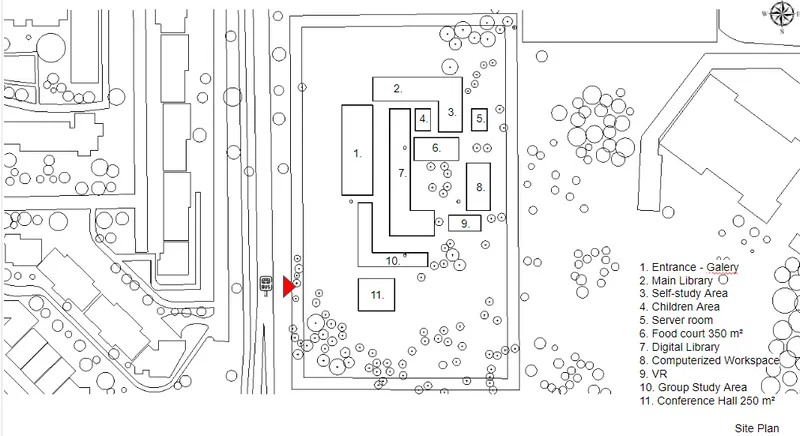
It took many iterations in the design to reach the final result. First of all, we tried to make libraries keep up with today's rapidly developing technologies. We started with a design that works like a campus by placing spaces containing the latest technology. (Vr rooms, computerized workspaces, ext.)
But we realized that settling into the area in this way is a design that the modern world is already used to, and it doesn't become special for the library.
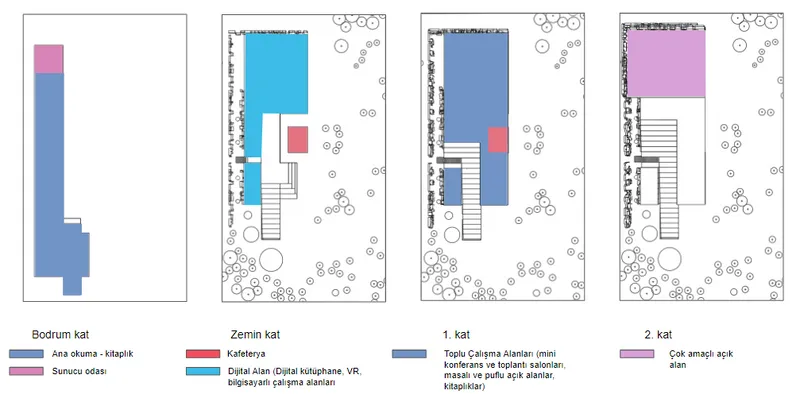
Then we imagined a transparent, readable new design with glass and reinforced concrete materials that hides the inside from the outside with a stone-covered facade, and when you enter inside workspaces and current practices are placed above the ground and books are exhibited underground with light and shadow.


With another design, we also tried to make an old-new library fiction by representing materials from the past and present and using stone and glass. Although the shape of the design has changed, we noticed that it has the same content as the above-mentioned designs and is insufficient. The problem with these designs was that we lost the library spirit while trying to integrate digital technology into a structure. The problem identified by the competition continued to exist in these designs.
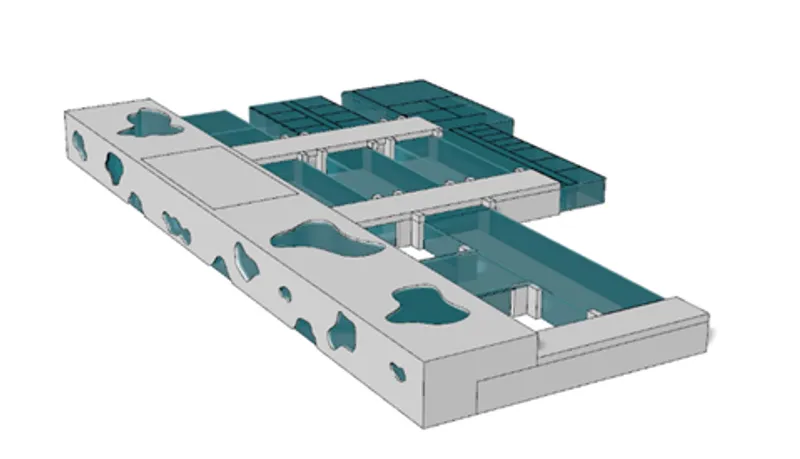

We realized that no matter how the design is, we cannot define a new library without changing our point of view. Up to this point, we have tried to fit as much "information" as possible into our designs as old-new, digital-analog. Although we tried to make a design by creating a contrast, we did not get results.
Over time, we questioned what the information was. We questioned the information itself. We questioned the relationship between information and library.
Rather than storing information somewhere, we were interested in the journey of that information until it reaches a person. We turned to the moment of learning information, how that information can be permanent after learning.
At that moment we consider "perceptual learning" to be the most efficient learning method and we combine it with libraries. We are looking for spatial counterparts of experience-based learning.
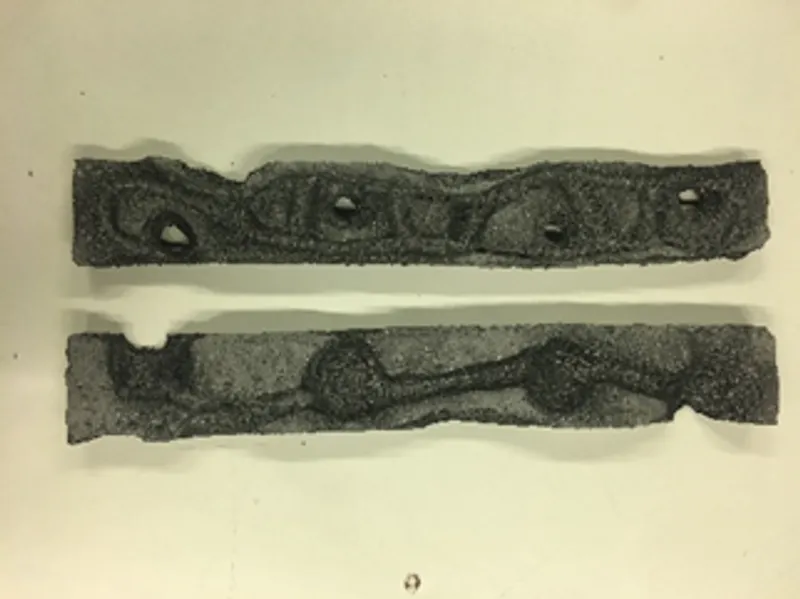
Starting from here, we tried many designs. We worked on models, maquette, sketches. And in fact, each stage developed the previous one, and we came to the result design.


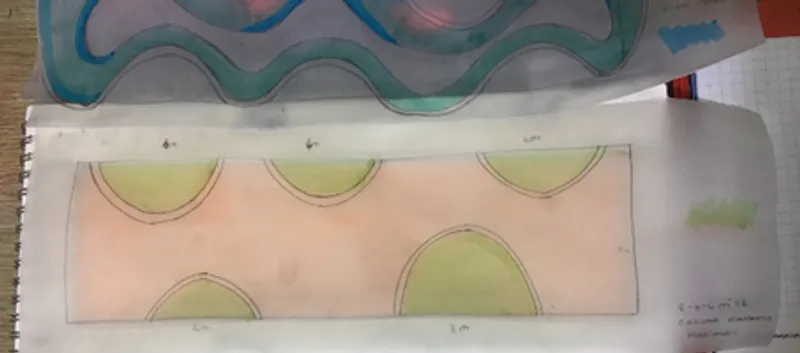


In the final design, we placed 10x3 stone blocks in the area with a certain logic and settled on spaces with continuity from the facade and from the inside. We have identified architectural touches that can appeal to the senses. Reading a book in the sound of rain, smelling the scents of flowers while studying a historical document, seeing two meditative areas in the garden while preparing for an exam highlights knowledge and the act of learning itself. It presents a new situation to the user.
We made this with the cistern we created with rainwater, with our fragrance gardens, with the atmosphere created by light and shadow, we aimed at a design that will make our senses aware. We construct the experience by appealing to the senses. We think of the structure as a whole with its surroundings by creating spaces where people can meditate and interact with each other, with gardens, fire - water circles. Users continue to experience perceptual learning inside the space outside as well. Thus, the library ceases to be just a structure for us and turns into a learning environment that spreads over the area.
One of the key elements that supports the experience is the material.
What material we would choose was very important for the project. We have been looking for how we can integrate the experience argument into the space instead of just being in words. We needed to see and feel the texture, but also to get away from the stereotypical image of the modern world. That's why we chose stone as a material. The stone represents both nature and the past. While this project brings a new library definition, it also protects the library definition that has come from the past to the present. Information continues to be stored in books, books continue to be stored in libraries. It continues to be the place where people come to learn. But when they come, what they encounter is no longer just books, but also the way they experience them.
In our library, the texture of the space that we are in allows us to notice the environment. Think about any library you've been to so far, how many of them have you wanted to touch the walls or examine the floor? Experi-Lib is the new definition of libraries. A new perspective on the way of getting information.
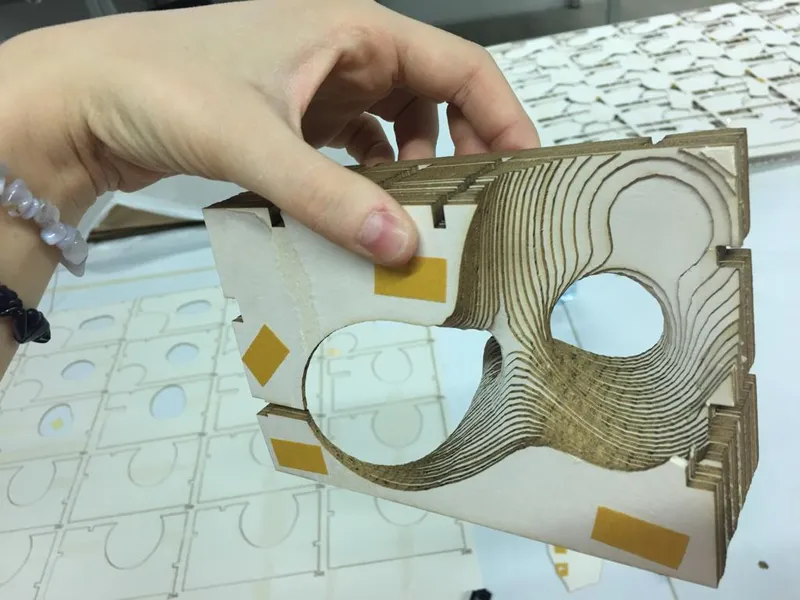
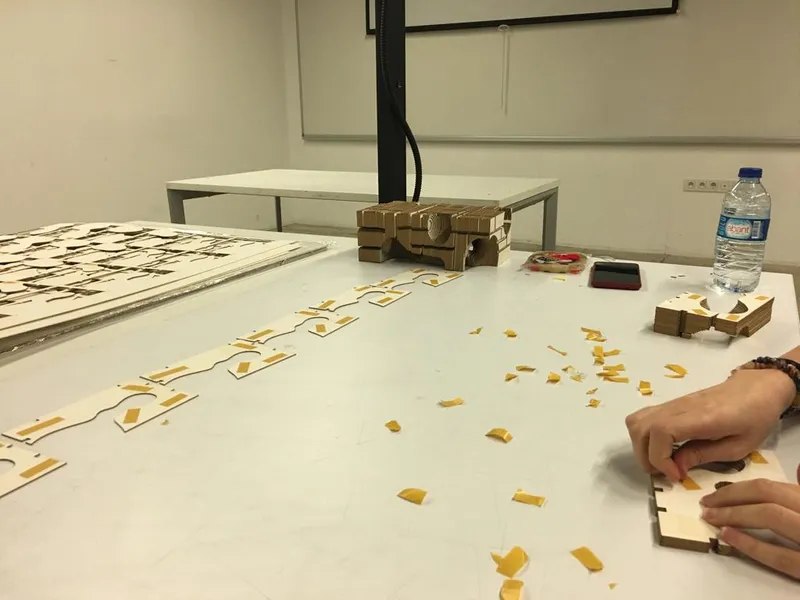
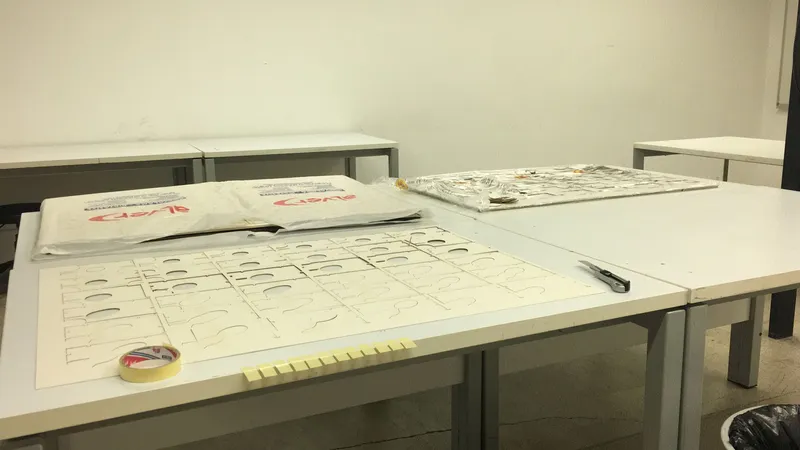
We have 3d modeled and visualized our design. In addition, we made a maquette of it. We have searched for the best forms of expression and materials. We believe that the design has great potential and is also open for development. We have created a laser file consisting of 250 sections. Then we separated more than 1000 pieces one by one and pasted them systematically. When we look at the final version of the maquette, it can carry itself. The pieces come together, the spaces settle into the voids left by the material.
We believe that over time, while Experi-Lib, the world's first experience library, will become one of the highlights of the city, it will be remembered that libraries are much more than digital data. Information is permanent as long as it is accumulated with memories.

Popular Articles
Popular articles from the community

Faces of the Soviet Avant-Garde: Turning Moscow's Street Names into an Open-Air Museum
A network of sculptural installations across a Moscow residential district transforms forgotten architect names into spatial encounters with cultural memor
Extended Shell: Retrofitting Kolkata's Balconies as Living Urban Thresholds
A modular retrofit system recovers the social and environmental intelligence of Kolkata's historic verandas for contemporary Park Street residents.

Singing Woman: An Opera House That Performs Before the Curtain Rises
Ovidiu Cristian Pavel's conceptual opera house translates Estonia's choral identity into a sculpted waterfront landmark facing the Baltic Sea.

Opera by the Sea Estonia: Three Shells Dissolving Architecture into Tallinn's Coastline
A winning opera house proposal replaces monumental form with interconnected shells that blur the boundary between building, park and Baltic Sea.

Similar Reads
You might also enjoy these articles

The Rhythm of Seasons
A Farmers' Market Connecting Nature and the City

More Than a Building-Designing a Living System
More Than a Building-Designing a Living System
Base Beyond
DESERT COMPOUND ARID: TOURISM OF ABSENCE AND ABUNDANCE

Explore Reading Room Competitions
Discover active competitions in this discipline


Challenge to reimagine the Iron Throne

Photograph architecture without architects

Illustrate the lost glory of Angkor Wat - Render Challenge

Design challenge to reuse E-waste
Comments (0)
Please login or sign up to add comments
No comments yet. Be the first to comment!