
Explore the surprisingly fascinating world of video games!
Video games have come a long way since their humble beginnings in the 1970s.

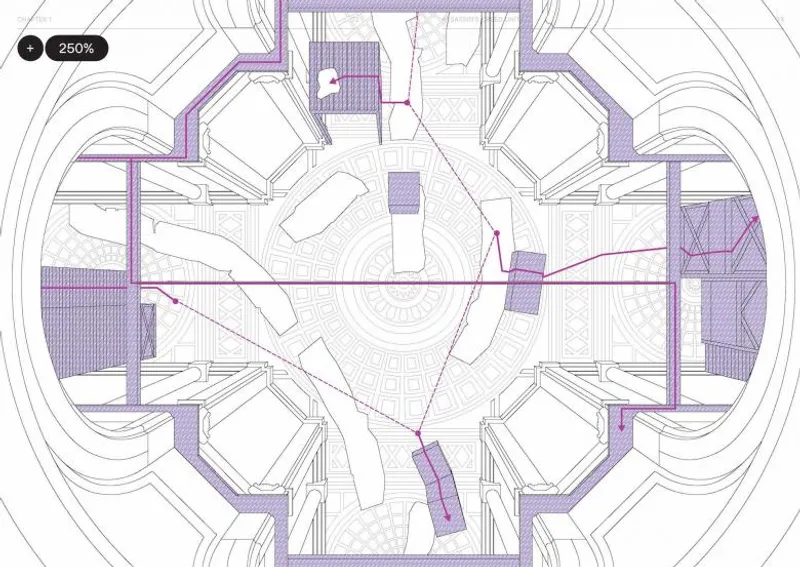 Image © 2022 Sandra Youkhana and Luke Casper Pearson
A recent book published by Thames & Hudson and an exhibition at the Museum of Modern Art (MoMA) examine the intersection of architecture and video games, exploring how people experience space and time through interactive design.
The book, titled "Videogame Atlas: Mapping Interactive Worlds," written by Luke Casper Pearson and Sandra Youkhana, and the MoMA exhibition, "Never Alone: Video Games and Other Interactive Design," delve into the immersive and often imaginative worlds of video games, highlighting the role of architects in designing the built environments within these virtual realms.
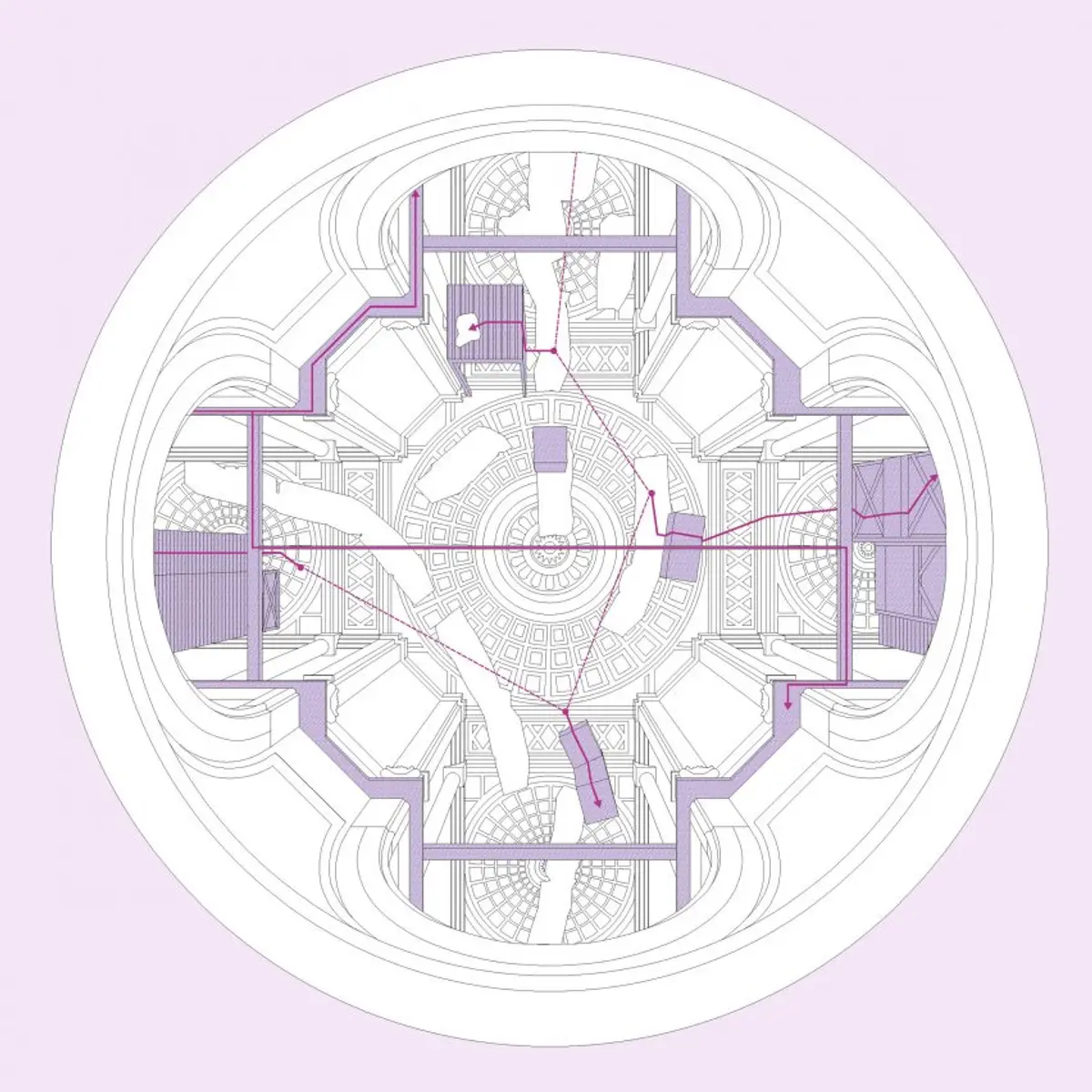
 Elevations of Notre Dame and the Bourse de Commerce in Assassin's Creed Unity overlaid with parkour lines. (Image © 2022 Sandra Youkhana and Luke Casper Pearson)
While architecture and film have been extensively studied together, there has been relatively little exploration of the relationship between architecture and video games. These two works seek to fill this gap, offering a unique perspective on the intersection of these two fields.
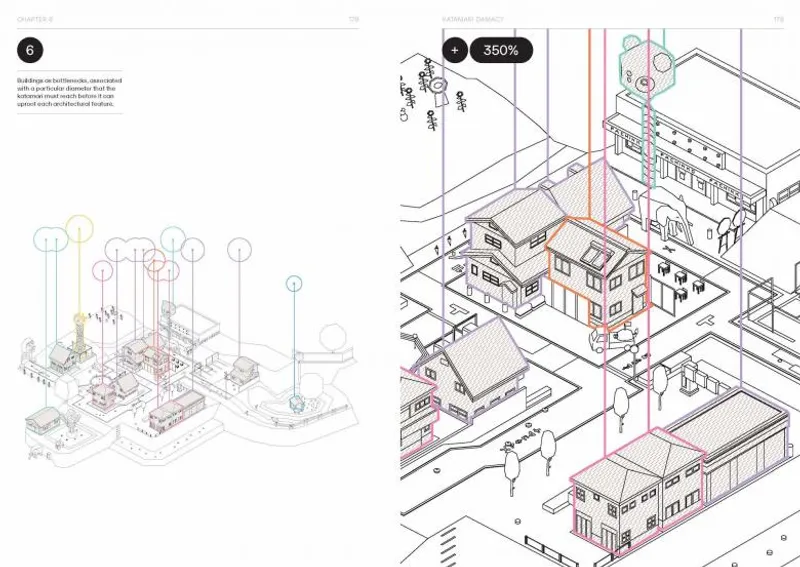 "Buildings as bottlenecks" in Katamari Damacy. (Image © 2022 Sandra Youkhana and Luke Casper Pearson)
Video games often include maps in various forms, such as Pac-Man's screen layout, in-game navigation tools for players to explore virtual environments, and printed maps in guidebooks for hardcore gamers to refer to.
However, the maps created by Luke Casper Pearson and Sandra Youkhana for the Videogame Atlas are a different kind of map entirely. As leaders of the Videogame Urbanism Studio at the Bartlett School of Architecture, their maps visually analyze the urbanism of various interactive game worlds.
The maps cover a diverse range of game genres, including first-person shooters, sandboxes, role-playing games, and simulators. This allows the authors, both avid video game players themselves, to examine a wide range of virtual environments and analyze them through mapping.
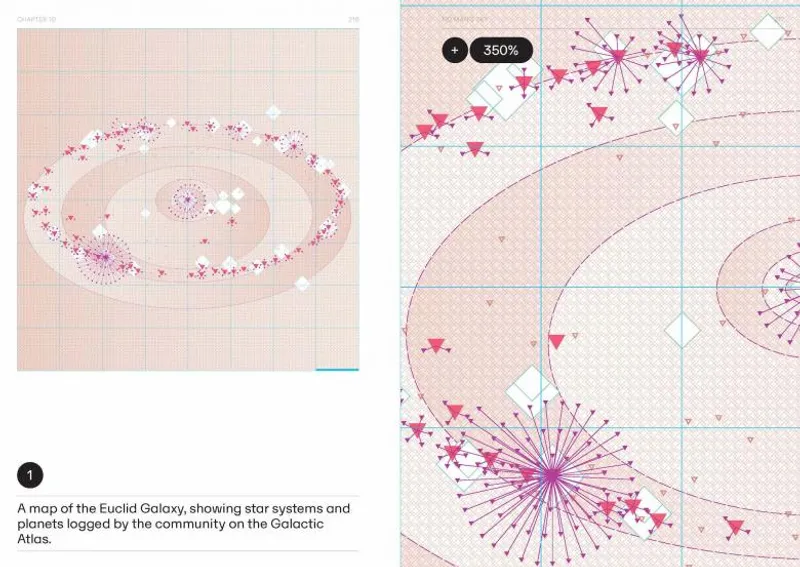 A map of the Euclid Galaxy in No Man's Sky. (Image © 2022 Sandra Youkhana and Luke Casper Pearson)
The book contains nearly 500 illustrations, all of which were created by the authors. This will be especially beneficial for readers who are familiar with the games, as they will have a better understanding of the maps and diagrams. Some of the interactive game worlds are based on real places, like the Paris of Assassin's Creed Unity, making them easier to comprehend.
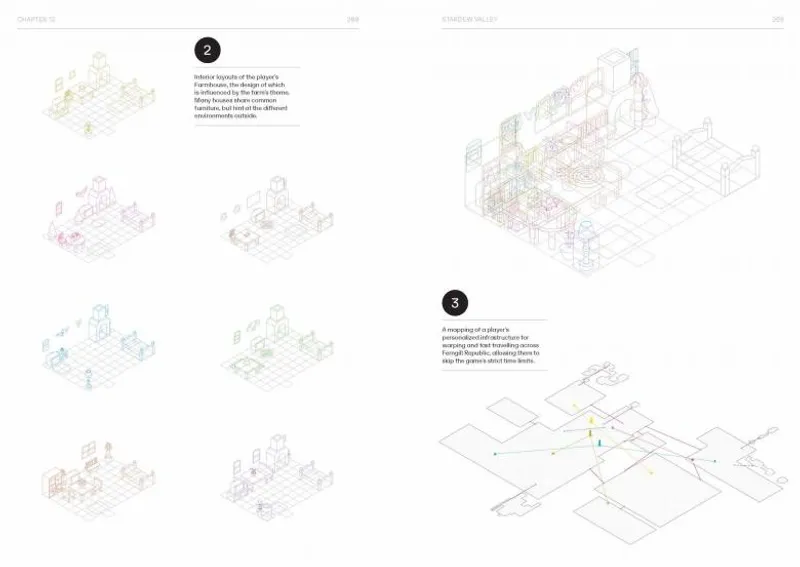 The player's Farmhouse on Stardew Valley and mapping for fast travelling across the game's Fernhill Republic. (Image © 2022 Sandra Youkhana and Luke Casper Pearson)
However, others are more fantastical or hybridized versions of reality, such as the world of Katamari Damacy. This game involves a player rolling a giant ball around a room, picking up objects, and increasing in size until they are able to consume everything on Earth's surface. The authors have included diagrams explaining how the player controls the Katamari, maps showing its movement and growth within a room, and illustrations showing the size it must reach to uproot buildings.
A map of the Euclid Galaxy in No Man's Sky. (Image © 2022 Sandra Youkhana and Luke Casper Pearson)
References (1)

Popular Articles
Popular articles from the community

Extended Shell: Retrofitting Kolkata's Balconies as Living Urban Thresholds
A modular retrofit system recovers the social and environmental intelligence of Kolkata's historic verandas for contemporary Park Street residents.
Temporary Home for Dogs: A Reversed Zoo Rethinks Animal Shelter Architecture
In Bucharest, a sinuous corridor and freed landscape flip the logic of containment, designing a shelter that works to make itself unnecessary.
Opera by the Sea Estonia: Three Shells Dissolving Architecture into Tallinn's Coastline
A winning opera house proposal replaces monumental form with interconnected shells that blur the boundary between building, park and Baltic Sea.

The Amber Palace Opera: A Geological Fiction Surfaces on Tallinn's Baltic Waterfront
Pierre Brillard reimagines a Baltic legend as a public landscape, opera house, and waterfront promenade rooted in Tallinn's coastal identity.

Similar Reads
You might also enjoy these articles

Shakur's House: Exposed Brick as an Interior Organiser in a 168 m² Mashhad Residence
Brick moves indoors in this Mashhad residence, where masonry walls, glass partitions and teal planes sequence a compact home without closing it off.

Day and Night Park: A Time-Based Urban Newsstand in Beijing
A temporary urban newsstand in Beijing blending travel, light, and reading through poetic colors, compact form, and community-focused design.

Modernist Patio Renovation in El Masnou, Barcelona by Oliver Segura Arquitectura + Cebrià Arquitectura
Modernist patio renovation blending tradition and innovation with a movable pool, leveled floors, and Catalan materials in El Masnou.

Alto Residencial Coop: Cooperative Housing Development in Santiago de Compostela by Carbajo Barrios Arquitectos
A linear cooperative housing complex blending white volumes and perforated metal façades, enhancing community living, natural light, privacy, and urban integration.

Explore Game Design Competitions
Discover active competitions in this discipline


Challenge to reimagine the Iron Throne

Photograph architecture without architects

Illustrate the lost glory of Angkor Wat - Render Challenge

Design challenge to reuse E-waste
Comments (0)
Please login or sign up to add comments
No comments yet. Be the first to comment!