

Expo 2025 Osaka Pavilion null² by Noiz Architects: A Landmark of Digital Pavilion Architecture
A reflective, interactive pavilion merging digital design, Buddhist philosophy, and modular architecture at Expo 2025 Osaka by Noiz Architects.


A Vision for Digital-Physical Integration at Expo 2025 Osaka
In a bold redefinition of what an expo pavilion can be, Noiz Architects’ null² Pavilion at Expo 2025 Osaka fuses cutting-edge digital pavilion architecture with philosophical and technological depth. Commissioned as one of the eight Signature Pavilions and produced by media artist Yoichi Ochiai, this structure serves as both a conceptual and physical gateway into a new era—where virtuality and materiality coexist, vibrate, and breathe in synchrony.
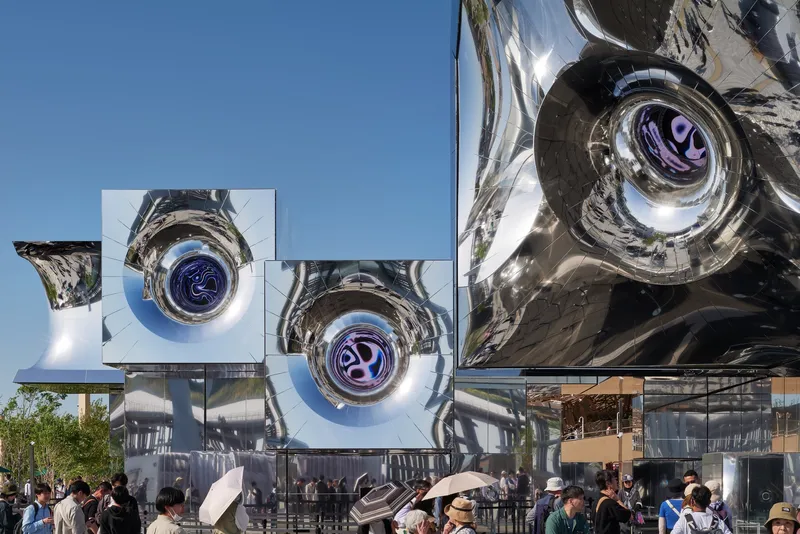

Architectural Philosophy: From “Emptiness” to Digital Fluidity
The name null² carries layered meanings. Technically, “null” represents emptiness in programming. Culturally and spiritually, it references the Buddhist concept of 空 (“emptiness”), particularly the phrase “form is emptiness, emptiness is form” from the Heart Sutra. This duality forms the backbone of the design, bridging the immaterial and the tangible through reflective membranes and voxel geometry, ultimately questioning the nature of presence in a digital world.
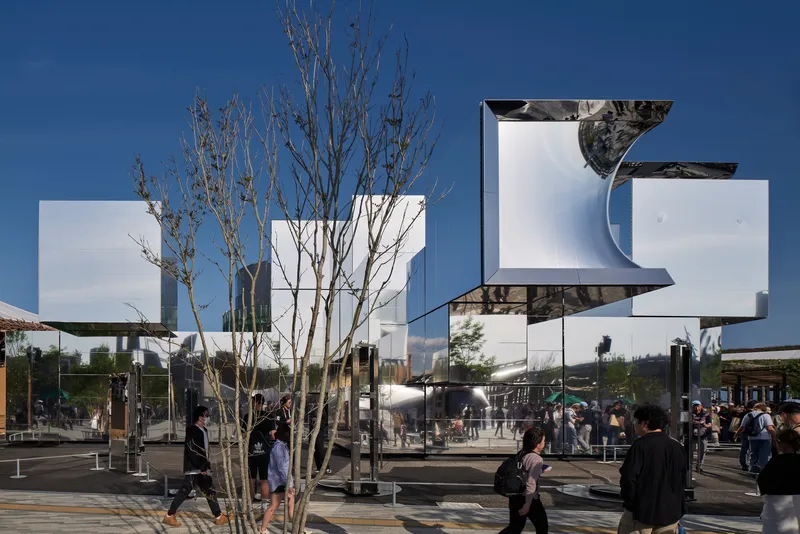

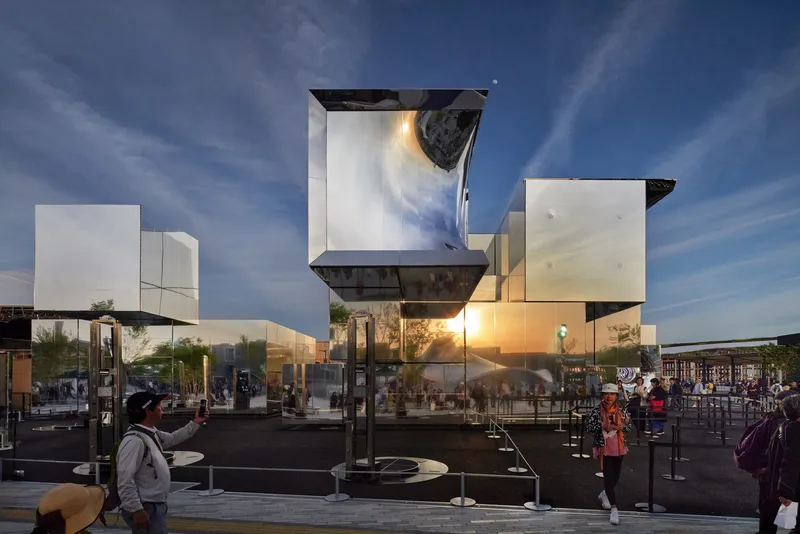
Contextual Reflection: From Expo ’70 to the Post-Internet Age
Unlike the 1970 Osaka Expo that celebrated technological optimism through monumental physical structures, null² responds to the internet age’s intangible connectivity. In a time where virtual interaction often replaces physical travel, Noiz Architects challenges the relevance of traditional exposition spaces by creating a pavilion that exists in both the real and digital realms, offering a meta-experience rooted in interaction, transformation, and reflection.
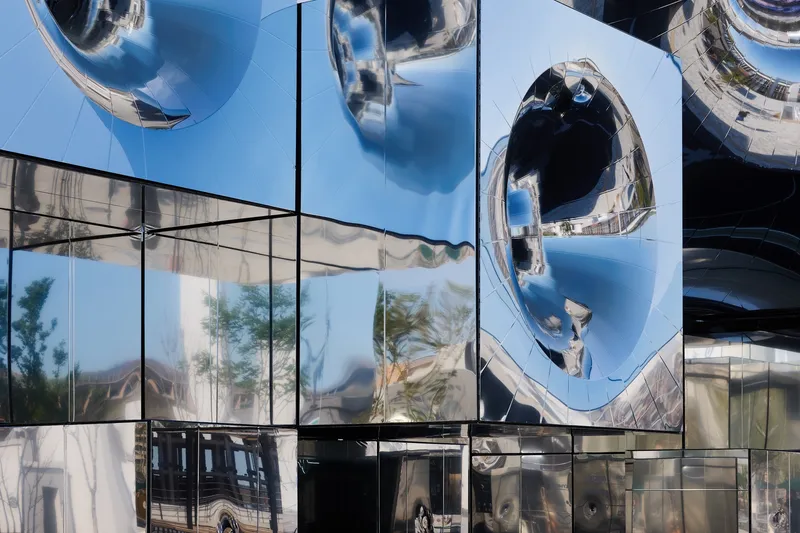
Design Concept: Voxel-Based Modular Systems
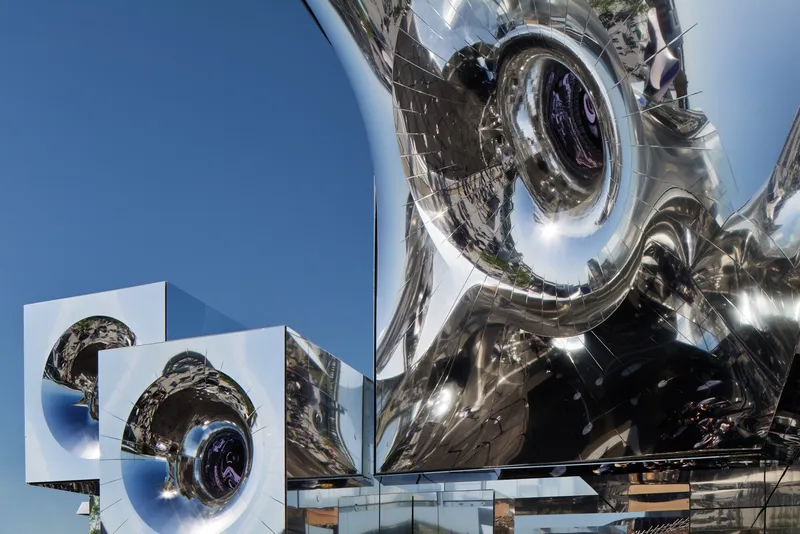
At its core, the pavilion is composed of voxel clusters—modular cubic volumes at 2m, 4m, and 8m scales, referencing low-resolution digital landscapes commonly seen in VR environments and video games. These digital building blocks are not only a visual metaphor but also provide maximum adaptability, allowing for quick alterations in layout, function, or even disassembly and relocation after the Expo. The voxel format embodies efficiency in data communication while maintaining architectural dynamism.


Material Innovation: Reflective, Adaptive Membrane System
The pavilion’s defining aesthetic feature is its 98% reflective mirrored membrane, developed in collaboration with Taiyo Kogyo and Ochiai’s team. This material has a metallic, breathable quality that mimics living tissue—its surface ripples in wind, altering reflections and producing a constantly shifting visual dialogue with its environment. This isn't just spectacle: the membrane’s high solar reflectivity enhances energy performance and opens the door for future adaptive building skins beyond the Expo.

Programmable Architecture: Movement, Sound, and Interaction
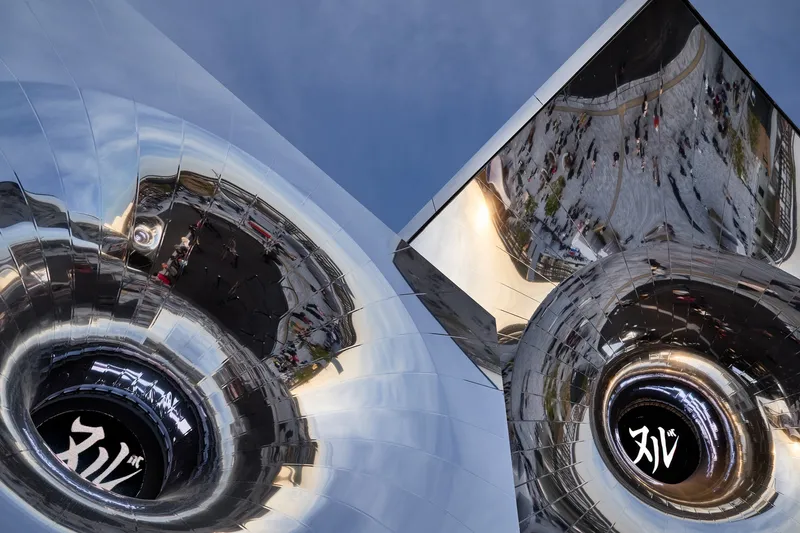
Inside selected voxels, robotic arms and woofers manipulate the membranes through low-frequency sound vibrations, creating surreal, fluid transformations. The Japanese phrase "nuru-nuru" (slippery, fluid) aptly describes these shifting forms. This responsiveness turns the pavilion into a living organism, reacting to external stimuli and blurring the lines between sculpture, structure, and machine.

Functional Zones: Interaction Beyond Exhibition
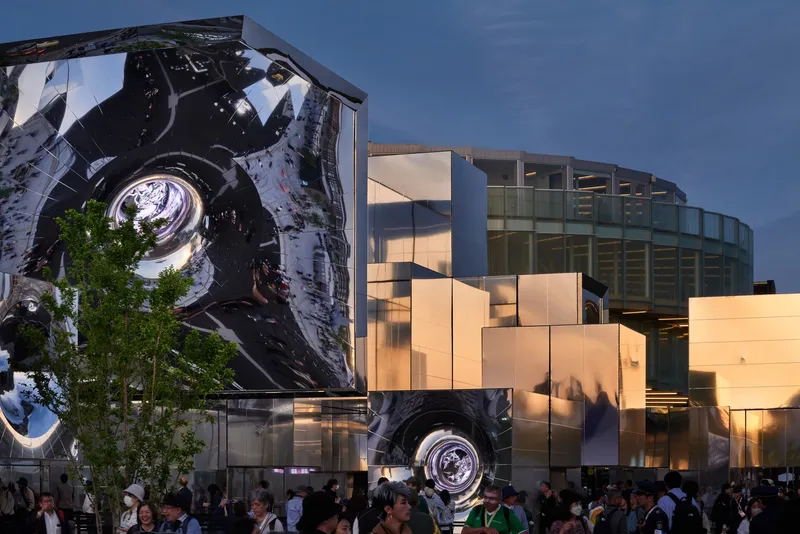
The pavilion contains four distinct areas—Exhibition Hall, Back Office, Security Station, and Rest Area—each housed within modular voxels. In the exhibition space, visitors interact with their digital twins, further reinforcing the blurred boundary between the physical self and virtual identity. This aligns perfectly with the Expo 2025 theme of fostering new human-technology relationships, positioning null² as a prototype for digitally-augmented public architecture.
Sustainability and Future Use: A Pavilion Designed to Move
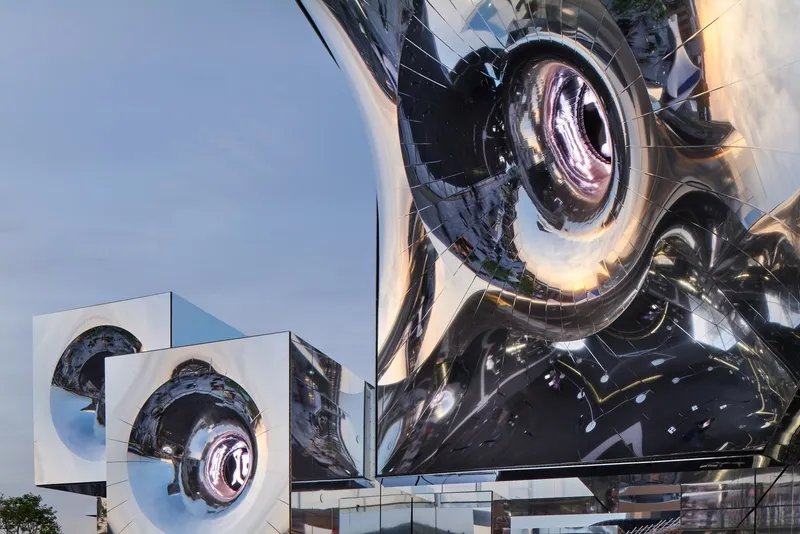
Unlike many static expo structures, null² was designed from the outset with mobility, reuse, and sustainability in mind. Every component—from frames to membranes—can be disassembled and reassembled elsewhere, minimizing construction waste and extending the building’s lifecycle. This portable architecture model reflects an emerging ethos in exhibition design, where architecture is temporary, reactive, and transformative.
Digital Pavilion Architecture as a Living Interface
null² by Noiz Architects is far more than a pavilion—it is a living interface between worlds. Through reflective surfaces, robotic membranes, and interactive digital experiences, it pushes the limits of digital pavilion architecture. More than a structure, it is a statement: architecture in the age of AI, avatars, and information flows must be interactive, impermanent, and infinitely reprogrammable.
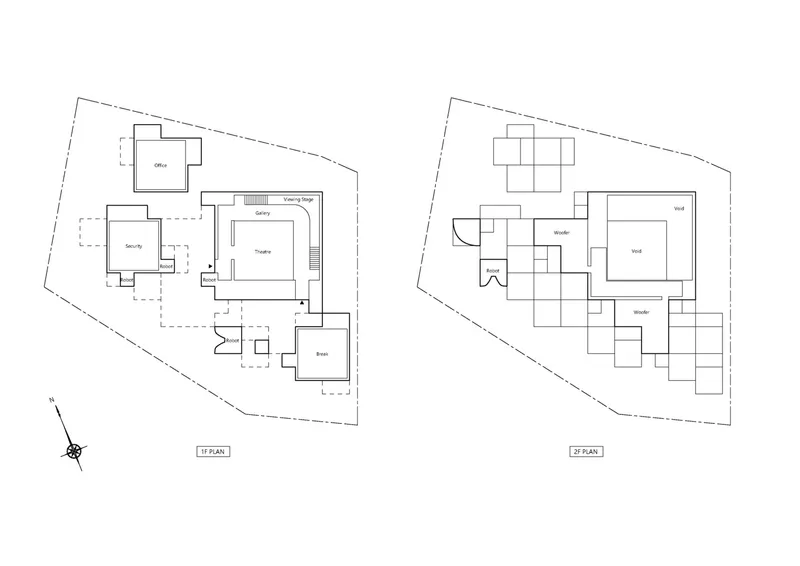
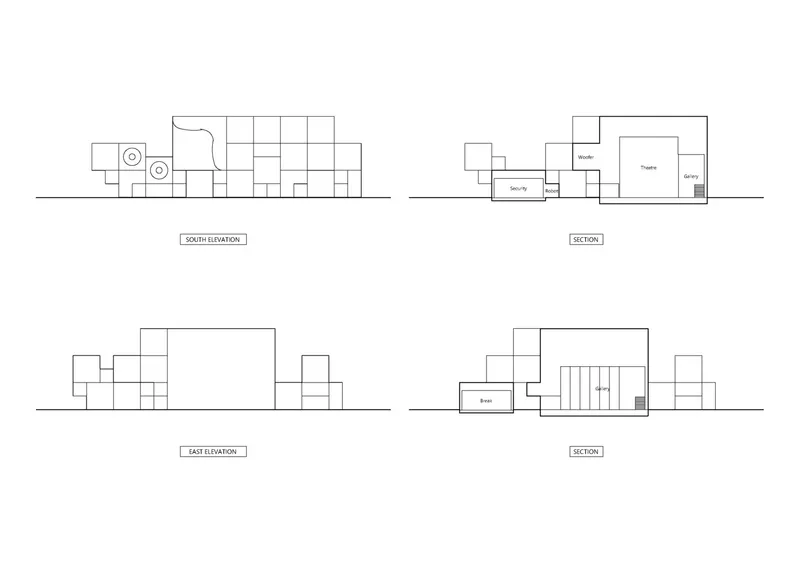
All Phtographs are works of Daici Ano , Tomoyuki Kusunose




Popular Articles
Popular articles from the community


Co-life: Sustainable Architecture for Age-Friendly Community Living
Co-life reimagines sustainable architecture for seniors through courtyards, rammed earth, shared gardens, and spaces designed for belonging.

The Earth Pod: 3D Printed Homes for Resilient Refugee Communities
The Earth Pod reimagines refugee housing through 3D printed homes made from clay, combining resilience, self-sufficiency, and rapid shelter.

The Ocean Hive: Sustainable Architecture for a Self-Sufficient Civilization at Sea
The Ocean Hive imagines sustainable architecture at sea, where modular habitats, algae, wave power and ocean waste sustain a growing colony.
EW PARK: Sustainable Architecture Reimagines the Future of Urban Parking
EW PARK reimagines city parking as a modular wooden tower combining automation, solar energy, electric mobility, and adaptable urban design.

Similar Reads
You might also enjoy these articles


FAMM Arquitectura Organizes Ten Villas Around Courtyards and Jungle in Nosara, Costa Rica
El Molino pairs two elongated volumes with deep overhangs and timber louvers to build a compact coastal community five minutes from the beach.

Oscar Niemeyer's Ibirapuera Park Pavilions Define São Paulo's Cultural Identity in Concrete and Curve
A constellation of modernist volumes set within São Paulo's most important urban park, conceived for the city's 400th anniversary in 1954.
How Henri Picq's 1889 Paris Pavilion Traveled 11,000 Kilometers to Become Santiago's Artequín Museum
A prefabricated iron and glass pavilion built for the Paris Universal Exposition found a second life as a children's art museum in Chile.

Sanjay Puri Architects Wraps a Jaipur Office Tower in Capsule-Shaped Green Buffers
A nine-level climate-responsive workplace near Jaipur Airport uses stacked planter terraces and aluminium screens to fight 40°C heat.


Explore Architecture Competitions
Discover active competitions in this discipline



Challenge to reimagine the Iron Throne


Photograph architecture without architects


Illustrate the lost glory of Angkor Wat - Render Challenge


Design challenge to reuse E-waste
Comments (0)
Please login or sign up to add comments
No comments yet. Be the first to comment!