
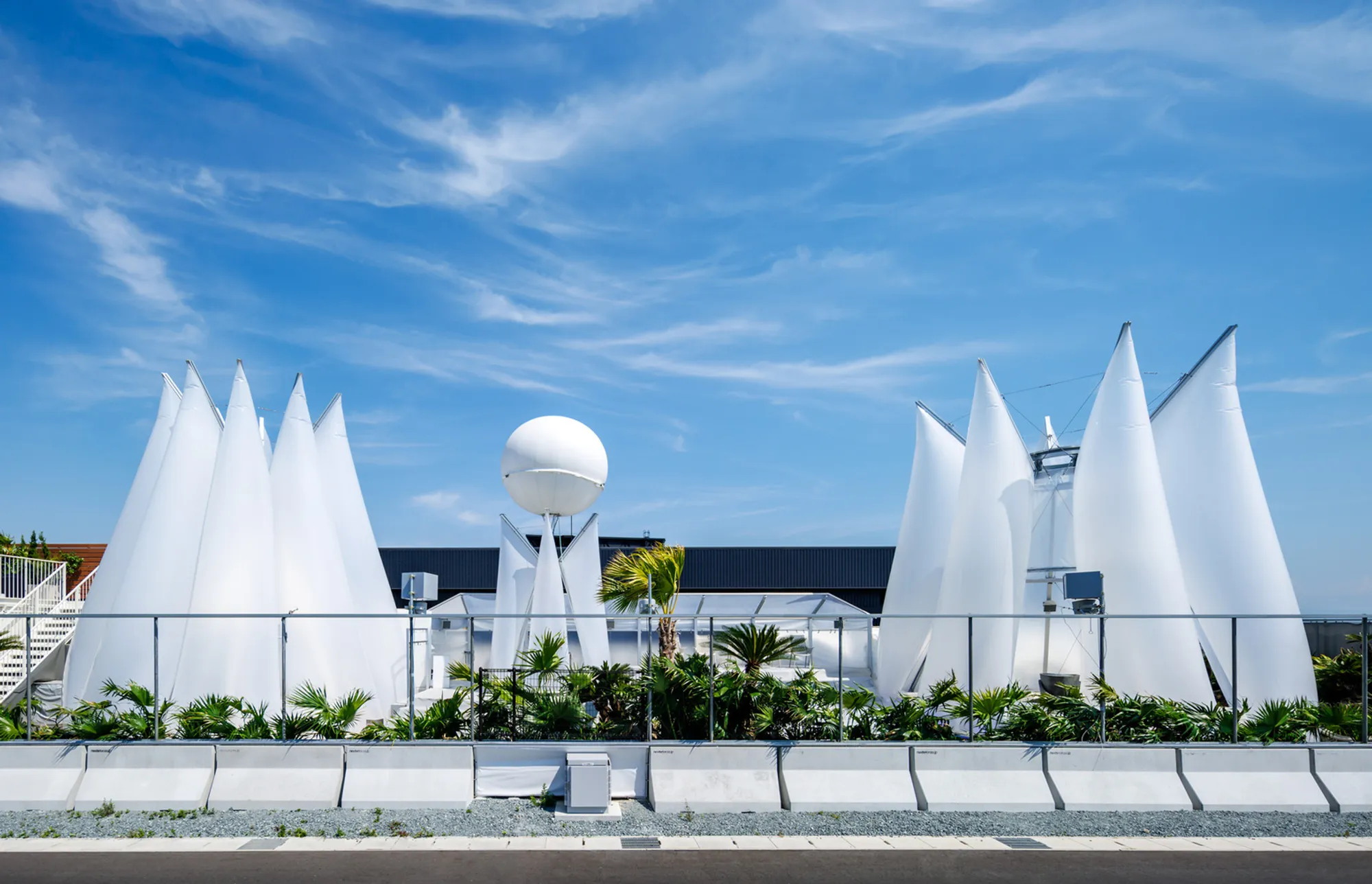
EXPO Osaka 2025 Sauna “TAIYO TSUBOMI” by KOMPAS: An Immersive Encounter Between Architecture and Nature
An experimental sauna pavilion blending ETFE membrane architecture, light, sound, and nature to create an immersive, multisensory experience at EXPO Osaka 2025.


A New Symbol of Sensory Architecture at EXPO Osaka 2025
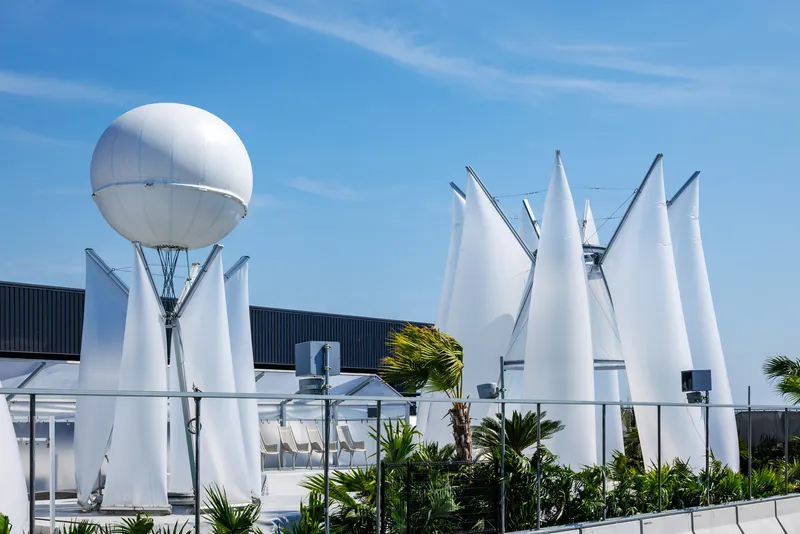
Perched along the western seafront of the EXPO 2025 Osaka site, “TAIYO TSUBOMI” (Bud of the Sun) designed by KOMPAS redefines the relationship between architecture, nature, and the human senses. Conceived as an experimental sauna pavilion, this 161-square-meter installation transforms the traditional sauna experience into an immersive, multi-sensory journey.
Rooted in the Expo’s vision of a “laboratory for future society,” the project embodies the concepts of “resonance with nature” and the “awakening of synesthesia.” It invites visitors to reconnect with their environment through the interplay of light, air, sound, scent, and heat—elements that merge into a dynamic architectural and sensory symphony.
Architectural Concept: The Bud of the Sun
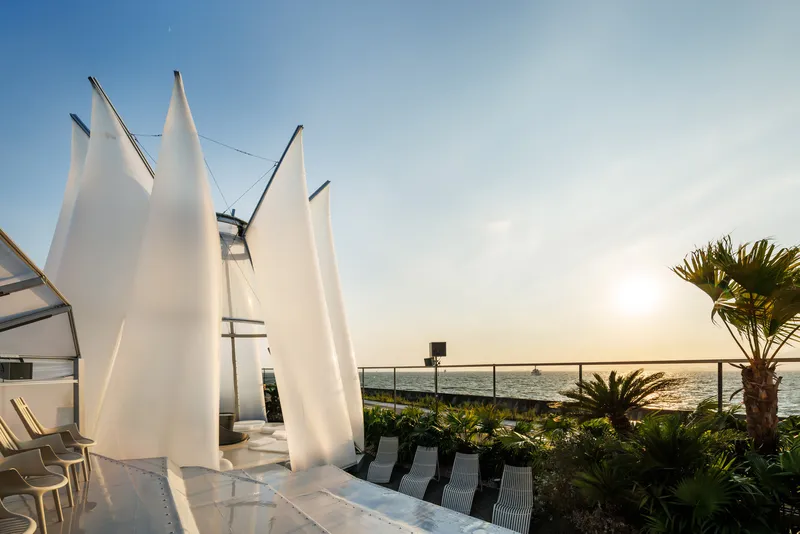
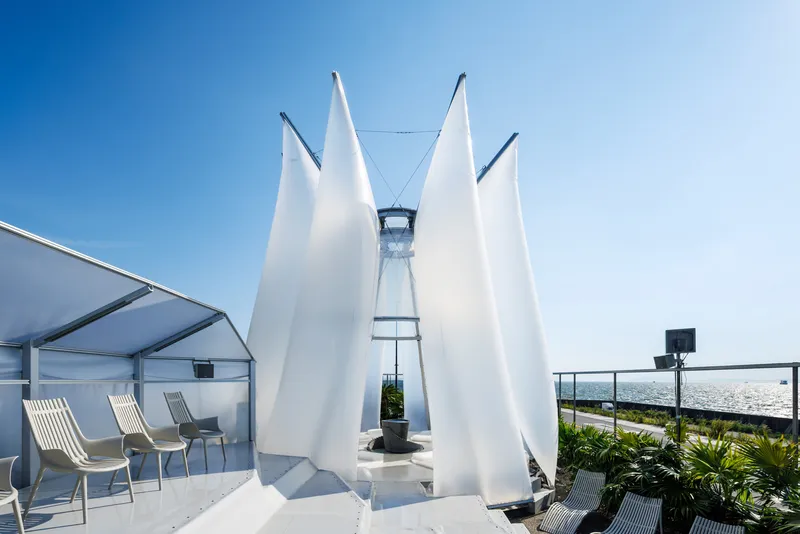
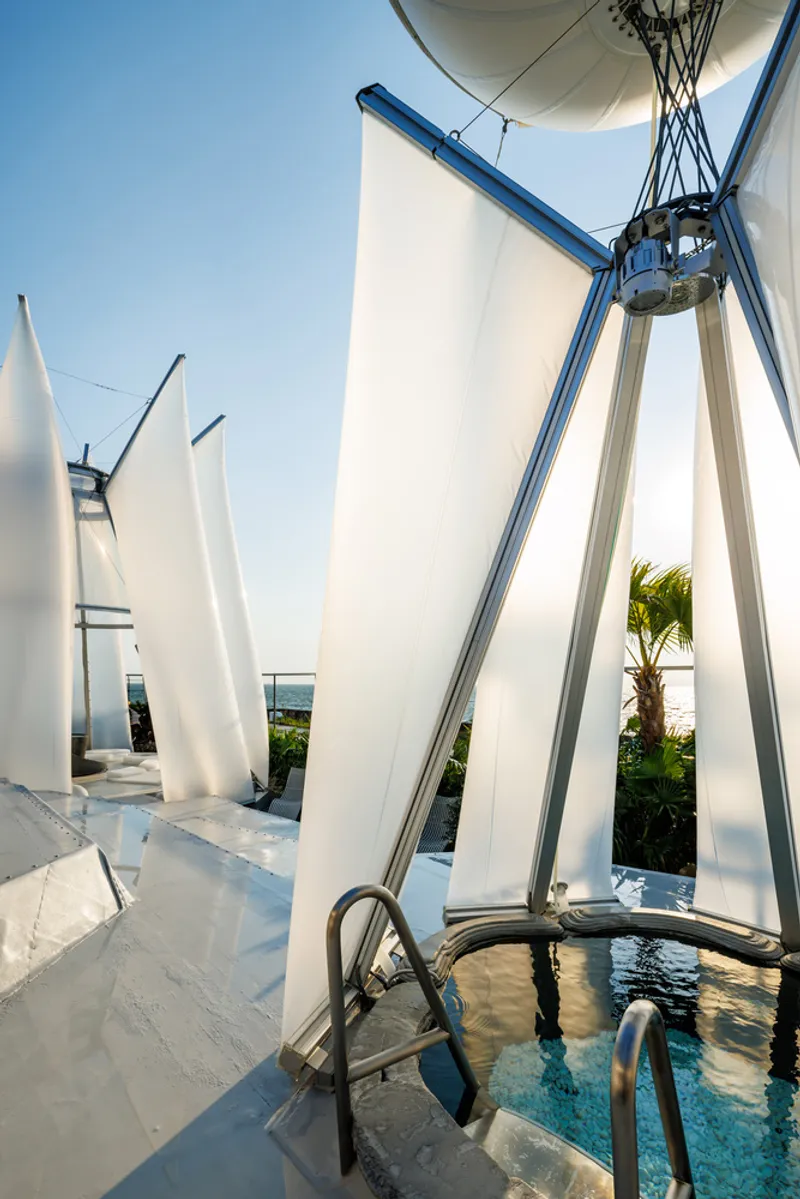
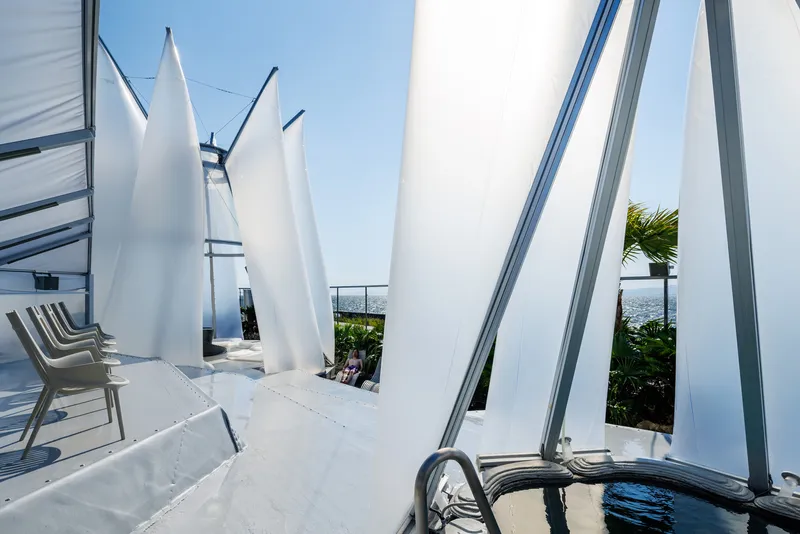
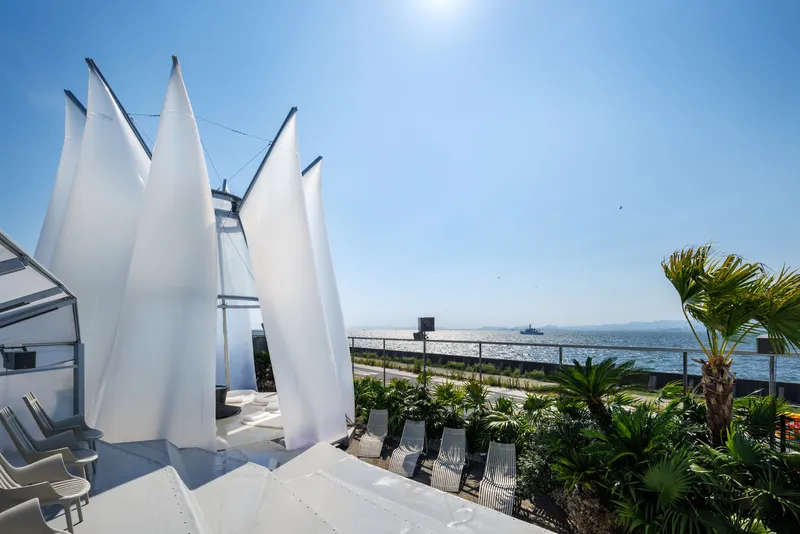
Set upon an open platform enveloped by lush greenery, the architecture unfolds in three distinctive, translucent forms. Each membrane volume performs a unique role in the ritualized sauna journey:
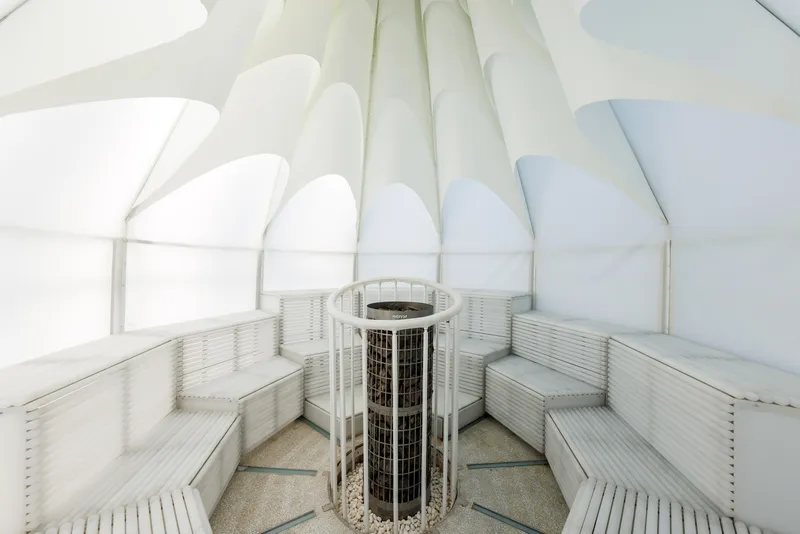
- The Sauna Chamber — a space that envelopes the body in radiant heat, its curved shell recalling a bud about to bloom.
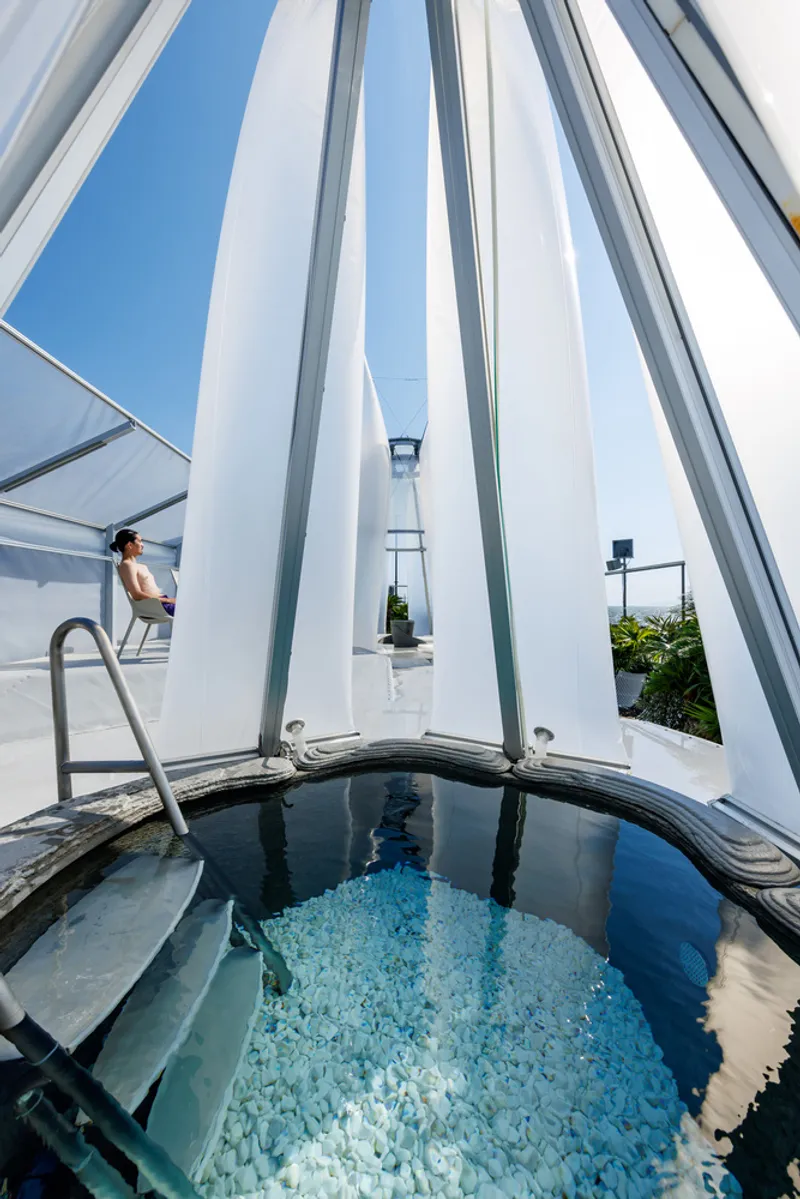
- The Lounge Pavilion — an airy refuge illuminated by daylight and cooled by passing breezes, creating a transition from intensity to calm.
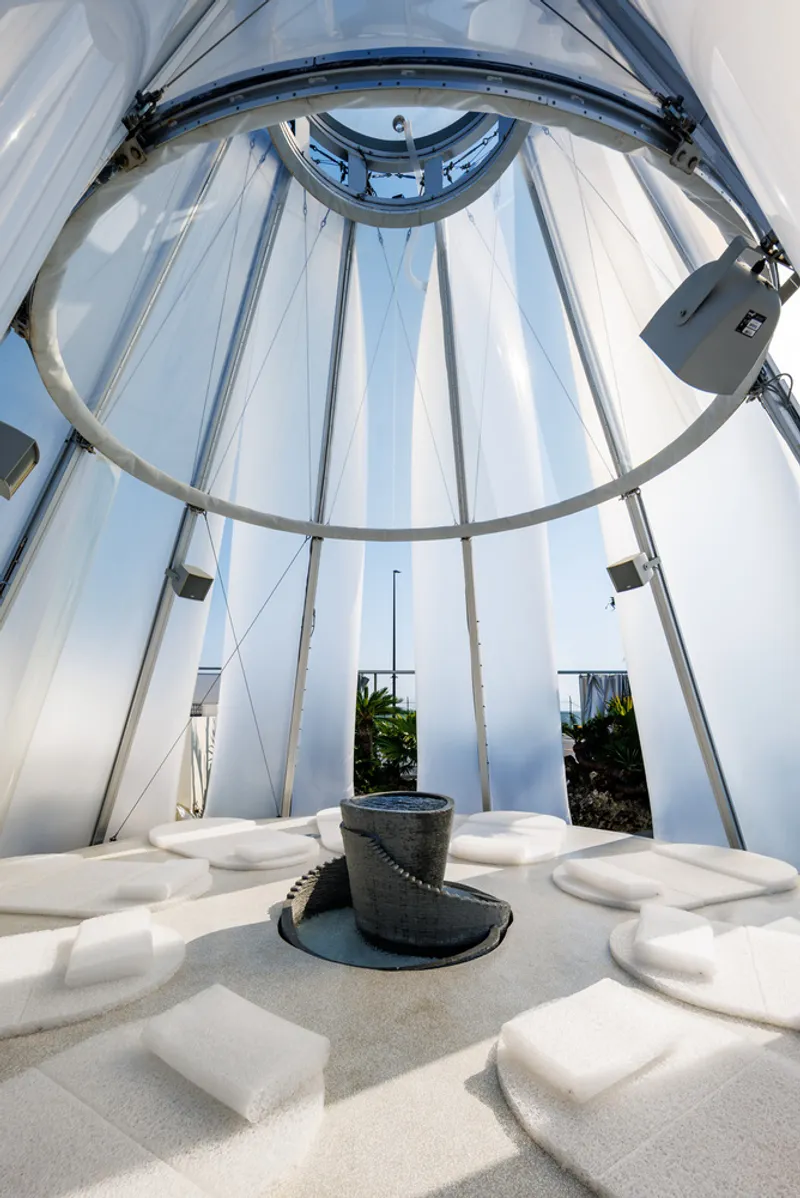
- The Cold Bath Dome — a sculptural basin beneath a balloon-like roof where cool air and water meet in rejuvenating contrast.
Together, these soft, billowing structures sway gently with the wind, reflecting the sky and sunset hues, establishing a poetic dialogue between human experience and the rhythms of nature.
Ritual as Architecture: The 11 Sauna Experiences
Unlike conventional spas, “TAIYO TSUBOMI” offers a curated ritual journey guided by trained sauna attendants. Participants move through a sequence of “11 Sauna Rituals,” each combining temperature, light, scent, and sound to stimulate the senses. This choreography of sensations transforms the act of bathing into a meditative exploration—a narrative of heat and cooling, presence and reflection.
Innovative Membrane Architecture
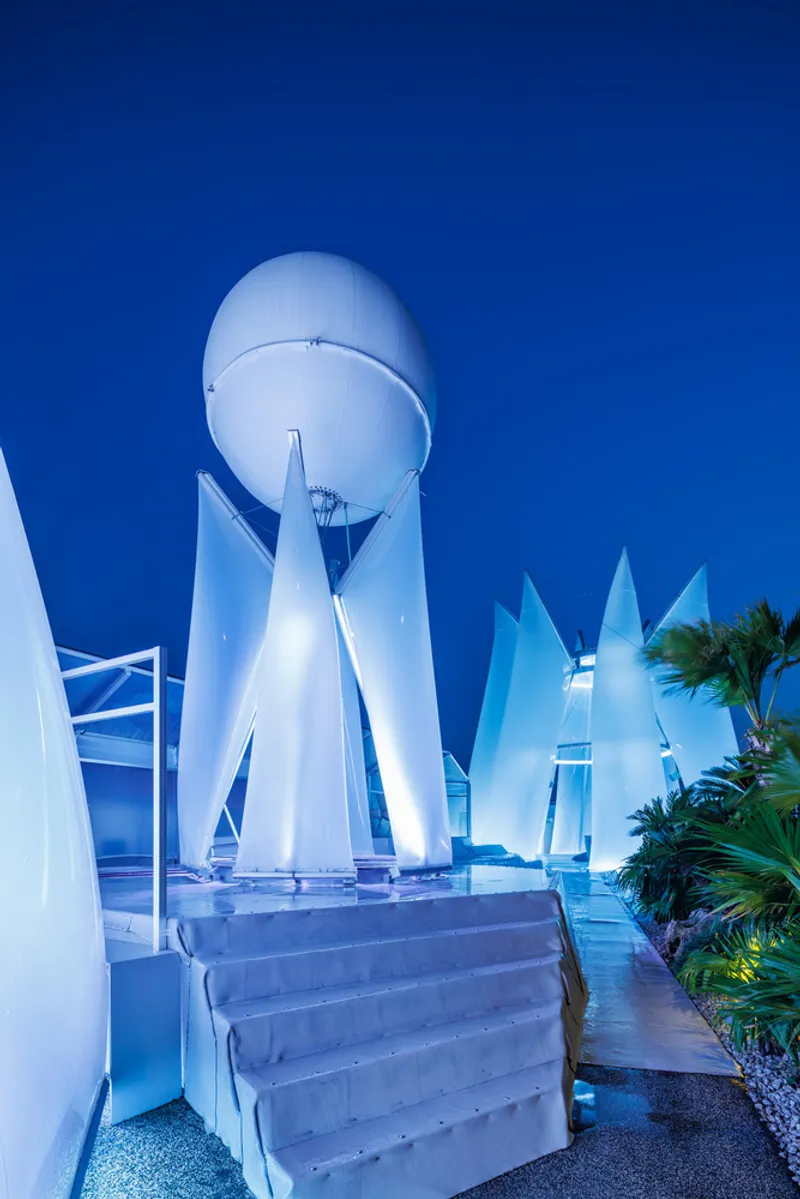
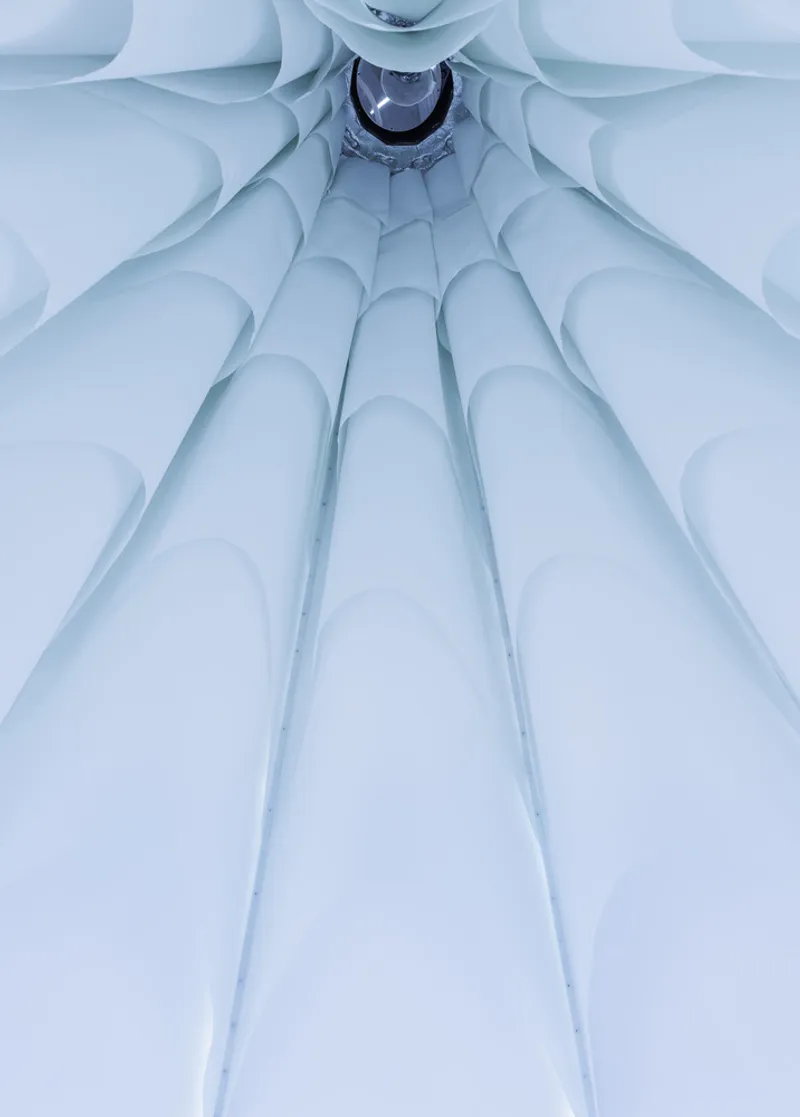
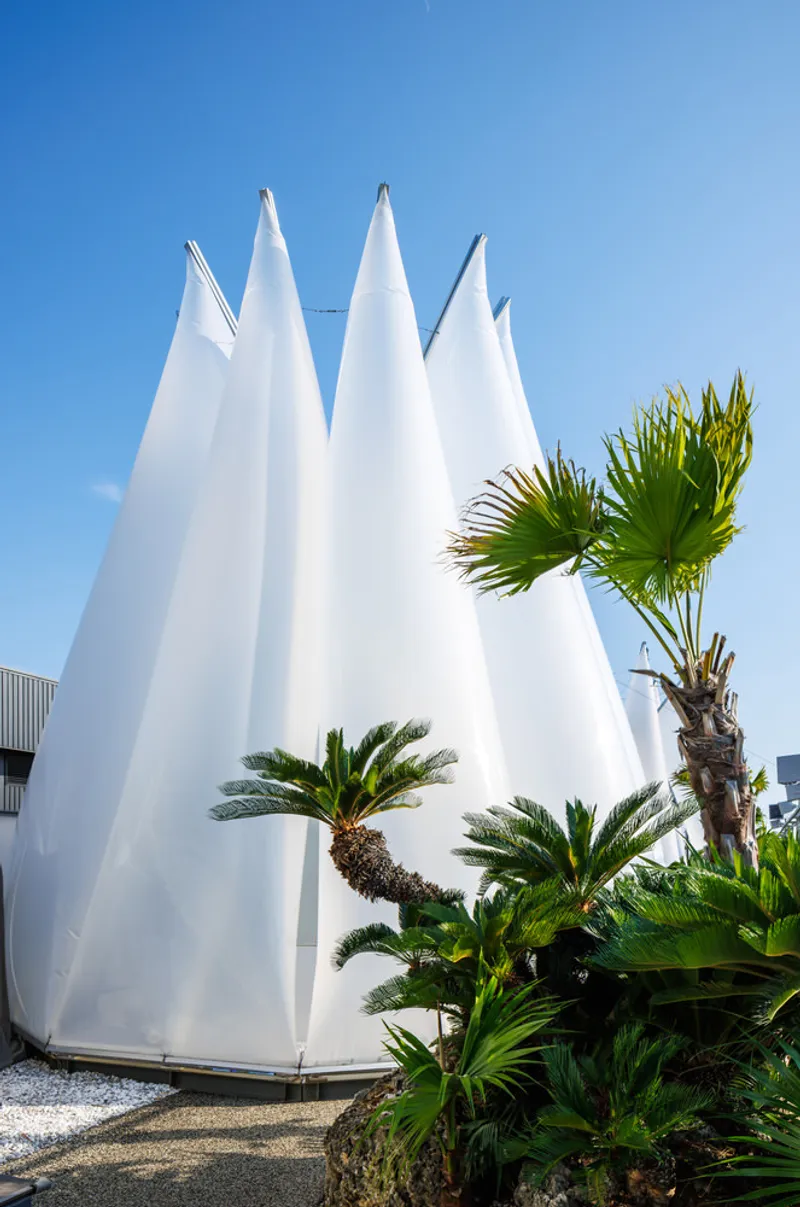
At the core of the design lies an advanced air-membrane system that embodies architectural lightness and structural innovation. The building’s shell consists of tetrahedral air-membrane units made from thin aluminum frames and ETFE film, forming enclosed volumes supported solely by air pressure.
Despite their delicate appearance, these ETFE membranes reach heights of up to 8 meters, ensuring remarkable stability and insulation. The modular system’s adaptability allows it to be easily deflated, transported, and reassembled elsewhere—showcasing a sustainable and reusable architectural model.
Light, Transparency, and Thermal Harmony
In a striking departure from conventional wood-lined saunas, “TAIYO TSUBOMI” employs a translucent ETFE interior that captures and diffuses sunlight throughout the day. The frosted texture of the membrane transforms harsh light into a soft glow, creating a warm and ethereal environment.
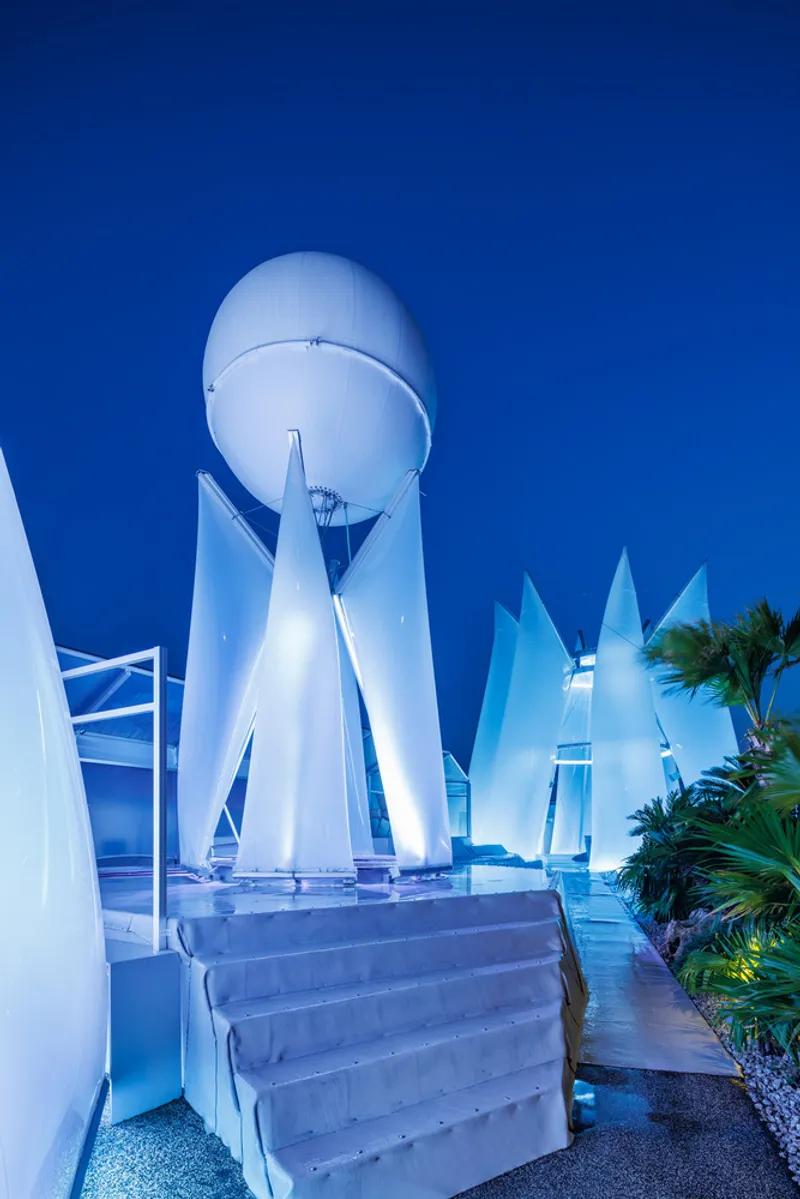
By night, the entire pavilion glows from within, its luminous presence resembling a floating bud under the stars. The result is a sauna that not only shelters the body but also heightens visual and thermal perception—a dialogue between material, atmosphere, and emotion.
Fusion of Advanced and Natural Materials
KOMPAS integrates a spectrum of experimental materials that complement the lightweight ETFE system. The cold bath is sculpted from 3D-printed concrete, an innovation that allows for organic, fluid forms reminiscent of natural stone basins. Elsewhere, the use of concrete canvas—a flexible fabric that hardens upon contact with water—introduces strength and texture to the site’s foundations.
This marriage of high technology and raw materiality reflects the project’s central philosophy: that architecture should evolve through both innovation and elemental simplicity, aligning with natural forces rather than opposing them.
A Vision for the Future of Experiential Design
“TAIYO TSUBOMI” is more than a sauna—it is a prototype for future experiential architecture, where physical structures become extensions of the human senses. Through its ephemeral form and deep connection with the environment, KOMPAS presents a new architectural language—light, reversible, and emotionally charged.
All photographs are work of Yohei Sasakura



Popular Articles
Popular articles from the community


Co-life: Sustainable Architecture for Age-Friendly Community Living
Co-life reimagines sustainable architecture for seniors through courtyards, rammed earth, shared gardens, and spaces designed for belonging.

Hill & Cross Opera: Sculptural Opera House Architecture Shaped by Tallinn’s Landscape and Identity
Hill & Cross Opera reimagines opera house architecture in Tallinn through its sculptural hill, civic plaza, glass wave and a luminous cross.

The Earth Pod: 3D Printed Homes for Resilient Refugee Communities
The Earth Pod reimagines refugee housing through 3D printed homes made from clay, combining resilience, self-sufficiency, and rapid shelter.

Lunar Spiral: Space Architecture Shaped by the Mathematics of the Universe
Lunar Spiral reimagines space architecture through Fibonacci geometry, lunar regolith, levitating habitats, and self-sustaining Moon living.

Similar Reads
You might also enjoy these articles


Hodi-Mandai Geram
Project Function: Preservation and revitalization of the Intangible heritage and socio-spatial identity of the Hodi by Housing, Cultural Memory Center, Sacred Grove, landscape, local tourism economy


Olio Towers: A Mid-Rise for Performers That Fuses Housing, Rehearsal, and Stage
Located blocks from Houston's Theater District, this modular tower stacks living units around a central performance atrium.

Oasis: Modular Green Housing Carved into Dhaka's Urban Fabric
A shortlisted Plugin Housing entry reclaims unauthorized settlements in Dhaka with stepped concrete volumes, green roofs, and ventilation-driven design.

Black Hole: A Floating Megastructure for the Post-Physical Era
Emiliano Mazzarotto envisions a spherical, self-scaling arena where e-sports, digital hotels, and holographic stadiums replace traditional public space.

Explore Sustainable Design Competitions
Discover active competitions in this discipline



Challenge to reimagine the Iron Throne


Photograph architecture without architects


Illustrate the lost glory of Angkor Wat - Render Challenge


Design challenge to reuse E-waste
Comments (0)
Please login or sign up to add comments
No comments yet. Be the first to comment!