
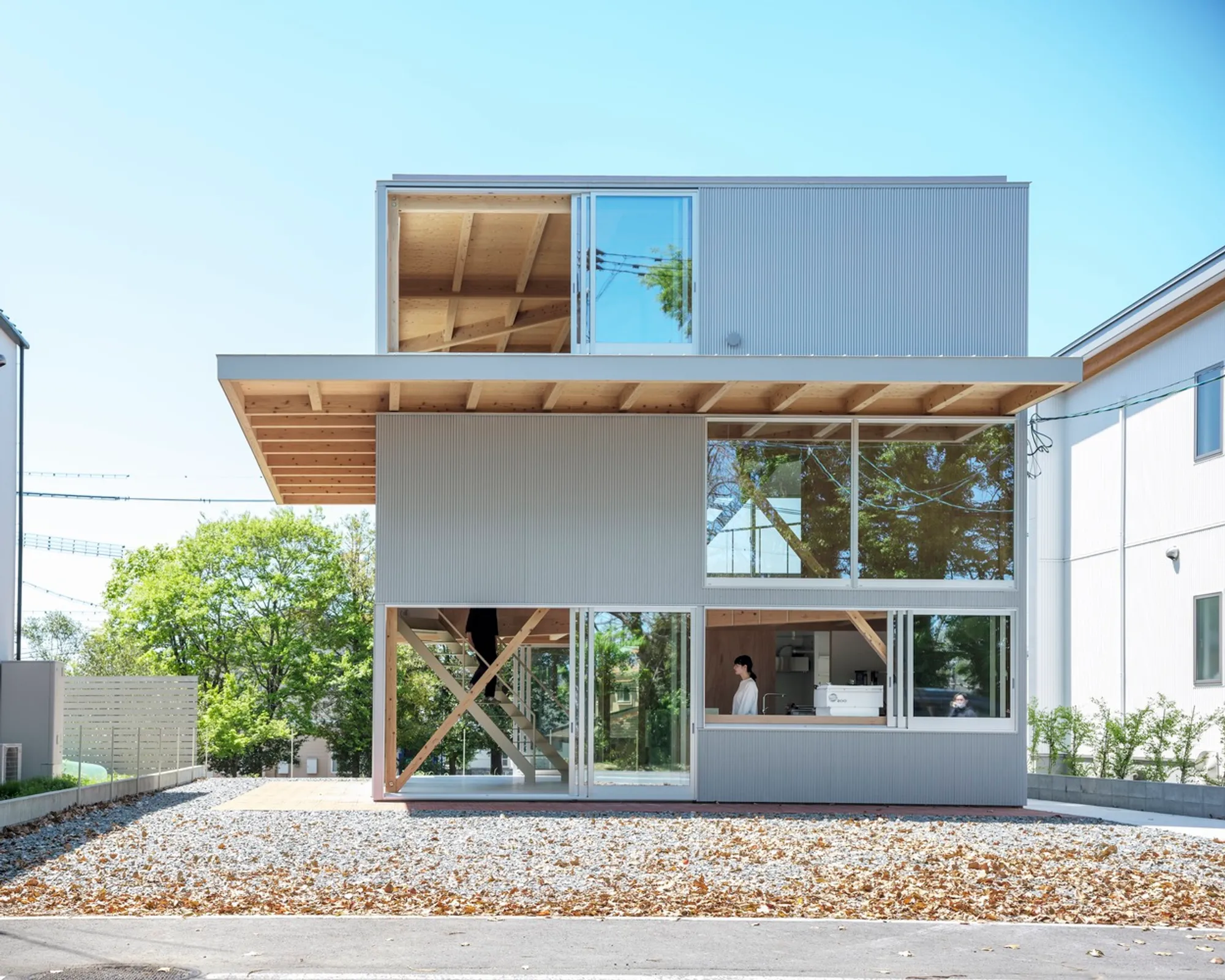
EZU House and Café by Yabashi Architects & Associates – A Fluid Blend of Living and Gathering
EZU House and Café blends living and gathering, offering a flexible lakeside residence with café, fluid spaces, and nature-connected design.


Located in Kumamoto, Japan, EZU House and Café by Yabashi architects & associates is a unique mixed-use project that redefines the relationship between private living and public hospitality. Completed in 2023, the 109 m² structure sits on a stepped lakeside terrain, offering sweeping views of gardens, rooftops, and distant mountains. This context of layered landscapes heavily influenced the architectural approach, where openness, flexibility, and connectivity became guiding principles.
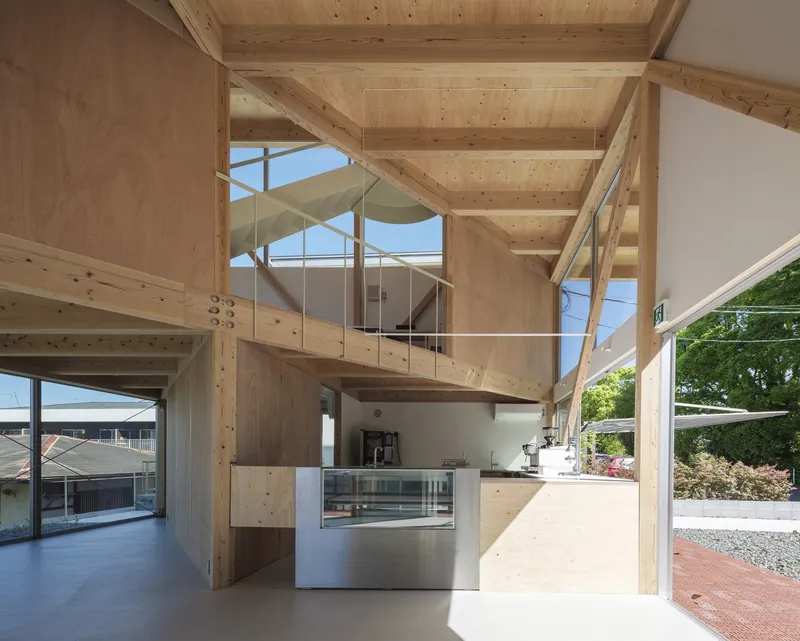
A House That Doubles as a Café
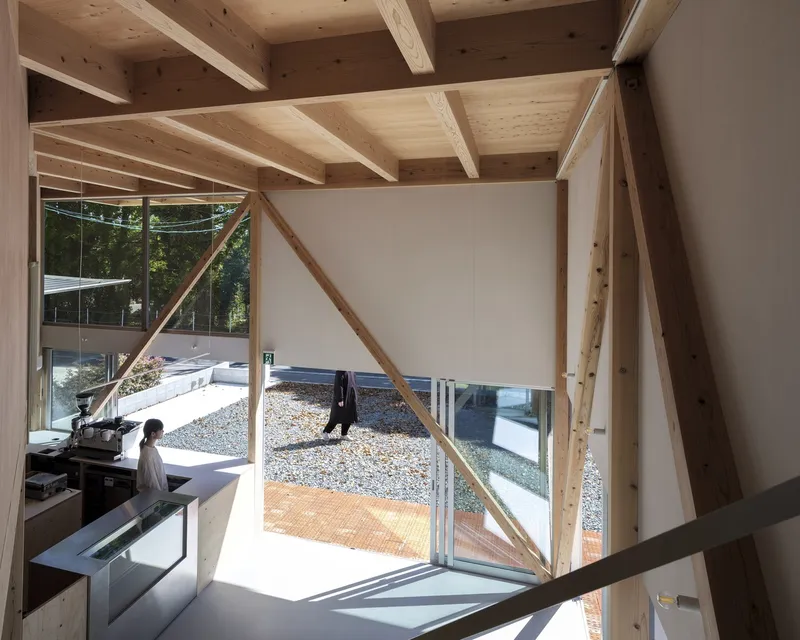
The project is conceived as a two-story residence with a café on the ground floor, envisioned by the owners as both a weekend retreat and a dynamic commercial space. Unlike conventional housing that prescribes rigid lifestyles, the design allows for adaptability—functioning as a second home while welcoming community interaction through the café. It embraces the idea of a “protective home” and an “open villa,” coexisting in one structure.
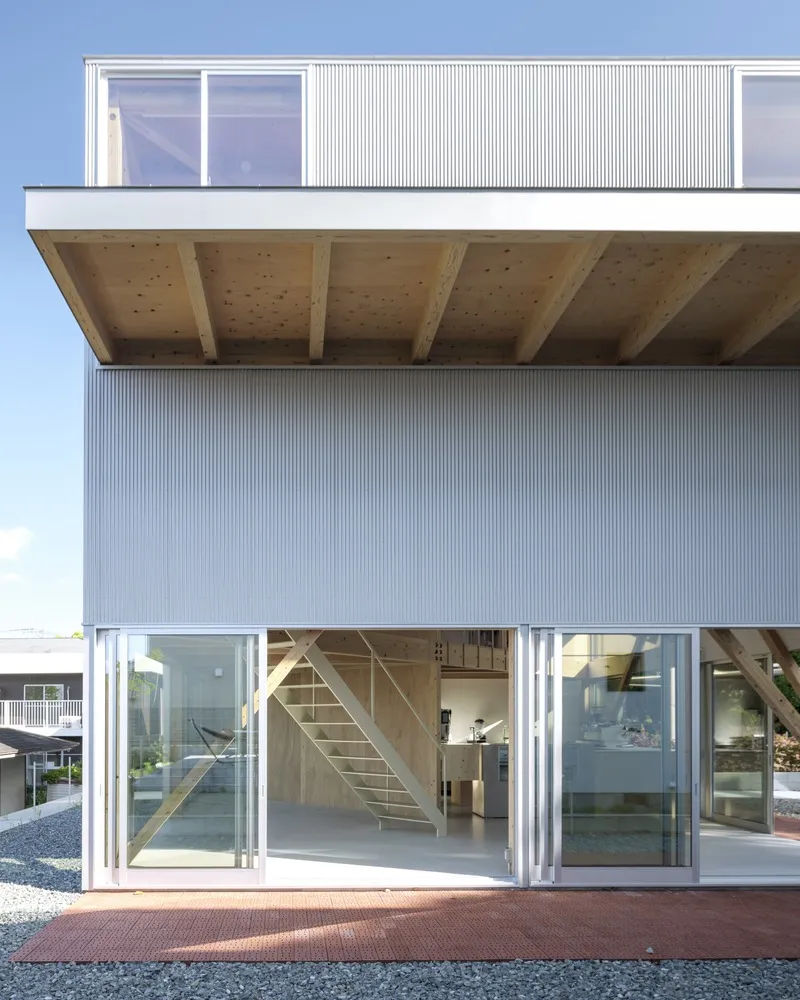
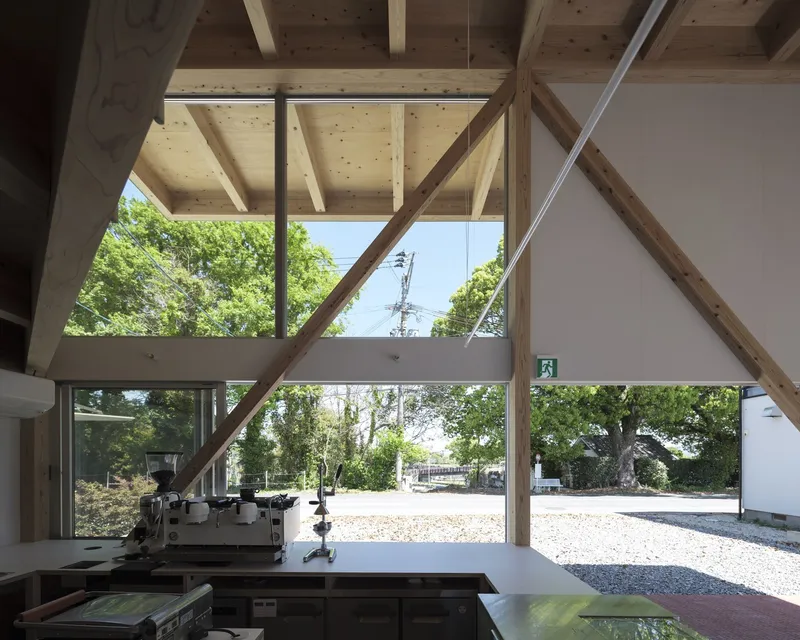
Spatial Strategy and Free Flowing Movement
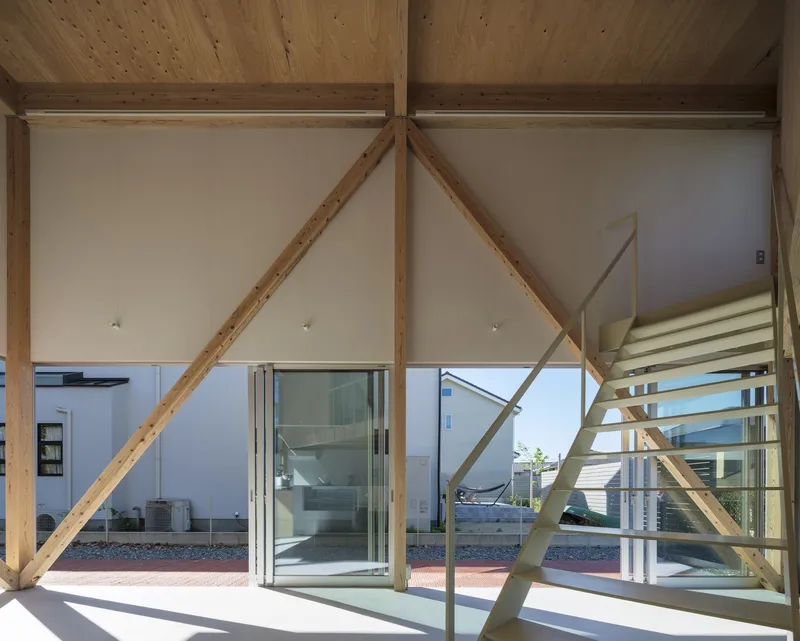
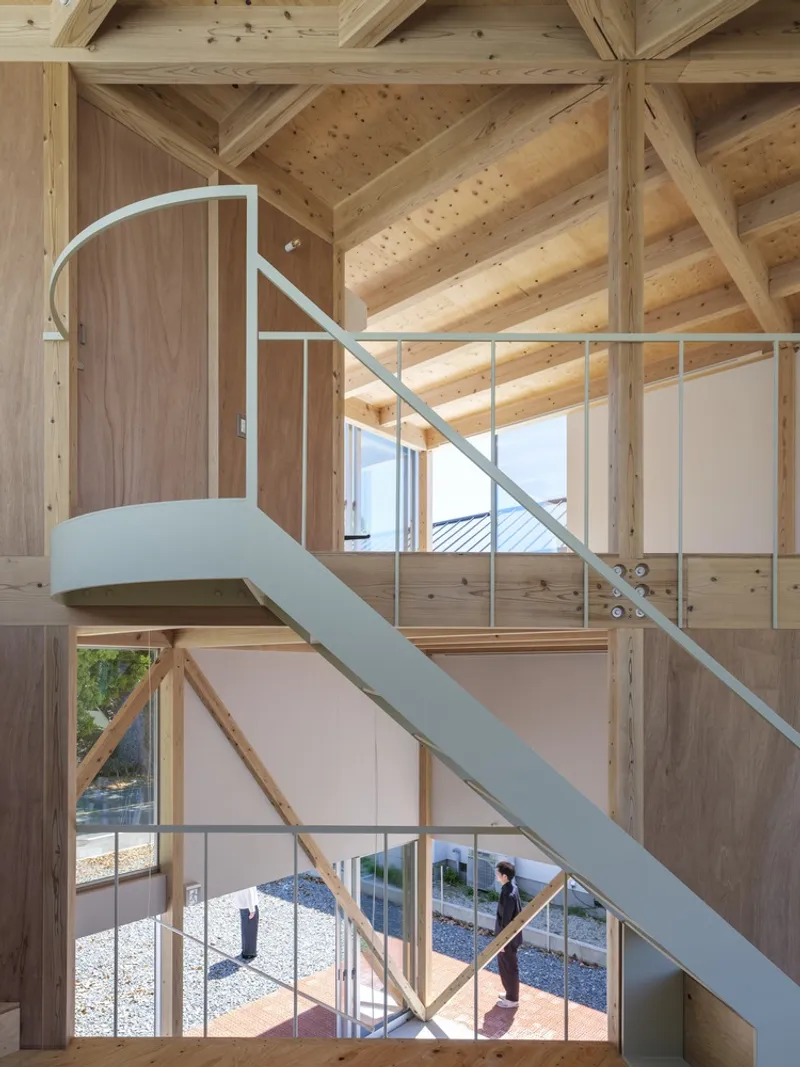
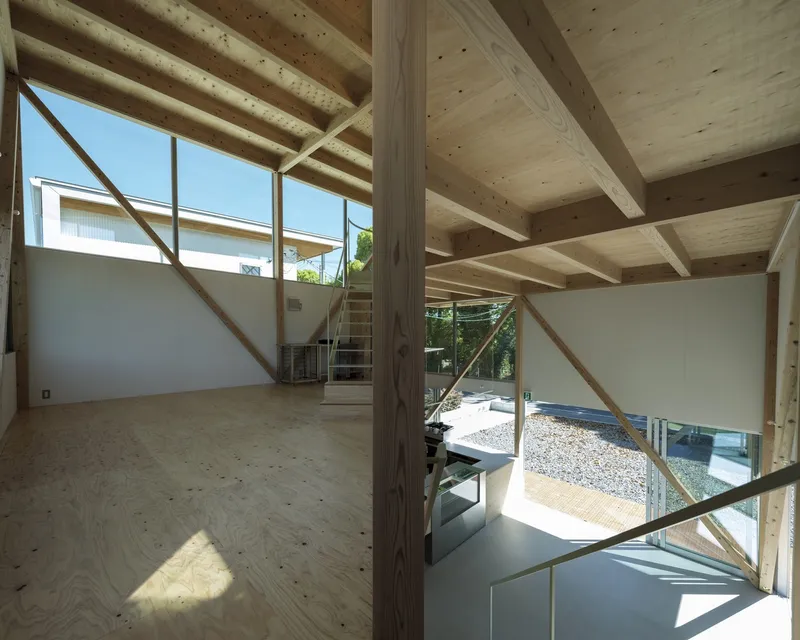
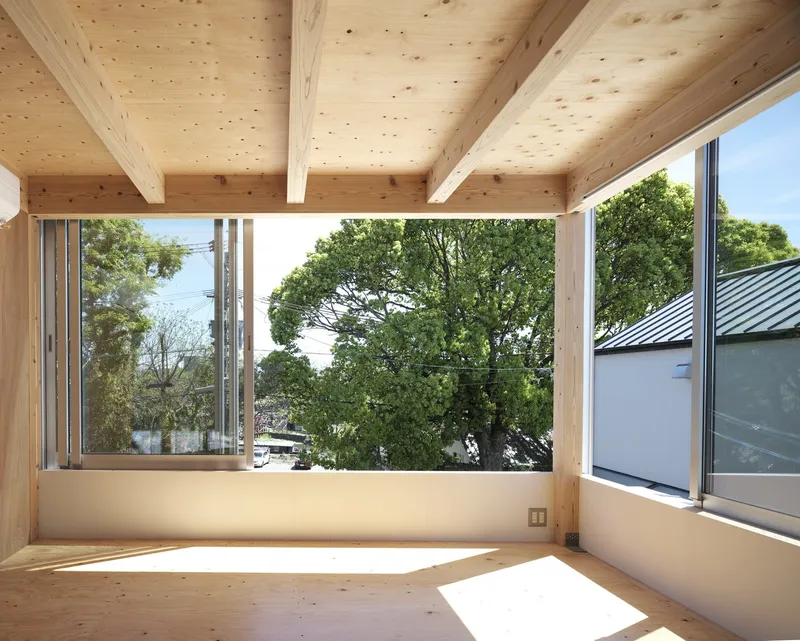
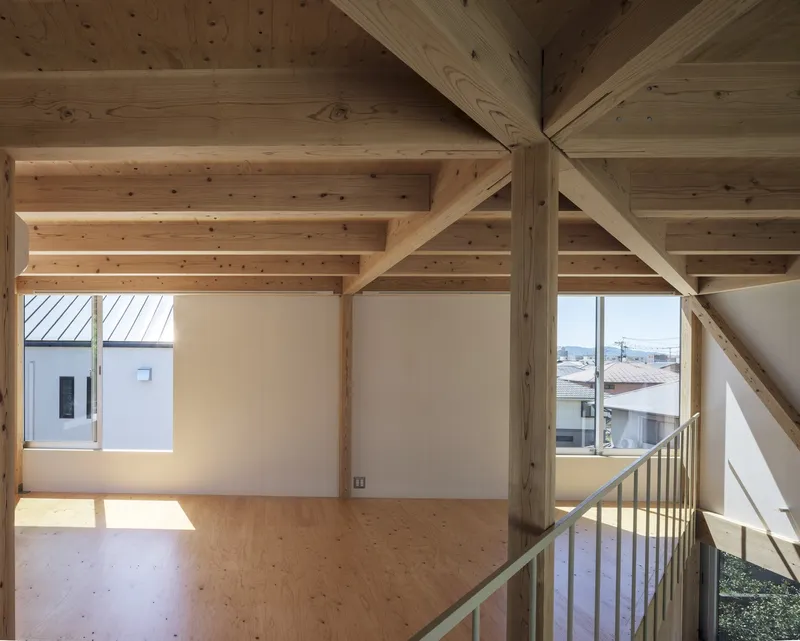
At the core of the design is a square plan with diagonally divided upper floors, creating an interlocking composition that enhances spatial diversity. By shifting levels and introducing a spiral vertical connection, the architects developed a three-layered continuous space where each floor reveals new perspectives. Rather than strict partitions, spaces remain fluid—encouraging occupants to experience changing views of the sky, greenery, and surrounding environment as they move through the house.
Minimal furniture, greenery, and essential functions characterize each level, reinforcing the idea of a “free space” where boundaries dissolve and users can shape the atmosphere to their needs.
Architecture as a Connector to Nature
The design integrates a double-layered façade that wraps the earthquake-resistant structure with insulation and wide openings. This system not only ensures safety and comfort but also maximizes visual and physical connection to the outdoors. The diagonal load-bearing walls subtly separate café and residential zones while maintaining a sense of openness—creating a continuous three-dimensional one-room house rather than segmented compartments.
Living in Motion
Movement within the house constantly reframes the environment: a shift in body position might align your gaze with distant mountains, or windows from another floor might frame the greenery outside. This dynamic play of views transforms the building into more than just a house or café—it becomes an instrument for perceiving nature, community, and time.
Al




Popular Articles
Popular articles from the community


Riyadh For All: Intergenerational Urban Design for Active Aging in Rabat
Riyadh For All reimagines urban design in Rabat with intergenerational co-living, adaptive courtyards, and Moroccan cultural exchange today.

The Ocean Hive: Sustainable Architecture for a Self-Sufficient Civilization at Sea
The Ocean Hive imagines sustainable architecture at sea, where modular habitats, algae, wave power and ocean waste sustain a growing colony.

Co-life: Sustainable Architecture for Age-Friendly Community Living
Co-life reimagines sustainable architecture for seniors through courtyards, rammed earth, shared gardens, and spaces designed for belonging.

Play: Fragments of Their World
Familiar architecture becomes modular playground design, creating safe spaces where displaced children can learn, connect, imagine and play.


Similar Reads
You might also enjoy these articles


Hodi-Mandai Geram
Project Function: Preservation and revitalization of the Intangible heritage and socio-spatial identity of the Hodi by Housing, Cultural Memory Center, Sacred Grove, landscape, local tourism economy


Olio Towers: A Mid-Rise for Performers That Fuses Housing, Rehearsal, and Stage
Located blocks from Houston's Theater District, this modular tower stacks living units around a central performance atrium.

Oasis: Modular Green Housing Carved into Dhaka's Urban Fabric
A shortlisted Plugin Housing entry reclaims unauthorized settlements in Dhaka with stepped concrete volumes, green roofs, and ventilation-driven design.

Black Hole: A Floating Megastructure for the Post-Physical Era
Emiliano Mazzarotto envisions a spherical, self-scaling arena where e-sports, digital hotels, and holographic stadiums replace traditional public space.

Explore Housing Competitions
Discover active competitions in this discipline



Challenge to reimagine the Iron Throne


Photograph architecture without architects


Illustrate the lost glory of Angkor Wat - Render Challenge


Design challenge to reuse E-waste
Comments (0)
Please login or sign up to add comments
No comments yet. Be the first to comment!