
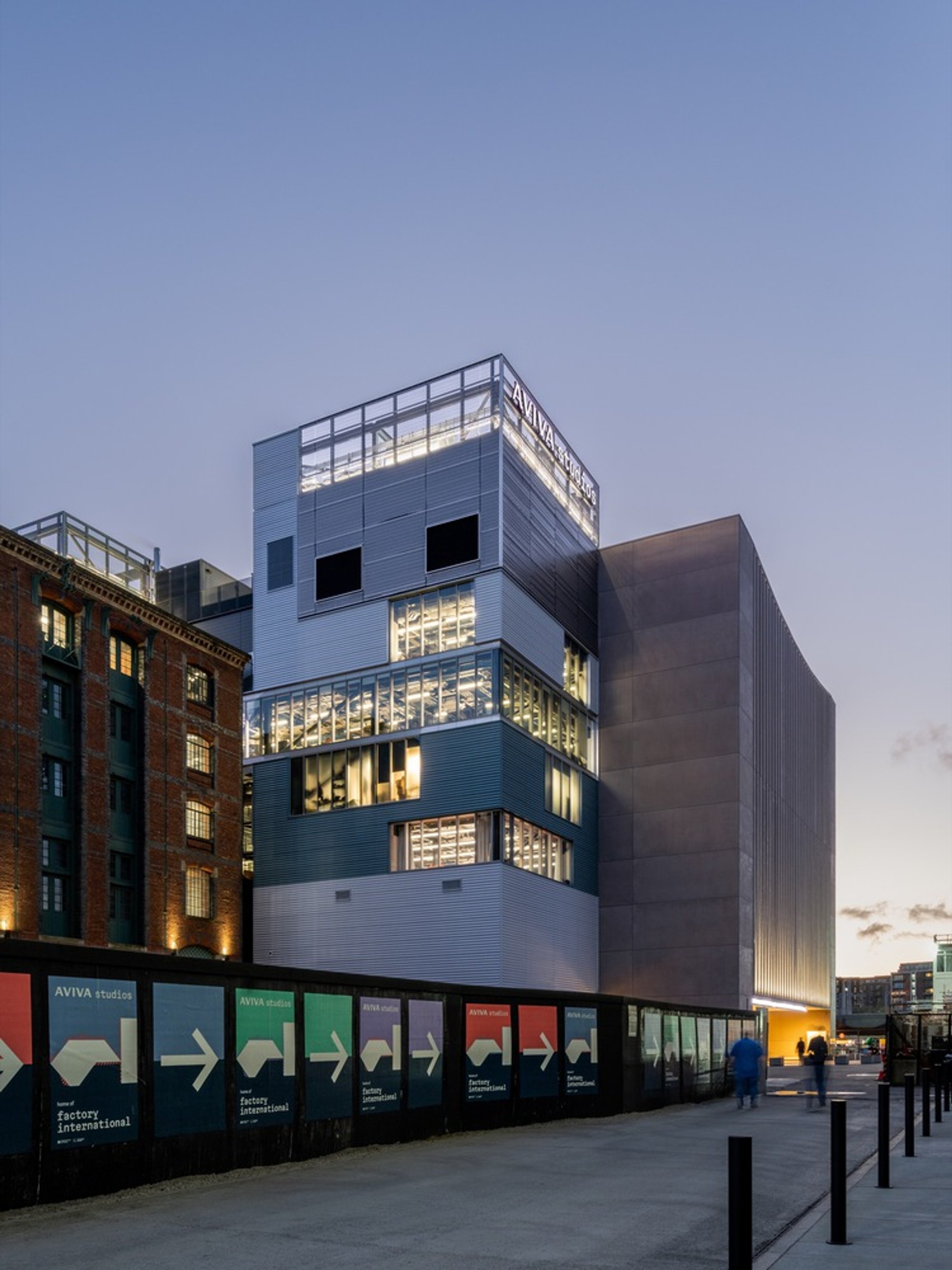
OMA Gives Manchester a Shape-Shifting Cultural Engine on the River Irwell
Factory International Aviva Studios stacks two acoustically isolated performance volumes over a Victorian rail line in St. John's Quarter.

Manchester spent decades losing the raw, cavernous spaces that once fueled its music and art scenes. Post-industrial warehouses were demolished or converted into flats, and the biennial Manchester International Festival was left scrambling for temporary venues across the city. Factory International Aviva Studios, designed by OMA and completed on a 1.8-hectare site in St. John's Quarter, is the direct answer to that problem: a 13,350-square-metre building engineered from the ground up to host almost any configuration of live performance, exhibition, or hybrid event imaginable.
What makes the project genuinely unusual is not its scale but its structural philosophy. OMA did not design a theatre or a gallery or a concert hall. It designed a box-in-box system, two acoustically isolated inner volumes (a warehouse and a hall) nested inside a larger steel-framed shell, separated by voids up to 2.5 metres thick. The result is a building that can run a ballet and an industrial noise concert simultaneously without a decibel of bleed, or throw open a pair of 60-tonne proscenium doors and merge everything into a single 5,000-capacity space. That kind of flexibility is typically described in competition briefs and then quietly abandoned during value engineering. Here, OMA and engineers Buro Happold actually built it.
Industrial Skin, Urban Gesture
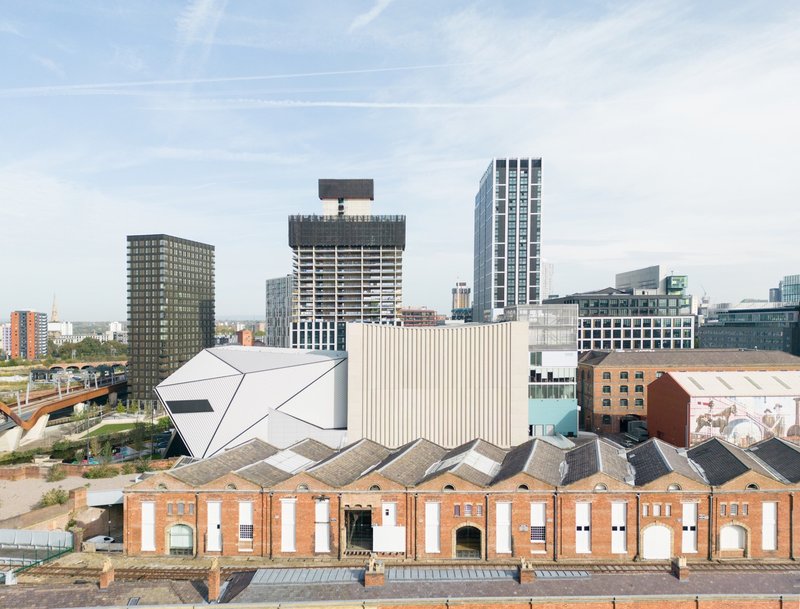
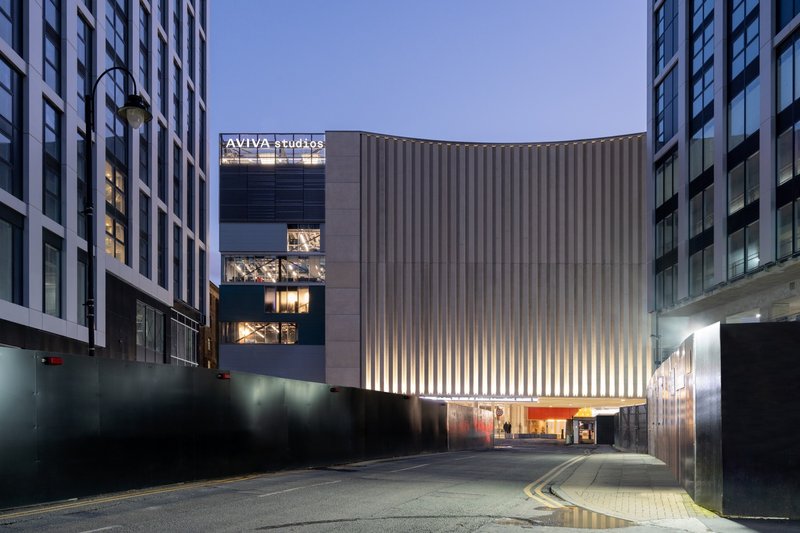
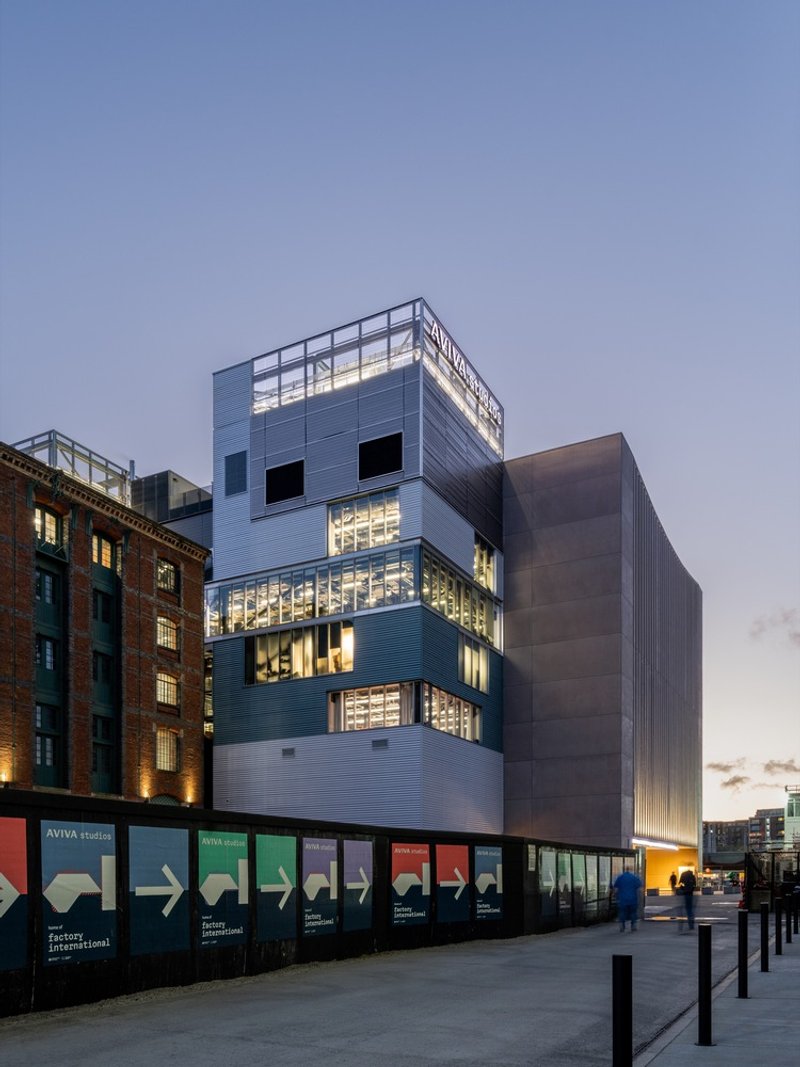
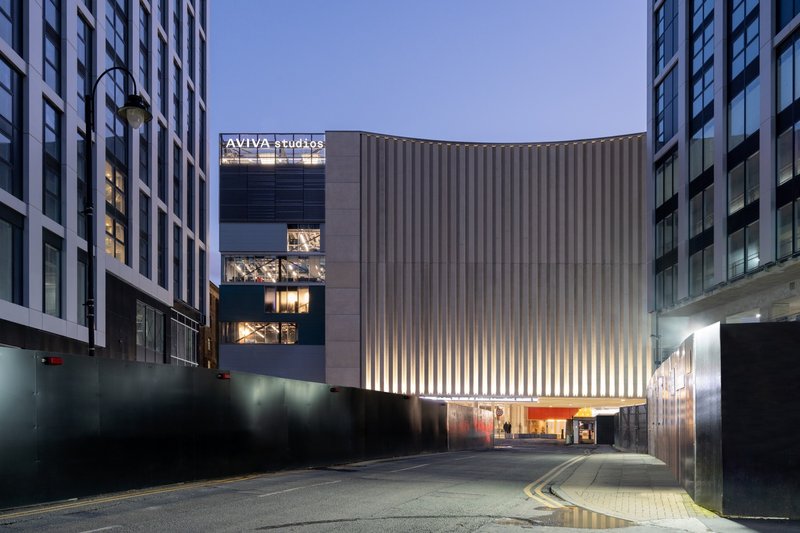
From the air, Factory International reads as a pale, angular mass rising above the red brick grain of the surrounding conservation area. Corrugated metal and 300mm-thick concrete panels form the outer box, a deliberately rough envelope that refuses the polished curtain-wall aesthetic of Manchester's commercial boom. The choice is pointed: this is a building that wants to recall the industrial shells it replaces, not the glass-faced residential towers multiplying around it.
At street level, the massing lifts over Water Street, creating a covered public threshold that reconnects pedestrians with the River Irwell. The cantilevered volume is not decorative. A 23-metre-long truss weighing 125 tonnes supports the proscenium doors above, while a larger cantilever diverts 5,000 tonnes of structural load around a central mega column. OMA turned the engineering necessity of spanning a road into the building's most legible civic move.
A Bridge Between Eras
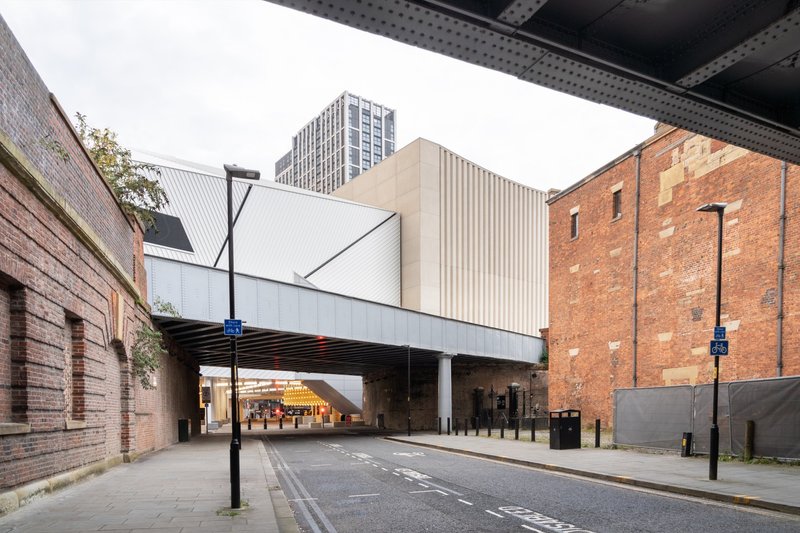
The most surprising moment in the building's massing occurs where the new white volume meets a pair of retained 19th-century brick warehouses. Rather than pulling back deferentially, OMA bridges directly over the older structures, creating a compressed street-level passage at dusk that feels almost like passing beneath a railway viaduct. The gesture is confrontational in the best sense: it acknowledges the industrial past not by mimicking it but by physically incorporating it into the new circulation sequence.
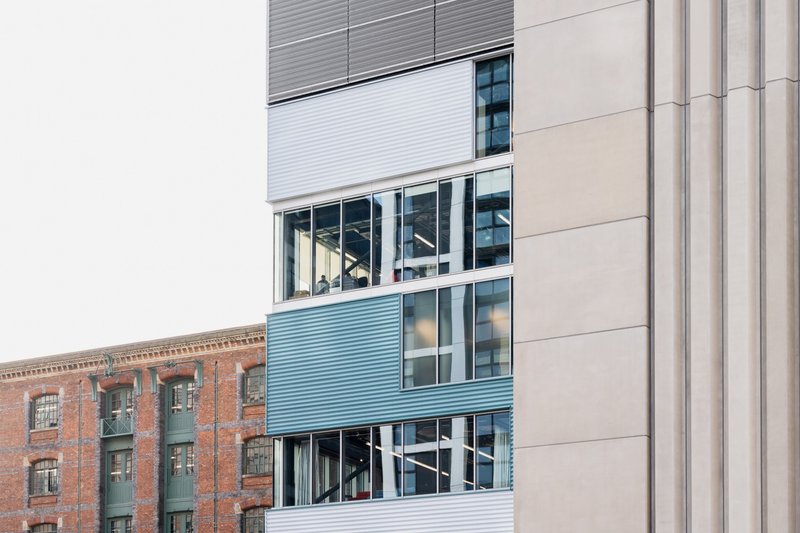
Stacked corrugated panels in white and blue, punctuated by horizontal glazing bands, expose the stairwells that knit the foyer levels together. The material language is relentlessly honest: exposed steel connections, rough concrete, no applied finishes. It reads less like a prestige arts venue and more like a place where things get made.
The Warehouse: 5,000 People and 200 Tonnes of Rigging
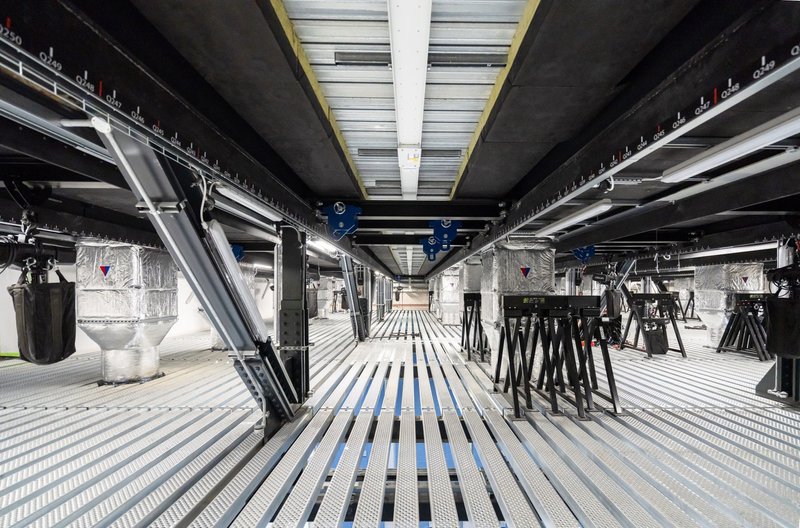
The warehouse space, 68 metres long, 34 metres wide, and 20 metres high, is the operational heart of Factory International. Its ceiling grid spans 30 by 66 metres and contains 170 strong points, each rated to hold a tonne. Two runway beams allow crane-mounted exhibits to traverse the full length of the room. Long-span steel trusses overhead support 200 tonnes of rigging capacity, a number more commonly associated with arena tours than arts institutions.
Two supersized moveable "Multiwalls," each 21 metres tall and acoustically insulated, can subdivide the warehouse into smaller rooms or retract to open the full volume. The 200mm-thick precast concrete panels forming the inner box sit on acoustic bearings, decoupled from the main steel frame. It is a level of isolation engineering that treats sound as a material condition rather than an afterthought.
The Hall: Flexible Proscenium
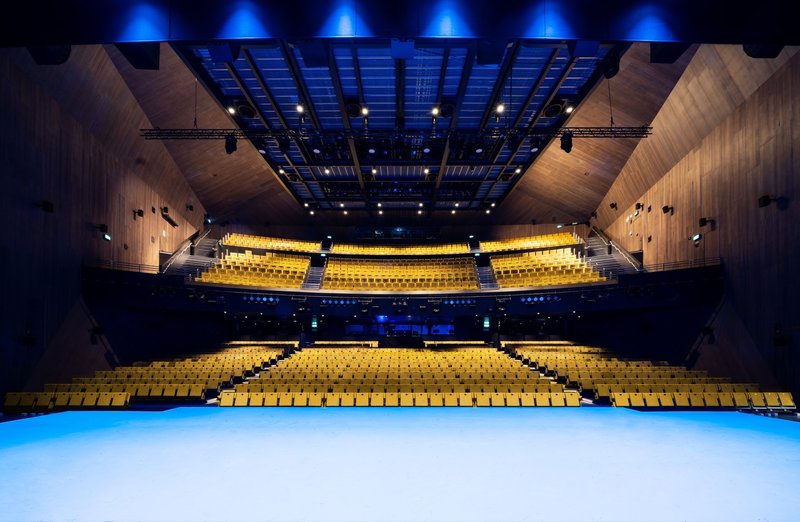
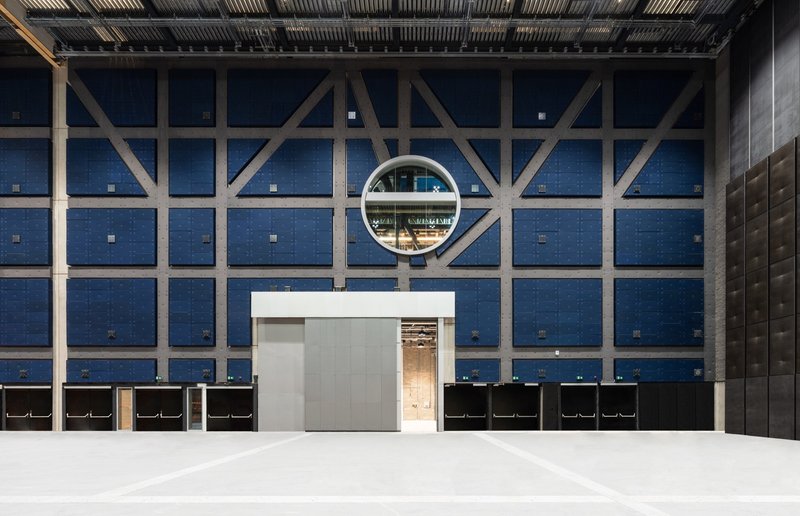
The 1,600-seat auditorium complements the warehouse with a more traditional proscenium format, but the word "traditional" needs heavy qualification. The stage can extend to 45 metres deep when the 60-tonne acoustic doors rise and the hall merges into the warehouse behind. An orchestra pit accommodates 80 musicians. Tiered yellow seating faces a stage bathed in blue light beneath exposed acoustic panels, and the overall atmosphere is closer to an experimental black box than a Victorian opera house.
The connection between the two volumes is the building's party trick. A 33-metre-long bar on the foyer level is split in two by the structural element OMA calls the "mega pig," the concrete and steel node that holds up the proscenium arch. It is the kind of detail that turns engineering into narrative: you drink a beer leaning against the thing that keeps the entire theatrical apparatus from collapsing.
Working Interiors and Public Life
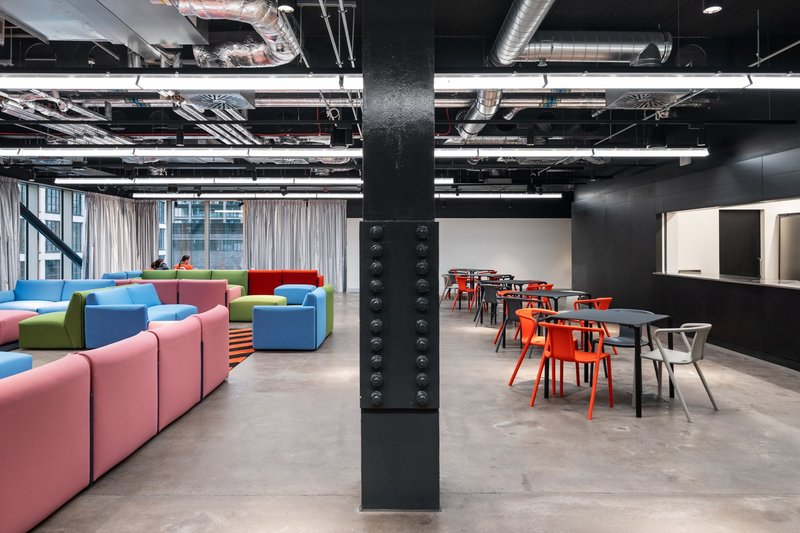
Above the main performance levels, multi-use foyers on Levels 2 and 3 double as workspaces, rehearsal areas, and casual gathering points. Colorful modular seating and orange dining chairs sit beneath exposed mechanical systems, and the atmosphere is deliberately informal. OMA made the decision early on that the foyers should feel like occupied studios rather than grand lobbies, and the fit-out follows through on that commitment.
The blue acoustic tile walls and circular portal windows in the reception areas push the interior palette toward something playful, even Pop. It is a clear nod to the graphic sensibility of Ben Kelly and Peter Saville, whose work for Factory Records defined Manchester's visual identity in the 1980s. OMA does not quote that legacy literally but absorbs its attitude: bold color, industrial texture, zero preciousness.
Why This Project Matters
Most new cultural buildings hedge their bets. They offer one fixed format, a concert hall or a gallery, and call it "world-class." Factory International is interesting because it refuses that specificity entirely. The entire structural apparatus, the box-in-box isolation, the moveable walls, the crane-rated trusses, the retractable proscenium doors, exists to keep the building's identity permanently open. It is a venue designed to be reconfigured by every artist who walks through it, which is a fundamentally different proposition from a venue designed to be admired.
For Manchester, the building also solves a concrete urban problem. The St. John's Quarter site, once home to Granada Television studios, had stalled between heritage nostalgia and developer ambition. By lifting its volume over Water Street, retaining the flanking brick warehouses, and opening new public ground toward the River Irwell, OMA gives the neighborhood a piece of infrastructure that works for the city even when no performance is scheduled. That dual utility, cultural machine and urban connector, is what separates a landmark from a logo.
Factory International Aviva Studios by OMA. Location: Manchester, United Kingdom. Area: 13,350 square metres. Photographs by Marco Cappelletti.
About the Studio
Share Your Own Work on uni.xyz
If projects like this are the kind of work you want to make, uni.xyz is a place to publish your own, find collaborators, and enter design competitions.




Popular Articles
Popular articles from the community

YOAP Architects Round a Corner in Yeongcheon with a Cylindrical Community Hub
A 197-square-meter brick and ribbed-clad tower turns a forgotten alley corner in South Korea into a public garden with a low threshold.
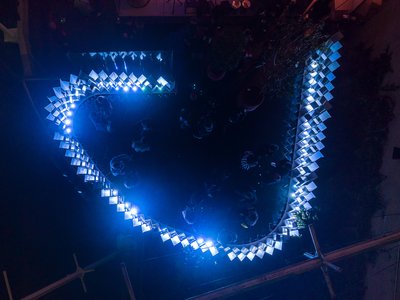
Rojkind Arquitectos and Think Parametric Build a Glueless Pavilion from 67 Interlocking Panels
A serpentine fiber-cement installation in Chapultepec Park celebrates a decade of architectural media in Mexico City.
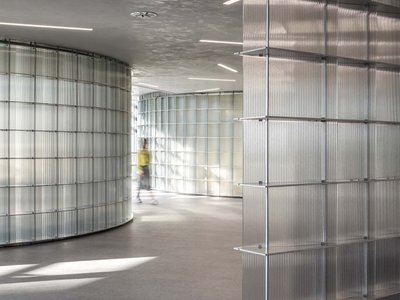
HCCH Studio Wraps a Shanghai High-Rise Office in Curved Walls of Translucent Glass
A 1,000 square meter fit-out in Lujiazui replaces the typical tech-office palette with layered glass, micro-cement, and quiet rigor.
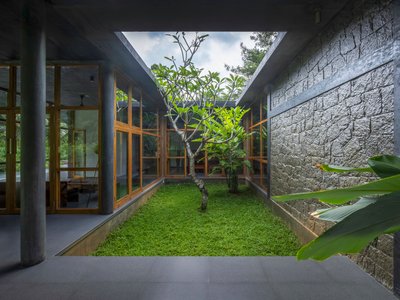
3dor Concepts Wraps a Kerala Home in Mirrored Concrete Arcs Around a Courtyard Tree
In the Western Ghats foothills of Thamarassery, a 270 m² single-story house uses two curved volumes to frame nature as its center.


Similar Reads
You might also enjoy these articles

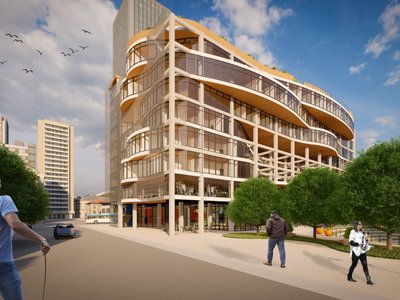
Olio Towers: A Mid-Rise for Performers That Fuses Housing, Rehearsal, and Stage
Located blocks from Houston's Theater District, this modular tower stacks living units around a central performance atrium.

Oasis: Modular Green Housing Carved into Dhaka's Urban Fabric
A shortlisted Plugin Housing entry reclaims unauthorized settlements in Dhaka with stepped concrete volumes, green roofs, and ventilation-driven design.

Black Hole: A Floating Megastructure for the Post-Physical Era
Emiliano Mazzarotto envisions a spherical, self-scaling arena where e-sports, digital hotels, and holographic stadiums replace traditional public space.
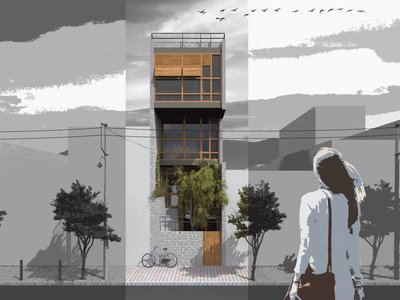
Compact & Sustainable Living in Piraeus: A Four-Level Family Home Built Around Light and Air
A narrow townhouse in one of Greece's densest port cities uses a central atrium and passive strategies to house three generations under one roof.


Explore Architecture Competitions
Discover active competitions in this discipline




The International Standard for Design Portfolios


The Global Benchmark for Architecture Dissertation Awards


The Global Benchmark for Graduation Excellence


Challenge to design an urban locus of culture and heritage
Comments (0)
Please login or sign up to add comments
No comments yet. Be the first to comment!