
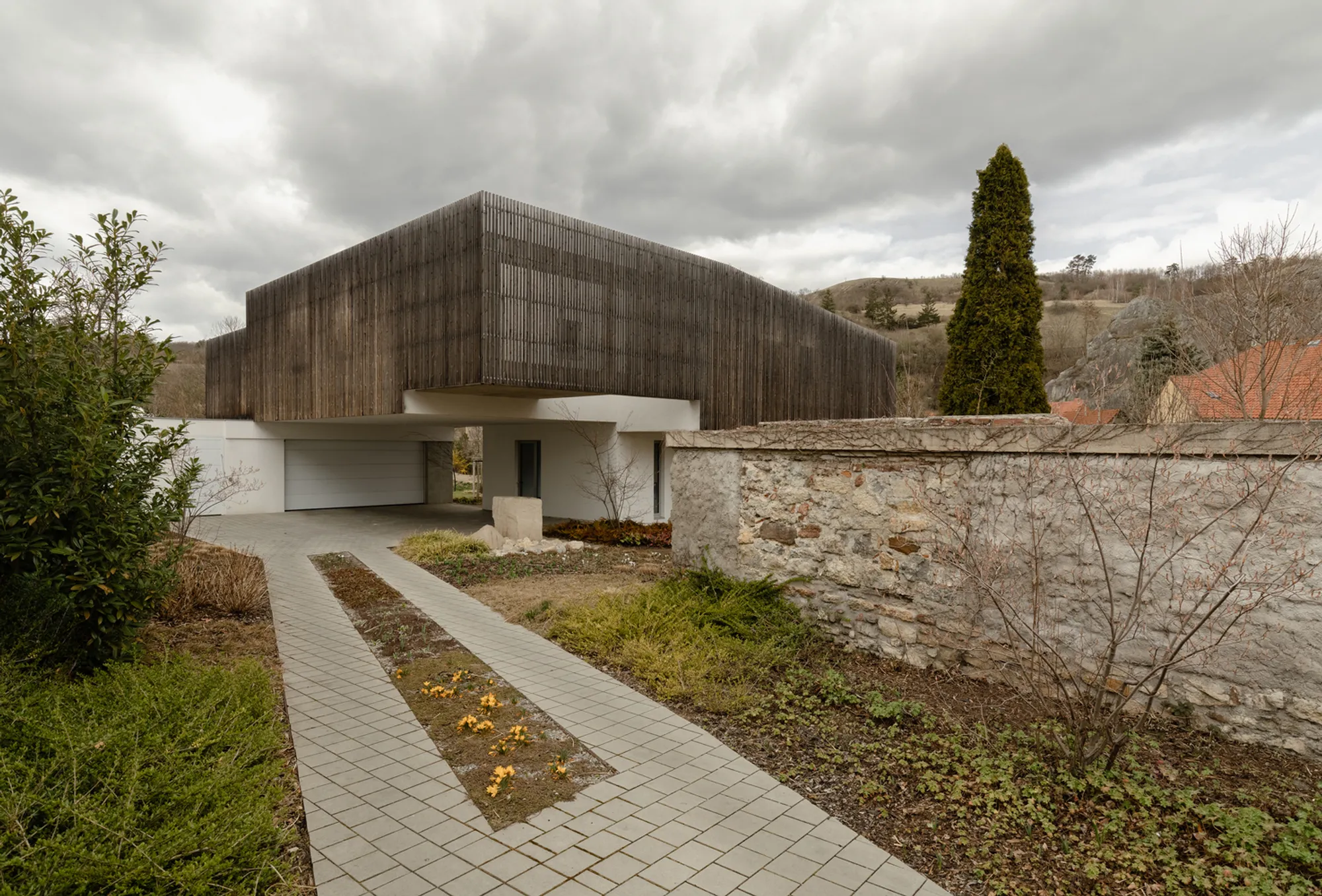
Family House Hlubocepy by RO_AR Szymon Rozwalka Architects
Family House Hlubocepy blends organic terrain and geometric design, harmonizing rocky landscape with urban context through light-filled, contemporary architecture.


A Home Between Urban and Natural Worlds
Located in Praha 5, Czechia, the Family House Hlubocepy designed by RO_AR Szymon Rozwalka architects is a striking residential project that redefines the relationship between architecture, landscape, and urban development. Completed in 2021, the 331 m² house is situated on the threshold of two contrasting environments: the natural beauty of the Dalejský Brook and the Hlubočepské Rocks to the northwest, and a fragmented urban fabric on the south and east.
This unique context shaped the form, scale, and spatial organization of the residence, creating a home that simultaneously embraces nature while distancing itself from the chaos of surrounding urban development.


Contextual Design Inspired by Landscape
The site’s bio-corridor and rock formations deeply influenced the architectural approach. From the northwest, the home opens toward nature, integrating green views into its interiors. To the south and east, the house takes on a more abstract form, acting as a protective buffer against the disorderly urban sprawl.
The design allows the house to blend with the dramatic rocky backdrop, while the orientation and form ensure optimal natural light reaches the interiors, even with challenging site conditions such as a narrow entrance and neighboring structures close to the property boundary.


Concept of Terrain Deformation
The design process began with the land deformation method—a concept where the building emerges as a continuation of the terrain. From the northwest, the landscape rises into an artificial hill, within which the home is partially embedded. From the southeast, the “hill” is cut away, forming an entrance patio and creating a distinct threshold between interior and exterior.
This dual geometry—organic curves versus rectangular cuts—shaped the essence of the house, where natural and artificial forms collide to produce a dynamic spatial experience.


Budget-Driven Adaptation
During construction, budget constraints necessitated bold design decisions. The architects chose a direct subtraction approach, cutting away “unnecessary” elements from the initial concept. This reduction, though risky, produced an architectural language of deliberate simplicity. In some areas, the minimal intervention created elegant and unexpected outcomes, while in others, compromises were more evident.
Despite these adjustments, the essential dialogue between organic and geometric forms was preserved, ensuring the project’s integrity and conceptual clarity.


Interiors: Light, Geometry, and Materiality
Inside, the interiors reflect the clash of geometries—the fluid organic rear spaces contrast with the crisp rectangular forms toward the front. Large windows maximize daylight and views, while material choices such as concrete, wood, and glass create a warm yet robust atmosphere.
Structural and technical contributions from STATIKA Olomouc and Projekce TZB Prokeš supported the architectural vision, while landscape design by Flera reinforced the seamless integration of nature with built form.
- Architects: RO_AR Szymon Rozwalka architects
- Location: Praha 5, Czechia
- Area: 331 m²
- Year: 2021
- Photography: Viola Hertelová
- Manufacturers: TON, Artemide, Asilo, Brokis, Ceramica Vogue, Delta Light, Entra, Ragno, Schüco, VitrA
- Structural Engineer: STATIKA Olomouc
- Building Services Engineering: Projekce TZB Prokeš, Jaroslav Prokeš
- Landscape Architect: Flera

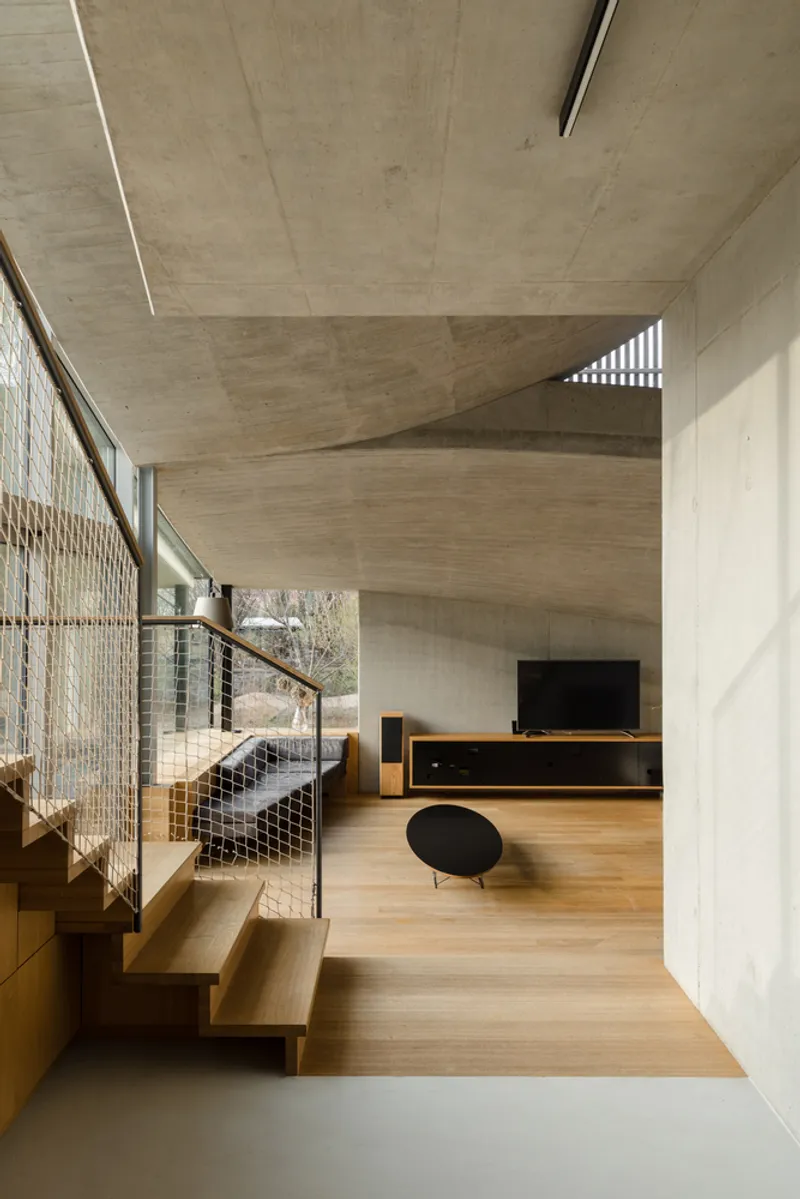
The Family House Hlubocepy is more than a private residence—it is an architectural dialogue between city and nature, between organic and geometric forms, and between budgetary pragmatism and creative vision. By grounding the home in its unique topography and ecological context, RO_AR Szymon Rozwalka architects created a distinctive project that resonates with its surroundings while offering a modern sanctuary for its inhabitants.
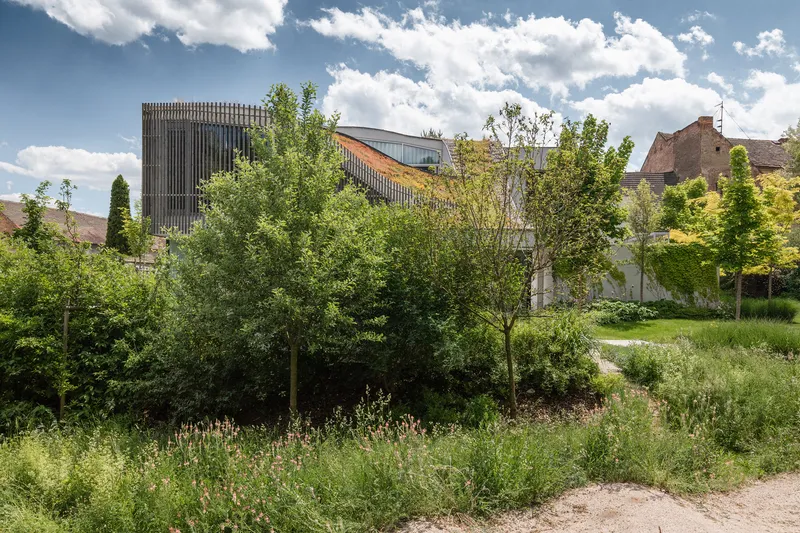
All Photographs are works of Viola Hertelová




Popular Articles
Popular articles from the community


The Ocean Hive: Sustainable Architecture for a Self-Sufficient Civilization at Sea
The Ocean Hive imagines sustainable architecture at sea, where modular habitats, algae, wave power and ocean waste sustain a growing colony.

Co-Life: Senior Housing Design That Reconnects Older Adults With the City
Co-Life reimagines senior housing design through healing gardens, shared streets, workshops, and a sustainable community across generations.

Co-life: Sustainable Architecture for Age-Friendly Community Living
Co-life reimagines sustainable architecture for seniors through courtyards, rammed earth, shared gardens, and spaces designed for belonging.

Riyadh For All: Intergenerational Urban Design for Active Aging in Rabat
Riyadh For All reimagines urban design in Rabat with intergenerational co-living, adaptive courtyards, and Moroccan cultural exchange today.
Similar Reads
You might also enjoy these articles


Hodi-Mandai Geram
Project Function: Preservation and revitalization of the Intangible heritage and socio-spatial identity of the Hodi by Housing, Cultural Memory Center, Sacred Grove, landscape, local tourism economy


Olio Towers: A Mid-Rise for Performers That Fuses Housing, Rehearsal, and Stage
Located blocks from Houston's Theater District, this modular tower stacks living units around a central performance atrium.

Oasis: Modular Green Housing Carved into Dhaka's Urban Fabric
A shortlisted Plugin Housing entry reclaims unauthorized settlements in Dhaka with stepped concrete volumes, green roofs, and ventilation-driven design.

Black Hole: A Floating Megastructure for the Post-Physical Era
Emiliano Mazzarotto envisions a spherical, self-scaling arena where e-sports, digital hotels, and holographic stadiums replace traditional public space.

Explore Archip Prague Competitions
Discover active competitions in this discipline



Challenge to reimagine the Iron Throne


Photograph architecture without architects


Illustrate the lost glory of Angkor Wat - Render Challenge


Design challenge to reuse E-waste
Comments (0)
Please login or sign up to add comments
No comments yet. Be the first to comment!