
FAQ Question
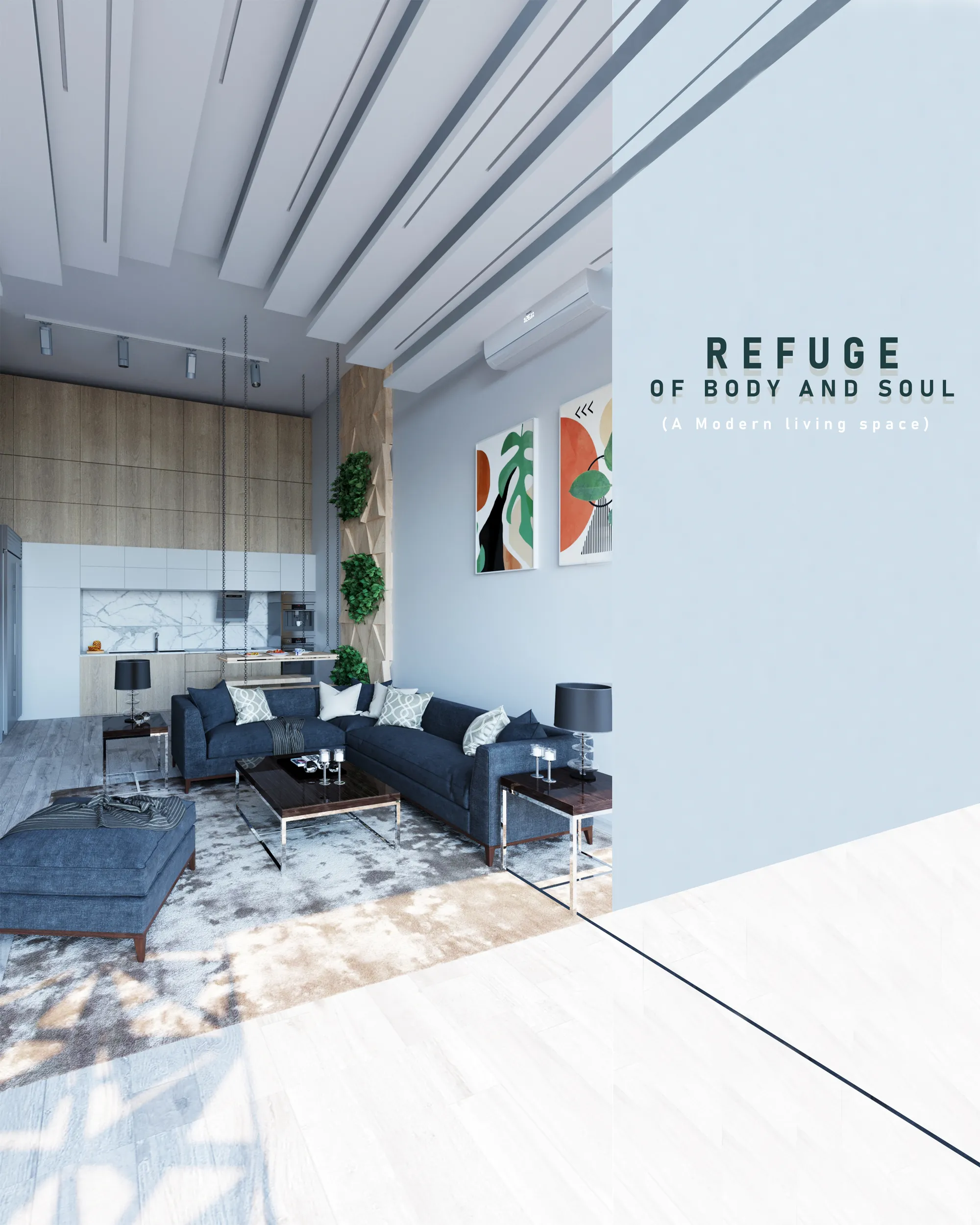
"refuge of body and soul"
1.
Q. What was the concept behind the project?
A. Throughout history, responding to changing conditions and new needs has always been an integral part of architecture. Adapting the architecture to environmental changes and user performance changes is a desirable goal that has existed in different eras and has been difficult to achieve due to the lack of required technology. Due to the growth of urbanization, the need for multi-functional and flexible spaces is felt more than ever. Today, with advances in technology, it is increasingly possible to create a flexible architecture that adapts to the changes that have taken place. Flexibility has a variety of variability, adaptability to variability over time. Although architectural space is a well-defined space, for various reasons it may be necessary to change design patterns to change the functional structure of home spaces. Residential spaces are one of the most important spaces in the whole world. Because each person spends more time in this space during his life. It is very important to pay attention to the design of this space, both in terms of its physical body and the psychological impact of the created spaces . In the current situation, due to the increasing population of migration to cities, providing housing has become one of the main needs of society. The importance of mass production of housing units is more important than ever. Attention to demand has increased, units that are designed without considering the principles of interior architecture without analyzing the wide range of different needs of individuals, so many of the needs will not meet the needs of family members. This proposal is a relatively small living space for a family of three in the center of Isfahan, which aims to meet the needs of residents in various modes and at different times of the day and year. This design is modeled on traditional Iranian architecture, which has always paid attention to climate and sustainability issues.
2.
Q. What was the intent behind the organization of elements across various levels (Architectural, Site, Urban)?
A. The objectives of the project are considered in different comparisons. At the urban level, attention has been paid to Iranian architecture and the architectural background of Isfahan, as well as hot and dry climate issues. At the scale of the site for design, site analysis was performed to extract optimal orientations. At the scale of architecture, the pattern of traditional Iranian houses in Isfahan was examined to be inspired by those patterns and pay attention to the principles of flexibility and stability of Iranian architecture. Design a new living space for the new generation.
3.
Q. How many iterations were tried to arrive at the final outcome?
A. In the design process, first one of the modes (sizes) presented in the link (brief) of the competition was selected according to the needs and proportions. Then, the patterns used in Iranian architecture that lead to optimal and suitable states of different functions were extracted. After that, according to the different needs of the residents of this living space, as well as according to the dimensions and blocks and its orientation on the site, the said patterns were used to find the best plans and sections. Flexibility and use of Iranian architectural patterns and concepts have been the principles and goals of this design. Therefore, each time the elements are moved and a new space is created, one of the Iranian proportions is formed
4.
Q. How was a specific objective attempted to be met ?
A. The purpose of this design is how to create new spaces based on the different needs of residents over time with simple changes increase or decrease in the physical structure of the interior space and create a variety of spatial qualities. This goal was achieved by modeling the concepts of traditional Iranian architecture, which is especially evident in the hot and dry climate of Iran, ie cities such as Isfahan (the bed of the site). Nowadays, changing the direction of modular houses is not important for the designer. But this plan pays full attention to geographical directions. Due to the climate of Isfahan, we designed the house to the south and we will never accept the rotation of this block to the other side.
5.
Q. What/How were the materials chosen?
A. To select the materials used in the interior design of this living space, many things have been considered. Therefore, for interior walls, non-load bearing 3D-pannels with very low thickness have been used. Wooden parts have also been used for moving elements. The percentage of glass is selected according to the hot and dry climate and according to the existing standards of this climate. The building elements are often covered in bright colors to give the occupants a greater sense of space. Also, wood and greenery have been used to bring a sense of nature into the building.
6.
Q. What is the expansion plan of the project?
A. Iranian hexagonal and rectangular patterns and proportions, according to their geometry, can be expanded as well as made larger or smaller, without disturbing the proportions or spatial relations.
7.
Q. How will the project transform with the passing time?
A. Flexibility makes sense when a system can change space to suit needs without changing its essence or key elements. Flexibility is one of the most basic indicators of traditional Iranian architecture that today, according to the various human needs, can be considered as a solution to create suitable residential spaces, considering the health of the body, soul and human impact from the living environment. Be. Since the constituent elements of space define that space; So for a space to be flexible, these factors must also be flexible. This project has tried to combine the constituent elements of space with each other and has challenged the independence of these elements. In this way, the role of the ceiling, walls, doors and openings are combined with each other and are designed in a flexible way that can change over time and according to the needs of the residents, creating different spaces. The result is a small house that, in addition to reducing the cost of material savings, provides people with desirable, wellproportioned spaces that reduce the adverse effects of reducing area.


Popular Articles
Popular articles from the community


The Earth Pod: 3D Printed Homes for Resilient Refugee Communities
The Earth Pod reimagines refugee housing through 3D printed homes made from clay, combining resilience, self-sufficiency, and rapid shelter.

Co-life: Sustainable Architecture for Age-Friendly Community Living
Co-life reimagines sustainable architecture for seniors through courtyards, rammed earth, shared gardens, and spaces designed for belonging.

Conexión: Biophilic Design Reimagines High-Rise Living in Hong Kong
Conexión reimagines high-rise living in Hong Kong through biophilic design, green facades, shared spaces, daylight, water and nature within.

The Ocean Hive: Sustainable Architecture for a Self-Sufficient Civilization at Sea
The Ocean Hive imagines sustainable architecture at sea, where modular habitats, algae, wave power and ocean waste sustain a growing colony.


Similar Reads
You might also enjoy these articles
The Rhythm of Seasons
A Farmers' Market Connecting Nature and the City

More Than a Building-Designing a Living System
More Than a Building-Designing a Living System
Base Beyond
DESERT COMPOUND ARID: TOURISM OF ABSENCE AND ABUNDANCE

Explore Flexible Spaces Competitions
Discover active competitions in this discipline




Challenge to reimagine the Iron Throne


Photograph architecture without architects


Illustrate the lost glory of Angkor Wat - Render Challenge


Design challenge to reuse E-waste
Comments (0)
Please login or sign up to add comments
No comments yet. Be the first to comment!