
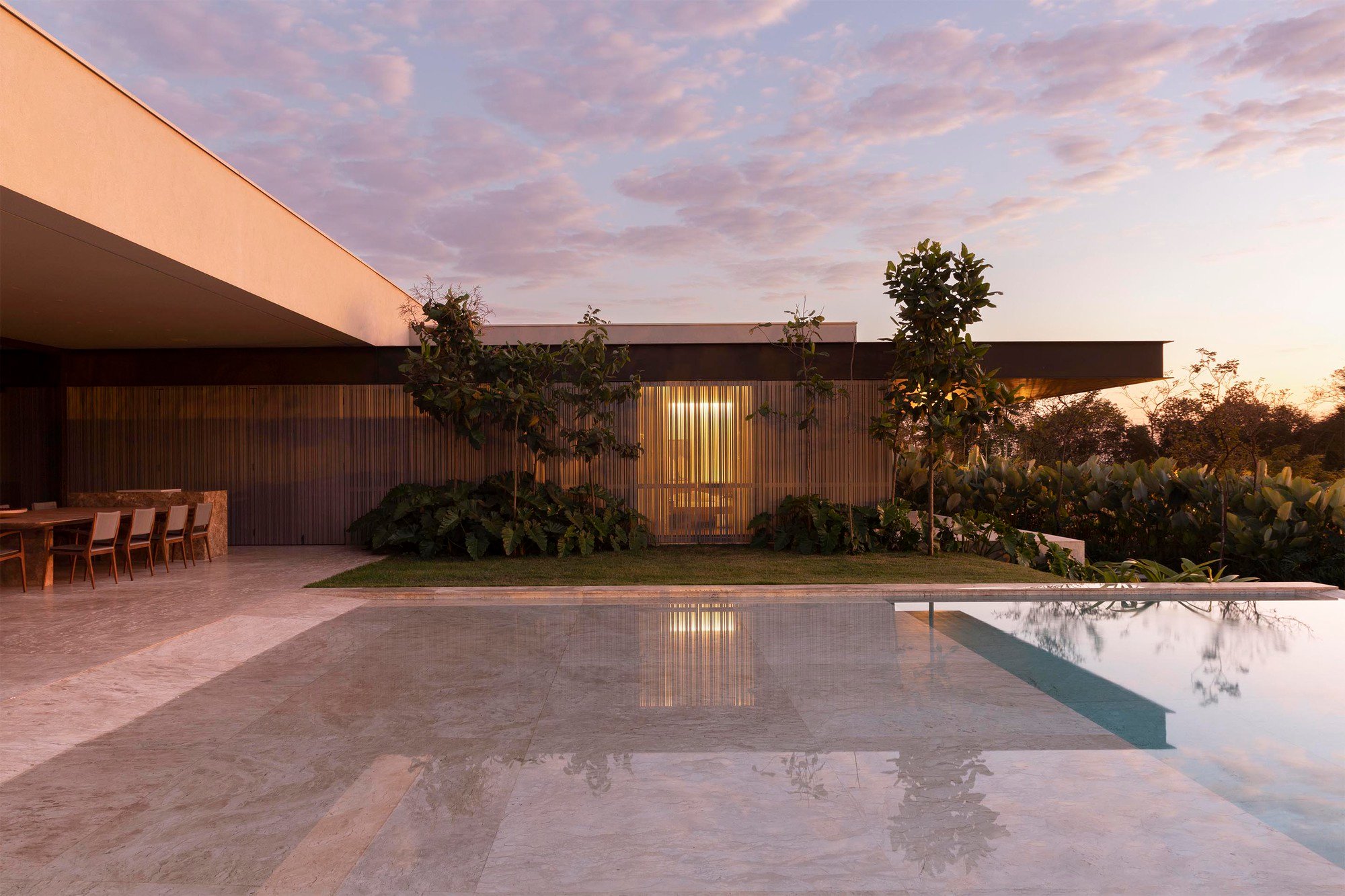
FE House: Ground-Floor Living in Ribeirão Preto
N2B Arquitetura designed a 1,020 m² single-storey house in inland São Paulo that resolves a generous programme as both home and refuge.

Ribeirão Preto is one of the wealthiest inland cities in São Paulo state, a place where agribusiness money meets a growing appetite for contemporary architecture. FE House, completed in 2022 by N2B Arquitetura, sits in this context: a 1,020 square metre ground-floor residence that was designed to be both a house and a refuge.
That dual brief, home and sanctuary, is not unusual. What makes FE House worth studying is how literally the architects took it. The programme is resolved entirely on a single level, with social areas flowing into leisure spaces, intimate rooms separated by a quiet corridor, and a service zone for the pool buried underground. The house spreads, but it never sprawls.
Ground-Floor Living, Done Right
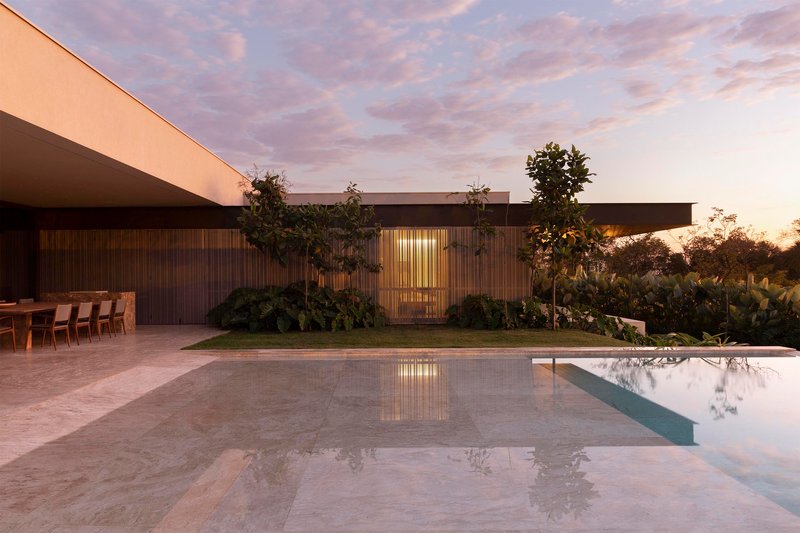

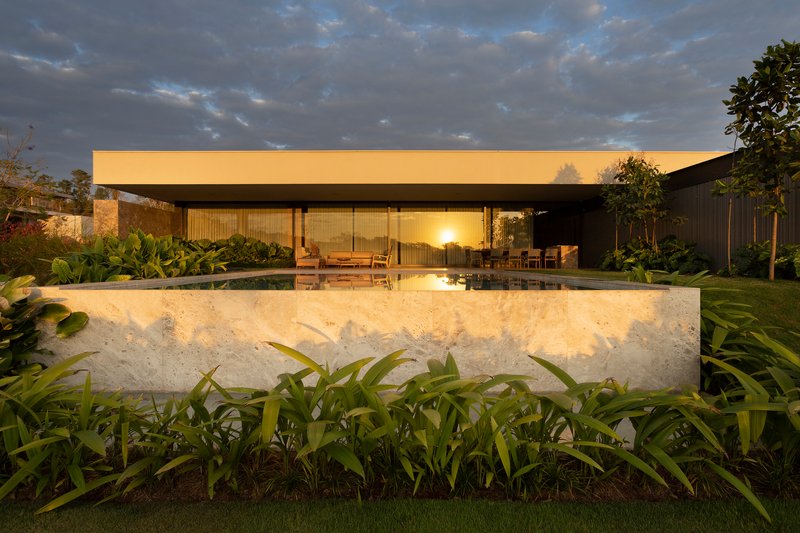
Single-storey houses at this scale are rare in Brazilian practice because land is expensive and vertical building is the default. Going horizontal here was a deliberate choice. It gives every room direct access to the garden. It eliminates stairs. It makes the house feel continuous with the landscape.
The plan, designed by Caio Yoshiaki Nagano, Rodolfo Biagi Becker, and Natalie Fogagnoli, separates the programme into clear zones. Social spaces, kitchen, bedrooms, and services each occupy their own wing, connected by covered circulation that doubles as gallery and threshold.
Contemporary Lines, Warm Materials

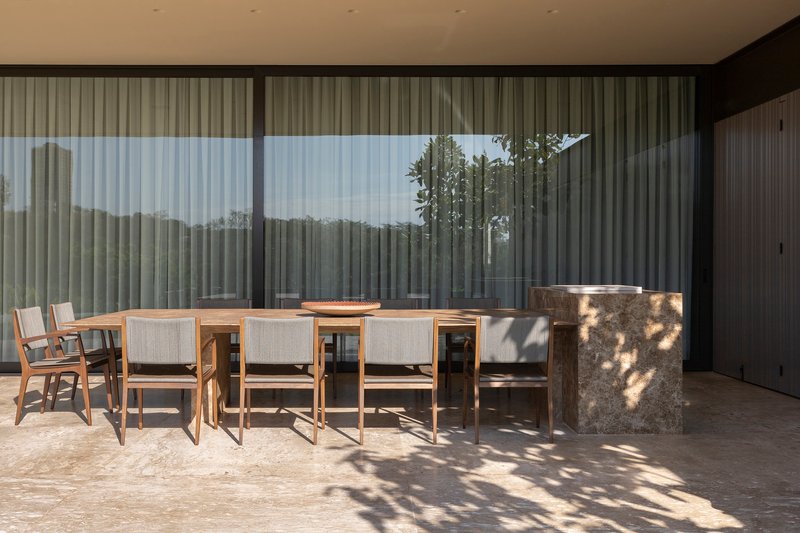
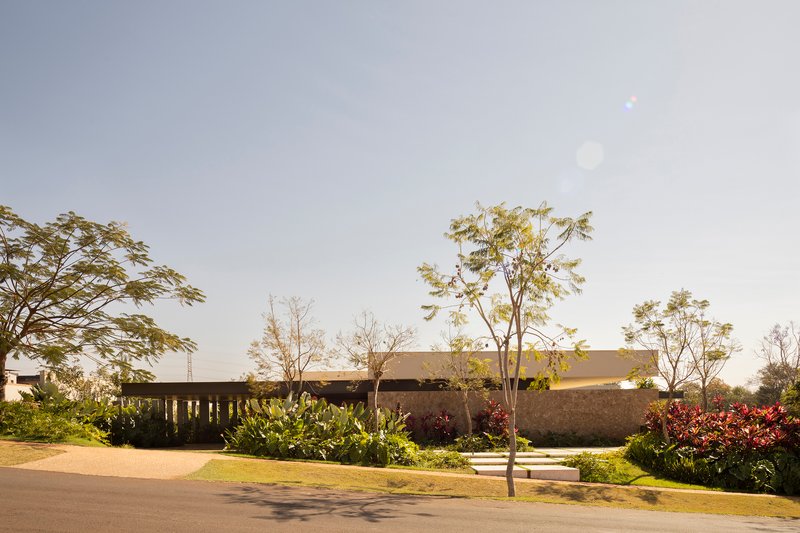
The brief asked for contemporary lines with sophisticated materials that still feel like home. This is a tension that most large houses fail to resolve. They either go cold and minimal or warm and cluttered. FE House manages to be neither.
The material palette is disciplined: concrete, timber, stone, and glass in proportions that shift as you move from public to private. The social areas are open and hard-surfaced. The bedrooms are softer, lower, more enclosed. The transition is gradual, and it works.
Social Space and the Indoor-Outdoor Threshold

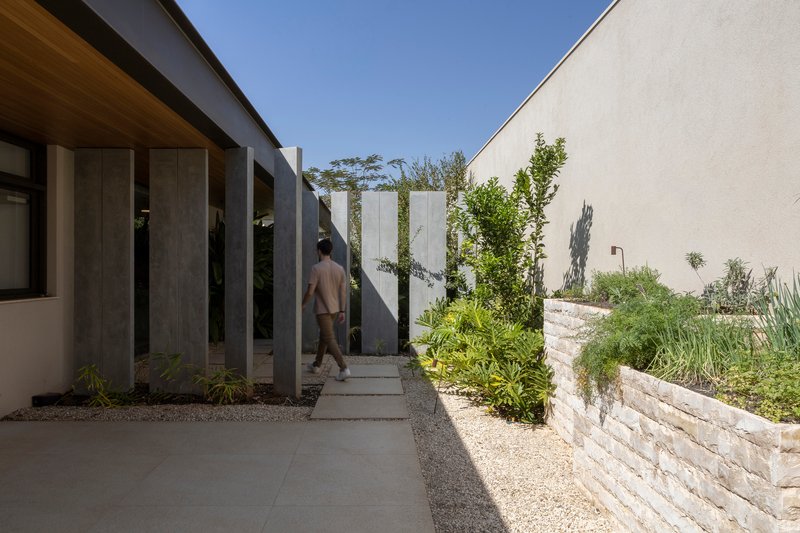

The living, dining, and entertaining zones open directly to the pool terrace and garden. The glass walls retract so the boundary between inside and outside disappears. This is standard in contemporary Brazilian residential architecture, but execution matters. The proportions here are generous without being excessive. The overhang is deep enough to shade the interior without darkening it.
The pool area, with its underground changing room and technical services, is treated as architecture rather than landscape furniture. It is part of the plan, not an afterthought.
The Kitchen and Service Logic
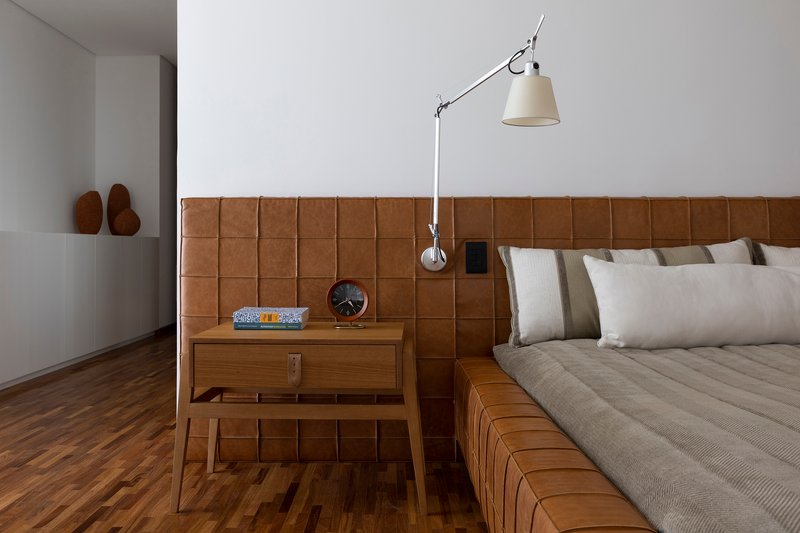
Kitchen and laundry are separated from the main social flow but not hidden. This reflects a shift in Brazilian residential design away from the fully segregated service wing toward something more integrated. The kitchen here is a working space that guests can see but that does not dominate the living room.
Getting this balance right matters in a culture where cooking and entertaining overlap. A kitchen that feels like a restaurant pass is too much. A kitchen behind a closed door is too little. FE House finds the middle.
Four Suites and the Intimate Wing
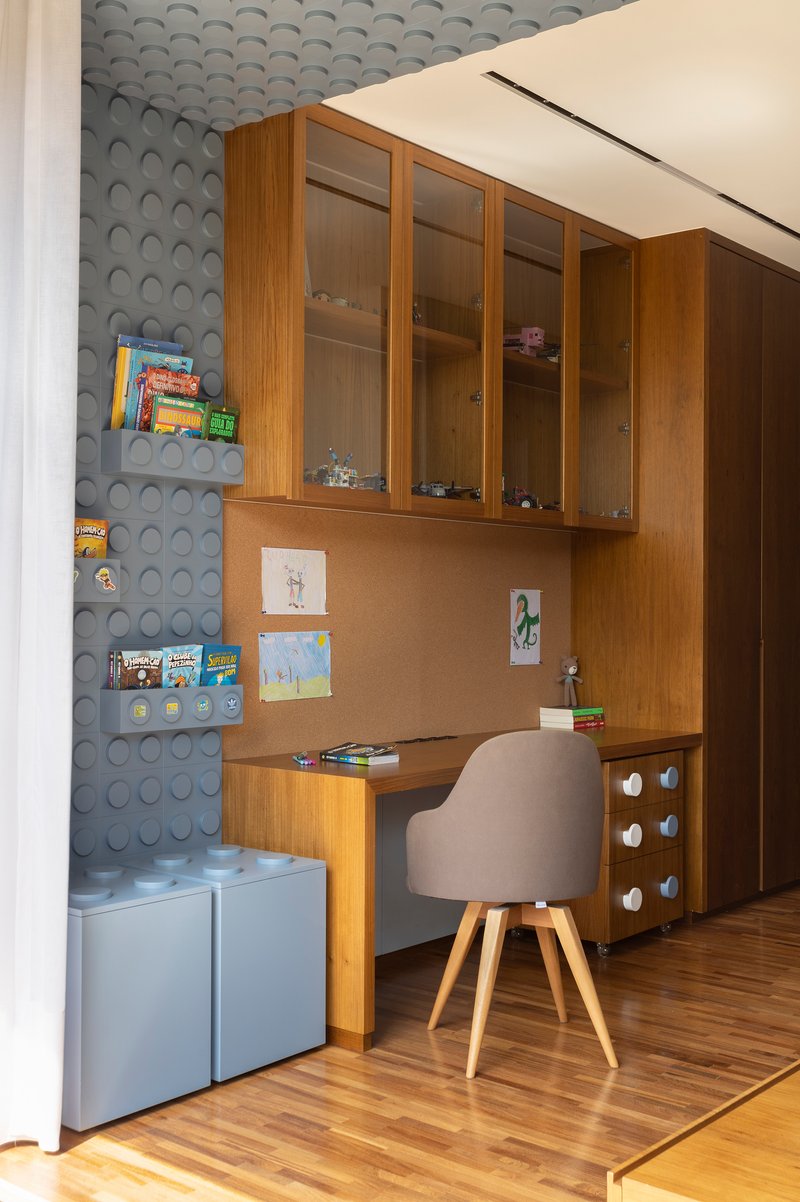
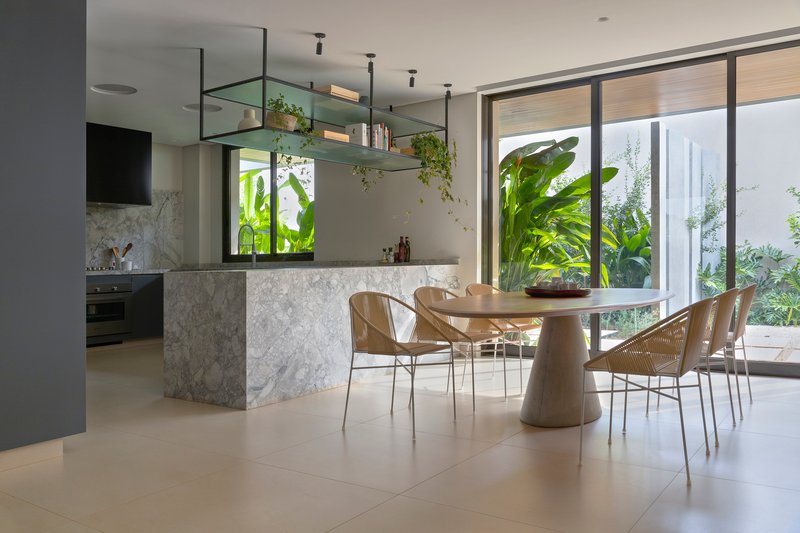
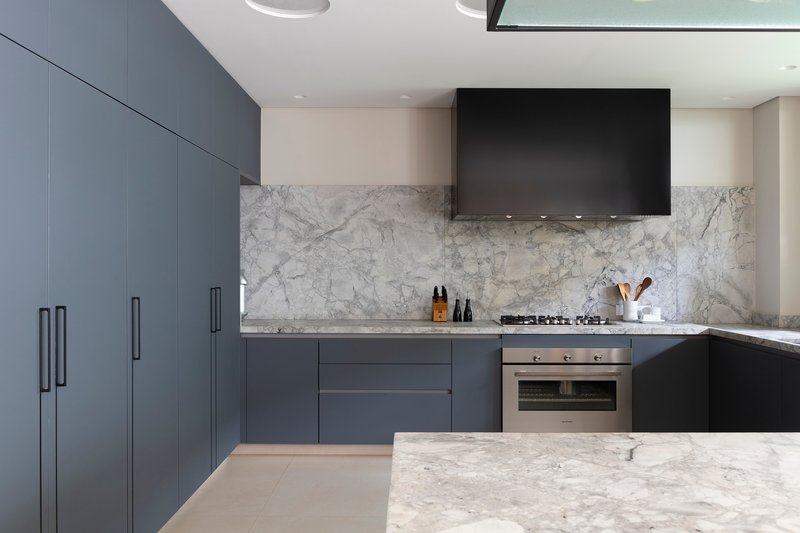
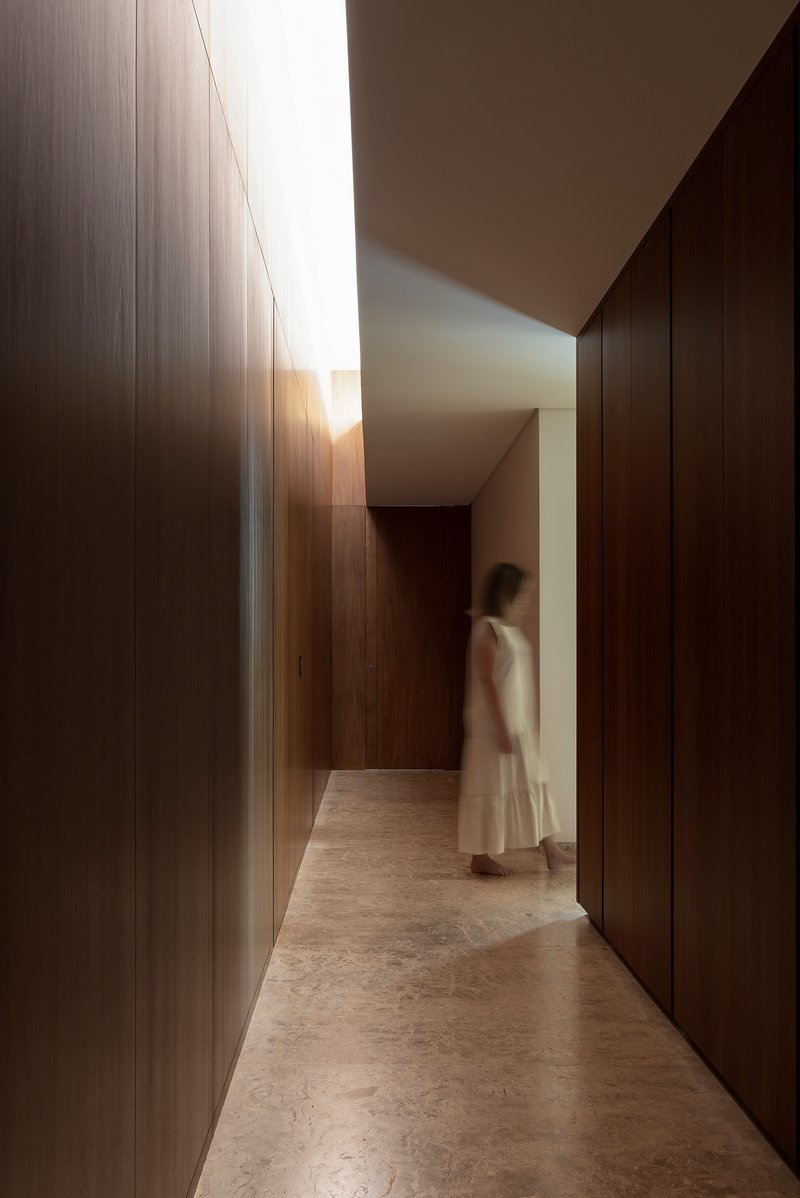
The intimate area contains four suites, each with its own bathroom and garden view. The corridor that connects them is quiet, low-lit, and material-rich. It is the architectural equivalent of lowering your voice. You know you have moved from the social to the private part of the house without being told.
This kind of spatial storytelling is what separates a well-planned house from a well-decorated one. The plan does the work. The materials confirm it.
Structure and the Garden
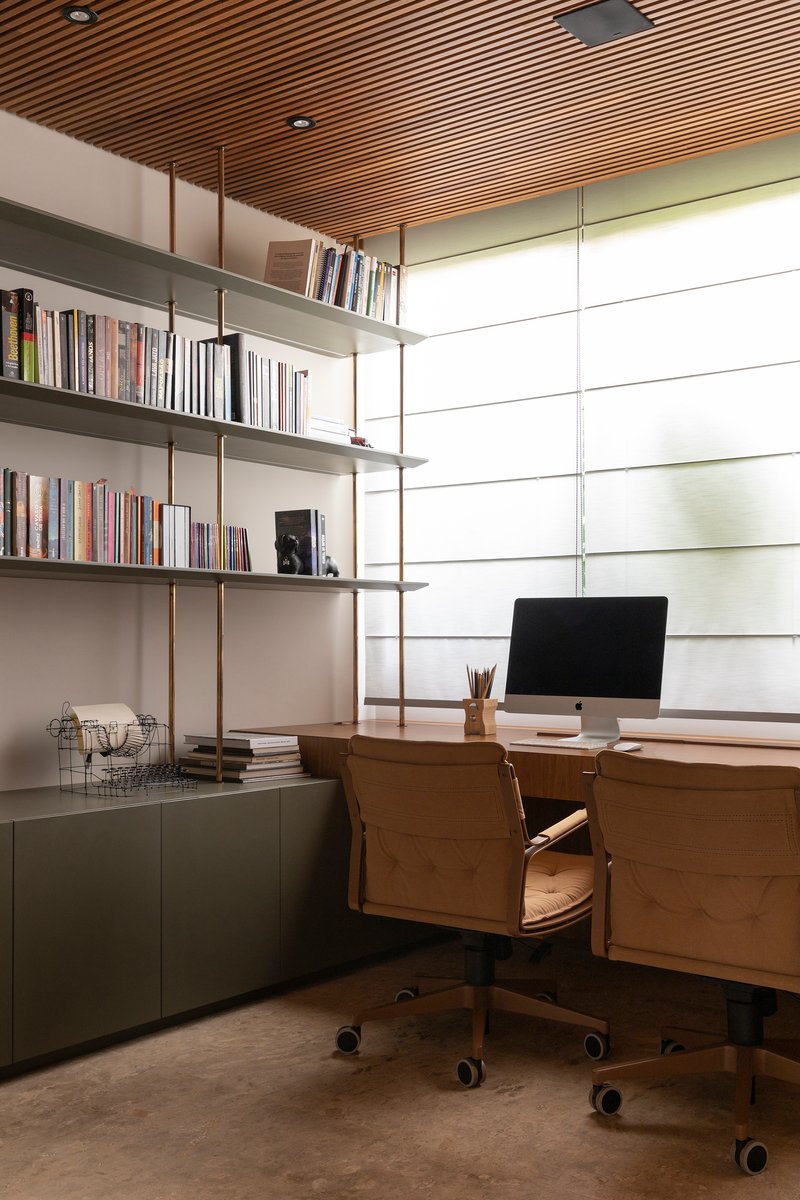
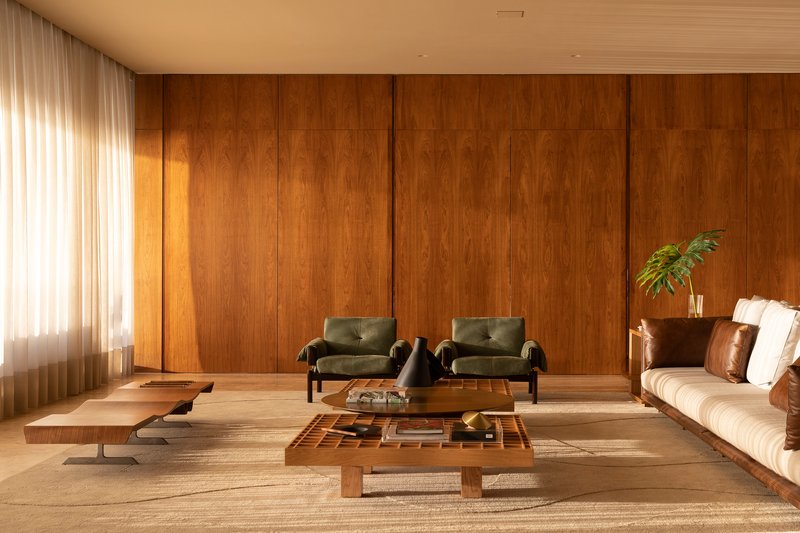
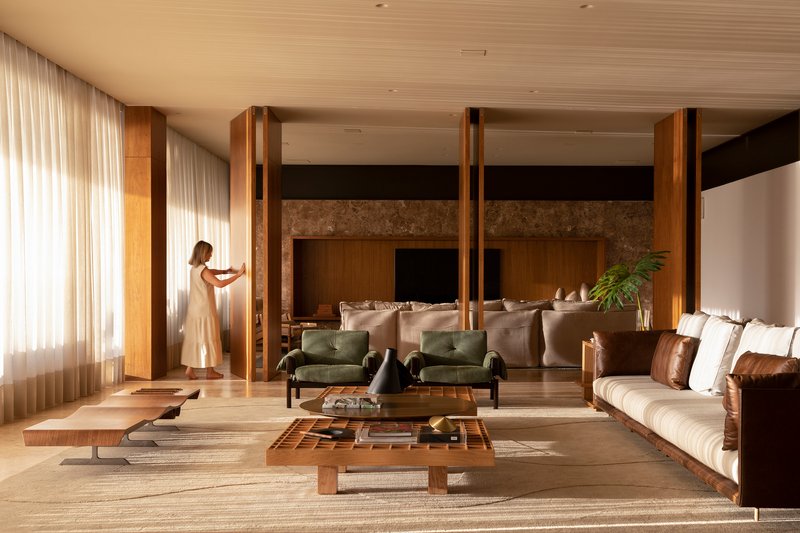
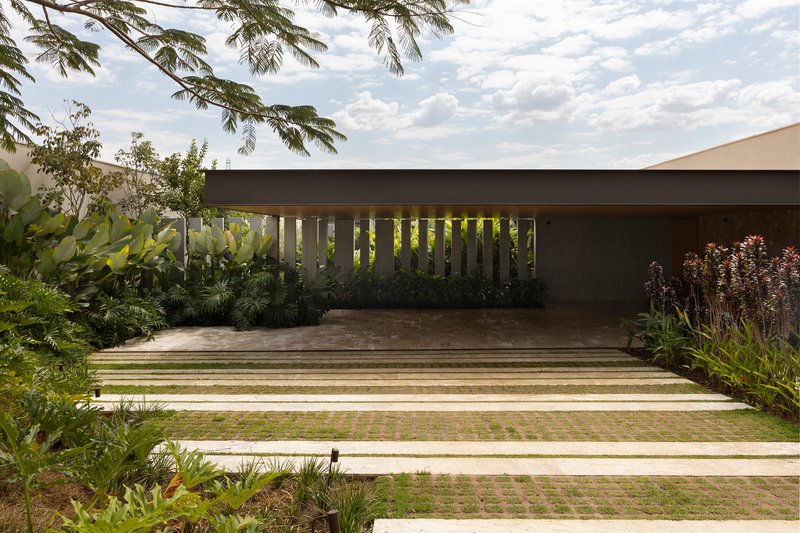
The structural engineering by Etec Engenharia keeps the columns out of the way. Long spans open the social areas and allow the glass walls to work uninterrupted. The landscape, designed in-house by N2B Arquitetura, is restrained. Trees are placed for shade and privacy. Planting is native where possible and low-maintenance throughout.
Light and Atmosphere
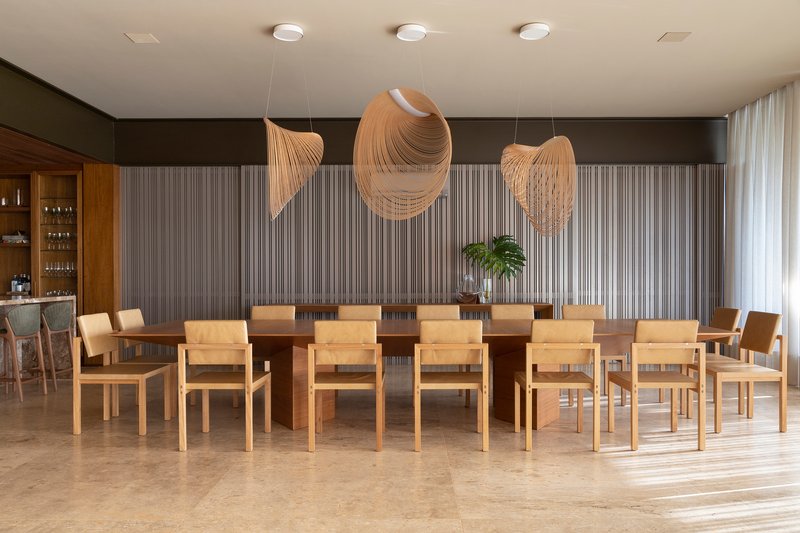
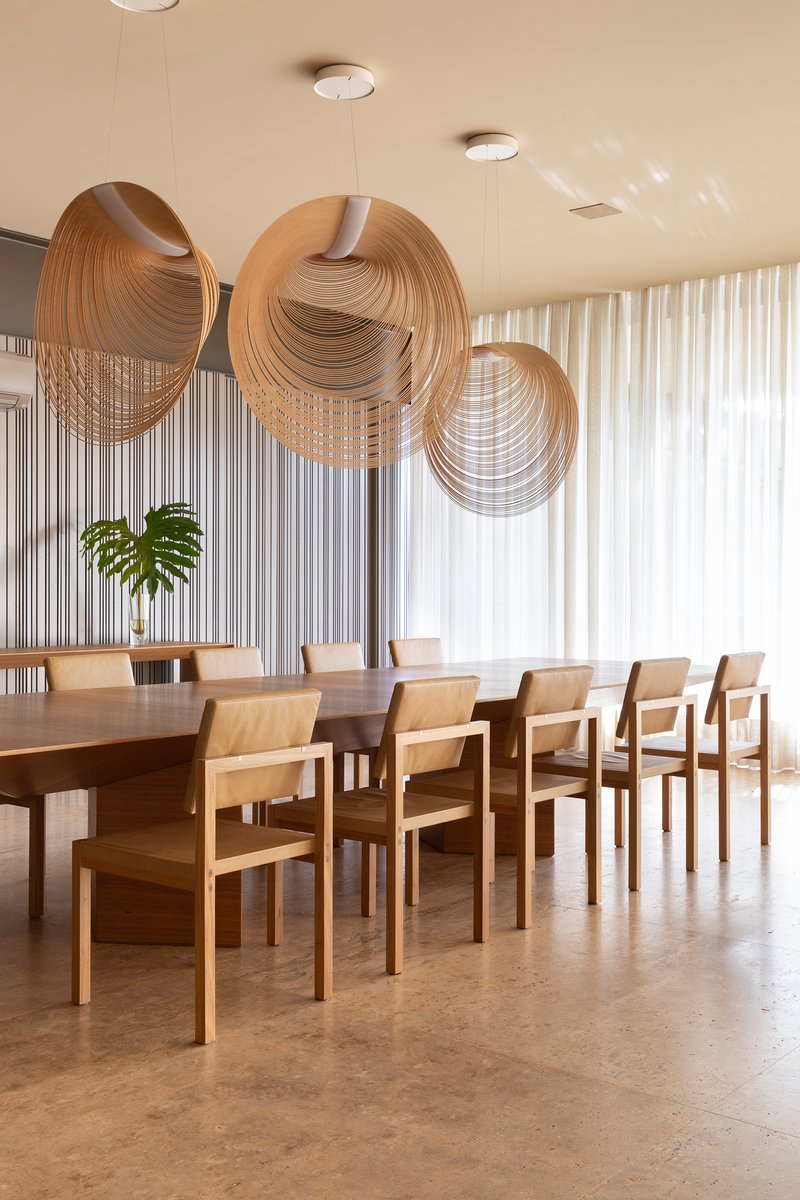

The photographs by Carolina Mossin capture the house at its best: late afternoon, warm light, long shadows. But the plan is designed to handle midday too. The deep overhangs, the strategic tree placement, and the orientation all reduce solar gain without closing the house off from its garden.
A ground-floor house in inland São Paulo gets hot. The architecture has to manage that actively, through section, shade, and ventilation, not just through air conditioning. FE House does both, which is the responsible approach.
Detail and Finish
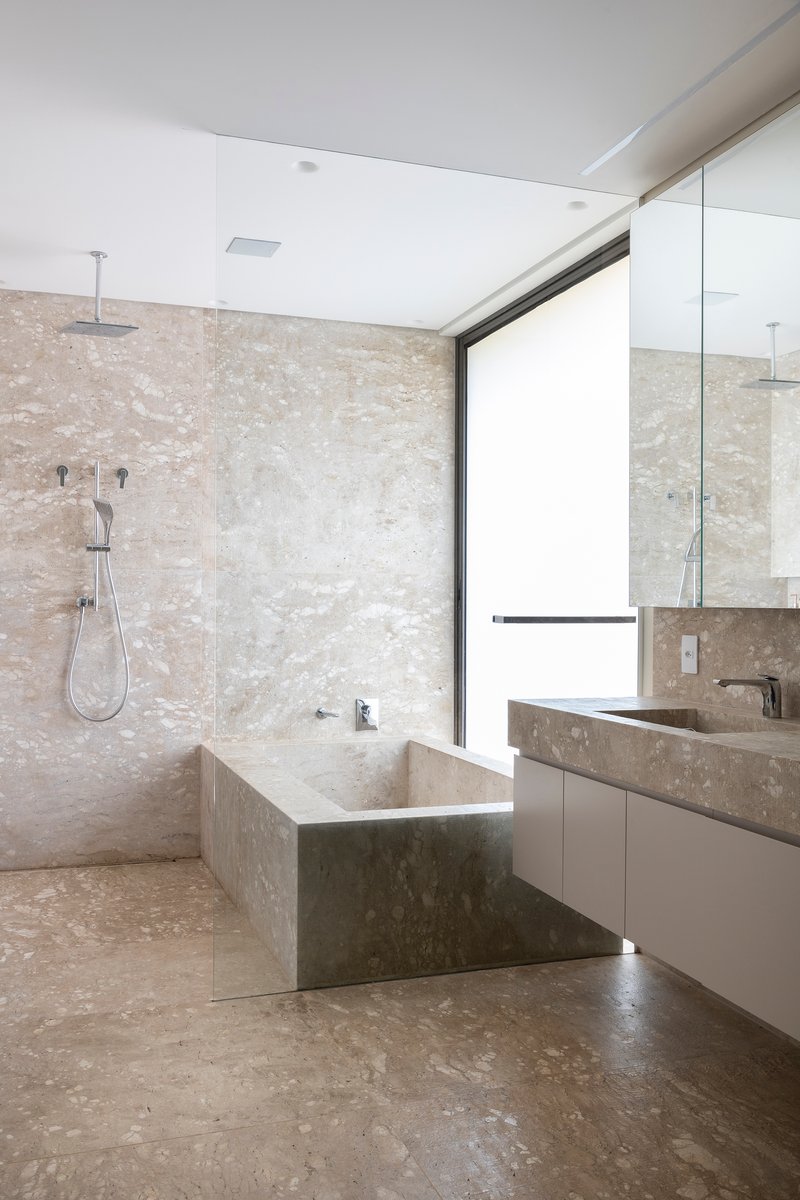
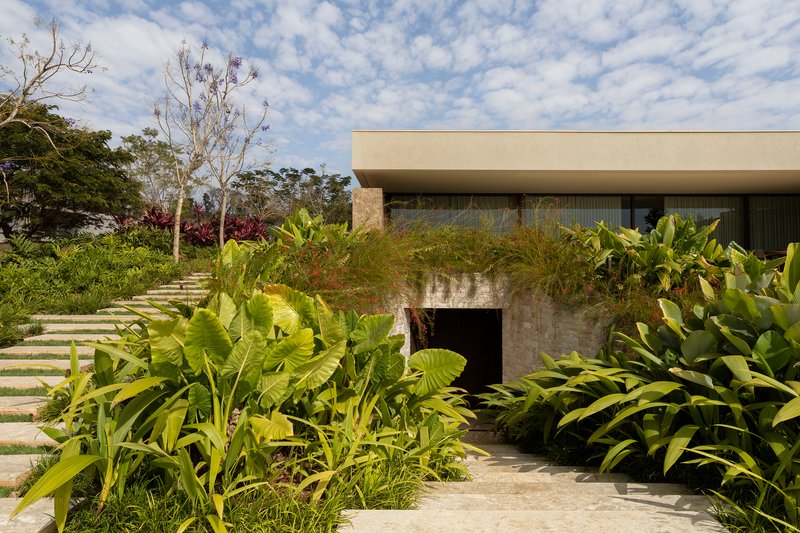

At the detail level, the house is well made. Joints are clean, materials meet precisely, and nothing feels improvised. Construction by Bistane Engenharia is the kind of careful work that only shows when you look closely, which is exactly when it matters most.
Plan

The floor plan reveals the full logic. The social wing fans toward the garden. The bedrooms line up along the quieter edge. Services are tucked behind. Circulation is generous but purposeful. Every room has at least two connections, so the house never dead-ends.
Why This Project Matters
Brazilian residential architecture has been one of the most productive fields in contemporary practice for decades. Studios like N2B Arquitetura, working outside the capital in secondary cities like Ribeirão Preto, are expanding that conversation. They prove that serious architectural thinking is not limited to São Paulo or Rio.
FE House is worth studying for anyone designing a large single-storey residence in a warm climate. The lessons are clear: how to organise a big programme on one level without losing intimacy, how to handle the indoor-outdoor threshold at scale, and how to use materials to signal spatial transitions without walls or doors.
About the Studio
Share Your Own Work on uni.xyz
If you are working on residential architecture, uni.xyz is a place to publish your projects, find collaborators, and enter design competitions.
Project credits: FE House by N2B Arquitetura. Ribeirão Preto, Brazil. 1,020 m². Completed 2022. Architects: Caio Yoshiaki Nagano, Rodolfo Biagi Becker, Natalie Fogagnoli. Construction: Bistane Engenharia. Structure: Etec Engenharia. Photographs: Carolina Mossin.




Popular Articles
Popular articles from the community


Magic Box Office Barcelona Innovative Sustainable Workplace Design
Innovative sustainable office design featuring triangular form, ceramic façade, flexible interiors, natural light optimization, and creative workspace for modern work culture.

20 Most Popular Commercial Architecture Projects of 2025
From sustainable market concepts to heritage factories, the commercial buildings and proposals that drew the most attention on uni.xyz this year.
Fifth NRE Jazz Club: De Bever Architecten: Eindhoven’s Revitalized Cultural Hub
Historic gas factory transformed into Fifth NRE Jazz Club blending modern sustainability, jazz culture, dining, and heritage architecture seamlessly.

Similar Reads
You might also enjoy these articles
20 Most Popular Commercial Architecture Projects of 2025
From sustainable market concepts to heritage factories, the commercial buildings and proposals that drew the most attention on uni.xyz this year.
Magic Box Office Barcelona Innovative Sustainable Workplace Design
Innovative sustainable office design featuring triangular form, ceramic façade, flexible interiors, natural light optimization, and creative workspace for modern work culture.
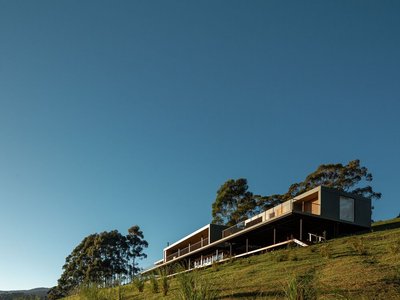
Mantiqueira House by SysHaus and M Magalhães Estúdio
A linear modular house embedded in Serra da Mantiqueira, integrating panoramic views, sustainable prefabrication, minimal terrain impact, and contemporary interiors.
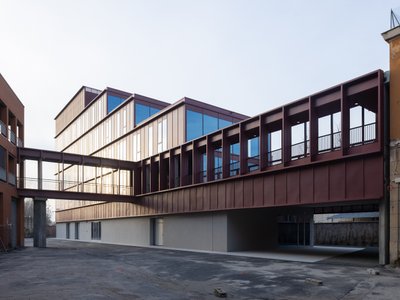
Guardia di Finanza Office Building by DEMOGO
Stepped institutional office in Bologna integrates terraces, red-toned facade, and linear staircase, reconnecting military complex with surrounding urban landscape.

Explore Architecture Competitions
Discover active competitions in this discipline




The International Standard for Design Portfolios


The Global Benchmark for Architecture Dissertation Awards


The Global Benchmark for Graduation Excellence


Challenge to design mud housing for contemporary communities
Comments (0)
Please login or sign up to add comments
No comments yet. Be the first to comment!