

Ferdinand E. Marcos Stadium by WTA Architecture and Design Studio – A Landmark of Urban Regeneration and Cultural Identity in Laoag City
12,000-seat stadium blending open public spaces, cultural identity, and clean geometry to revitalize Laoag City through community, sport, and landscape integration.


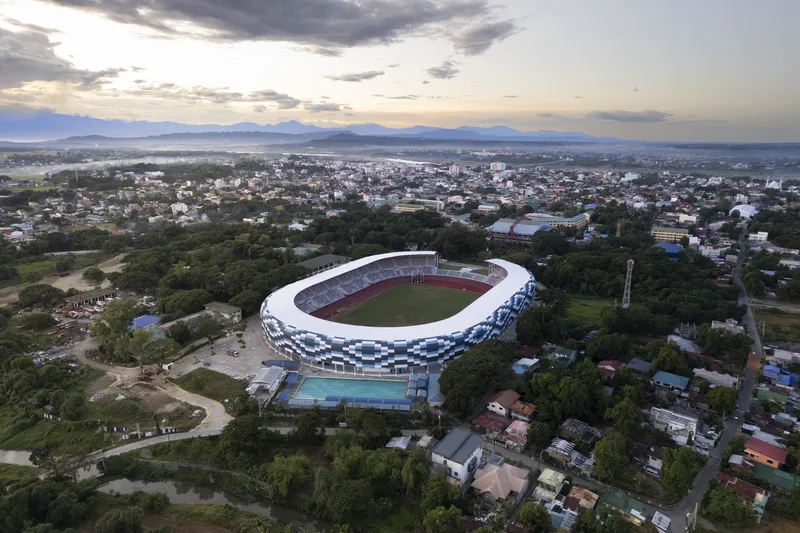
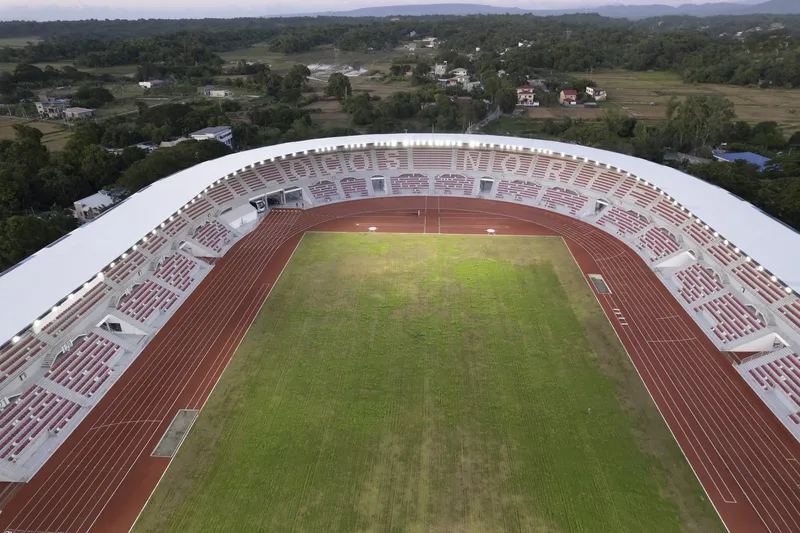
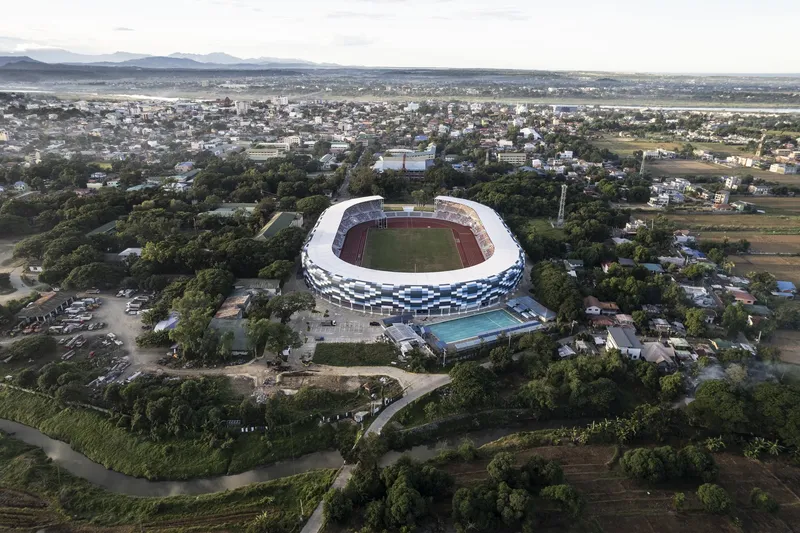
The Ferdinand E. Marcos Stadium, designed by WTA Architecture and Design Studio, is a transformative 12,000-capacity sports venue that redefines public space in Laoag City, Ilocos Norte. Conceived as both a civic landmark and a community gathering space, the stadium acts as a new focal point for social life, student activity, and sports tourism. Its strategic location—adjacent to Mariano Marcos State University and facing Rizal Park—positions it at the heart of the city’s cultural and educational fabric.
A Stadium Park for the People
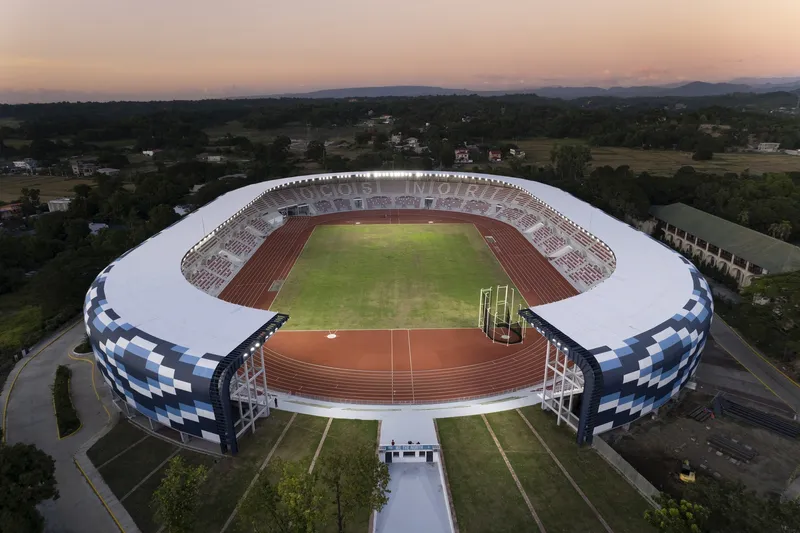
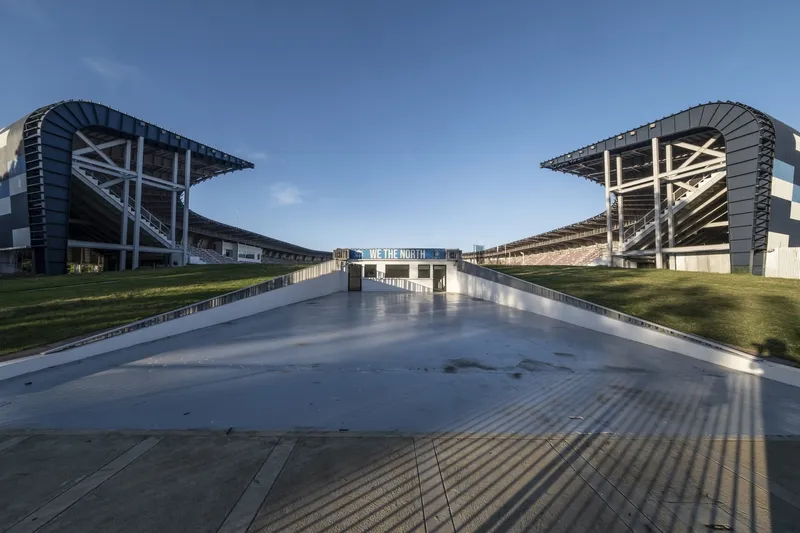
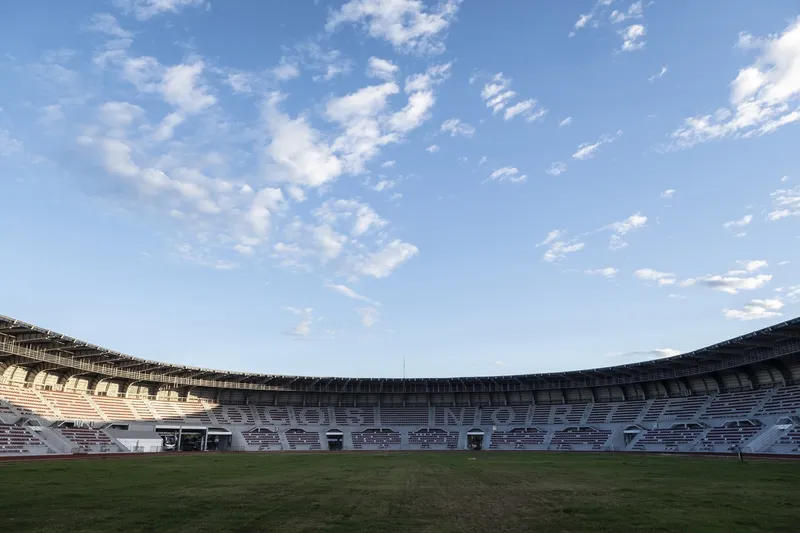
One of the project’s defining features is its open southern end, which dissolves the traditional boundary of a sports arena. Instead of a closed bowl, the stadium extends into an expansive amphitheater, a gently sloping public lawn, and new connections to Rizal Park. This design expands the city’s accessible public open space by nearly 200%, inviting residents, students, and visitors to engage with the stadium daily—not just during major events.
By creating a seamless transition between sports, leisure, and landscape, the stadium becomes a multifunctional public park where people gather for exercise, relaxation, and community activities. It stands as a model for open-access public infrastructure, offering spaces that remain active from morning through evening, weekdays and weekends alike.
Revitalizing the Urban Core
The transformation of the Ferdinand E. Marcos Stadium is a powerful example of urban regeneration rooted in public value. Once deteriorated and underused, the site has been reimagined as a vibrant civic destination that fosters community life. The redevelopment replaces the former eastern roadway with a pedestrian-friendly promenade connecting directly to the university grounds. This integration invites students to move effortlessly between campus and stadium, turning the venue into an everyday extension of academic life.
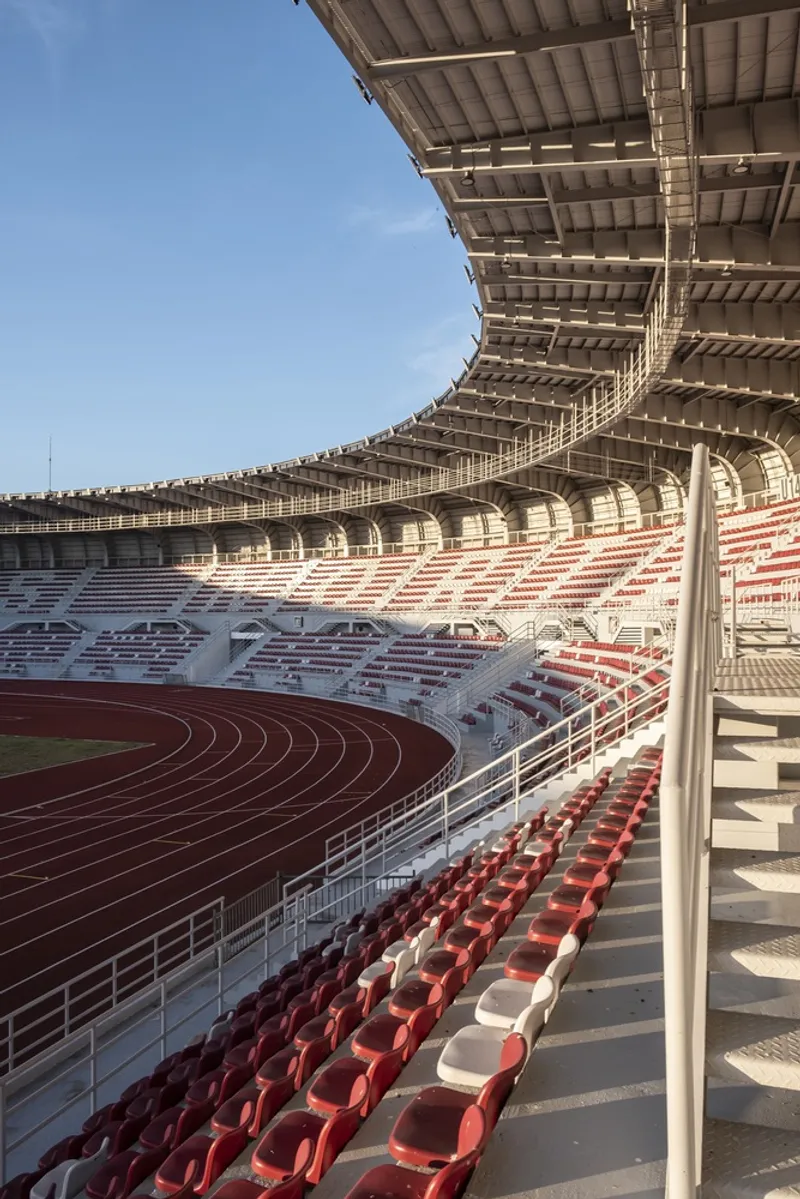
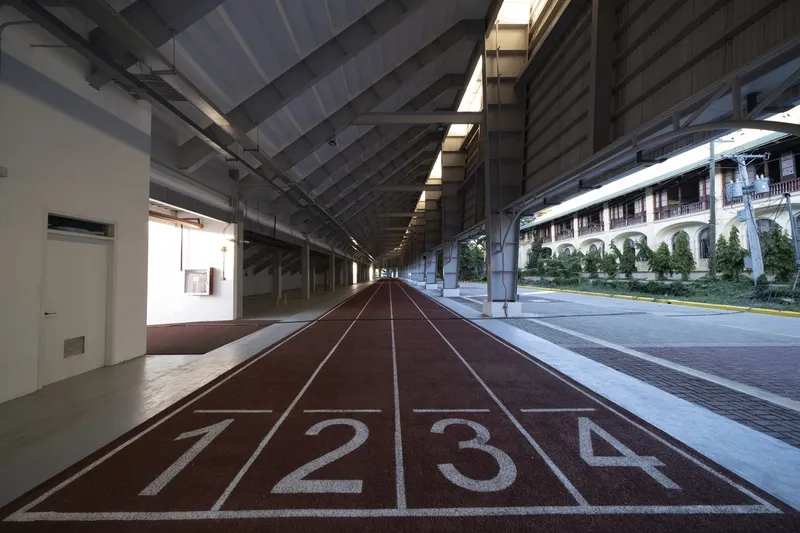
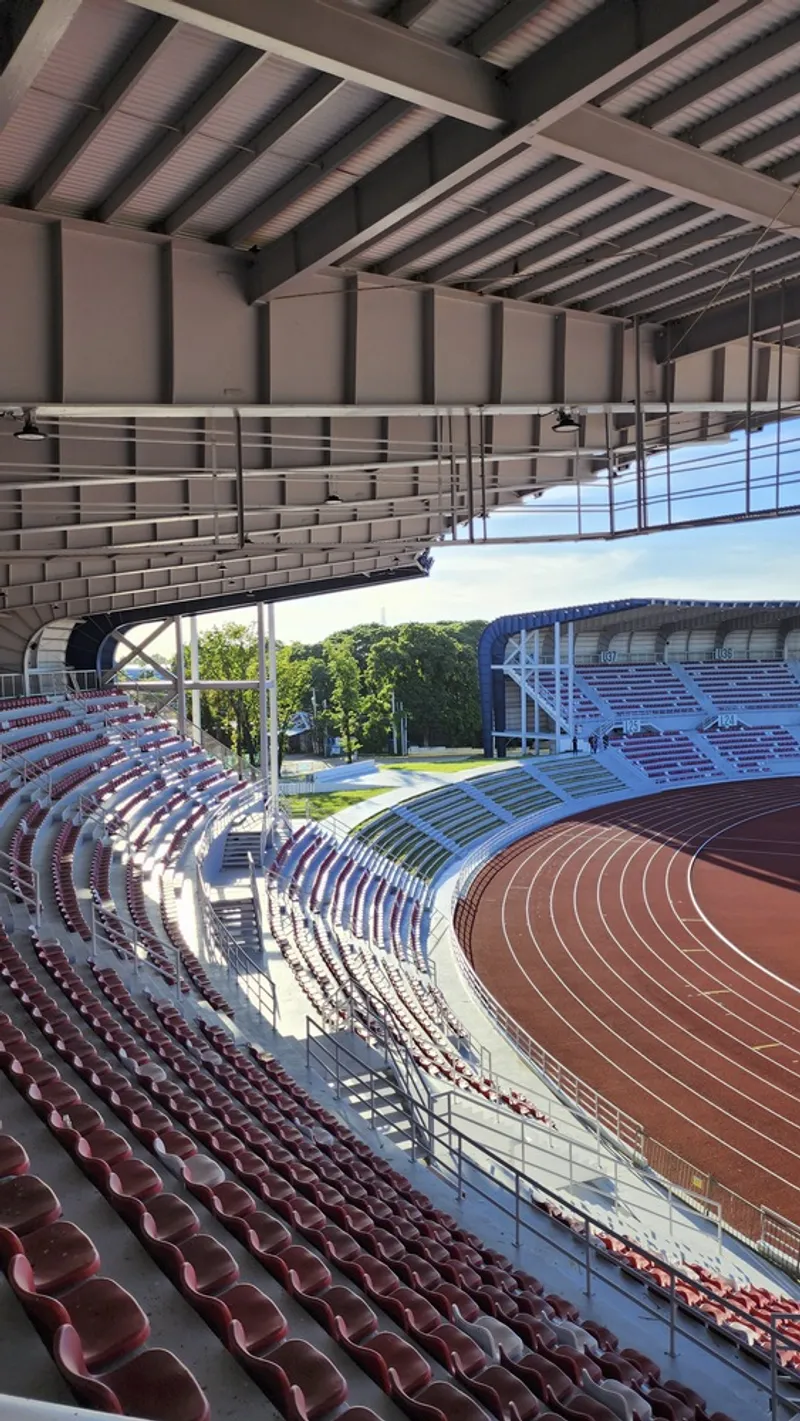
Below the seating bowl, sheltered spaces accommodate public warm-up tracks, enhancing accessibility for athletes and casual joggers. During weekdays, the stadium attracts students gathering before and after classes, while weekends draw families, walkers, and groups enjoying the new open areas. The project successfully bridges urban and rural communities, becoming a shared, inclusive environment for all Ilokanos.
A Minimalist Geometry Inspired by Local Architecture
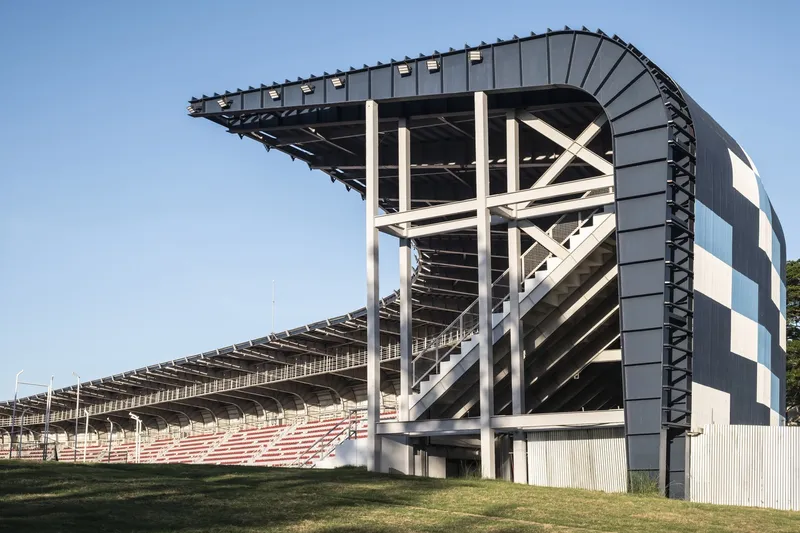
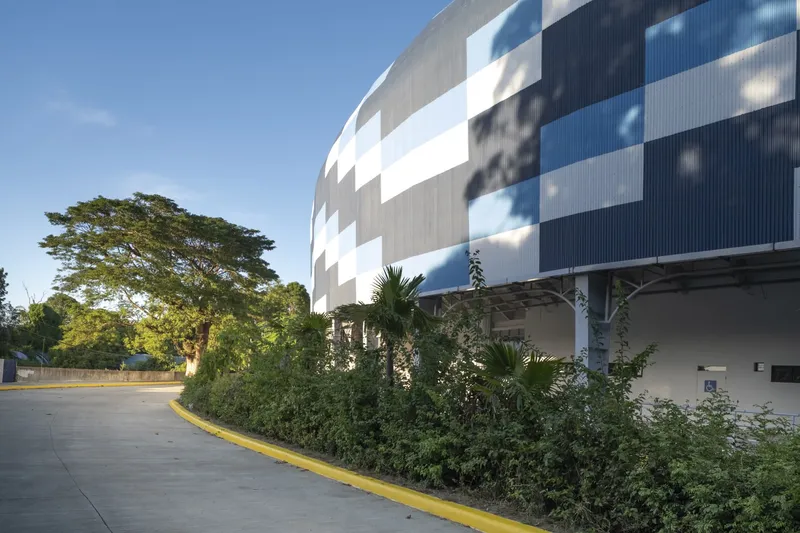
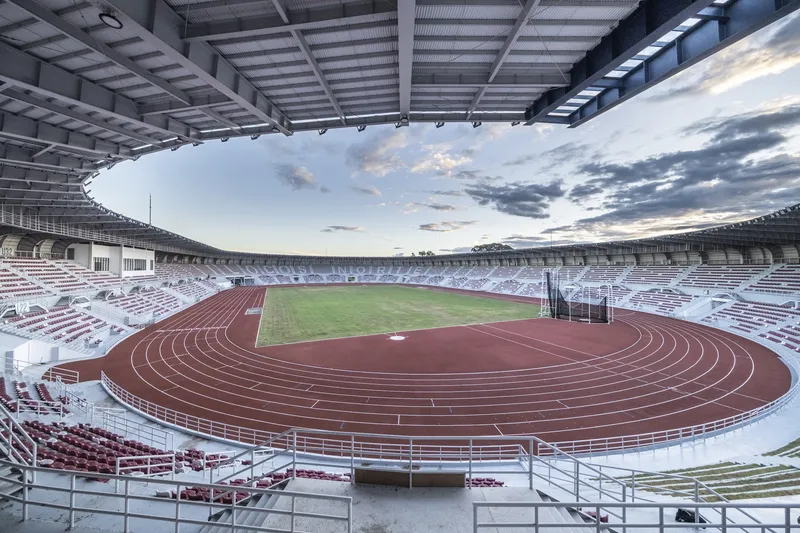
Architecturally, the stadium presents a clean, minimalist geometry defined by its open bowl and striking corrugated PVC exterior. The use of corrugated textures references the metal roofing of traditional Filipino homes, grounding the contemporary design in local vernacular. Curving steel columns support the lightweight canopy, bending gracefully as they taper into the rafter system. This blend of simplicity and elegance reinforces the building’s visual clarity while maintaining structural efficiency.
Celebrating the Ilokano Abel Tradition
The stadium’s exterior skin carries deep cultural meaning. Its design draws inspiration from the Ilokano Abel fabric, a traditional textile woven into every stage of local life—birth, rites of passage, marriage, and death. The façade interprets the iconic Binakol pattern, known for its hypnotic geometric motif that symbolizes sea waves and protects against malevolent spirits.
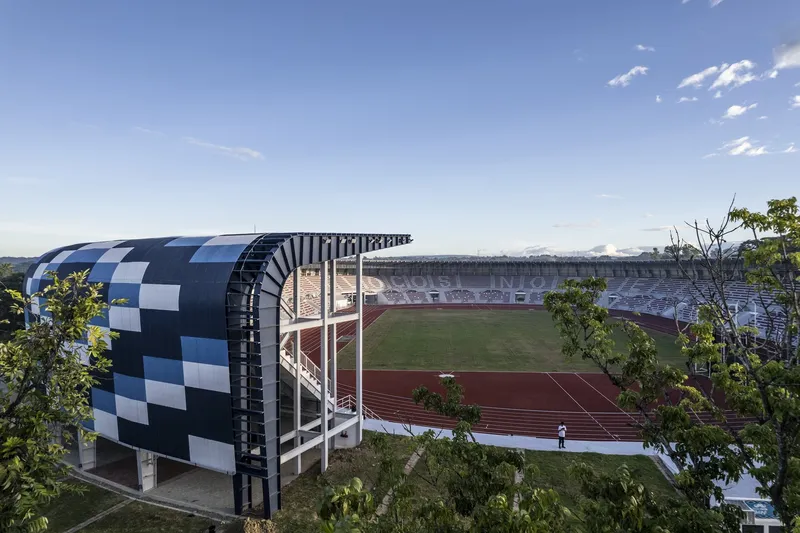
By incorporating Abel-inspired patterns at an architectural scale, the stadium becomes an urban tapestry of Ilokano identity, honoring craftsmanship passed down through generations while reintroducing it to a modern civic structure.
A Catalyst for Sports Tourism and Community Development
The stadium is a central component of a larger 12-hectare sports complex that includes:
- INSPIRE Sports Training Center
- Centennial Arena
- Aquatics Center
- Sports education facility and dormitory
As the anchor of this development, the Ferdinand E. Marcos Stadium enhances Ilocos Norte’s vision for a thriving sports tourism economy. More importantly, it functions as a people’s stadium—a public facility designed to be open, inclusive, and beneficial to the broader community.
All photographs are works of Edward Simon


Popular Articles
Popular articles from the community


Manzana Morphosis: Stretching Barcelona's Grid into a Living Landscape for 2050
A radical reworking of the Eixample manzana turns density into a tool for generous public space, vertical ecology, and environmental performance.

Singing Woman: An Opera House That Performs Before the Curtain Rises
Ovidiu Cristian Pavel's conceptual opera house translates Estonia's choral identity into a sculpted waterfront landmark facing the Baltic Sea.

Opera on the Sea: Driftwood Logic Shapes a Timber Opera House on Estonia's Coast
Trevor Orgill's opera house translates the entangled drift of floating timber into a civic building where wood, water, and music converge.
Faces of the Soviet Avant-Garde: Turning Moscow's Street Names into an Open-Air Museum
A network of sculptural installations across a Moscow residential district transforms forgotten architect names into spatial encounters with cultural memor

Similar Reads
You might also enjoy these articles


Hodi-Mandai Geram
Project Function: Preservation and revitalization of the Intangible heritage and socio-spatial identity of the Hodi by Housing, Cultural Memory Center, Sacred Grove, landscape, local tourism economy


Olio Towers: A Mid-Rise for Performers That Fuses Housing, Rehearsal, and Stage
Located blocks from Houston's Theater District, this modular tower stacks living units around a central performance atrium.

Oasis: Modular Green Housing Carved into Dhaka's Urban Fabric
A shortlisted Plugin Housing entry reclaims unauthorized settlements in Dhaka with stepped concrete volumes, green roofs, and ventilation-driven design.

Black Hole: A Floating Megastructure for the Post-Physical Era
Emiliano Mazzarotto envisions a spherical, self-scaling arena where e-sports, digital hotels, and holographic stadiums replace traditional public space.

Explore Stadium Competitions
Discover active competitions in this discipline

Challenge to design a barrier free sports center

Challenge to design an outdoor ice-rink and park

Challenge to reimagine the Iron Throne

Photograph architecture without architects
Comments (0)
Please login or sign up to add comments
No comments yet. Be the first to comment!