
FIGR Architecture Wrings a Full House from 160 Square Meters in Melbourne's Grittiest Suburb
In Cremorne, a workers cottage expands into a compact, skylit home that borrows its material language from the industrial roofscape next door.


Cremorne is the kind of Melbourne suburb where a single-story workers cottage can find itself nose to nose with a twelve-storey commercial building. It is dense, scrappy, and unapologetic about it. FIGR Architecture took that character as a design brief, not a problem, and turned a tiny 160 square meter site into a home that feels far larger than its 109 square meters on paper. That Old Chestnut House treats constraint as a creative accelerant: every wall, portal, and courtyard does double duty.
What makes the project genuinely interesting is its refusal to follow the standard Melbourne rear-extension playbook. Instead of bolting an open-plan living box onto the back of the cottage and calling it done, FIGR arranged the new program around the perimeter of the backyard so that every room maintains a continuous interface with the garden. The result is a home where you are never more than a step away from planted ground, even when you are standing at the kitchen island. A cranked timber portal bridges the old cottage and the new addition, hiding a bathroom and laundry in its angled footprint while stitching two very different architectural languages together.
A Cottage Meets Its Industrial Neighbor
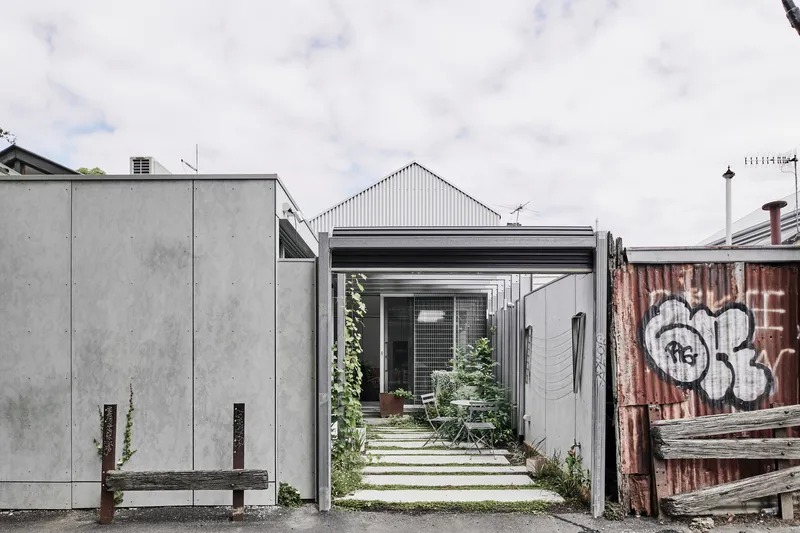
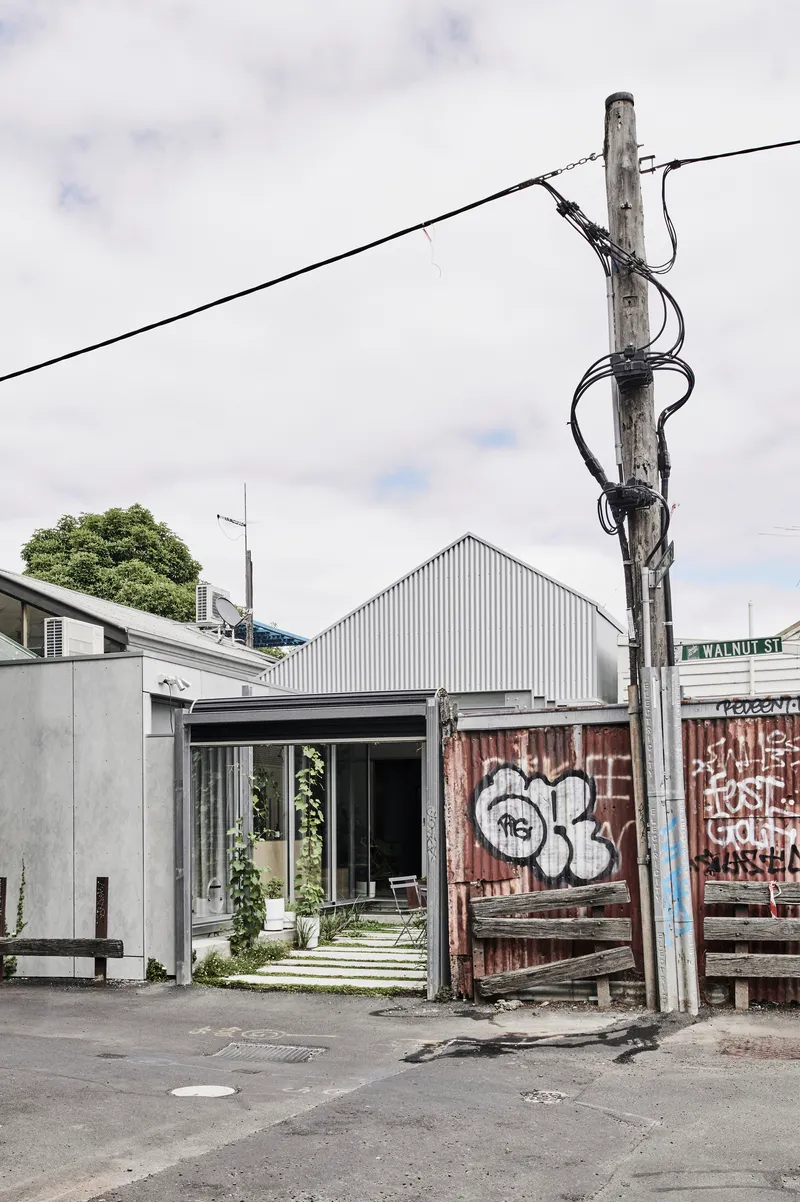
From the street, the house reads as a corrugated metal gable volume sitting beside a graffitied timber fence. It is modest, almost deliberately anonymous. The narrow laneway entrance is framed by concrete panels and a weathered shed, setting the tone for a material palette that draws directly from Cremorne's industrial heritage. Galvanized steel, raw concrete, and compressed fibre cement are not concessions to budget here; they are deliberate references to the corrugated roofscapes of the workers cottages that once dominated the neighborhood.
FIGR could have dressed the exterior in something polished to compete with the commercial towers looming behind. Instead, the firm chose materials that age honestly and sit comfortably within the suburb's rough-edged streetscape. The gable form itself is legible as a house, a quiet assertion of domesticity in a precinct that has been steadily rezoned for everything else.
The Timber Portal That Holds Everything Together
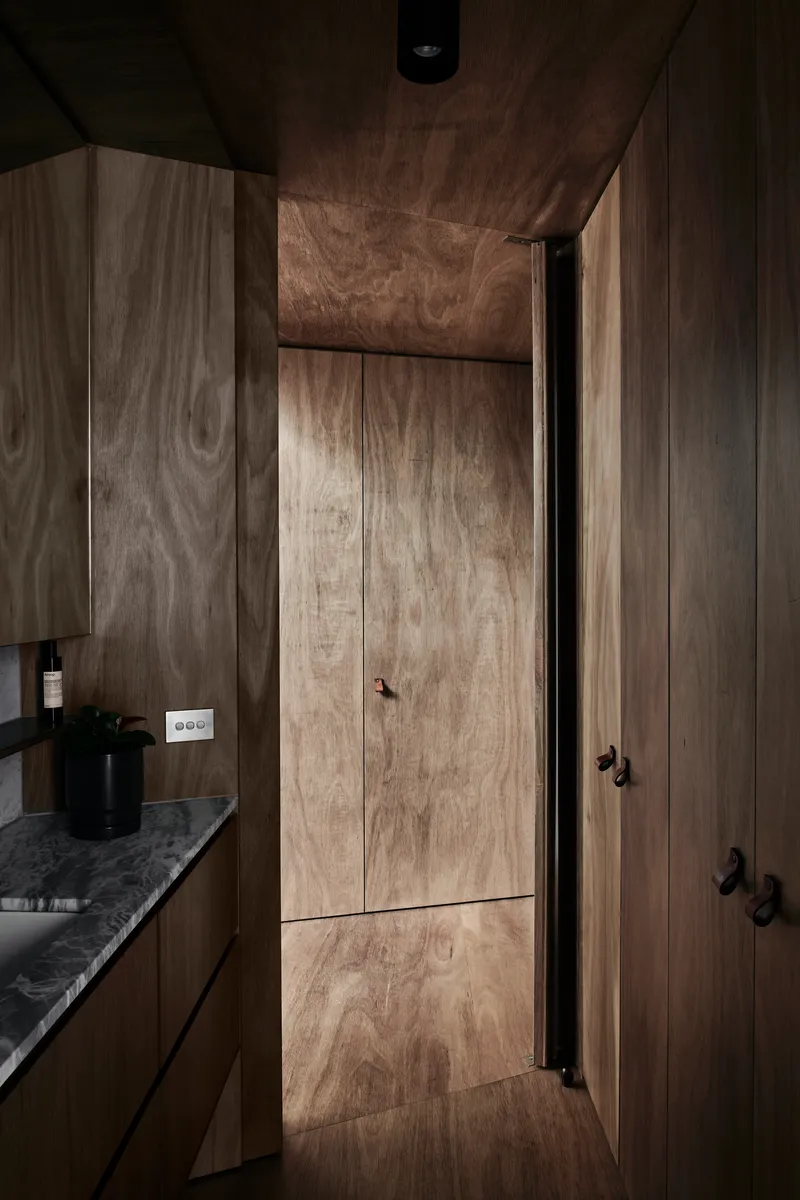
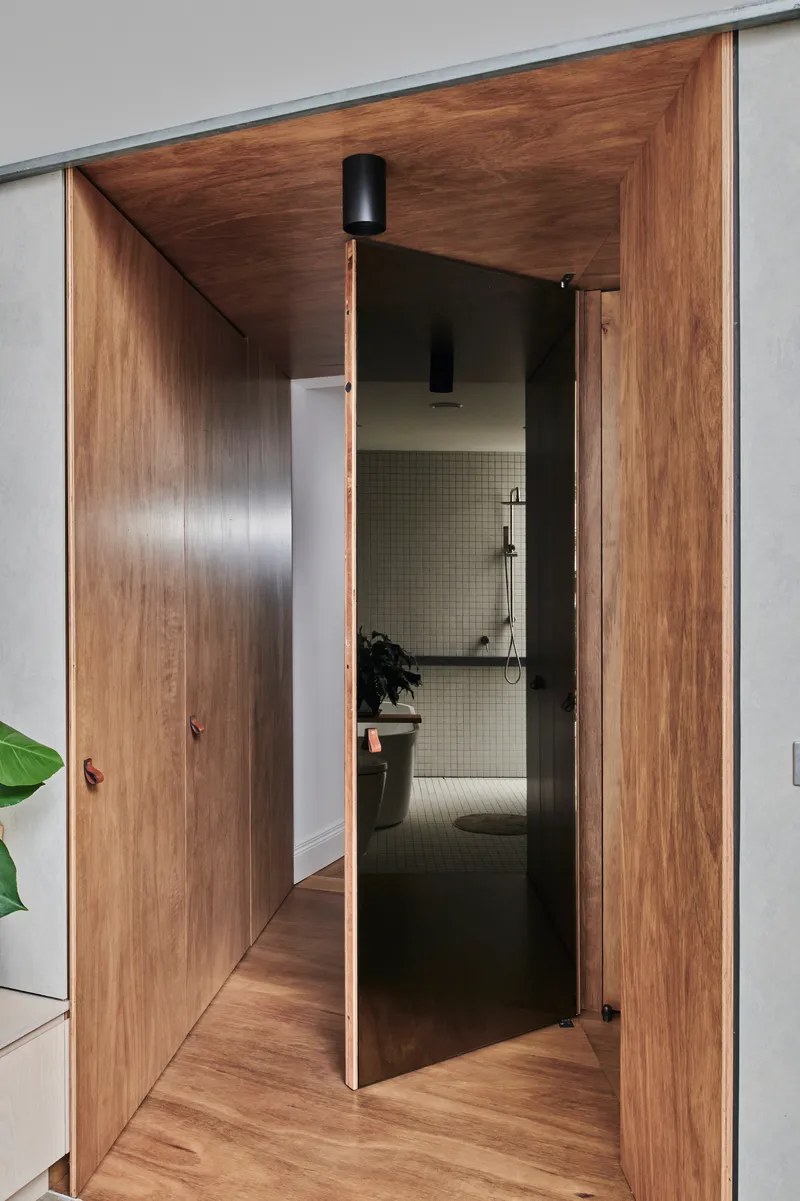
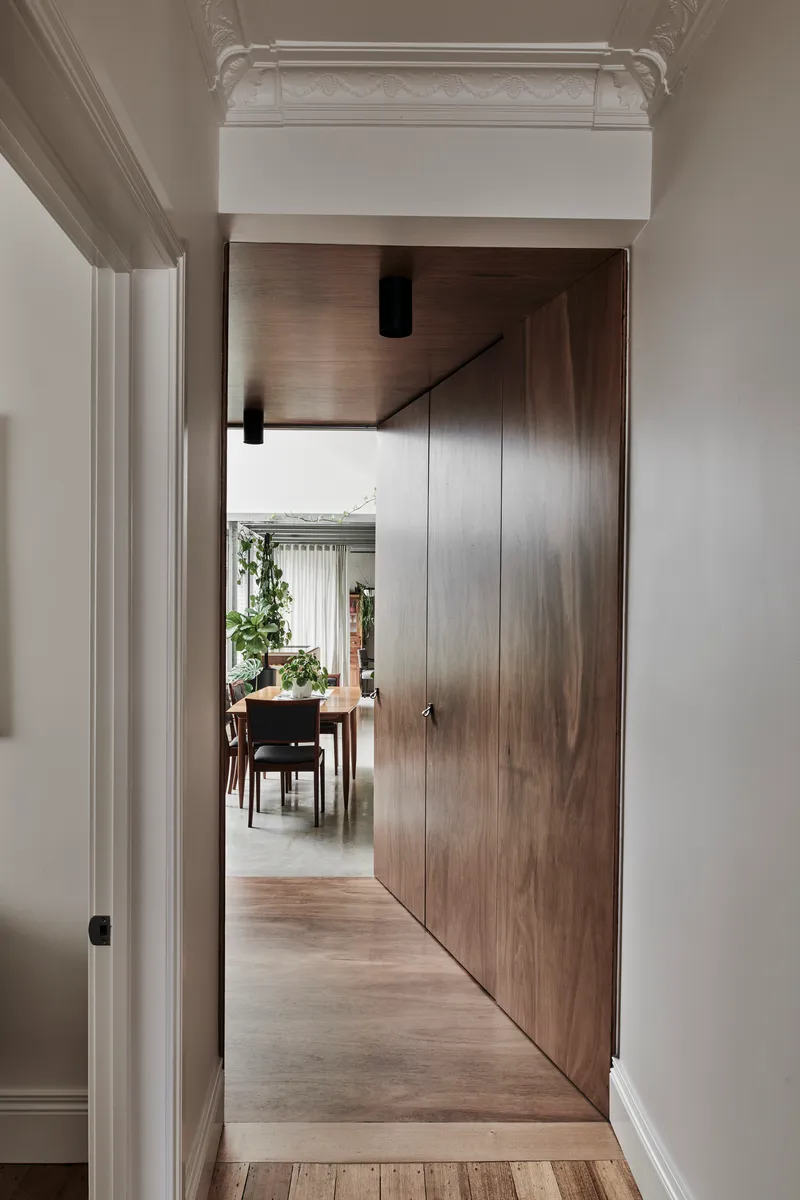
The hinge of the plan is a cranked corridor lined entirely in Australian spotted gum veneer. Walking through it, you feel the house pivot: the original cottage's plaster walls and ornate ceiling moldings give way to flush timber surfaces and copper toggle pulls. It is a threshold that makes the transition between old and new legible without being theatrical. The corridor also neatly conceals the wet rooms, tucking the bathroom and laundry into what would otherwise be dead space at the centre of the plan.
Detailing here is precise. Full sheets of veneer are sealed with water-based, non-solvent finishes. Pivot doors sit flush with the walls so the portal reads as a continuous timber tube. The effect is warm and enveloping, a marked contrast to the raw concrete and galvanized steel that dominate the newer volumes. FIGR understood that in a house this small, the transition between rooms matters as much as the rooms themselves.
Borrowing Light from the Sky and the Neighbor
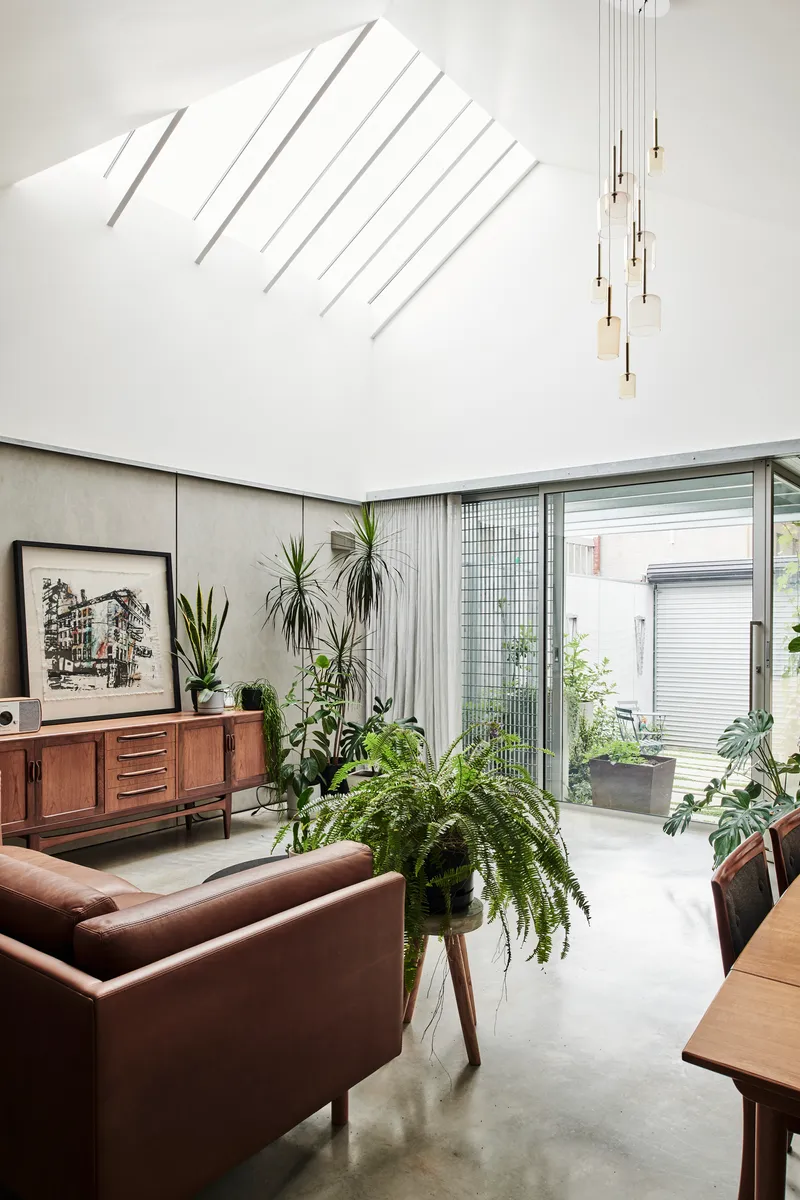
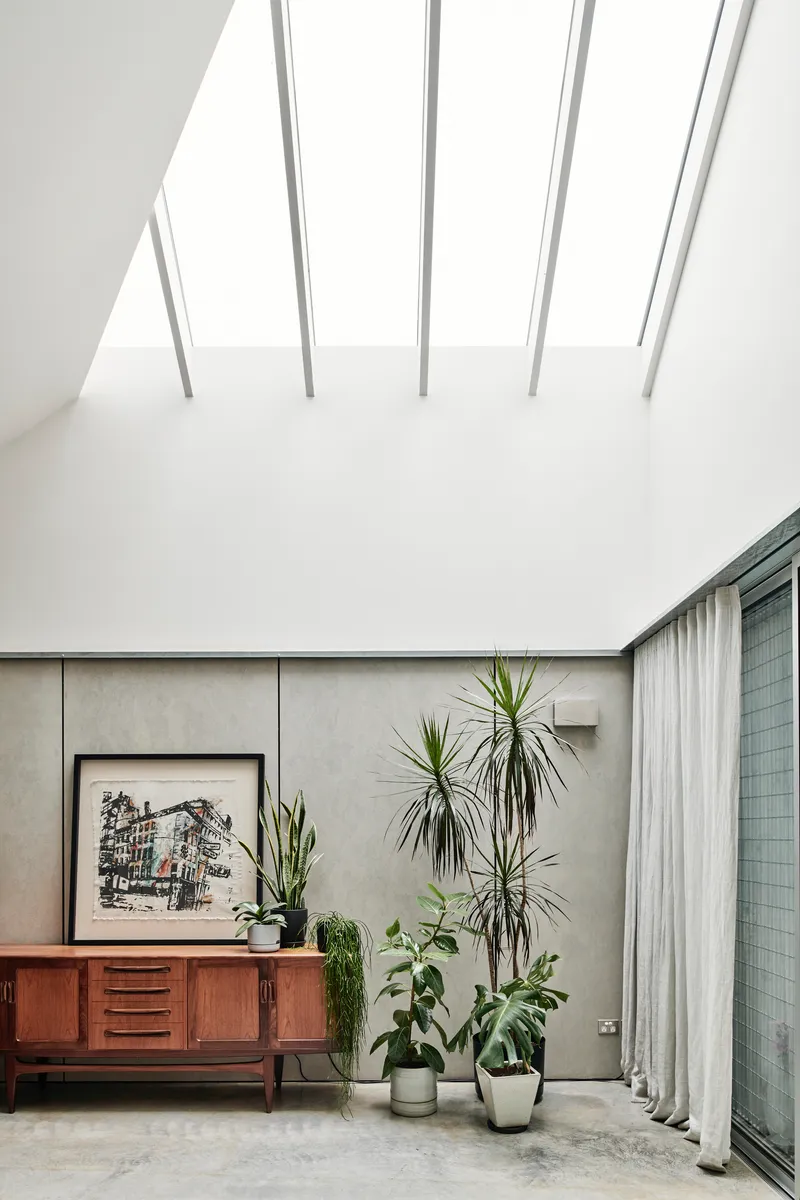
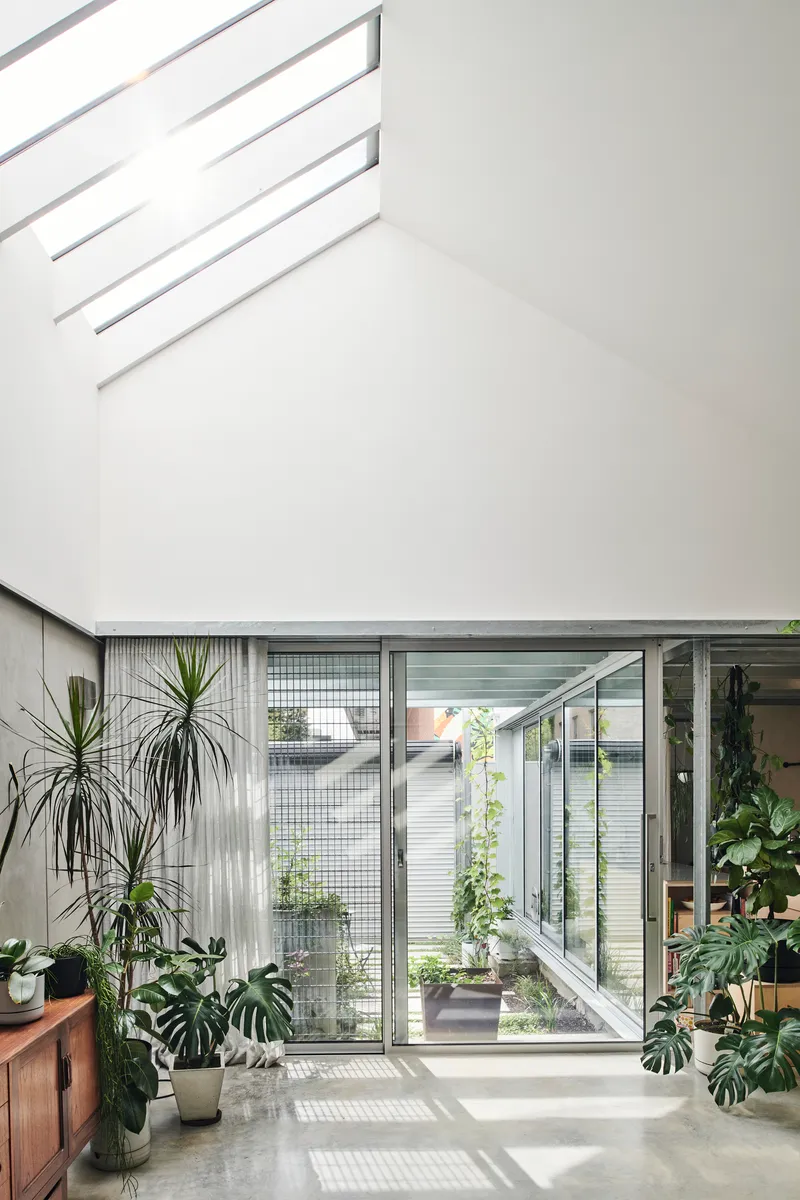
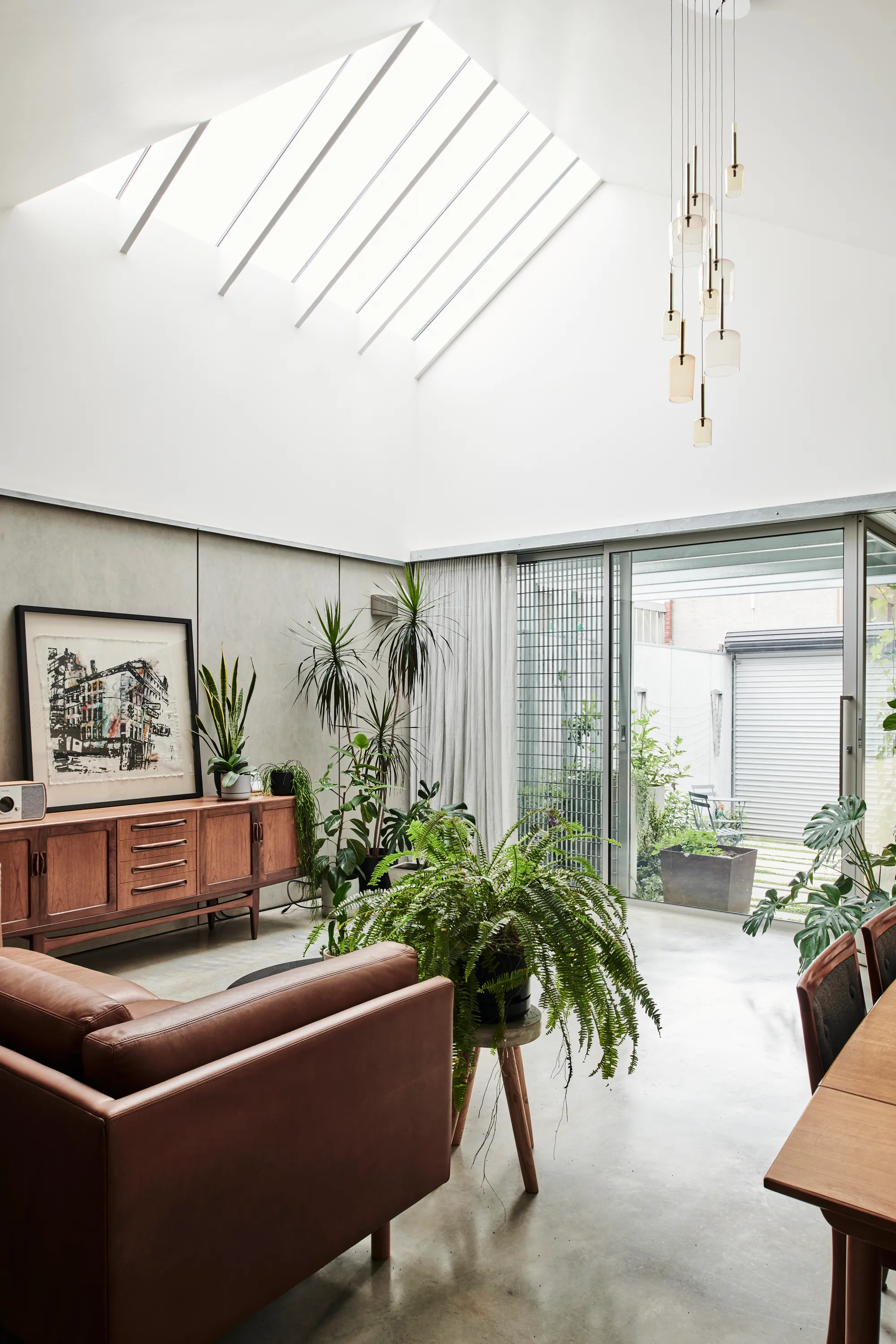
The double-height pitched ceiling in the addition is the spatial centrepiece of the house. Its ridgeline is deliberately skewed to the north, integrating a skylight that washes the interior with warming natural light. On a sunny afternoon, diagonal shadow lines from the skylight mullions stripe the white walls like a sundial. It is one of the most photogenic moments in the project, but more importantly, it is doing serious passive-design work: the tall eggshell volume diffuses and amplifies daylight deep into the plan, reducing the need for artificial lighting.
FIGR also negotiated with the adjacent neighbor to increase the view to the sky, achieving mutual visual privacy without physical screens. That kind of collaborative urbanism rarely makes it into project descriptions, but it is exactly the sort of social negotiation that makes tight-site living viable. Double-glazed windows and high-performance insulation handle the thermal side of the equation.
A Kitchen That Opens onto Everything
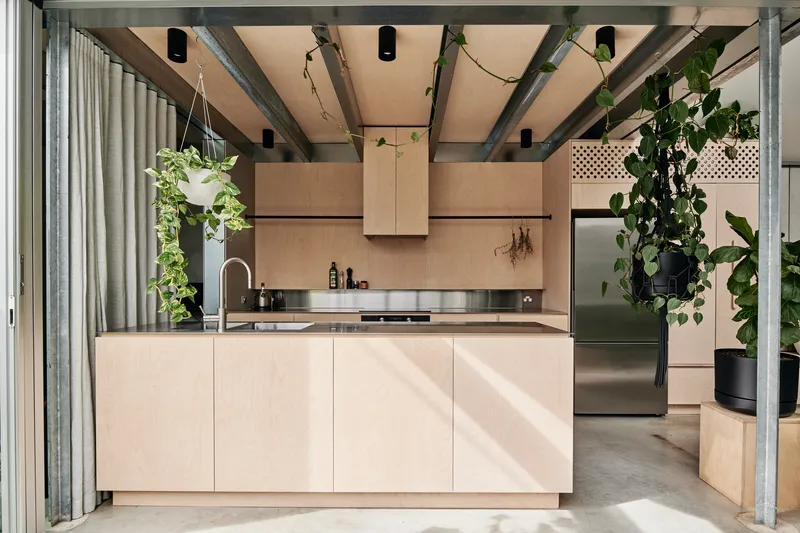
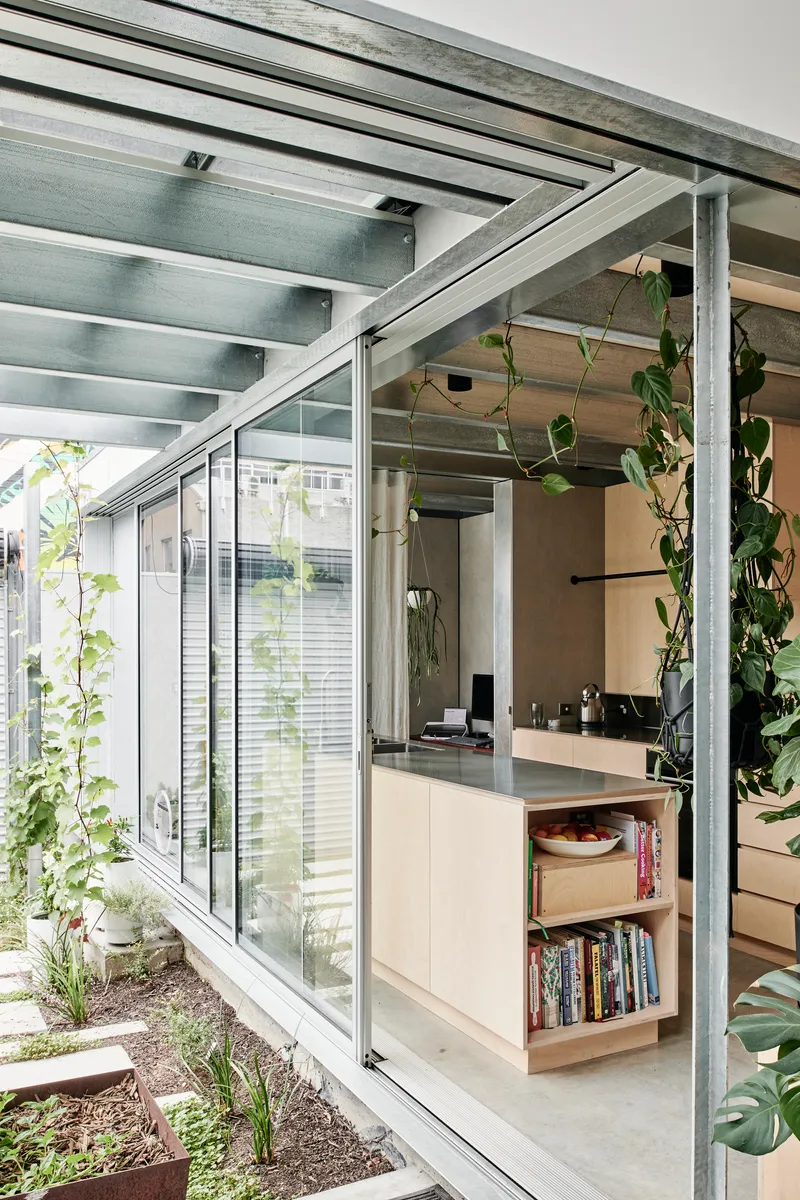
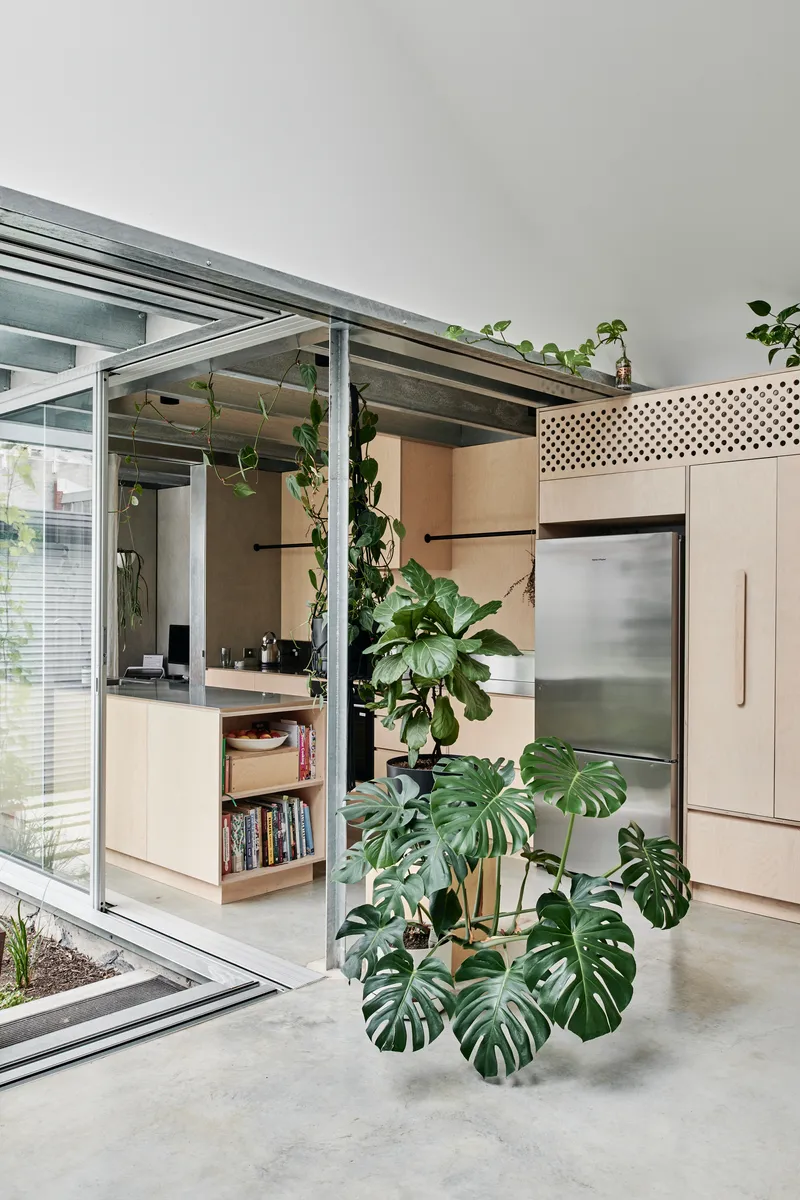
The kitchen sits at the heart of the new volume, organized around a plywood island topped with a stainless steel benchtop. MaxiPly Russian birch cabinetry, finished in Osmo oil, wraps the perimeter. Overhead, exposed galvanized steel purlins carry pendant lights and, in a move that gives the room its character, hanging monstera plants that blur the boundary between indoor and courtyard. The structural frame is left visible, and the glazed roof reads as a continuation of the pergola outside.
Sliding glass doors on two sides mean the kitchen can be thrown open to the courtyard in warm months, effectively doubling the usable area. A work-from-home station sits beyond the kitchen, positioned to catch light from the courtyard. In 109 square meters, FIGR managed to fit cooking, dining, working, and living without any of those functions feeling squeezed.
The Courtyard as Connective Tissue
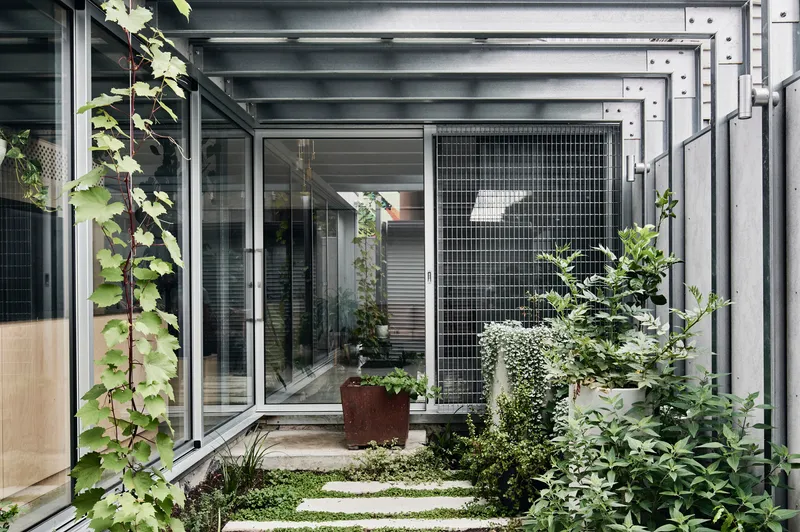
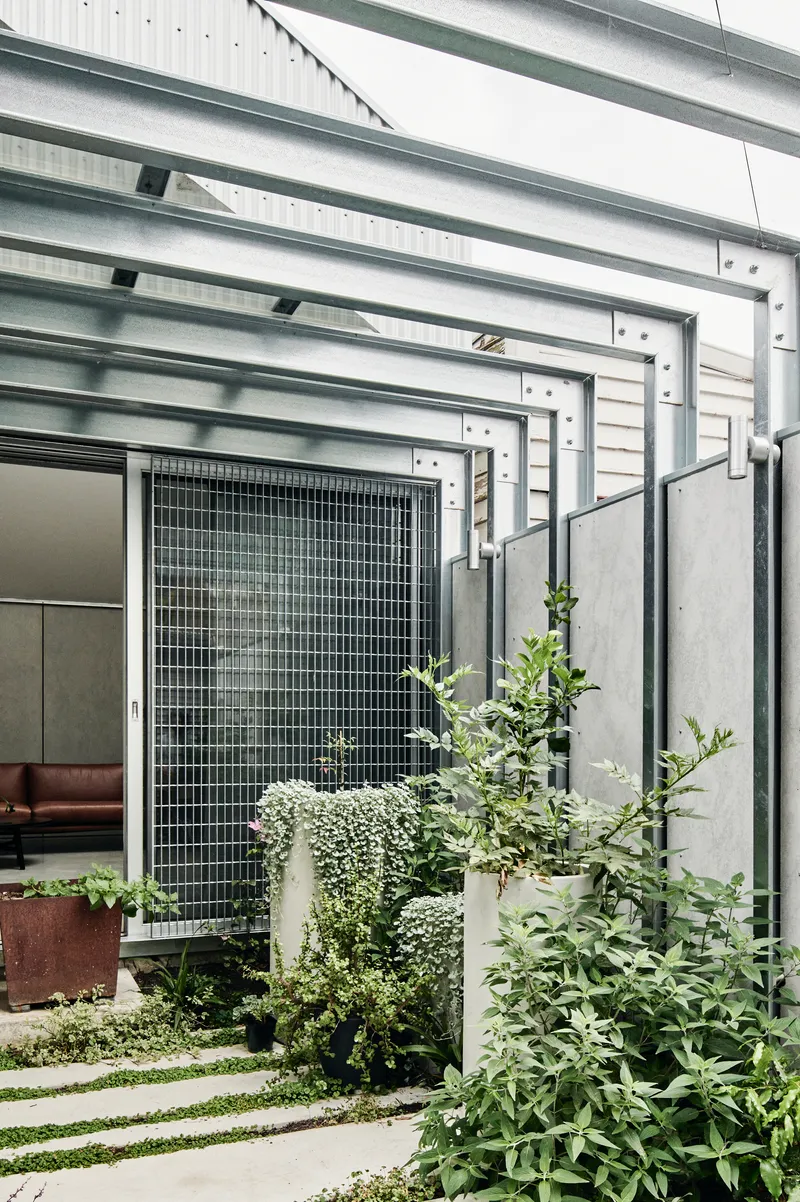
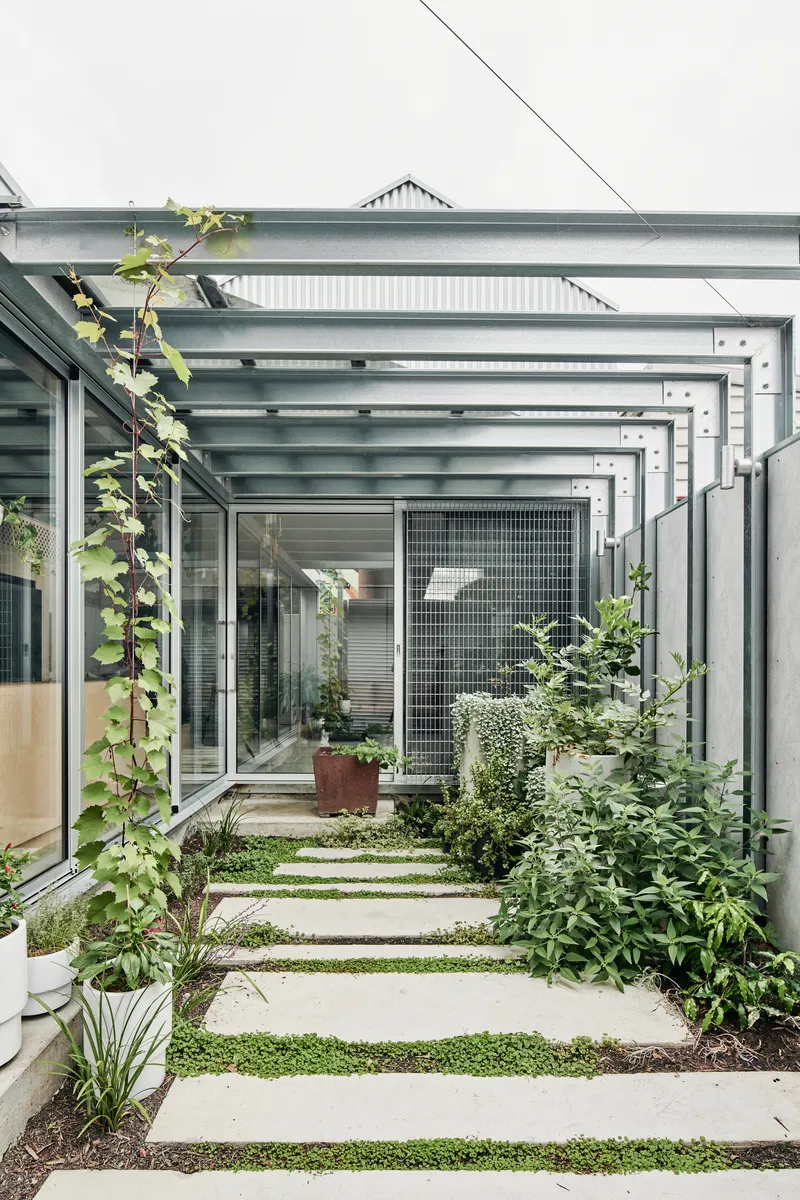
Rather than treating the garden as leftover space, FIGR uses the courtyard as the organizing logic of the entire addition. Rooms are arranged around its edges, and every major living space looks into it. Grass pavers, climbing vines, wire mesh screens, and a collection of potted plants give the courtyard a layered, slightly wild quality that contrasts with the precision of the interior detailing. A glazed steel pergola shelters a pathway connecting the kitchen to a bike shed and storage area.
Beneath the surface, the courtyard is working hard. A 2,500-liter rainwater harvesting tank collects runoff for irrigation. A narrow rain garden along the northern boundary filters stormwater while providing diffused light to the bathroom. Worm composting closes the organic waste loop. These are not token sustainability gestures; on a site this tight, every square meter of ground has to perform multiple functions.
Bathrooms as Found Objects
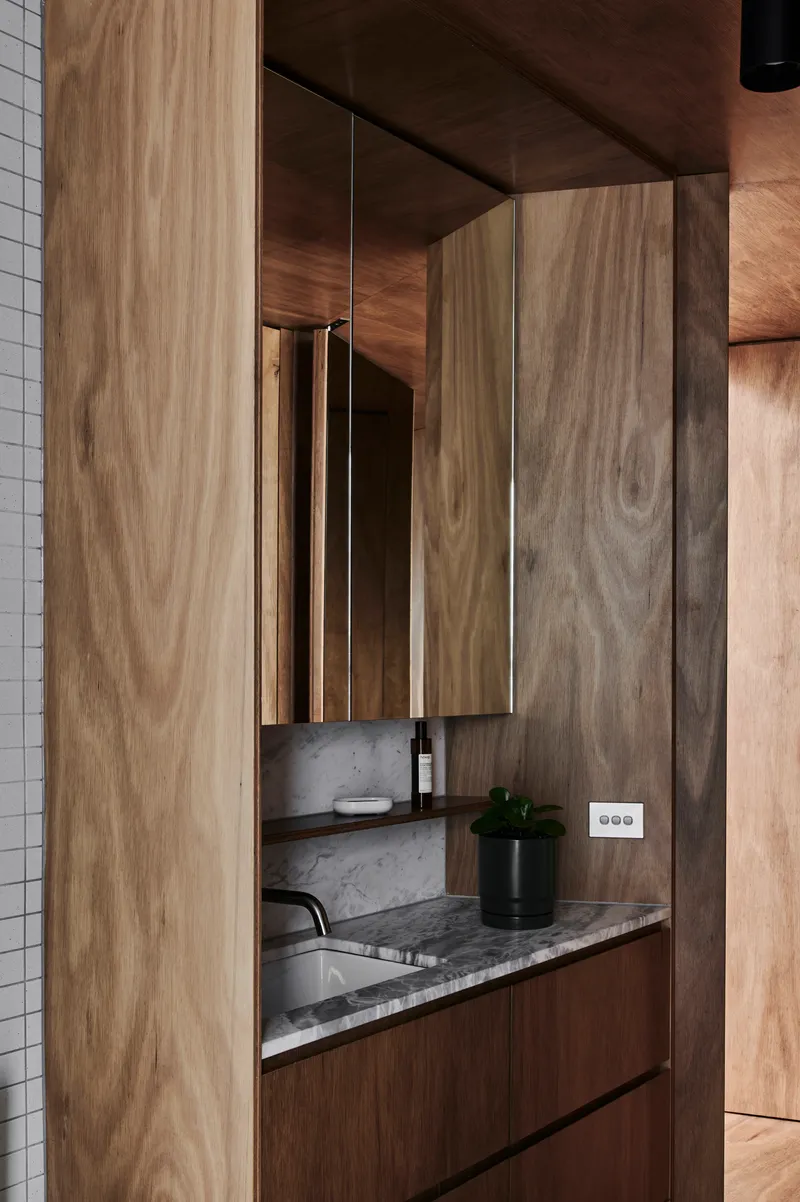
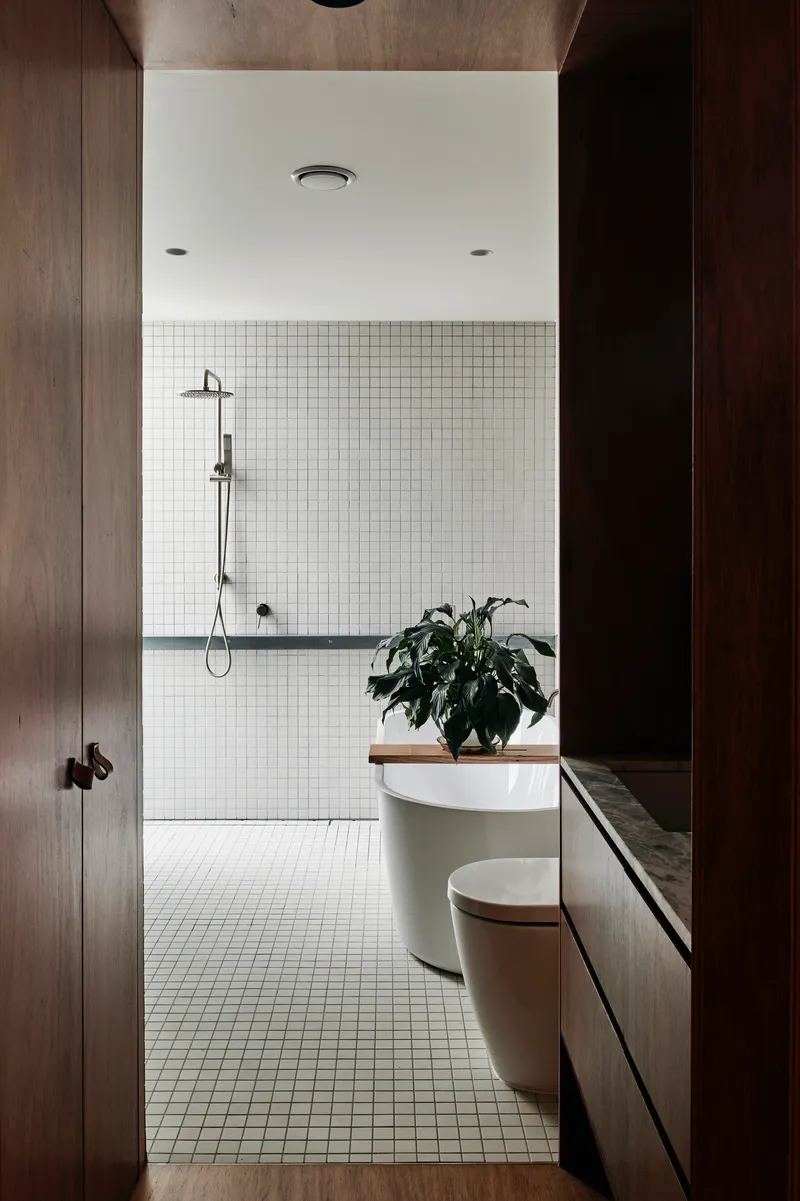
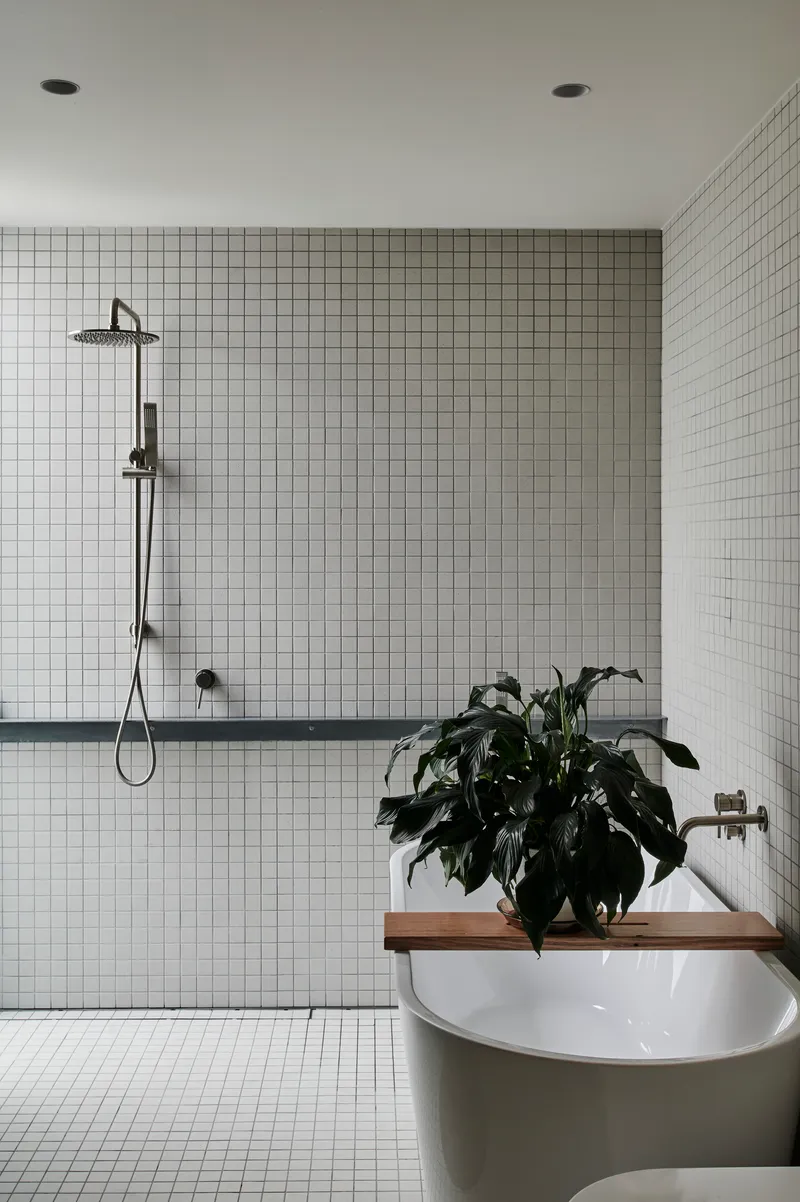
The bathrooms feel like they belong to a different register than the rest of the house, and that is the point. Recycled marble, smoked mirror, white mosaic tile, and a freestanding tub create small moments of indulgence tucked inside the utilitarian shell. The main bathroom vanity is set within a mirrored niche that visually doubles the room, a necessary trick in a space this compact. The open shower doubles as a dog-washing zone, which is the kind of pragmatic detail that separates a house designed for actual living from one designed for a magazine cover.
Inside and Outside, Collapsed
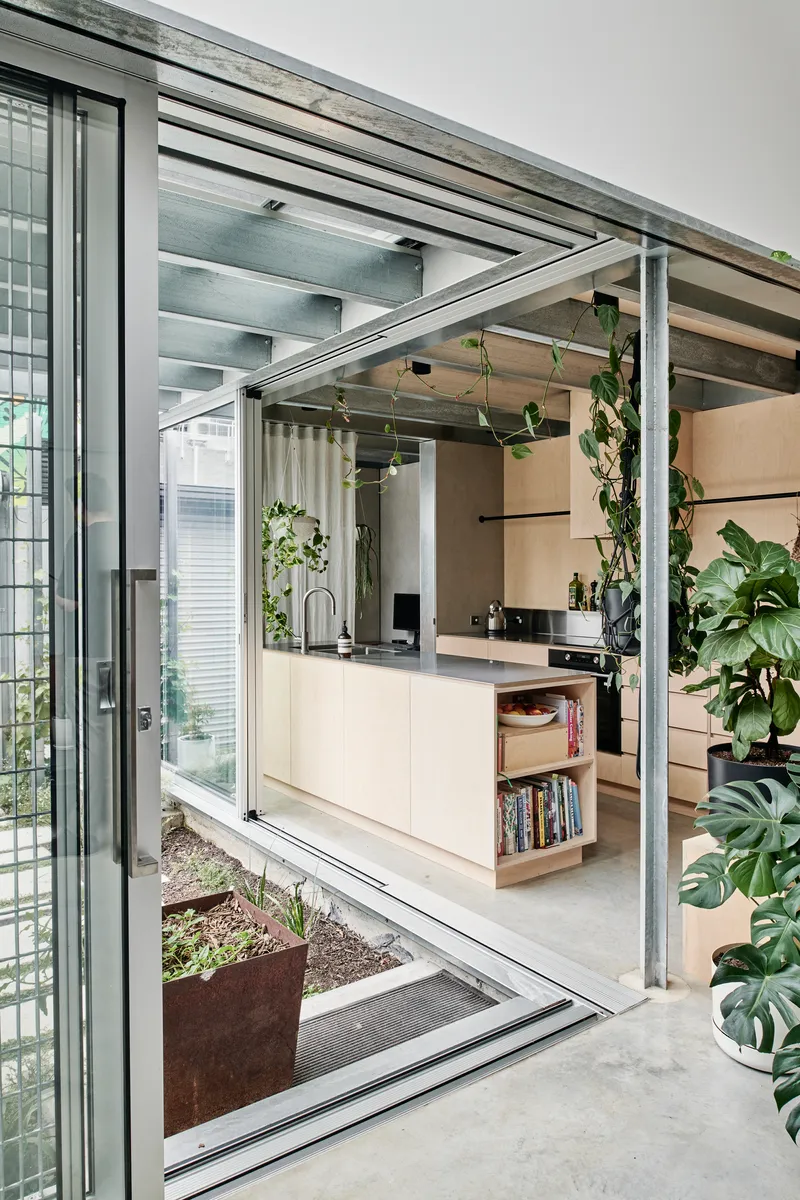
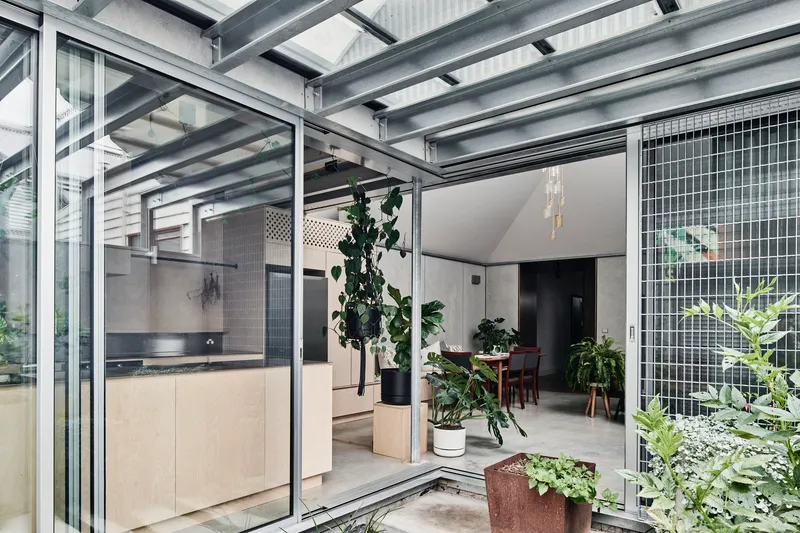
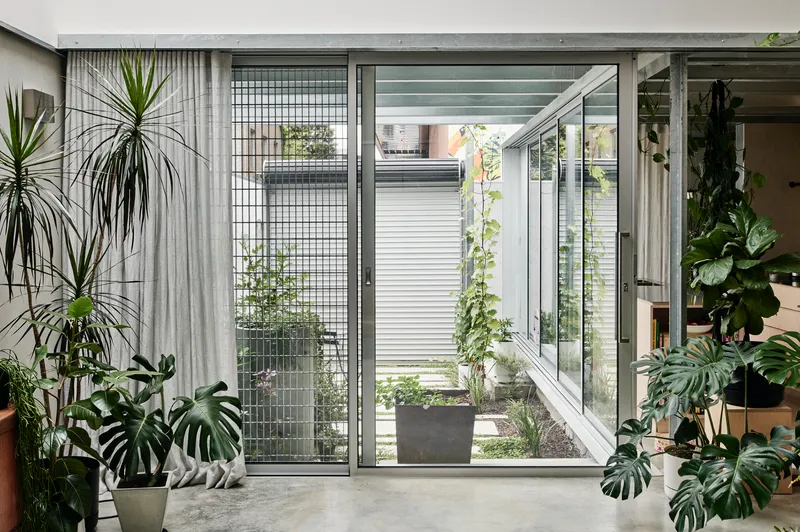
The most compelling quality of the house is how aggressively it dissolves the boundary between inside and out. Sliding doors open the kitchen to the courtyard. The steel pergola reads as an extension of the interior structure. Plants hang from the exposed purlins inside and climb the mesh screens outside. Even the corrugated metal cladding wraps both interior courtyard walls and exterior facades, refusing to distinguish between the two.
Standing in the living space and looking through the open courtyard, past the steel beams and greenery, you understand the strategy. FIGR did not try to make a small house feel big through visual tricks or white-walled minimalism. They made a small house feel generous by making the garden a room, and the rooms a garden.
Plans and Drawings
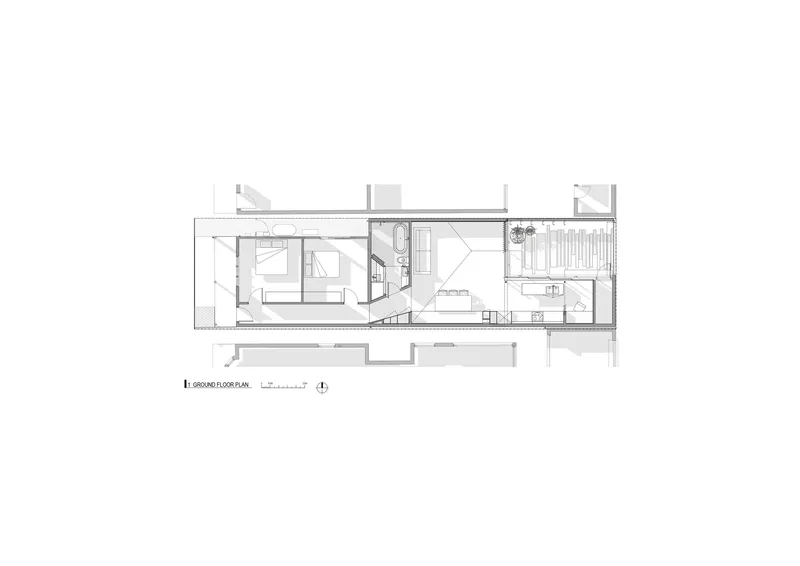
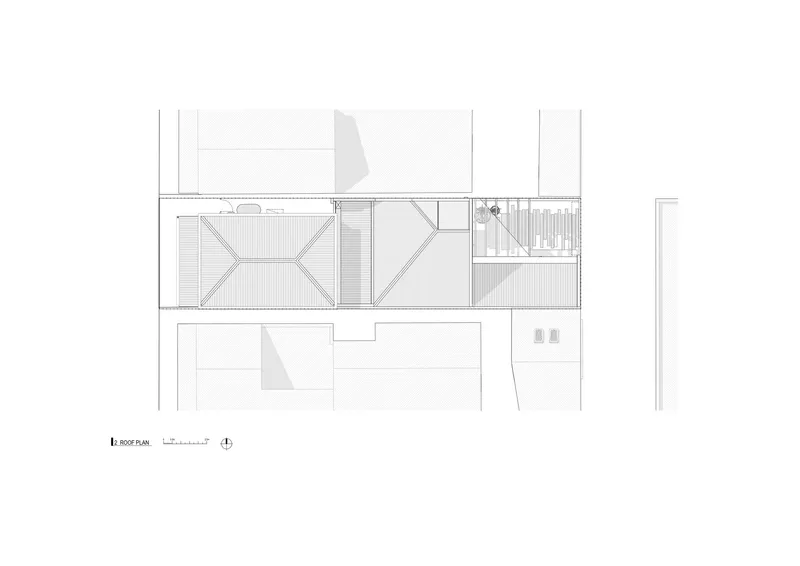
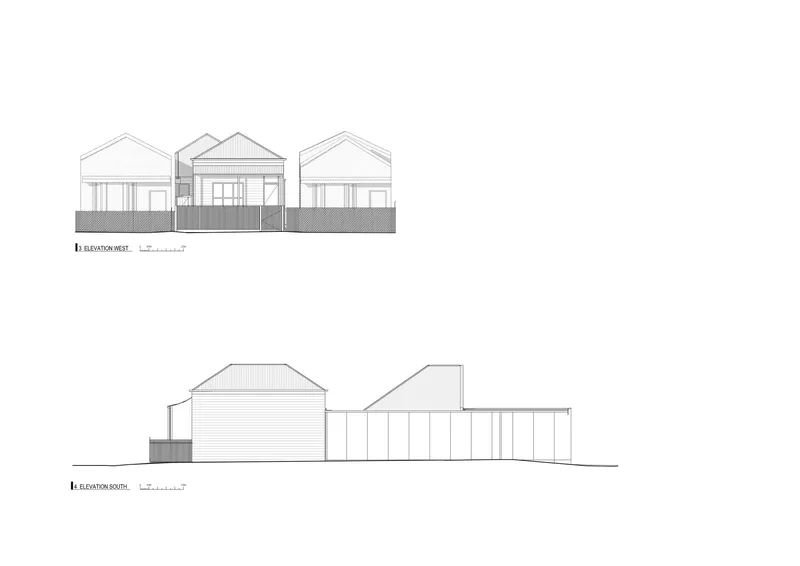
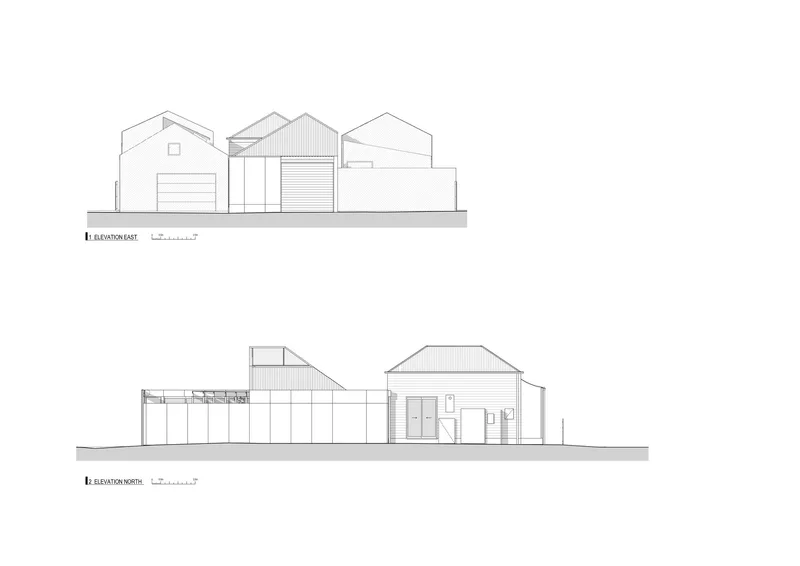
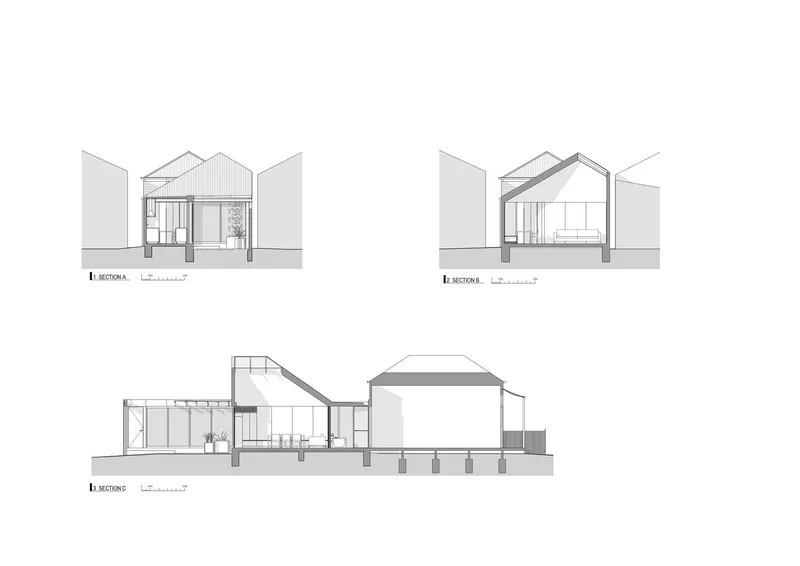
The ground floor plan reveals the linear logic of the house: two original bedrooms occupy the front of the cottage, the timber portal cranks through the centre, and the new living spaces fan out around the courtyard at the rear. The roof plan shows how the gable volumes are offset to create the north-facing skylight. Elevations confirm the three distinct gabled forms, each clad differently, while the section cuts expose the double-height space and its relationship to the low-ceilinged original rooms. What the drawings make clear is just how precisely the angles and offsets are calibrated. Nothing is accidental here.
Why This Project Matters
Australian cities, Melbourne foremost among them, face an ongoing tension between densification and livability. The reflex is to go up: apartments, townhouses, stacked units. That Old Chestnut House makes a quieter argument. It says that the existing housing stock, even a tiny workers cottage on a sliver of land, can be reimagined to accommodate contemporary life without demolition or vertical expansion. It is, as FIGR puts it, a sustainable act to make space work harder.
The project also offers a lesson in material honesty. By drawing its palette from the industrial roofscape of Cremorne itself, FIGR produced a house that belongs to its context without nostalgia. Galvanized steel, raw concrete, and plywood are not stand-ins for something more expensive. They are the architecture. In a profession that often treats residential projects as showcases for refinement, That Old Chestnut House reminds us that grit, pragmatism, and spatial intelligence can produce something just as compelling.
That Old Chestnut House by FIGR Architecture, Cremorne, Melbourne, Australia. 109 m², completed 2022. Photography by Tom Blachford.
About the Studio
Share Your Own Work on uni.xyz
If projects like this are the kind of work you want to make, uni.xyz is a place to publish your own, find collaborators, and enter design competitions.




Popular Articles
Popular articles from the community


Co-life: Sustainable Architecture for Age-Friendly Community Living
Co-life reimagines sustainable architecture for seniors through courtyards, rammed earth, shared gardens, and spaces designed for belonging.

Hill & Cross Opera: Sculptural Opera House Architecture Shaped by Tallinn’s Landscape and Identity
Hill & Cross Opera reimagines opera house architecture in Tallinn through its sculptural hill, civic plaza, glass wave and a luminous cross.

Co-Life: Senior Housing Design That Reconnects Older Adults With the City
Co-Life reimagines senior housing design through healing gardens, shared streets, workshops, and a sustainable community across generations.

Riyadh For All: Intergenerational Urban Design for Active Aging in Rabat
Riyadh For All reimagines urban design in Rabat with intergenerational co-living, adaptive courtyards, and Moroccan cultural exchange today.


Similar Reads
You might also enjoy these articles

Bao Huynh Watercolor Atelier: A Serene Art Retreat in Hội An
Bao Huynh Watercolor Atelier in Hội An blends multifunctional art spaces, sustainable design, local materials, and family-friendly living in a serene environment.

Atelier Macri Concept Store Interior Design by CASE-REAL
Atelier Macri store features a "ko" counter, walnut wood details, cork displays, blending retail, gallery, and seamless customer experiences.

Manuel Vargas Izquierdo Stadium and High-Performance Sports Center: Architectural Excellence in Jalpa de Méndez
The Manuel Vargas Izquierdo Stadium blends sustainable design, inclusive sports facilities, and cultural-inspired architecture, revitalizing Jalpa de Méndez’s public spaces.

KAKR Buluh Awar Hall: Revitalizing Community and Ecology Through Bamboo Architecture
Community built bamboo hall revitalizes Buluh Awar village, empowering youth, restoring ecology, celebrating vernacular craftsmanship through sustainable architecture and culture.


Explore Residential Building Competitions
Discover active competitions in this discipline


Challenge to design mud housing for contemporary communities


Challenge to reimagine the Iron Throne


Photograph architecture without architects


Illustrate the lost glory of Angkor Wat - Render Challenge
Comments (0)
Please login or sign up to add comments
No comments yet. Be the first to comment!