
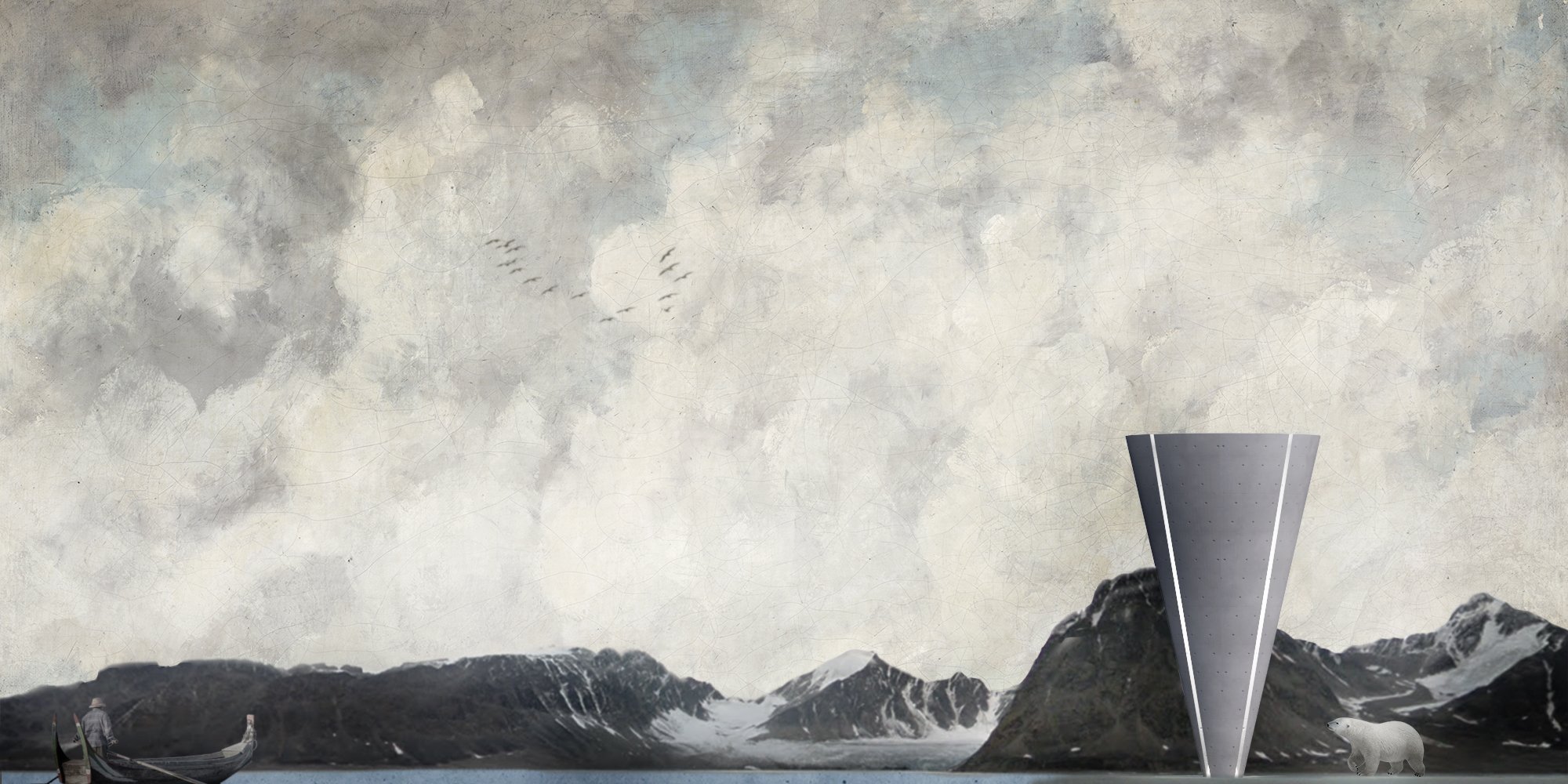
FIRE ICICLE
What if there is a light under the water?

CONCEPT
The whole idea of a lighthouse is to emanate light from a source placed as high as possible from the ground. But what if this is not the only option? What if we have a light source deep under the sea level and guide it up, to light the world above the water? Our intent was to not only light up the way for sailors so that they can find the way to the land, but also to light up the depth, a place that has never met the eye of the sun before, so that these two worlds are now connected by the same ray of light.
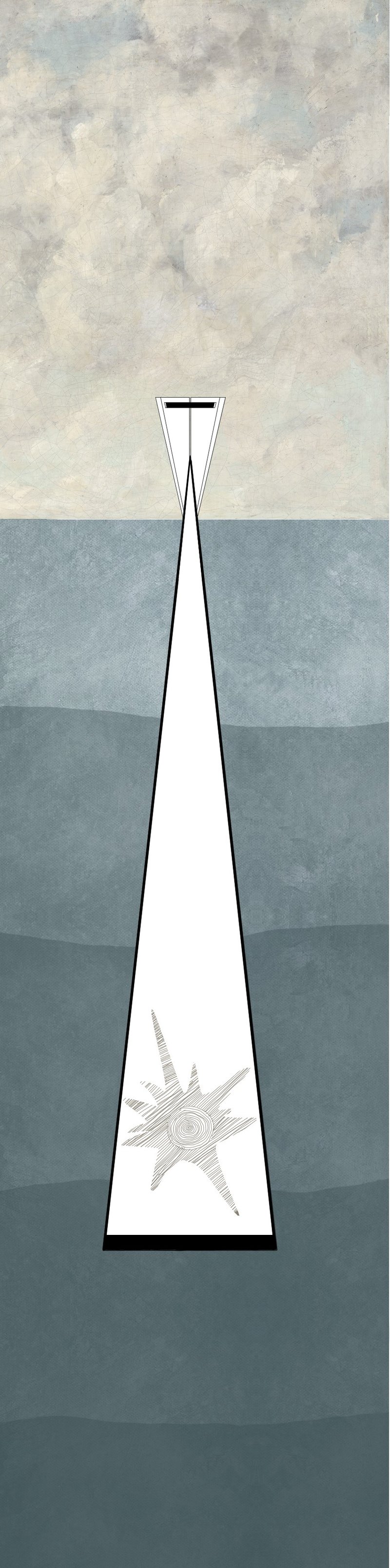
PLACEMENT ON SITE
We placed our lighthouse on a small area of land found in the northern part of the site, located as far as possible towards the water. This allowed us to propose an object that digs deep into the sea without intersecting the earth, and allowing our construction to give the upper side the illusion of floating on water, rather than standing on solid ground.
FORM
Part of a Norwegian archipelago, located at south from the North Pole, the site inspired us to approach a shape inspired from nature, that of an icicle. Following the concept, and in our trying to find a deeper connection between two separate worlds, land and sea, we obtained a final volume, that of a hourglass. An icicle on the land, pointing towards the sea, and another one below, mirrored, so it points from the water to the above land.
The first icicle, located on land, has an approximate diameter of 50 centimeters at its conjunction with the land, and reaches a 4 meters diameter at its highest point. It has a height of 7 meters, being the smaller version of the two. It is made of mainly two kinds of pieces: 4 walls, not touching each other, kept together by a lid, placed at 50 centimeters beyond the tower’s highest point. This lid is also detached from the walls, using only small portions of them to connect.
The second icicle is part of the underwater construction, and reaches 42 meters depth. The cone’s base has a diameter of 6 meters, not much more that its above-the-water equivalent, but the remarkable length ratio difference makes it look more supple, reminding much more of the natural shape of an icicle. Here, in the underwater part of our hourglass stands our source of light, a sphere with limbs that cling to the walls to keep it in its place.
FUNCTION
A lighthouse represents home, a sign that land is near for anyone out at sea during a storm, bad weather or an ordinary night. Light represents life and hope, but here it also represents a source leading in the right direction. This are the meanings that we wanted to emphasize through our project. We took a sphere and stretched it, transforming it into a living organism whose purpose is to light up the world. It stretches and sticks to the limited space that it has, anticipating the way the light will stretch beyond that space.
The organism emits light in its surroundings, becoming a center, a source of life for the aquatic creatures, and travels above to light up the land and the sky. While reaching the upper part of the hourglass, it escapes from the glass cone where it intersects the opaque part of the construction, and then travels outside through the 4 slots that separate the walls. Each slot points to each of the cardinal points, a suggestion for the lighthouse’s purpose: to shine everywhere around it. The light also goes upward, through the slits existing between the lid and the walls, going towards the sky forming a furthermore tight connection between the world above the sea and the one underneath it. Due to the fact that the lighthouse uses a living organism to power itself, it does not need the assistance of any human being, but merely their recognition and appreciation.
MATERIALITY
Even if the two connected towers communicate and their purpose is to unify and create a deeper connection between two worlds, there appear some differences in terms of materiality.
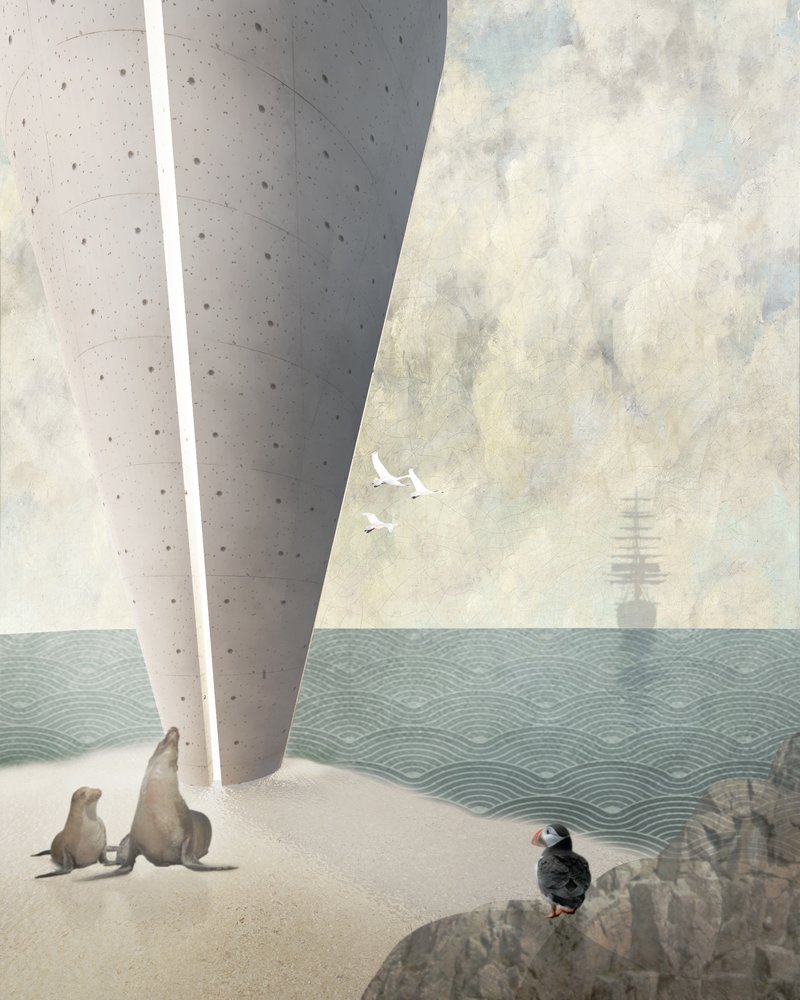
On one hand we can talk about a more opaque approach at the level of the above ground tower. We used exposed concrete on it for multiple purposes. The main reason would be that it helps in function, the opaque material only letting the light escape through the designated slits. The second reason in using concrete is so that the lighthouse can adapt to its surrounding nature and not be a point of major interest during the day. Its point is to attract at night from a great distance, but during daytime we wanted it to be a part of its environment. This will be a hidden monument during the seasons when the sun is always up, an unknown construction living in silence between the rocks already existent.
On the other hand we have the underwater lighthouse. This one is treated in a much more transparent manner. It is made entirely of glass, the only exception being the light sphere. Here we can talk about using glass in order to let the light shine through, and to generate a space for that living light sphere that does not let water in, but also does not seem that exists there, because it blends with the surroundings.


Popular Articles
Popular articles from the community

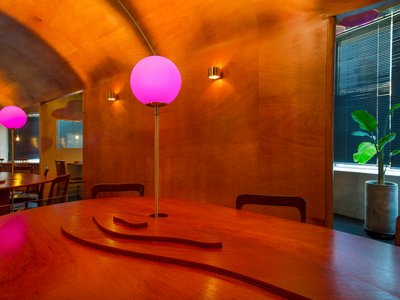
Indiesalon Carves a Plywood Cave into a Seoul Bistro's Second Floor
Munhwa Bistro's second Seongsu branch wraps diners in a laminated timber vault laced with colored light and mirror illusions.

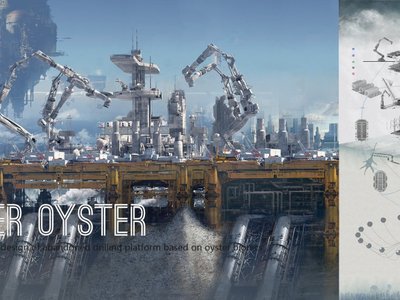
Cyber Oyster: A Visionary Adaptive Reuse Architecture Project Transforming Abandoned Oil Rigs Through Oyster Bionics
An adaptive reuse architecture concept transforming abandoned offshore oil platforms into self-healing marine ecosystems inspired by oyster bionics.
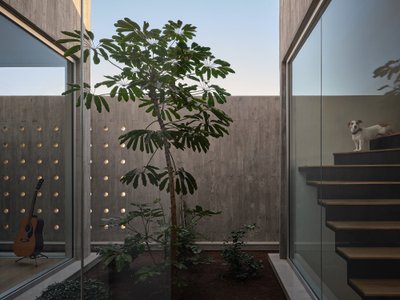
Driss Kettani Carves a Private World from Concrete Boxes on a Tight Casablanca Plot
Villa Polo stacks perforated concrete volumes around courtyards and a rooftop pool to shield a family home from the dense urban fabric.
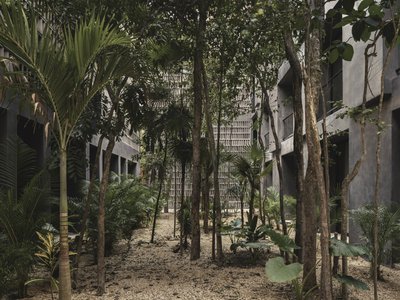
Three Studios Build 200 Affordable Units for Tulum's Displaced Hospitality Workers
Casa Selva embeds dark concrete housing blocks into Yucatán rainforest, offering dignified shelter to those priced out by the tourism they serve.

Similar Reads
You might also enjoy these articles
The Rhythm of Seasons
A Farmers' Market Connecting Nature and the City

More Than a Building-Designing a Living System
More Than a Building-Designing a Living System
Base Beyond
DESERT COMPOUND ARID: TOURISM OF ABSENCE AND ABUNDANCE


Explore Architecture Competitions
Discover active competitions in this discipline




The International Standard for Design Portfolios


The Global Benchmark for Architecture Dissertation Awards


The Global Benchmark for Graduation Excellence


Challenge to reimagine the Iron Throne
Comments (0)
Please login or sign up to add comments
No comments yet. Be the first to comment!