
Five Collaborators Build a Culture Center with a Community Kitchen in Rural Oaxaca
In Santa Catarina Quiané, low-tech timber construction and rammed earth anchor a communal space born from land tenure struggle.

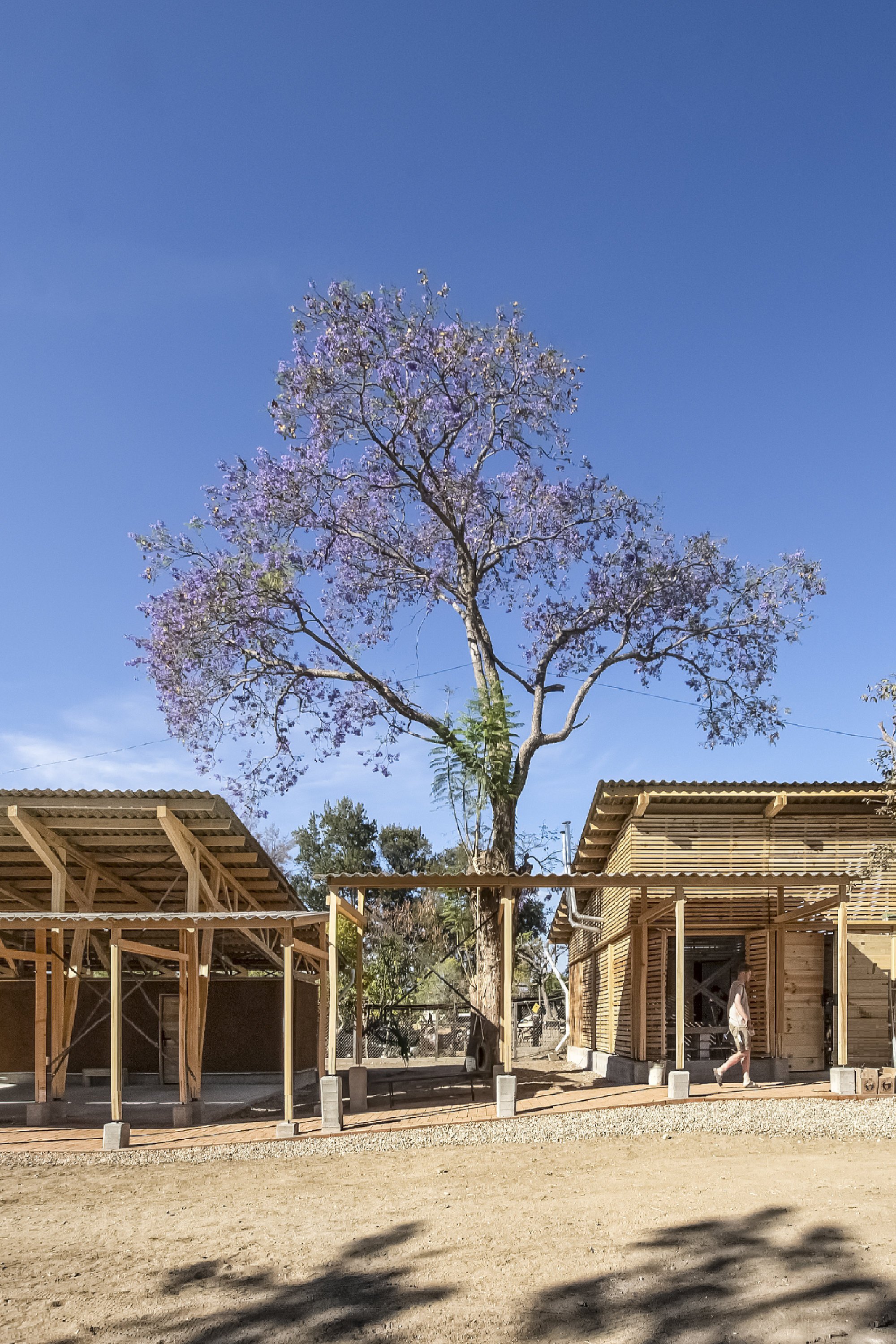
Architecture built through collective struggle carries a different weight. The Quiané Center for Culture and Ecology, Phase 2, is the work of five collaborators: CAMPO, Atarraya Taller de Arquitectura, Universidad de Ciencias Aplicadas de Múnich, Frente por la Defensa de la Tierra, and the Comunidad de Santa Catarina Quiané itself. Completed in 2020, the 250 m² expansion adds a gallery, an open auditorium for dance and music, and a community kitchen to the center's existing campus. The fact that the community is listed as a co-author is not performative. This project emerged during an active struggle for communal land tenure, meaning the act of building was itself a declaration of self-determination.
What makes Phase 2 genuinely interesting is how its low-tech, low-cost construction reads not as austerity but as fluency. The design team worked with ecological and sustainable materials, primarily timber framing, rammed earth, and corrugated metal, and configured them to resist seismic forces through diagonal bracing and lightweight roof assemblies. The resulting pavilions are porous, shade-rich, and alive with the movement of children, cooks, and musicians. In a region where seismological hazard is a permanent threat, this architecture treats vulnerability as a design parameter rather than an afterthought.
A Campus Under the Canopy
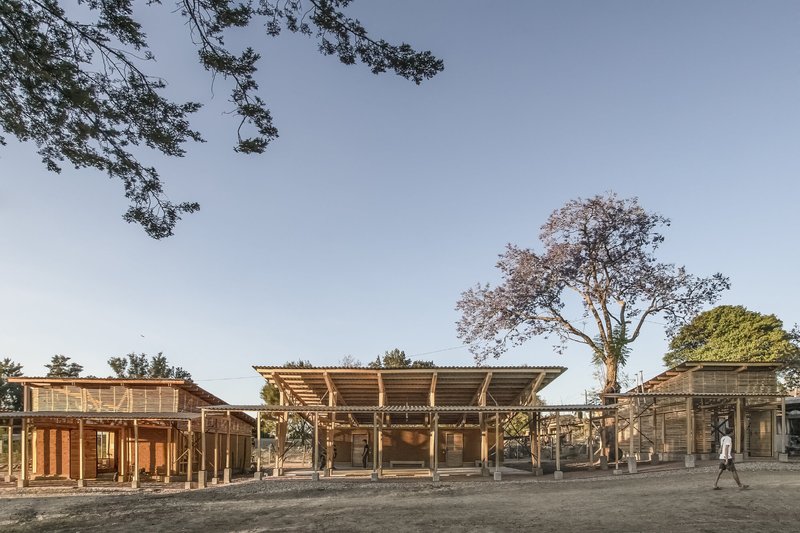
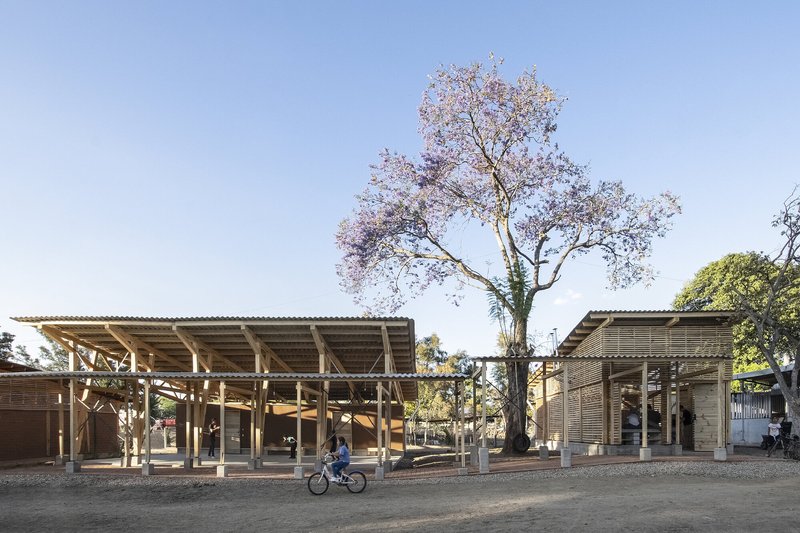
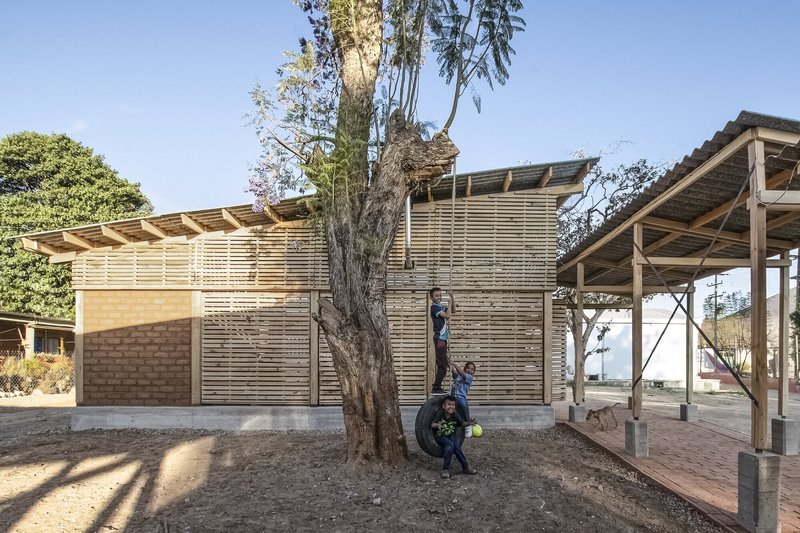
The center's identity is inseparable from its trees. Mature jacarandas and other native species anchor the site, and the pavilions defer to them, slipping beneath canopies rather than clearing ground. The low-rise timber structures with their horizontal slat cladding create a visual grain that rhymes with the surrounding foliage, so the distinction between landscape and architecture softens at every edge. A gravel surface and brick paving replace the hard infrastructure of a typical civic campus, keeping the ground permeable and the atmosphere domestic.
Children on bicycles, a tire swing looped from a branch, people gathering in shade: the photographs by Paulina Ojeda consistently show a place that is used hard and used well. That is the real test for a community building, and Phase 2 passes it.
Timber Structure as Seismic Strategy
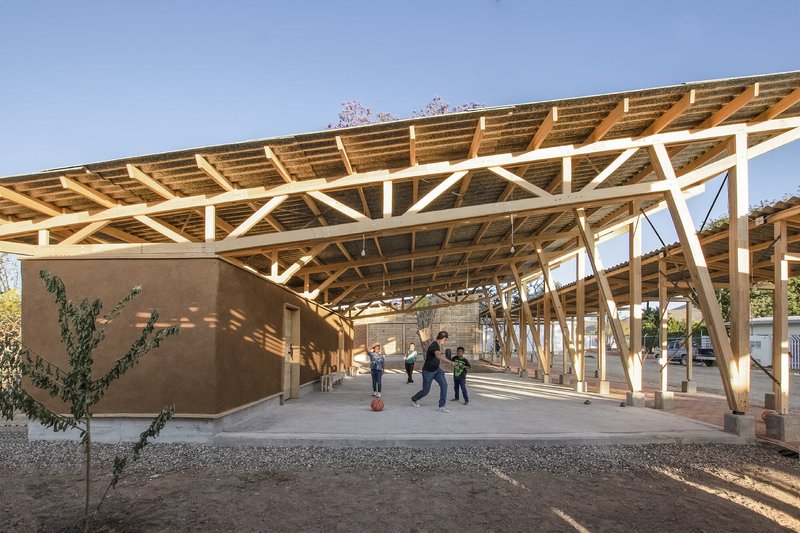
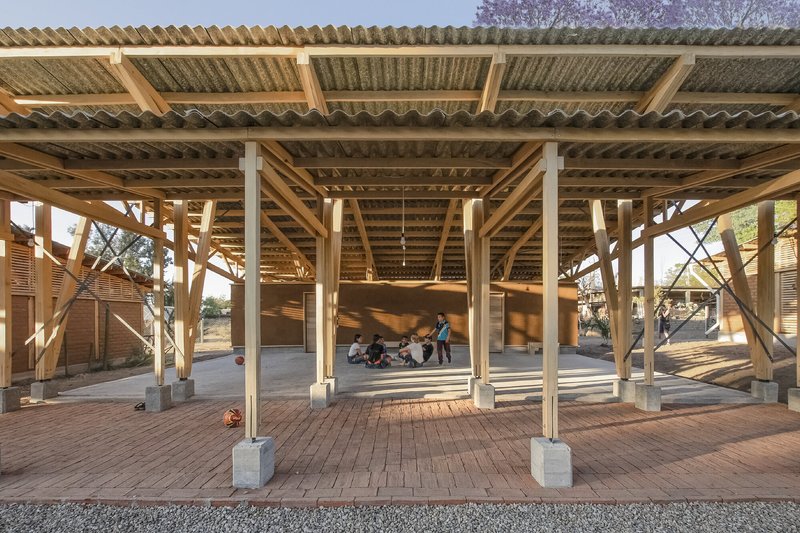
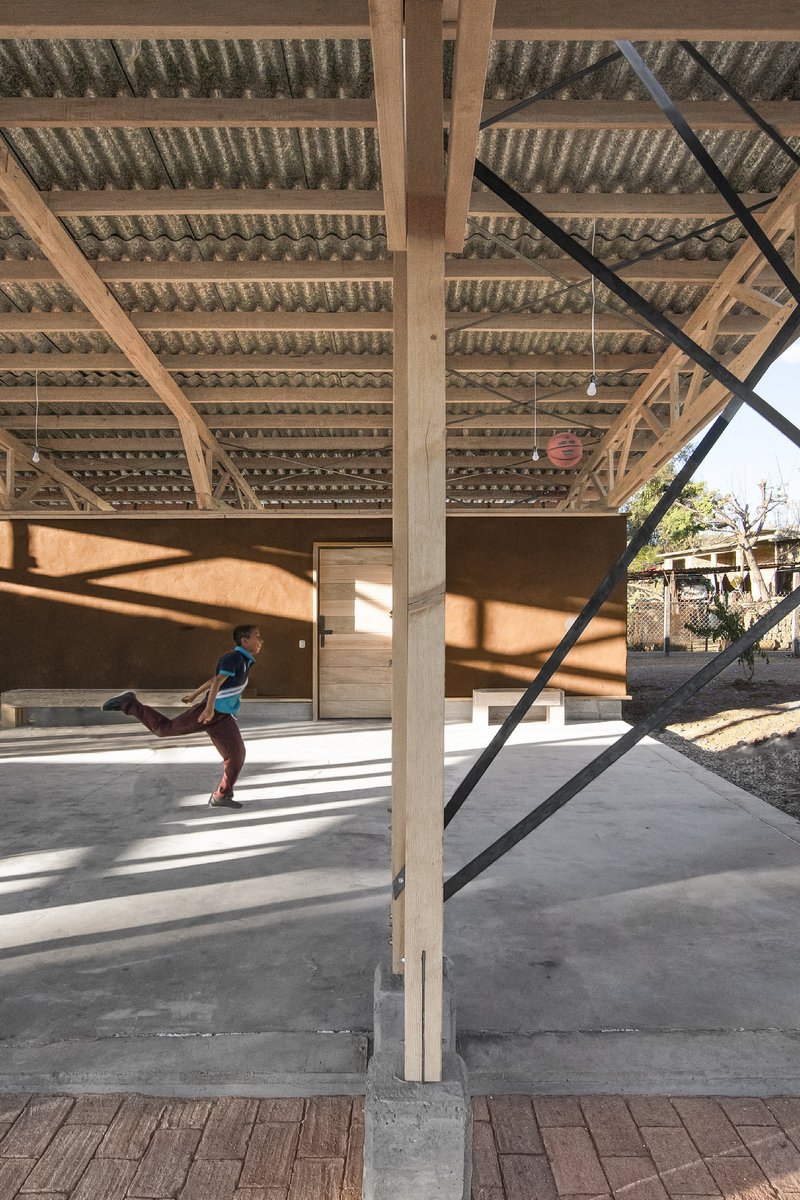
Diagonal bracing is the structural refrain of the entire project. Timber members cross in X-patterns within wall planes and beneath trusses, creating a lattice that absorbs lateral forces during seismic events. The strategy is textbook earthquake engineering stripped to its most legible form: lightweight materials, redundant connections, and a geometry that distributes load rather than concentrating it. Steel connectors appear at key joints, but the vocabulary is overwhelmingly wood.
The white-painted trusses in the covered outdoor spaces have a directness that recalls agricultural structures, which is appropriate. This is building for a rural community of about 400 people, and the construction logic should be replicable by local labor with local materials. Nothing here requires specialized fabrication. That replicability is the point.
Slatted Screens and Filtered Light
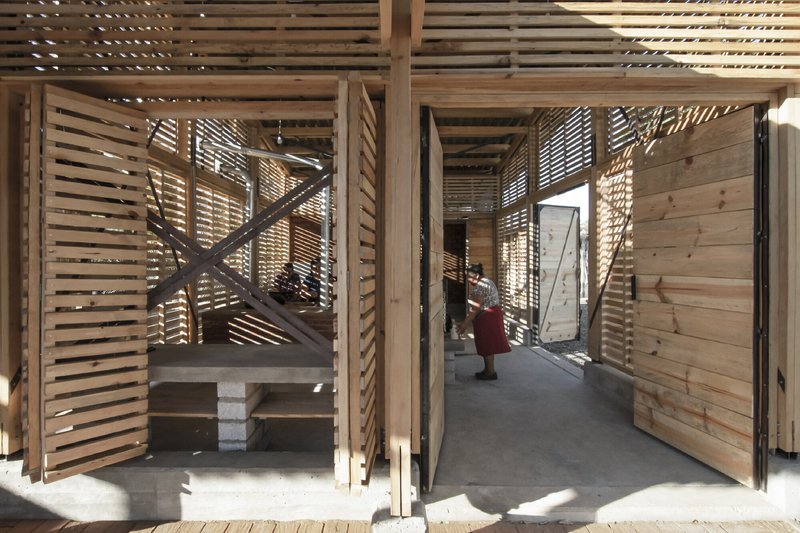
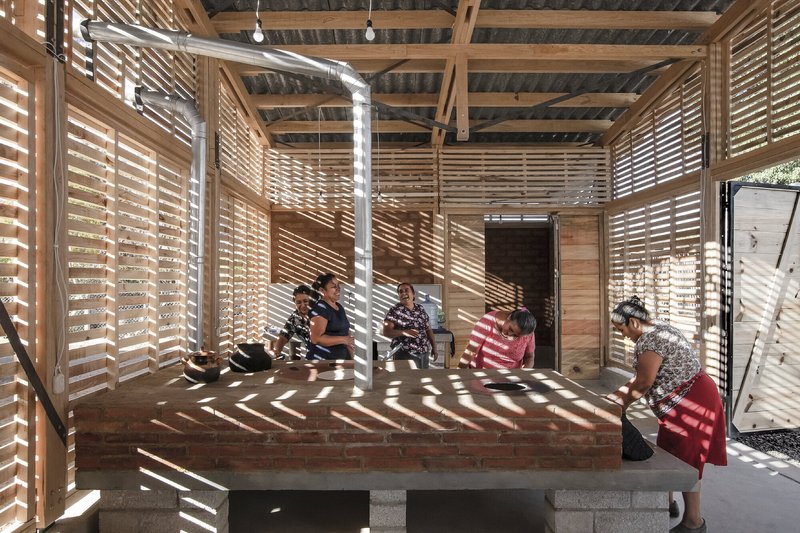
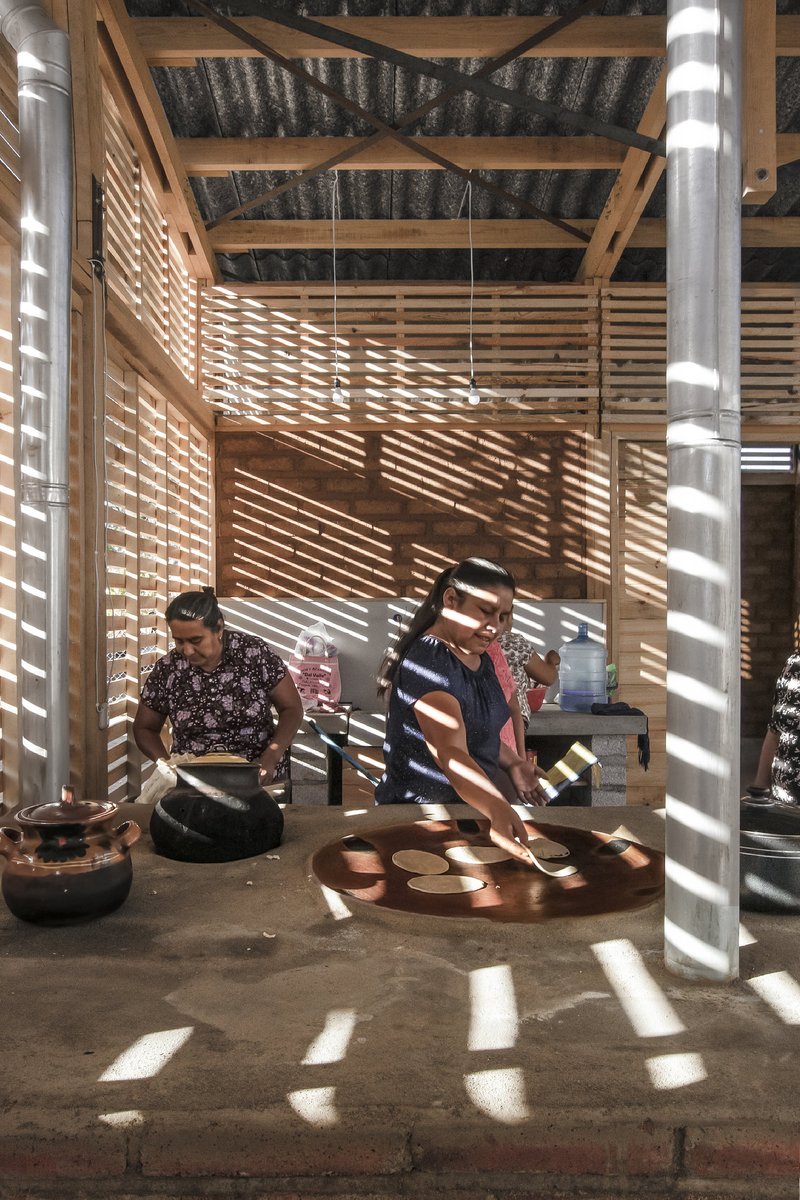
Horizontal timber slats wrap the pavilions in a second skin that modulates light, air, and privacy simultaneously. The interior photographs show striped sunlight patterns on polished concrete floors, a visual effect that shifts throughout the day and transforms what could be a utilitarian enclosure into something atmospheric. The slats are spaced generously enough to ventilate the interiors without mechanical systems, a critical move in Oaxaca's warm climate.
The louvered facade also serves as a threshold device. From outside, the buildings appear semi-opaque, registering as solid volumes. From inside, the slats dissolve into views of trees, sky, and courtyard. That perceptual flip, solid from without and open from within, gives the community a sense of enclosure without confinement.
Rammed Earth and Material Honesty
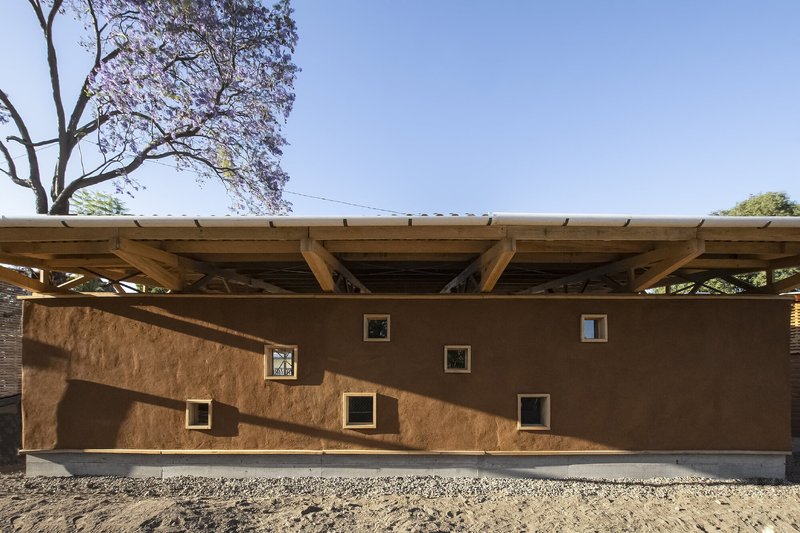
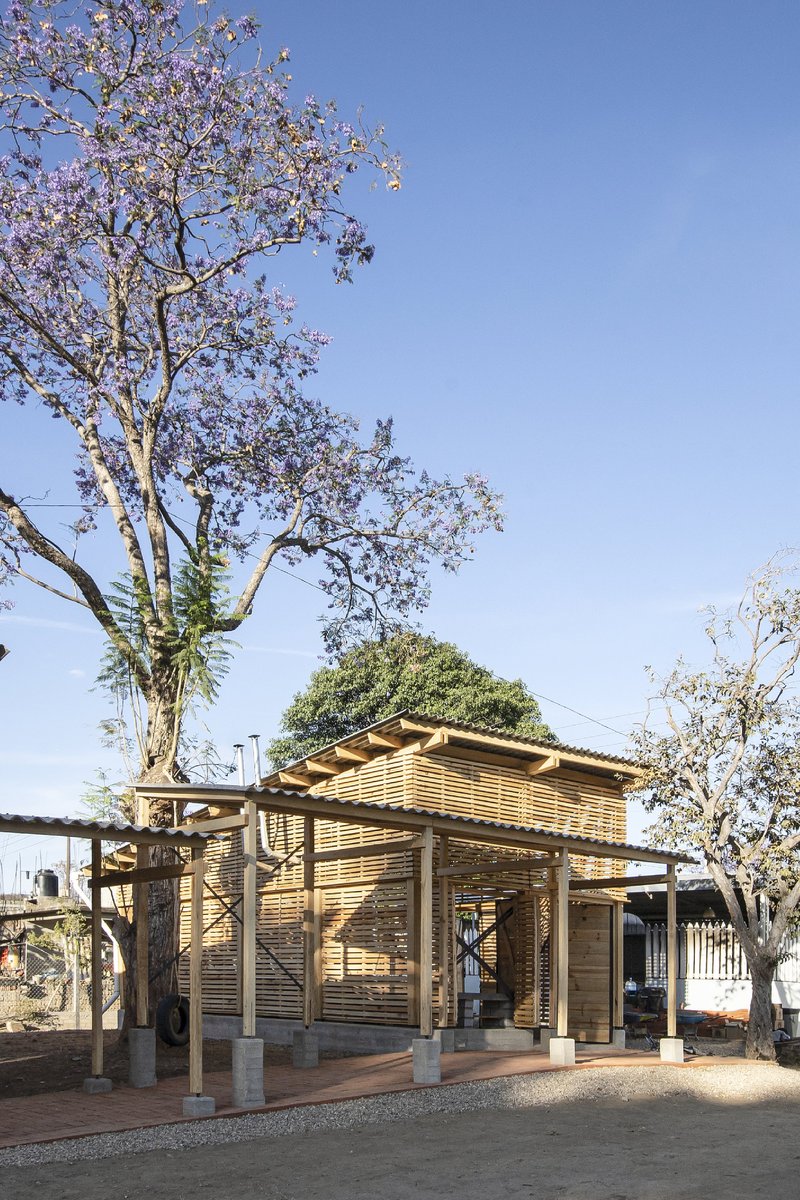
Rammed earth walls appear at strategic locations, providing thermal mass and a visual counterpoint to the lightweight timber framing. One wall is punctuated with small square windows in a scattered composition, an almost playful move that lets light enter as focused spots rather than washes. The layered soil strata visible in the wall surface are left exposed, treating the construction process as ornamentation.
The combination of rammed earth for mass and timber for frame creates a hybrid system that is both pragmatic and expressive. Earth absorbs and releases heat slowly, stabilizing interior temperatures. Timber flexes under seismic stress rather than cracking. Together, they address the two dominant environmental pressures of the site, heat and earthquakes, without importing any technology from outside the region.
The Community Kitchen as Social Infrastructure
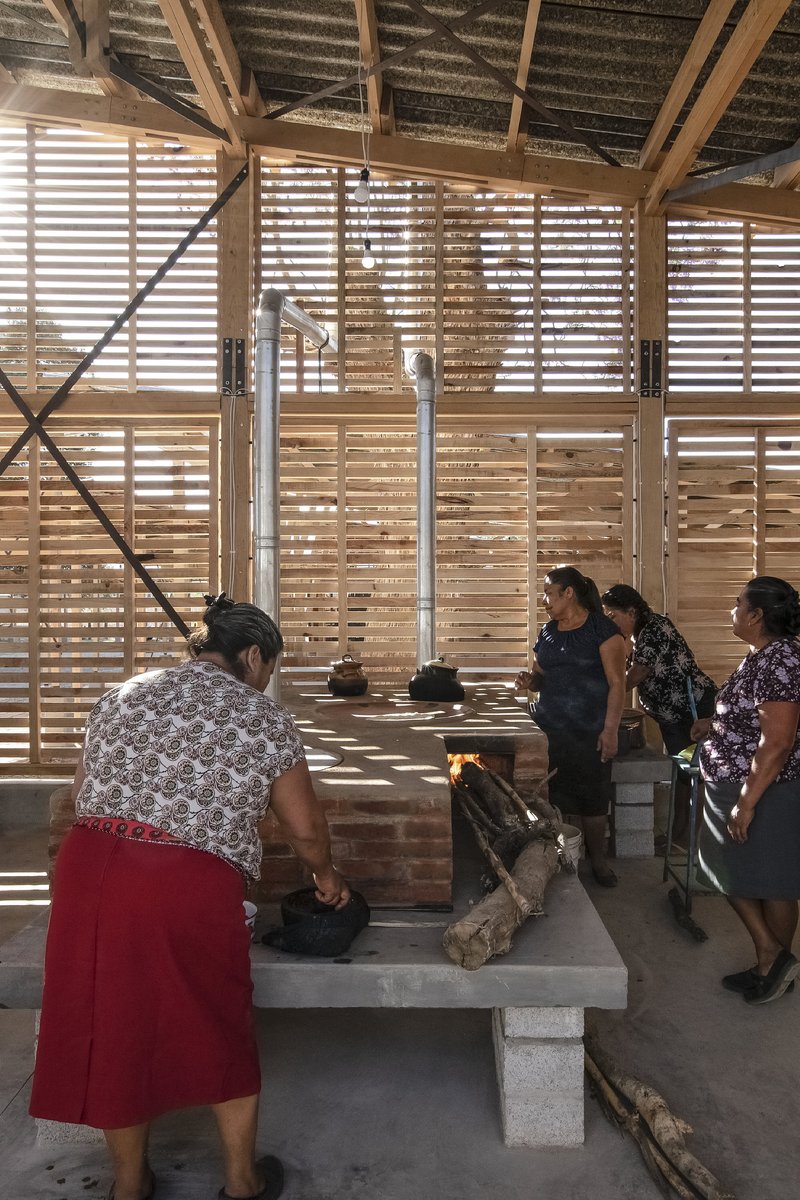
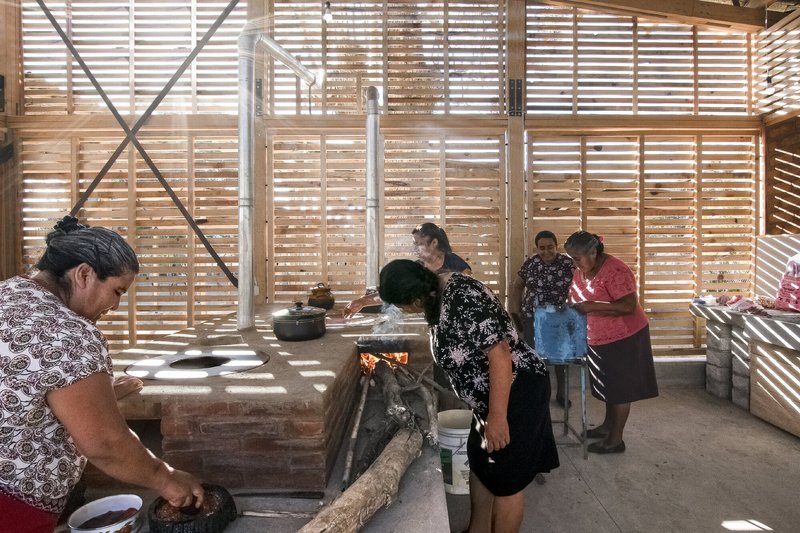
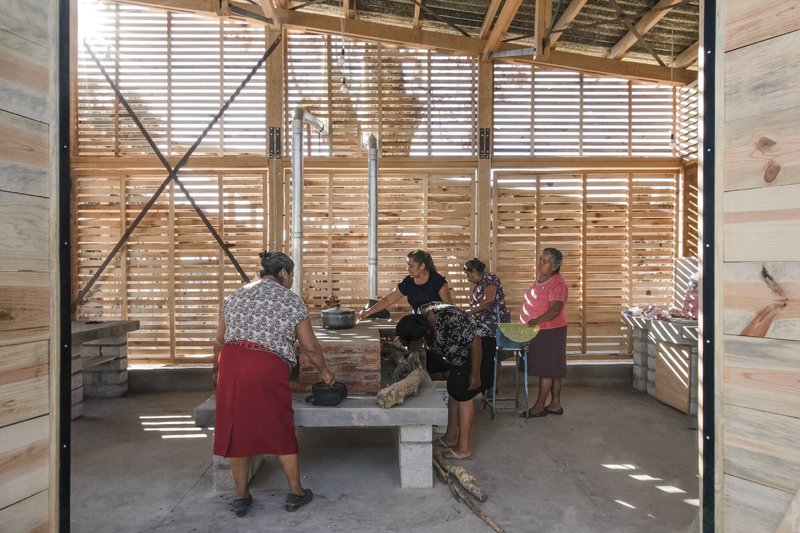
The new community kitchen may be the most important room in the project. A central brick hearth anchored by a metal flue sits at the core of the space, surrounded by timber walls that filter dappled light over people preparing food together. The cooking area is neither hidden nor glamorized. It is simply positioned at the social center of the building, reflecting the reality that shared meals are the primary civic act in a community of this scale.
The images show community members gathered around the hearth, hands in motion, the space filled with the kind of productive activity that most cultural centers relegate to a back-of-house service area. Here, the kitchen is the culture. That inversion of program hierarchy is a quiet but consequential design decision.
Open Pavilions and Collective Gathering
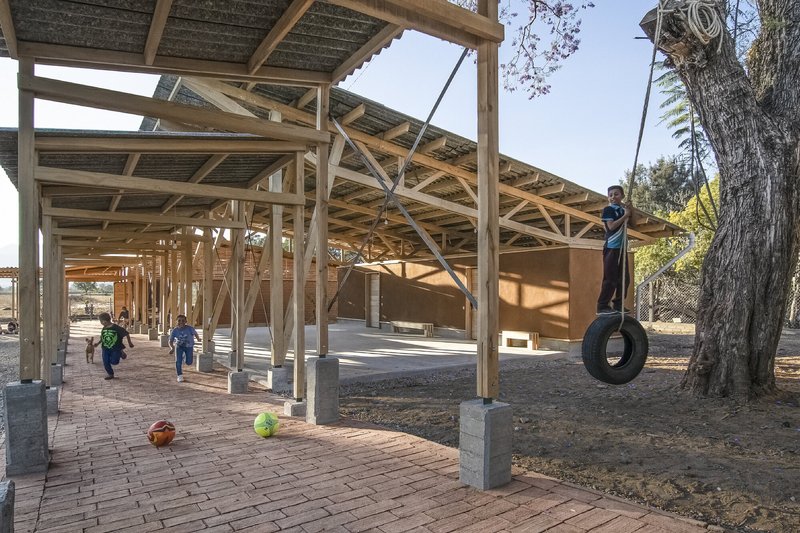
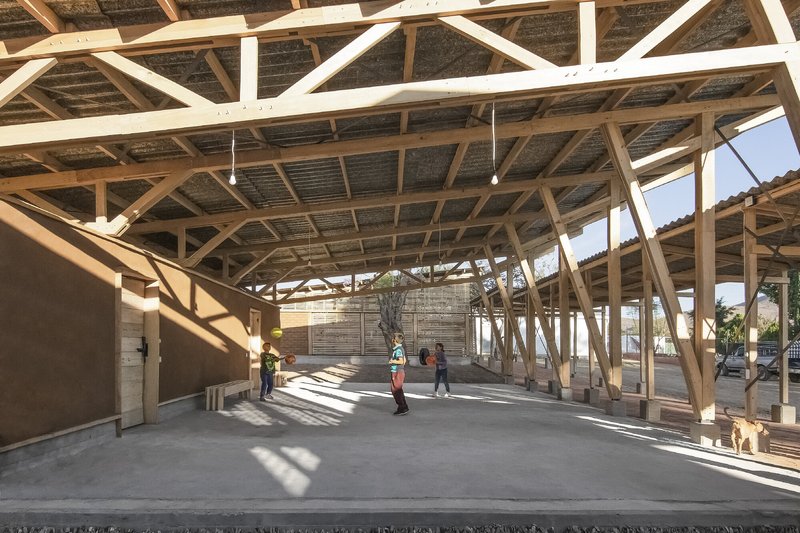
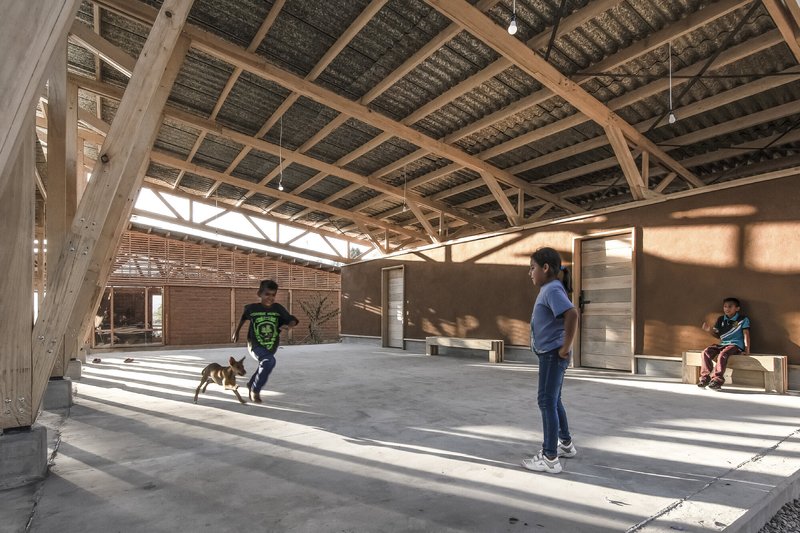
The open auditorium spaces function as flexible halls for dance, music, and assembly. Exposed timber trusses span overhead, supported by columns that define the edges without enclosing the volume. Brick paving and concrete floors accommodate both barefoot children and seated gatherings with equal ease. Clerestory windows at the roof ridge bring daylight deep into the interiors while maintaining the low, sheltering profile of the roofline.
These pavilions are designed for a community of roughly 400 people, a scale where a single covered space can serve as auditorium, dance floor, meeting hall, and playground in the course of a single week. The architecture does not prescribe a single use. It provides shade, structure, and a floor, then steps back.
After Dark
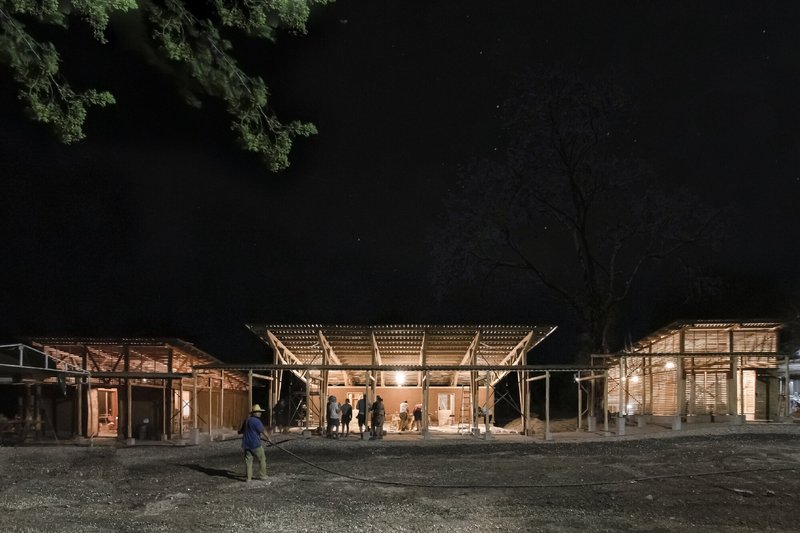
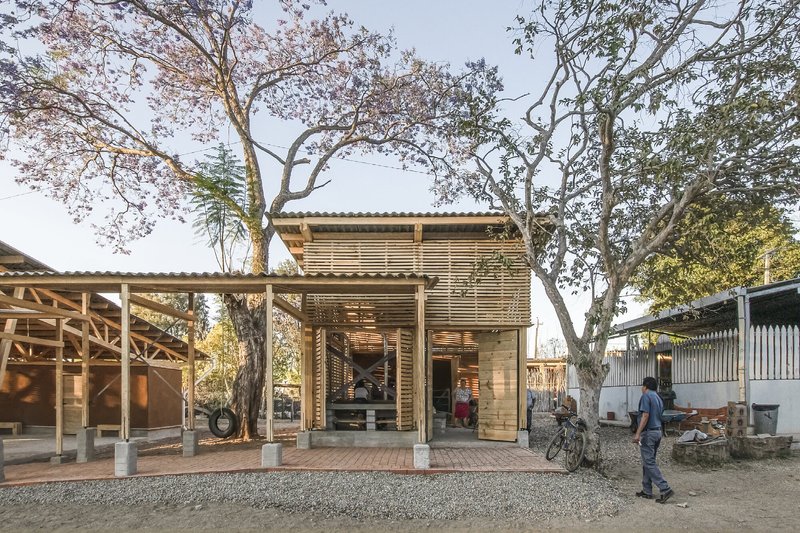
A night photograph reveals the campus glowing beneath a sky dense with stars. The timber pavilions, lit from within, radiate warmth through their slatted skins, turning each building into a lantern. In a rural community without the light pollution of a city, this image captures something essential about the project's role. The center is a gathering point, a beacon in a landscape that is otherwise dark and open. At dusk, the two-story pavilion on its concrete plinth reads as a civic presence, modest in scale but unmistakable in purpose.
Plans and Drawings
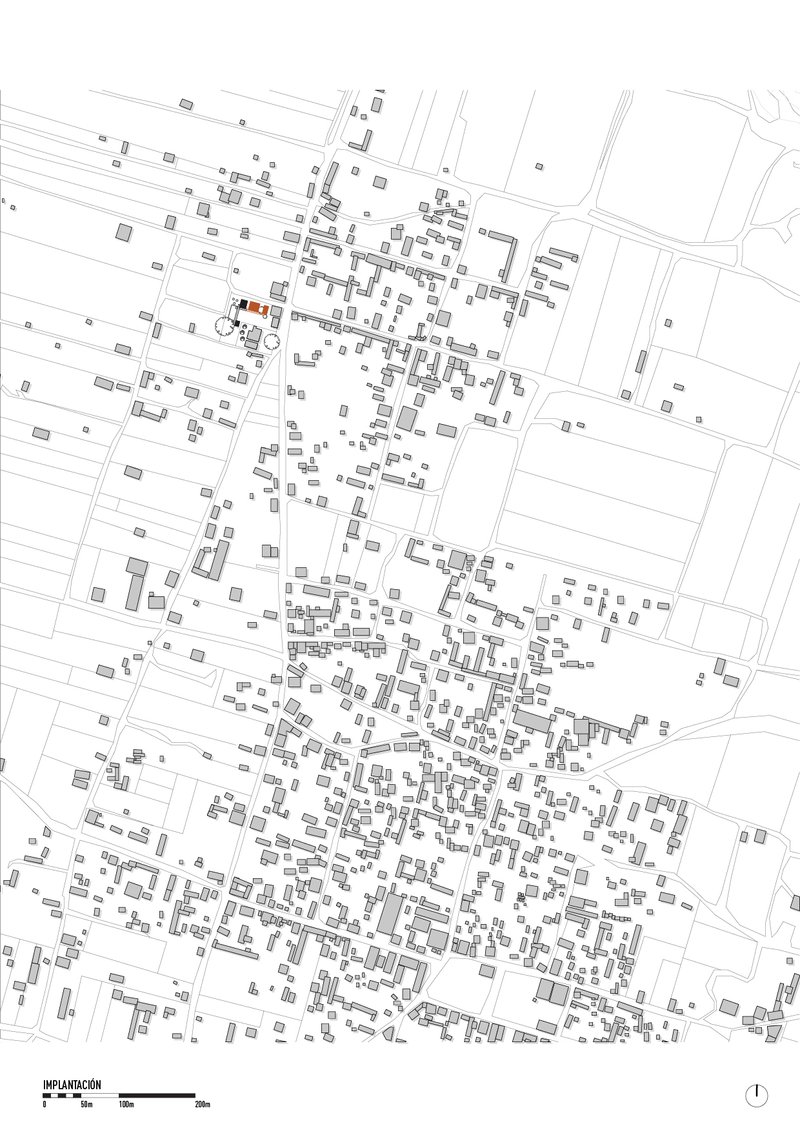
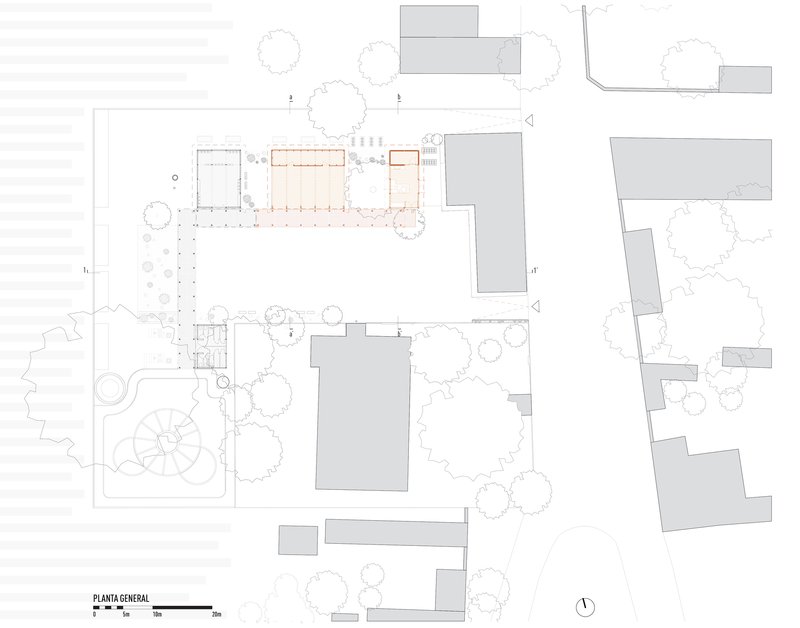
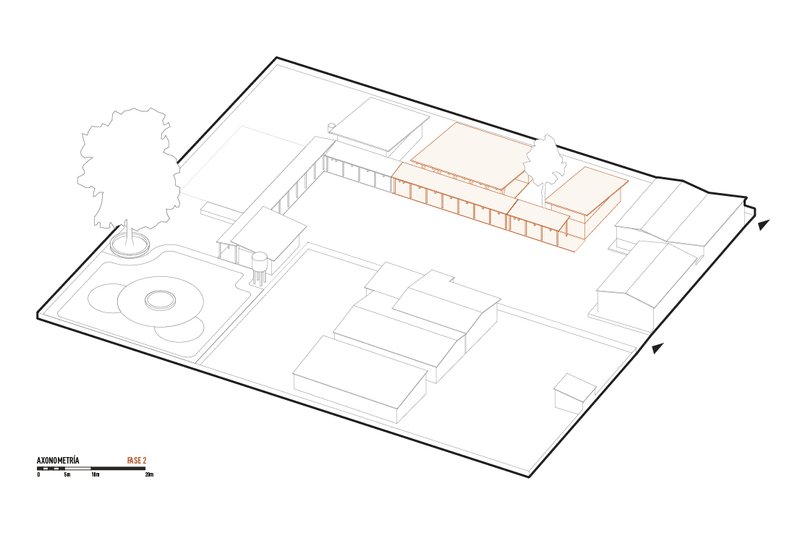
The site plan locates Phase 2 within the existing campus and street grid, showing how the new structures extend the center's footprint without overwhelming the surrounding parcel pattern. The ground floor plan reveals the colonnade as the primary organizational device, linking courtyard spaces, garden areas, and neighboring volumes into a continuous sequence. The axonometric drawing makes the strategy legible in three dimensions: a covered walkway stitches the program together, creating a sheltered route between the auditorium, kitchen, and existing buildings.
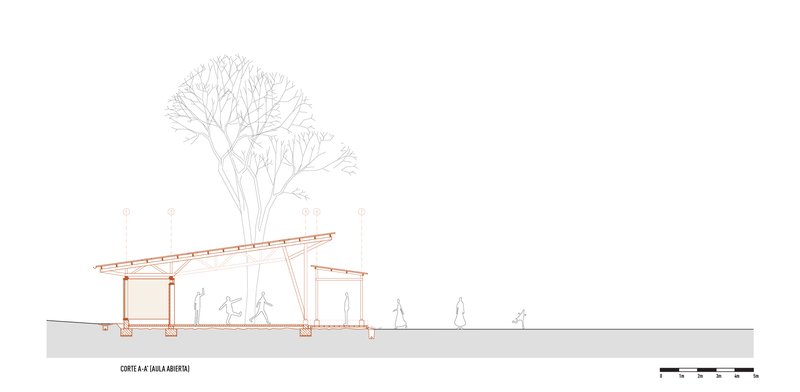
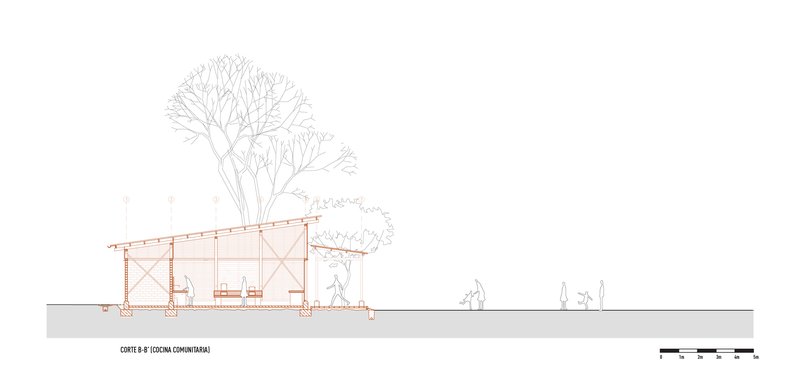
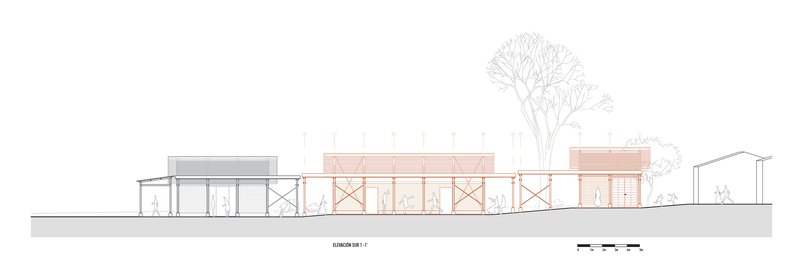
The section drawings expose the relationship between the sloped timber roof, the exposed trusses, and the trees that flank the buildings. Figures drawn beneath the structure reinforce the scale: these are single-story spaces with generous overhead clearance, not monumental halls. The elevation drawing shows the linear covered structure connecting adjacent buildings, with a tall tree rising above the roofline at one end, a reminder that the landscape was here first and the architecture arrived as a guest.
Why This Project Matters
The Quiané Center for Culture and Ecology, Phase 2, matters because it collapses the distance between architect and community in a way that most participatory projects only claim to do. The community is a credited co-author. The design team includes an activist organization, Frente por la Defensa de la Tierra, alongside architecture studios and an academic institution. The result is a building that serves a political function, asserting territorial sovereignty through construction, while also functioning as a genuinely useful piece of social infrastructure.
It also matters as a technical demonstration. In a seismically active region with limited resources, the project proves that earthquake-resistant construction does not require imported technology or specialized contractors. Diagonal timber bracing, rammed earth walls, lightweight roofs, and concrete footings combine into a system that any reasonably skilled builder can execute. That transferability is the most radical thing about the project. It turns architecture from a service delivered by experts into a capacity held by the community itself.
Quiané Center for Culture and Ecology, Phase 2, designed by CAMPO, Atarraya Taller de Arquitectura, Universidad de Ciencias Aplicadas de Múnich, Frente por la Defensa de la Tierra, and Comunidad de Santa Catarina Quiané. Located in Santa Catarina Quiané, Mexico. 250 m². Completed in 2020. Photography by Paulina Ojeda.
About the Studio
Share Your Own Work on uni.xyz
If projects like this are the kind of work you want to make, uni.xyz is a place to publish your own, find collaborators, and enter design competitions.


Popular Articles
Popular articles from the community

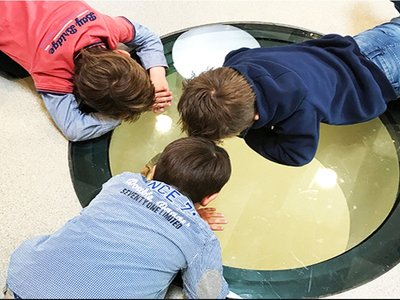
IKC de Geluksvogel: Sustainable School Architecture Designed for Free Movement and Digital Learning
IKC de Geluksvogel turns sustainable school architecture into a flexible Maastricht campus for digital learning, nature, and free movement.

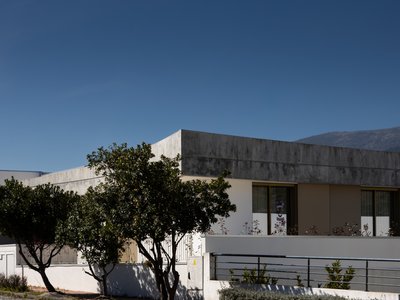
PLATAFORMArq Folds a Concrete Roof Over the Portuguese Mountains in House #474
A 220-square-meter residence in Teixoso, Portugal, wraps board-formed concrete into an angular canopy that frames the Serra da Estrela foothills.
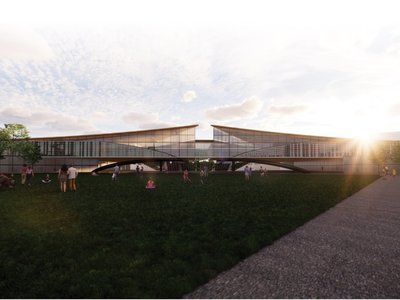
Kawasaki Olympic Sports Center: Sports Complex Architecture Rooted in Community, Tradition, and Movement
Kawasaki Olympic Sports Center reimagines sports complex architecture as a civic park where tradition, training, and community meet locally.
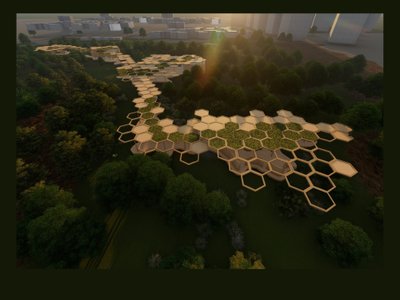
Eco Chapel: A Green Architecture Pavilion Designed in Symbiosis with the Forest
Eco Chapel uses green architecture to weave prayer, learning and reuse into a forest pavilion shaped by modular hexagonal canopies for life.


Similar Reads
You might also enjoy these articles
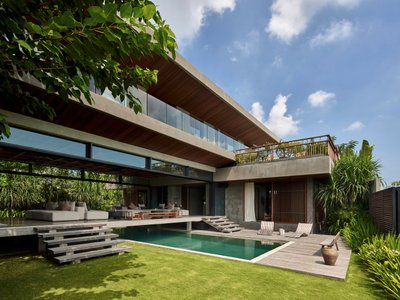
Freebird Residence by Alexis Dornier: A Tropical Modernist Sanctuary in Bali
Floating living pavilion above pool anchors H-shaped tropical villa, blending Japanese minimalism, sustainable strategies, lush landscape, and sculptural interiors.
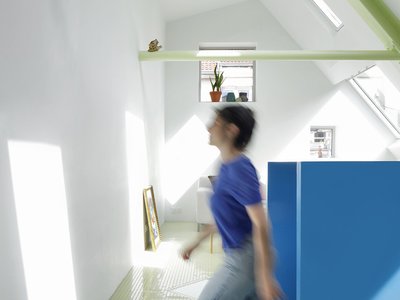
127af Flips a Tiny Bagnolet Rowhouse Upside Down with a Handcrafted Roof Extension
A 55-square-meter terraced house on the edge of Paris gains a luminous upper living floor through lightweight timber and steel.
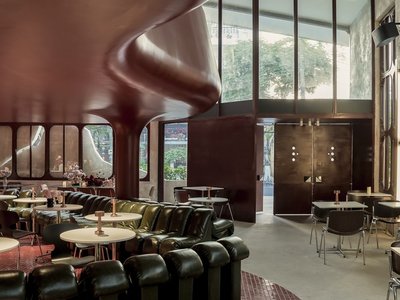
1.61 Design Workshop Wraps a 600-Square-Meter Café in Vietnam in Sculptural Burgundy Drama
Reden Café & Bistro pairs a helical staircase, mosaic floors, and deep red interiors to rethink Vietnamese hospitality space.

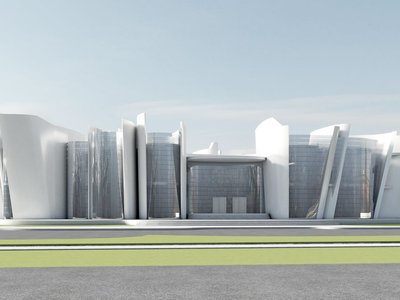
The Unbound Brain: A School Shaped by Cognitive Architecture
Cylindrical learning pods radiate like neurons from a central cortex, turning the floor plan into a spatial model of human thought.


Explore Architecture Competitions
Discover active competitions in this discipline




The International Standard for Design Portfolios


The Global Benchmark for Architecture Dissertation Awards


The Global Benchmark for Graduation Excellence


Challenge to reimagine the Iron Throne
Comments (0)
Please login or sign up to add comments
No comments yet. Be the first to comment!