
Five Cove Island House by RHAD Architects – A Modern Coastal Retreat in Nova Scotia
Five Cove Island House by RHAD Architects blends modern shed-style design with coastal views, courtyards, and natural materials on Nova Scotia’s rugged shore.


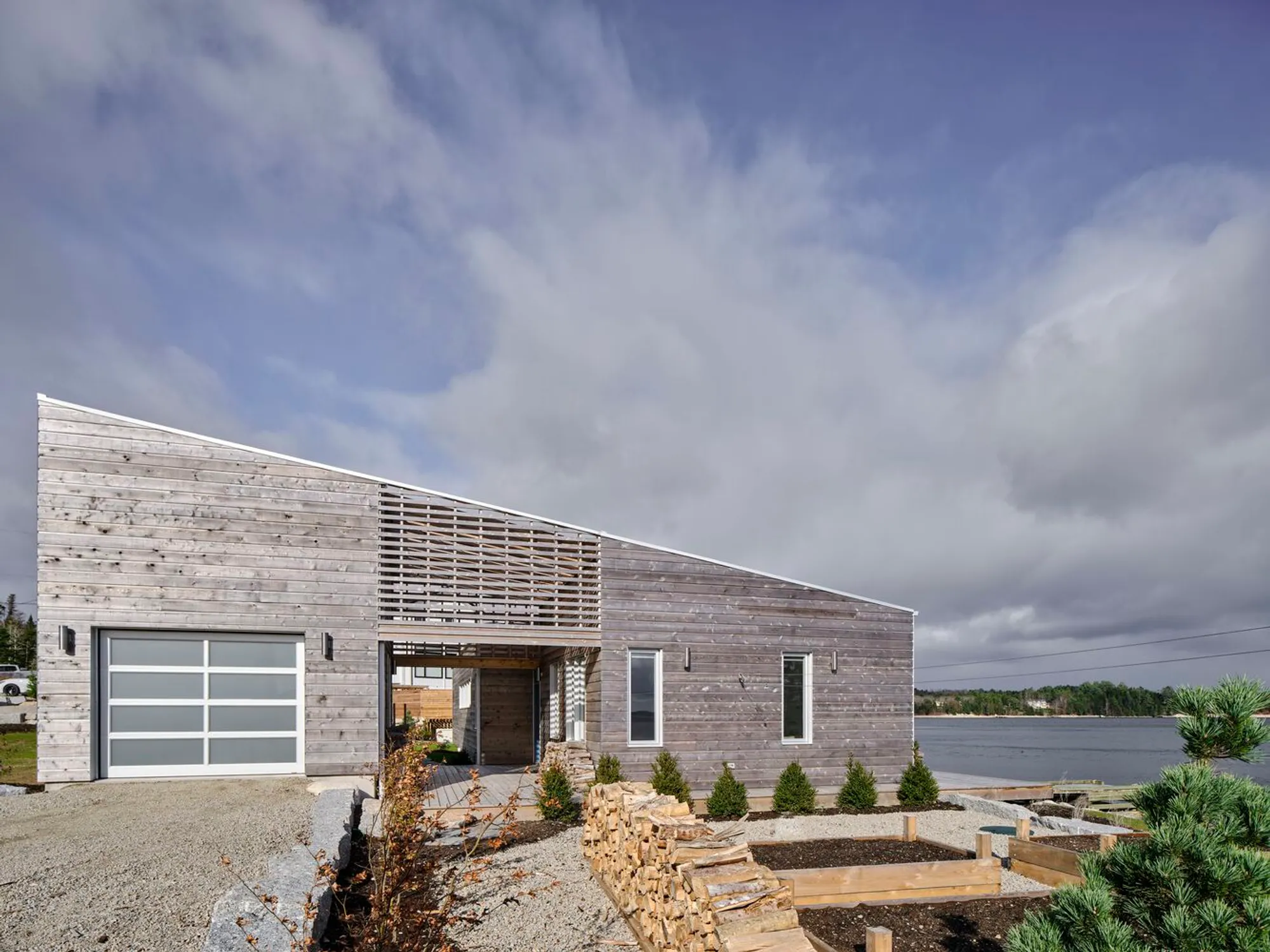
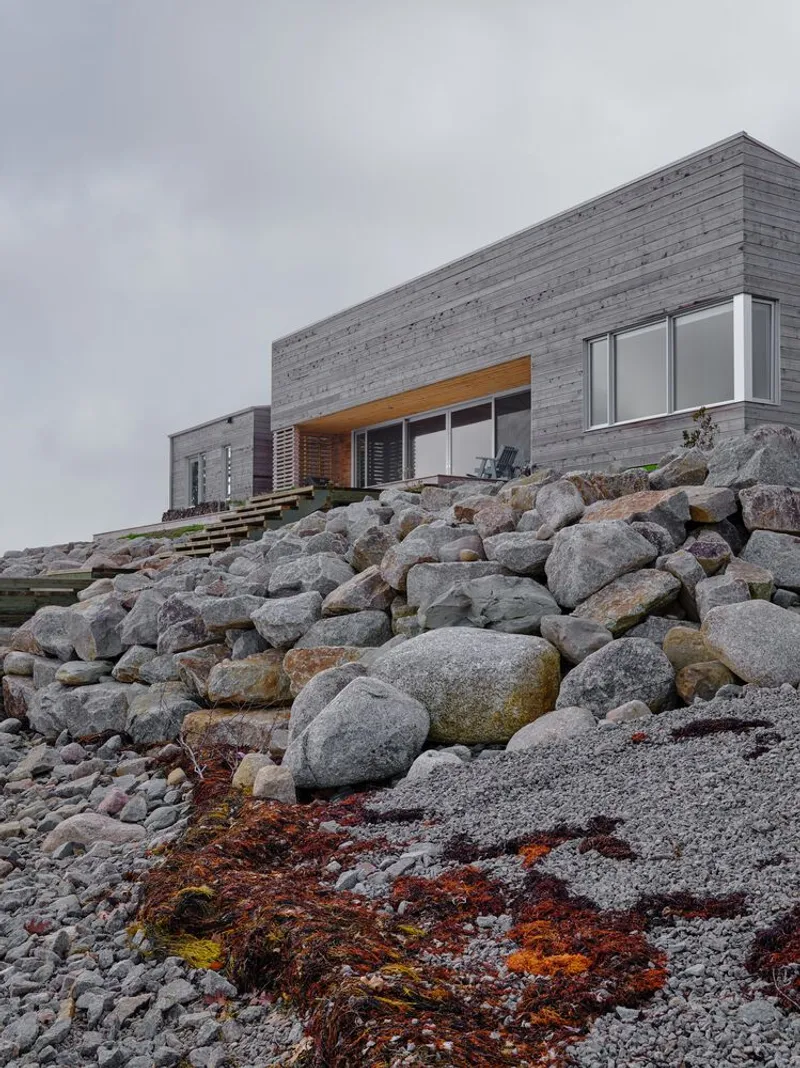
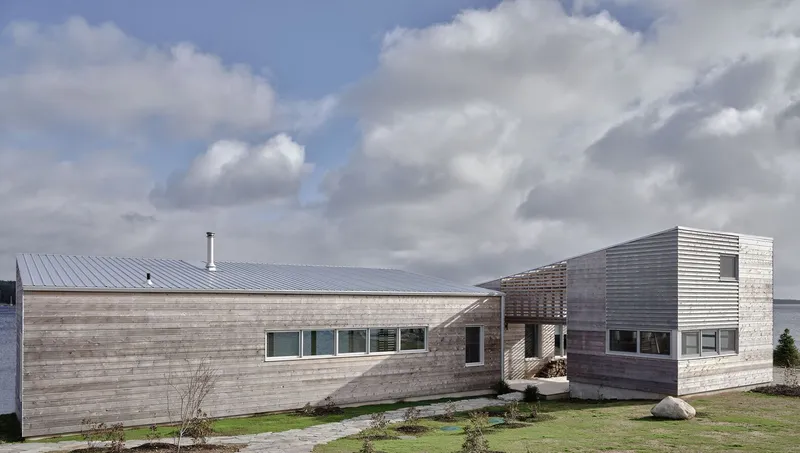
Located on the rugged south shore of Nova Scotia, Five Cove Island House by RHAD Architects is a stunning example of modern coastal residential design that blends simplicity, functionality, and a deep respect for its natural surroundings. Perched on the edge of a weather-beaten island—connected to the mainland by a small causeway—the 1,869-square-foot residence is framed by five scenic coves, offering sweeping views of the Atlantic Ocean and nearby islands.
Design Concept and Inspiration
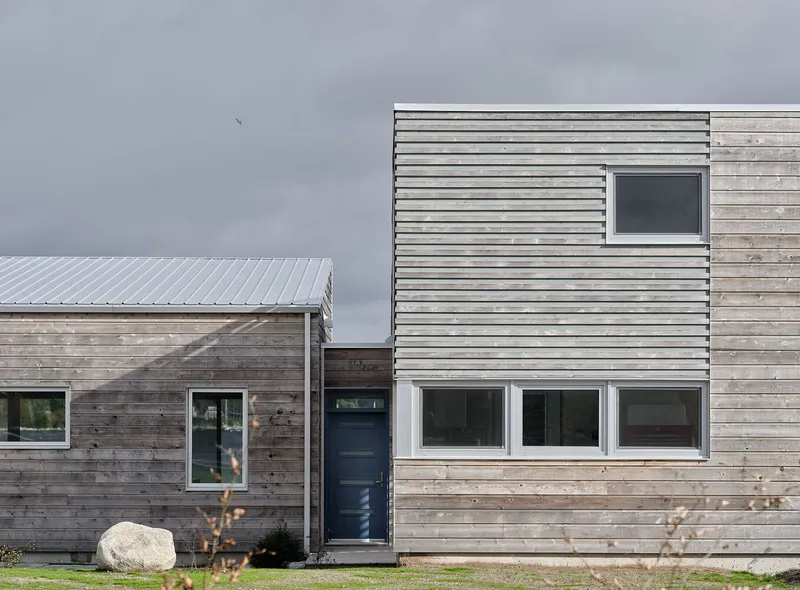
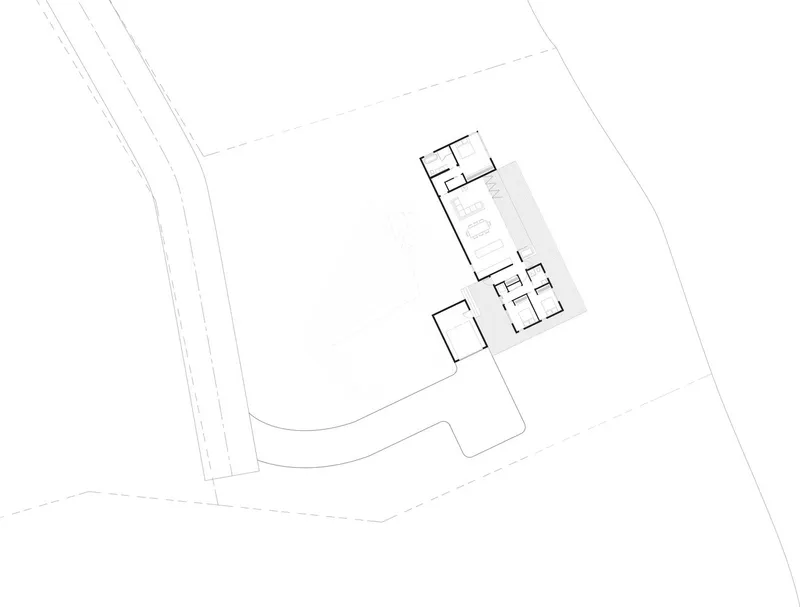
The house was envisioned as an understated shed form, reflecting the vernacular architecture of Nova Scotia’s south shore. RHAD Architects manipulated this basic shed typology—cutting, pulling, flipping, and extending it—to create a dynamic structure that defines various outdoor and indoor spaces. These deliberate moves form sunlit courtyards, sheltered entrances, and warm retreats, all while maintaining a minimalist footprint.
The residence features 1,560 sq. ft. of primary living space and an additional 290 sq. ft. of garage and storage space, making it compact yet highly functional. Its extended shed form not only anchors the building to the landscape but also frames a courtyard visible upon arrival, subtly guiding visitors toward the tip of the island.
Courtyards and Outdoor Living
A defining feature of the Five Cove Island House is its three interconnected courtyards, each designed to adapt to changing sun patterns and wind conditions.
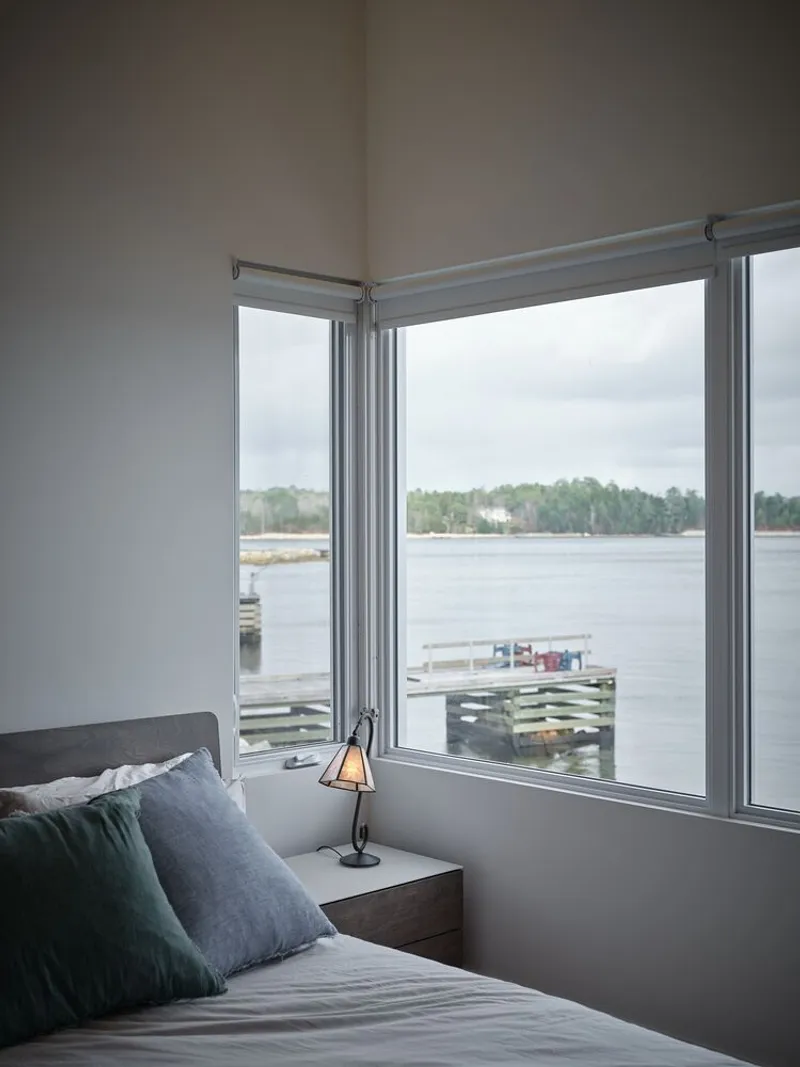
- East Deck: Oversized patio doors connect the main living, dining, and kitchen areas to the east-facing deck, framing expansive views of the mainland and surrounding islands.
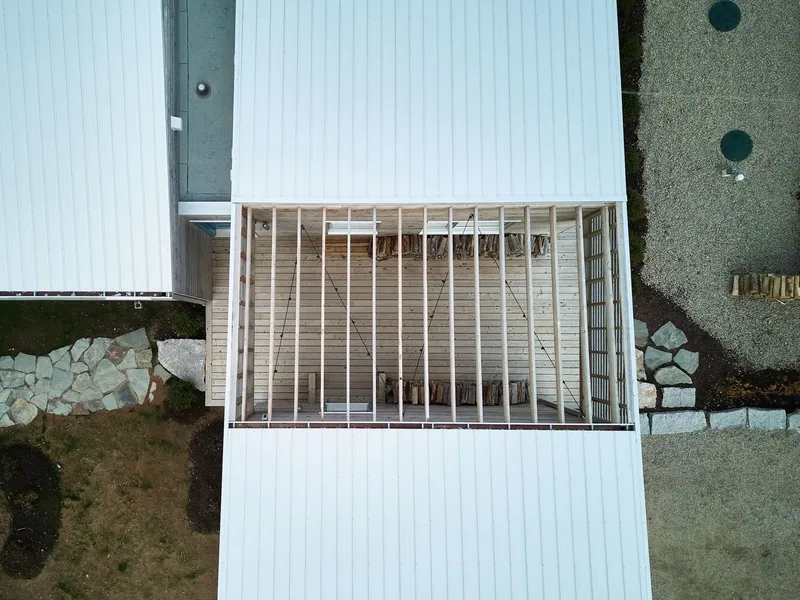
- South Deck: When cool winds blow from the east, the sunny south-facing deck becomes a cozy retreat, shielded by the structure itself. This microclimate also nurtures the private garden and clothesline.
- Southwest Courtyard: The entry courtyard, positioned on the southwest side, offers a protected outdoor area for gardening and serves as the primary welcoming space for the house.
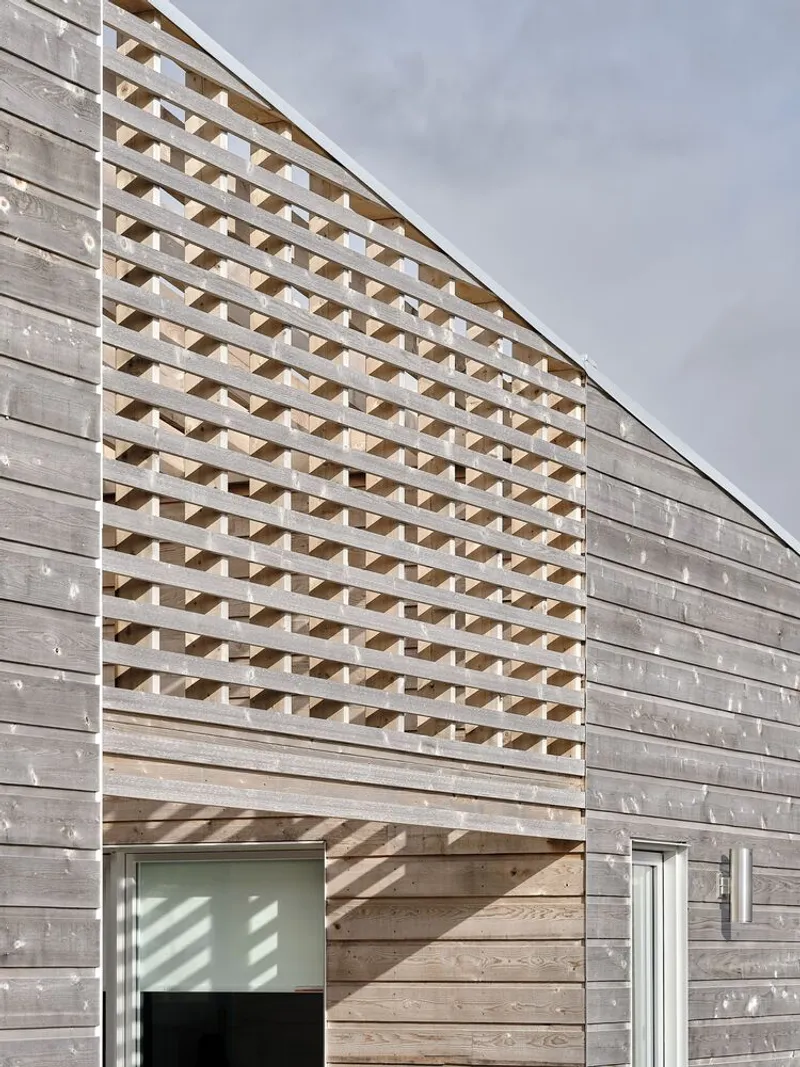
A pergola and slatted wood detailing on the south deck create playful patterns of light and shadow during the day and transform the house into a glowing lantern at night—visible both from the road and the ocean.
Materiality and Craftsmanship
The home’s material palette emphasizes durability and authenticity, using western red cedar, Selkirk finishes, and Vicwest steel roofing. The overhang on the east deck provides essential protection against rain and snow while enhancing the structure’s clean lines and modern silhouette.
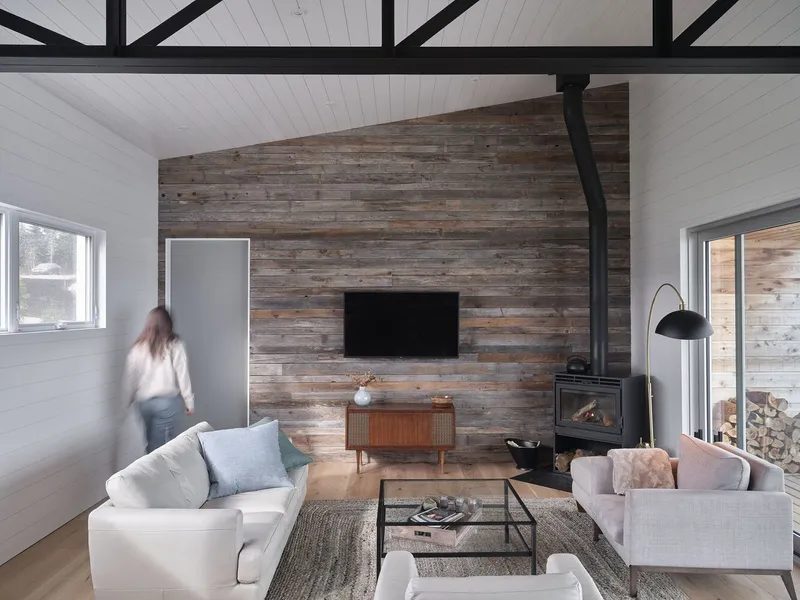
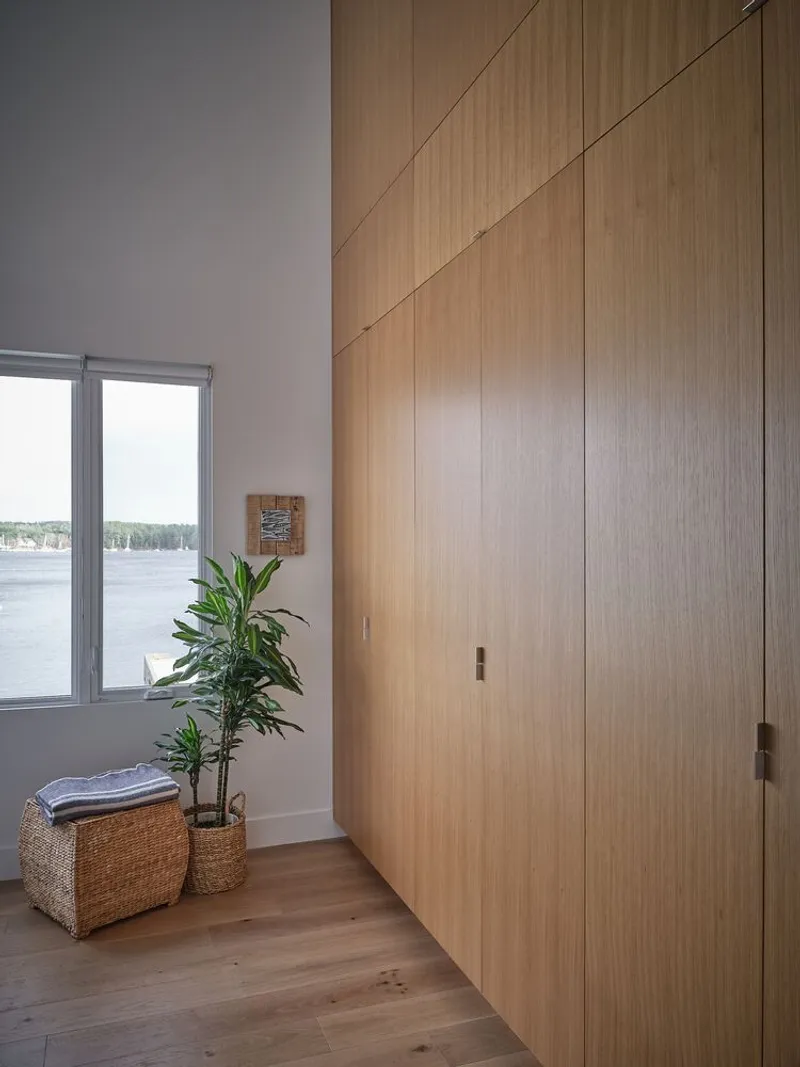
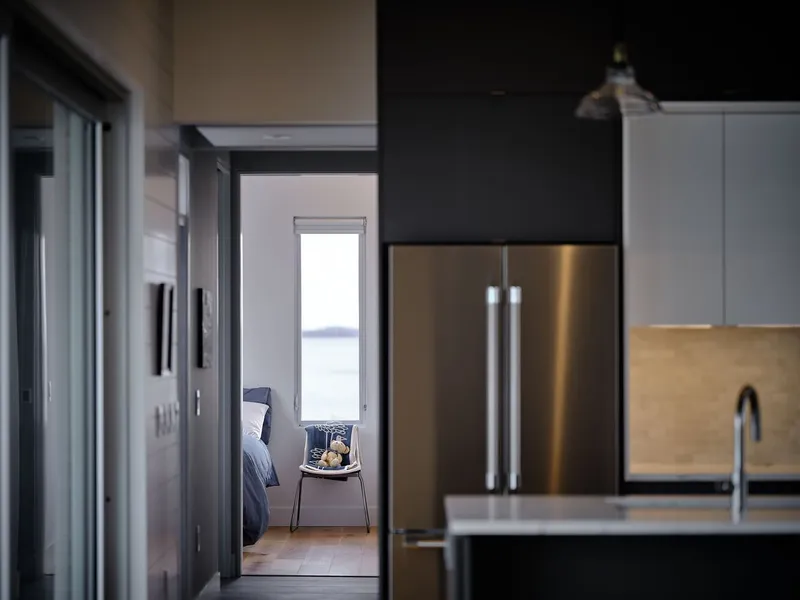
Inside, the design celebrates structure and craftsmanship. The open-plan living, dining, and kitchen area features exposed steel trusses that emphasize the home’s industrial yet minimalist aesthetic. The interior walls are wrapped in white-painted shiplap, evoking a cozy cottage feel, while salvaged barn boards from a previous project add a rustic layer of storytelling.
Spatial Organization
The layout is cleverly divided to cater to both the main resident and visiting guests. A “cottage within a cottage” concept is achieved by flipping the shed form opposite the entry corridor, allowing flexible use of space.
The heart of the house—the vaulted living area—centers around a wood-burning fireplace, tucked strategically in the corner to preserve panoramic ocean views through the large patio doors.
All Photographs are works of Julian Parkinson




Popular Articles
Popular articles from the community


Hill & Cross Opera: Sculptural Opera House Architecture Shaped by Tallinn’s Landscape and Identity
Hill & Cross Opera reimagines opera house architecture in Tallinn through its sculptural hill, civic plaza, glass wave and a luminous cross.

The Ocean Hive: Sustainable Architecture for a Self-Sufficient Civilization at Sea
The Ocean Hive imagines sustainable architecture at sea, where modular habitats, algae, wave power and ocean waste sustain a growing colony.

Riyadh For All: Intergenerational Urban Design for Active Aging in Rabat
Riyadh For All reimagines urban design in Rabat with intergenerational co-living, adaptive courtyards, and Moroccan cultural exchange today.

AL-JANNAH: Sustainable Architecture and Permaculture for Afghan Widows
AL-JANNAH uses sustainable architecture and permaculture to create resilient oasis of housing, learning, work and renewal for Afghan widows.


Similar Reads
You might also enjoy these articles


Hodi-Mandai Geram
Project Function: Preservation and revitalization of the Intangible heritage and socio-spatial identity of the Hodi by Housing, Cultural Memory Center, Sacred Grove, landscape, local tourism economy


Olio Towers: A Mid-Rise for Performers That Fuses Housing, Rehearsal, and Stage
Located blocks from Houston's Theater District, this modular tower stacks living units around a central performance atrium.

Oasis: Modular Green Housing Carved into Dhaka's Urban Fabric
A shortlisted Plugin Housing entry reclaims unauthorized settlements in Dhaka with stepped concrete volumes, green roofs, and ventilation-driven design.

Black Hole: A Floating Megastructure for the Post-Physical Era
Emiliano Mazzarotto envisions a spherical, self-scaling arena where e-sports, digital hotels, and holographic stadiums replace traditional public space.


Explore Housing Competitions
Discover active competitions in this discipline



Challenge to reimagine the Iron Throne


Photograph architecture without architects


Illustrate the lost glory of Angkor Wat - Render Challenge


Design challenge to reuse E-waste
Comments (0)
Please login or sign up to add comments
No comments yet. Be the first to comment!