

Flexible Domestic Architecture: Unplanned Domestic Prototype Space by Ismael Medina Manzano
The article explores how Unplanned Domestic Prototype Space reimagines flexible architecture for modern living, promoting sustainability and adaptability.


Rethinking Domestic Spaces for Modern Living
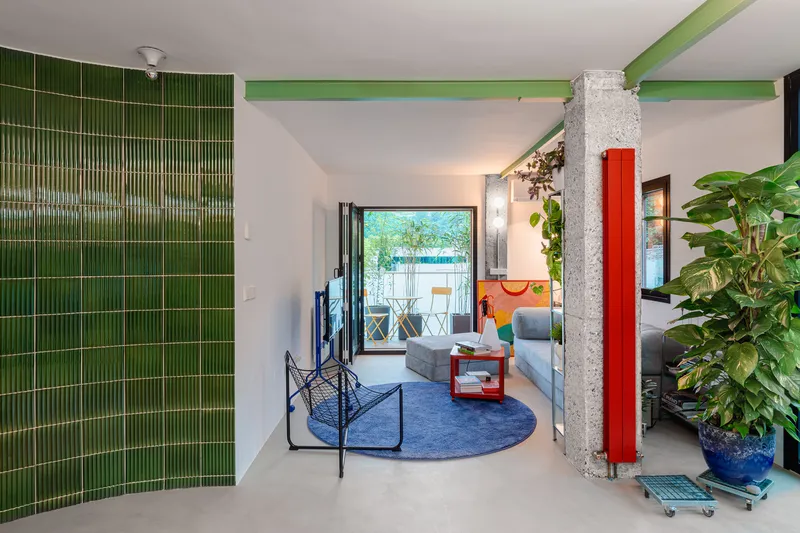
The Unplanned Domestic Prototype Space, designed by Ismael Medina Manzano Architecture in Donostia-San Sebastián, Spain, redefines domestic environments for contemporary needs. Set in an 80 m² apartment from 1966, the project challenges the rigid, compartmentalized housing models of the past and embraces flexible domestic architecture to address evolving forms of coexistence in the 21st century.
Context: Standardized Housing and Its Limitations
Built under Spain's 1959 Stabilization Plan, the original apartment was designed to reflect the nuclear family model of the mid-20th century. Its minimal and standardized design prioritized efficiency by strictly compartmentalizing domestic life. While this approach aligned with the socio-economic goals of the era, it no longer meets the demands of modern lifestyles that thrive on adaptability and diversity.
The Unplanned Domestic Prototype Space emerges as a response to this historical legacy, offering a dynamic reimagining of how spaces can adapt to social, ecological, and cultural changes.
Central Design Concept: A Curved Wall of Transformation
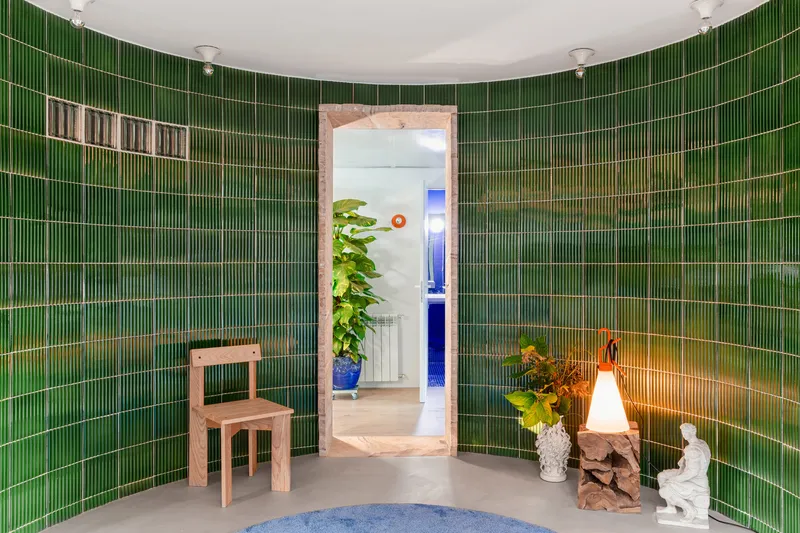
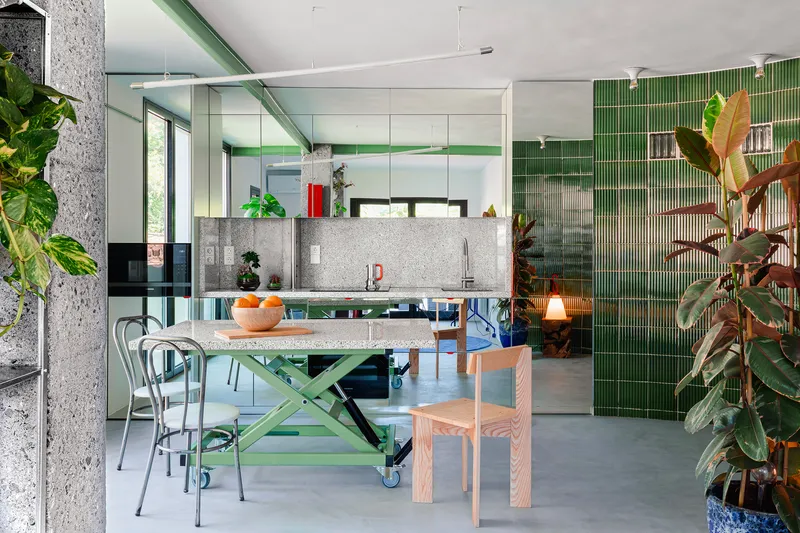
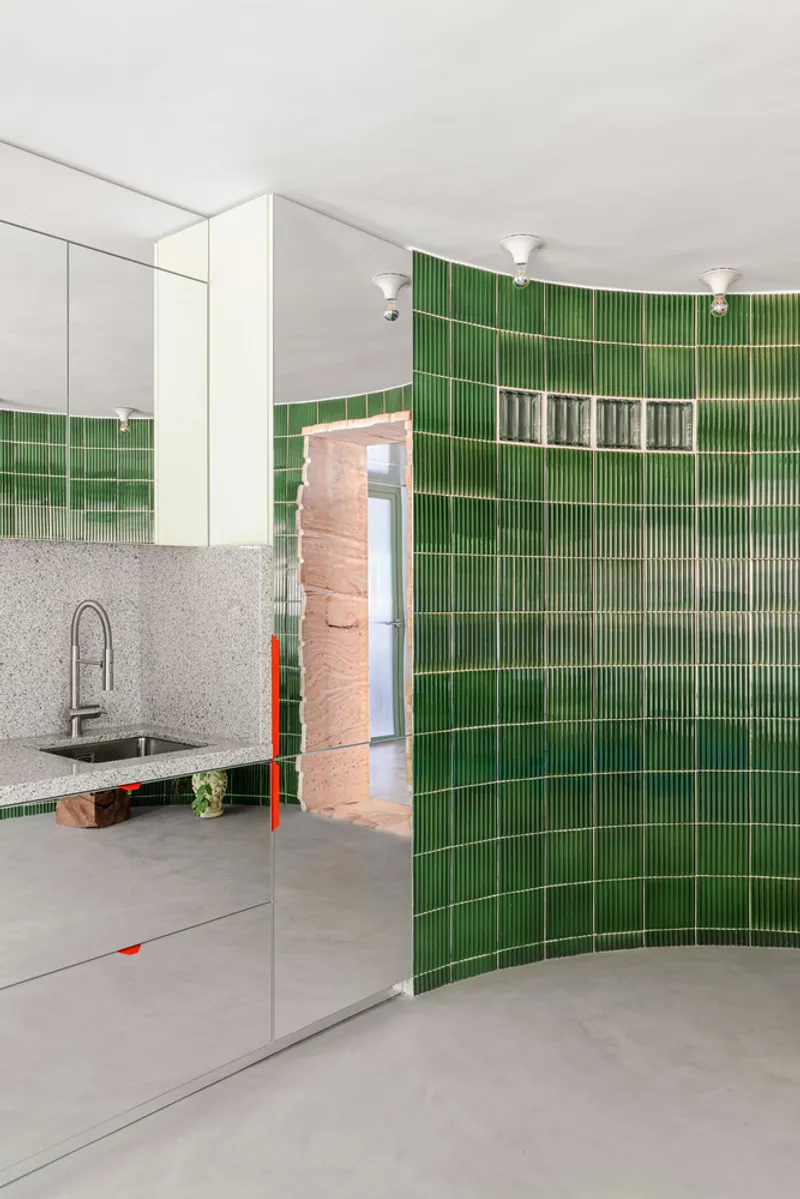
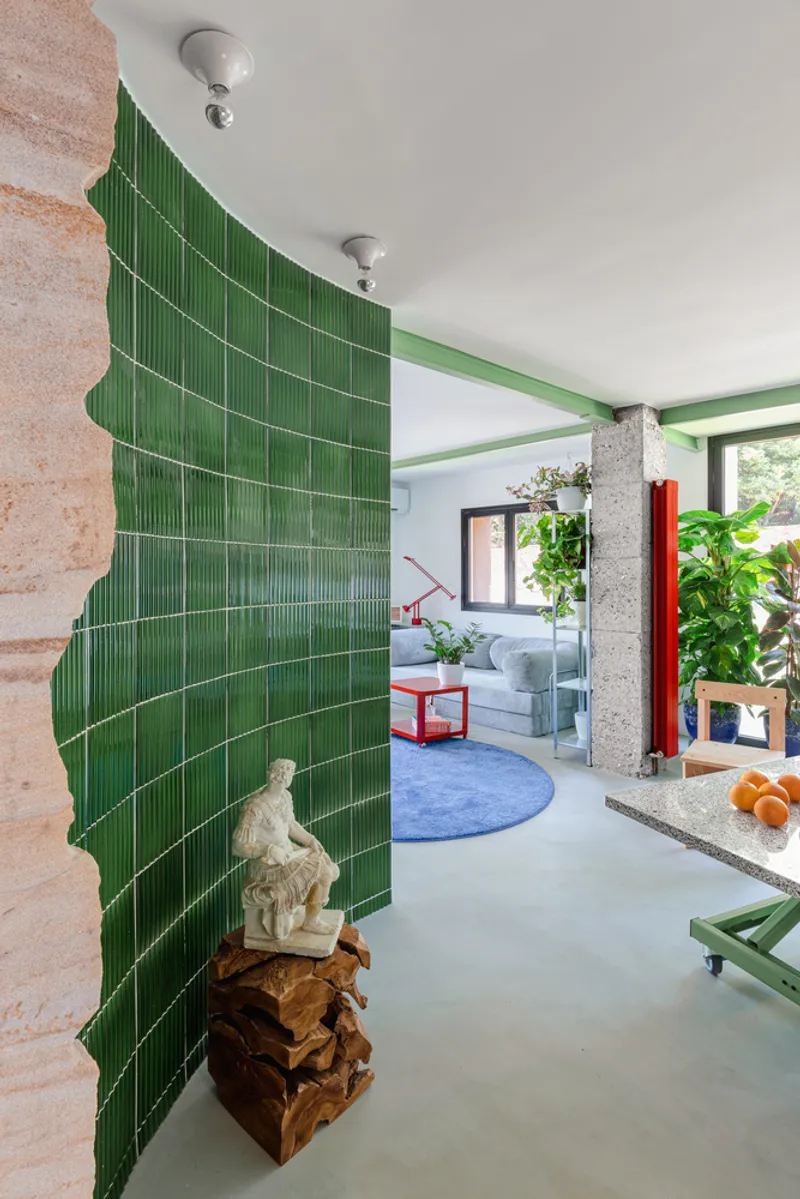
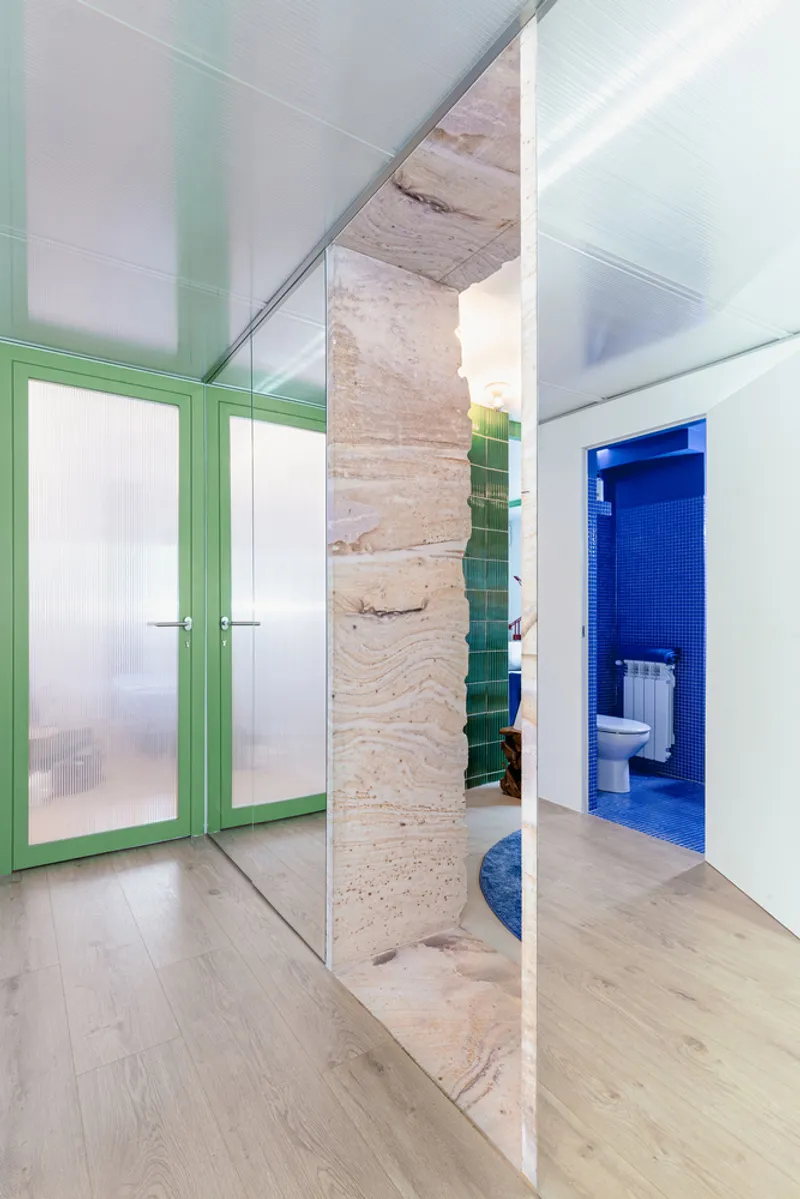
At the heart of the project is a curved glazed ceramic wall, a central element that redefines the logistical and aesthetic functions of traditional storage systems. This wall houses pantries, cupboards, kitchen cabinets, shelves, and closets, blending functionality with visual appeal.

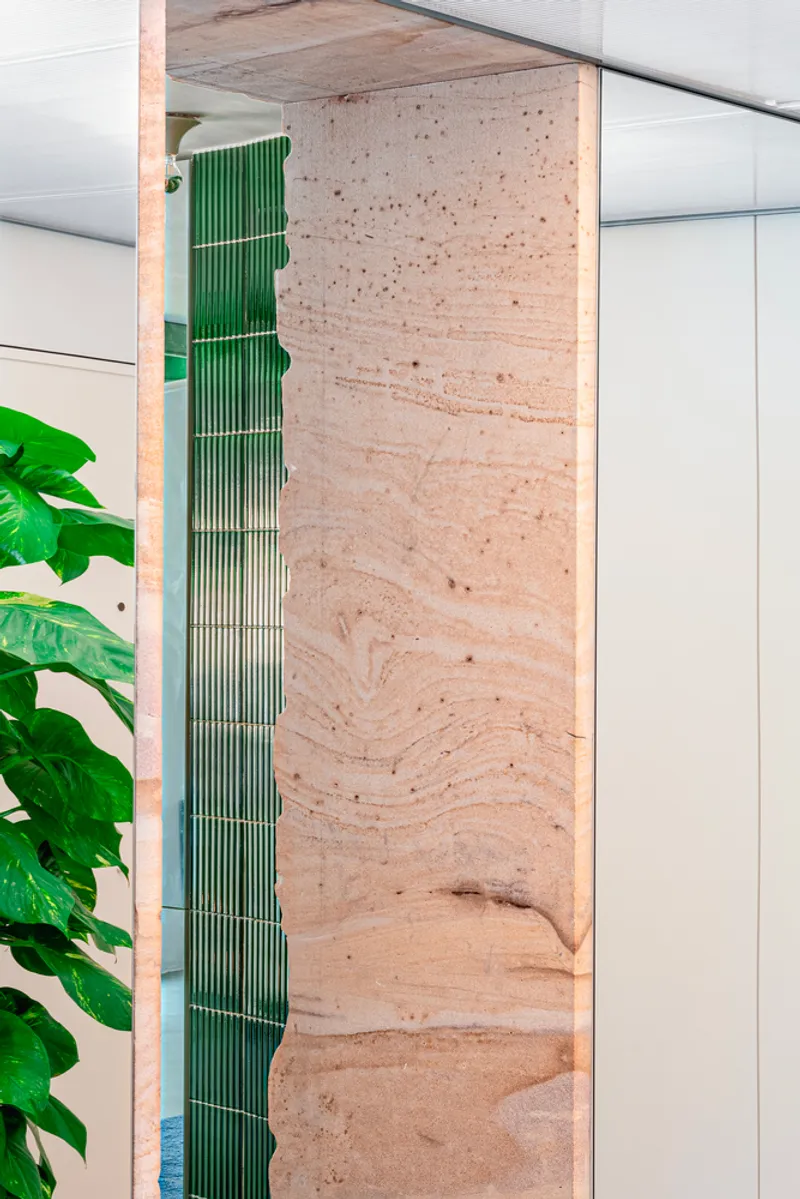
Beyond its practical utility, the wall fosters interaction by serving as a social nucleus within the apartment. One of its vertices merges into a mirrored showcase, cleverly concealing household appliances while enhancing spatial fluidity. Another section incorporates a sandstone portal, crafted from locally sourced materials, which reflects the geological and cultural heritage of the San Sebastián region.
Materiality: Sustainability and Regional Context
The materials used in the project underscore its commitment to sustainability and local craftsmanship. The elevatable kitchen island, made from reused national granite, exemplifies the integration of recycled elements. This adaptable feature orbits within the space, promoting interaction and flexibility for various social scenarios.
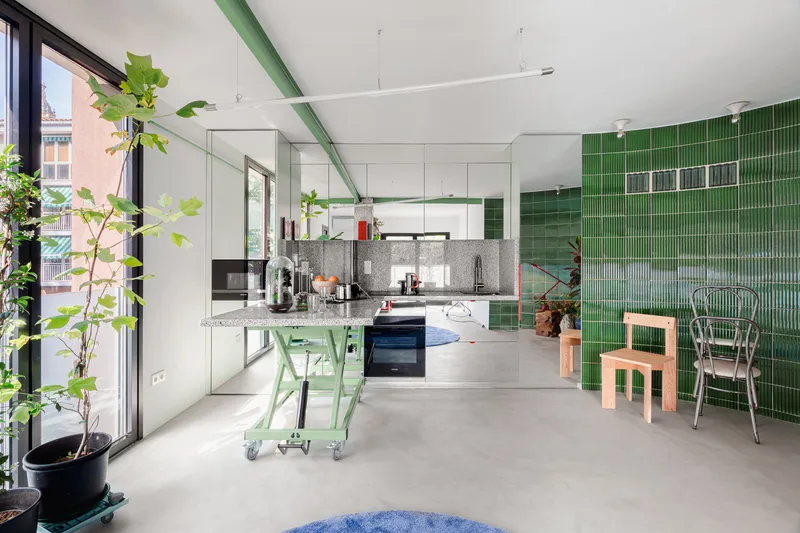
Local tree roots are repurposed into stools, while carpentry systems utilize aluminum and steel from nearby metallurgical industries. The use of recycled aluminum tube chairs and mobile vegetation with an internal irrigation system further reinforces the prototype's connection to the surrounding environment.
These choices not only reduce the project's ecological footprint but also highlight the productive landscape that transcends the boundaries of the domestic interior.
Adaptability and Social Interaction
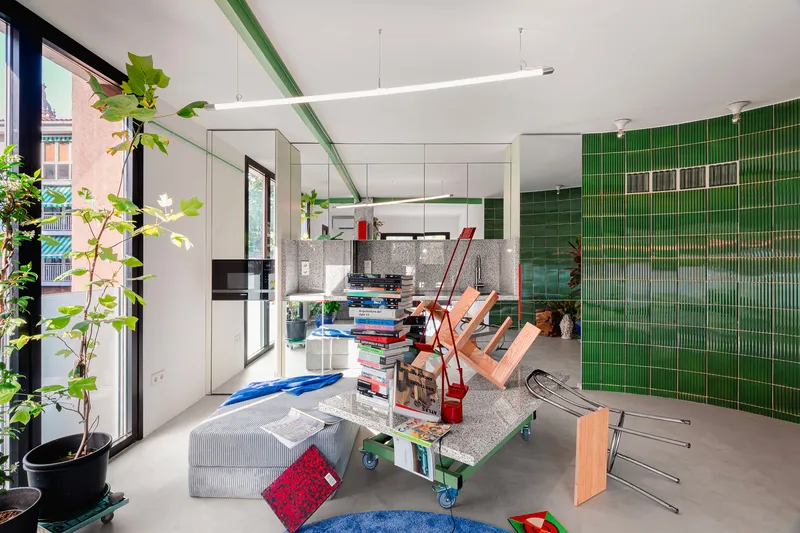
The Unplanned Domestic Prototype Space prioritizes adaptability, encouraging future residents to reinterpret the environment according to their unique needs. Mobile elements, such as the kitchen island and vegetation systems, enable the apartment to host diverse social and functional configurations.
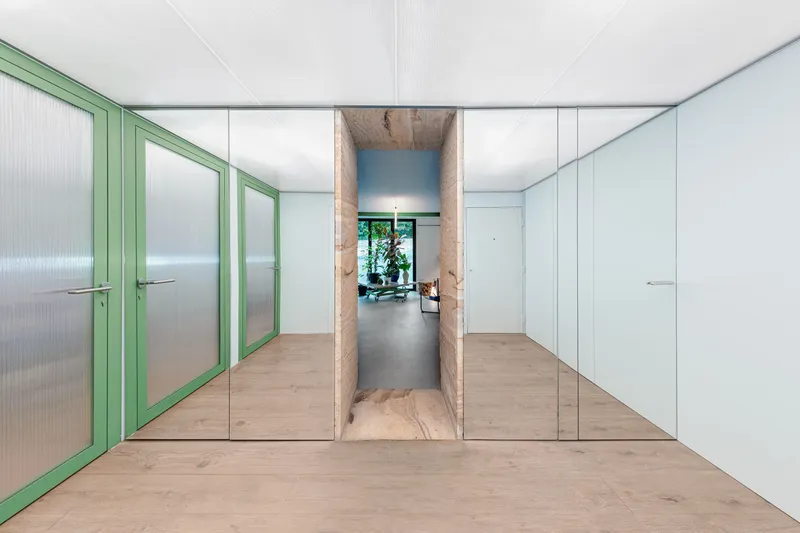
This flexible approach transforms the apartment into a fluid, multi-purpose space that adapts to various living scenarios. By doing so, it challenges the traditional constraints of domestic architecture and proposes a model that celebrates unregulated, collective coexistence.
A Reflection of Ecosystems and Community
The design integrates elements of the local ecosystem, including the use of regional materials and references to geological processes. This contextual awareness bridges the gap between the domestic interior and the broader environment, making the space a microcosm of the region's cultural and ecological identity.

The project also reflects on the evolving nature of social relationships, promoting interaction and collaboration among its inhabitants. By integrating sustainability, adaptability, and a deep respect for context, the Unplanned Domestic Prototype Space offers a forward-thinking solution to contemporary housing challenges.
Toward a New Vision of Flexible Domestic Architecture
The Unplanned Domestic Prototype Space redefines the possibilities of flexible domestic architecture, where adaptability and sustainability become central to design. By breaking away from the rigid constraints of the past, the project paves the way for innovative approaches to housing reform.
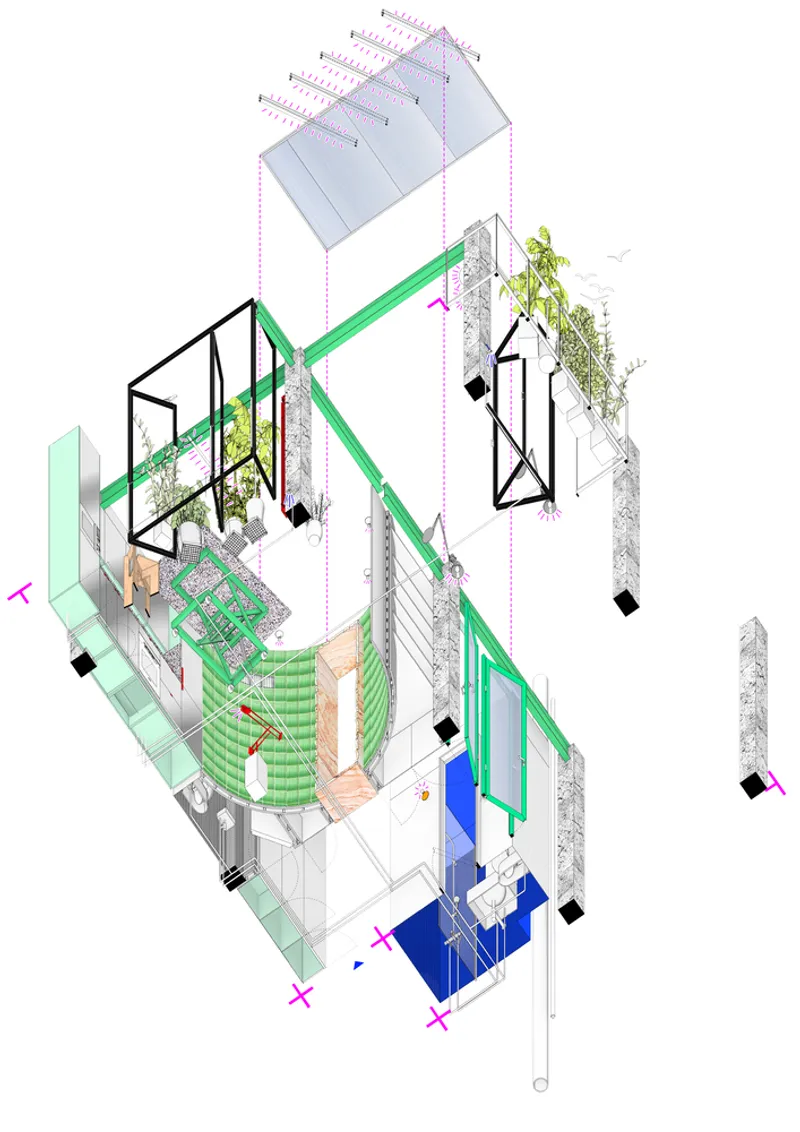
Through its thoughtful use of materials, integration of local context, and emphasis on adaptability, the prototype demonstrates how architecture can respond to modern living needs while fostering a harmonious relationship with the environment. This experiment not only reimagines domestic spaces but also serves as a blueprint for sustainable, flexible, and socially engaged architecture in the future.
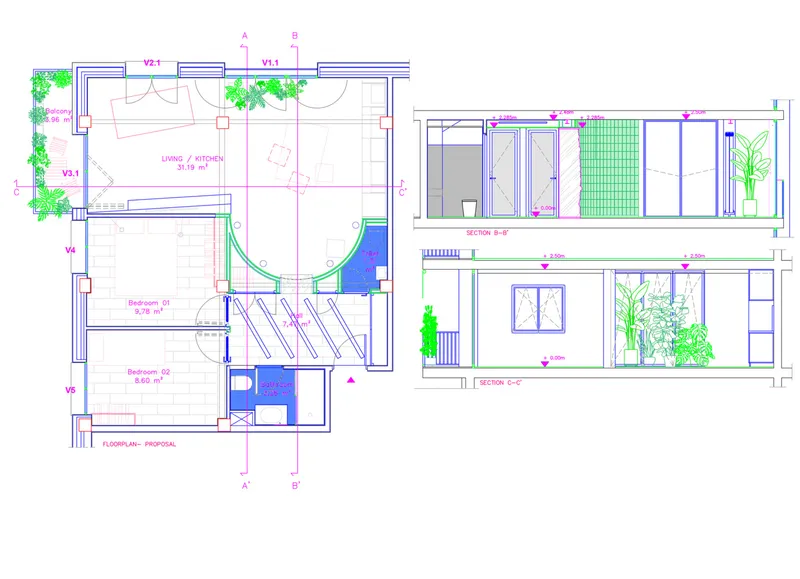
All Photographs are work of Hiperfocal


Popular Articles
Popular articles from the community


Architekt Andreas Gruber Scatters 23 Dark Timber Chalets Across a South Tyrolean Forest Edge
In Molini di Tures, Amonti Chalets breaks a resort into a hamlet of gabled timber houses, with parking, storage and services pushed into the slope.

U.GA Architects Wraps an Oval Rooftop Pool in Curved Board-Formed Concrete on Busan's Jeollidan-gil
In Busan's Jeonpo-dong, a 454 m² mixed-use block stacks a neighborhood facility, guest rooms and an oval rooftop pool inside spiraling concrete walls.

LT2A and OPEN Architectes Thread a Brick and Glass High School Through a Wooded Belgian Campus
In Braine-l'Alleud, a 3,000 m² wing for Collège Cardinal Mercier pairs pale brick with a glazed colonnade, deferring to a small chapel and a dense wood.

longwave studio Reorganizes a 112 m² Tainan Apartment Around the Daily Routines of a Family and Two Cats
In Tainan, Taiwan, birch plywood, rust-red furniture and a freestanding plaster wall link arrival, storage, work and family life in one apartment.

Similar Reads
You might also enjoy these articles


Hodi-Mandai Geram
Project Function: Preservation and revitalization of the Intangible heritage and socio-spatial identity of the Hodi by Housing, Cultural Memory Center, Sacred Grove, landscape, local tourism economy


Olio Towers: A Mid-Rise for Performers That Fuses Housing, Rehearsal, and Stage
Located blocks from Houston's Theater District, this modular tower stacks living units around a central performance atrium.

Oasis: Modular Green Housing Carved into Dhaka's Urban Fabric
A shortlisted Plugin Housing entry reclaims unauthorized settlements in Dhaka with stepped concrete volumes, green roofs, and ventilation-driven design.

Black Hole: A Floating Megastructure for the Post-Physical Era
Emiliano Mazzarotto envisions a spherical, self-scaling arena where e-sports, digital hotels, and holographic stadiums replace traditional public space.

Explore Flexible Spaces Competitions
Discover active competitions in this discipline

Challenge to reimagine the Iron Throne

Photograph architecture without architects

Illustrate the lost glory of Angkor Wat - Render Challenge

Design challenge to reuse E-waste
Comments (0)
Please login or sign up to add comments
No comments yet. Be the first to comment!