
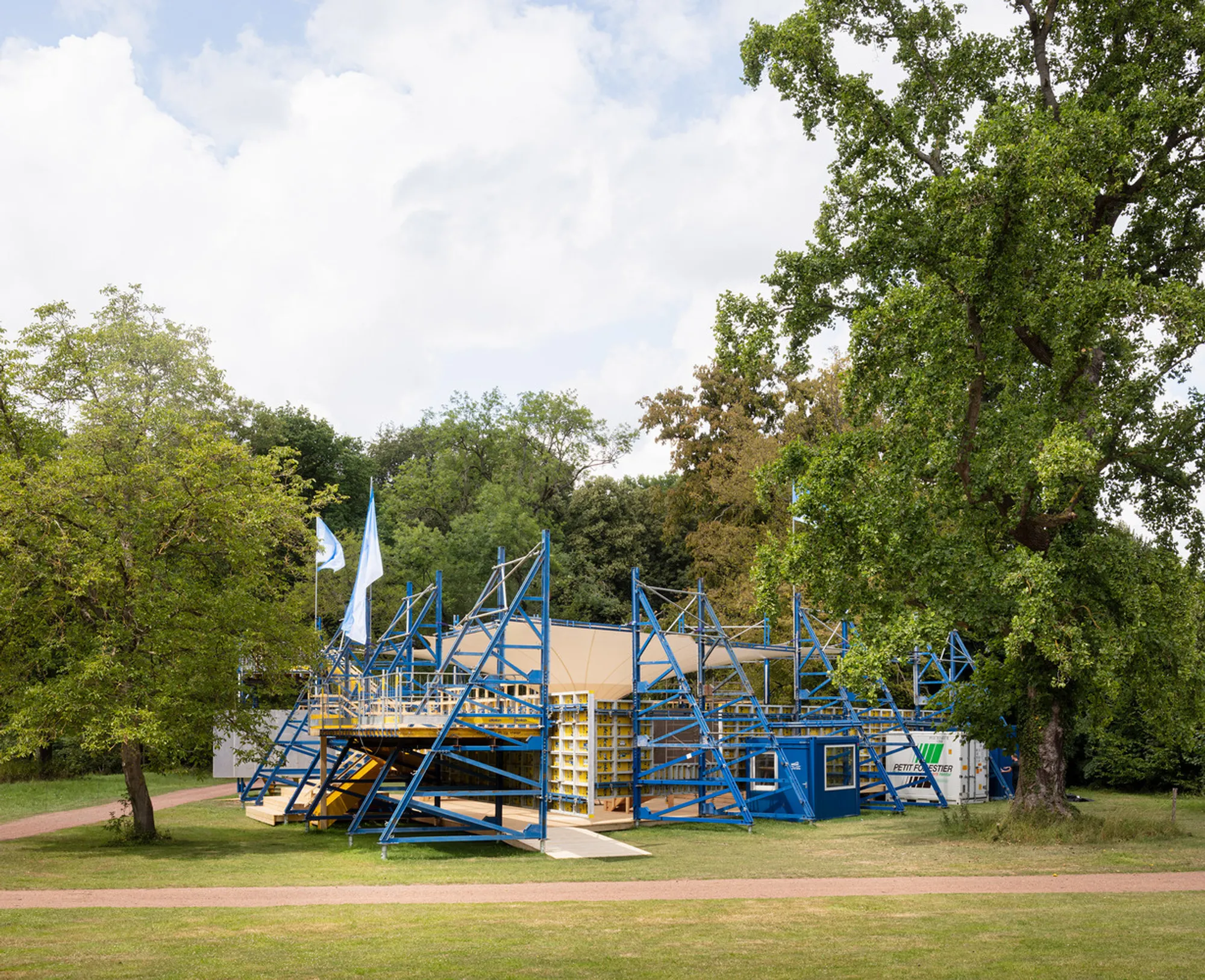
Flora Pavilion: A Sustainable Architectural Intervention at Rubens Castle
Flora Pavilion blends sustainable architecture with heritage, using circular construction to create a dynamic, temporary intervention at Rubens Castle, Belgium.


Reviving History Through Contemporary Architecture
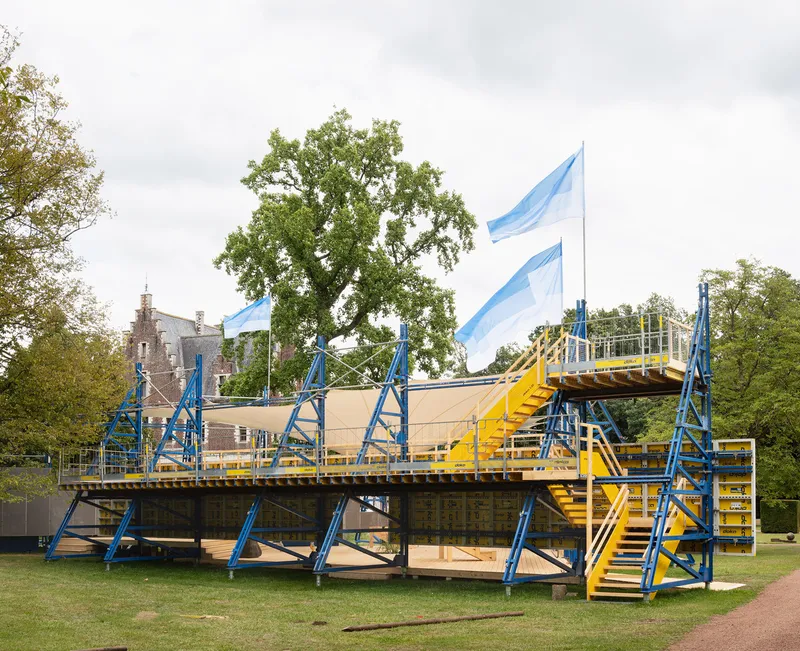
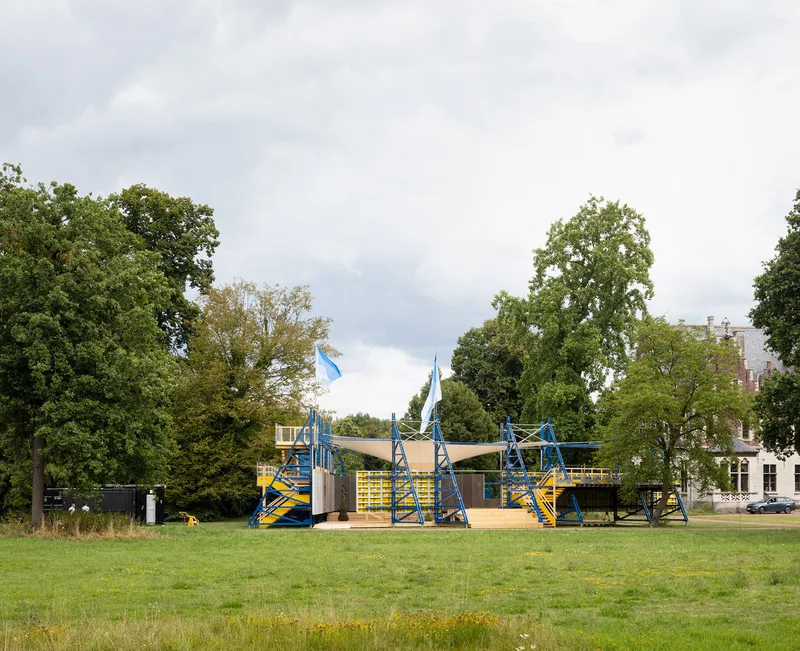
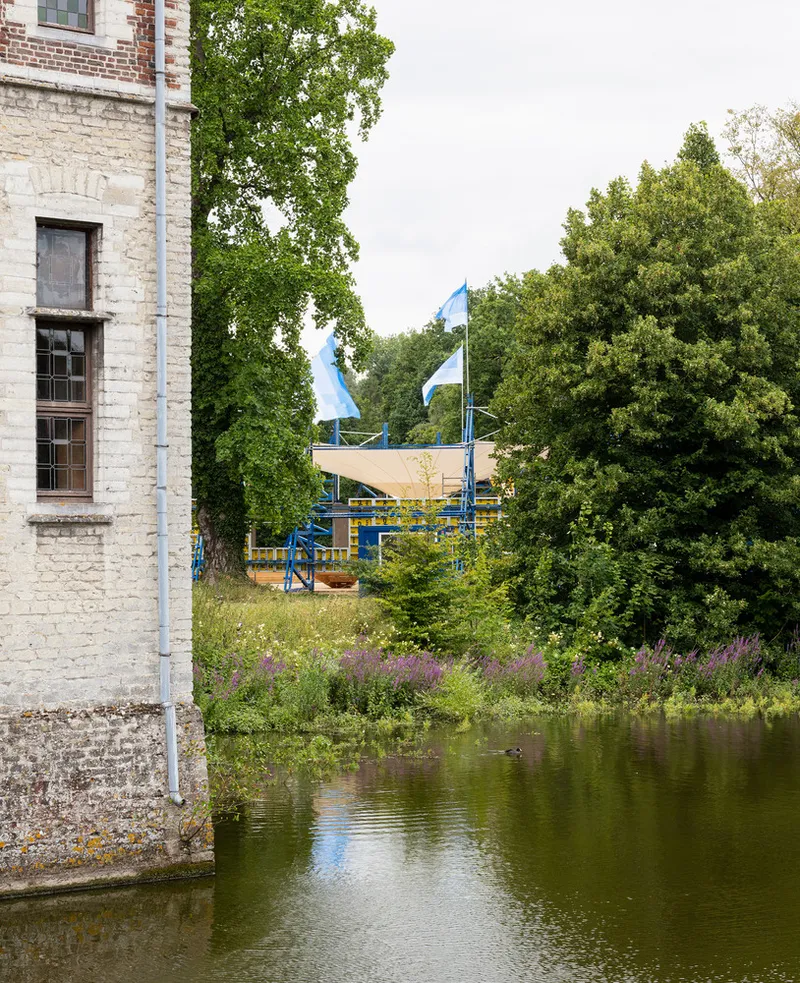
The Flora Pavilion, designed by ConstructLab, 019, Mouton, and H110 Architecten En Ingenieurs, is a striking architectural intervention set against the historic backdrop of Rubens Castle in Zemst, Belgium. Inspired by Peter Paul Rubens’ 1636 masterpiece, A View of Het Steen in the Early Morning, this pavilion reimagines the landscape surrounding the castle of Elewijt, blending historical context, sustainable architecture, and cultural engagement.
Spanning 640 m², the pavilion is a temporary structure designed for the Stories Unfold initiative—a participatory event curated by EventFlanders and Tourism Flanders to activate historic sites through artistic and architectural exploration.
Blending Architecture with Heritage and Nature
The site of Rubens Castle is a complex intersection of historical narratives, ecological transformation, and modern urbanization. The pavilion embraces this layered history, connecting with the surrounding parkland, water features, and local community. It raises critical questions about how heritage sites can remain relevant while adapting to evolving tourism dynamics.
By integrating circular construction methods, the project reflects contemporary concerns around sustainability in architecture. The design respects the site's existing architectural elements while introducing a dynamic and flexible spatial intervention.
A Pavilion Built on Circular Construction Principles
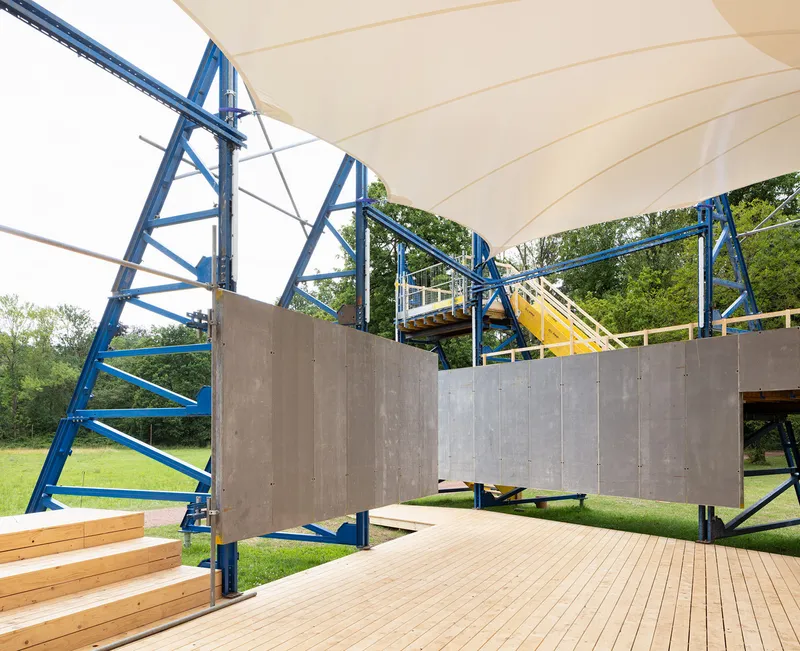
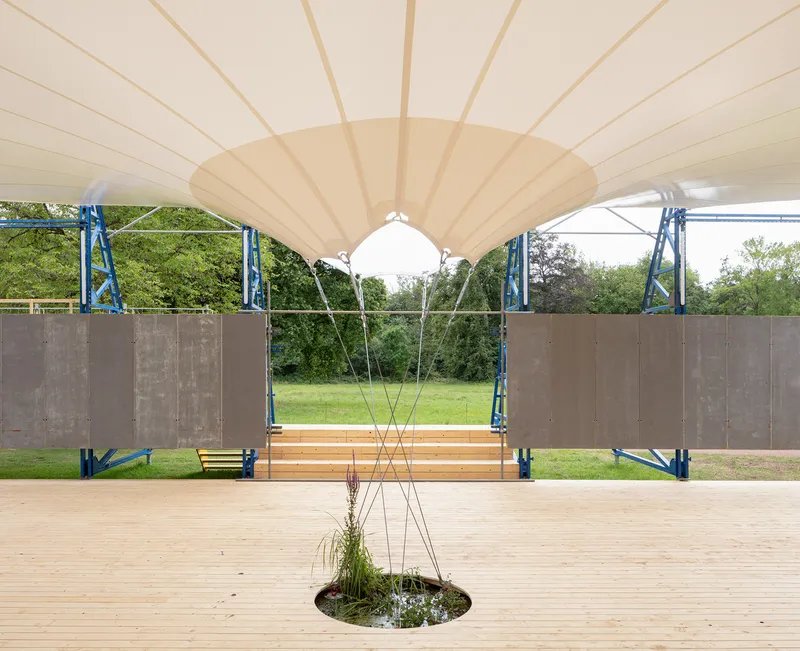
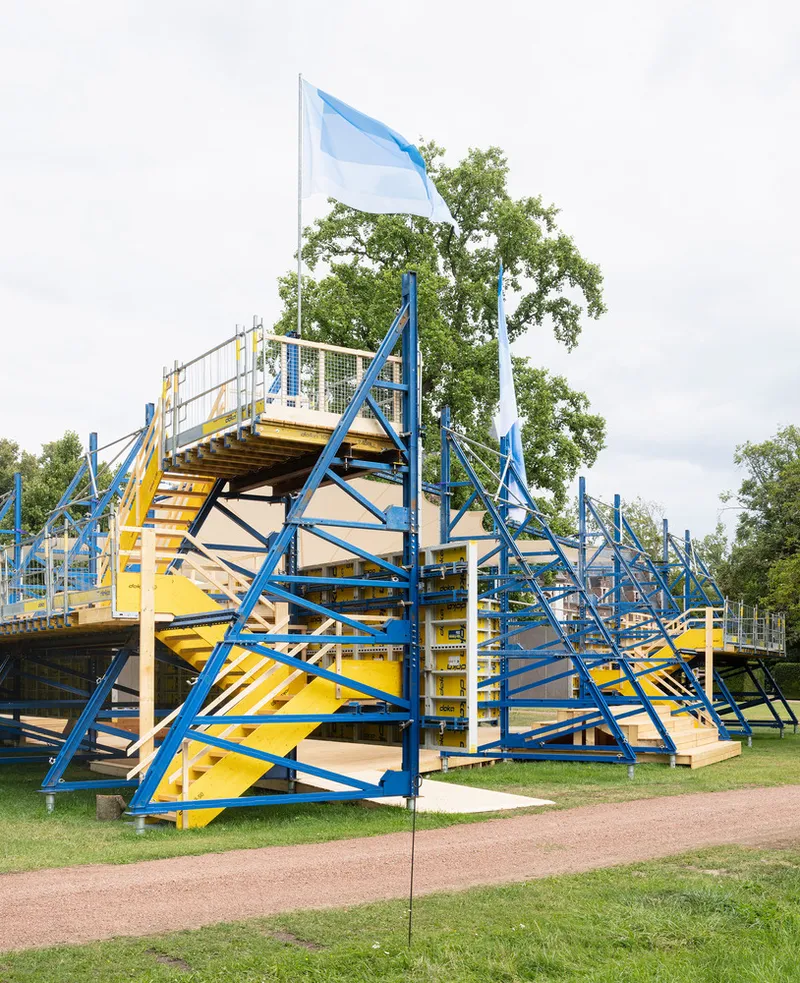
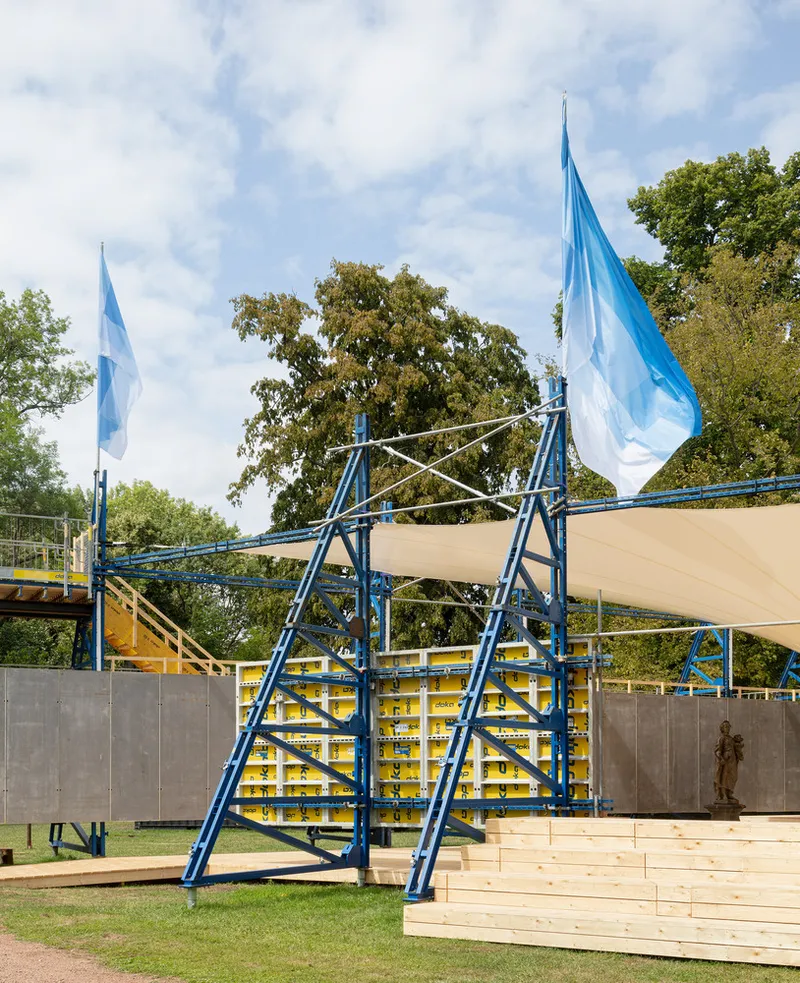
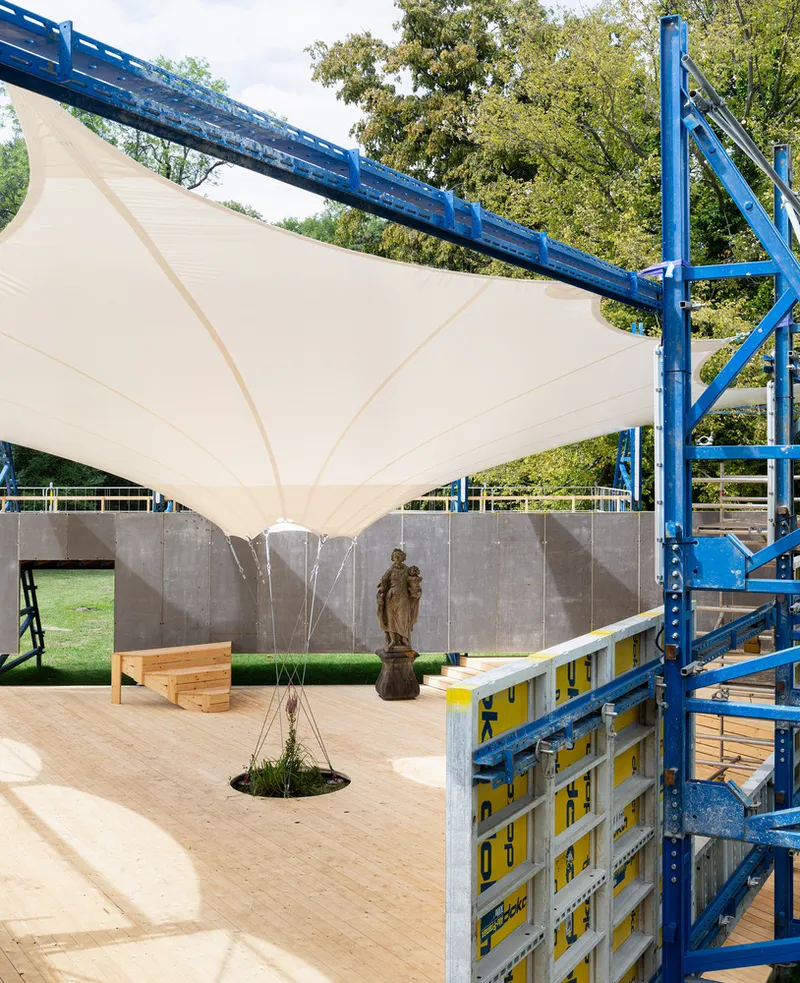
A defining feature of Flora Pavilion is its use of reclaimed formwork material, typically employed for temporary structural support. Instead of being discarded, this material serves as the primary structural element, making the project a model of sustainable and circular architecture. Once the pavilion is dismantled, the materials will be repurposed for future projects, reducing waste and promoting responsible construction practices.
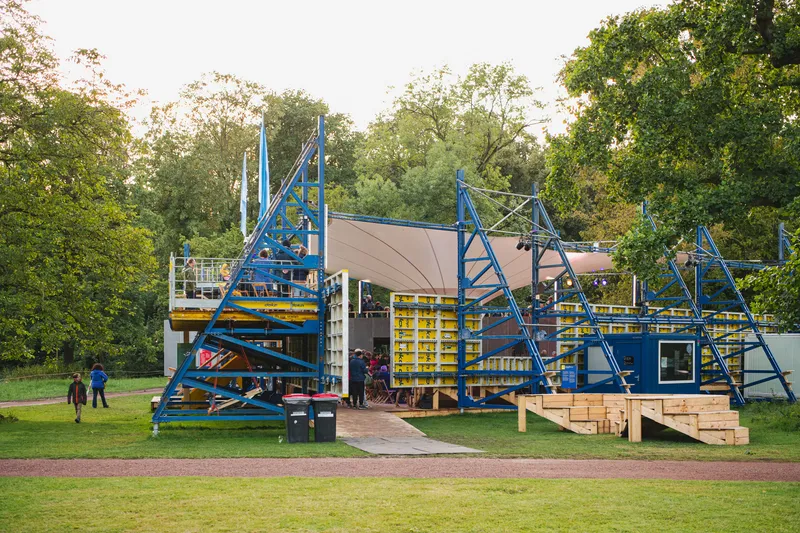
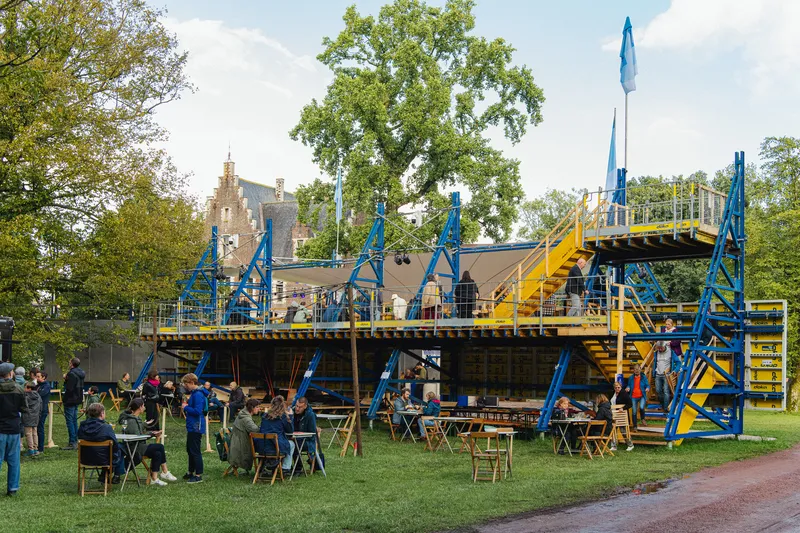
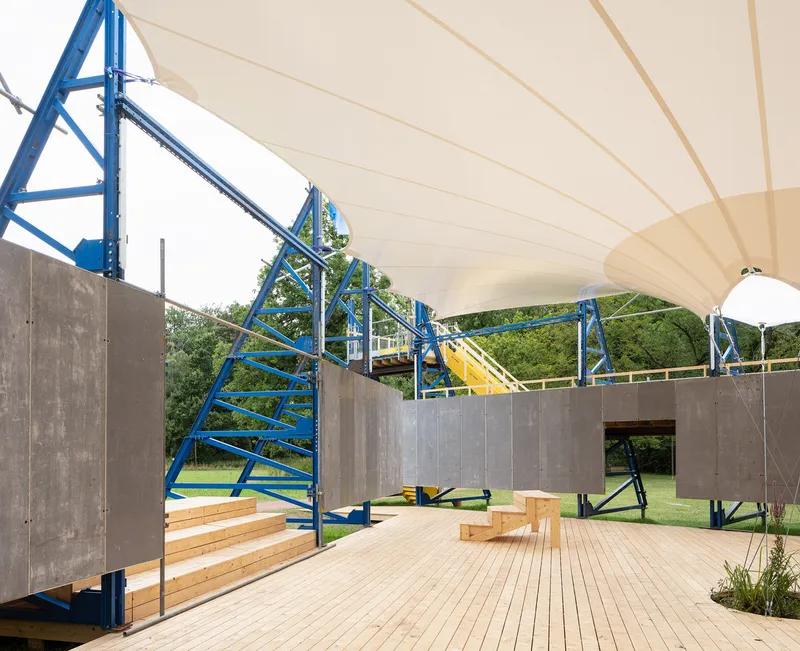
Beyond its physical structure, the Flora Pavilion functions as a cultural and social catalyst, providing an enclosed yet open-ended space for events, exhibitions, and community engagement. Its design also frames unique perspectives of the castle and surrounding landscape, encouraging visitors to experience the site in new and unexpected ways.
A striking feature of the pavilion is a series of flags, which introduce an element of movement and playfulness. These textile interventions interact with the landscape’s depth, drawing imaginary lines that subtly redefine the space while enhancing the atmospheric experience of the site.
Reimagining Historic Sites for the Future
As tourism and cultural engagement continue to evolve, projects like the Flora Pavilion demonstrate how architecture can bridge the past and future. By respecting heritage while embracing sustainability, this intervention serves as a model for how historic sites can be activated in innovative, environmentally conscious ways.
Through adaptive reuse, circular construction, and participatory design, the Flora Pavilion encourages dialogue about the role of architecture in preserving history while shaping contemporary experiences.
All Photographs are works of Michiel De Cleene, Birgit Sterckx



Popular Articles
Popular articles from the community


Co-Life: Senior Housing Design That Reconnects Older Adults With the City
Co-Life reimagines senior housing design through healing gardens, shared streets, workshops, and a sustainable community across generations.

The Ocean Hive: Sustainable Architecture for a Self-Sufficient Civilization at Sea
The Ocean Hive imagines sustainable architecture at sea, where modular habitats, algae, wave power and ocean waste sustain a growing colony.

Play: Fragments of Their World
Familiar architecture becomes modular playground design, creating safe spaces where displaced children can learn, connect, imagine and play.

Riyadh For All: Intergenerational Urban Design for Active Aging in Rabat
Riyadh For All reimagines urban design in Rabat with intergenerational co-living, adaptive courtyards, and Moroccan cultural exchange today.


Similar Reads
You might also enjoy these articles


Hodi-Mandai Geram
Project Function: Preservation and revitalization of the Intangible heritage and socio-spatial identity of the Hodi by Housing, Cultural Memory Center, Sacred Grove, landscape, local tourism economy


Olio Towers: A Mid-Rise for Performers That Fuses Housing, Rehearsal, and Stage
Located blocks from Houston's Theater District, this modular tower stacks living units around a central performance atrium.

Oasis: Modular Green Housing Carved into Dhaka's Urban Fabric
A shortlisted Plugin Housing entry reclaims unauthorized settlements in Dhaka with stepped concrete volumes, green roofs, and ventilation-driven design.

Black Hole: A Floating Megastructure for the Post-Physical Era
Emiliano Mazzarotto envisions a spherical, self-scaling arena where e-sports, digital hotels, and holographic stadiums replace traditional public space.

Explore Architecture Competitions
Discover active competitions in this discipline


Challenge to design a portable theatre

Challenge to design a portable music platform

Challenge to design an open learning module for the elderly


Challenge to reimagine the Iron Throne
Comments (0)
Please login or sign up to add comments
No comments yet. Be the first to comment!