
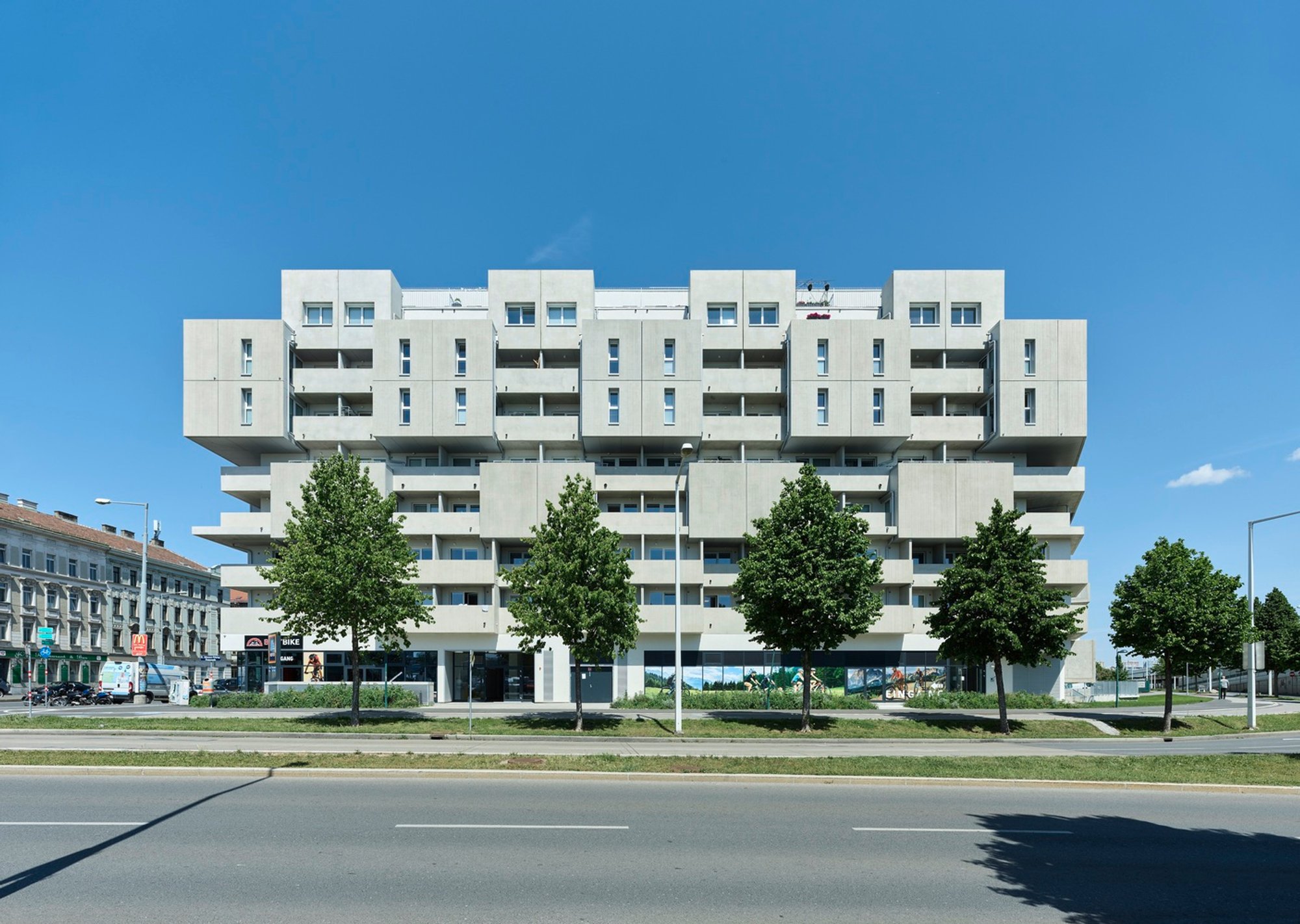
Florasdorfer Spitz: A Seamless Blend of Urban Density and Rural Charm in Vienna’s Northern Gateway
Florasdorfer Spitz blends urban density with village charm, featuring green façades, mixed-use spaces, and flexible, community-oriented housing.

Location: Floridsdorf, Vienna, Austria Architects: Freimüller Söllinger Architektur + Studio Vlay Streeruwitz Typology: Mixed-Use Architecture – Residential, Retail, Commercial Completion: 2022 Total Area: 25,110 m² Photography: © Bruno Klomfar Manufacturers: Swisspearl, Felbermayer Fenster GmbH, Rauter Concrete Solutions Landscape Architecture: Carla Lo Landschaftsarchitektur Traffic Planning: NASt, con.sens
Reimagining the Edge: Where City Meets Village
At the crossroads of infrastructure and local identity, the Florasdorfer Spitz Building emerges as a bold and contextual urban intervention. Situated at the confluence of two major highways in Vienna’s Floridsdorf district, the project by Freimüller Söllinger Architektur and Studio Vlay Streeruwitz ambitiously redefines what it means to live where “city meets village.” The architects were challenged with creating an urban space that fosters high density without sacrificing the warmth and openness of a rural character.
To meet this ambitious goal, the design strategy revolved around four site-specific principles:
- Integrating Floridsdorf's traditional urban typology
- Utilizing the spatial reserve along Pragerstrasse
- Emphasizing the landscape-rich eastern edge
- Incorporating vertical green spaces to soften the cityscape
Urban Form and Spatial Strategy
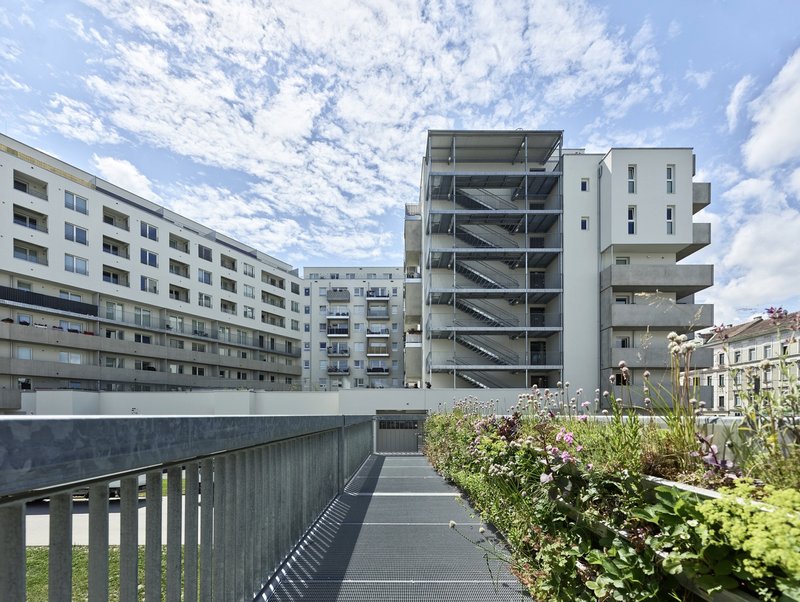
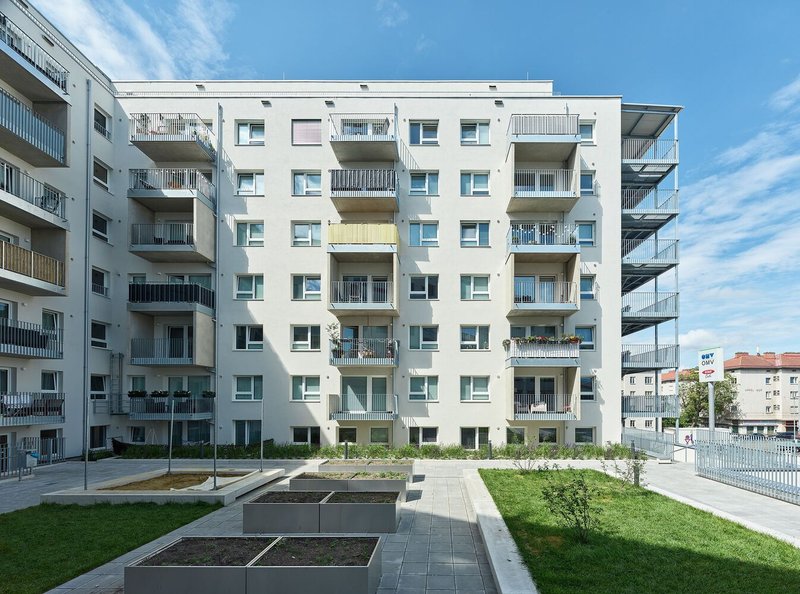
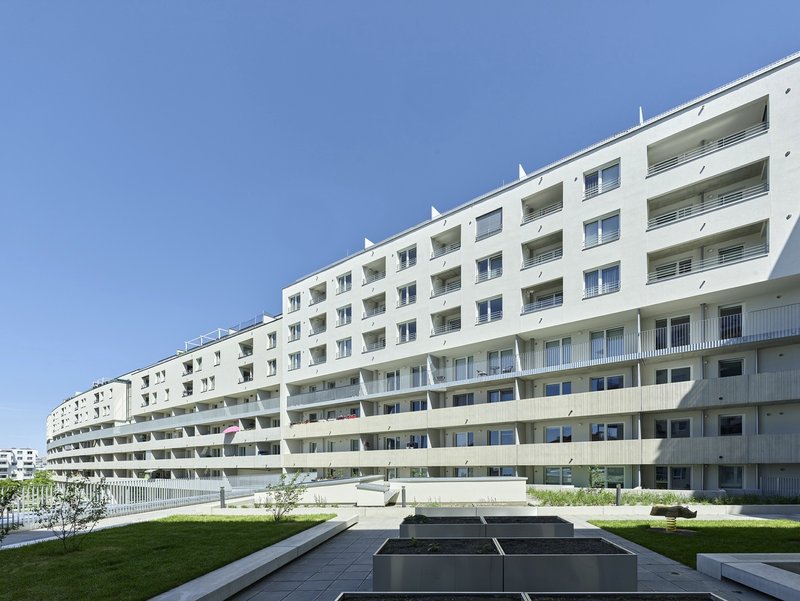
The masterplan references the historical perimeter block typology, articulated as a dialogue between “brackets and dots.” While the bracket-like perimeter forms define the edge and provide continuity, the dot-shaped point blocks offer visual and spatial porosity. These elements frame a landscaped inner courtyard, creating a sheltered oasis while maintaining a clear urban frontage.
A key design move was utilizing a vacant reserve lot along Pragerstrasse. This allowed for the seamless extension of the perimeter, avoiding fragmented voids and ensuring the building fronts remained activated and publicly engaged. This strategy strengthens the district’s urban cohesion while accommodating density with dignity.
Architectural Expression and Materiality
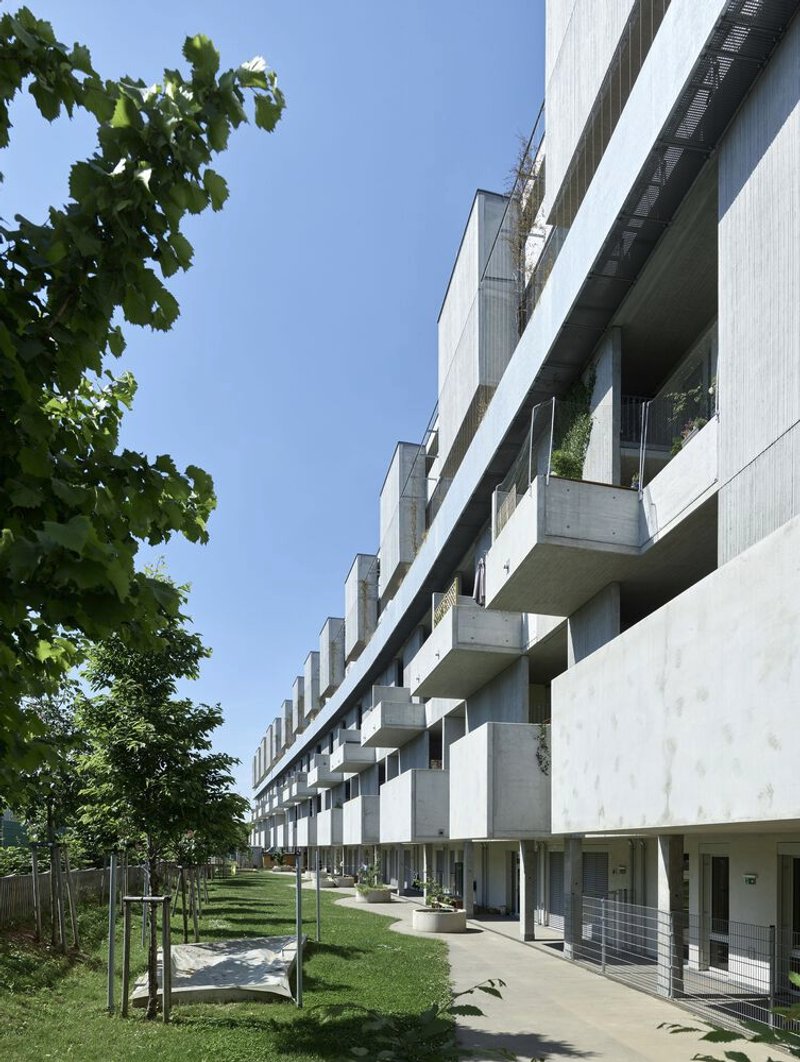
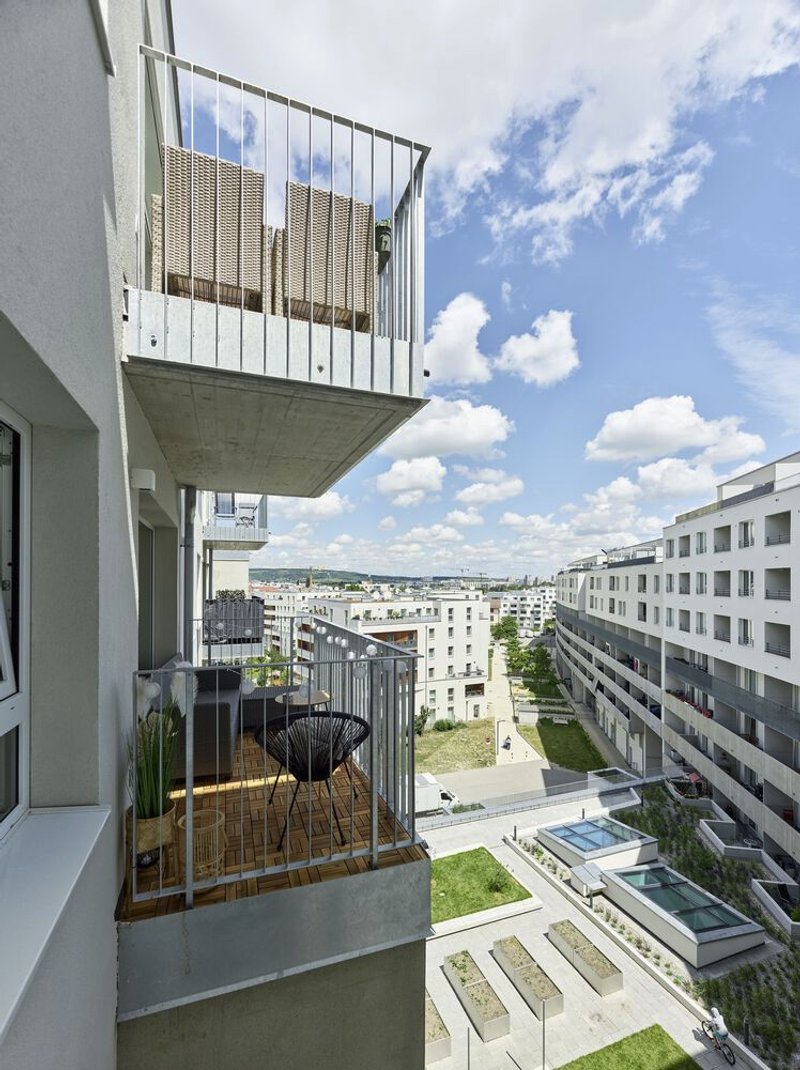
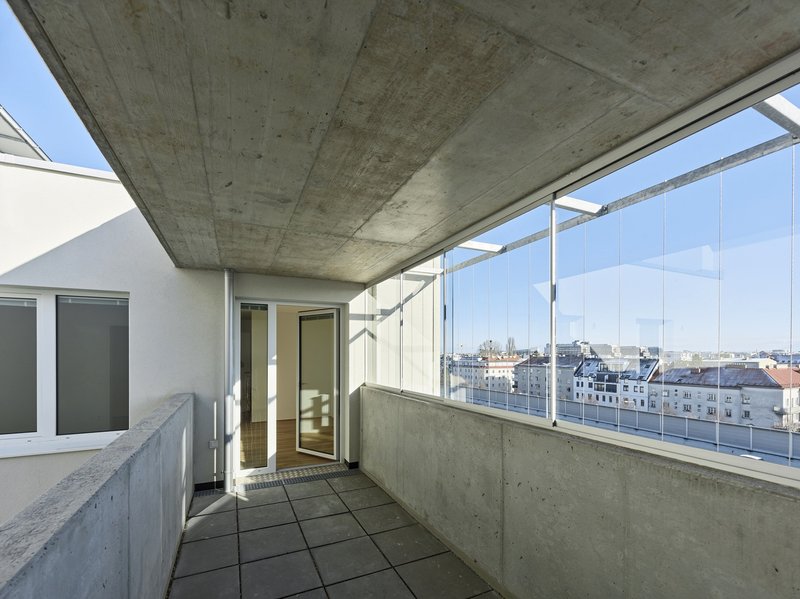
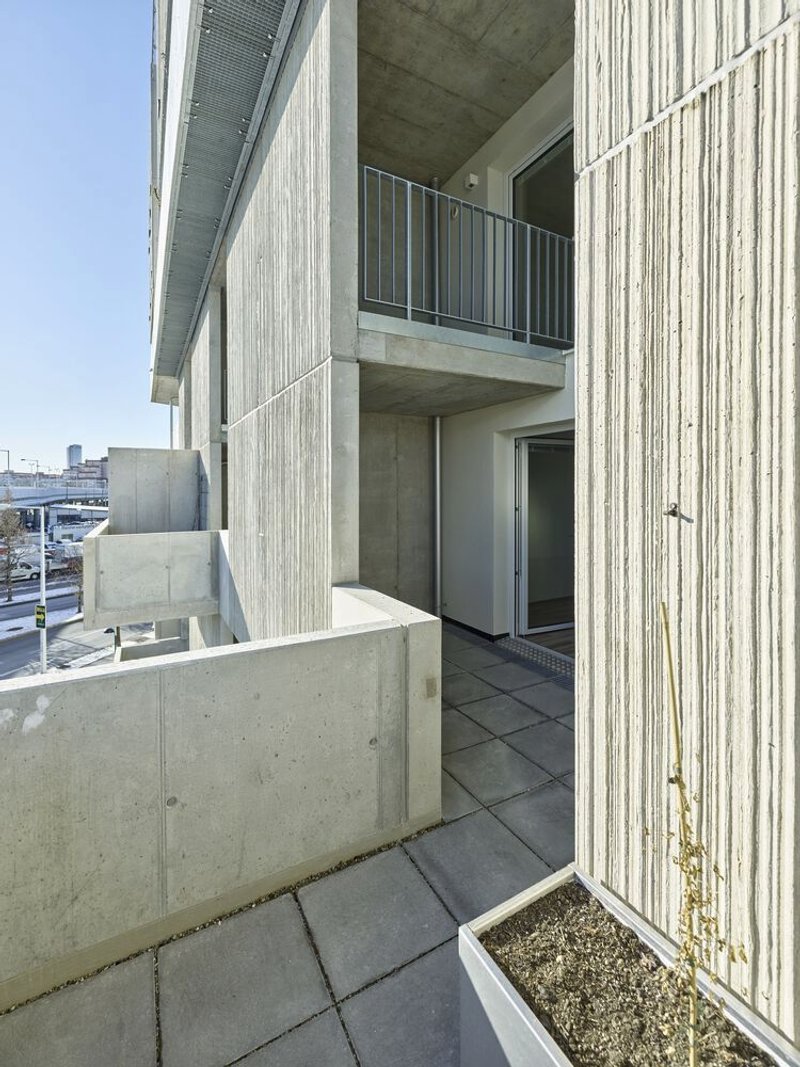
Located at the southern tip of the urban block, Florasdorfer Spitz functions as both a landmark and a connective threshold. Its expressive precast concrete facade, defined by textured surfaces, creates a dynamic interplay of light and shadow throughout the day. The careful orientation of private outdoor spaces—including loggias, terraces, and balconies—ensures residents experience both openness and retreat, with views directed toward the peaceful interior gardens.
Multifunctionality and Living Flexibility
More than a residential project, Florasdorfer Spitz exemplifies mixed-use urban living. The building accommodates:
- 147 apartments
- 39 fully equipped boarding rooms
- A ground-floor supermarket and retail spaces
- Shared community rooms on each floor
- Generous storage for bicycles and strollers
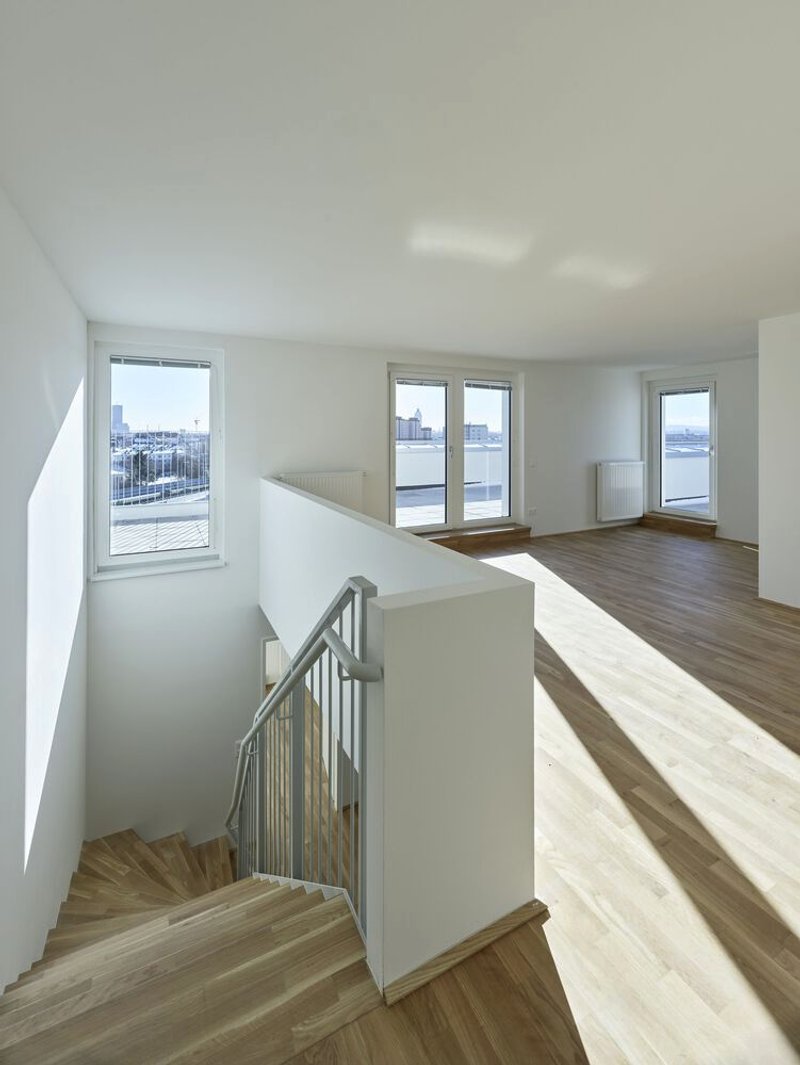
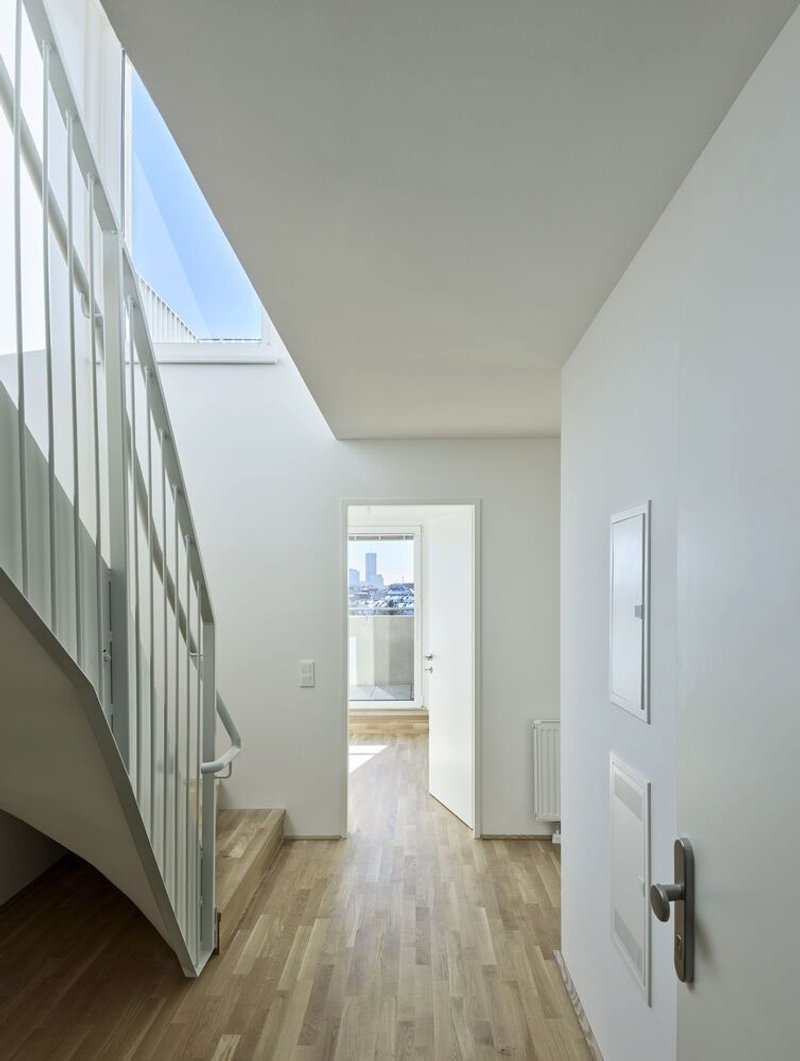
The flexible apartment layouts are designed to evolve with residents' changing needs—whether for intergenerational living, work-from-home solutions, or creating guest flats with separate access. This adaptability fosters long-term residency and community stability, essential in contemporary urban housing.
Green Infrastructure and Acoustic Buffering
On the eastern edge of the site, the building interfaces with a mature green strip, acting as both a sound barrier and a natural buffer. This green infrastructure not only mitigates highway noise up to a height of 15 meters but also enhances biodiversity. A striking feature is the vertical garden carpet—a lush façade treatment that brings the garden to all levels, visually and experientially. Above the tree canopy, apartments enjoy open sky and panoramic views, while the lower levels benefit from intimacy and natural shading.
A Sustainable Model for Urban Expansion
Florasdorfer Spitz stands as a forward-thinking model for sustainable urban expansion in rapidly growing European cities. It demonstrates that urban density can be reconciled with human-centered design, green infrastructure, and typological innovation. Through the smart layering of programmatic diversity, architectural expression, and ecological awareness, the project fosters an inclusive, vibrant, and climate-resilient urban lifestyle.




Popular Articles
Popular articles from the community

Kawasaki Olympic Sports Center: Sports Complex Architecture Rooted in Community, Tradition, and Movement
Kawasaki Olympic Sports Center reimagines sports complex architecture as a civic park where tradition, training, and community meet locally.
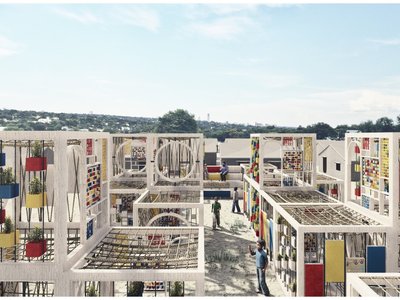
The Faith: Modular Architecture for Play, Learning, and Hope in Kutupalong Refugee Camp
A modular playground architecture project in Bangladesh where play, learning, safety, and hope rebuild childhood inside a refugee camp anew.
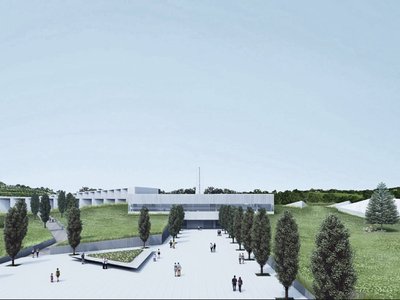
CRACK: Winery Architecture Carved Into the Landscape
CRACK reimagines winery architecture as a buried path through vineyard terrain, linking production, tasting, lodging, landscape and culture.

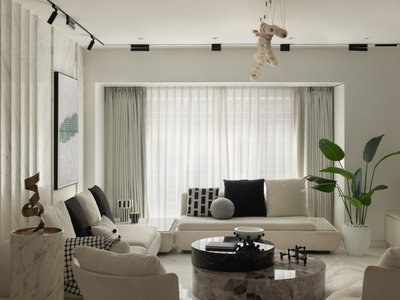
Inside a Timeless Mumbai Residence by Aether Studio
Aether Studio's 2,250 sq ft apartment in Malad, Mumbai uses marble, brass, boucle, and disciplined restraint to build a quiet retreat from the city.

Similar Reads
You might also enjoy these articles

Olio Towers: A Mid-Rise for Performers That Fuses Housing, Rehearsal, and Stage
Located blocks from Houston's Theater District, this modular tower stacks living units around a central performance atrium.
Oasis: Modular Green Housing Carved into Dhaka's Urban Fabric
A shortlisted Plugin Housing entry reclaims unauthorized settlements in Dhaka with stepped concrete volumes, green roofs, and ventilation-driven design.

Black Hole: A Floating Megastructure for the Post-Physical Era
Emiliano Mazzarotto envisions a spherical, self-scaling arena where e-sports, digital hotels, and holographic stadiums replace traditional public space.
Compact & Sustainable Living in Piraeus: A Four-Level Family Home Built Around Light and Air
A narrow townhouse in one of Greece's densest port cities uses a central atrium and passive strategies to house three generations under one roof.

Explore Residential Building Competitions
Discover active competitions in this discipline




The International Standard for Design Portfolios


The Global Benchmark for Architecture Dissertation Awards


The Global Benchmark for Graduation Excellence

Challenge to design mud housing for contemporary communities
Comments (0)
Please login or sign up to add comments
No comments yet. Be the first to comment!