
NO ARCHITECTURE Shatters the Glass House Into a Flower-Shaped Pavilion in the Hudson Valley
A radial plan of glass petals and board-formed concrete walls brings the surrounding landscape into every room of this New York retreat.

The glass house is one of modern architecture's most loaded typologies. From Philip Johnson's rectangle in New Canaan to Mies van der Rohe's Farnsworth House, the proposition has always been simple: dissolve the wall, reveal the landscape, and accept the consequences. NO ARCHITECTURE takes that proposition and torques it. Their Flower House, set in the agricultural terrain of the Hudson Valley, replaces the singular transparent box with a radial plan whose wings fan outward like petals, each one oriented toward a different slice of the surrounding mountains, fields, and sky.
What makes this project genuinely interesting is how it resolves a contradiction that has plagued glass houses for decades: total transparency versus functional privacy. By splitting the program into separate wings and anchoring them around a central planted courtyard, the architects give every room a panoramic view while using board-formed concrete partitions and the plan's own geometry to shield private zones from one another. The result is a house that feels wide open and deeply sheltered at the same time.
A Plan That Radiates
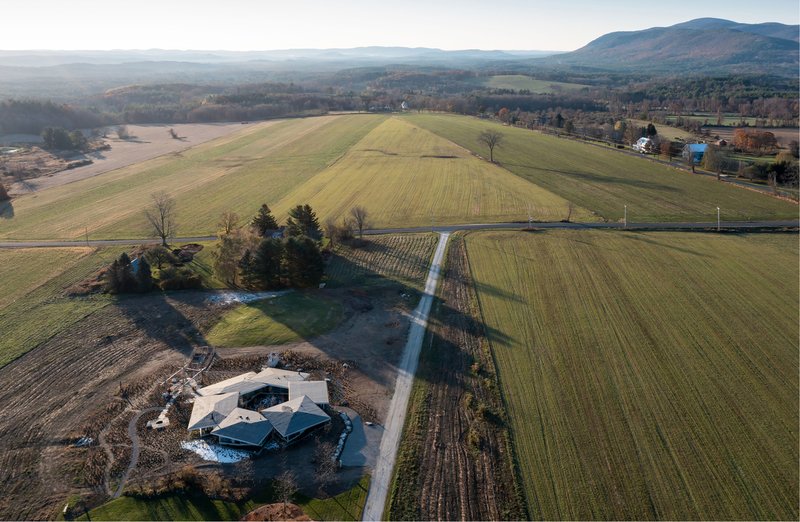
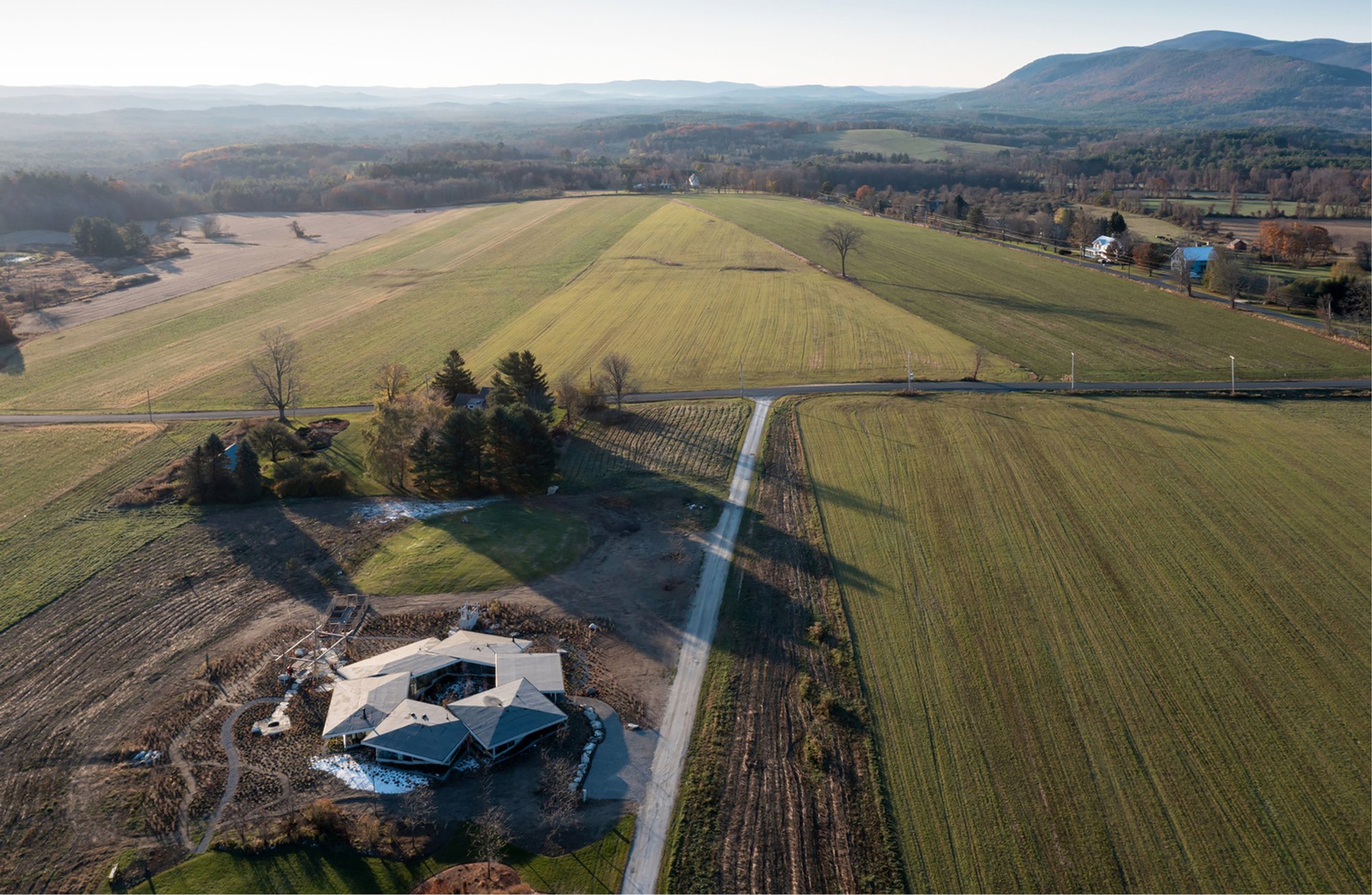
Seen from the air, the logic is immediate. The house is not one volume but several, each wing angled outward from a shared center like the petals of a wildflower. The angular footprint creates pockets of landscape between the wings: sheltered gardens, gravel courtyards, and entry paths lined with native grasses and flat stepping stones. It is a plan that generates landscape as much as it occupies it.
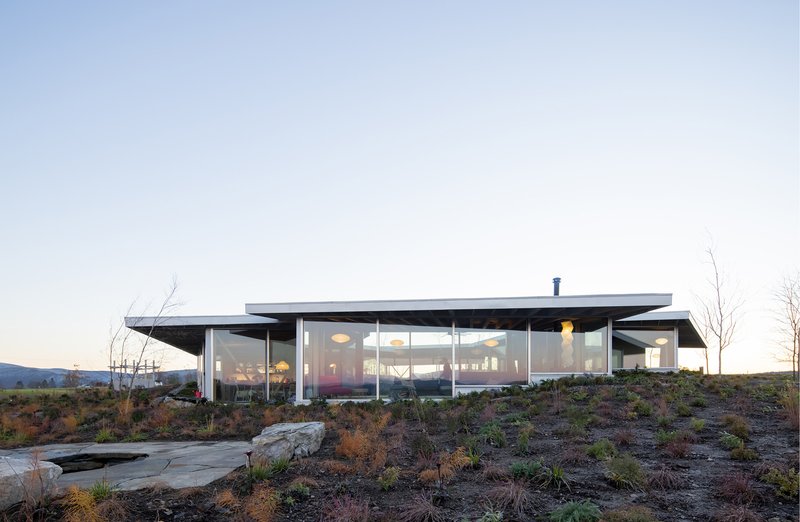
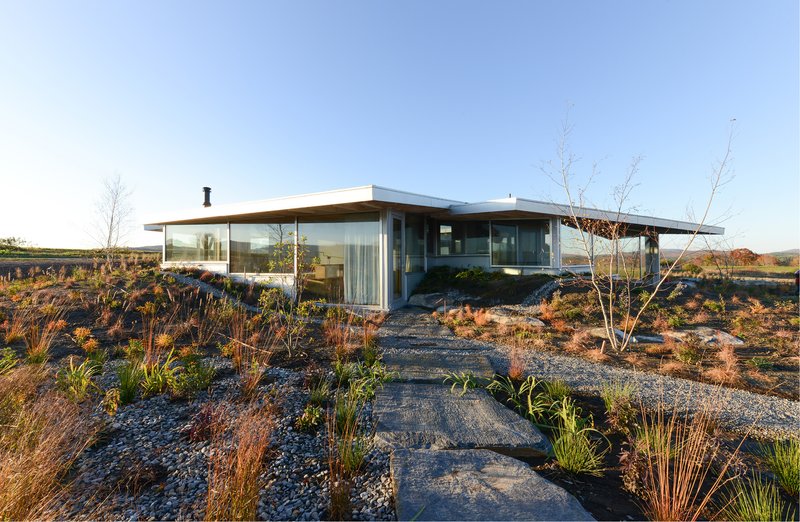
At ground level, the flat overhanging roof ties the wings together into a single horizontal gesture that hovers just above the rocky hillside. The effect at dusk is particularly striking. The house glows from within, and its silhouette reads as a thin, cantilevered plane rather than as a building in any conventional sense. The entry sequence, a procession of flagstones through gravel and low plantings, prepares you for a threshold that barely exists: you walk from garden directly into glass-walled living space.
The Central Courtyard as Heart
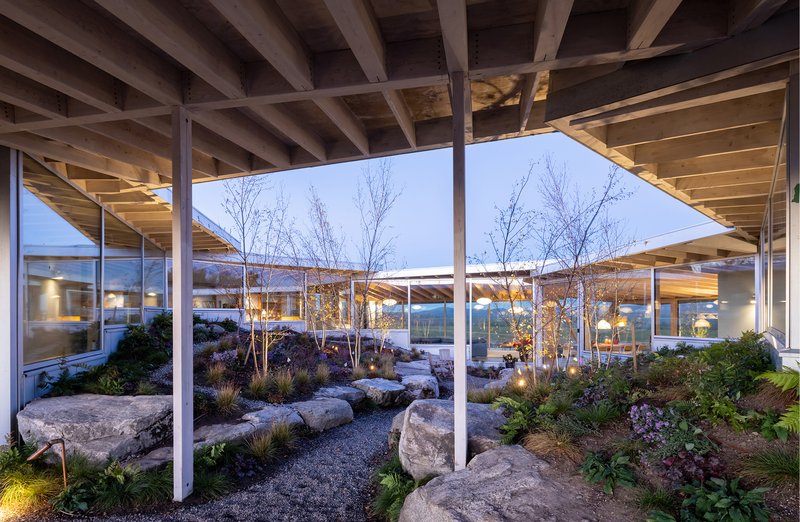
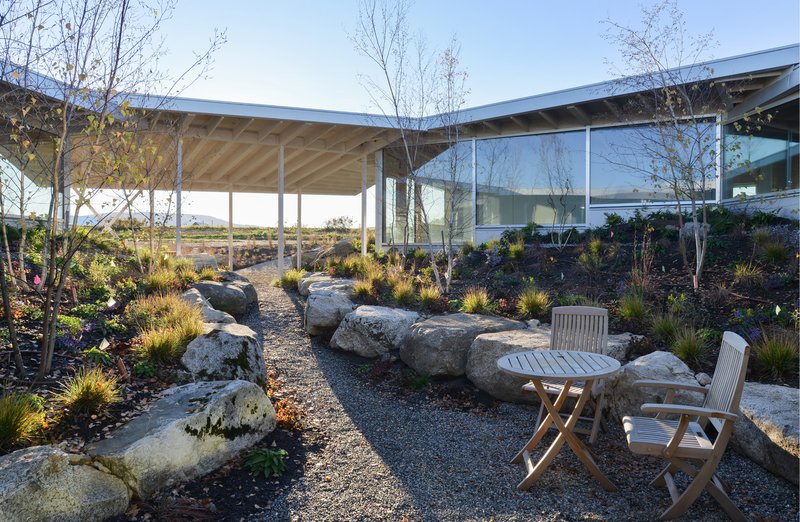
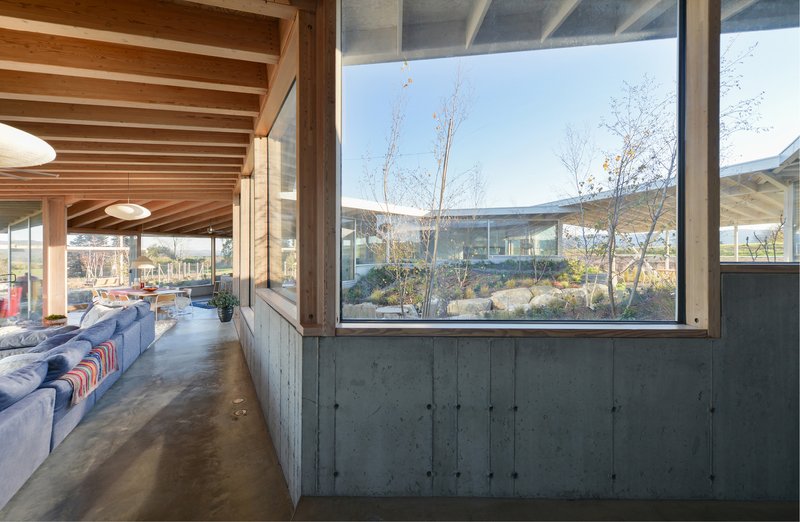
The interior courtyard is the project's most convincing move. Rather than treating the center of the plan as a corridor or service core, NO ARCHITECTURE fills it with birch trees, large boulders, and low native plantings, all beneath the exposed timber roof structure. The courtyard becomes a room without walls, a piece of landscape pulled inside the house's perimeter.
Corridors with continuous glazing on the courtyard side turn circulation into an experience of proximity to this interior garden. Concrete partition walls separate the hallway from bedrooms and bathrooms, but the courtyard stays visible through gaps and clerestories. The effect is that no matter where you stand in the house, you are always looking at two kinds of landscape simultaneously: the close, curated garden at the center and the expansive pastoral terrain beyond the glass walls.
Timber and Concrete in Dialogue
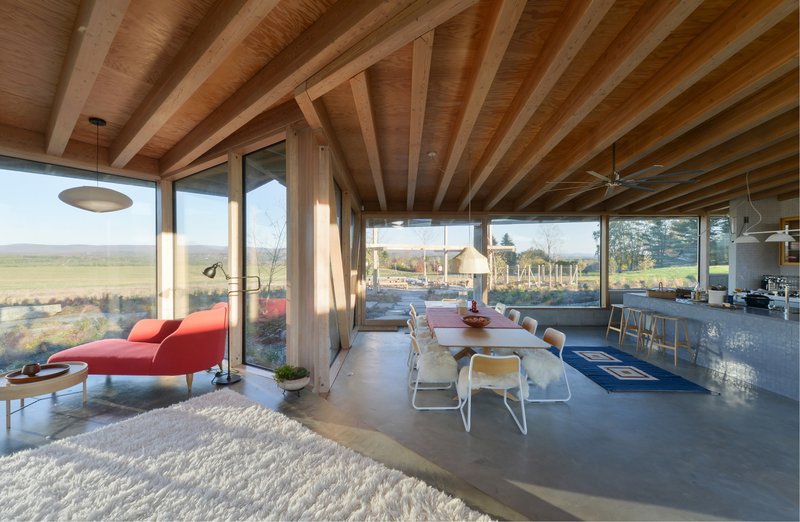
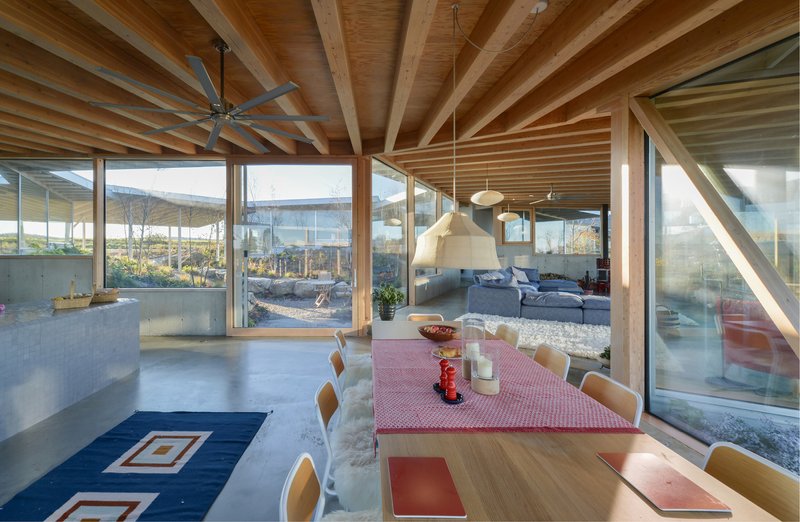
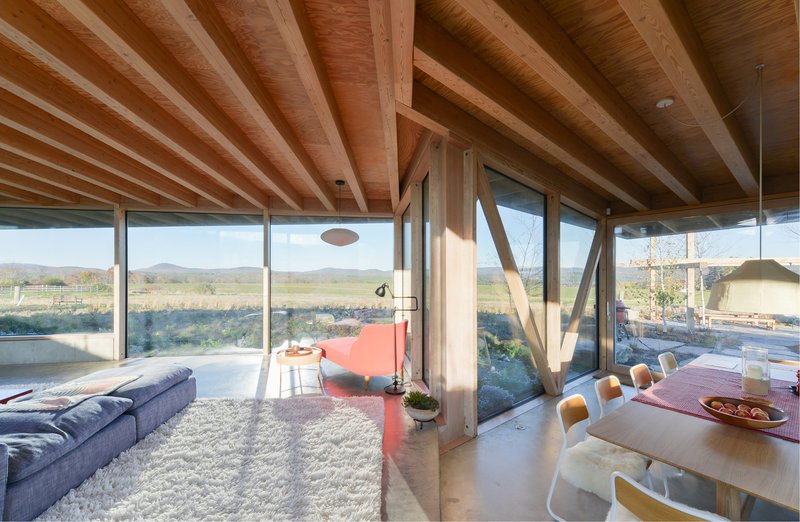
The material palette is deliberately limited to two primary elements: exposed timber joists overhead and board-formed concrete at mid-height. The timber ceiling runs continuously across every room, its rhythmic joists providing warmth and scale to spaces that could otherwise feel cold under so much glass. Angled structural bracing where the wings meet adds a moment of visual tension to the dining area, making the structure legible without resorting to ornament.
The concrete does the heavy spatial lifting. Cast with visible board marks, it rises to about waist or shoulder height to form partition walls, kitchen countertops, and bathroom enclosures. These half-walls are high enough to define rooms but low enough to let the timber ceiling and the landscape beyond flow uninterrupted. It is a simple trick, executed with discipline.
Living Spaces That Frame the Valley
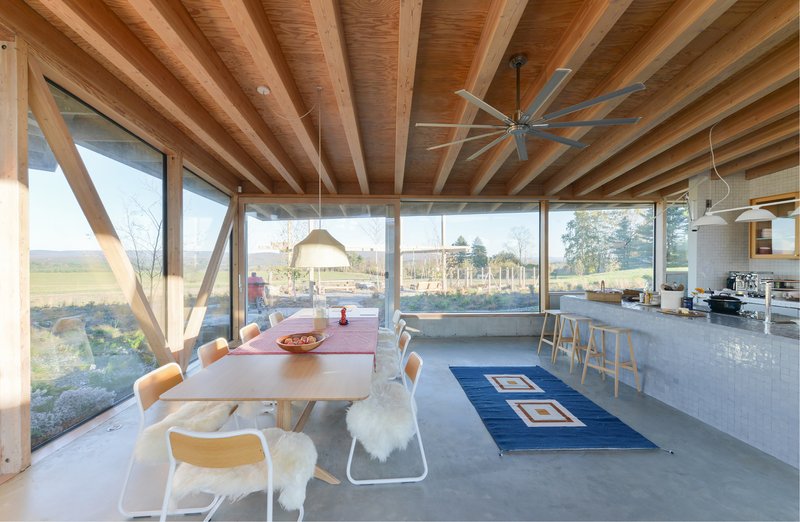
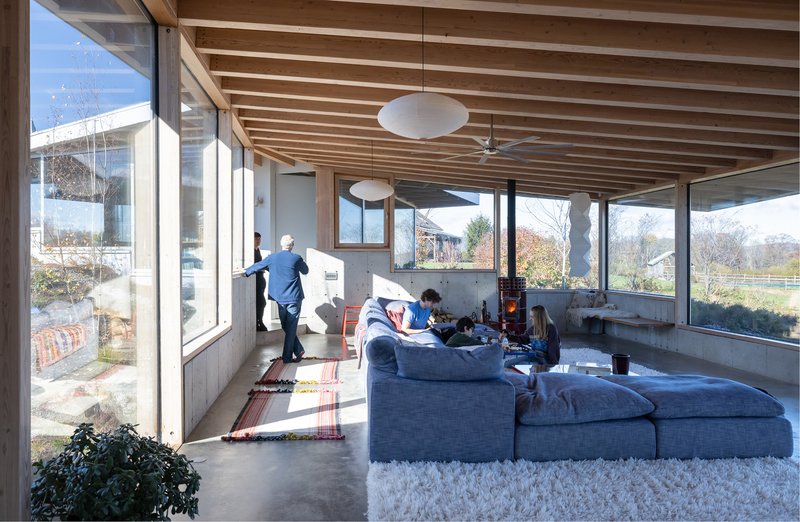
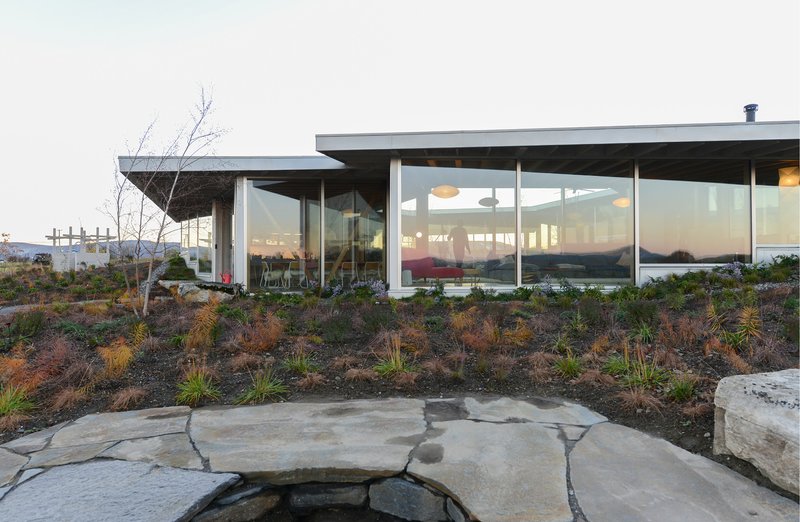
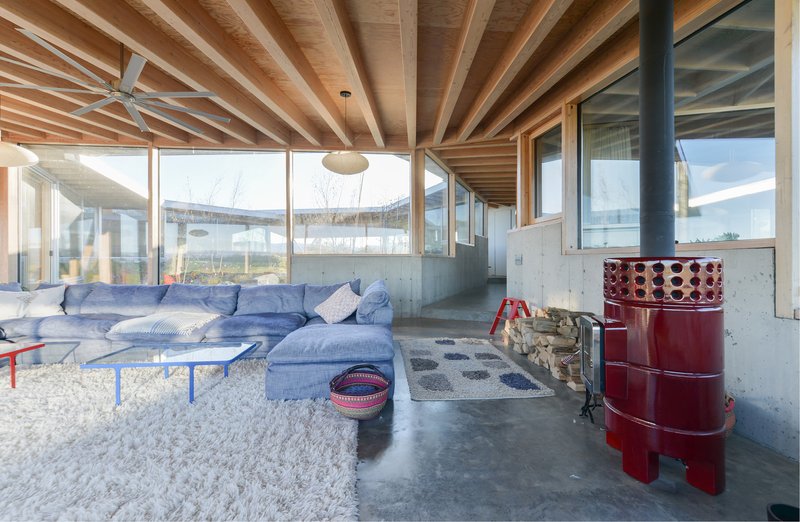
The open-plan living and dining area occupies the widest petal, stretching between full-height glazing on two sides. On a winter afternoon, the concrete floor absorbs low sunlight while the wood-burning stove anchors the seating area with the kind of elemental warmth that glass houses rarely deliver. Stacked firewood beside the concrete partition wall reinforces the sense that this is a house designed for habitation across seasons, not just for summer entertaining.
At dusk, the flagstone patio extends the living room outward, blurring the threshold between interior and landscape in a way that feels earned rather than merely gestural. Young plantings soften the edge, and the overhanging roof provides just enough shelter to make the transition comfortable.
Kitchen, Bedroom, and the Art of the Half-Wall
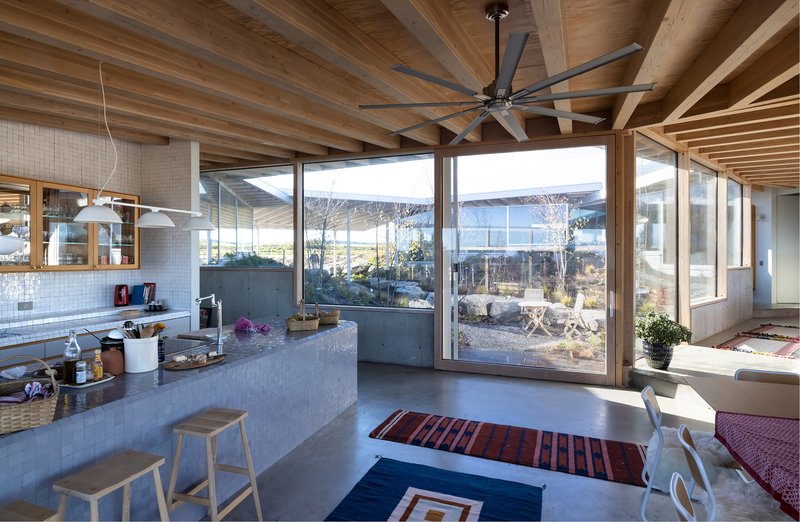
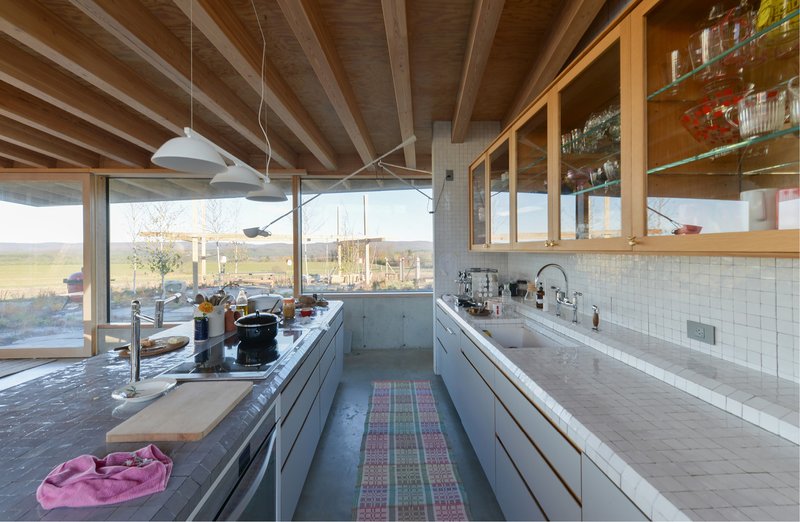
The kitchen deploys the concrete countertop as both work surface and spatial divider, its mass grounding the room beneath the lighter timber ceiling. Corner glazing opens toward the courtyard, so cooking becomes an act performed in full view of birch trees and boulders. A white tile backsplash in the galley section provides a practical nod that stops the palette from feeling too austere.
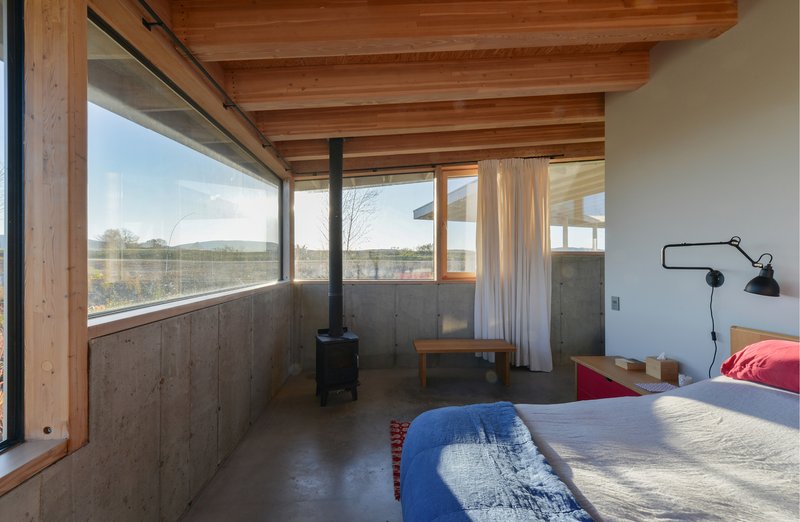
The bedroom takes the half-wall strategy furthest. Board-formed concrete rises just high enough to conceal the bed from the corridor, while a horizontal ribbon window above it frames distant hills in a composed strip of landscape. It is the most private room in the house, yet it still participates in the panoramic ambition of the plan. Privacy here is achieved through geometry and material, never through opacity.
Details That Hold the Concept Together
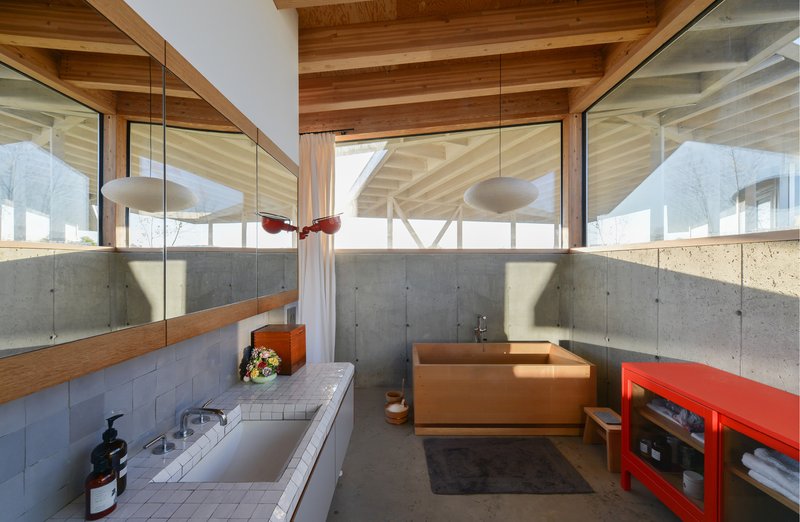
The bathroom distills the house's material logic into its smallest room. Concrete half-walls define the wet zone, while clerestory windows filter afternoon sunlight through the gap between wall and timber ceiling. There is no drywall, no trim, no suspended ceiling: just the same two materials doing the same work they do everywhere else. The consistency is the design.
Similarly, the red wood-burning stove beside the living room partition operates as both heat source and color accent in a house that otherwise avoids decorative gestures. Its chimney punches through the timber roof with minimal detailing, a reminder that the house's simplicity is achieved through precision, not austerity.
Why This Project Matters
The glass house typology has been revisited so many times that most new entries feel like tributes rather than arguments. Flower House is an argument. By fragmenting the plan into radiating wings and inserting a courtyard at the center, NO ARCHITECTURE solves the glass house's oldest problem: how to be transparent without being exposed. The geometry itself produces privacy, shade, and shelter, qualities usually sacrificed in the pursuit of total openness.
More broadly, the project demonstrates that a limited material palette, timber and concrete, can do extraordinary spatial work when paired with a plan that has genuine ambition. Every room in this house has a different orientation, a different relationship to the landscape, and a different quality of light, yet the whole reads as a single coherent gesture. That is difficult to achieve, and it is worth studying closely.
Flower House by NO ARCHITECTURE, Hudson Valley, New York. Photographs by Iwan Baan.
About the Studio
Share Your Own Work on uni.xyz
If projects like this are the kind of work you want to make, uni.xyz is a place to publish your own, find collaborators, and enter design competitions.




Popular Articles
Popular articles from the community

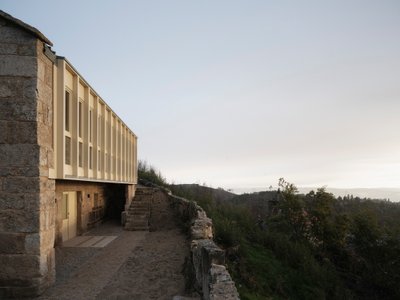
Three Architects Stitch a Social Center into a Crumbling Galician Hamlet
In Muimenta, Spain, timber and plywood volumes graft onto granite ruins to anchor a rural revitalization effort.
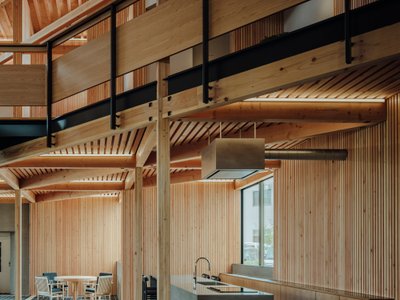
ure LLC Builds a Timber-Framed Suburban Office That Doubles as a Community Living Room in Hiroshima
KItoNOKO wraps sawtooth roofs and corrugated metal around an exposed timber frame to give a commercial district a new civic anchor.
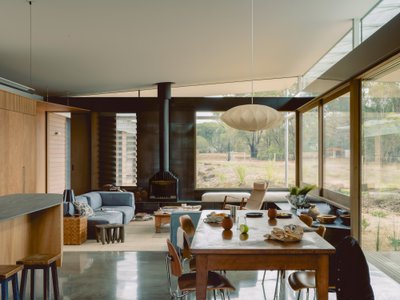
Not All Architecture Grounds a Timber Retreat in Victoria's Coastal Bushland
Ironbark House stretches low beneath eucalyptus canopy, threading a quiet domestic life between courtyard, deck, and landscape.

CTA | Creative Architects Designs Triangular Floating Shelters for Vietnam's Flood-Ravaged Communities
A timber-louvered triangular shelter rises on concrete pontoons to keep Vietnamese families safe and together when floodwaters come.


Similar Reads
You might also enjoy these articles

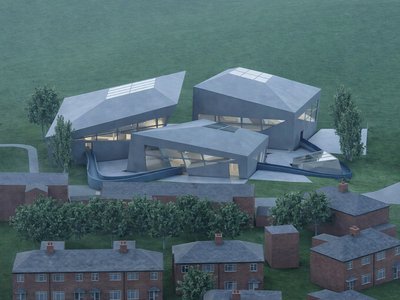
Filtering Space: A Gradual Spatial Experience
From urban intensity to spatial calm.


The Ken Roberts Memorial Delineation Competition (Krob)
As the most senior architectural drawing competition currently in operation anywhere in the world, it draws hundreds of entries each year, awarding the very best submissions in a series of medium-based categories.

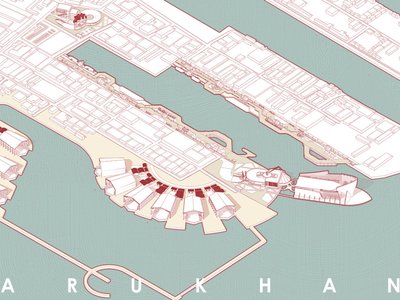
Waterfront Redevelopment and Urban Revitalization in Mumbai: Forging a New Dawn for Darukhana
A transformative waterfront redevelopment project reimagining Darukhana’s shipbreaking heritage into an inclusive urban future.

OUT-OF-MAP: A Call for Postcards on Feminist Narratives of Public Space
Rhizoma Design and Research Lab invites artists, designers, architects, researchers, and students to reflect on how feminist perspectives can reshape public space. Selected works will be exhibited in Barcelona, October 2026. Submissions open until 15 April 2026.


Explore Architecture Competitions
Discover active competitions in this discipline




The International Standard for Design Portfolios


The Global Benchmark for Architecture Dissertation Awards


The Global Benchmark for Graduation Excellence


Challenge to reimagine the Iron Throne
Comments (0)
Please login or sign up to add comments
No comments yet. Be the first to comment!