
Flying Chess Kindergarten: Transforming Play into Learning Through Landscape Design
Shanghai kindergarten transformed into game-based outdoor learning environment with themed educational paths, modular activity zones, and integrated natural habitat features.


A Partnership Born from Mutual Inspiration
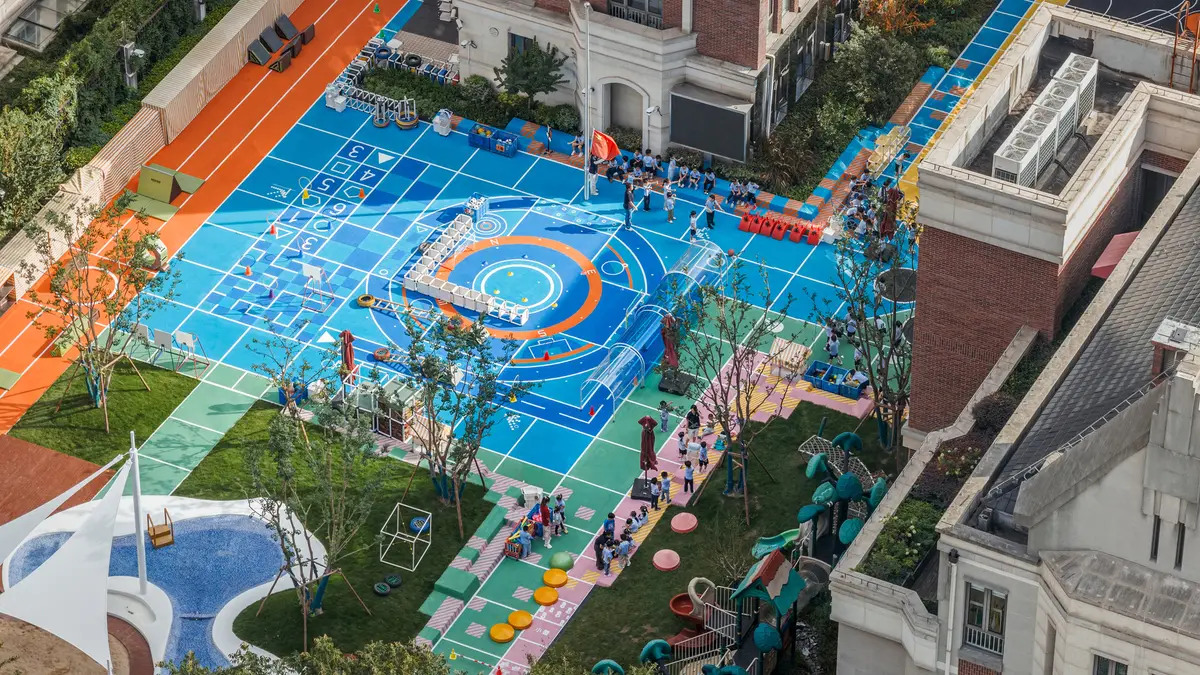
In the dynamic landscape architecture scene of Shanghai, China, an extraordinary collaboration emerged between VIASCAPE design and Xuhui Science and Technology Kindergarten that would redefine the relationship between outdoor space and early childhood education. This partnership, rooted in shared values and mutual inspiration, culminated in the Flying Chess Kindergarten—a 2,800-square-meter outdoor learning environment that seamlessly integrates play, nature education, science exploration, and spatial cognition.
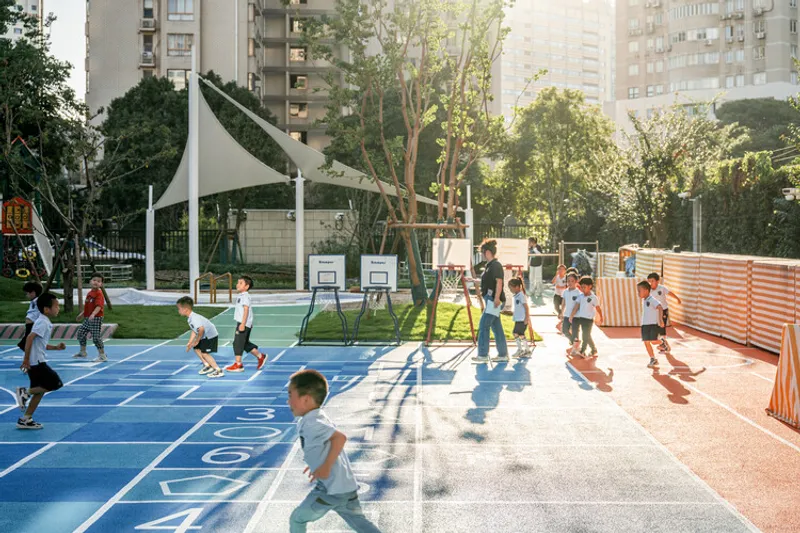
The story began with Tianlin Park, a landscape design completed by VIASCAPE in late 2023 that garnered significant positive public feedback. Throughout 2024 and early 2025, teachers from Xuhui Science and Technology Kindergarten became frequent visitors to the park, both spontaneously and through organized groups. They observed how the natural habitat design, intricately woven into the holistic landscape experience, resonated deeply with their ongoing early childhood nature education program. This alignment of vision sparked an initial conversation that would evolve into one of Shanghai's most innovative kindergarten landscape projects.
From Park Visit to Design Collaboration
Following initial contact in April 2025, VIASCAPE's design team was invited to provide a guided tour of Tianlin Park specifically for the kindergarten's teaching staff. During this visit, the designers elaborated on the concept and value of "urban habitat"—an integrated approach combining natural, vibrant, and cultural elements within urban contexts. This process of knowledge exchange and conceptual alignment laid a solid foundation for the collaborative design journey ahead, characterized by mutual inspiration and shared commitment to child-centered design principles.
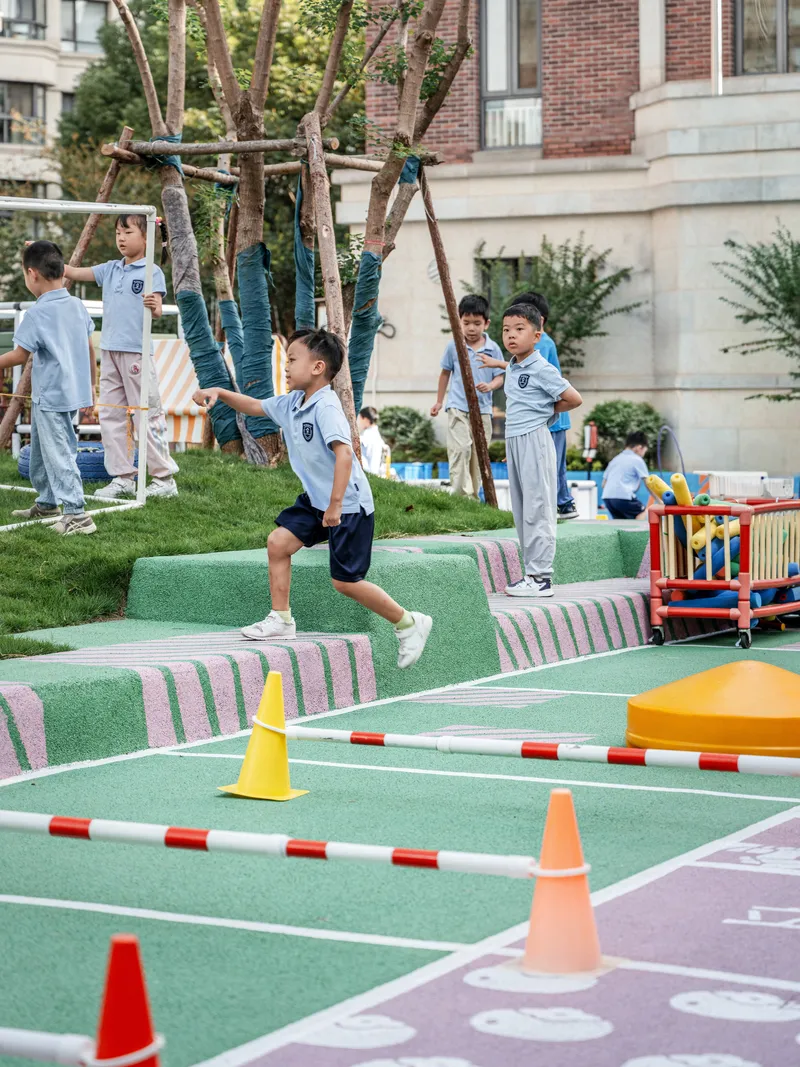
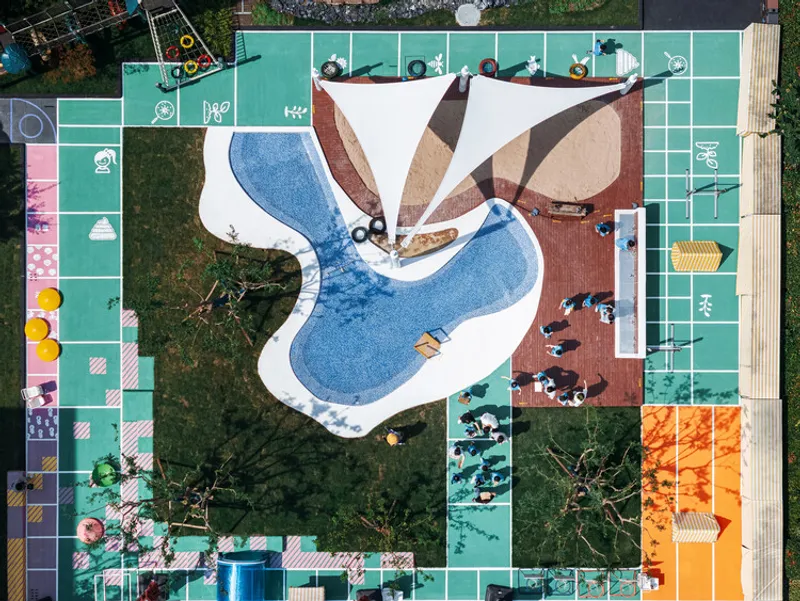
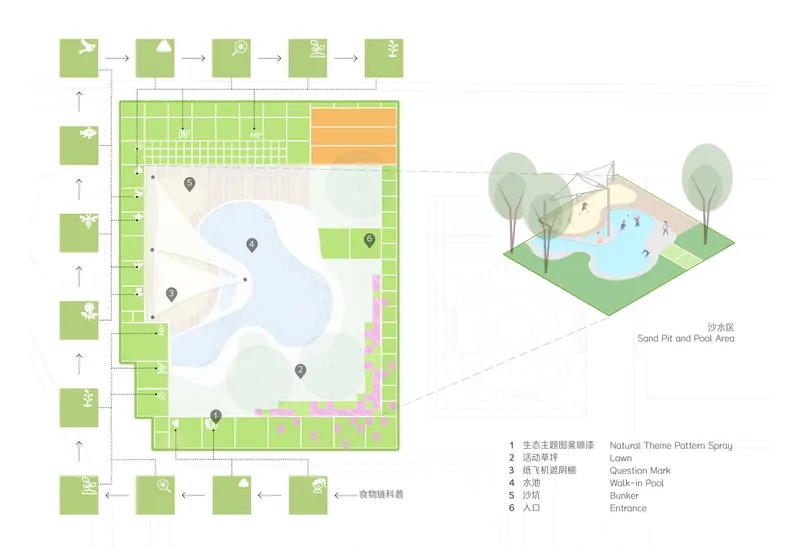
The kindergarten's Wending campus became the canvas for this ambitious vision. Through careful preliminary work and on-site surveys, the design team quickly identified landscape elements worth preserving while simultaneously pinpointing opportunities for transformation. In-depth discussions with the kindergarten's teaching team revealed three core educational pillars: "Nature Awareness," "Sci-Tech" (Science and Technology), and "Sports." These programmatic features became the conceptual anchors for defining the landscape renewal as an "Outdoor Learning and Exploring Space for Children."
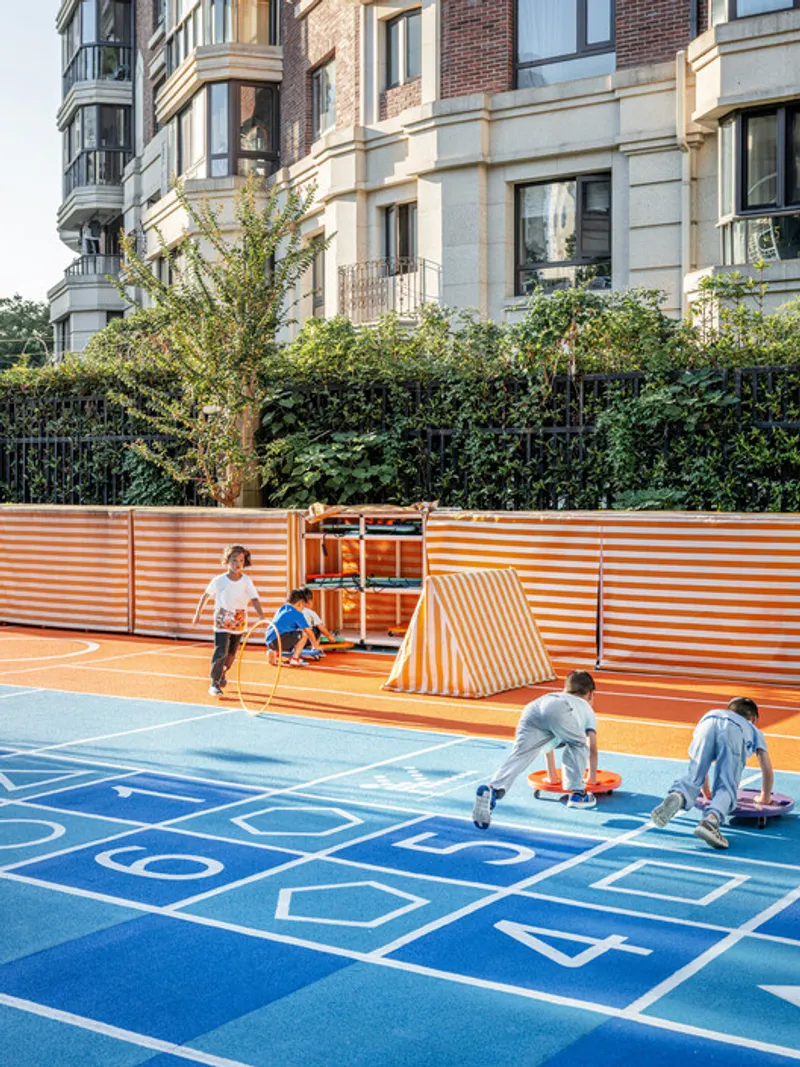
The "Play+" Philosophy Meets Flying Chess
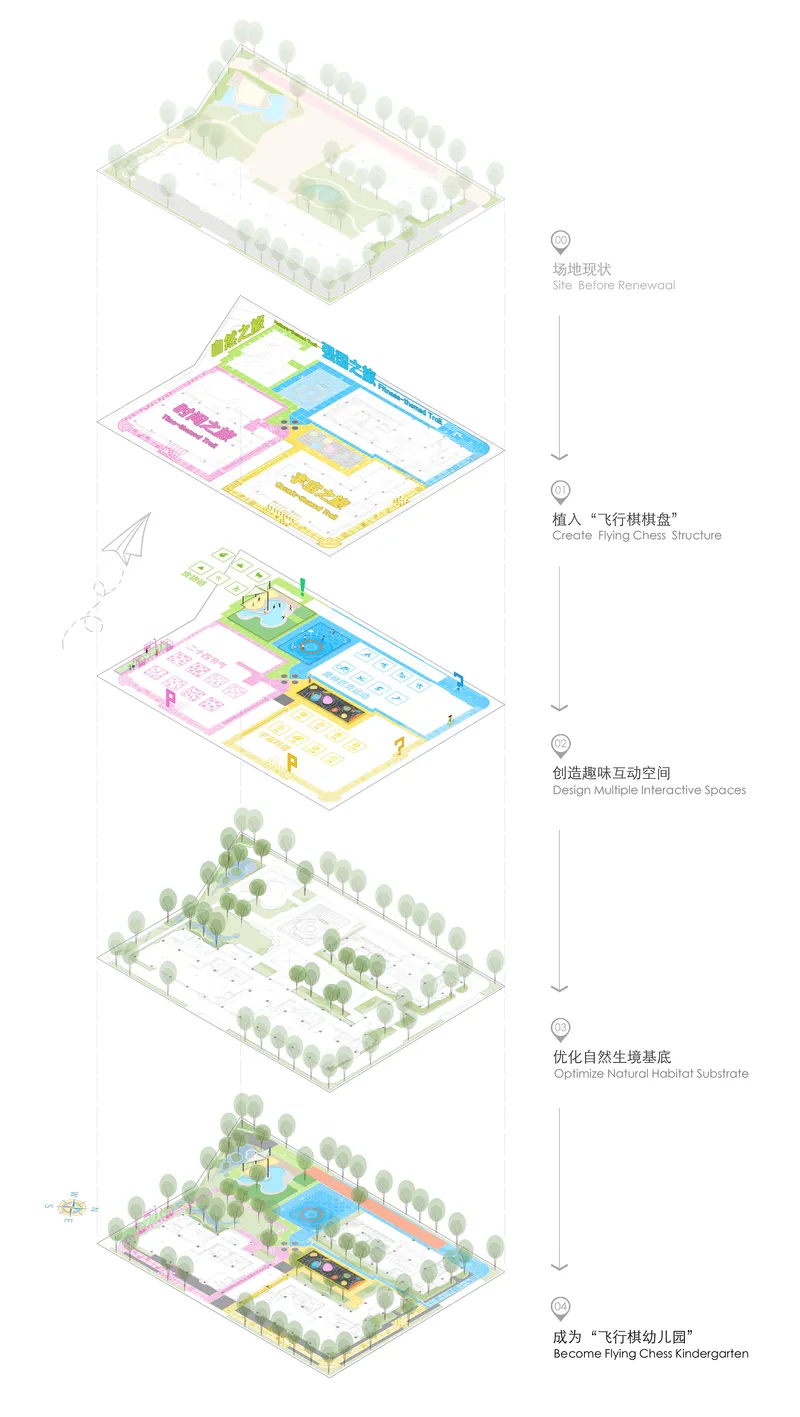
By reviewing the existing cost parameters and renovation plans for the kindergarten's outdoor spaces, VIASCAPE established a renewal design framework featuring "natural habitat creation as the foundation, site renewal as the core." In early May 2025, responding directly to the kindergarten's educational philosophy branded as "Play+", the team proposed an innovative overall design concept: the "Flying Chess Kindergarten."
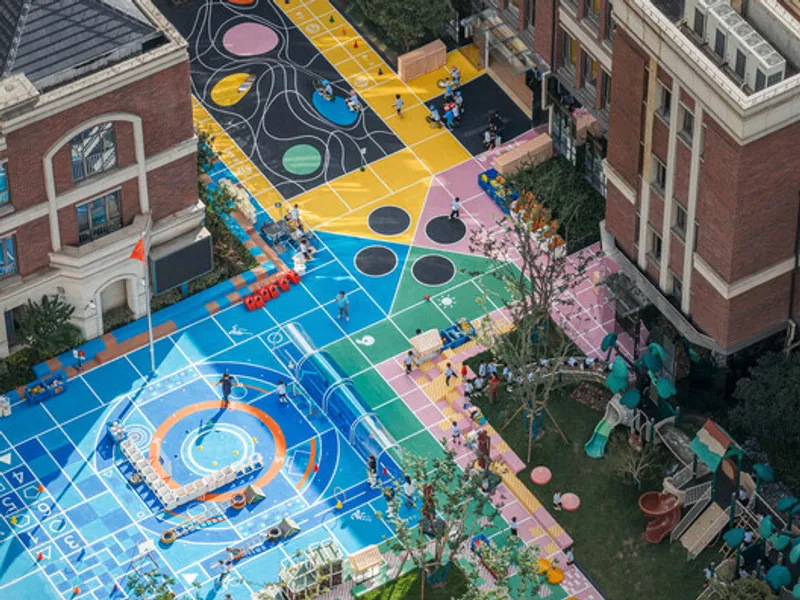
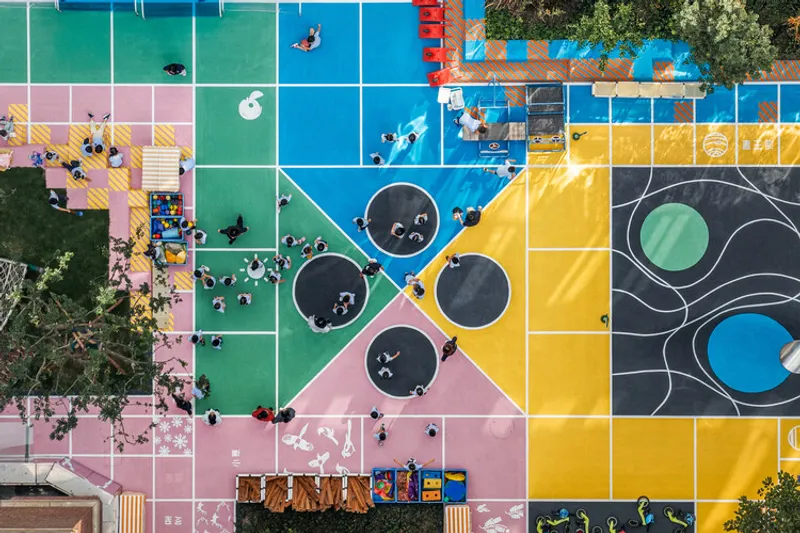
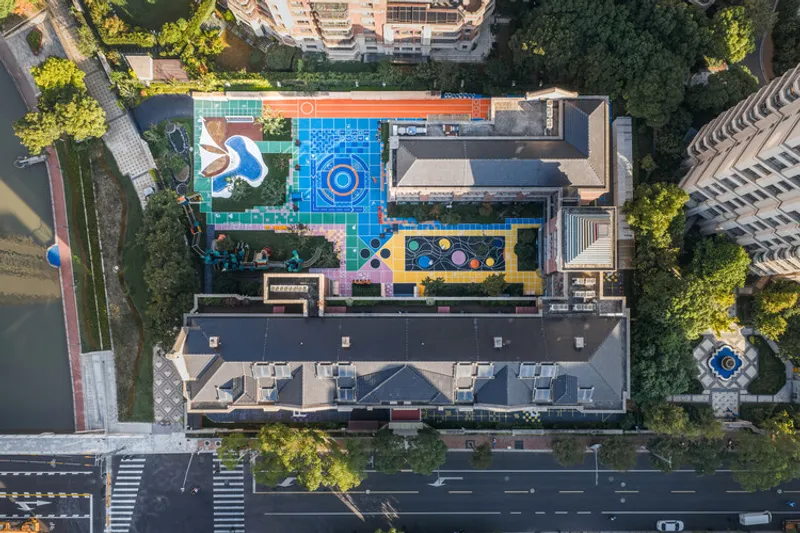
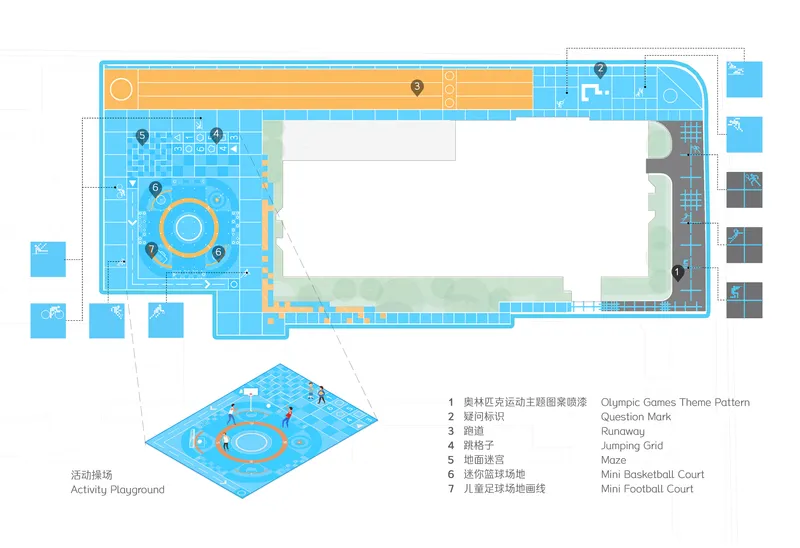
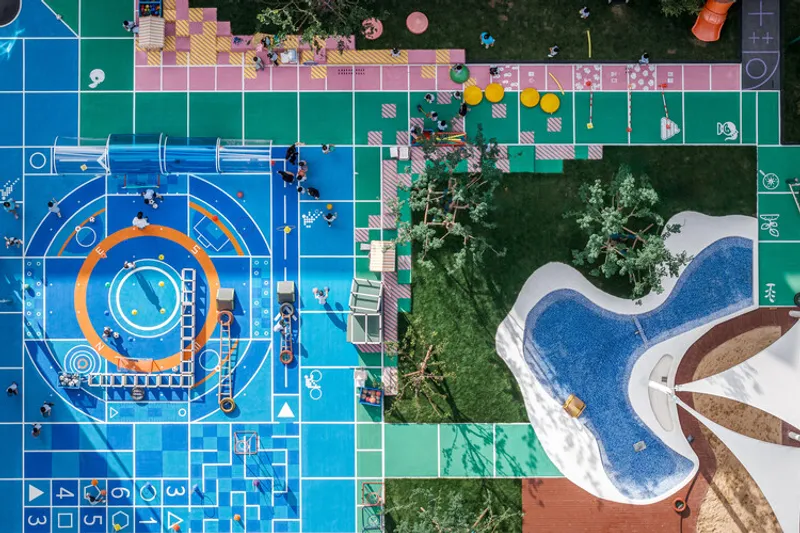
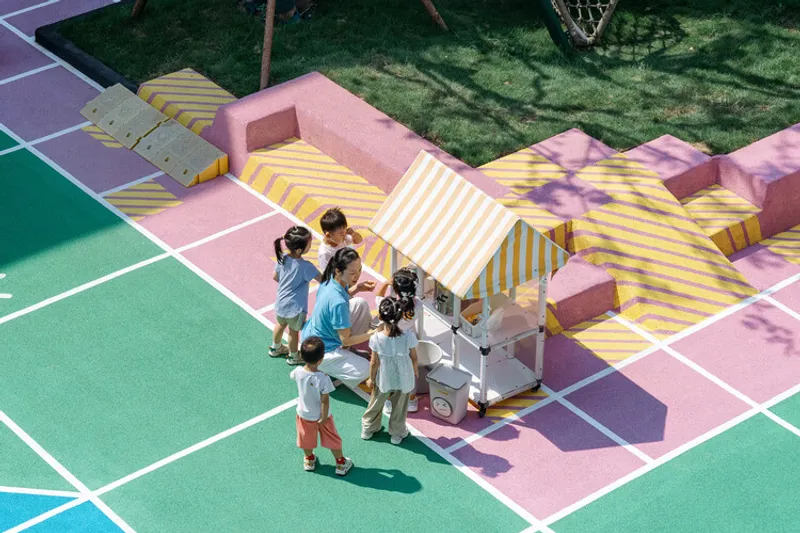
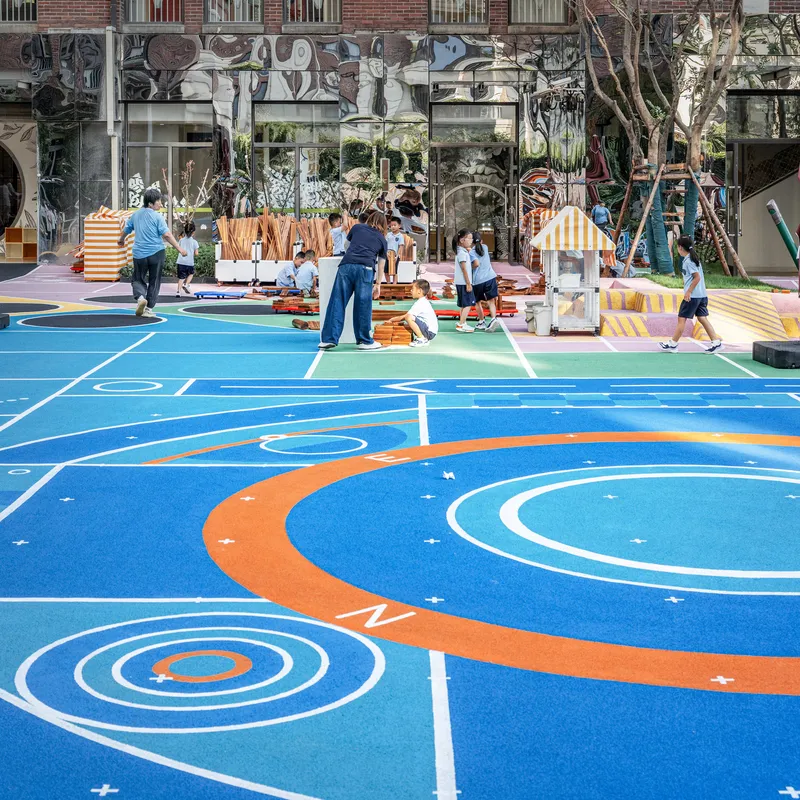
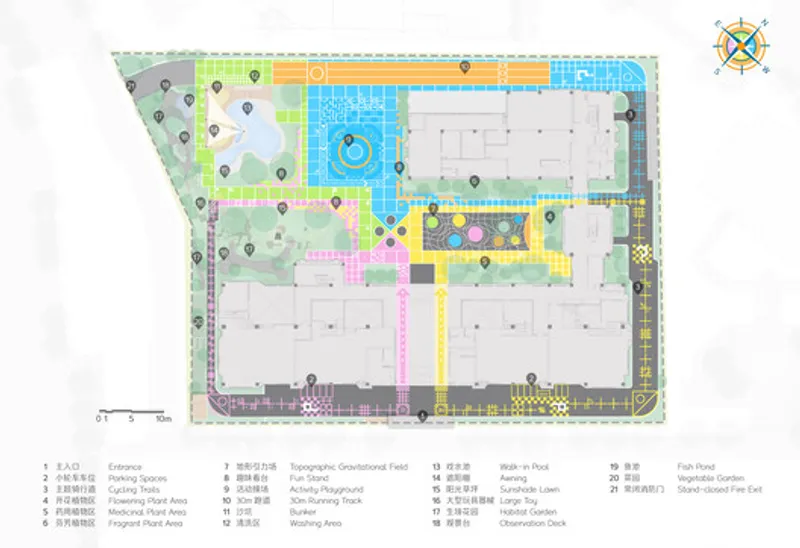
The Flying Chess game—a beloved board game familiar to Chinese children—provided the graphic prototype for the entire spatial organization. This wasn't mere thematic decoration; rather, the designers projected and adapted the game's structure to the site's specific conditions, forming a functional spatial framework that children could physically navigate and explore. The iconic "four-colored paths" from the original game were transformed into distinctive landscape zones, each representing a unique educational journey.
Natural Habitat Integration: Learning from Tianlin Park
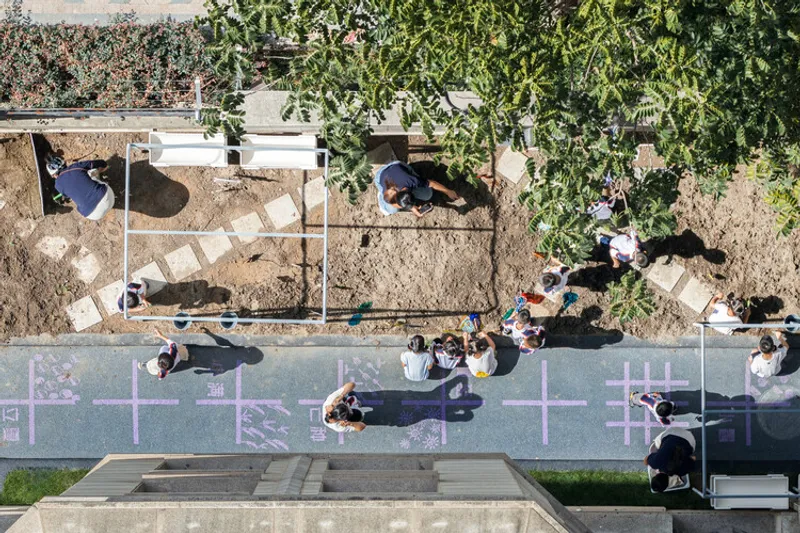
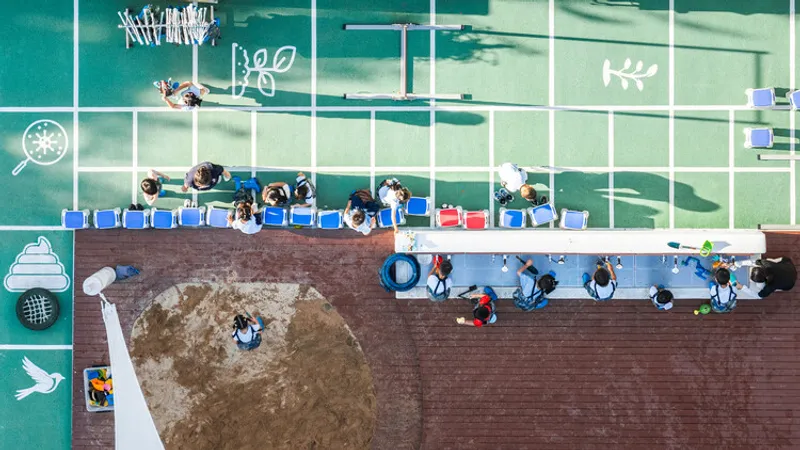
On the periphery of the site, VIASCAPE applied lessons learned from their acclaimed Tianlin Park project. Utilizing existing green spaces and areas beneath climbing structures, the team created habitat observation points and optimized understory planting following an earthscape-oriented natural habitat restoration approach. This strategy generated sufficient outdoor space for nature awareness teaching while preserving mature vegetation and ecological value.
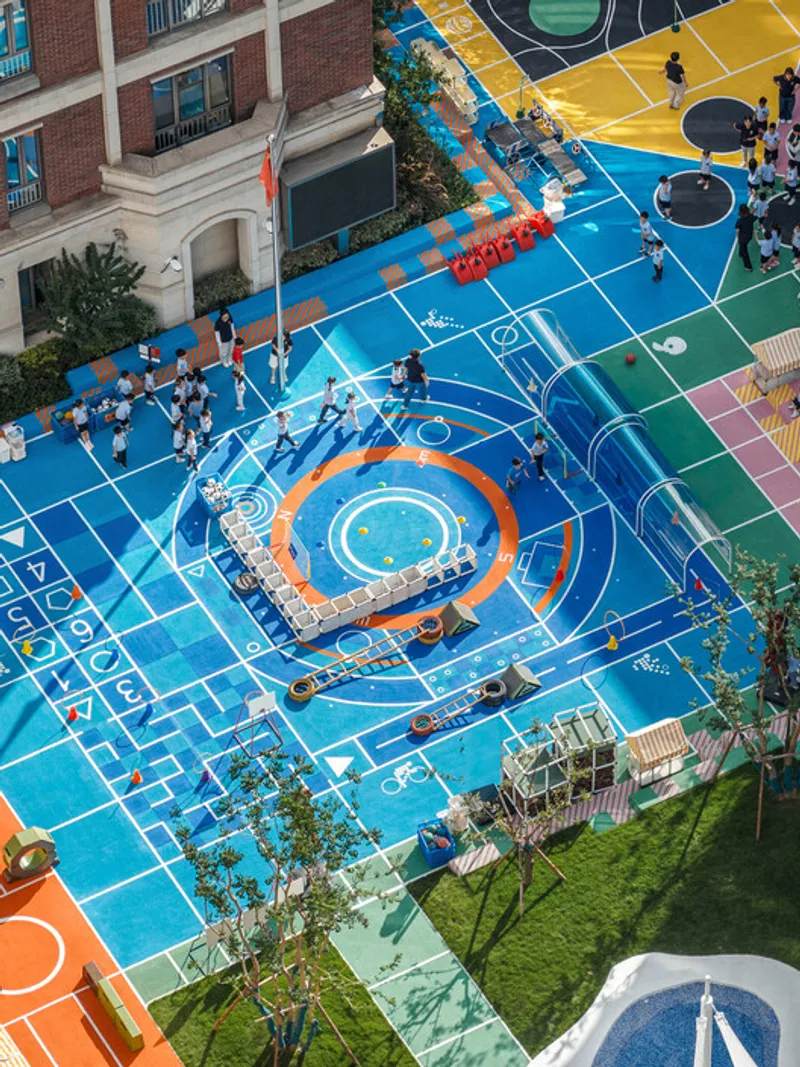
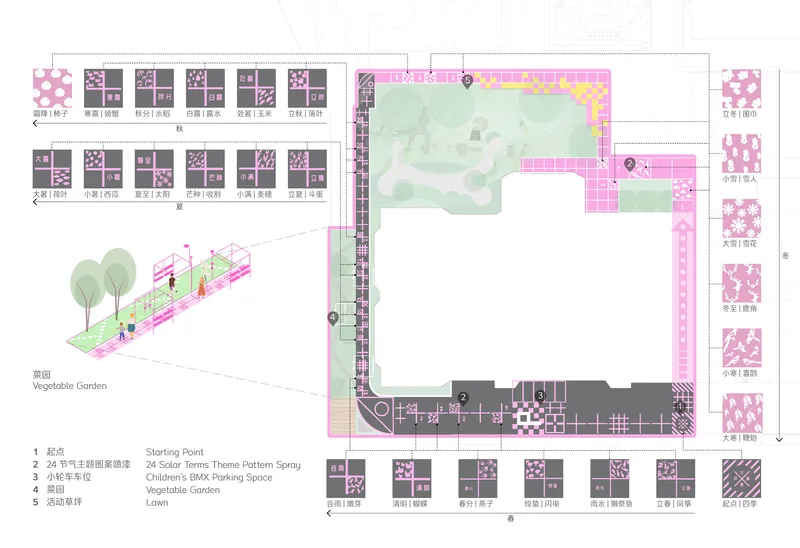
The habitat creation component ensures that children encounter authentic natural processes—not sanitized or overly manicured landscapes, but living ecosystems where insects, birds, and plants interact visibly. This approach supports inquiry-based learning and develops observational skills critical to scientific thinking.
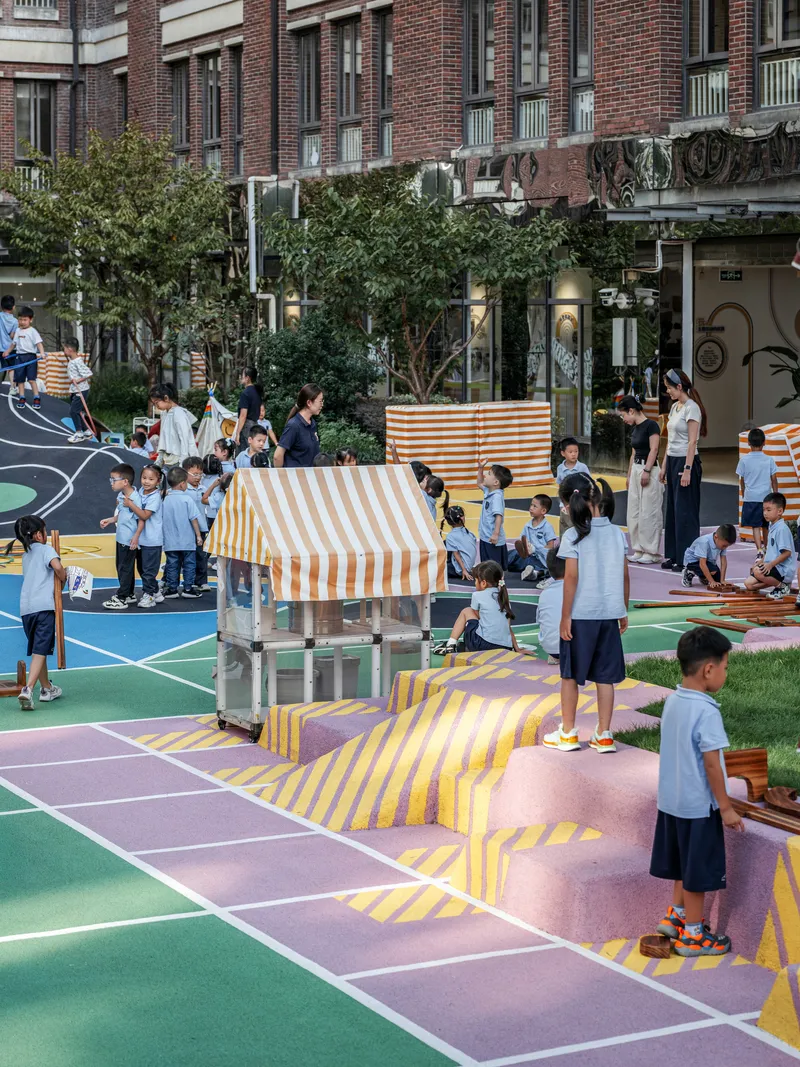
The Solar System Gravity Field: Science Through Spatial Experience
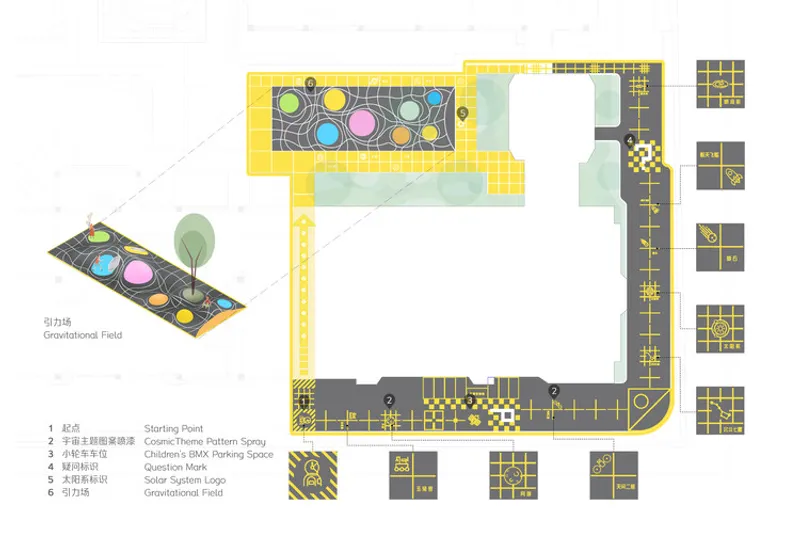
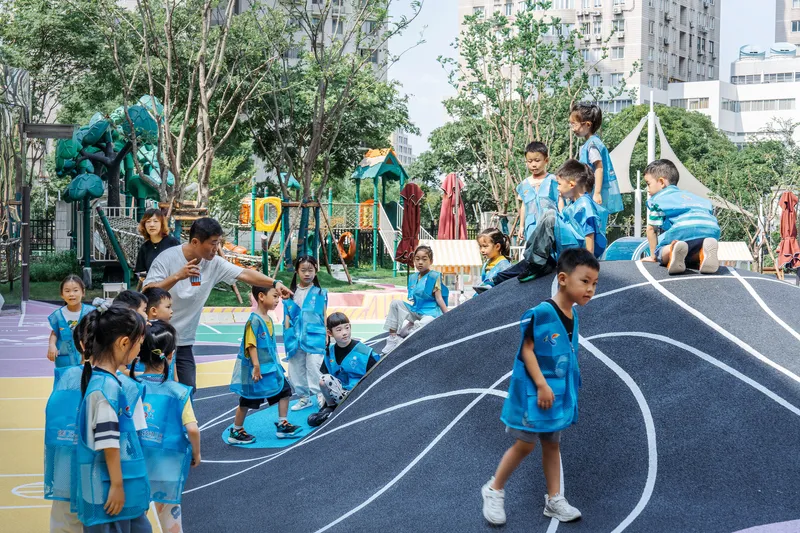
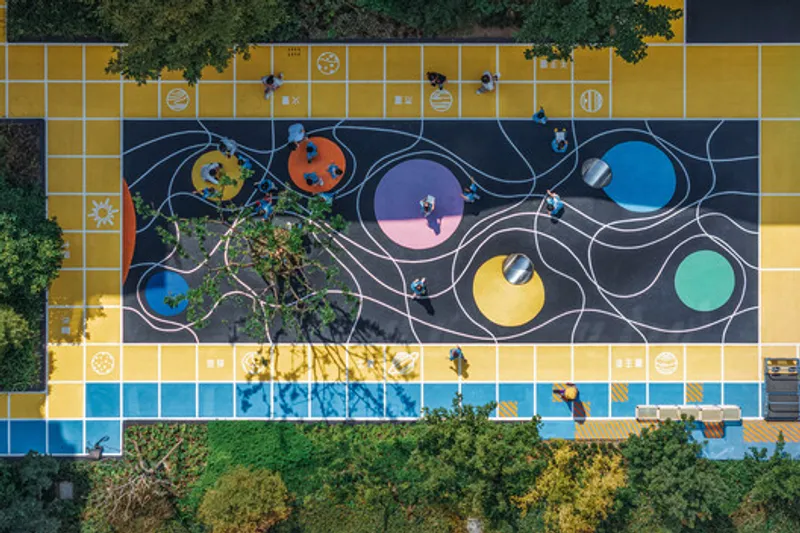
A particular design highlight demonstrates how abstract scientific concepts can be translated into physical spatial experiences. The "Solar System Gravity Field" transformed an existing "Cave-Hill" play structure using the same modular logic employed throughout the project. This space visually and experientially introduces concepts like gravity, planetary orbits, and the solar system's scale relationships.
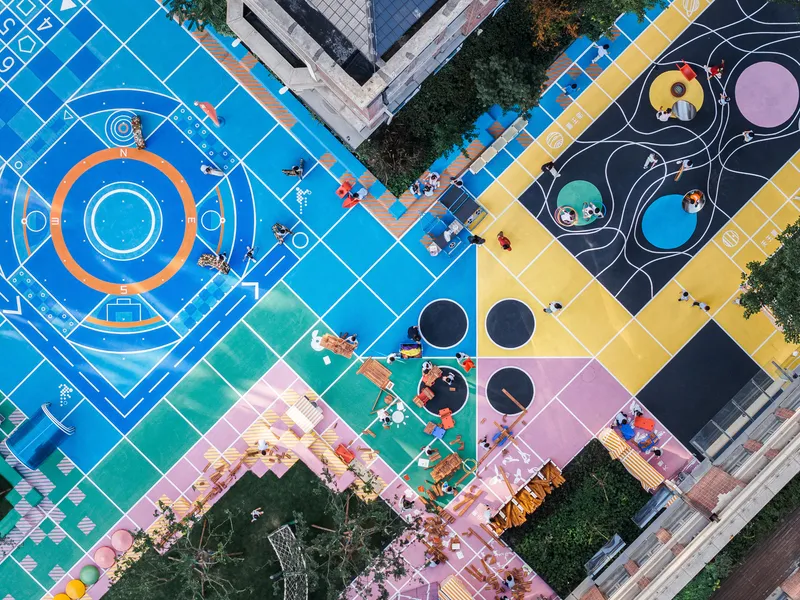
Parametric design and construction techniques created a rich environment for spatial cognition that functions simultaneously as a climbing structure, gathering space, and teaching tool. Children intuitively grasp astronomical concepts through physical movement—ascending represents traveling outward from the sun, while gravitational "wells" demonstrate orbital mechanics through playful slides and curves.
Circulation Design: Safety, Accessibility, and Movement Education
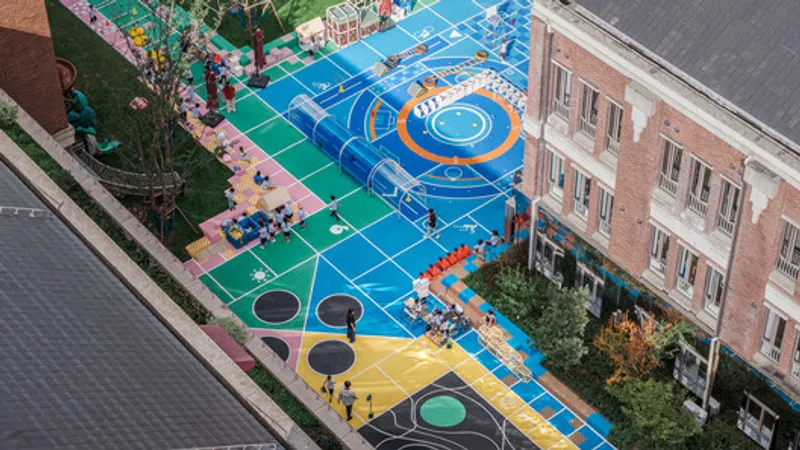
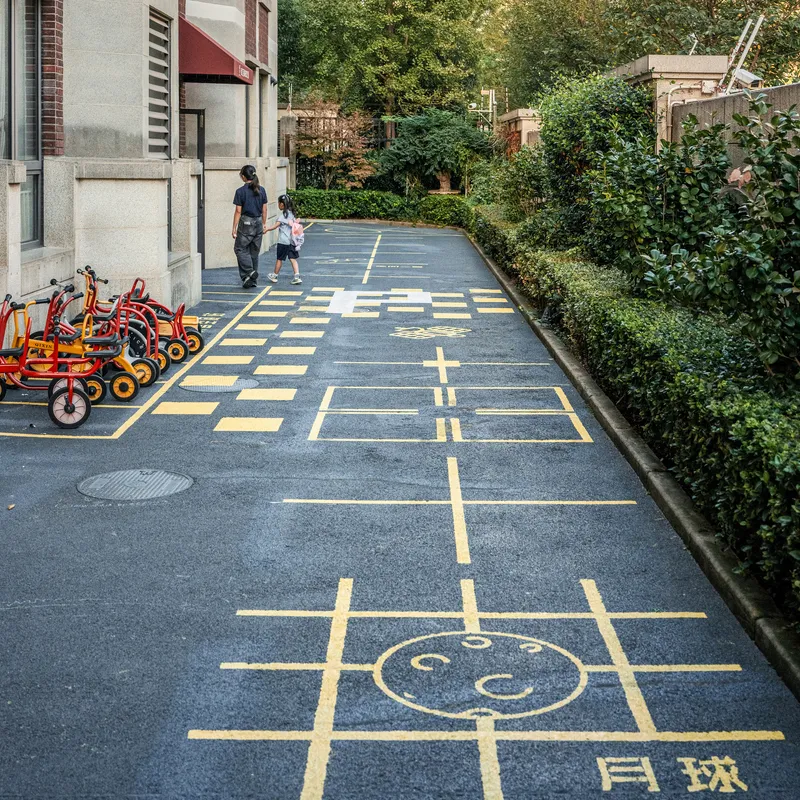
The four themed paths of the Flying Chess board layout form individual loops while converging at the central activity area, creating a spacious, safe, and distinctive circulation system. This configuration resolves previous issues with inaccessible pathways while specifically supporting the kindergarten's bicycle and balance bike training program.
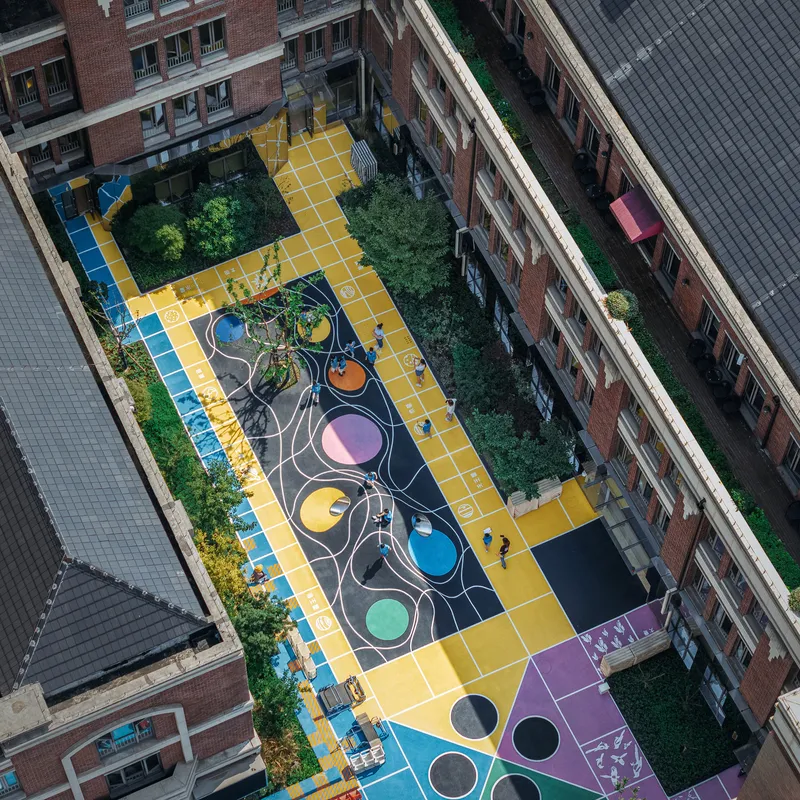
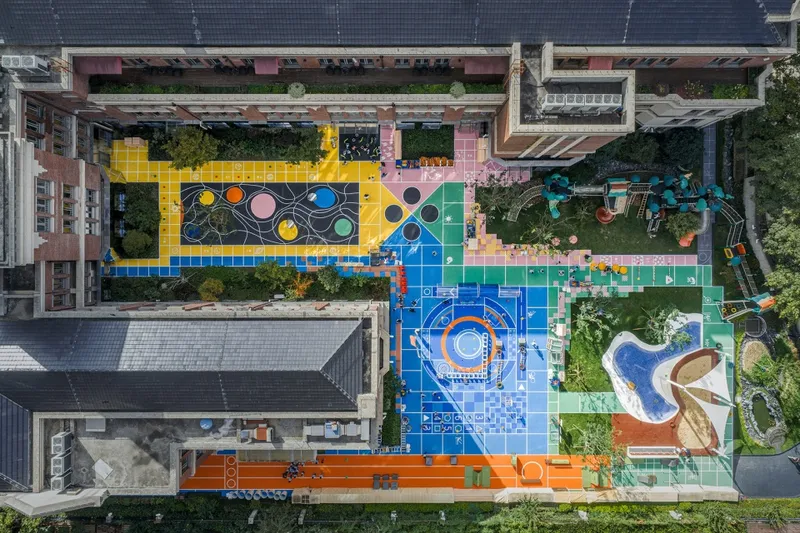
The circulation design considers multiple scales of movement—from toddler walking speeds to older children on wheeled vehicles. Path widths, surface materials, and sightlines were carefully calibrated to enable teacher supervision while encouraging age-appropriate independence and navigation skills.
Urban Kindergarten Design: A New Paradigm
The Flying Chess Kindergarten represents an emerging paradigm in urban kindergarten design, particularly relevant for high-density Asian cities facing space constraints. The project demonstrates that limited square meterage need not result in limited educational possibilities. Through intelligent modular systems, multifunctional programming, and conceptually rich thematic design, relatively compact outdoor spaces can deliver extraordinary learning environments.
The project also models successful collaboration between landscape architects and educators, showing how design excellence emerges from deep engagement with pedagogical principles rather than imposing aesthetic solutions. The months-long dialogue between VIASCAPE and the kindergarten's teaching team ensured that every design decision supported educational objectives while maintaining design integrity and spatial quality.
All the Photographs are works of CreatAR Images


Popular Articles
Popular articles from the community


ETEH Reworks the Shared Spaces of São Domingos School in Brazil Around Timber, Color and Hanging Plants
At São Domingos School in Brazil, 436 m² of hall, refectory and library are recast with timber joinery, a yellow and blue code and trailing greenery.


Manzana Morphosis: Stretching Barcelona's Grid into a Living Landscape for 2050
A radical reworking of the Eixample manzana turns density into a tool for generous public space, vertical ecology, and environmental performance.

Aquadapt: An Underwater Habitat That Rewrites Its Rooms by the Hour
Curved modules ring the seabed while one shell shifts from breakfast room to cinema, farm and football pitch as residents' needs change.

Opera on the Sea: Driftwood Logic Shapes a Timber Opera House on Estonia's Coast
Trevor Orgill's opera house translates the entangled drift of floating timber into a civic building where wood, water, and music converge.

Similar Reads
You might also enjoy these articles


Hodi-Mandai Geram
Project Function: Preservation and revitalization of the Intangible heritage and socio-spatial identity of the Hodi by Housing, Cultural Memory Center, Sacred Grove, landscape, local tourism economy


Olio Towers: A Mid-Rise for Performers That Fuses Housing, Rehearsal, and Stage
Located blocks from Houston's Theater District, this modular tower stacks living units around a central performance atrium.

Oasis: Modular Green Housing Carved into Dhaka's Urban Fabric
A shortlisted Plugin Housing entry reclaims unauthorized settlements in Dhaka with stepped concrete volumes, green roofs, and ventilation-driven design.

Black Hole: A Floating Megastructure for the Post-Physical Era
Emiliano Mazzarotto envisions a spherical, self-scaling arena where e-sports, digital hotels, and holographic stadiums replace traditional public space.

Explore Playground Competitions
Discover active competitions in this discipline

Challenge to design public laboratory

Challenge to reimagine the Iron Throne

Photograph architecture without architects

Illustrate the lost glory of Angkor Wat - Render Challenge
Comments (0)
Please login or sign up to add comments
No comments yet. Be the first to comment!