
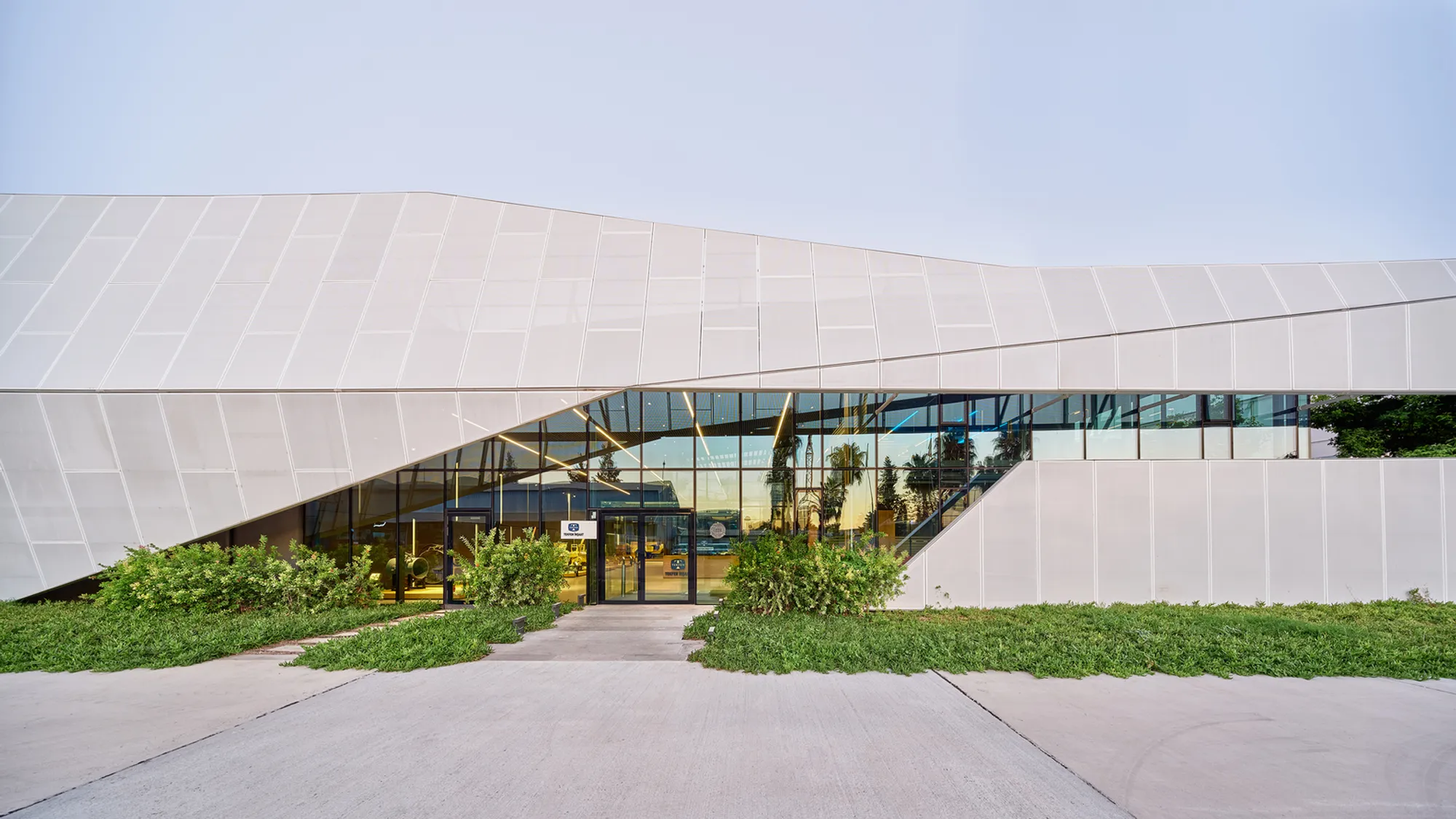
FNN Sustainability Center by ACARARCH – A Landmark of Green Innovation in Ceyhan, Türkiye
FNN Sustainability Center by ACARARCH integrates steel structure, green roofs, inner gardens, and photovoltaic energy, achieving LEED Platinum certification.


The FNN Sustainability Center, designed by ACARARCH, stands as a powerful example of sustainable architecture and innovative green design. Located within Tekfen Construction's Machine Maintenance Facilities in Ceyhan, Türkiye, the 3,370 m² building functions as an archive, museum, and administrative office—each program thoughtfully integrated into a cohesive architectural form. Completed in 2020, the project has been recognized with a LEED Platinum Certification, demonstrating its exceptional commitment to energy efficiency, eco-friendly materials, and sustainable building strategies.

Architectural Concept and Design Philosophy
The design emphasizes the structural beauty of steel, highlighting its role not just as a construction material but as a defining aesthetic element. Each functional space is treated uniquely:
- The archive is fully enclosed and built with reinforced concrete for durability and security.
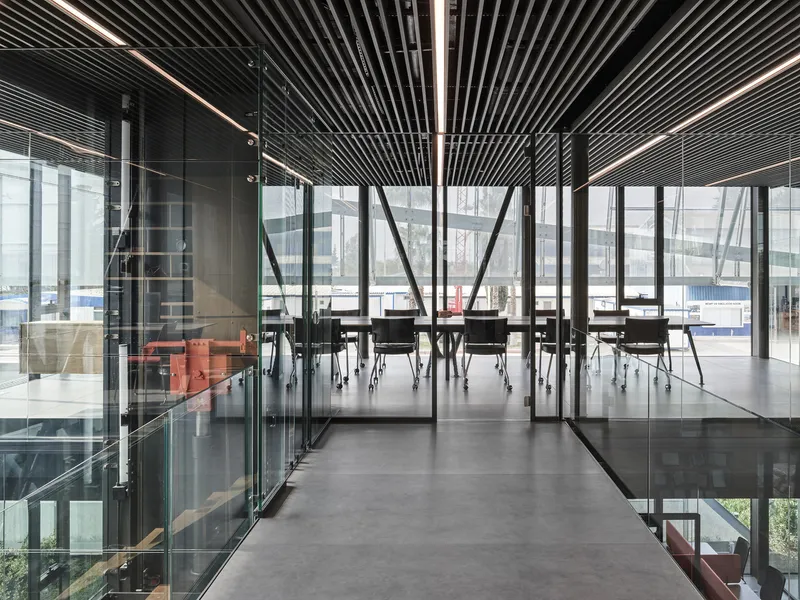
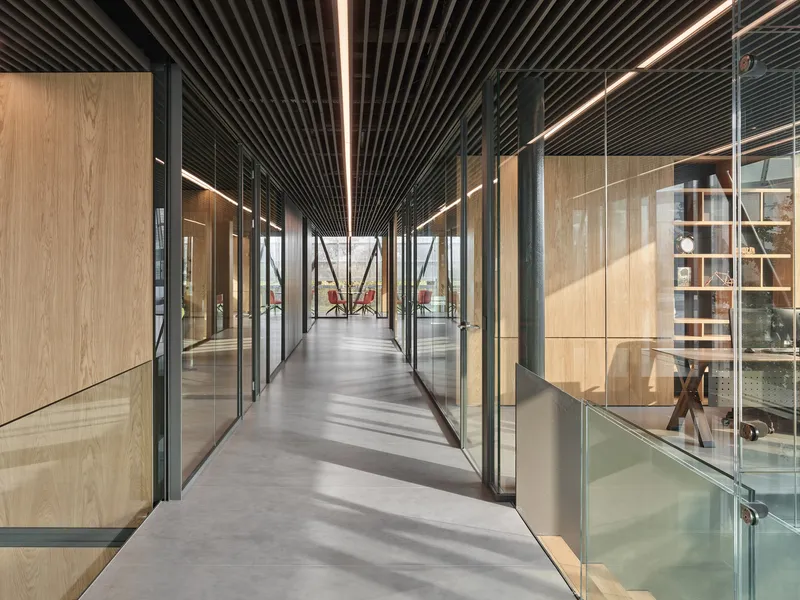
- The offices feature transparent glass façades, fully exposing the steel framework and allowing abundant natural light.
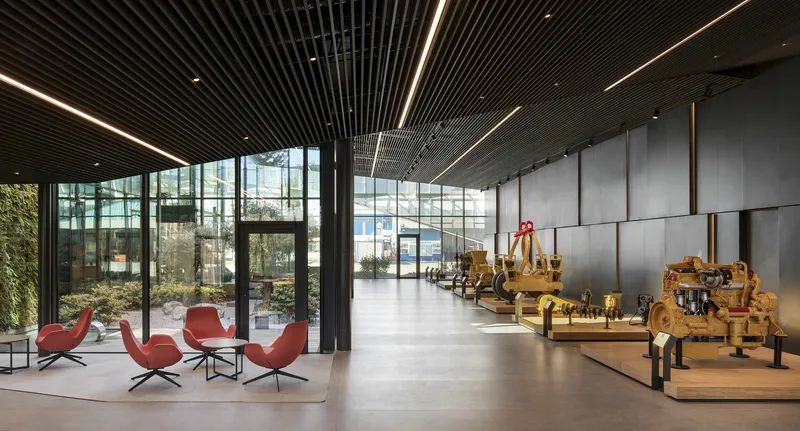
- The museum acts as a dynamic, extroverted space, bridging the enclosed and open zones.
This fluid spatial arrangement ensures that the building operates as a single organism, with seamless movement between the exhibition area, offices, and archive.


Sustainable Features and Green Innovations
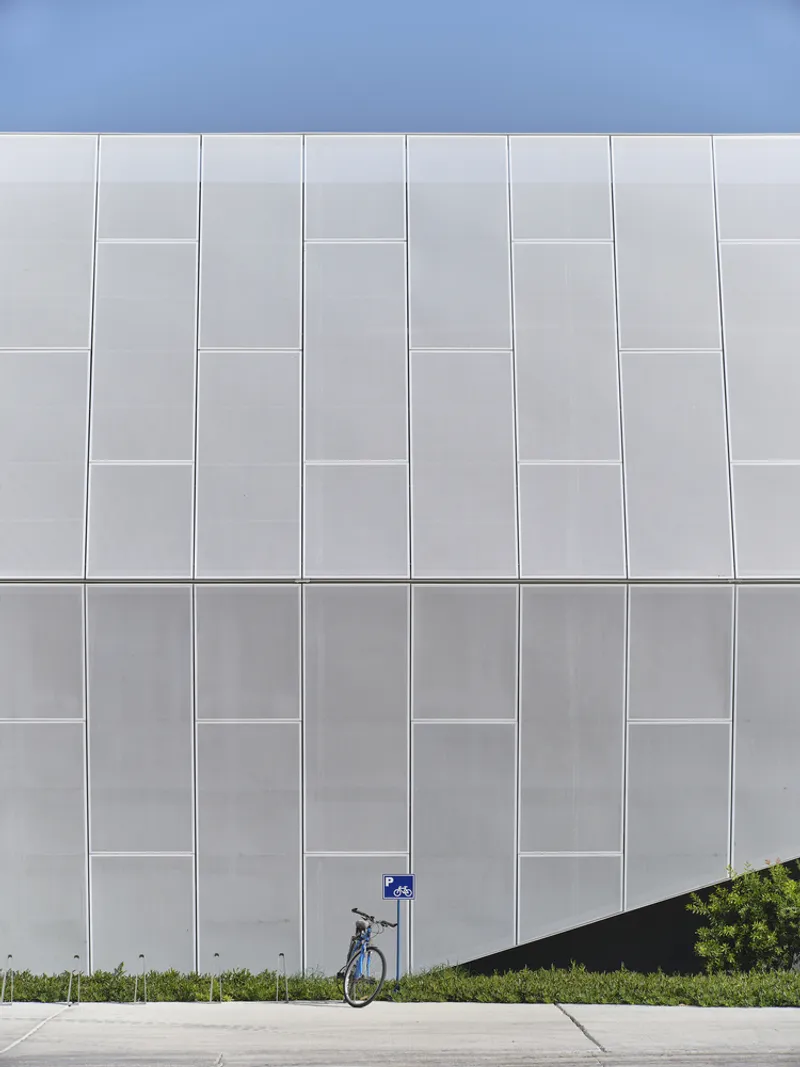
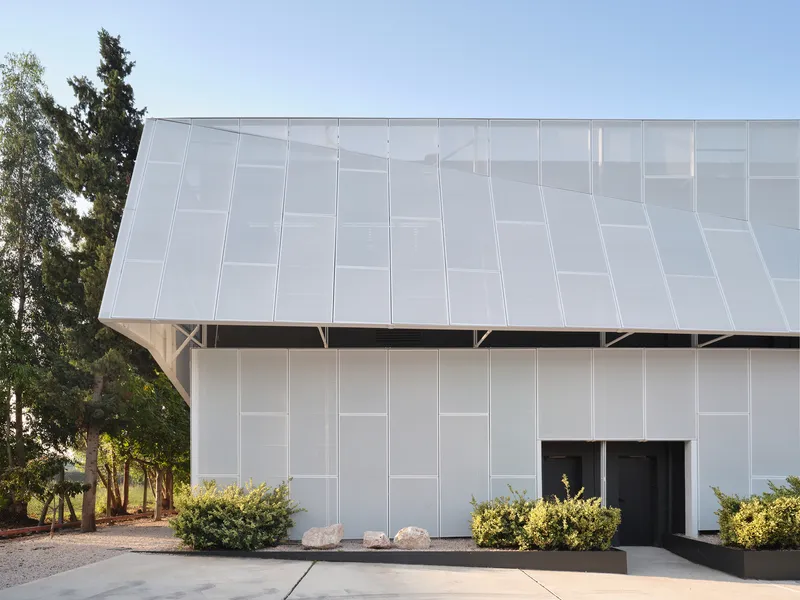
A multi-purpose perforated metal shell envelops the building, providing solar shading and enhancing thermal comfort by reducing direct sun exposure. The varying distances between the shell and the interior structure create inner gardens and green courtyards, fostering a natural connection between indoor and outdoor environments.
Key sustainability elements include:
- Green roof designed as a multifunctional terrace with seating areas for events and relaxation.
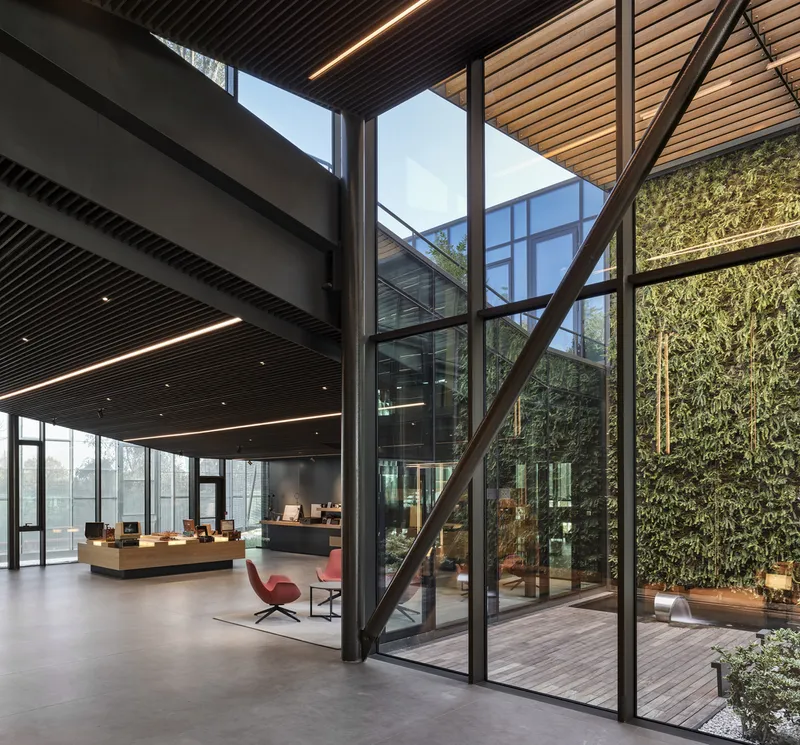
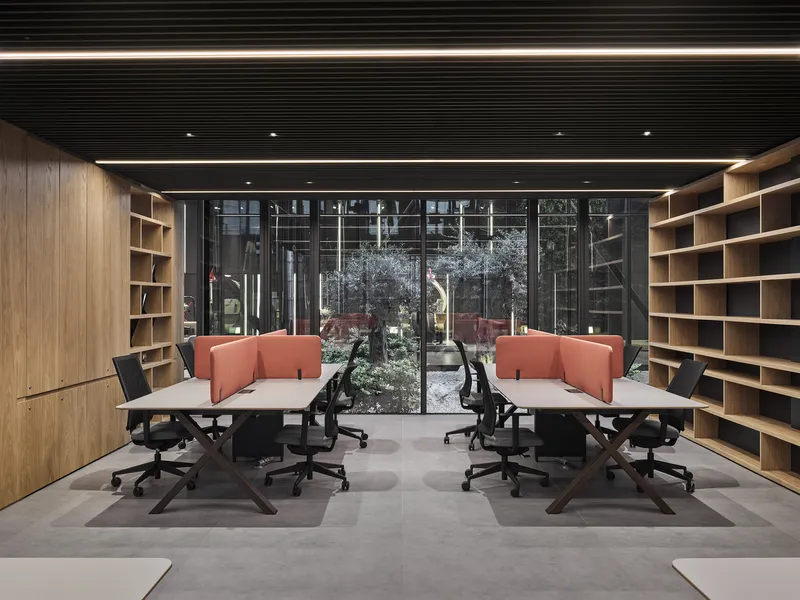
- Inner courtyards integrated with pools to improve air circulation and create serene breakout spaces for staff.
- Photovoltaic panels generating approximately 45% of the building’s energy consumption.
- Low-emission materials, efficient lighting design, and carefully selected native plants contributing to environmental performance.

Interior Design and Spatial Experience
The interiors balance transparency and privacy, with libraries and sound-insulated walls strategically placed in office areas. The design encourages visual continuity, ensuring that spaces flow organically into each other. The presence of green courtyards and reflective pools not only enhances the indoor microclimate but also supports well-being and productivity for employees.
Collaborative Effort and Materiality
The project brought together an impressive team, including lead architects Emre Acar, Çağrı Helvacıoğlu Aydoğu, and Yunus A. Özdemir, with Yoo as the main contractor. High-quality materials and manufacturers such as RHEINZINK, Guardian Glass, Mitsubishi Electric, Schüco, and Kalesinterflex were chosen for their durability, energy efficiency, and eco-friendly properties.
Why FNN Sustainability Center Stands Out
The FNN Sustainability Center is not just an office building; it is a statement of environmental responsibility, combining modern industrial design with green architecture principles. From its LEED Platinum certification to its integrated green spaces, the project sets a benchmark for sustainable office buildings in Türkiye and beyond.
All Photographs are works of Egemen Karakaya, İbrahim Özbunar




Popular Articles
Popular articles from the community


Play: Fragments of Their World
Familiar architecture becomes modular playground design, creating safe spaces where displaced children can learn, connect, imagine and play.

Riyadh For All: Intergenerational Urban Design for Active Aging in Rabat
Riyadh For All reimagines urban design in Rabat with intergenerational co-living, adaptive courtyards, and Moroccan cultural exchange today.

The Ocean Hive: Sustainable Architecture for a Self-Sufficient Civilization at Sea
The Ocean Hive imagines sustainable architecture at sea, where modular habitats, algae, wave power and ocean waste sustain a growing colony.

Co-life: Sustainable Architecture for Age-Friendly Community Living
Co-life reimagines sustainable architecture for seniors through courtyards, rammed earth, shared gardens, and spaces designed for belonging.


Similar Reads
You might also enjoy these articles


Hodi-Mandai Geram
Project Function: Preservation and revitalization of the Intangible heritage and socio-spatial identity of the Hodi by Housing, Cultural Memory Center, Sacred Grove, landscape, local tourism economy


Olio Towers: A Mid-Rise for Performers That Fuses Housing, Rehearsal, and Stage
Located blocks from Houston's Theater District, this modular tower stacks living units around a central performance atrium.

Oasis: Modular Green Housing Carved into Dhaka's Urban Fabric
A shortlisted Plugin Housing entry reclaims unauthorized settlements in Dhaka with stepped concrete volumes, green roofs, and ventilation-driven design.

Black Hole: A Floating Megastructure for the Post-Physical Era
Emiliano Mazzarotto envisions a spherical, self-scaling arena where e-sports, digital hotels, and holographic stadiums replace traditional public space.


Explore Office Building Competitions
Discover active competitions in this discipline



Challenge to reimagine the Iron Throne


Photograph architecture without architects


Illustrate the lost glory of Angkor Wat - Render Challenge


Design challenge to reuse E-waste
Comments (0)
Please login or sign up to add comments
No comments yet. Be the first to comment!