

Forest House by RAWI Arquitetura + Design: A Minimalist Concrete Residence Immersed in Nature
Forest House blends minimalist concrete forms with a central Jacaranda courtyard, creating a warm, nature-integrated home that connects architecture and landscape beautifully.


Forest House, designed by RAWI Arquitetura + Design, is a striking 350 m² residence in Cotia, Brazil, where architecture and nature merge into a harmonious, sculptural living experience. Photographed by Rafael Renzo, the project redefines contemporary residential architecture through its minimalist composition, organic integration with native vegetation, and expressive use of concrete, wood, and natural textures.

Architecture Rooted in Nature
Born from a deep dialogue with the surrounding landscape, Forest House embraces the preserved native trees that anchor the site. Designed to house a father and his three children, the residence reflects values of affection, comfort, and environmental respect. Each architectural gesture reinforces the idea of living with—not against—nature.
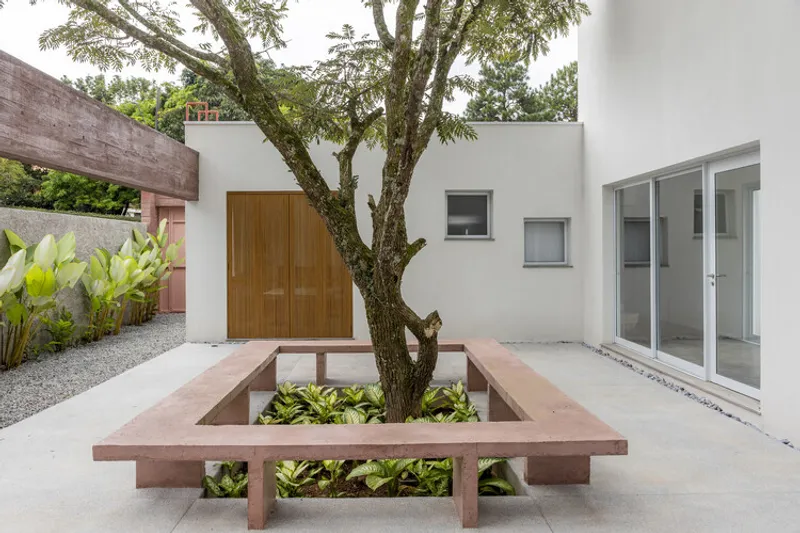
At the heart of the project lies a majestic Jacaranda tree, preserved and celebrated through a central courtyard that becomes the social and emotional core of the home.

Minimalist ‘C’-Shaped Layout With Sculptural Volumes
The house unfolds in a sculptural ‘C’-shaped layout, built from clean geometric lines, large openings, and pure forms. Three architectural elements stand out:
- A suspended rear volume that appears to float over the land
- A central courtyard framed by an on-site molded concrete bench and structural beam
- A pigmented concrete box on the façade, a reddish-toned volume inspired by São Paulo brutalism
These expressive components reshape the terrain and create a dynamic relationship between light, shadow, and materiality.

Courtyard Living: Light, Space & Flow
The preserved Jacaranda tree shapes the flow of the entire residence. Surrounding the courtyard are the living room, kitchen, bedrooms, and hall, all connected through double-height voids and generous openings that invite natural light deep into the interior. This interplay of exterior and interior is a hallmark of São Paulo modernist architecture, where the landscape becomes an extension of the home.

Brutalist Inspiration With Contemporary Warmth
The façade blends brutalist inspiration with a modern reinterpretation. Minimalist white volumes rest atop the pigmented concrete box, creating a layered, sculptural effect. The raw beauty of materials—from concrete slabs retaining formwork marks to wide-jointed ceramic flooring—conveys authenticity and craft.
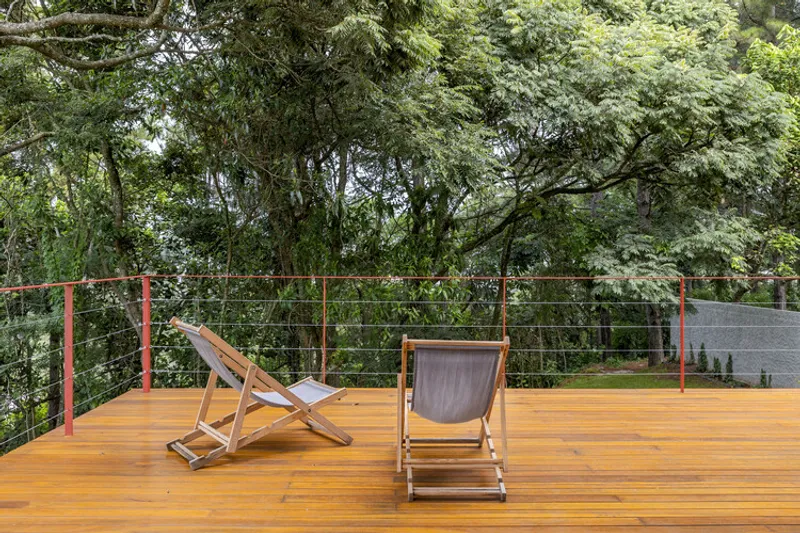
The south-facing side opens fully toward the forest, creating visual continuity and reinforcing the concept of an elevated architecture that lightly touches the land.
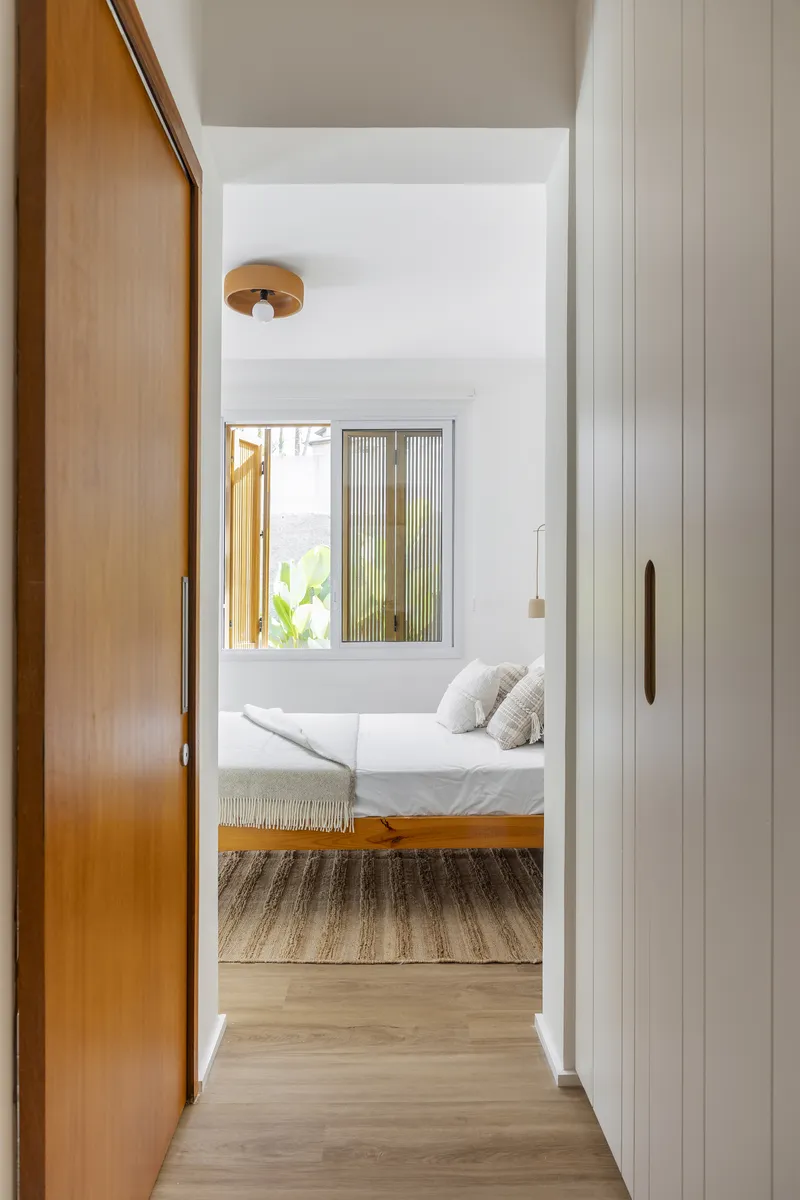

A Journey Through Materiality
Upon entering, visitors are greeted by the home’s defining elements:
- Ceramic flooring forming a continuous visual carpet
- Exposed concrete slabs with imprint marks
- Natural wood details
- Neutral, earthy tones that enhance the sense of calm
The six-meter-high corridor amplifies light and cross-ventilation, leading to the sculptural staircase crafted from burnished cement and accented with a terracotta-colored steel railing.
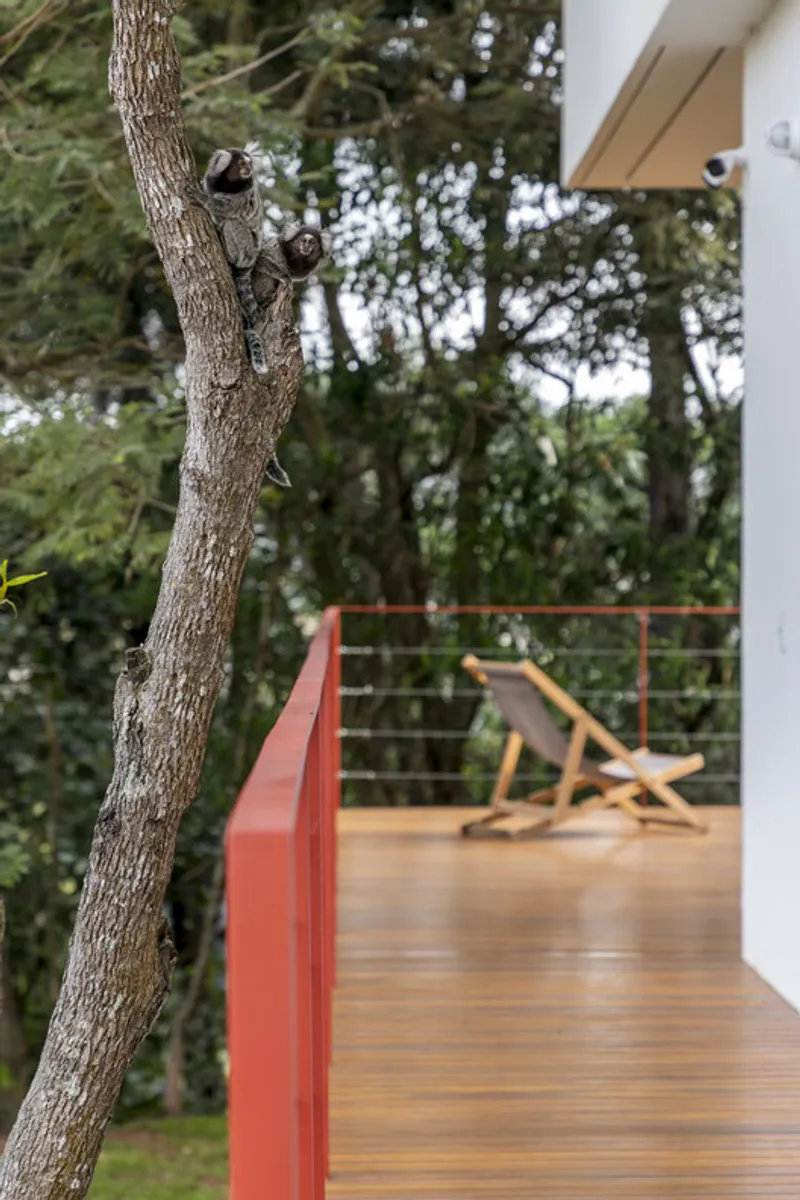

Kitchen, Living & the Warmth of Modernism
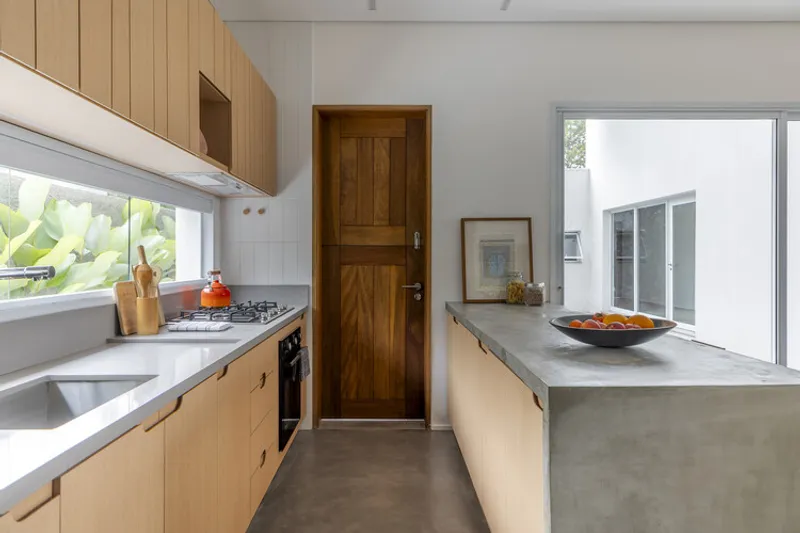
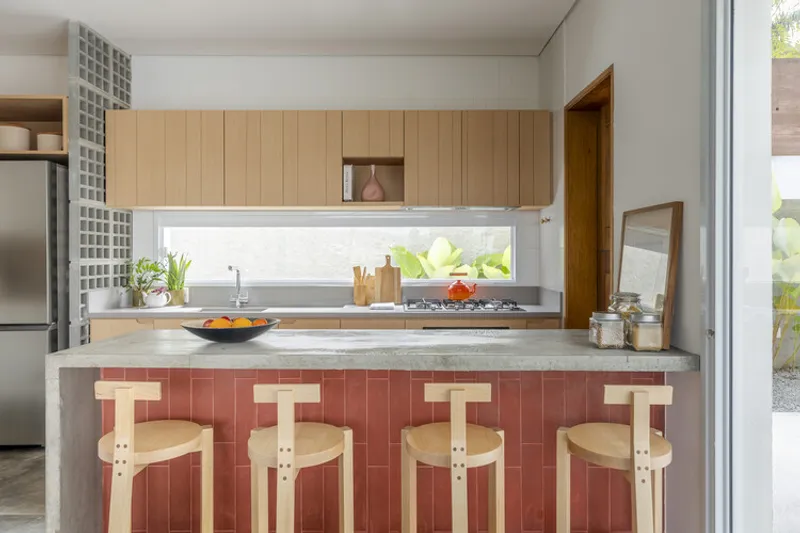
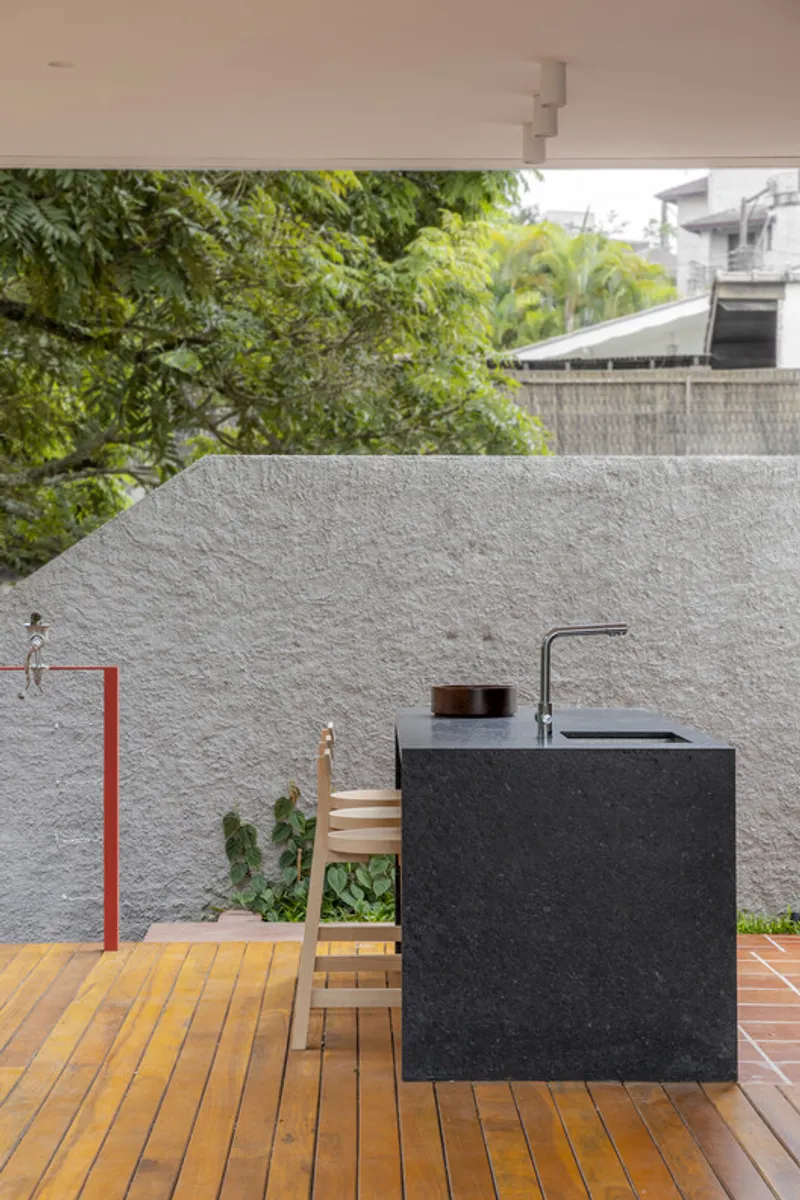
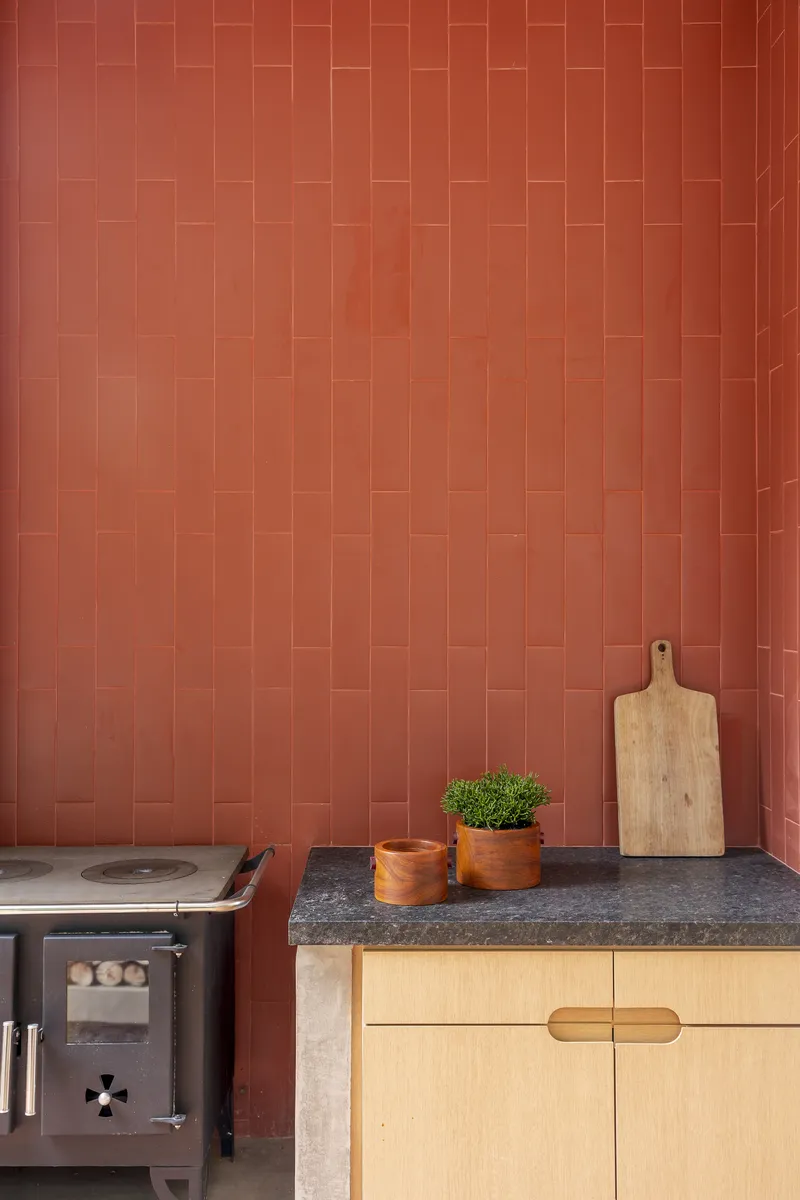
The kitchen is the vibrant heart of the house, featuring:
- A solid concrete island
- Iconic Girafa stools by Lina Bo Bardi, made of tauari wood
- A charming wood-burning stove located in the porch breakfast area
The living room curates furniture by legends like Sérgio Rodrigues and Lina Bo Bardi, balancing the robust texture of concrete with the warmth of natural wood.
On the ground floor, the father’s suite connects directly to the courtyard for greater accessibility. Another suite features textured plaster-like walls and a custom wardrobe with vertical niches, adding subtle elegance.

A House That Breathes With the Landscape
From the floating volumes to the preserved vegetation, Forest House stands as a testament to sustainable design, contextual architecture, and minimalist living. It is both a refuge and a sculpture—an architecture that breathes with the forest.


All the photographs are works of Rafael Renzo


Popular Articles
Popular articles from the community


U.GA Architects Wraps an Oval Rooftop Pool in Curved Board-Formed Concrete on Busan's Jeollidan-gil
In Busan's Jeonpo-dong, a 454 m² mixed-use block stacks a neighborhood facility, guest rooms and an oval rooftop pool inside spiraling concrete walls.

Cube Design Draws an Ecological Corridor Between Two Shenzhen Hills with the Nankai Building
Beside Shenzhen's container docks, the Nankai Building pairs stacked balconies with a climbing green screen to connect two hillsides across its height.

longwave studio Reorganizes a 112 m² Tainan Apartment Around the Daily Routines of a Family and Two Cats
In Tainan, Taiwan, birch plywood, rust-red furniture and a freestanding plaster wall link arrival, storage, work and family life in one apartment.

David Macias Steps a Doorless Stone and Plaster House Down a Tropical Colombian Hillside
In the humid hills of Colombia, Threshold House replaces the front door with an open void and terraces its 850 m² down the slope instead of fighting it.

Similar Reads
You might also enjoy these articles


Hodi-Mandai Geram
Project Function: Preservation and revitalization of the Intangible heritage and socio-spatial identity of the Hodi by Housing, Cultural Memory Center, Sacred Grove, landscape, local tourism economy


Olio Towers: A Mid-Rise for Performers That Fuses Housing, Rehearsal, and Stage
Located blocks from Houston's Theater District, this modular tower stacks living units around a central performance atrium.

Oasis: Modular Green Housing Carved into Dhaka's Urban Fabric
A shortlisted Plugin Housing entry reclaims unauthorized settlements in Dhaka with stepped concrete volumes, green roofs, and ventilation-driven design.

Black Hole: A Floating Megastructure for the Post-Physical Era
Emiliano Mazzarotto envisions a spherical, self-scaling arena where e-sports, digital hotels, and holographic stadiums replace traditional public space.

Explore Architecture Competitions
Discover active competitions in this discipline

Challenge to reimagine the Iron Throne

Photograph architecture without architects

Illustrate the lost glory of Angkor Wat - Render Challenge

Design challenge to reuse E-waste
Comments (0)
Please login or sign up to add comments
No comments yet. Be the first to comment!