
Forest Kindergarten Architecture: Hut of Hat by Tezuka Architects
A whimsical forest kindergarten playroom in Machida, designed for light, nature, and imagination by Tezuka Architects.


A Magical Playroom in the Forests of Machida, Japan
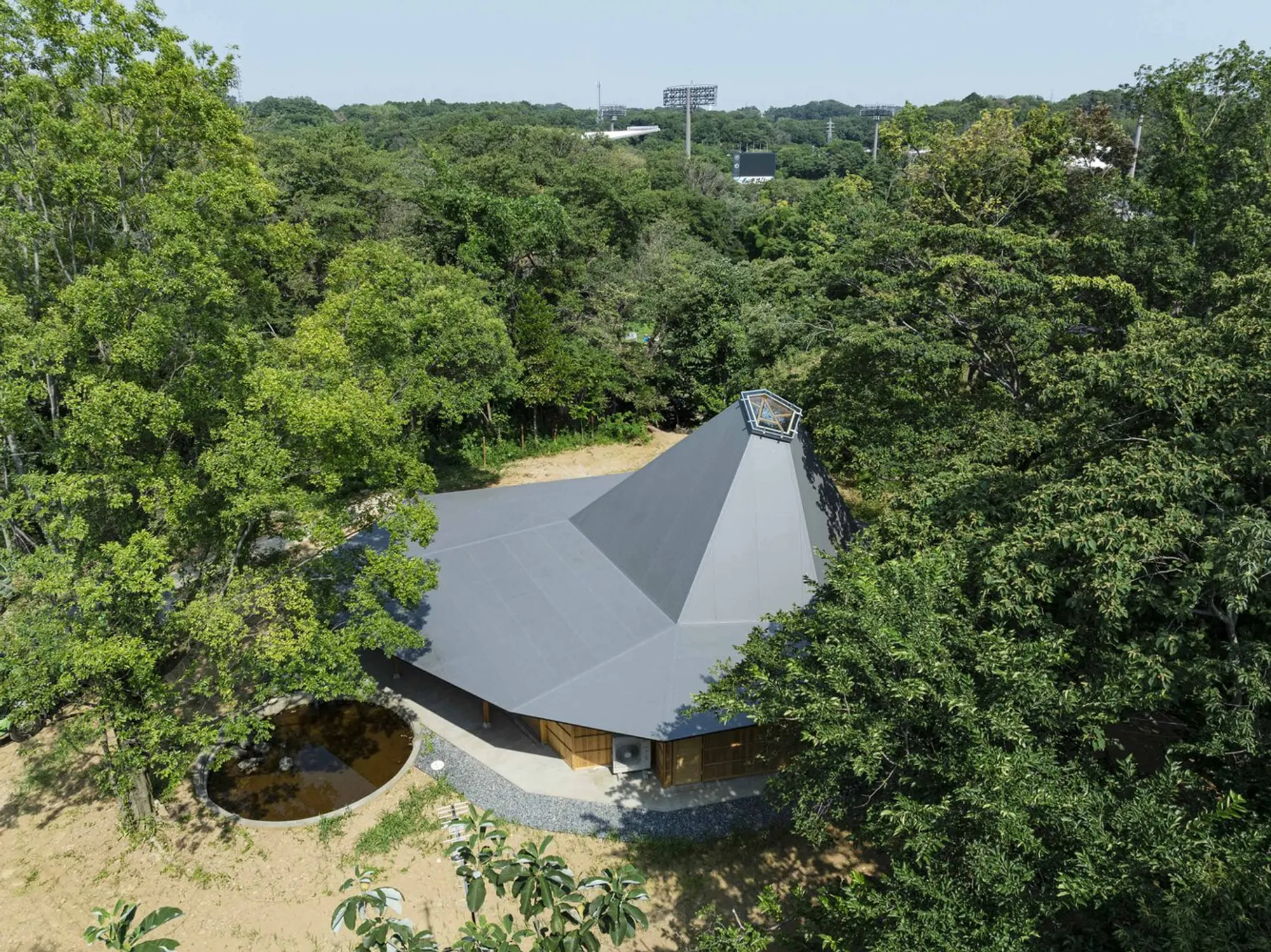
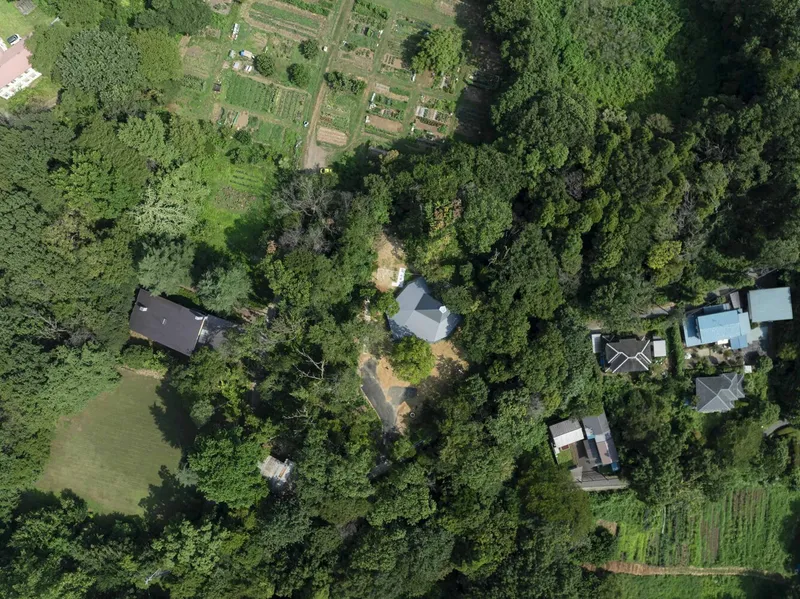
Designed by Tezuka Architects, the Hut of Hat is an enchanting example of forest kindergarten architecture—blending educational purpose, whimsical form, and environmental context into a playful and poetic structure. Nestled within a dense, four-hectare forest west of Tokyo, this 193 m² timber building serves as a weekly destination for kindergarten children who visit from a school located 20 minutes away. The structure is more than just a playroom; it is an immersive spatial experience where architecture meets childhood imagination.
A Journey into Nature-Inspired Architecture
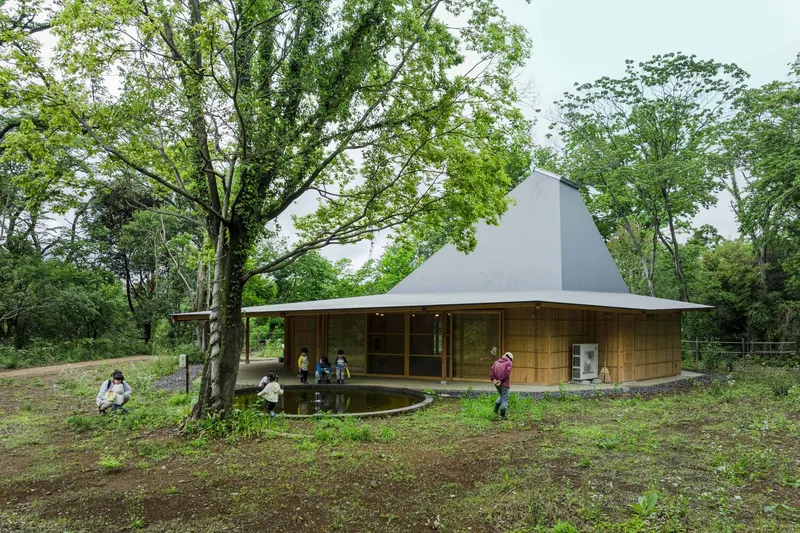
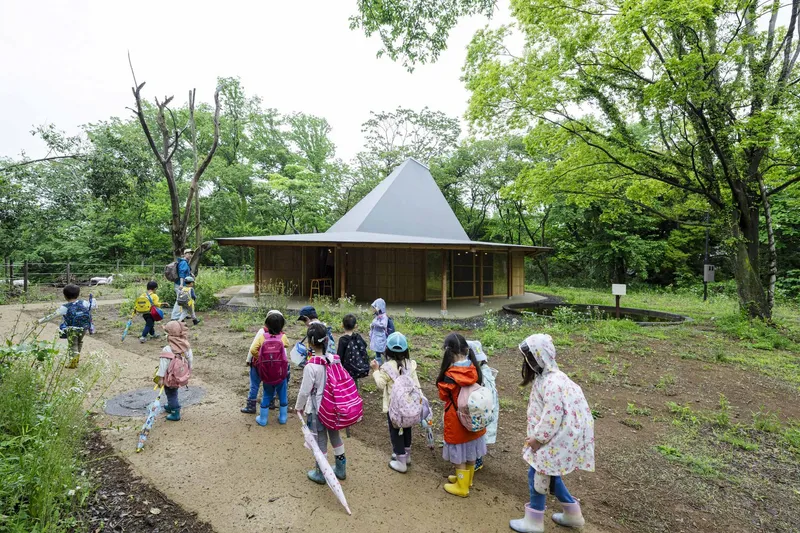
Access to the Hut of Hat is deliberately designed as a gentle adventure. Children and visitors first walk through a flourishing forest, following a winding path and ascending a small hill. Emerging from the trees, they encounter a structure that feels both ancient and fantastical—a hybrid of a forest hut and chapel, embodying reverence for nature and the joy of discovery.
The building’s most distinctive feature is its conical roof, shaped like a witch’s hat, which rises dramatically from the irregular polygonal base. The form is not only iconic but also deeply responsive to the natural surroundings. Its geometry mimics the fragmented outline of the forest canopy, while a wide brim creates generous eaves that extend the usable space outdoors, providing shelter from sun and rain.
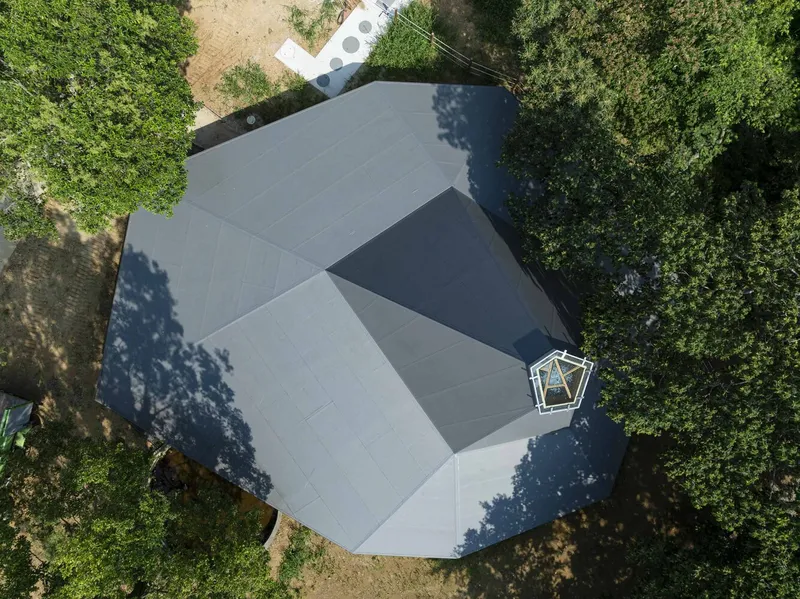
Designed for Children and Light
The Hut of Hat is built with children’s experiences at its core. Half of the playroom’s floor area lies beneath the extended eaves, functioning as a semi-outdoor zone where children can engage with nature while remaining protected from the elements. This architectural decision blurs the line between interior and exterior, fostering a sense of continuity with the surrounding forest.
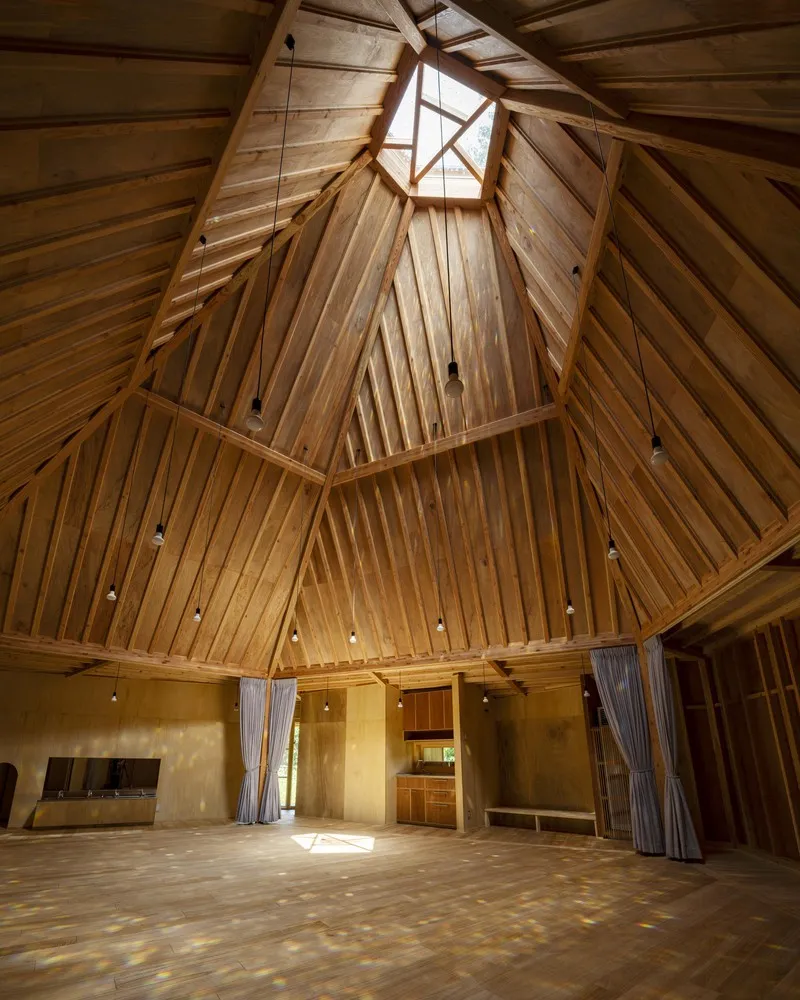
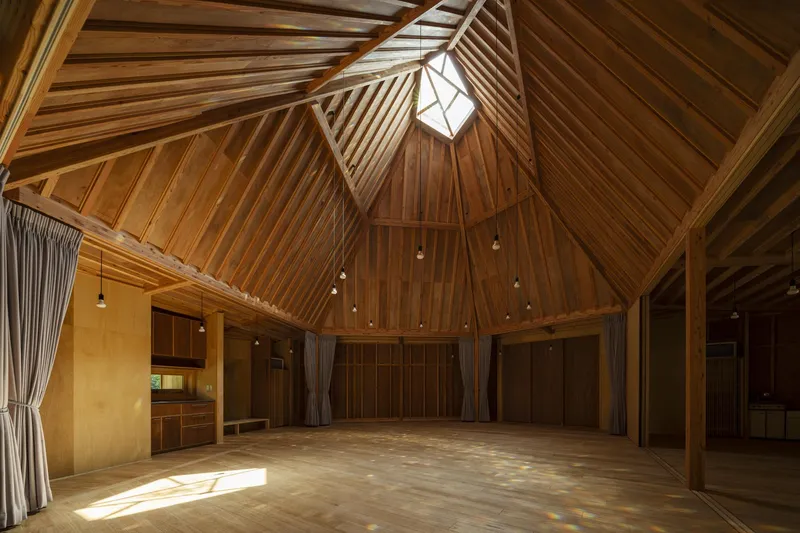
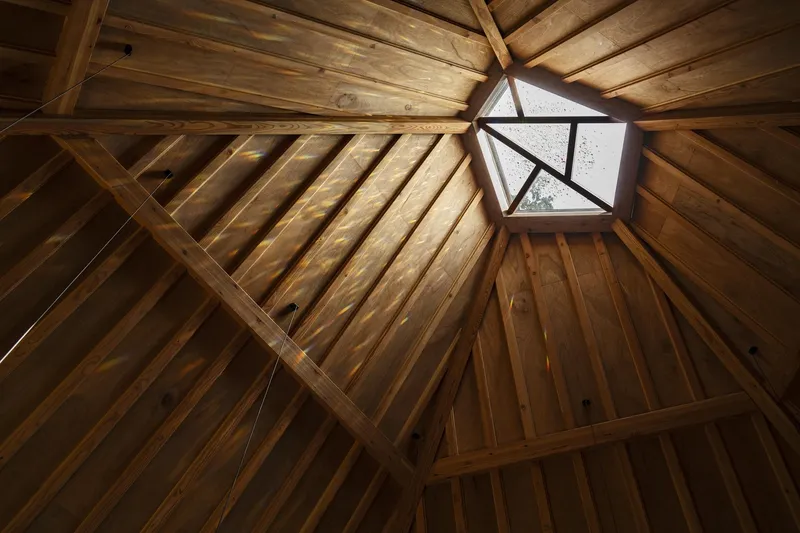
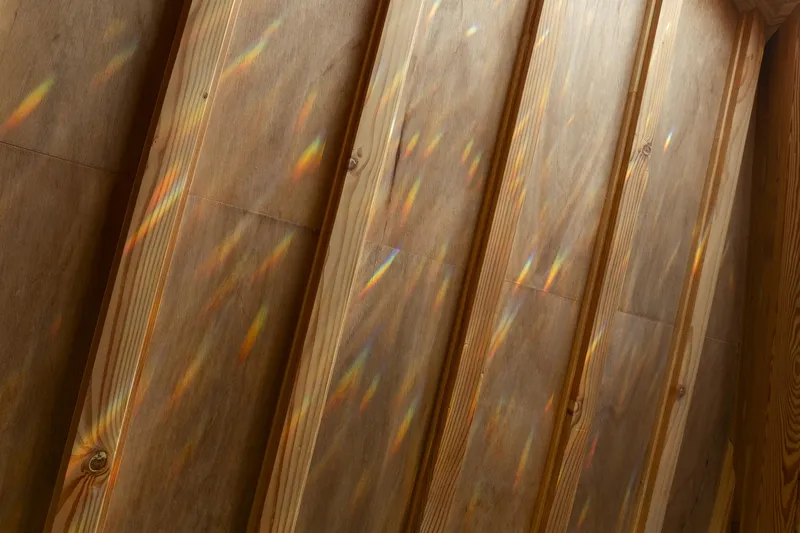
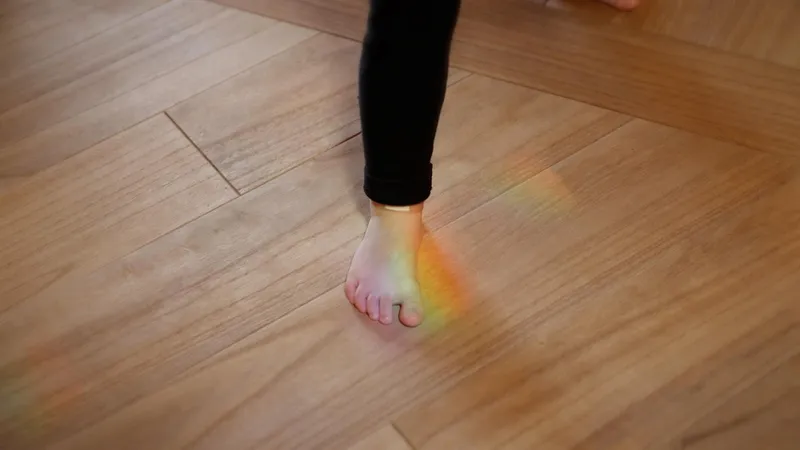
At the peak of the conical roof is a latticed skylight filled with thousands of clear prisms. These prisms scatter polarized sunlight into a dazzling array of rainbow-colored lights that shift throughout the day and change with the seasons. The rainbows—each about the size of a child’s palm—dance across walls, floors, and ceilings, igniting wonder and curiosity. The architects intentionally chose clear prisms instead of stained glass, believing that polarized light offers a more vivid and natural spectrum of color. The result is a kinetic play of light that is both ephemeral and interactive, as children try to catch the intangible rainbows.
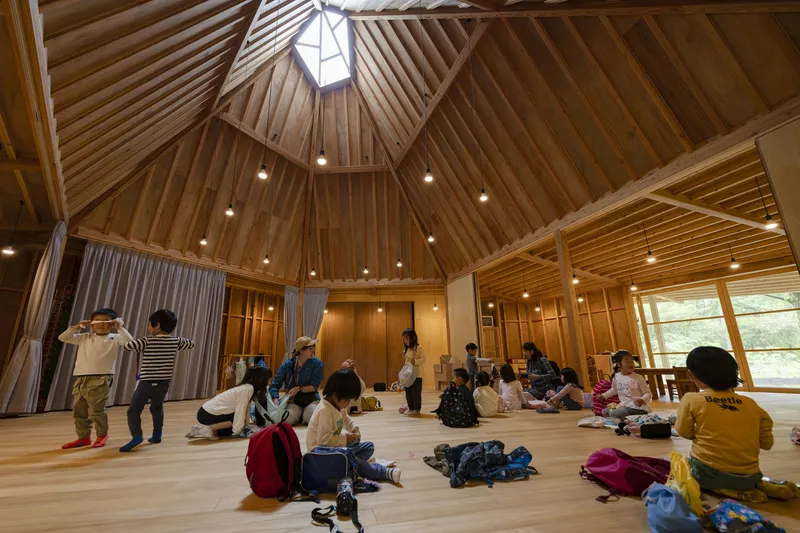
Architectural Language of Simplicity and Delight
Constructed primarily in wood, the Hut of Hat showcases traditional craftsmanship and natural materials. The interior is warm, tactile, and minimal, allowing the form and light to take center stage. Structural beams are left exposed, reinforcing a sense of openness and honesty in construction. Furniture is simple and movable, encouraging freedom and spontaneity in how the space is used.
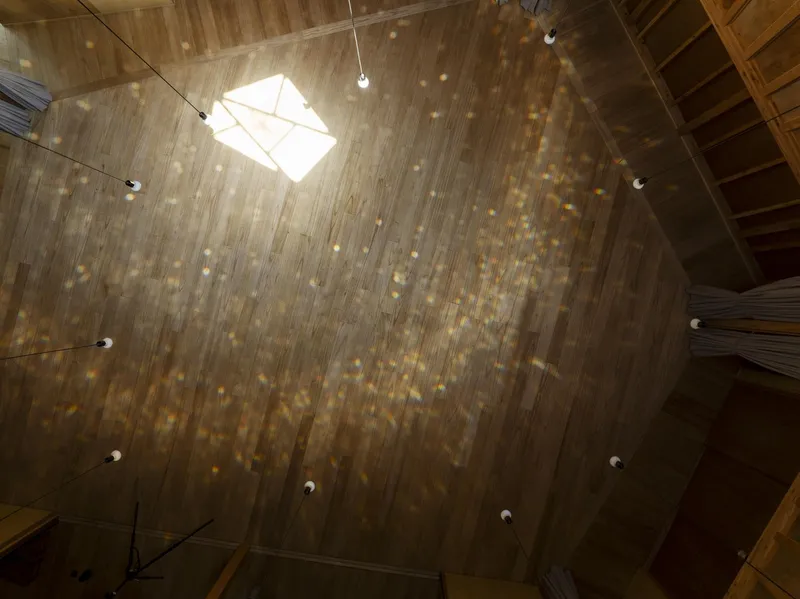

The architecture avoids any rigid programmatic definition, allowing children to invent their own activities and narratives. The form itself becomes part of the play, as the dramatic roof and shifting light patterns create a storybook atmosphere.
A Model for Nature-Based Learning Spaces
The Hut of Hat is a pioneering example of forest kindergarten architecture in Japan. It illustrates how educational buildings can be deeply rooted in nature, while still offering protection, comfort, and sensory richness. By prioritizing play, wonder, and environmental engagement, the design reflects a pedagogical approach that sees nature not as a backdrop, but as an active participant in the learning process.
In an era when early childhood education is increasingly moving indoors, this project offers a powerful counter-narrative—showing how architecture can support holistic development by connecting children to the natural rhythms of light, seasons, and landscape. Tezuka Architects have created a place where architecture becomes a memory, a landscape, and a story—all at once.
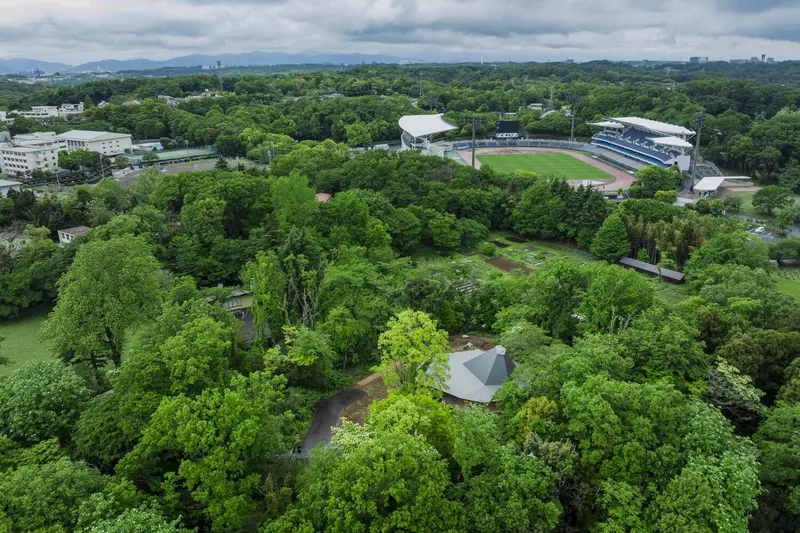
All Photographs are works of Kida Katsushida, FOTOTECA




Popular Articles
Popular articles from the community


Lunar Spiral: Space Architecture Shaped by the Mathematics of the Universe
Lunar Spiral reimagines space architecture through Fibonacci geometry, lunar regolith, levitating habitats, and self-sustaining Moon living.

The Musturak Paradise: Senior Living Architecture for a Connected Future in Temara, Morocco
The Musturak Paradise reimagines senior living architecture in Temara via private homes, social spaces, culture, community, and shared care.

The Ocean Hive: Sustainable Architecture for a Self-Sufficient Civilization at Sea
The Ocean Hive imagines sustainable architecture at sea, where modular habitats, algae, wave power and ocean waste sustain a growing colony.

Hill & Cross Opera: Sculptural Opera House Architecture Shaped by Tallinn’s Landscape and Identity
Hill & Cross Opera reimagines opera house architecture in Tallinn through its sculptural hill, civic plaza, glass wave and a luminous cross.

Similar Reads
You might also enjoy these articles

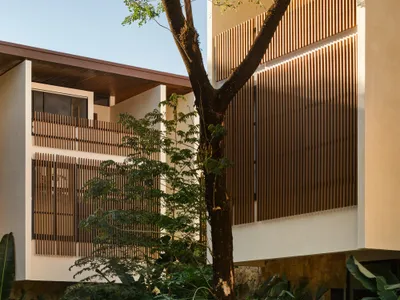
FAMM Arquitectura Organizes Ten Villas Around Courtyards and Jungle in Nosara, Costa Rica
El Molino pairs two elongated volumes with deep overhangs and timber louvers to build a compact coastal community five minutes from the beach.
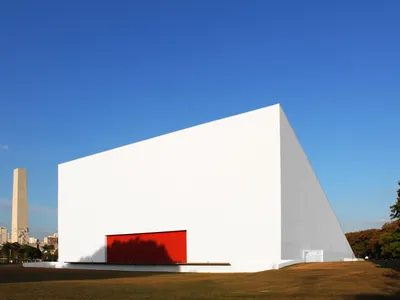
Oscar Niemeyer's Ibirapuera Park Pavilions Define São Paulo's Cultural Identity in Concrete and Curve
A constellation of modernist volumes set within São Paulo's most important urban park, conceived for the city's 400th anniversary in 1954.
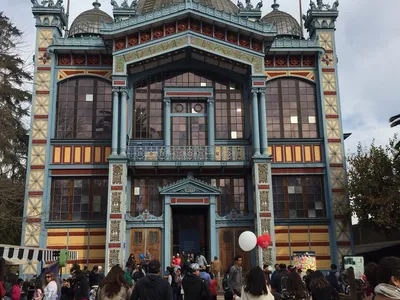
How Henri Picq's 1889 Paris Pavilion Traveled 11,000 Kilometers to Become Santiago's Artequín Museum
A prefabricated iron and glass pavilion built for the Paris Universal Exposition found a second life as a children's art museum in Chile.
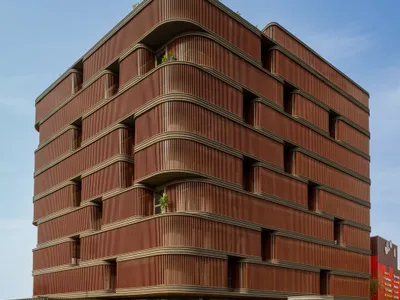
Sanjay Puri Architects Wraps a Jaipur Office Tower in Capsule-Shaped Green Buffers
A nine-level climate-responsive workplace near Jaipur Airport uses stacked planter terraces and aluminium screens to fight 40°C heat.

Explore Tree House Competitions
Discover active competitions in this discipline



Challenge to reimagine the Iron Throne


Photograph architecture without architects


Illustrate the lost glory of Angkor Wat - Render Challenge


Design challenge to reuse E-waste
Comments (0)
Please login or sign up to add comments
No comments yet. Be the first to comment!