
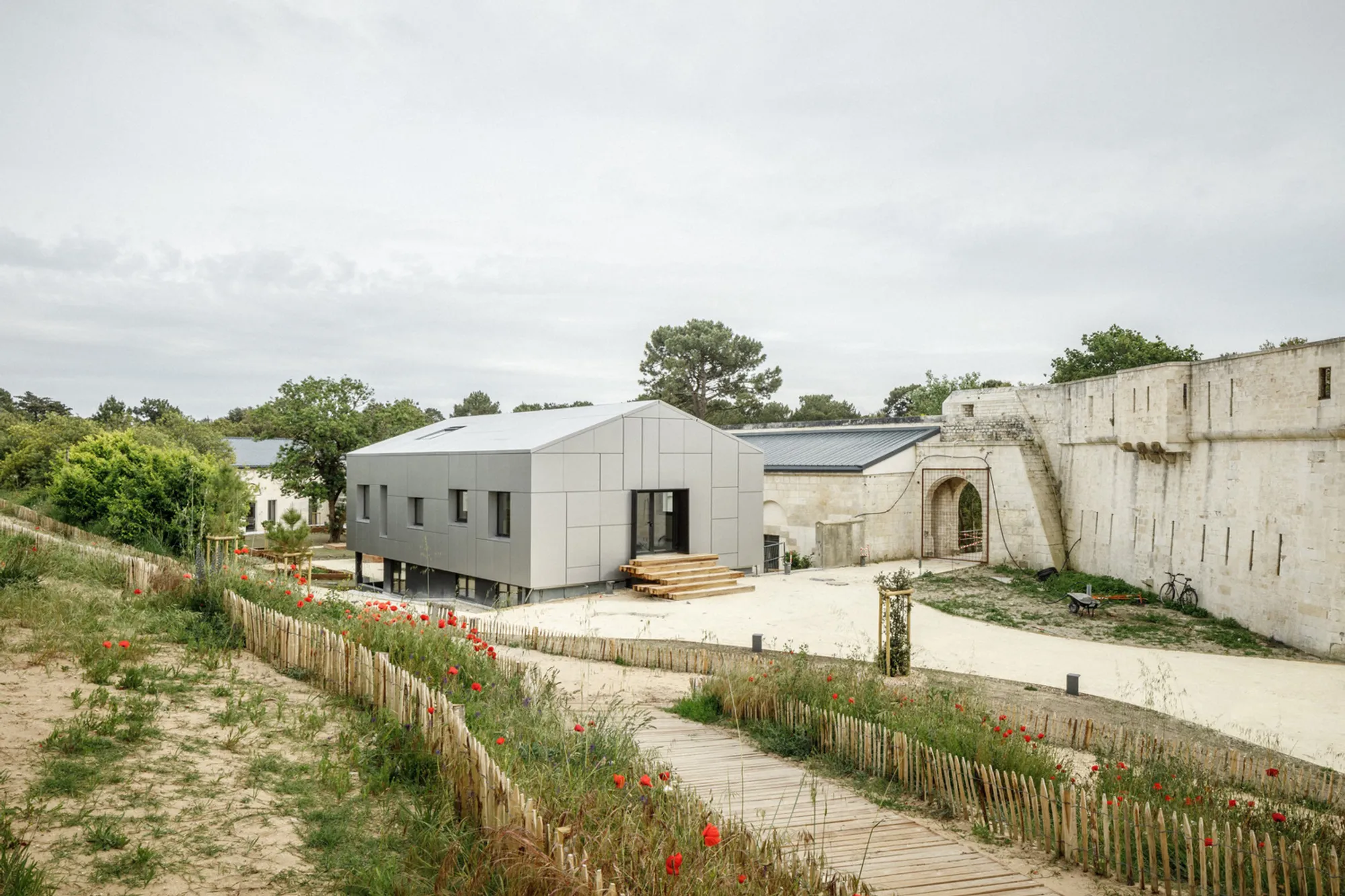
Fort des Saumonards Restoration by AR Studio d'Architectures Saint-Georges-d'Oléron 42 with MUGO
Historic coastal fort restored into immersive student retreat, blending heritage masonry, sustainable materials, adaptive reuse, and landscape-driven communal learning spaces


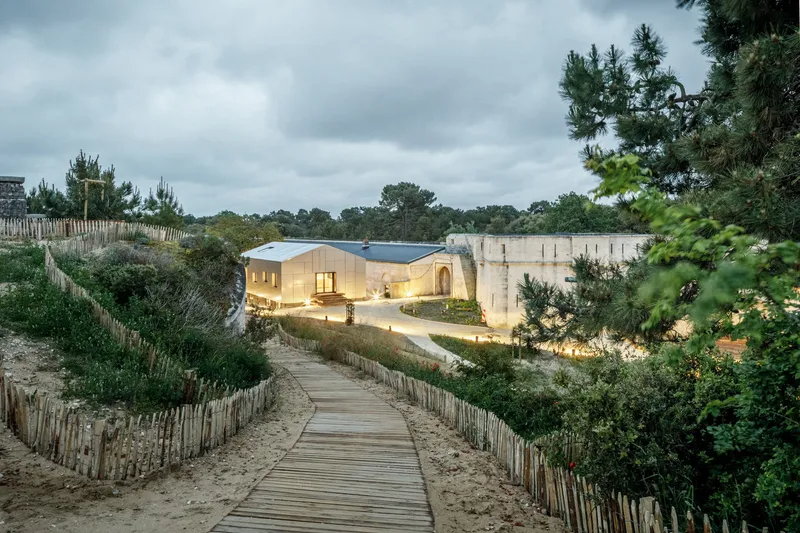
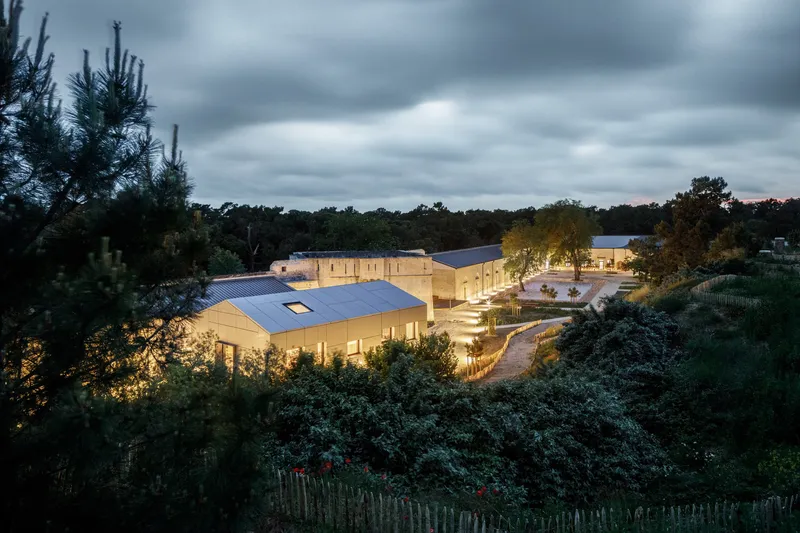
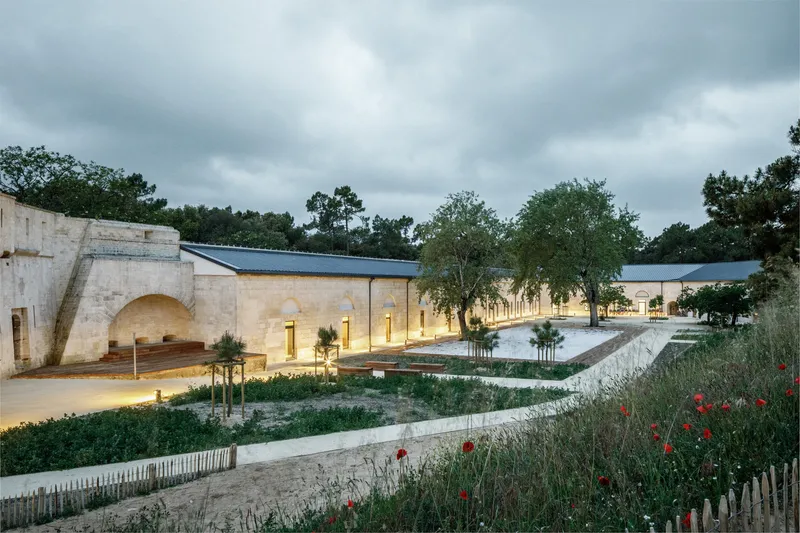
The Fort des Saumonards stands as a powerful example of how historic military architecture can be reimagined for contemporary use without losing its identity. Located in Saint-Georges-d'Oléron, just steps from the Atlantic shoreline, this 200-year-old coastal fort has been meticulously restored by AR Studio d'Architectures and transformed into a mixed-use summer campus for the innovative Paris-based coding school 42.
Completed in 2023, the 2,442-square-meter restoration balances architectural conservation, sustainable construction, and contemporary educational needs, creating a unique learning retreat deeply connected to its natural landscape.
Reawakening a Forgotten Military Landmark
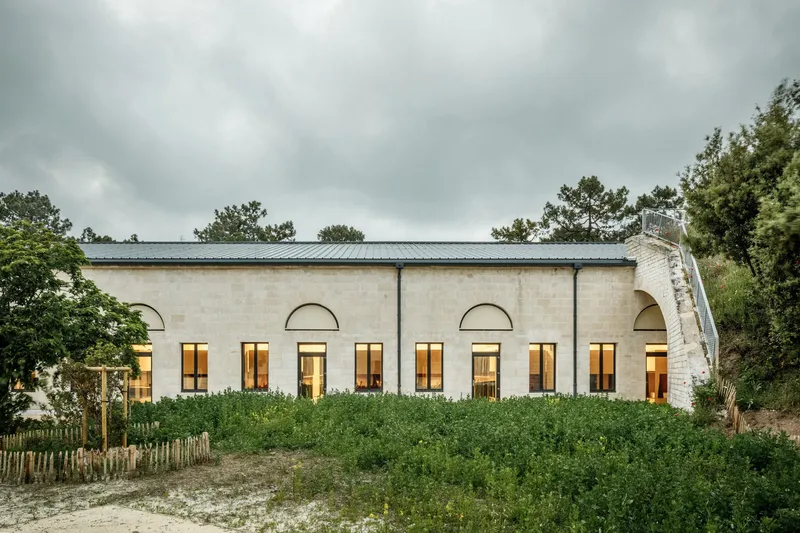
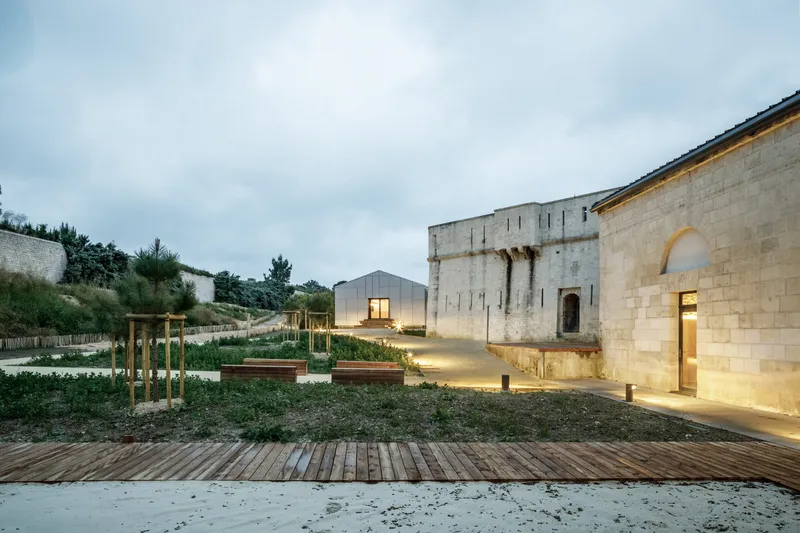
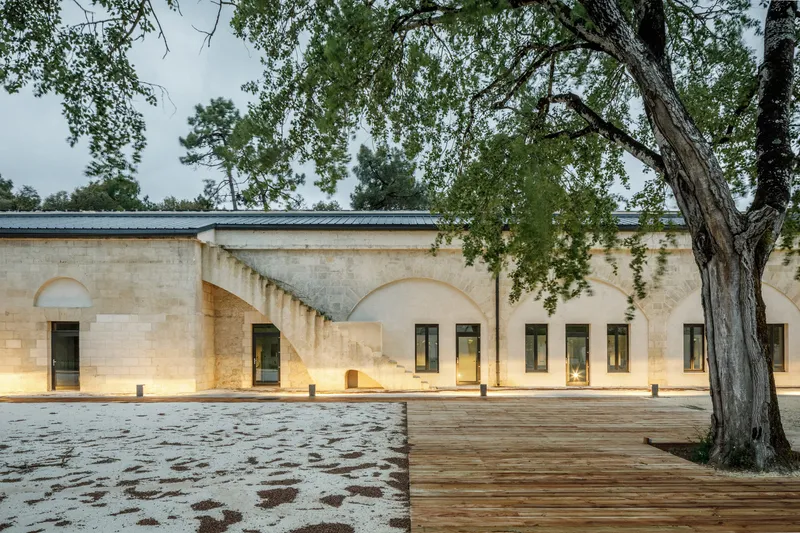
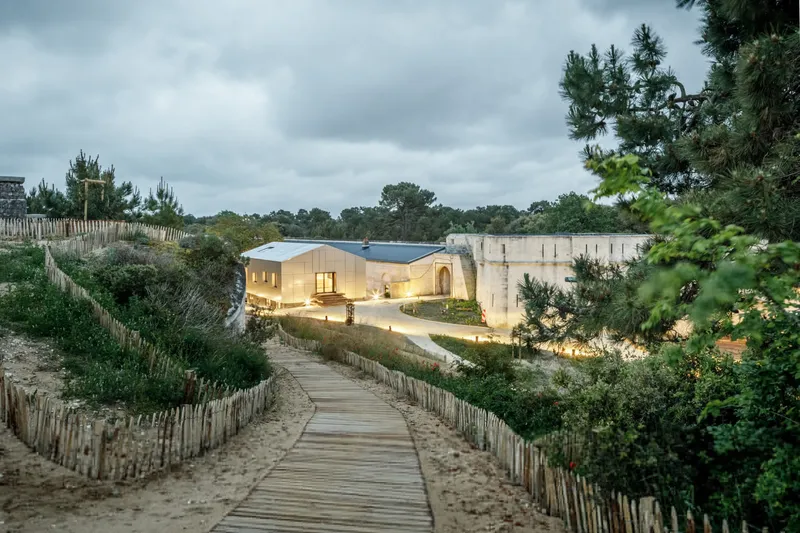
Abandoned for decades, the fort had gradually fallen into disuse, its stone walls weathered by time and sea air. Rather than imposing a radical transformation, the architects adopted a careful restoration strategy rooted in respect for the existing structure. Original stone façades were cleaned, repaired, and stabilized, allowing the fort’s historic character to remain legible and authentic.
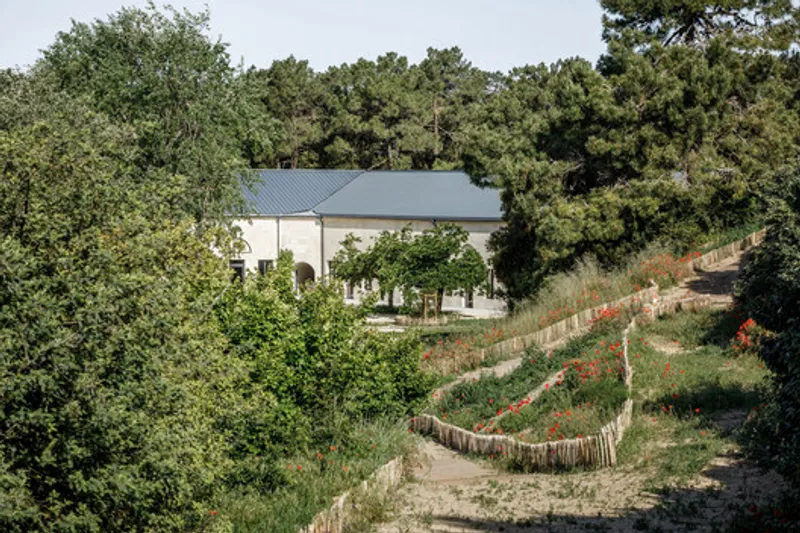
Inappropriate later interventions were quietly corrected. PVC window frames were replaced with dark timber joinery, restoring visual coherence while improving durability. Breathable lime and hemp render was applied to enhance thermal performance, ensuring modern comfort while allowing the historic masonry to function naturally. This approach demonstrates how heritage preservation and environmental performance can coexist within adaptive reuse architecture.
Contemporary Contrast: The Reinvention of the 1970s Pavilion
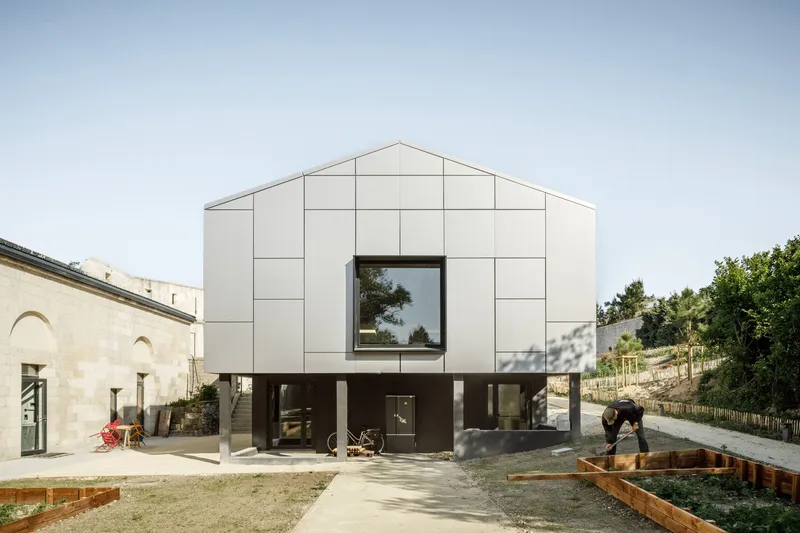
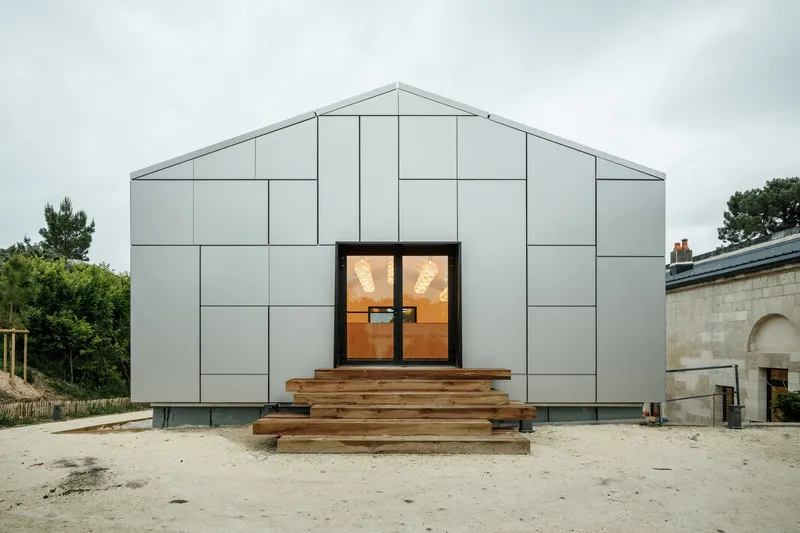
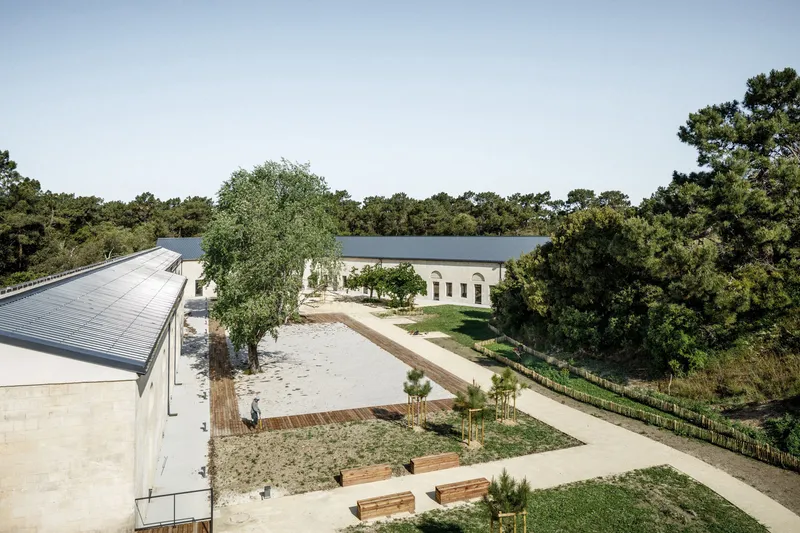
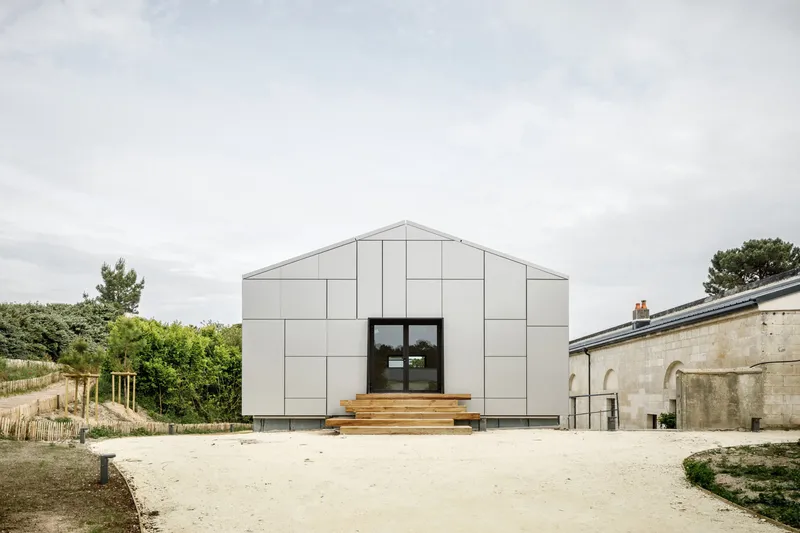
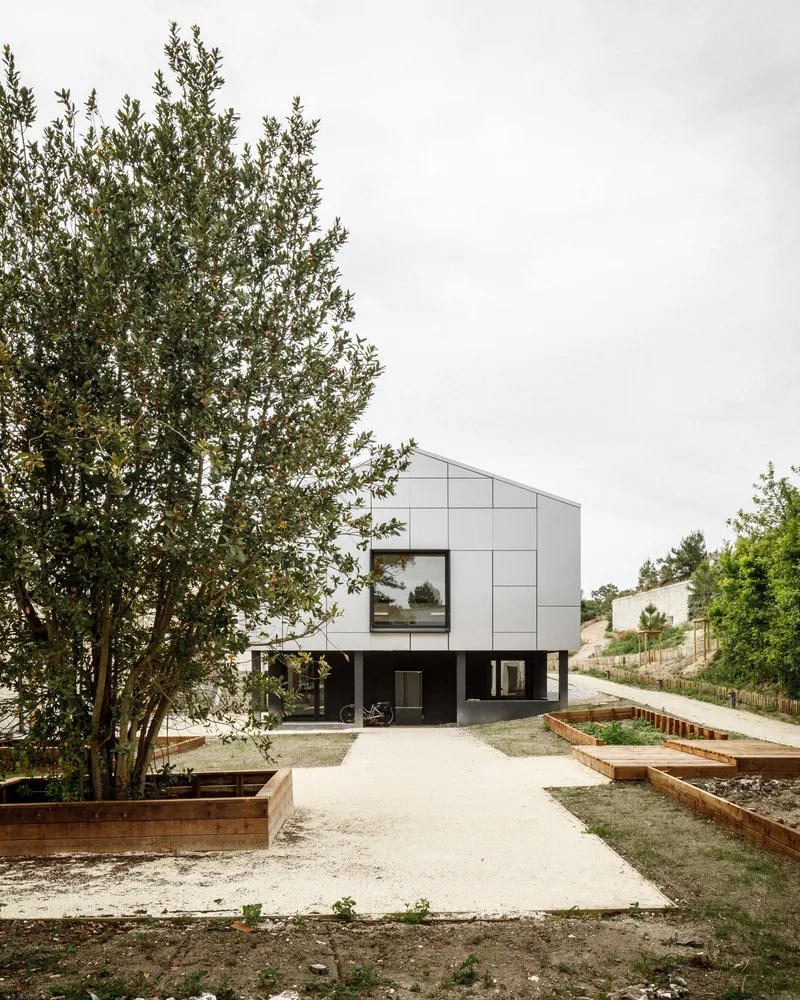
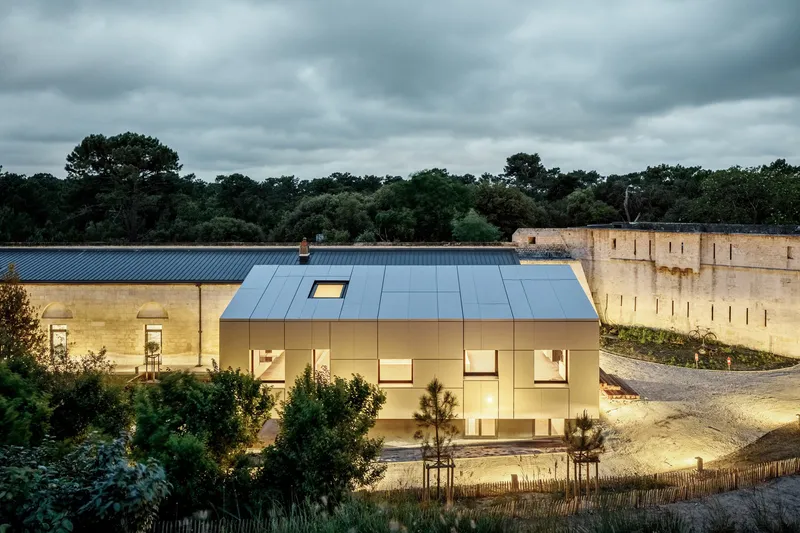
One of the most distinctive architectural gestures within the project is the transformation of a 1970s pavilion located inside the fort walls. Instead of demolishing this discordant structure, AR Studio d'Architectures embraced its difference and elevated it into a central architectural feature.
Clad in frosted metal panels, the pavilion subtly mirrors the surrounding dunes and vegetation, creating a striking dialogue between old and new. Fully re-insulated and structurally optimized, this “flying building” now functions as the main communal gathering space, reinforcing social interaction and collaboration among students while introducing a clearly contemporary layer into the historic complex.
Interior Spaces Designed for Learning and Retreat
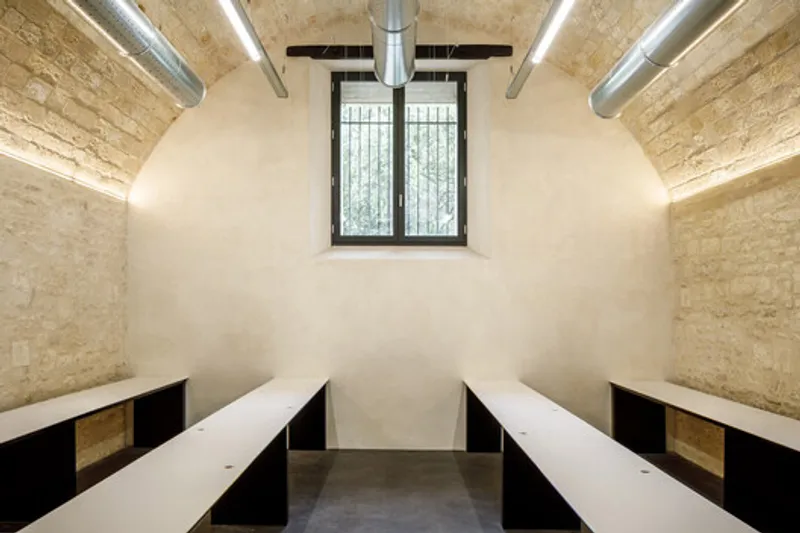
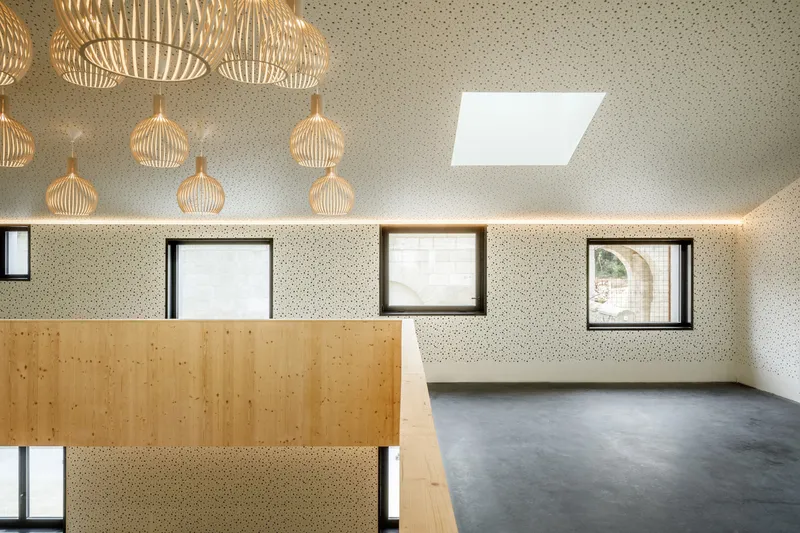
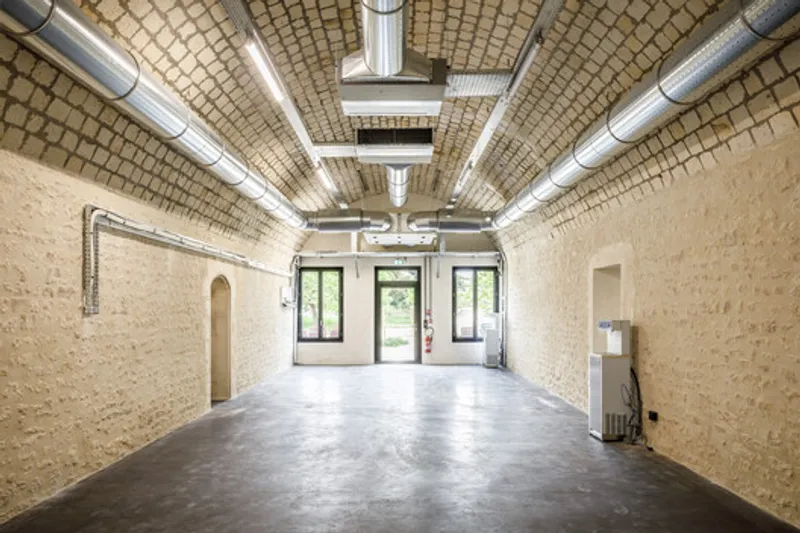
Inside the fort, spatial interventions are intentionally restrained. The architects preserved the robust geometry of the original military layout while introducing flexible, human-scaled interiors suited to educational and residential use. Dormitories echo the familiar cabin-style beds from 42’s Paris campus, providing continuity and comfort within an entirely new environment.
Shared spaces encourage informal learning, relaxation, and collective living. A caretaker’s apartment ensures on-site support, reinforcing the sense of a self-sufficient, temporary community. Throughout the interiors, material choices emphasize durability, simplicity, and tactility, aligning with the fort’s austere architectural language.
Landscape Architecture Rooted in Ecological Sensitivity
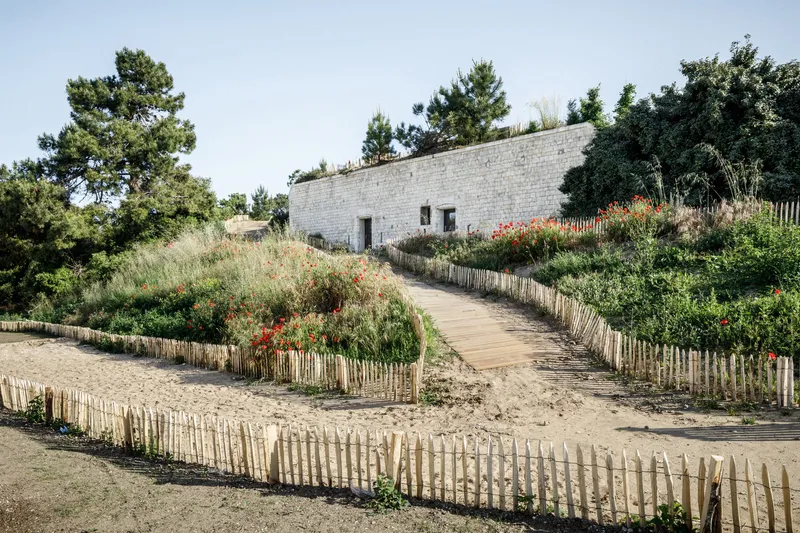
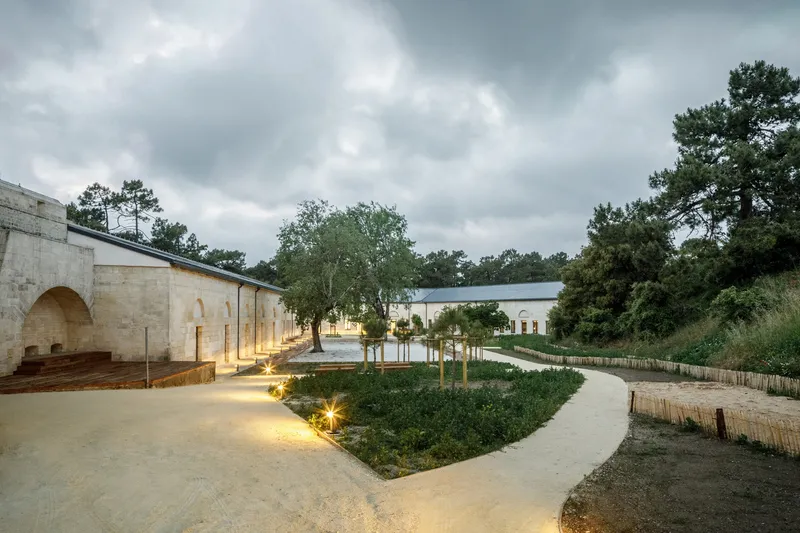
The surrounding landscape plays an essential role in the Fort des Saumonards restoration. Designed with great care, the outdoor spaces protect fragile coastal ecosystems while encouraging active use. Pine slat pathways guide movement across sensitive dunes, preventing erosion and preserving native vegetation.
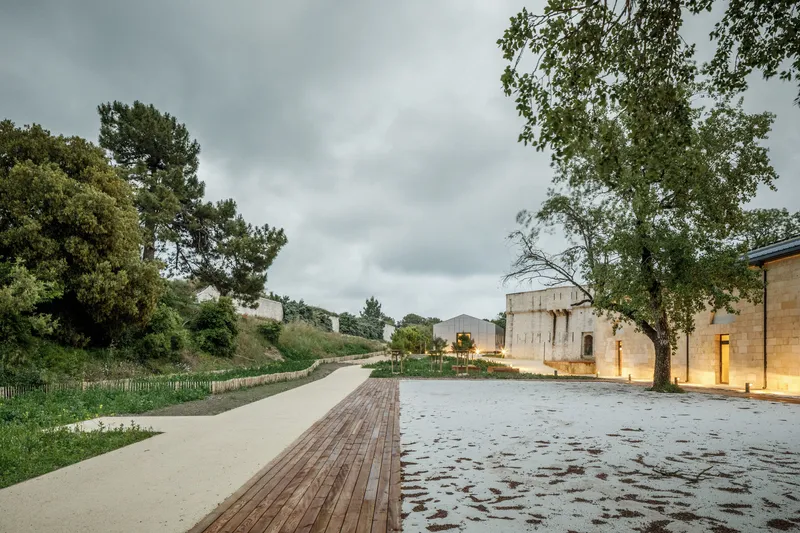
New topsoil supports an on-site vegetable garden, reinforcing the project’s commitment to sustainability and self-sufficiency. Outdoor amenities such as a sand volleyball court, shaded resting nets, and the open-air “fort agora” dining space transform the site into a holistic environment where architecture, landscape, and daily life are inseparable.
Architecture as a Framework for Well-Being and Creativity
More than a restored monument, Fort des Saumonards functions as an immersive architectural framework designed to support mental well-being, creativity, and social connection. By relocating students from dense urban environments to a raw coastal setting, the project offers a rare opportunity to disconnect from digital intensity and reconnect with nature.
This restoration demonstrates how historic preservation can be future-oriented, accommodating contemporary educational models while reinforcing cultural memory. Through careful material choices, sensitive interventions, and landscape-driven design, AR Studio d'Architectures has transformed a dormant fort into a living campus that honors the past while actively shaping new forms of learning.
A Model for Sustainable Heritage Architecture
The Fort des Saumonards restoration stands as a benchmark for adaptive reuse, coastal architecture, and sustainable historic renovation. It proves that preservation is not about freezing buildings in time, but about giving them renewed relevance through thoughtful architectural transformation. In doing so, the project offers a compelling vision for how heritage sites can evolve into vibrant, socially meaningful spaces for future generations.
All photographs are works of
Florent Michel 11h45


Popular Articles
Popular articles from the community


Hill & Cross Opera: Sculptural Opera House Architecture Shaped by Tallinn’s Landscape and Identity
Hill & Cross Opera reimagines opera house architecture in Tallinn through its sculptural hill, civic plaza, glass wave and a luminous cross.

Riyadh For All: Intergenerational Urban Design for Active Aging in Rabat
Riyadh For All reimagines urban design in Rabat with intergenerational co-living, adaptive courtyards, and Moroccan cultural exchange today.

The Earth Pod: 3D Printed Homes for Resilient Refugee Communities
The Earth Pod reimagines refugee housing through 3D printed homes made from clay, combining resilience, self-sufficiency, and rapid shelter.

The Ocean Hive: Sustainable Architecture for a Self-Sufficient Civilization at Sea
The Ocean Hive imagines sustainable architecture at sea, where modular habitats, algae, wave power and ocean waste sustain a growing colony.

Similar Reads
You might also enjoy these articles

Bamboo Housing Challenge 2026: Design Affordable, Sustainable Homes Using Bamboo
An international design competition by Bamboo U and IBUKU inviting architects and designers to reimagine affordable housing using bamboo — with the winning design built full-scale in Bali.

Computational Design & Education: Beegraphy Design Awards Introduces 7th Category (Featuring Jiyun's Innovative Approach)
Dive into Beegraphy’s 7th Design Awards category, where computational design meets education to create immersive, interactive learning tools, inspired by Jiyun’s work.
From Parametric Lighting to Urban Furniture: Join the 2nd Workshop in Beegraphy’s Computational Design Series
Dive into Cutting-Edge Design Techniques and Practical Applications with Industry Experts

Last Call: Unleash Your Architectural Genius in SHAK's Kindergarten Design Competition
Urgent call for architects to join SHAK's kindergarten design competition before the looming deadline

Explore Educational Building Competitions
Discover active competitions in this discipline



Challenge to design public laboratory


Challenge to reimagine the Iron Throne


Photograph architecture without architects


Illustrate the lost glory of Angkor Wat - Render Challenge
Comments (0)
Please login or sign up to add comments
No comments yet. Be the first to comment!