
Four Studios Revive Mallorcan Sandstone and Timber to Build Social Housing in Santa Margalida
Ten public housing units on inland Mallorca prove that local materials and passive design can define a new standard for social architecture.


Social housing rarely gets to be this specific. On the outskirts of Santa Margalida, a small inland town in northern Mallorca, a collaboration between Javier Gavín, Siddartha Rodrigo, Juan Moreno, and DATAAE has produced a building that does something increasingly unusual: it takes its cues from the island's own material culture rather than importing solutions from the mainland. Built for IBAVI, the Balearic Housing Institute, the ten-unit block won a competition and, more recently, a New European Bauhaus Rising Star Award from the European Commission. Both honors are deserved, because the project asks a genuinely difficult question and provides a coherent answer: what does affordable housing look like when you commit to local quarries, prefabricated timber, and passive climate strategy on a tight budget?
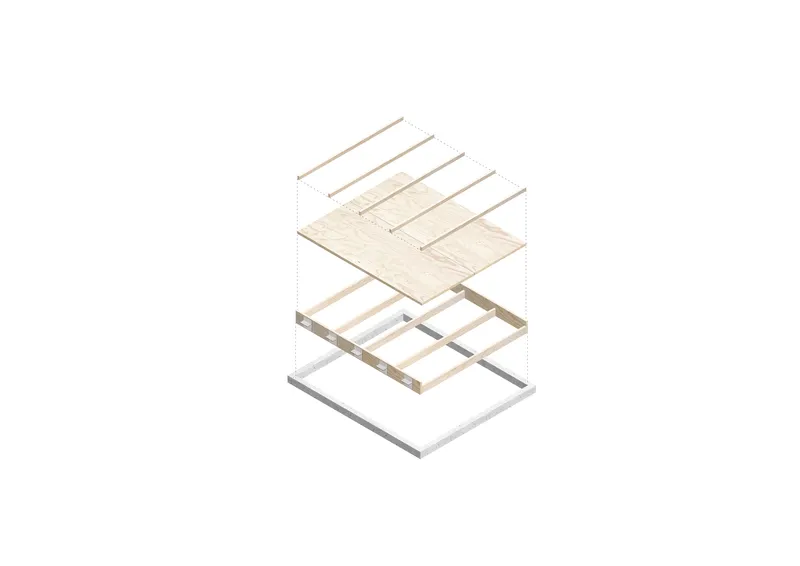
The answer turns out to look a lot like Mallorca itself. Marés sandstone from nearby quarries forms the exterior load-bearing structure, lending the facades a warm, pale tone that sits easily among terracotta rooftops. Locally sourced brick handles the vertical loads internally, while prefabricated timber panels make up the horizontal structure, speeding assembly and minimizing waste. The design team rotates floor slabs in alternating bays to distribute loads more efficiently, allowing thinner walls and less material overall. It is a building assembled from limited resources with extraordinary intelligence, which is precisely the tradition it claims to continue.
A Facade That Belongs
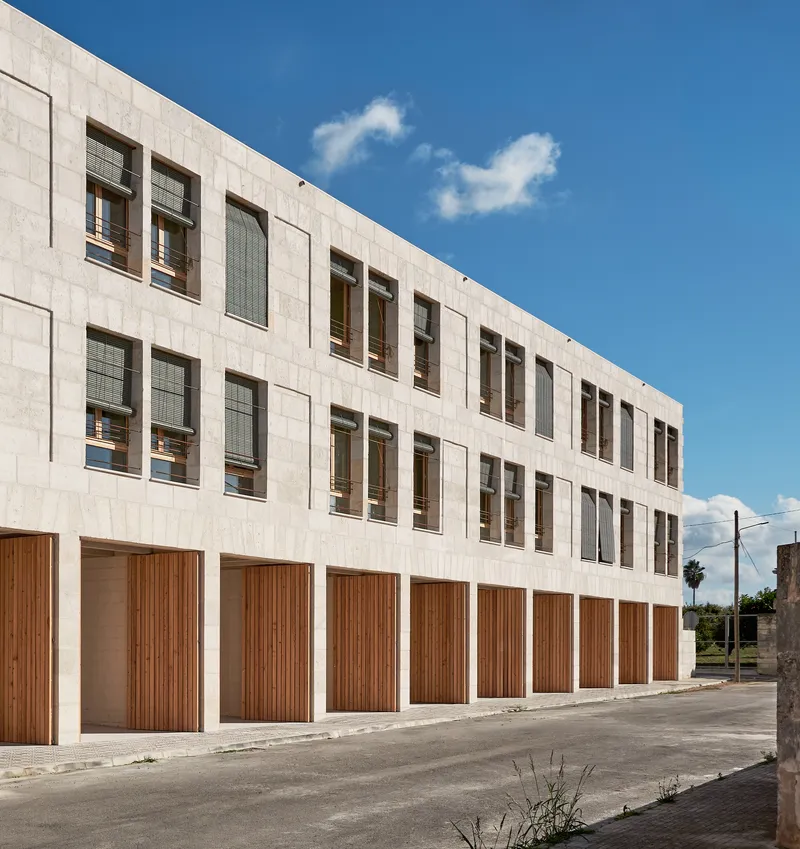
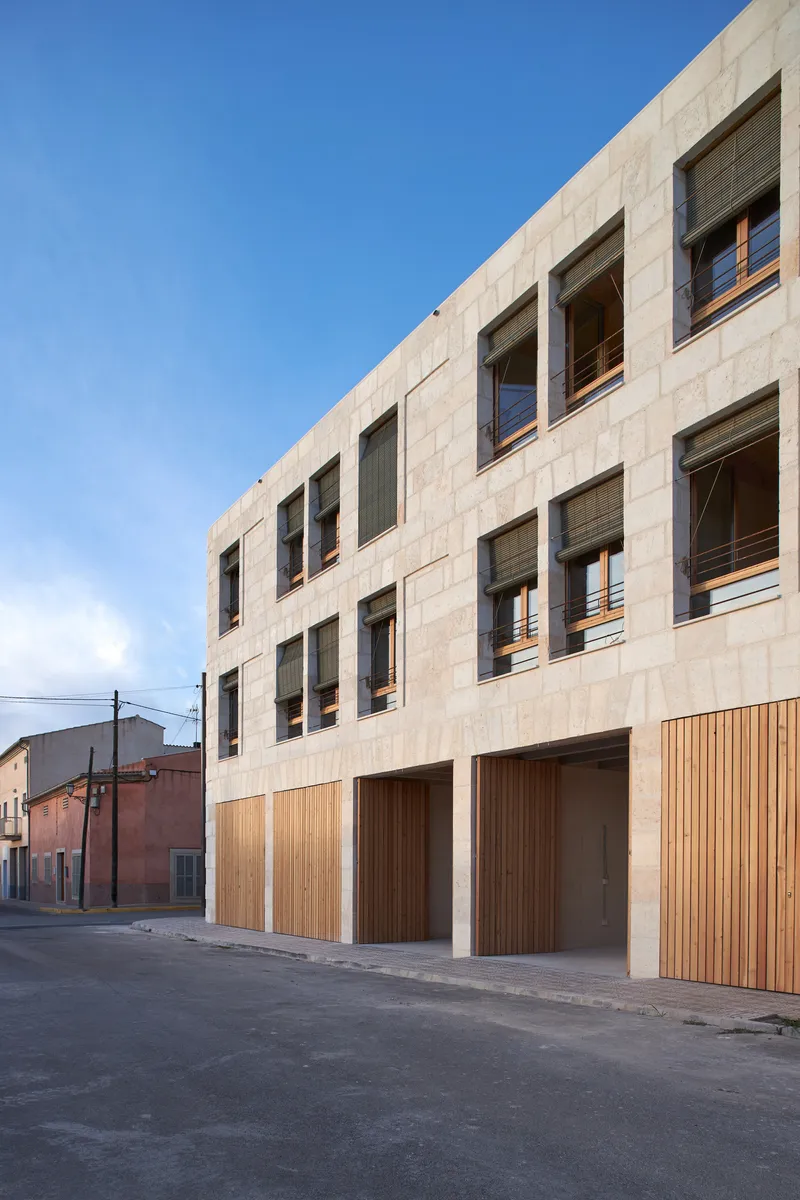
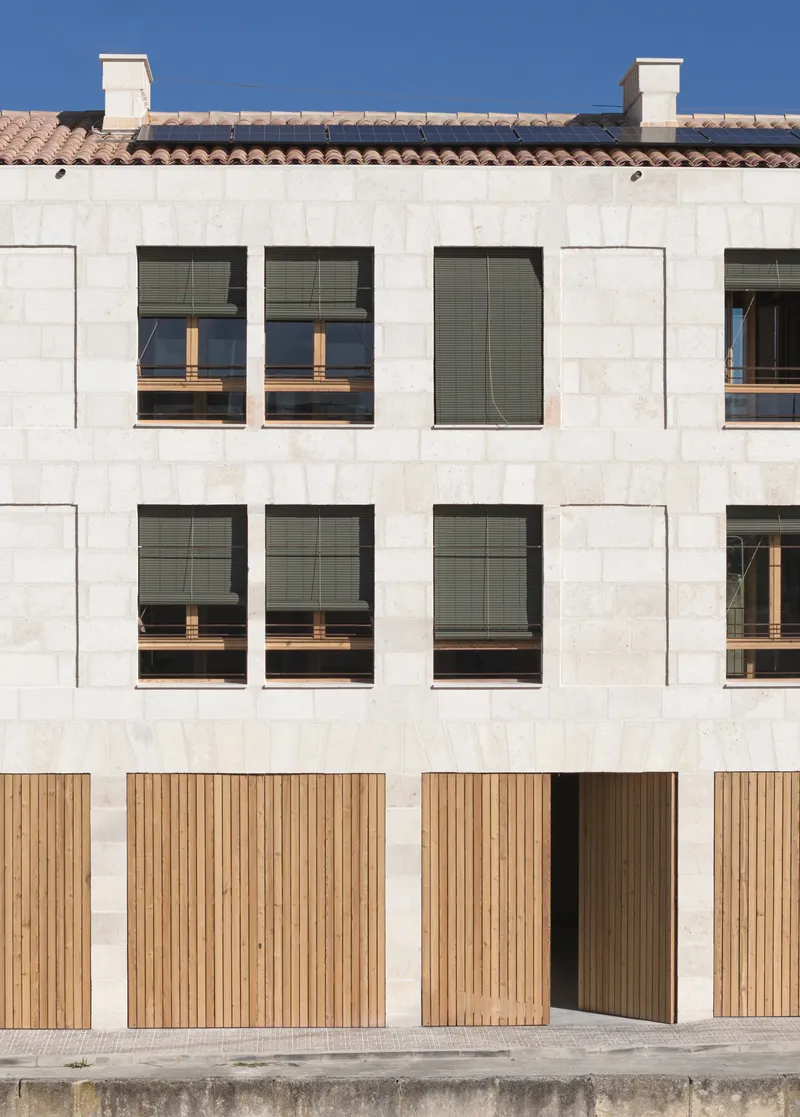
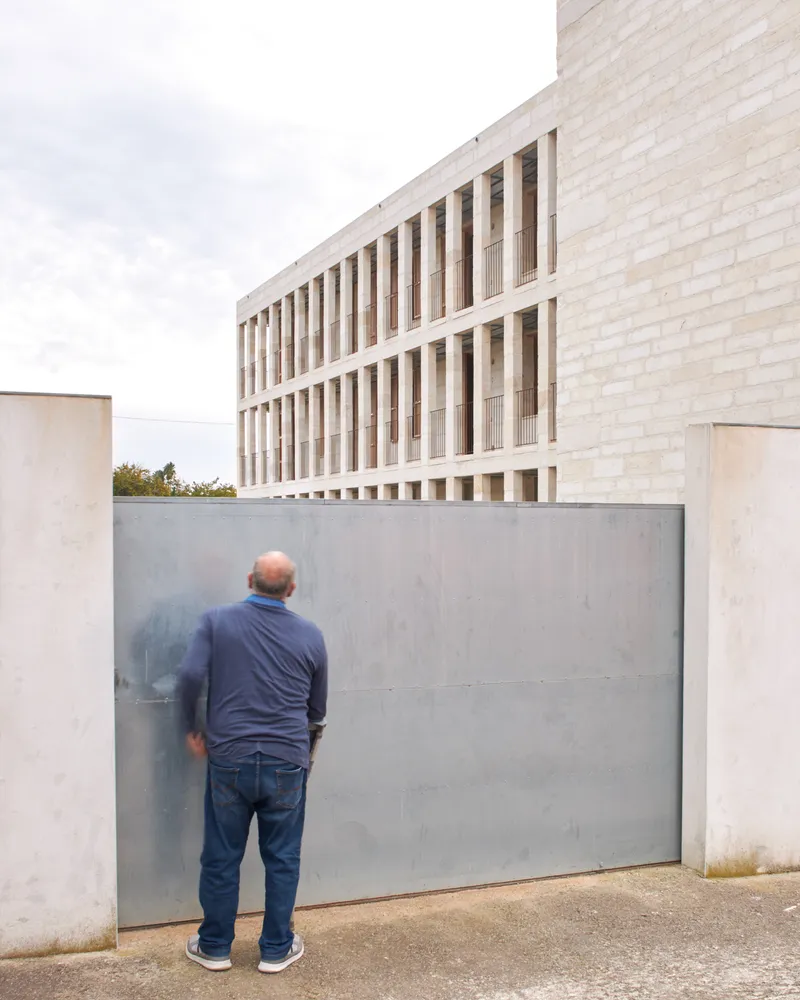
From the street, the building reads as a series of punched openings in pale stone, punctuated by vertical timber slat doors and shutters at ground level. Ten workshops occupy the ground floor, their wide timber garage doors establishing a rhythm that recalls the working facades of Mallorcan agricultural towns. Above, the window openings are more restrained, sized and spaced to control solar gain while admitting enough light to serve through-unit apartments with dual orientation.
The Marés sandstone is not decorative cladding. It is the structure, and the surface honesty that results gives the facades a weight and quietness that no render system could match. Because the stone comes from local quarries, the color palette integrates seamlessly with the surrounding townscape, avoiding the jarring "dropped in" quality that plagues so many public housing projects.
The Gallery as Climate Device
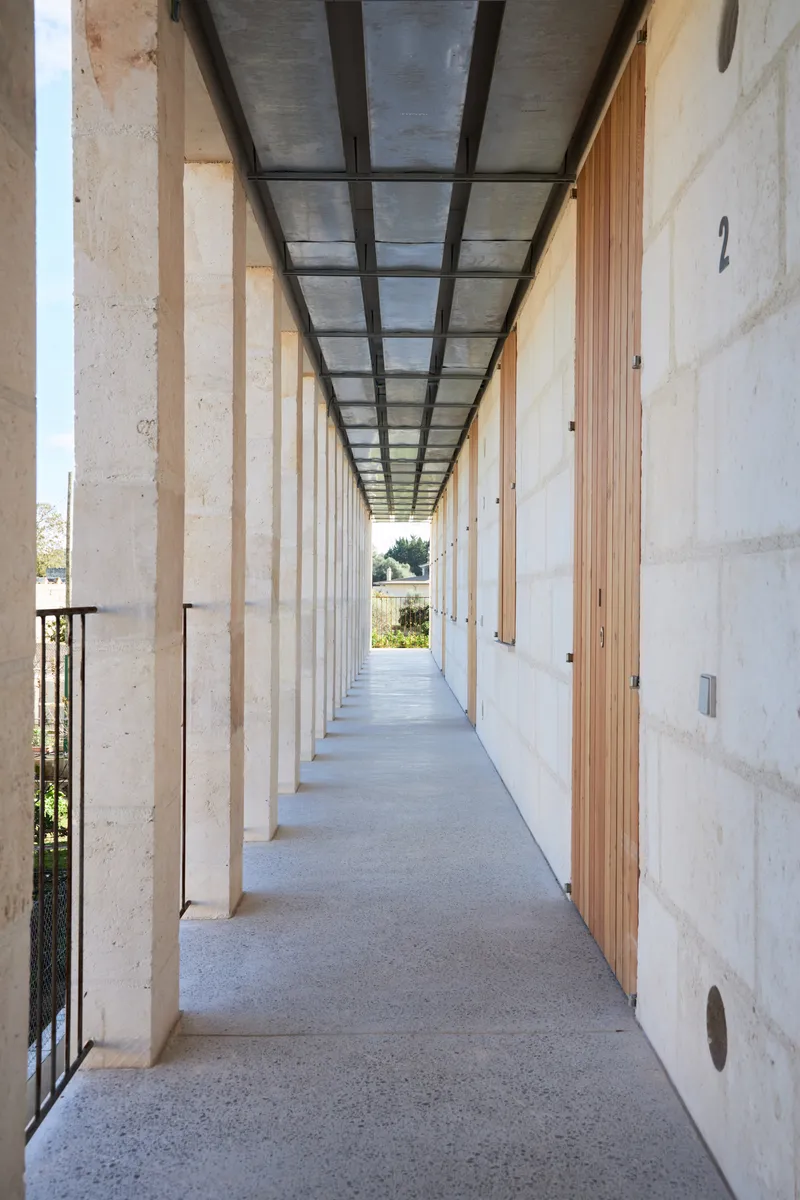
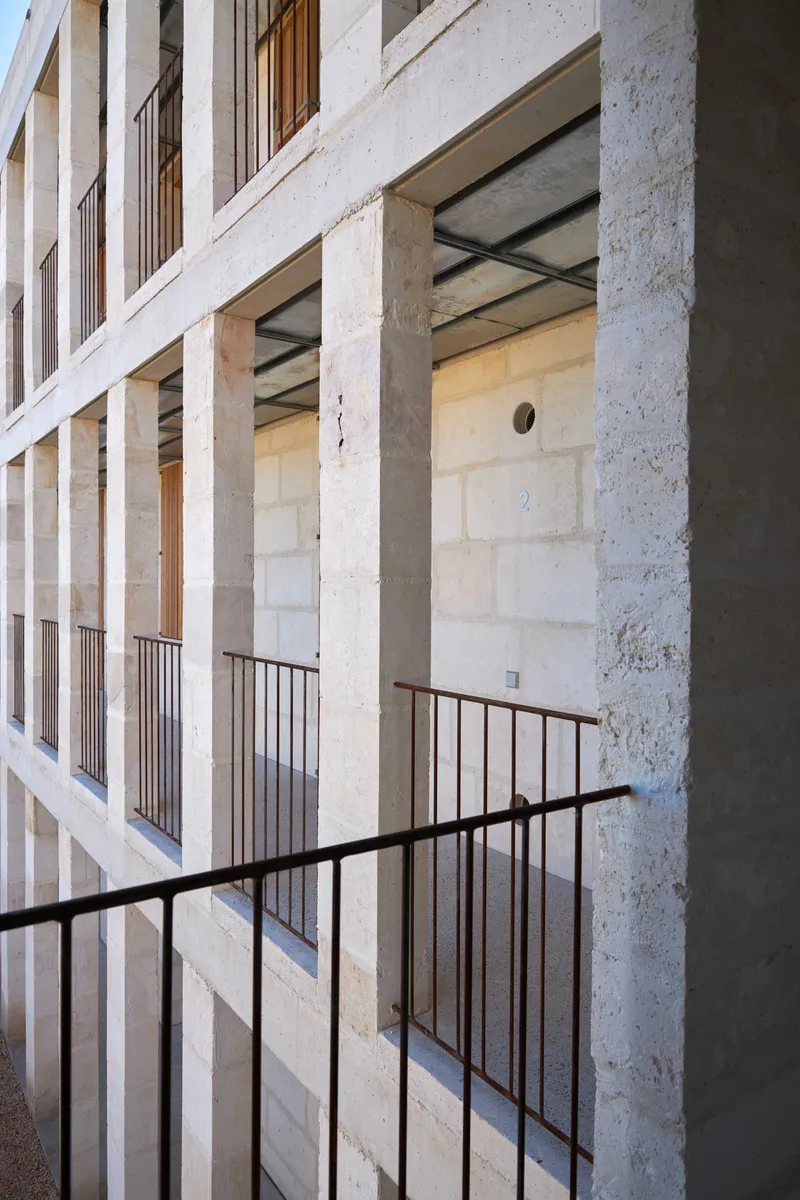
Southeast-facing gallery corridors run along the upper floors, functioning simultaneously as access decks and energy-harvesting buffer zones. Steel and glass ceiling panels shelter the walkways while allowing sunlight to reach the stone columns beneath. The galleries create a transitional microclimate between outdoors and indoors, tempering heat before it enters the apartments and promoting natural cross-ventilation through the shallow building depth.
Deep concrete beam overhangs shade the balconies at the rear, keeping direct afternoon sun off the interior walls. The passive strategy is comprehensive: the building meets comfort demands without relying on mechanical systems to compensate for poor orientation or excessive glazing. On a Mediterranean island where summer cooling loads are the primary concern, getting this right is not optional.
Stone, Timber, and the Logic of Assembly
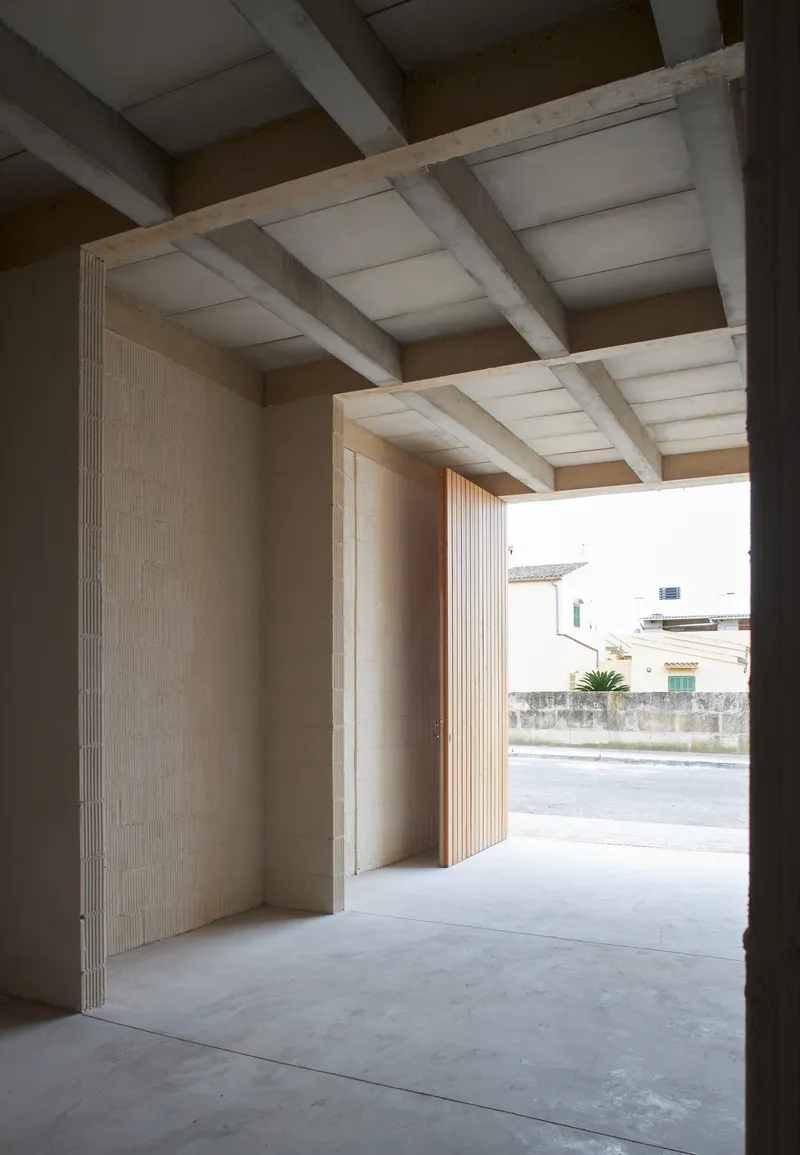
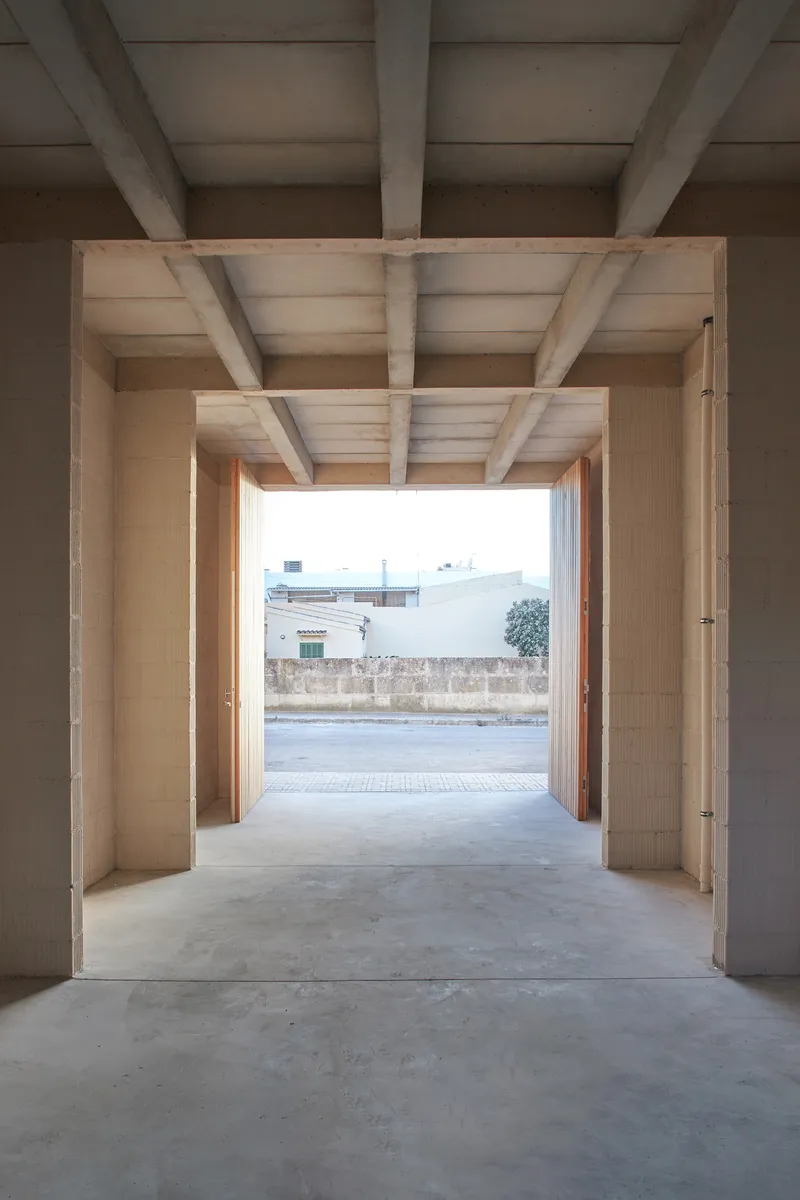
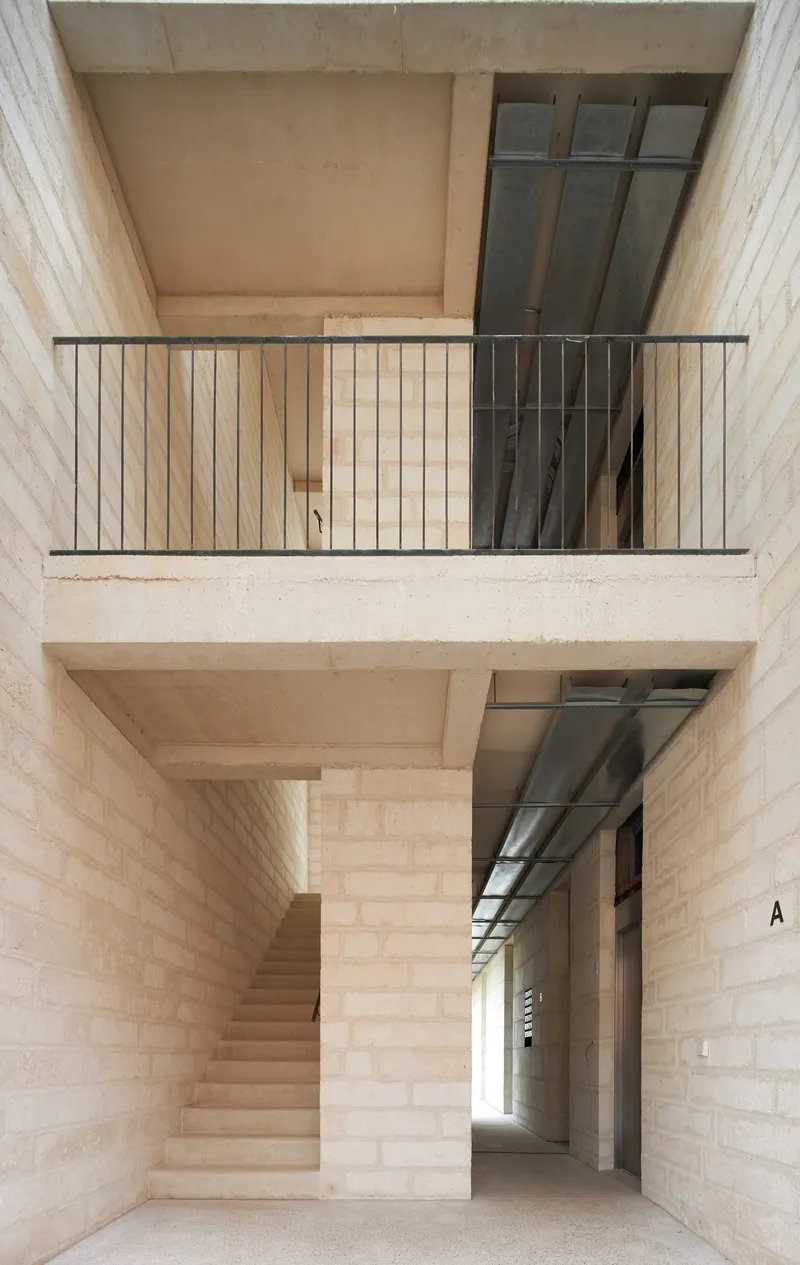
Walk through any threshold in this building and you encounter an honest conversation between materials. Exposed timber beams and joists frame the entry passages, while ribbed stone jambs articulate the doorways. The stairwells pair pale stone walls with steel balcony railings and glass block windows, layering industrial components against traditional ones without hierarchy. Nothing pretends to be something it is not.
The prefabricated timber panels that form the floor structure are designed as H-sections, a geometric solution that protects the upper parts of the joists in case of fire without requiring retardant additives or varnishes. It is a clever piece of engineering that keeps the material exposed and legible while meeting code. The broader ambition, to optimize the thickness of every structural element and minimize material usage on site, is evident in every detail.
Living Spaces Defined by Light and Material
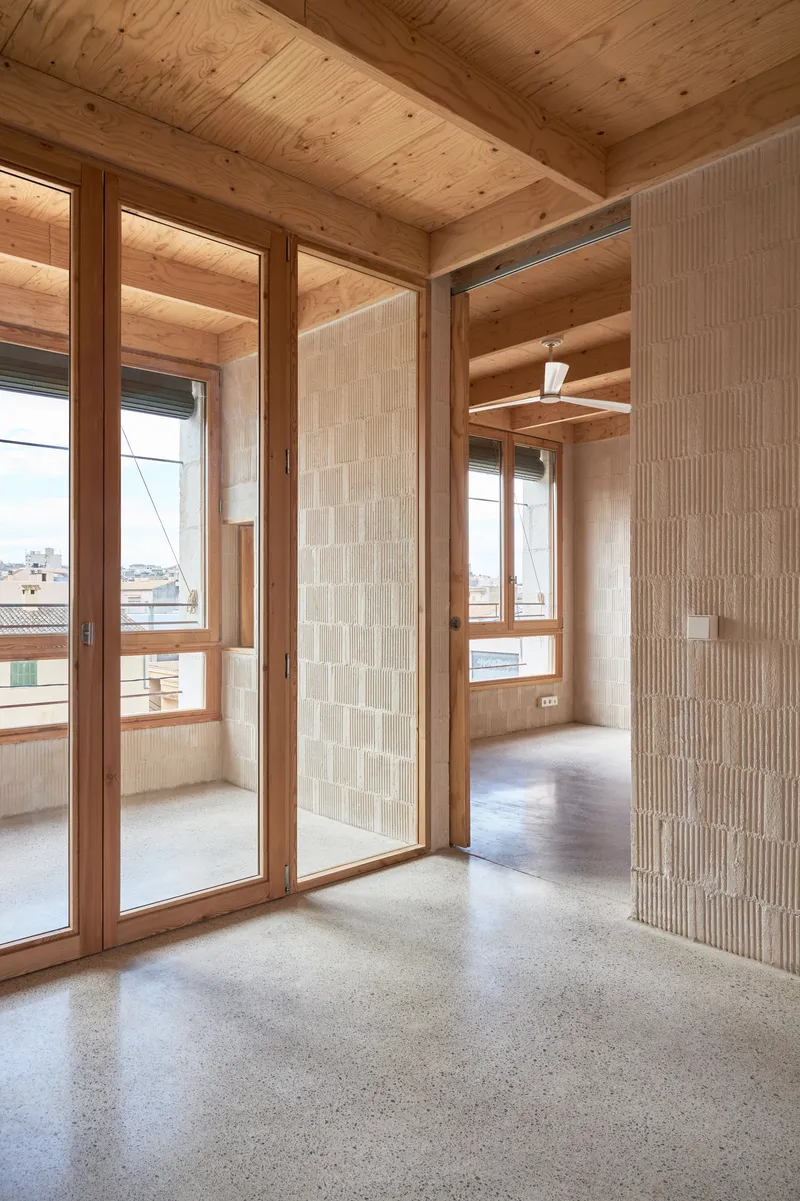
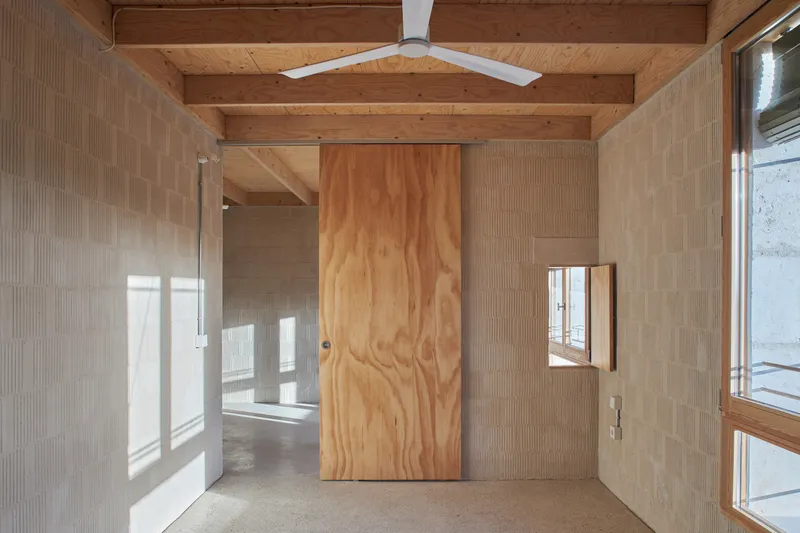
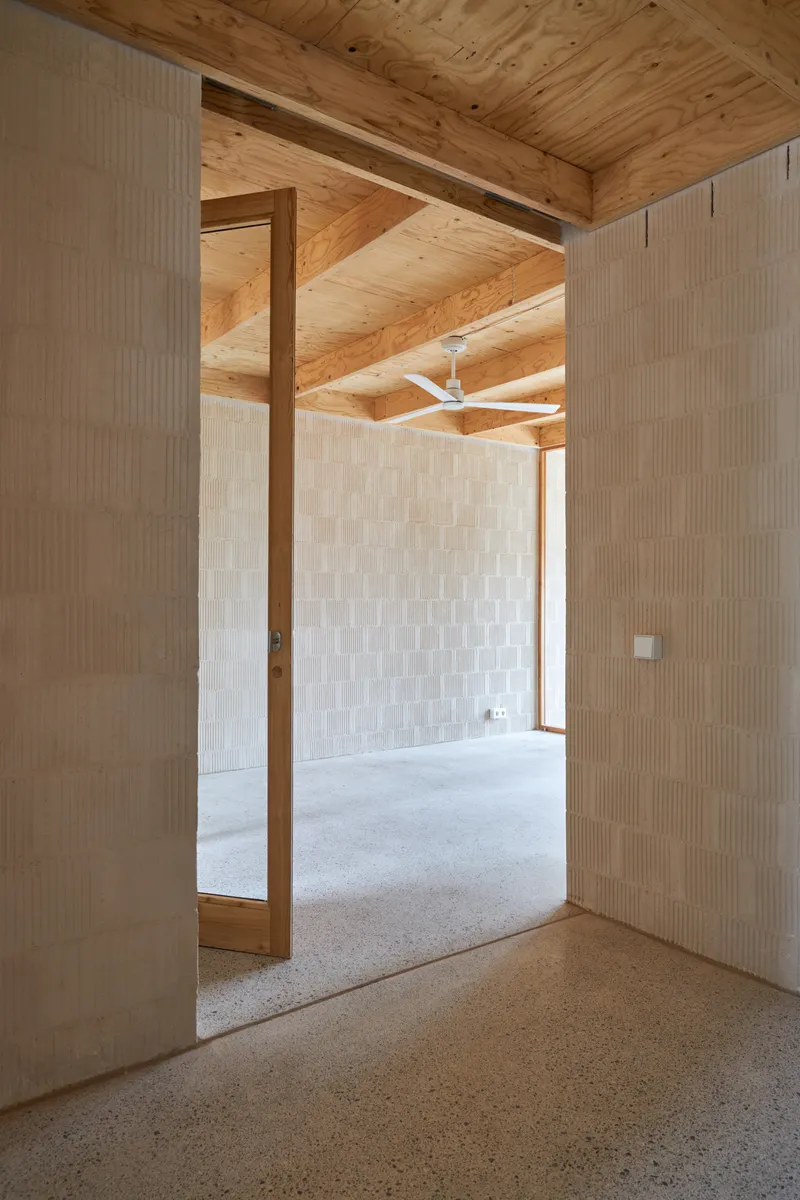
Inside the apartments, the material palette stays legible: exposed timber ceiling beams, terrazzo floors, white ceramic tile partitions, and large plywood sliding doors that allow residents to reconfigure rooms. The sliding panels are generous, running floor to ceiling, and the ceramic tile walls catch and diffuse afternoon light in a way that makes even modest rooms feel spacious. Timber-framed glazed doors connect living areas to adjacent rooms, maintaining visual continuity without sacrificing acoustic separation.
The interiors resist the temptation to over-specify. There is no single correct arrangement; the circular circulation routes created by the central core and the large operable partitions give residents agency over how they use their homes. For social housing, this degree of adaptability is significant. It acknowledges that affordability should not mean rigidity.
Domestic Details at Close Range
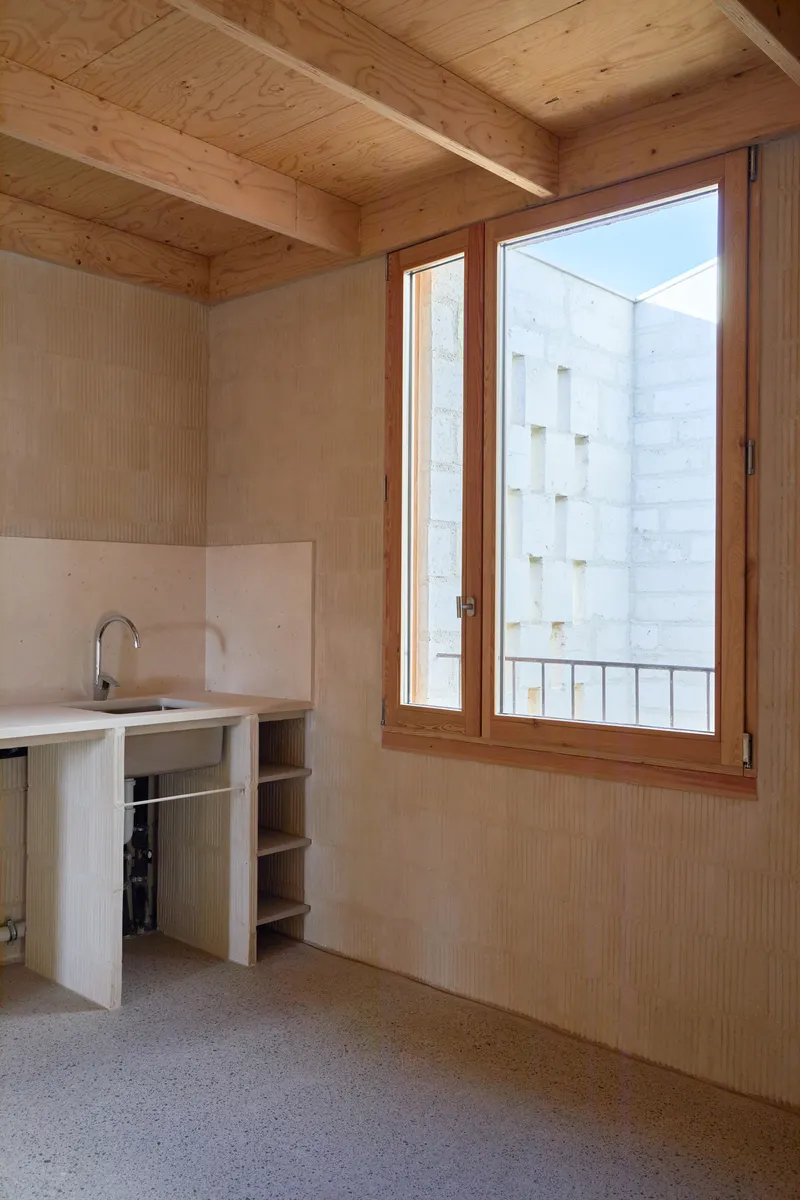
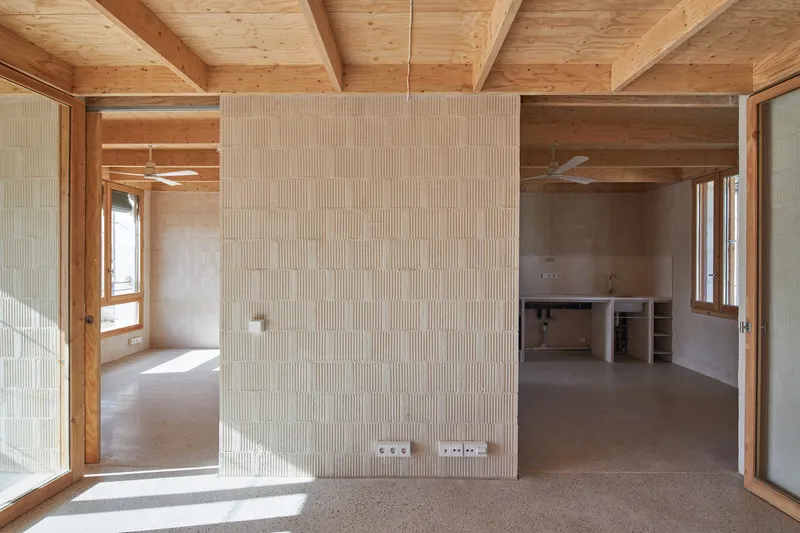
A small kitchen counter with open shelving sits beneath a timber-framed casement window that frames a view of a neighboring white facade. It is a quiet moment, but it speaks volumes about the care invested in even the most utilitarian spaces. The casement window is not a picture window; it is a working element that opens to catch a breeze, and its timber frame ties back to the structural language of the whole building.
At ground level, the workshops present ribbed hempcrete partition walls that divide the concrete floor space, offering a robust, adaptable base for whatever uses the community assigns them. The building meets its residents where they are, providing structure without prescription.
Settling Into the Townscape
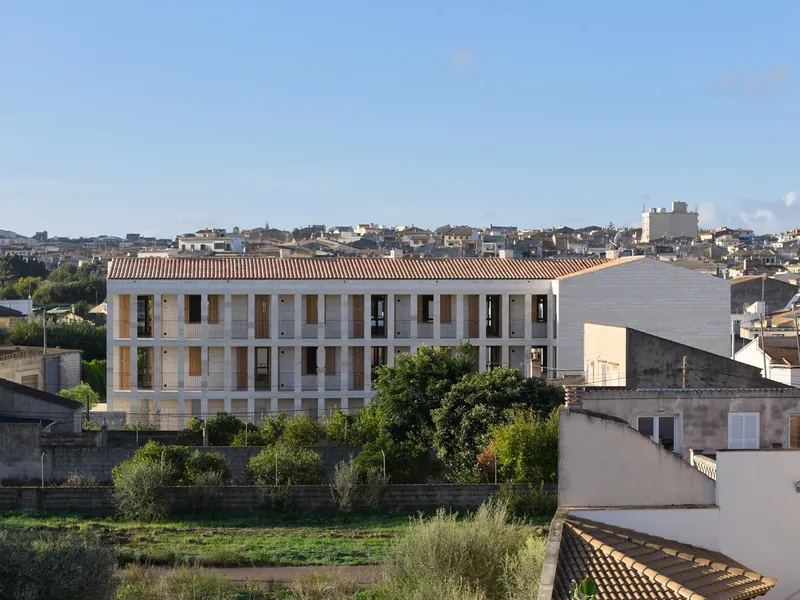
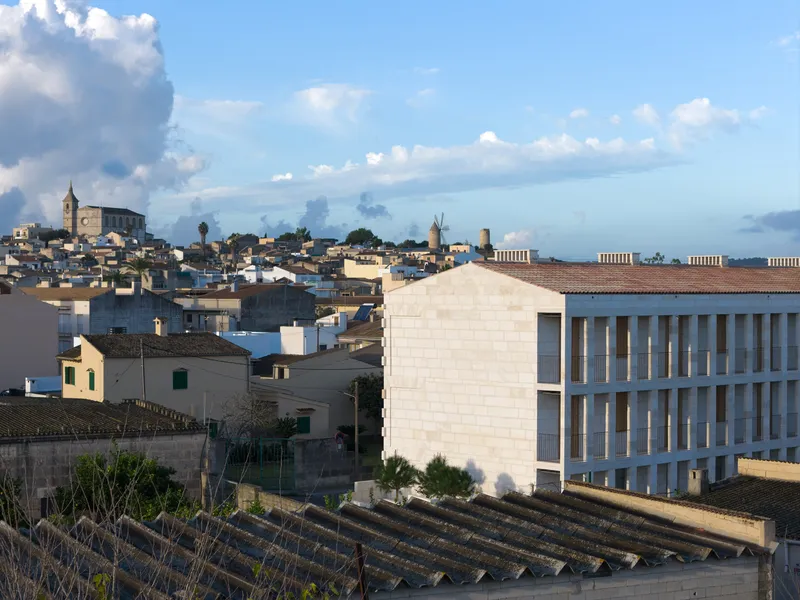
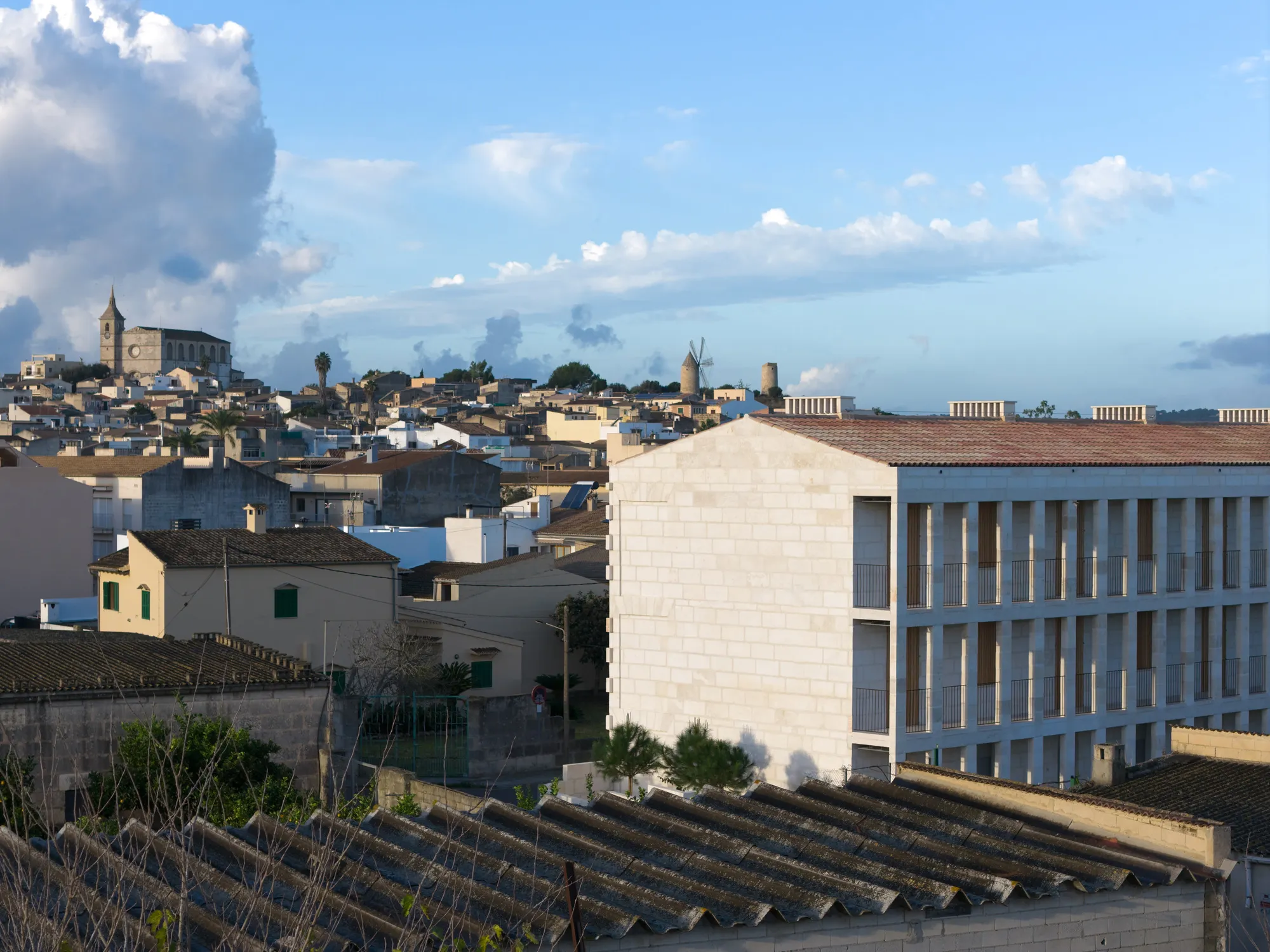
Seen from a distance, the building's pale stone and terracotta roof sit comfortably among the existing townscape of Santa Margalida. At dusk, the facade glows gently against the sky, its vertical window openings catching the last light. The massing is restrained, three stories that align with neighboring rooflines rather than asserting themselves above them. It is a building that earns its place through material kinship rather than formal spectacle.
Plans and Drawings
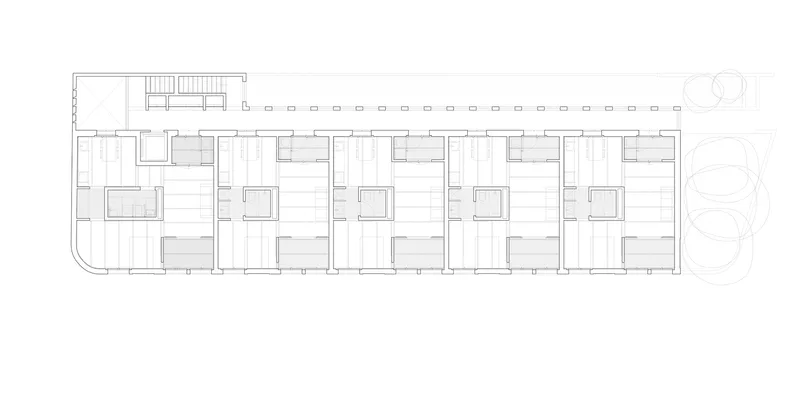
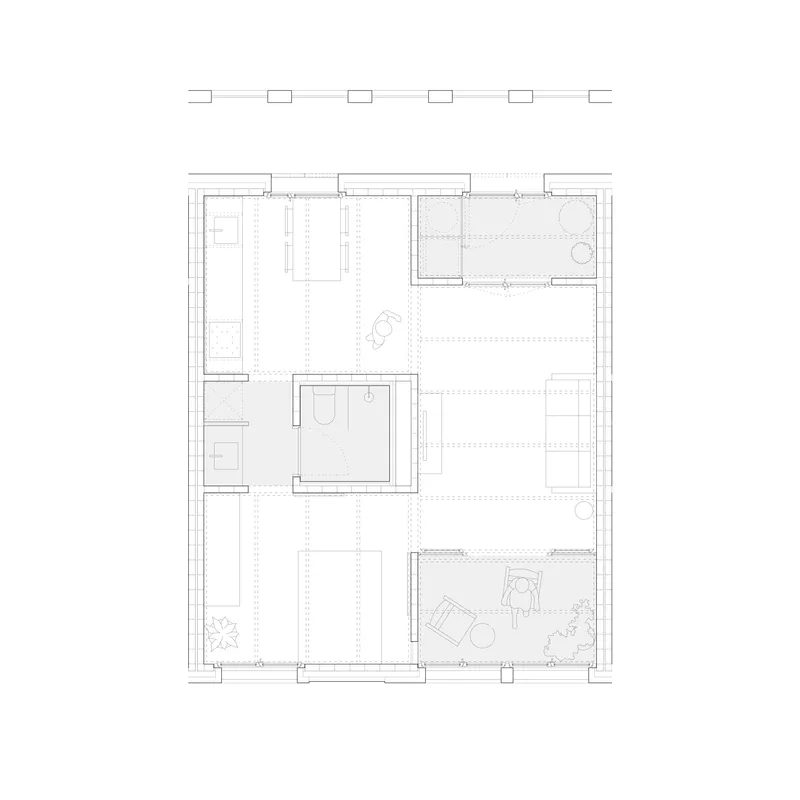
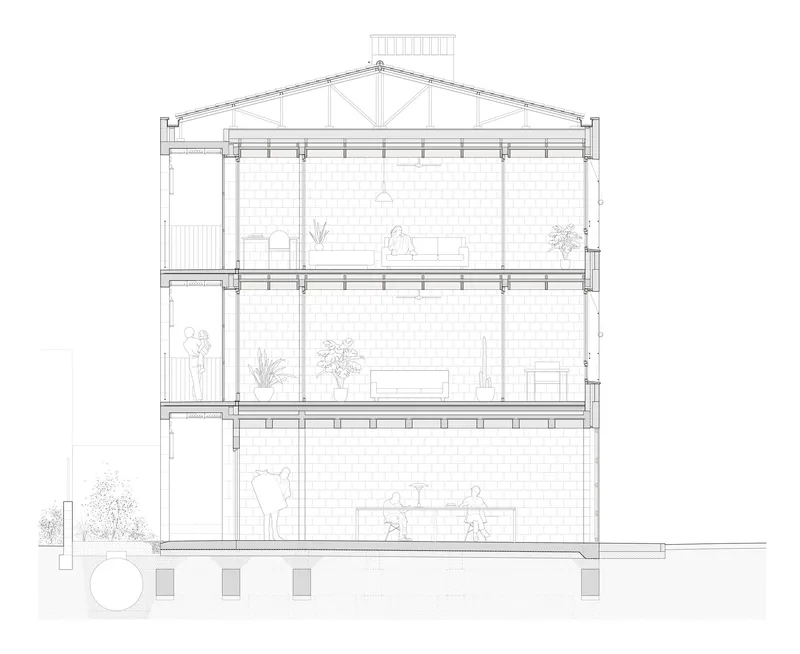
The floor plans confirm the shallow building depth that makes through-unit ventilation possible. Five units per floor share a corridor and stair core, with each apartment stretching from one facade to the other. The unit plans show compact but well-proportioned living spaces: a combined living and sleeping area, a bathroom, and a small outdoor terrace with plantings. The section drawing reveals the three-story structure with its exposed timber trusses, making legible the relationship between the prefabricated horizontal structure and the masonry bearing walls.
The exploded axonometric is particularly instructive, illustrating how the layered timber flooring and structural beam assembly come together. Each component is designed for rapid on-site assembly and minimal waste, a prefabrication logic applied not to steel or concrete but to the island's own materials. It is the kind of drawing that rewards close reading.
Why This Project Matters
The Balearic Islands have long understood that their landscape has no rear, that insularity demands resourcefulness. Historical building traditions on Mallorca developed sustainable techniques from limited materials precisely because there was no alternative. This project, by four studios working together, updates that tradition without romanticizing it. Marés sandstone and timber are not nostalgic choices here; they are rational ones, backed by structural optimization and fire engineering that push the materials beyond their historical limits. The result is a building that is contemporary in its intelligence and Mallorcan in its bones.
What makes the project matter beyond Mallorca is its demonstration that social housing can be materially specific, climatically responsive, and architecturally generous without exotic budgets. The workshops on the ground floor, the adaptable apartment layouts, the passive ventilation strategy, and the commitment to local supply chains all point toward a model that could be replicated in principle if not in material. Every island, every region, has its own version of Marés sandstone. The question is whether architects and institutions are willing to look for it.
Ten Social Housing Units in Santa Margalida, Mallorca by Javier Gavín, Siddartha Rodrigo, Juan Moreno, and DATAAE. Santa Margalida, Spain. 1,112 m². Completed 2025. Photography by Clara Torres González.
About the Studio
Javier Gavín
Official website of Javier Gavín, one of the studios behind this project.
javiergavin.comShare Your Own Work on uni.xyz
If projects like this are the kind of work you want to make, uni.xyz is a place to publish your own, find collaborators, and enter design competitions.




Popular Articles
Popular articles from the community


Riyadh For All: Intergenerational Urban Design for Active Aging in Rabat
Riyadh For All reimagines urban design in Rabat with intergenerational co-living, adaptive courtyards, and Moroccan cultural exchange today.

Co-Life: Senior Housing Design That Reconnects Older Adults With the City
Co-Life reimagines senior housing design through healing gardens, shared streets, workshops, and a sustainable community across generations.

Play: Fragments of Their World
Familiar architecture becomes modular playground design, creating safe spaces where displaced children can learn, connect, imagine and play.

The Ocean Hive: Sustainable Architecture for a Self-Sufficient Civilization at Sea
The Ocean Hive imagines sustainable architecture at sea, where modular habitats, algae, wave power and ocean waste sustain a growing colony.
Similar Reads
You might also enjoy these articles

Bao Huynh Watercolor Atelier: A Serene Art Retreat in Hội An
Bao Huynh Watercolor Atelier in Hội An blends multifunctional art spaces, sustainable design, local materials, and family-friendly living in a serene environment.

Atelier Macri Concept Store Interior Design by CASE-REAL
Atelier Macri store features a "ko" counter, walnut wood details, cork displays, blending retail, gallery, and seamless customer experiences.

Manuel Vargas Izquierdo Stadium and High-Performance Sports Center: Architectural Excellence in Jalpa de Méndez
The Manuel Vargas Izquierdo Stadium blends sustainable design, inclusive sports facilities, and cultural-inspired architecture, revitalizing Jalpa de Méndez’s public spaces.

KAKR Buluh Awar Hall: Revitalizing Community and Ecology Through Bamboo Architecture
Community built bamboo hall revitalizes Buluh Awar village, empowering youth, restoring ecology, celebrating vernacular craftsmanship through sustainable architecture and culture.


Comments (0)
Please login or sign up to add comments
No comments yet. Be the first to comment!