
Fragmento House by Diez + Muller Arquitectos: A Masterclass in Vertical Design and Landscape Integration
Fragmento House by Diez + Muller Arquitectos blends innovative vertical design, landscape integration, and sustainable materials in Ecuador’s Cumbayá Valley.


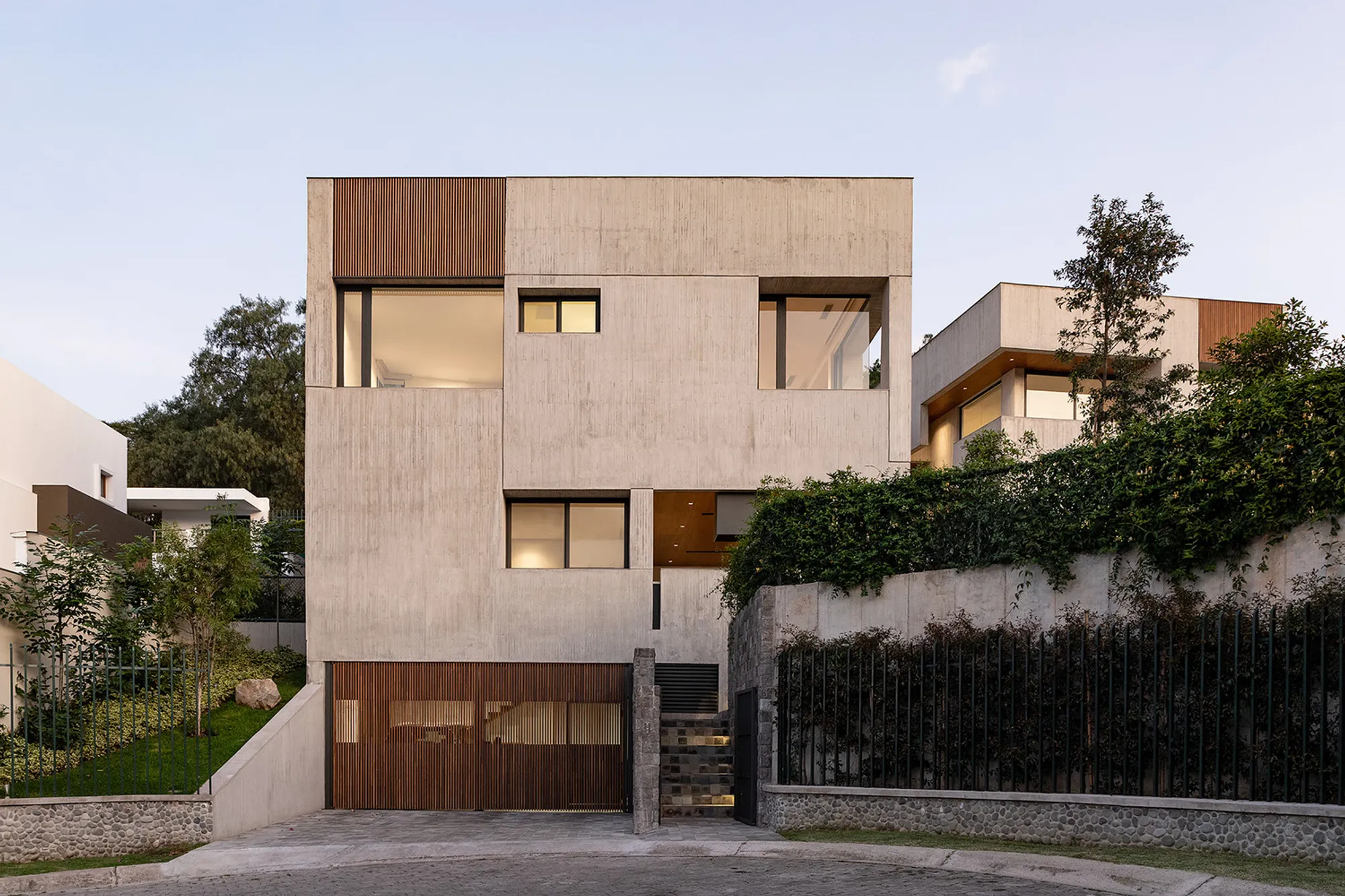
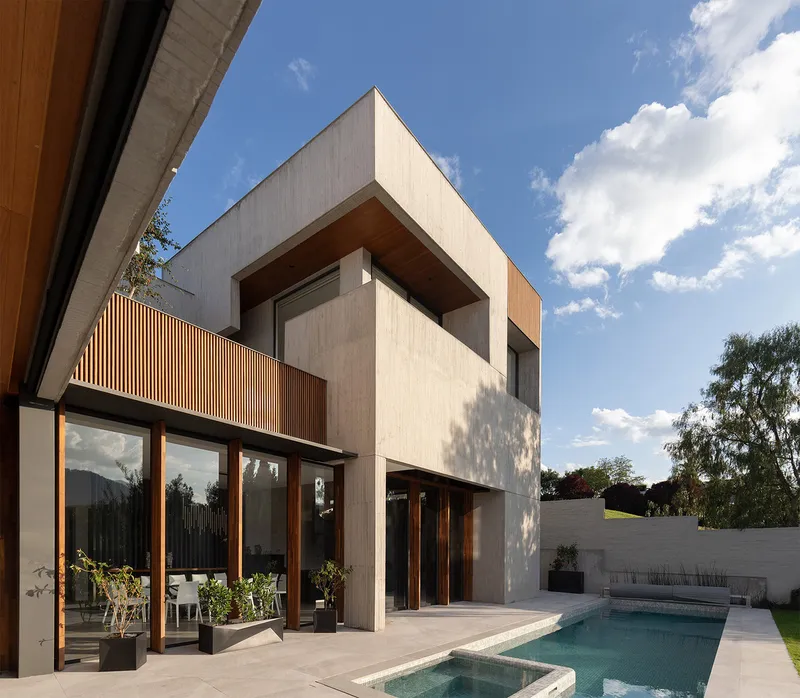
The Fragmento House, designed by Diez + Muller Arquitectos, stands as an exemplary fusion of architecture and topography in the Cumbayá Valley of Quito, Ecuador. Situated on a plot with significant elevation differences and dual street fronts, this innovative residence responds thoughtfully to both its challenging terrain and its surrounding environment. The design beautifully integrates the house with the land, providing a seamless connection between the built form and its natural context.

Innovative Response to Elevation and Landscape
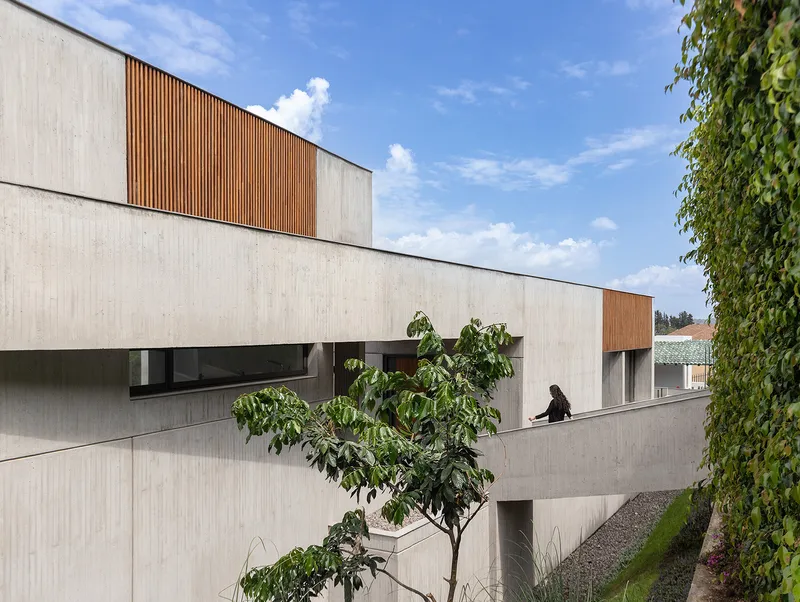
One of the most striking features of the Fragmento House is its ingenious approach to the land's topography. The site presents a 9-meter elevation difference between the main road and the return spoon, requiring a unique response. The design starts as an exercise in section, allowing the house to evolve organically from its complex landscape. The building forms a dialogue with its surroundings by carefully considering solar orientation, thermal control, and materiality. With the land facing west and the requirement for effective solar management, the architects employed deep, controlled openings and cantilevered spaces that provide shade, ensuring energy efficiency and comfort throughout the day.

Structural and Spatial Composition
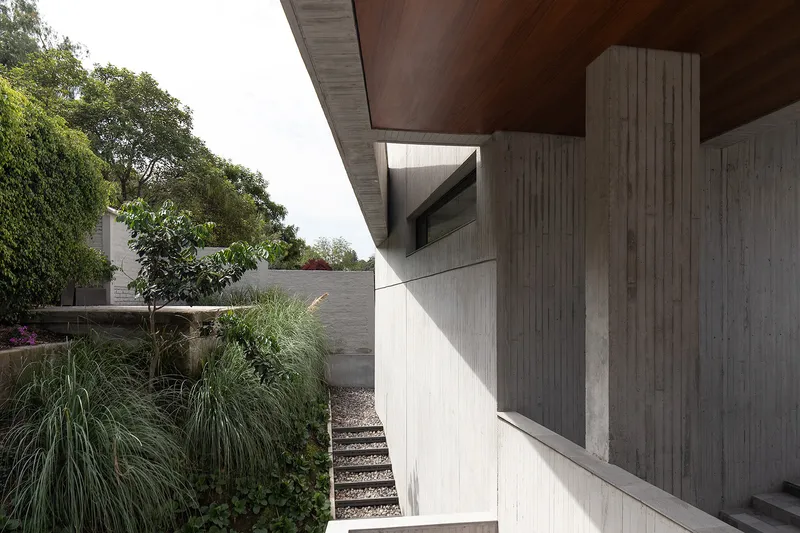
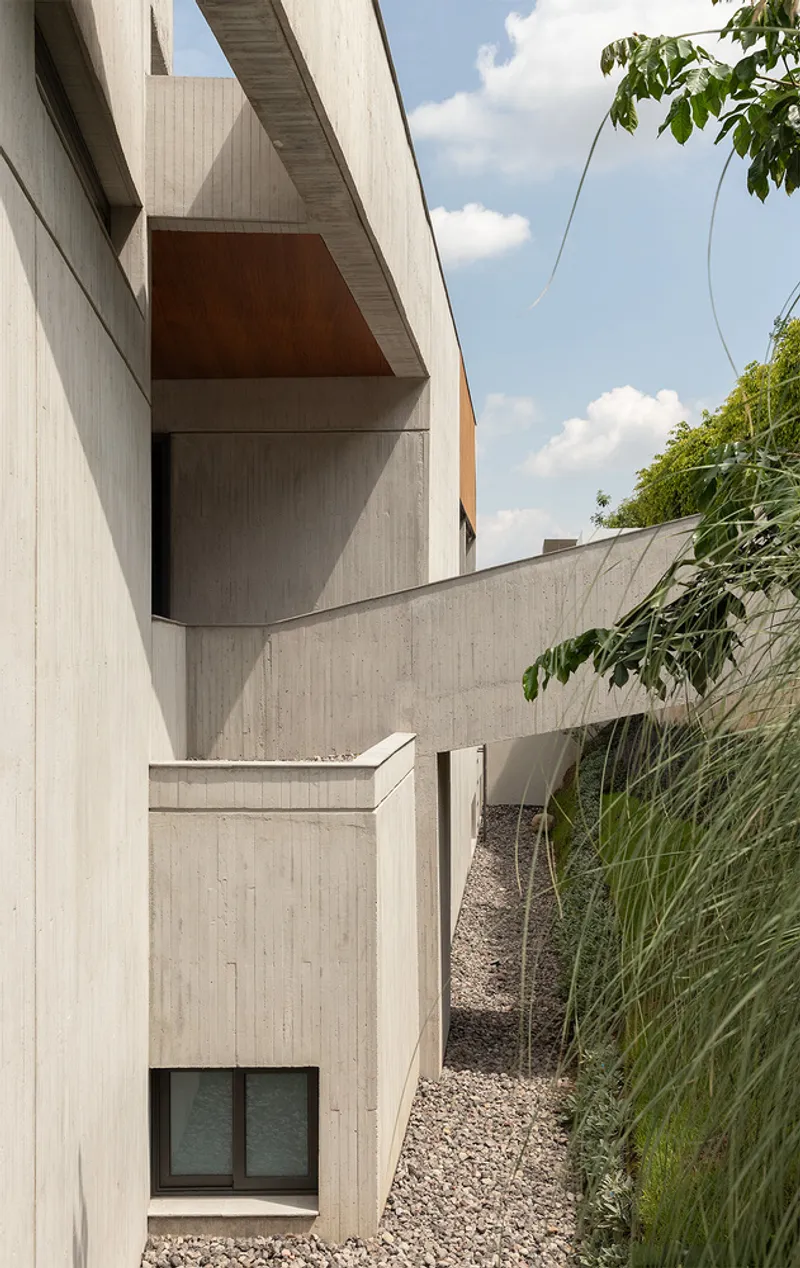
The house is arranged on two primary levels, designed to navigate the steep topography through a series of ramps and stairs that connect both street fronts. The upper floor serves as the main entry point, with the entrance accessible via a bridge that leads to an elevated square. This unique design not only offers a panoramic view of the valley but also separates the house's two main volumes. One volume houses the bedrooms, while the other contains a guest suite, offering both privacy and functionality.
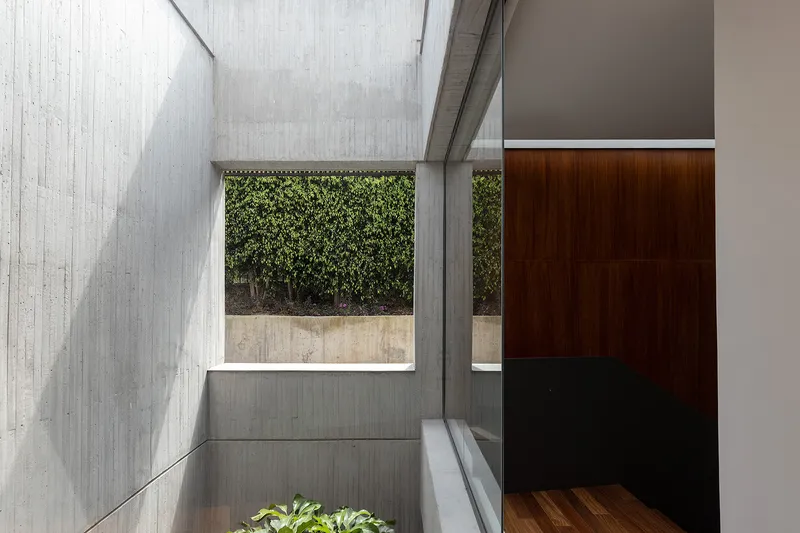
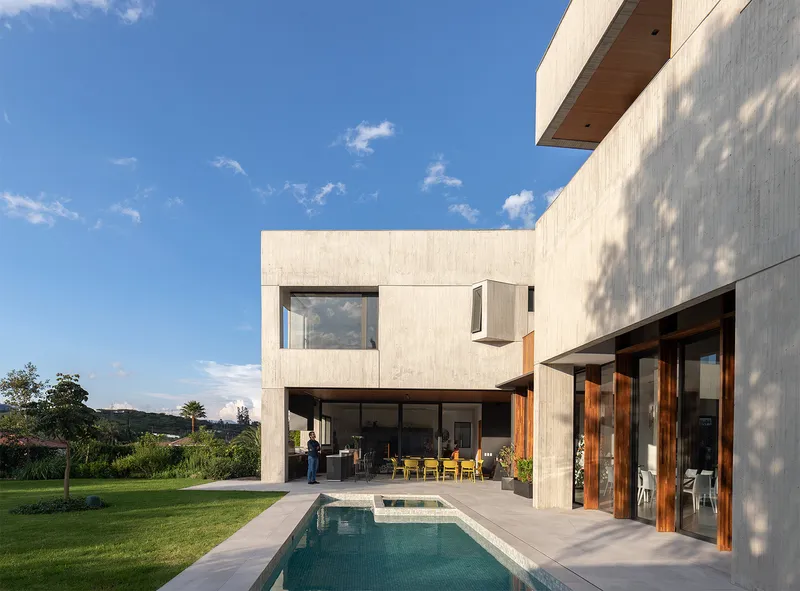
Vertical and Fluid Interior Spaces Upon entering, visitors are greeted by a staircase illuminated by a central patio, connecting the upper and lower levels. The lower floor, dedicated to social spaces, features a half-height living room beneath the guest suite, further enhancing the spatial separation. A porch and a main garden, nestled within the landscape, provide a tranquil setting for outdoor living. The materiality and design of these spaces create a seamless flow, offering a cohesive connection to nature while providing comfort and privacy.
Sustainable Design Features
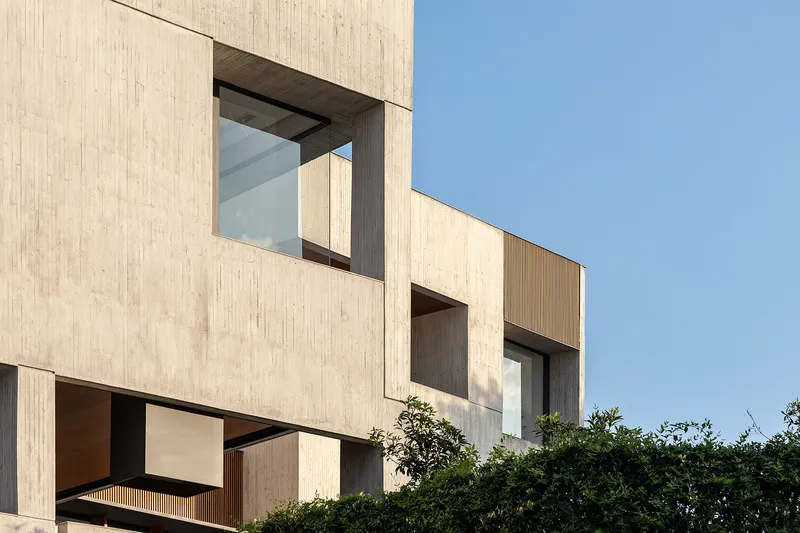
In line with the architect’s commitment to sustainability, the Fragmento House employs passive design strategies that prioritize both comfort and energy efficiency. The cantilevered roof sections provide crucial solar shading, particularly over the north-south-oriented porch. Landscaping plays an essential role in cooling the environment, with the house's outdoor spaces designed to reinforce the natural topography. While the main garden offers a recreational space, other areas maintain their natural slope, emphasizing the idea of the house as an organic extension of the land.
Materiality and Technical Considerations
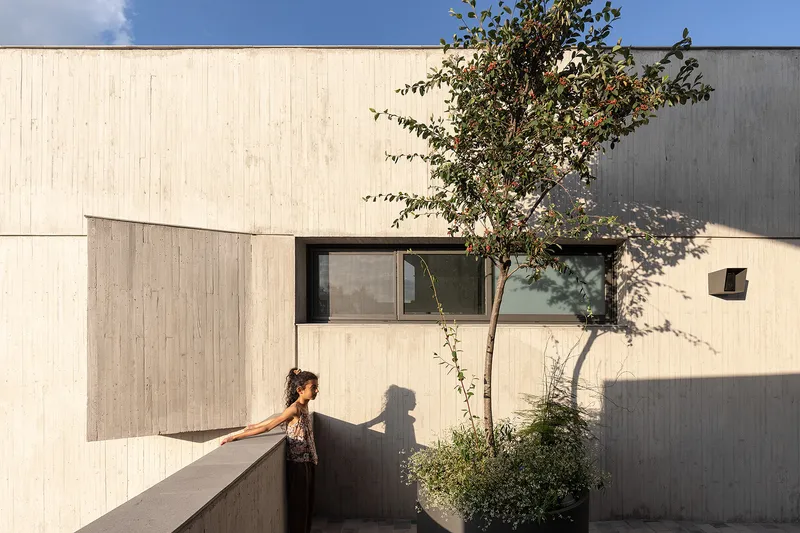
The choice of exposed concrete as the primary material for the house serves both aesthetic and functional purposes. The two monolithic volumes, designed to resemble abstract rocks in the landscape, are defined by the tactile quality of the concrete, which enhances the sensory experience of the space. Beyond its visual appeal, the concrete also acts as an insulator, contributing to thermal comfort and reducing the need for artificial cooling. This careful selection of materials speaks to the project’s commitment to integrating architecture with the natural environment while maintaining high performance.
Fragmento House is an outstanding example of how architecture can adapt to the challenges of a unique site while embracing its surroundings. The thoughtful integration of the building with the land, combined with innovative design solutions and sustainable principles, sets this project apart as a landmark achievement in contemporary residential architecture.



Popular Articles
Popular articles from the community


Riyadh For All: Intergenerational Urban Design for Active Aging in Rabat
Riyadh For All reimagines urban design in Rabat with intergenerational co-living, adaptive courtyards, and Moroccan cultural exchange today.

The Ocean Hive: Sustainable Architecture for a Self-Sufficient Civilization at Sea
The Ocean Hive imagines sustainable architecture at sea, where modular habitats, algae, wave power and ocean waste sustain a growing colony.

Co-Life: Senior Housing Design That Reconnects Older Adults With the City
Co-Life reimagines senior housing design through healing gardens, shared streets, workshops, and a sustainable community across generations.

The Musturak Paradise: Senior Living Architecture for a Connected Future in Temara, Morocco
The Musturak Paradise reimagines senior living architecture in Temara via private homes, social spaces, culture, community, and shared care.

Similar Reads
You might also enjoy these articles


Hodi-Mandai Geram
Project Function: Preservation and revitalization of the Intangible heritage and socio-spatial identity of the Hodi by Housing, Cultural Memory Center, Sacred Grove, landscape, local tourism economy


Olio Towers: A Mid-Rise for Performers That Fuses Housing, Rehearsal, and Stage
Located blocks from Houston's Theater District, this modular tower stacks living units around a central performance atrium.

Oasis: Modular Green Housing Carved into Dhaka's Urban Fabric
A shortlisted Plugin Housing entry reclaims unauthorized settlements in Dhaka with stepped concrete volumes, green roofs, and ventilation-driven design.

Black Hole: A Floating Megastructure for the Post-Physical Era
Emiliano Mazzarotto envisions a spherical, self-scaling arena where e-sports, digital hotels, and holographic stadiums replace traditional public space.
Explore Architecture Competitions
Discover active competitions in this discipline



Challenge to reimagine the Iron Throne


Photograph architecture without architects


Illustrate the lost glory of Angkor Wat - Render Challenge


Design challenge to reuse E-waste
Comments (0)
Please login or sign up to add comments
No comments yet. Be the first to comment!