

Frame and Window House by Shinji Nakano Architects: A Cliffside Residence Framing Light, Landscape, and Community
A cliffside Japanese home framing mountain views with layered spaces, semi-outdoor zones, and a long rectangular form that shares scenery with the community.


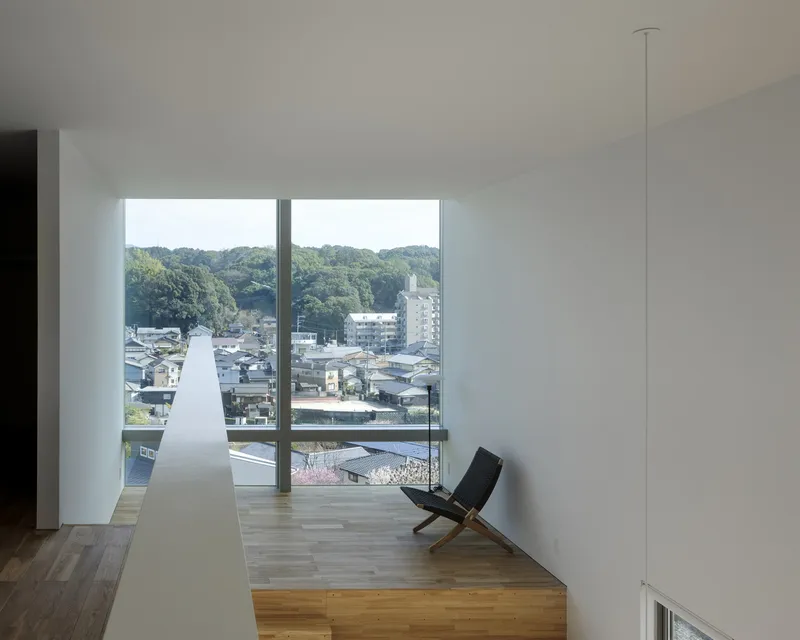
The Frame and Window House by Shinji Nakano Architects is a compact yet spatially rich residential project located in a quiet neighborhood in Fukuoka, Japan. Designed for a couple and their child, the 84 m² home sits on a mid-slope site carved into the mountain, where the terrain drops sharply towards the east. This unique topography provides sweeping mountain views and a panoramic outlook over the surrounding town, an environmental asset that shaped every design decision.
The project is situated within a tight-knit community, reinforcing the clients’ desire to create a home that embraces both the natural setting and the social fabric of the neighborhood. Rather than designing a private retreat that turns its back on its surroundings, the architects crafted a residence that shares views, light, and spatial openness with the community while offering privacy and comfort for the family.
Site Strategy: Sharing the View with the Neighborhood
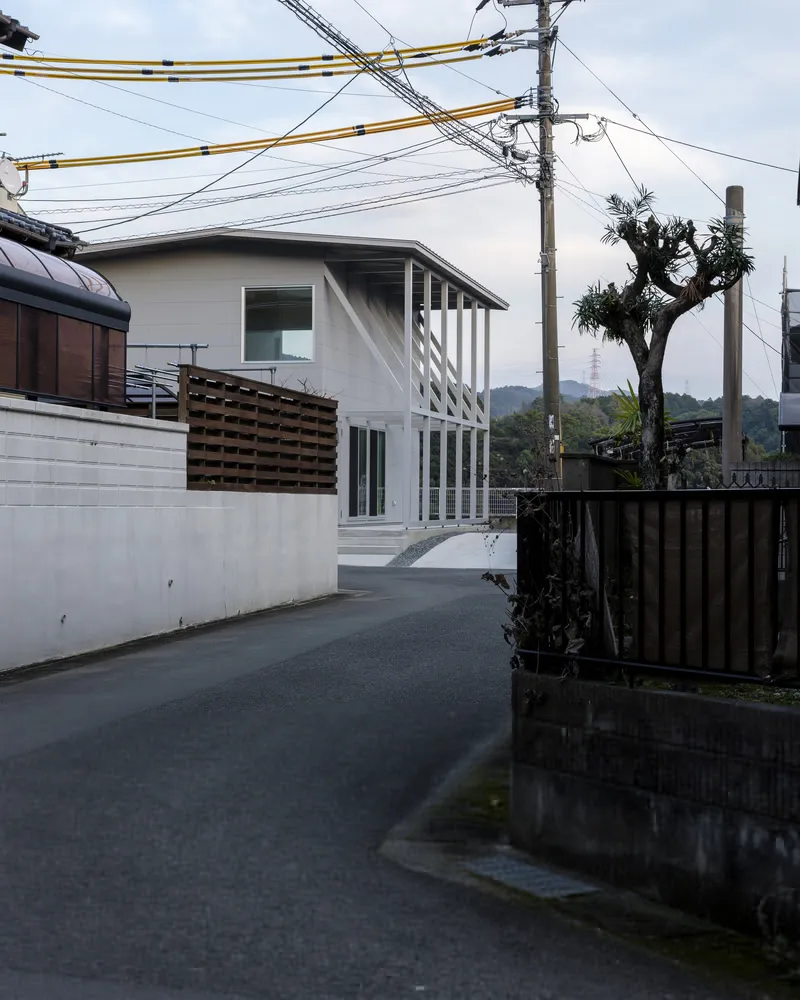
One of the defining concepts of the house is the decision not to monopolize the view. Instead of occupying the most scenic portion of the site, the architects placed the long, rectangular volume along the northern boundary, leaving the southern edge open. This gesture preserves the sightline from the front road, allowing neighbors to experience the same expansive landscape.
By extending the building linearly and elevating its main opening toward the east, the design ensures that the dramatic mountain and townscape remain communal assets rather than private property.
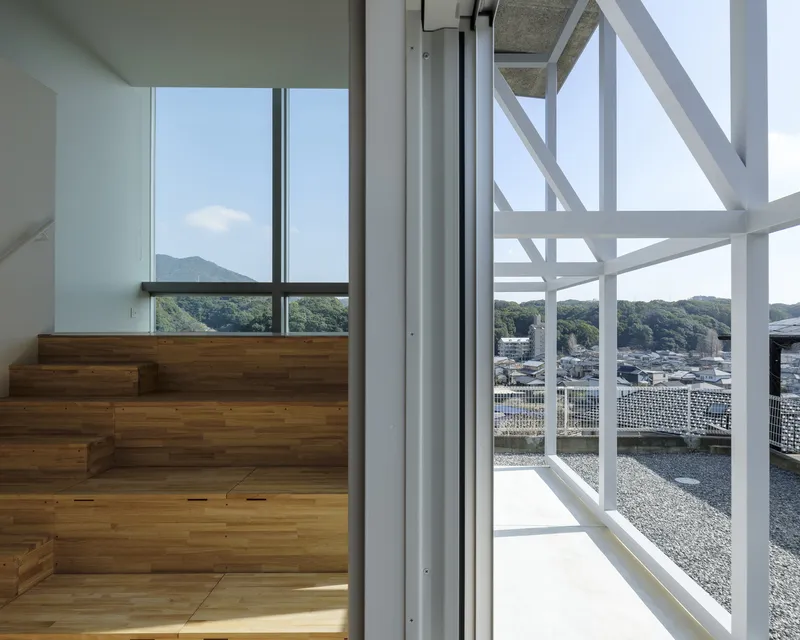
A Central Light-Filled Space Framed by Structure
At the core of the home is a long, elongated living area illuminated by a generous opening on the eastern façade. This large window not only draws in morning light but also frames the shifting mountain horizon, creating a daily visual ritual for the family.
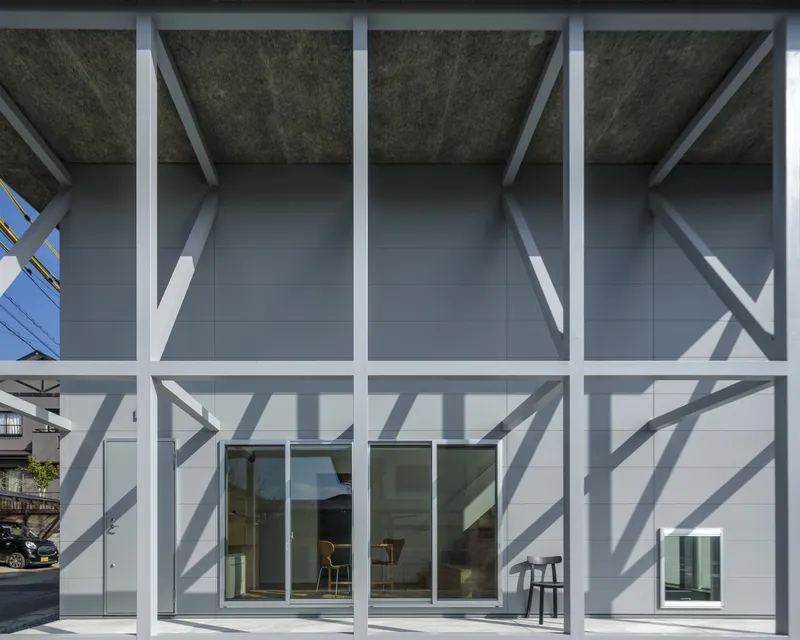
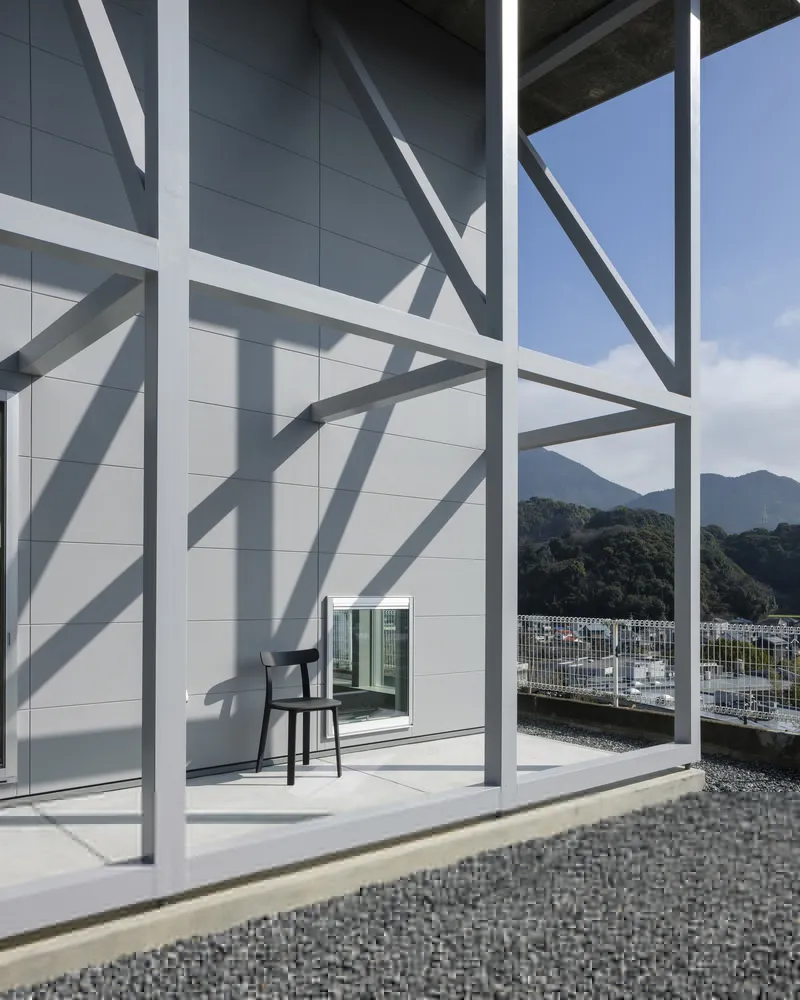
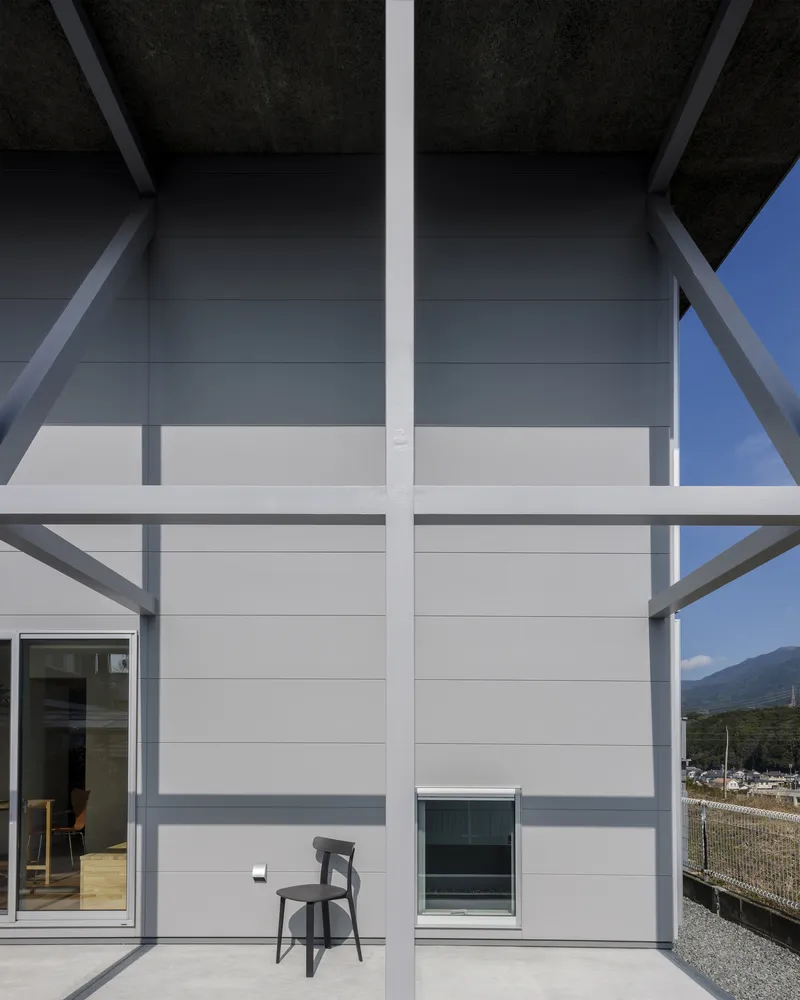
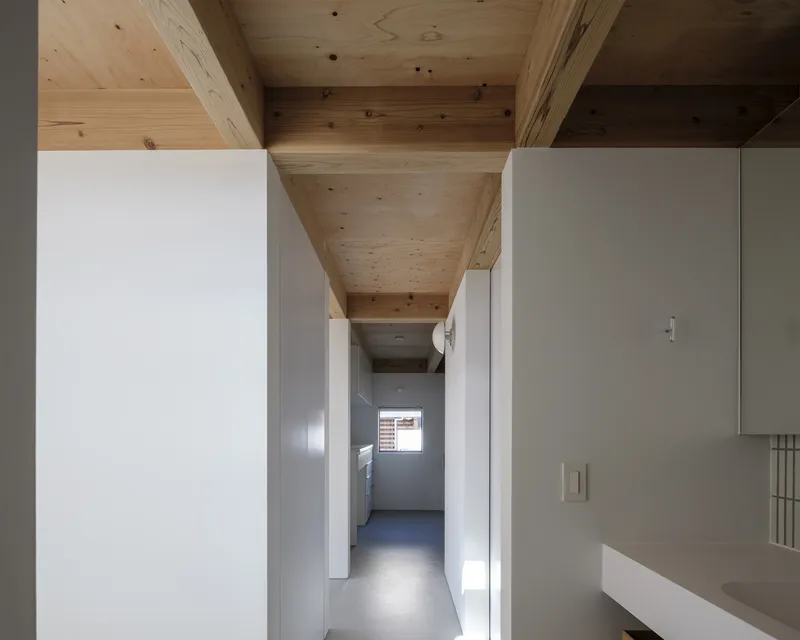
Compact rooms along the northern side contrast with a structural frame that extends outward to the south. This frame forms a semi-outdoor space, a multifunctional buffer zone that acts as:
- An outdoor extension for daily activities
- A sun-shading structure moderating seasonal light
- A soft boundary that encourages neighborly interaction
The interplay between interior and exterior enhances the home’s sense of openness while maintaining privacy where needed.
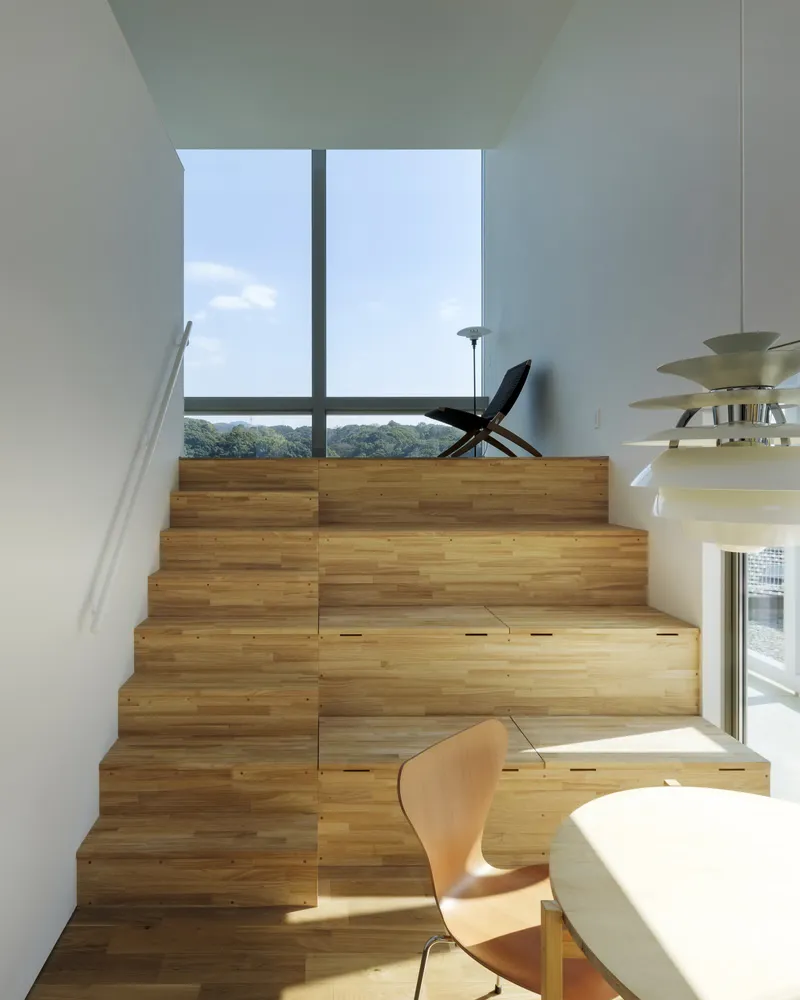
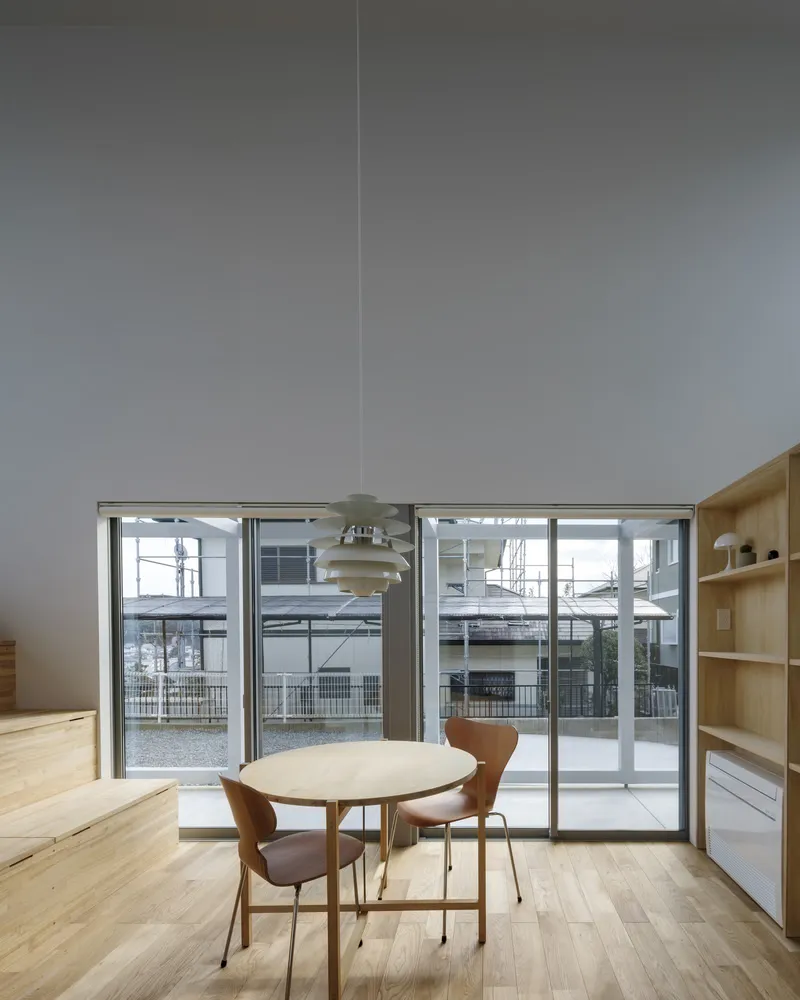
Smart Ground Integration for Structural Efficiency
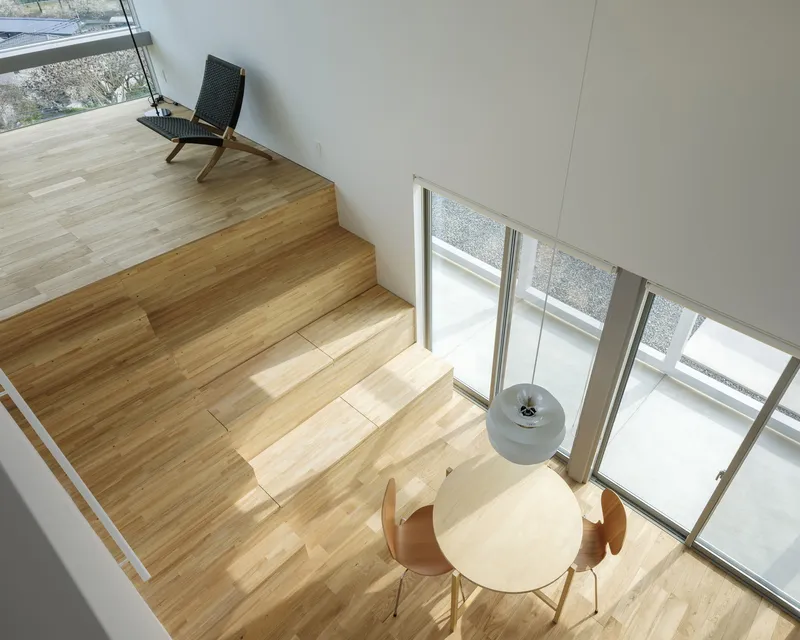
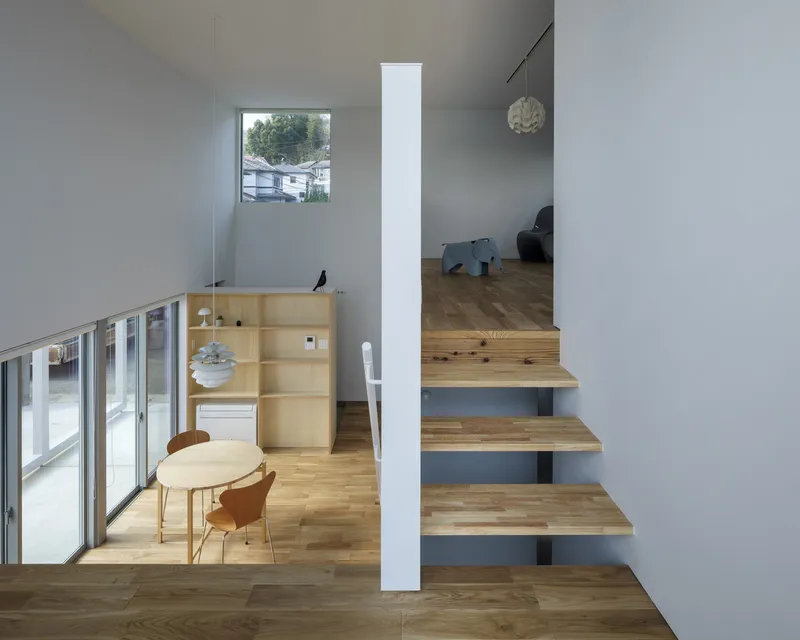
A soil survey revealed that the sloped terrain required pile foundations. To reduce cost, the architects strategically embedded the bedroom area into the cliffside, allowing shorter piles and making the structure more economical. As a result, the living room above becomes a 1.5-story space, connected fluidly to the first-floor dining area through a wide staircase.
This sectional variation creates visual continuity and air movement across floors, enhancing the feeling of spaciousness within a compact footprint.
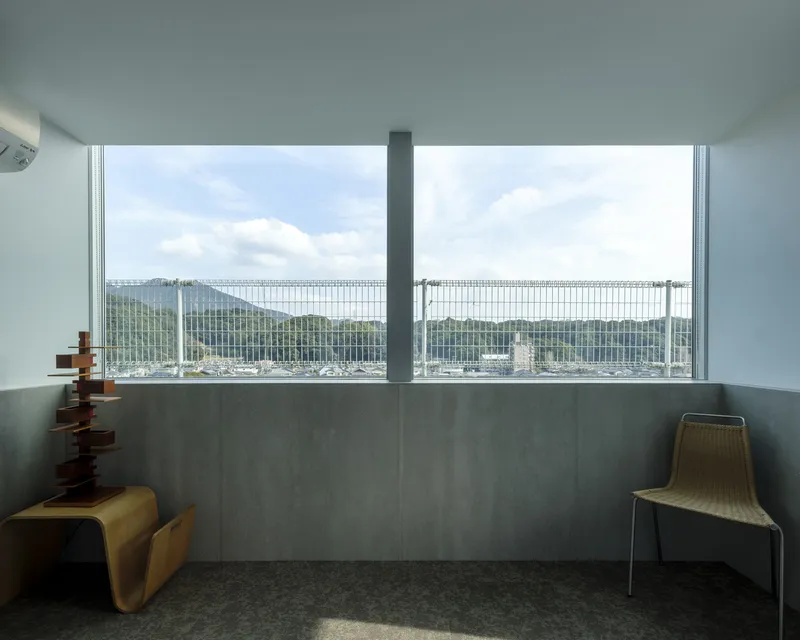
Sectional Play: Echoing the Landscape Inside
One of the project’s most striking architectural achievements is its careful manipulation of section. By stepping, embedding, lifting, and layering spaces, the house replicates the undulating qualities of the mountain terrain. Instead of a single flat connection to the view, the interior experiences shift as one moves through the home:
- Intimate framed views from lower, sheltered spaces
- Expansive, panoramic views from elevated vantage points
- Layered light that changes as the sun moves across the slope
This constant variation mimics the natural rhythms of the site and makes the home feel deeply embedded in the landscape.


Popular Articles
Popular articles from the community


Manzana Morphosis: Stretching Barcelona's Grid into a Living Landscape for 2050
A radical reworking of the Eixample manzana turns density into a tool for generous public space, vertical ecology, and environmental performance.

The Amber Palace Opera: A Geological Fiction Surfaces on Tallinn's Baltic Waterfront
Pierre Brillard reimagines a Baltic legend as a public landscape, opera house, and waterfront promenade rooted in Tallinn's coastal identity.


FCC Arquitectura Expands a Portuguese Granite House with a Board-Marked Concrete Wing
In Portugal, JV House pairs a cleaned-up whitewashed and granite dwelling with a timber-shuttered concrete extension, courtyards and a garden pool.

Aquadapt: An Underwater Habitat That Rewrites Its Rooms by the Hour
Curved modules ring the seabed while one shell shifts from breakfast room to cinema, farm and football pitch as residents' needs change.

Similar Reads
You might also enjoy these articles


Hodi-Mandai Geram
Project Function: Preservation and revitalization of the Intangible heritage and socio-spatial identity of the Hodi by Housing, Cultural Memory Center, Sacred Grove, landscape, local tourism economy


Olio Towers: A Mid-Rise for Performers That Fuses Housing, Rehearsal, and Stage
Located blocks from Houston's Theater District, this modular tower stacks living units around a central performance atrium.

Oasis: Modular Green Housing Carved into Dhaka's Urban Fabric
A shortlisted Plugin Housing entry reclaims unauthorized settlements in Dhaka with stepped concrete volumes, green roofs, and ventilation-driven design.

Black Hole: A Floating Megastructure for the Post-Physical Era
Emiliano Mazzarotto envisions a spherical, self-scaling arena where e-sports, digital hotels, and holographic stadiums replace traditional public space.

Explore Framed Structure Competitions
Discover active competitions in this discipline

Challenge to reimagine the Iron Throne

Photograph architecture without architects

Illustrate the lost glory of Angkor Wat - Render Challenge

Design challenge to reuse E-waste
Comments (0)
Please login or sign up to add comments
No comments yet. Be the first to comment!