

Francilian House by HEMAA Architectes: A Harmonious Blend of Old and New
Francilian House by HEMAA Architectes blends historic preservation with modern extension, using sustainable materials, natural light, and seamless indoor-outdoor connections.


Adaptive Renovation in the Paris Suburbs
Located in the suburbs of Paris, the Francilian House by HEMAA Architectes is a masterful example of architectural adaptation, where contemporary design meets historical preservation. This residential extension project seamlessly integrates a modern addition with an existing structure, respecting the site’s natural topography while enhancing functionality and aesthetic appeal.
Preserving Architectural Heritage
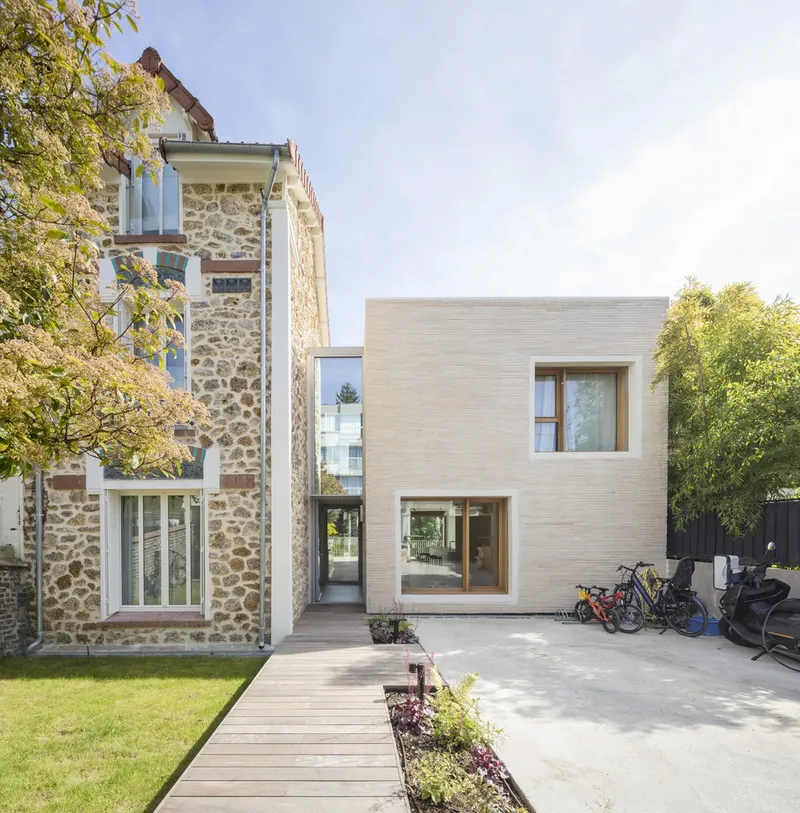
A thorough structural and historical analysis revealed that the original home had undergone numerous alterations over time, compromising its integrity. To address this, the architects strategically divided the building along a load-bearing brick wall, preserving only the well-maintained, historically significant sections.
Sustainable Reuse of Materials
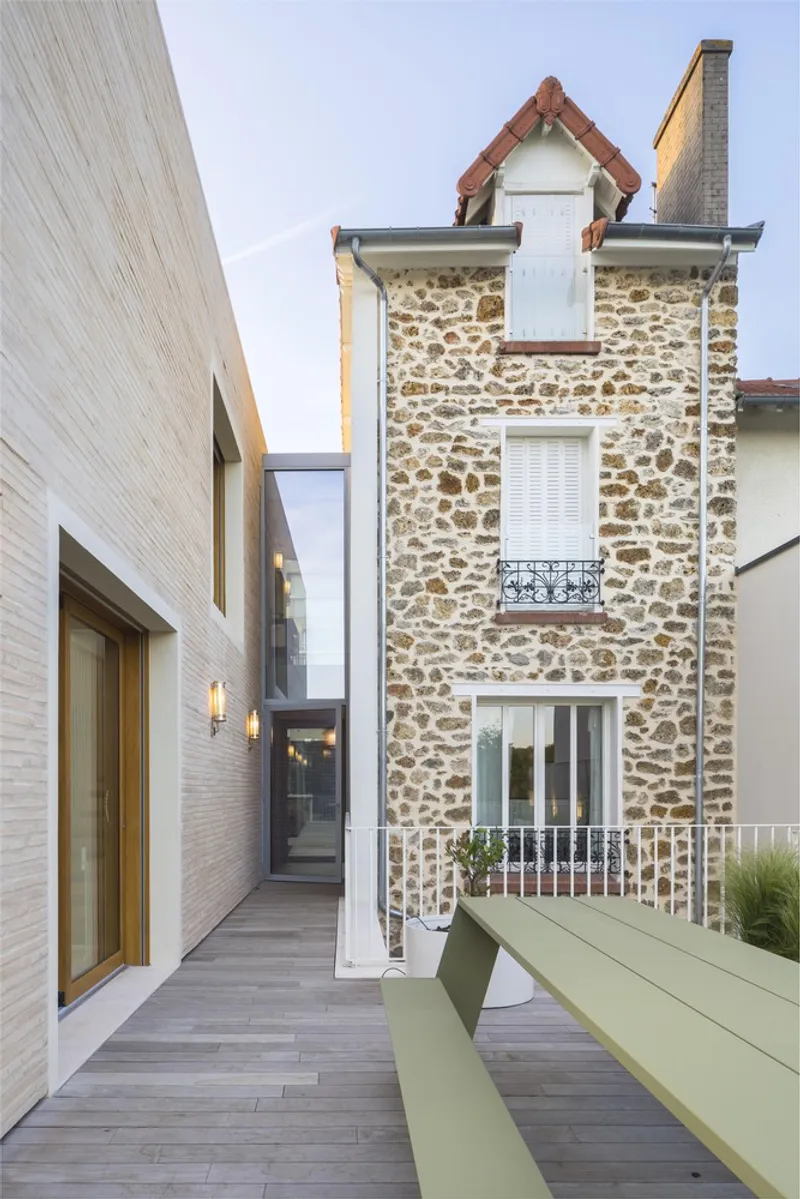
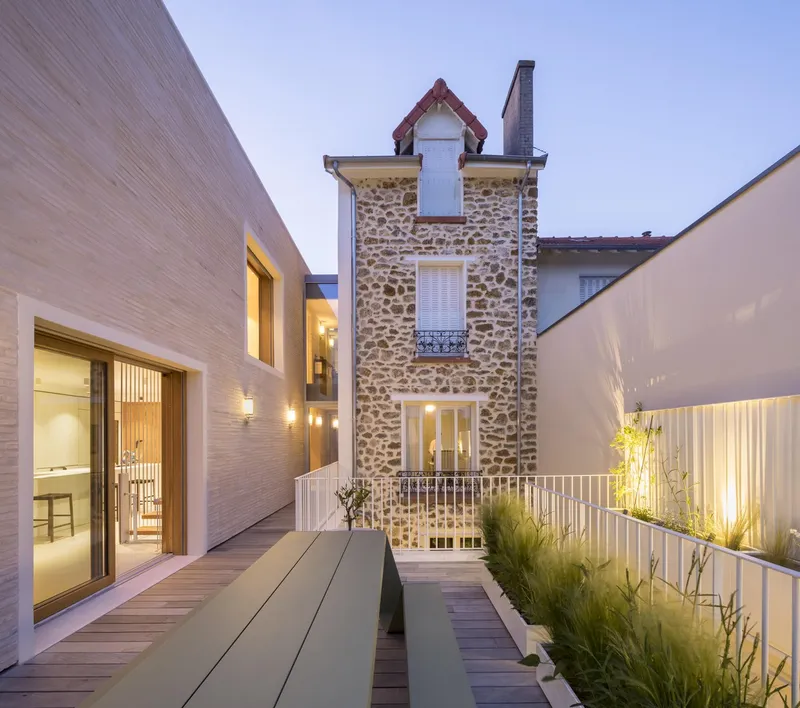
In a sustainable design approach, stones from the demolished sections were salvaged and repurposed to construct a new façade, ensuring continuity with the existing architecture. The extension, subtly integrated into the sloping terrain, is semi-buried on the street side, while on the garden side, it aligns harmoniously with neighboring buildings.
Seamless Transitions Between Architectural Eras
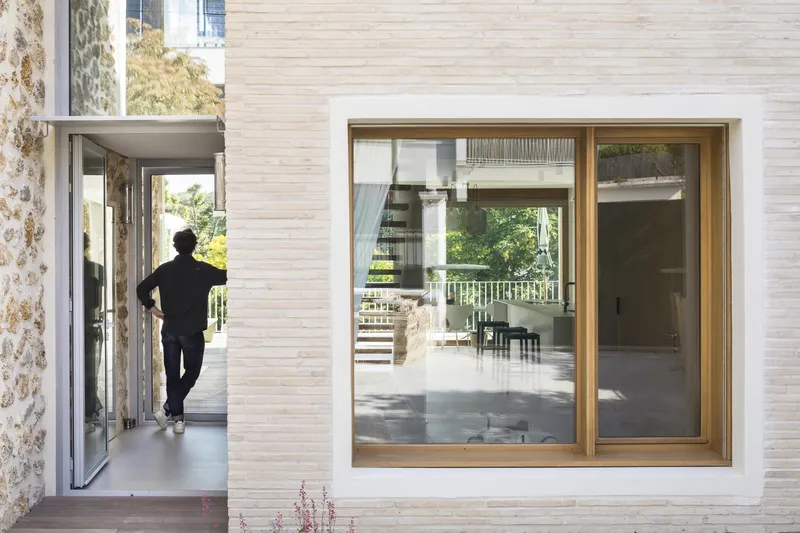
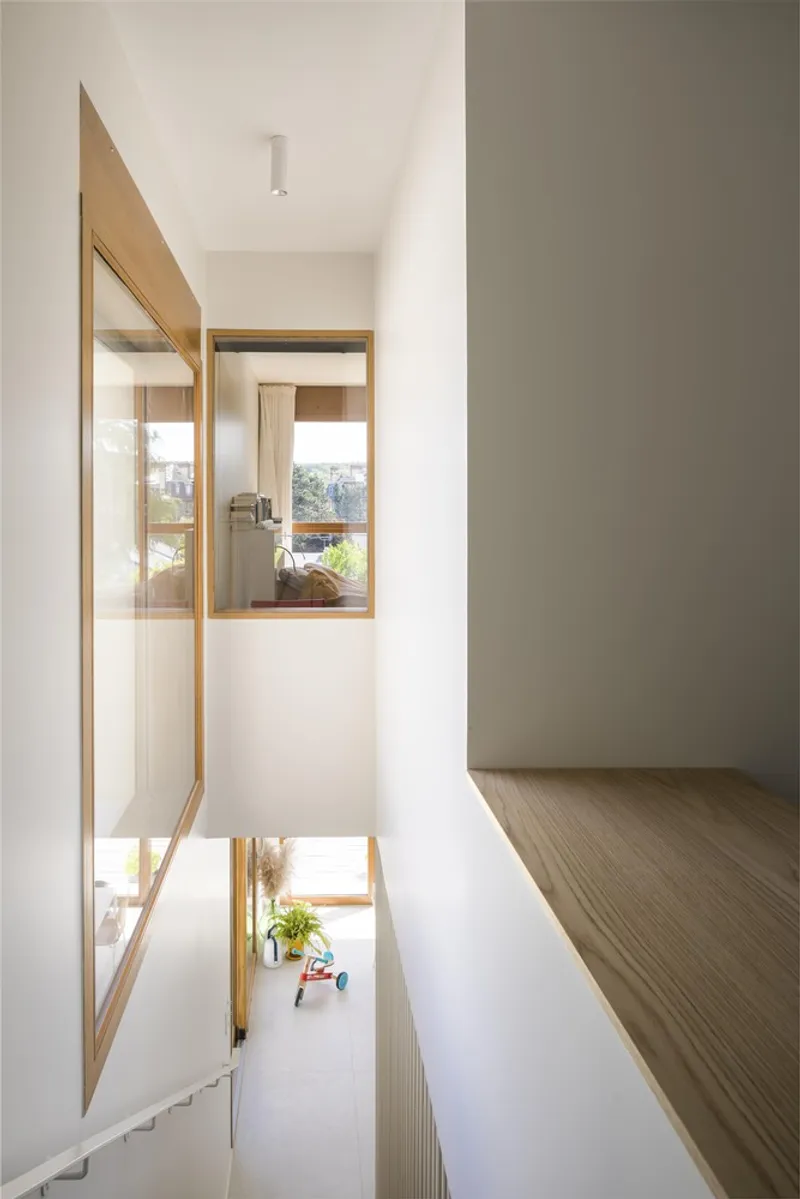
A glazed entrance serves as a transitional space, visually and functionally linking the old and new structures. Its minimalist design allows both architectural styles to retain their distinct identities while fostering cohesion.
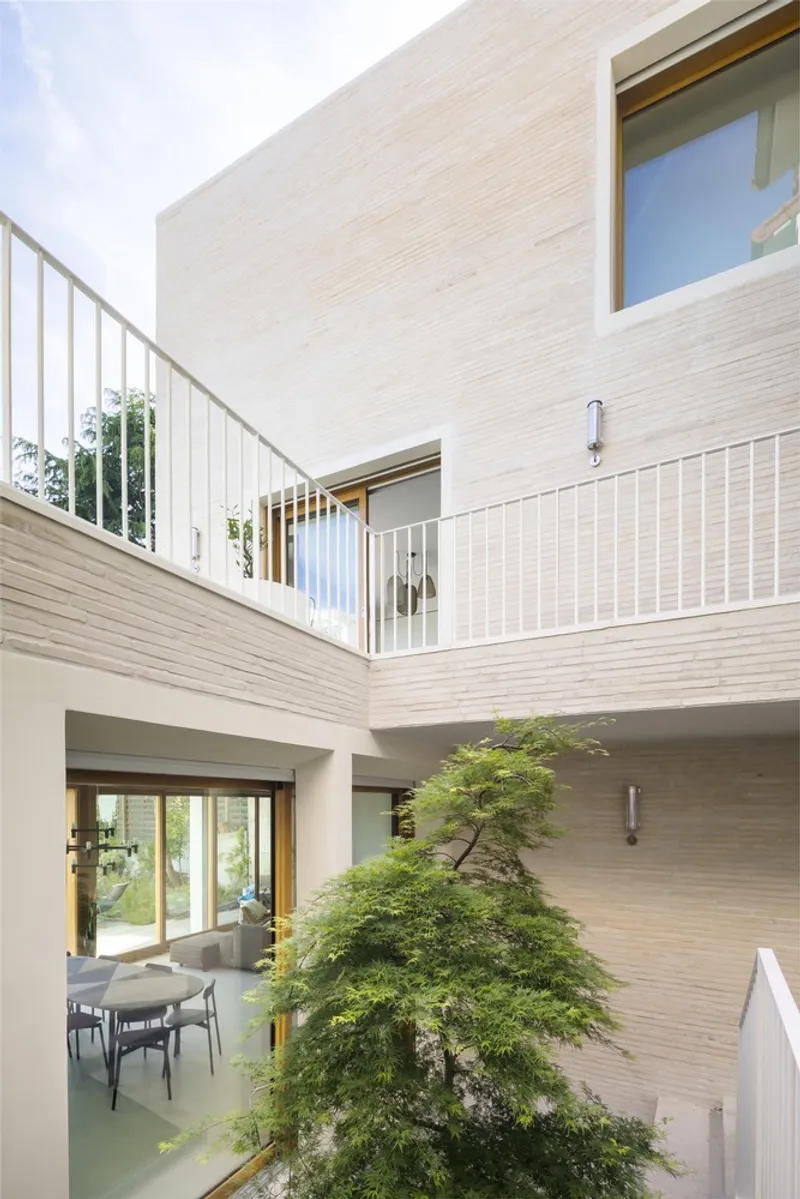
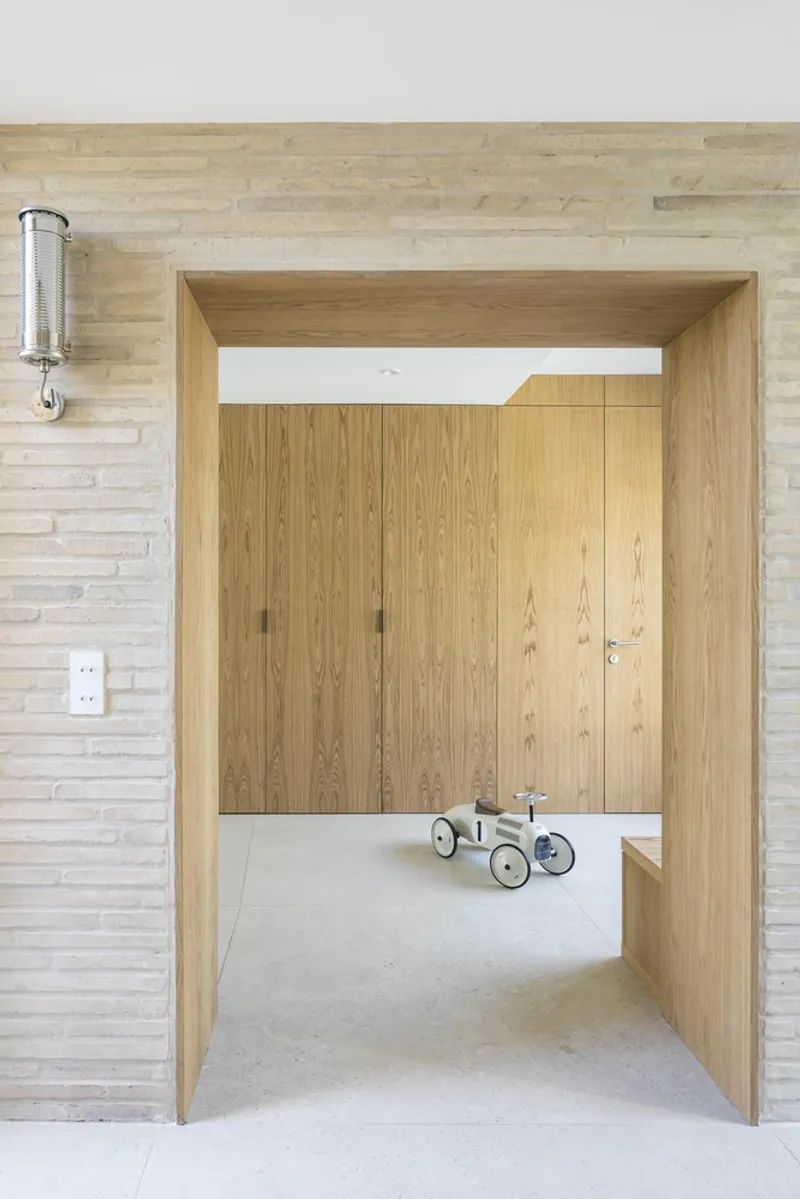
The garden-facing extension wraps around the original millstone structure and a newly designed patio, reinforcing the dialogue between past and present. The façade features light-colored long bricks, referencing the traditional millstone and solid brick constructions characteristic of the area. White architectural concrete frames the openings, complemented by natural oak window frames, enhancing the tactile and visual warmth of the space.
Maximizing Natural Light & Connectivity
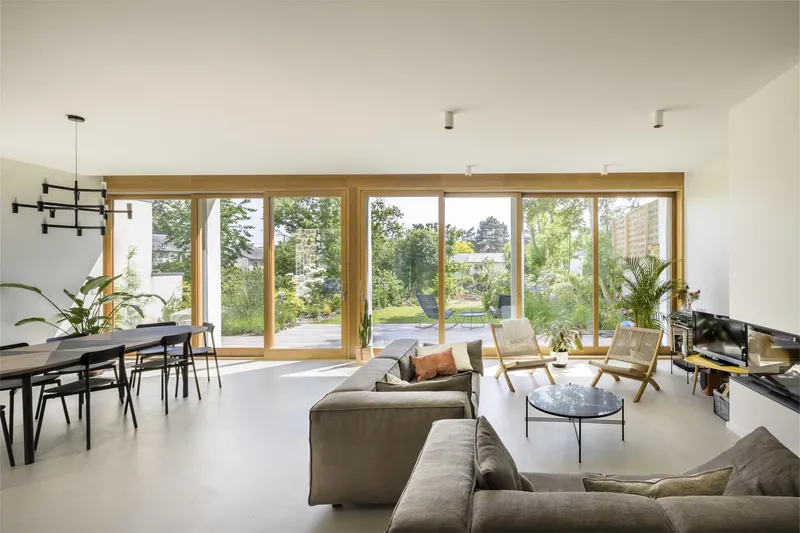
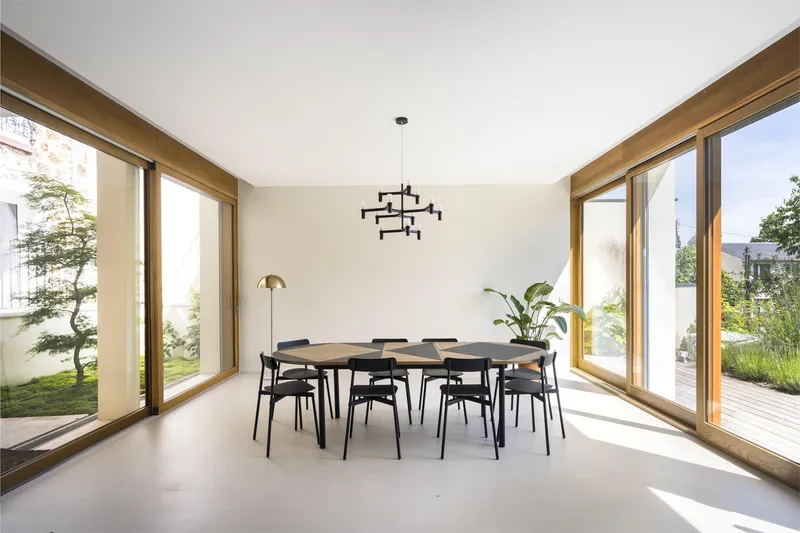
To the street side, the design maintains a discreet and private façade, while on the garden side, the house opens up to embrace natural light and the lush outdoor space. Large sliding glass doors on the lower level create a seamless transition between the living room and the fruit tree-filled garden, fostering an indoor-outdoor living experience. The patio ensures cross-ventilation, optimizing passive cooling strategies.
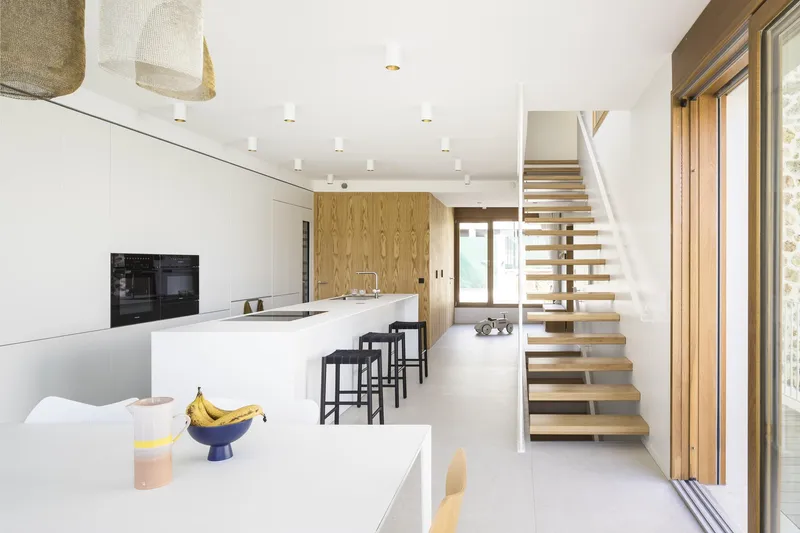
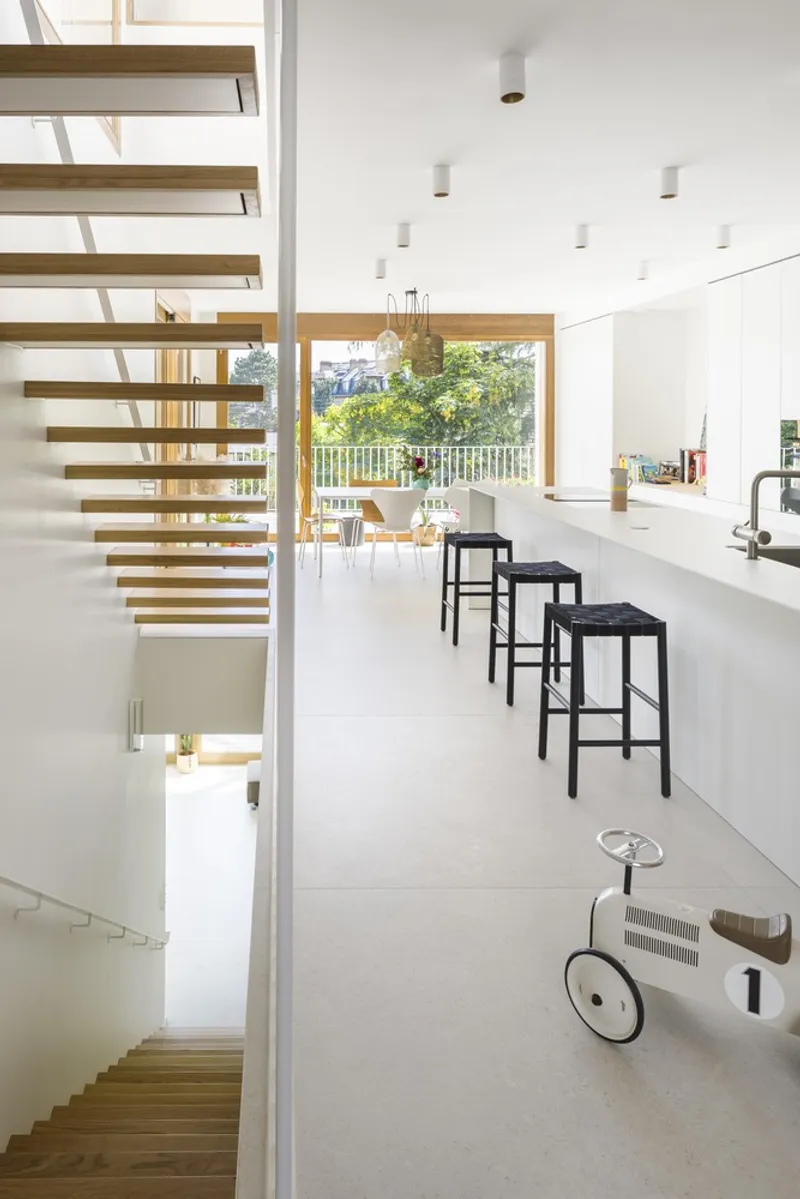
The ground floor, directly accessible from the street, houses the kitchen and dining area, extending to a terrace with garden views. The first floor accommodates four bedrooms, connected via a walkway in the glazed entrance passage, reinforcing the sense of fluidity within the home.
An Elegant Balance of History & Modernity
By carefully balancing heritage conservation with contemporary interventions, HEMAA Architectes has crafted a residence that respects the past while embracing the future. The Francilian House stands as a testament to thoughtful renovation, where materials, light, and space converge to create a truly timeless architectural dialogue.
All Photgraphs are works of Sergio Grazia


Popular Articles
Popular articles from the community


Temporary Home for Dogs: A Reversed Zoo Rethinks Animal Shelter Architecture
In Bucharest, a sinuous corridor and freed landscape flip the logic of containment, designing a shelter that works to make itself unnecessary.

Tsunami Convergenics: Turning Catastrophic Ocean Forces into Underwater Housing Infrastructure
A speculative underwater settlement off the coast of Onagawa, Japan, treats tsunamis and typhoons as energy sources rather than threats.

Singing Woman: An Opera House That Performs Before the Curtain Rises
Ovidiu Cristian Pavel's conceptual opera house translates Estonia's choral identity into a sculpted waterfront landmark facing the Baltic Sea.

Opera by the Sea Estonia: Three Shells Dissolving Architecture into Tallinn's Coastline
A winning opera house proposal replaces monumental form with interconnected shells that blur the boundary between building, park and Baltic Sea.

Similar Reads
You might also enjoy these articles


Hodi-Mandai Geram
Project Function: Preservation and revitalization of the Intangible heritage and socio-spatial identity of the Hodi by Housing, Cultural Memory Center, Sacred Grove, landscape, local tourism economy


Olio Towers: A Mid-Rise for Performers That Fuses Housing, Rehearsal, and Stage
Located blocks from Houston's Theater District, this modular tower stacks living units around a central performance atrium.

Oasis: Modular Green Housing Carved into Dhaka's Urban Fabric
A shortlisted Plugin Housing entry reclaims unauthorized settlements in Dhaka with stepped concrete volumes, green roofs, and ventilation-driven design.

Black Hole: A Floating Megastructure for the Post-Physical Era
Emiliano Mazzarotto envisions a spherical, self-scaling arena where e-sports, digital hotels, and holographic stadiums replace traditional public space.

Explore French Cultural Renovation Competitions
Discover active competitions in this discipline

Challenge to reimagine the Iron Throne

Photograph architecture without architects

Illustrate the lost glory of Angkor Wat - Render Challenge

Design challenge to reuse E-waste
Comments (0)
Please login or sign up to add comments
No comments yet. Be the first to comment!