
From the Bottom of the Sea
A climate-resilient bridge architecture rising from the sea, transforming fear of climate change into powerful public space.


"From the Bottom of the Sea" is a visionary proposal that redefines climate-resilient bridge architecture through narrative, symbolism, and urban innovation. Designed by Erika Tiella and Beatrice Tabac, the project transforms the fear of rising sea levels into a spatial and architectural experience that both warns and inspires.
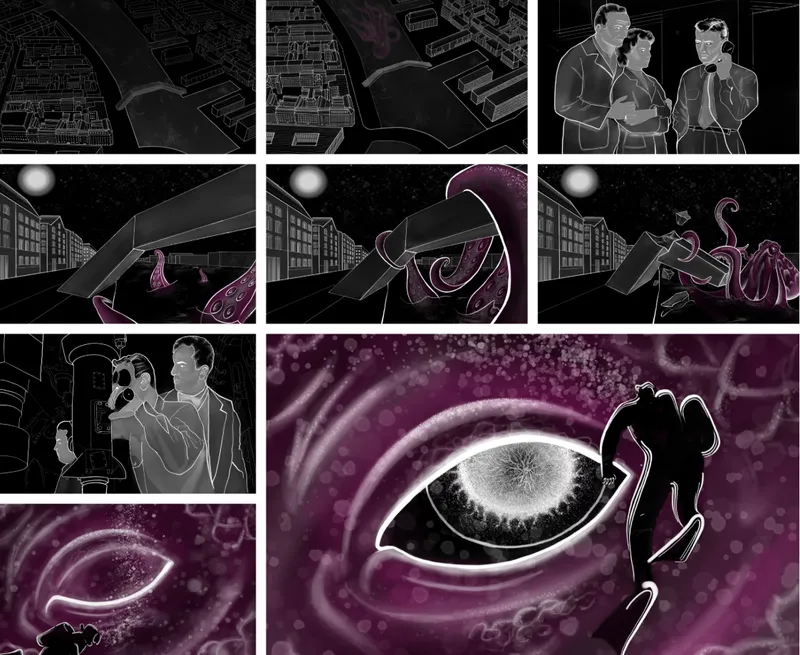
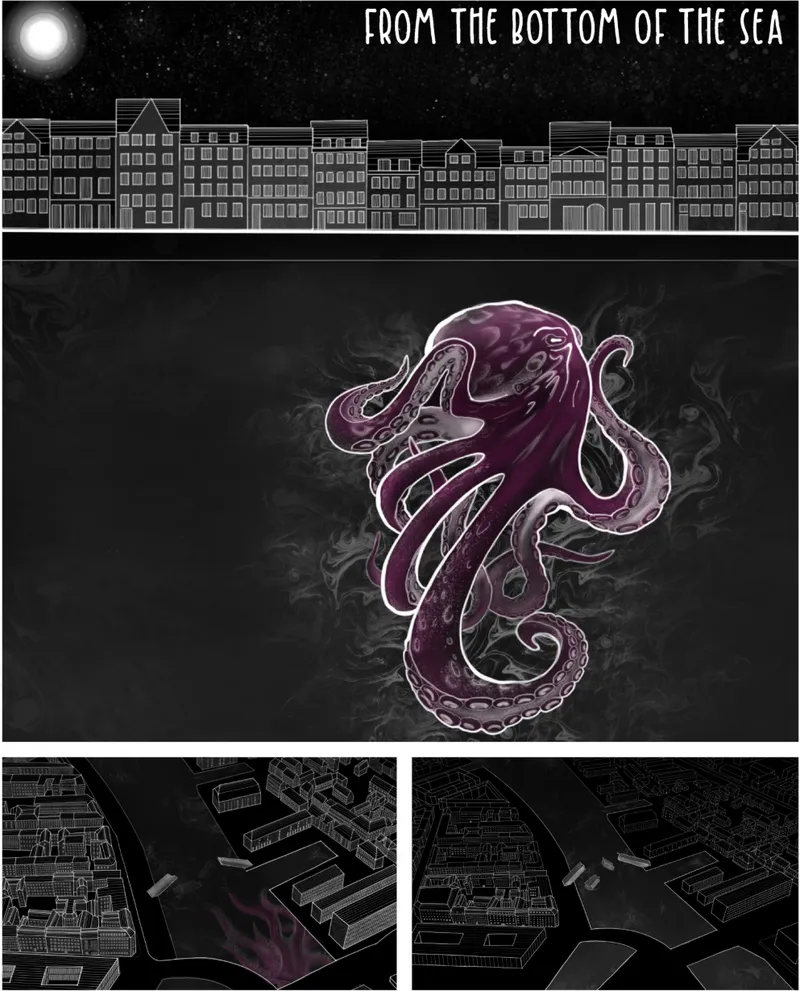
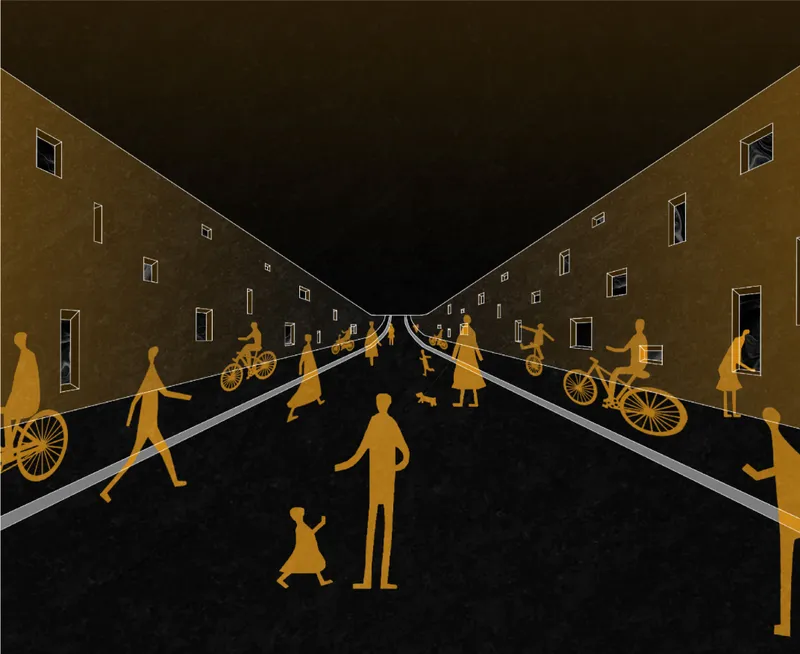
The concept originates from a powerful storyboard inspired by mid-century cinematic imagination. Referencing the 1955 film It Came from Beneath the Sea, the designers reinterpret the mythical kraken not as a literal monster, but as a metaphor for one of the greatest contemporary threats: climate change and rising sea levels. In this project, the "monster" becomes the embodiment of environmental risk, an imminent force capable of submerging cities if resilience is not embedded into urban design.
A Destroyed Bridge Reimagined as Sustainable Infrastructure
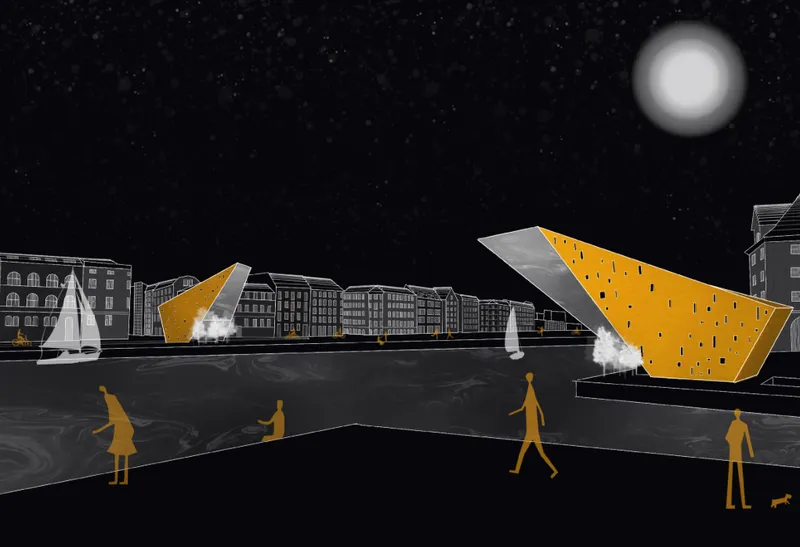
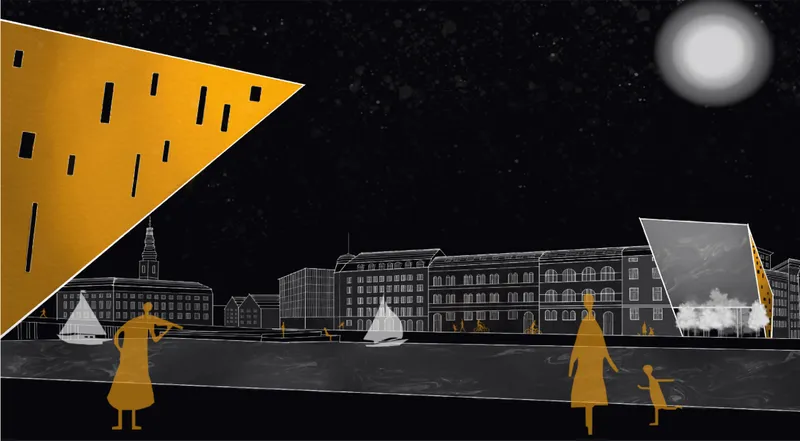
At first glance, the project appears to depict a collapsed bridge, two sculptural fragments rising dramatically above the canal. Yet this illusion conceals the true intervention: the actual passage unfolds beneath the water level. This inversion of expectation is central to the project’s architectural narrative.
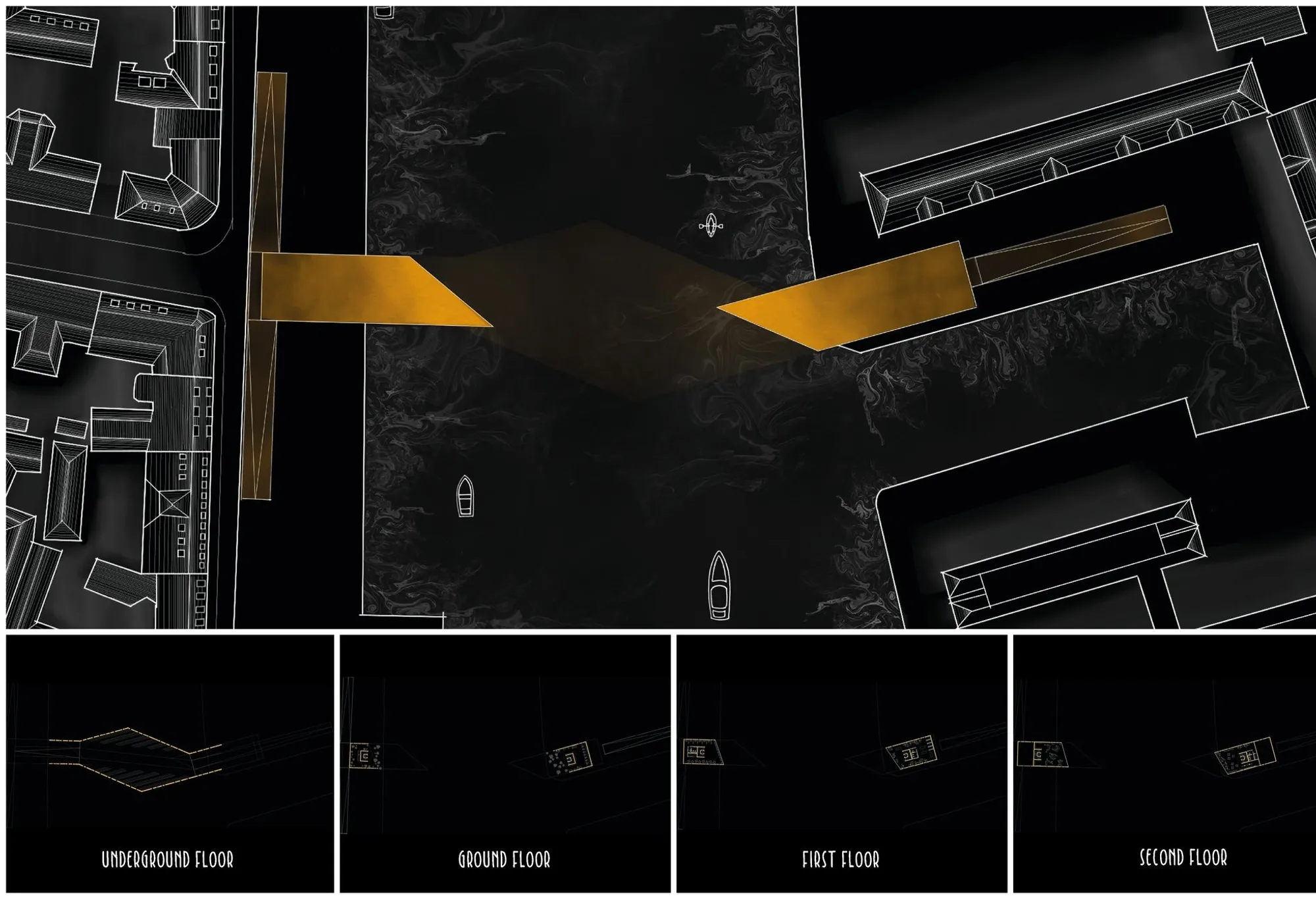
The bridge takes on the form of destruction to communicate urgency. Two intact vertical volumes emerge above the water, housing essential functions required by the competition brief. Meanwhile, the horizontal element, submerged yet fully functional, creates a continuous passage for bicycles and pedestrians between the canal banks.
This strategy reflects a deeper commitment to sustainable architecture and long-term adaptability. Rather than resisting water as an adversary, the design integrates it into the spatial experience, proposing infrastructure that coexists with environmental transformation.
Programmatic Layers and Urban Activation
The project is structured around three primary elements: two vertical blocks and one horizontal connective plane.
Right Vertical Block, Public Activation
The right block accommodates:
- Green public areas at street level
- An infopoint and bike-sharing facilities
- Cafeteria and study areas
- Relaxation spaces and panoramic viewpoints
These functions transform the bridge into a vibrant civic destination rather than a mere crossing.
Left Vertical Block, Operational and Logistic Functions
The left block is dedicated to:
- Offices
- Staff facilities
- Kitchen and refreshment areas
- Storage and service spaces
By separating public and logistic functions, the project ensures clarity of circulation and efficiency of use.
The Horizontal Element, Continuous Mobility
The submerged horizontal passage is dedicated to pedestrians and cyclists, including generous bike parking areas. In response to competition requirements, the bridge remains permanently open, ensuring uninterrupted boat circulation along the entire canal.
This solution exemplifies climate-adaptive urban infrastructure, allowing coexistence between mobility systems and maritime traffic without mechanical intervention.
Bridge as Landmark: Illusion, Skyline and Identity
Beyond function, the project asserts itself as an urban landmark. The inclined geometries interrupt the skyline, creating the illusion of a bridge mid-opening. From the canal, sailors perceive a dynamic silhouette against the night sky.
The oblique forms invite passers-by toward the canal edge, generating curiosity and interaction. The skyline becomes theatrical, an architectural gesture that redefines how infrastructure participates in city identity.
Storytelling as Architectural Strategy
What distinguishes "From the Bottom of the Sea" is its narrative methodology. The storyboard format allows complex environmental concerns to be communicated through visual storytelling. The kraken metaphor links mythology, cinema, and contemporary environmental anxiety.
Since antiquity, monsters have symbolized collective fears. Here, the fear is no longer nuclear catastrophe but climate instability. Rising waters threaten not only infrastructure but the very continuity of urban life.
By materializing this anxiety into architectural form, Erika Tiella and Beatrice Tabac propose a new paradigm for resilient waterfront architecture, one that acknowledges vulnerability while offering spatial solutions.
Reframing Climate Fear into Civic Space
Rather than presenting climate change as inevitable destruction, the project reframes it as a catalyst for innovation. The submerged passage becomes a powerful reminder: cities must adapt, rethink elevation, and reimagine the relationship between land and water.
"From the Bottom of the Sea" ultimately transforms the image of collapse into one of continuity. What appears broken becomes connective. What seems submerged becomes operative. And what symbolizes fear becomes a landmark of resilience.
In doing so, the project stands as a compelling example of climate-resilient bridge architecture: where storytelling, sustainability, and urban design converge to shape the future of our cities.



Popular Articles
Popular articles from the community


Riyadh For All: Intergenerational Urban Design for Active Aging in Rabat
Riyadh For All reimagines urban design in Rabat with intergenerational co-living, adaptive courtyards, and Moroccan cultural exchange today.

Conexión: Biophilic Design Reimagines High-Rise Living in Hong Kong
Conexión reimagines high-rise living in Hong Kong through biophilic design, green facades, shared spaces, daylight, water and nature within.

Hill & Cross Opera: Sculptural Opera House Architecture Shaped by Tallinn’s Landscape and Identity
Hill & Cross Opera reimagines opera house architecture in Tallinn through its sculptural hill, civic plaza, glass wave and a luminous cross.

The Musturak Paradise: Senior Living Architecture for a Connected Future in Temara, Morocco
The Musturak Paradise reimagines senior living architecture in Temara via private homes, social spaces, culture, community, and shared care.
Similar Reads
You might also enjoy these articles

Eco Chapel: A Green Architecture Pavilion Designed in Symbiosis with the Forest
Eco Chapel uses green architecture to weave prayer, learning and reuse into a forest pavilion shaped by modular hexagonal canopies for life.
Kaffeebühnen: Coffee Shop Architecture Designed as a Civic Stage Between Vienna’s City and Park
Kaffeebühnen turns coffee shop architecture into a civic stage, linking Vienna’s park edge, urban life, warm timber yards, and coffee craft.
Healing Façade: Sustainable Architecture for Reforestation, Community, and Sacred Ecology in Ethiopia
Healing Façade reimagines sustainable architecture as a living wall that restores soil, catches water and renews Ethiopia's forest churches.


Urban Forest: A Vertical Ecosystem for 5,000 Workers in Singapore's Changi Business Park
Radially stacked pods and layered green decks turn a 7-acre plot into 47 acres of ecological workspace projected for 2040.

Explore Architecture Competitions
Discover active competitions in this discipline



Challenge to reimagine the Iron Throne


Photograph architecture without architects


Illustrate the lost glory of Angkor Wat - Render Challenge


Design challenge to reuse E-waste
Comments (0)
Please login or sign up to add comments
No comments yet. Be the first to comment!