
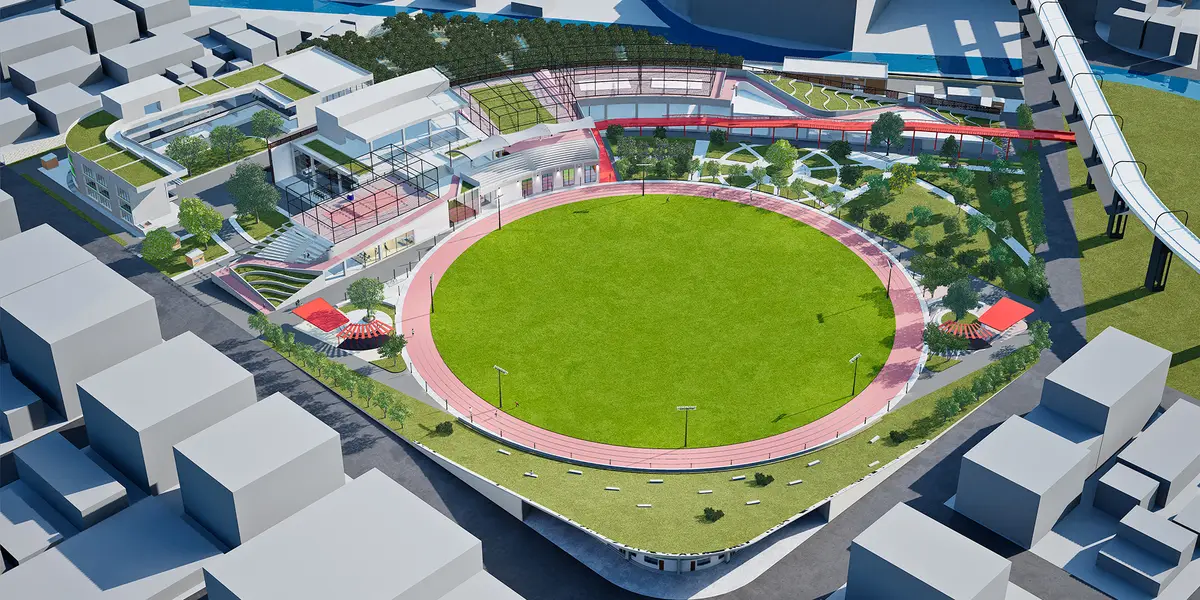
From Vibrancy to Vacancy: Addressing the Decline of Urban Structures
“When the ‘Heart’ weeps for what it has lost, The ‘Spirit’ laughs for what it has found”

“Public spaces are memory-keepers; they hold the imprint of generations who gathered, celebrated, protested, and dreamed there.”
The decline of once-vibrant urban structures into systematically defunct and underutilized spaces has become common in modern cities. This phenomenon, marked by neglect, lack of maintenance, and the obsolescence of functions, reflects a troubling pattern in urban landscapes. The demise of a building is rarely signaled by complete abandonment; instead, it often manifests through the gradual underuse of space or unauthorized encroachment, resulting in a significant loss of economic and social value. In cities where land is a precious resource, such as Mumbai, the existence of abandoned or underutilized buildings is a serious concern. The city's established systems and structures for repurposing buildings, supported by a strong builder lobby and adaptive retrofitting practices, aim to revitalize these spaces, often through privatization.
Underutilized buildings can be classified based on ownership: private or public. Privately owned buildings that fall into disuse, whether due to outdated functions or physical dilapidation, are frequently acquired by developers, leading to the construction of new structures. These processes allow urban areas to renew themselves, preventing the spread of decay. However, when it comes to public buildings, particularly large-scale infrastructure imbued with collective memory, the story often takes a different turn. These structures, once central to a community's identity, may suffer from neglect when maintenance becomes an issue. As they age and deteriorate, they pose safety risks, challenging their continued use and threatening their legacy. Once glorious, these buildings find themselves on a path to decay, a trajectory that is particularly pronounced in tier 2 cities where rapid development often sidelines older structures.
Nagpur, a tier 2 city in Maharashtra, provides a telling example of this phenomenon. Maharashtra, the most urbanized state in India with 42 percent urbanization compared to the national average of 25.7 percent, has seen Nagpur grow rapidly over the past few decades. As the district's most important urban center, Nagpur attracts concentrated development, making it a magnet for urbanization forces. Yet, this concentration of growth has also contributed to the neglect of certain areas, leaving them to fall into disrepair.
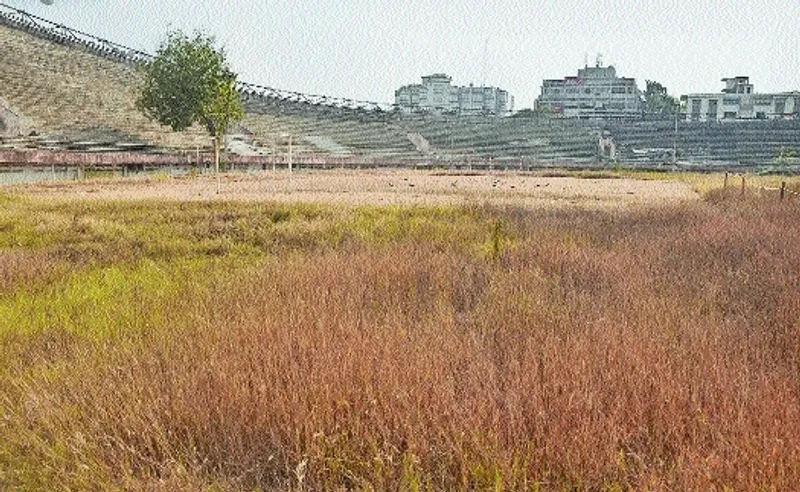
A case in point is the Yashwant Stadium, a cricket stadium built in 1974 that has suffered from years of neglect. Once a vibrant cultural hub, the stadium hosted concerts, rallies, religious events, and sports activities, playing a significant role in the community. However, over time, the stadium's condition has deteriorated, and it is now slated for redevelopment. Situated in a major commercial district and surrounded by shops, the stadium's decline is particularly striking, given its context. Despite its central location, the stadium lacks basic amenities such as parking and washrooms, and structural audits have reduced its seating capacity from 50,000 to just 5,000 - 7,000, underscoring its physical deterioration.
The impact of such a dilapidated structure on society and its immediate neighborhood is profound. It acts as a dead space within a thriving area, raising concerns about the economic viability of the stadium. While repurposing the stadium is one potential solution, questions about its financial feasibility linger. Alternatively, dismantling the structure and developing a new facility is another option.
While repurposing structures through retrofitting or demolition is essential, it is equally important to prevent similar buildings from reaching this critical point. This requires timely health monitoring and maintenance to safeguard future structures from deteriorating. By addressing these concerns, cities can avoid the emergence of "dead zones" and ensure that their urban landscapes remain vibrant and sustainable.
Thesis Proposition
The proposed intervention reimagines Yashwant Stadium as a regenerative urban commons, integrating sports infrastructure, public leisure, urban agriculture, landscape design, and community-centric architecture. The objective is to create a space that is inclusive, ecologically responsive, and economically viable, promoting a green and active urban lifestyle while responding to the unique challenges of a Tier 2 city.
Site and Context
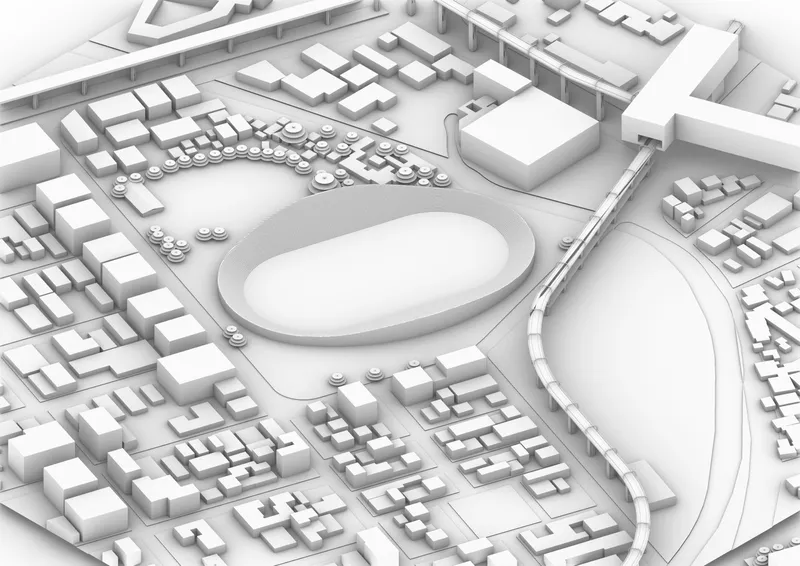
The stadium occupies a 40,000 sq.m. site located between a densely populated neighborhood and a central business district, offering significant potential for public engagement. The Nag River forms the northern boundary, yet suffers from pollution, foul odor, and seasonal flooding due to the inflow of untreated sewage and industrial waste. The proposed master plan incorporates a buffer zone to mitigate environmental degradation and initiate riverfront restoration.
The site’s urban connectivity is further enhanced by proximity to the Sitabuldi Metro Station, enabling opportunities for transit-oriented development (TOD). A nearby flyover offers a unique vantage point for visual engagement, while the southern edge of the site, known for its vibrant evening food culture (Khau Galli), reinforces the potential for social activation.
The Patwardhan Ground, currently misused as a transport depot, is proposed to be reintegrated into the public domain by relocating bus services to underutilized metro yards, thereby reclaiming valuable urban land.
Design Strategy
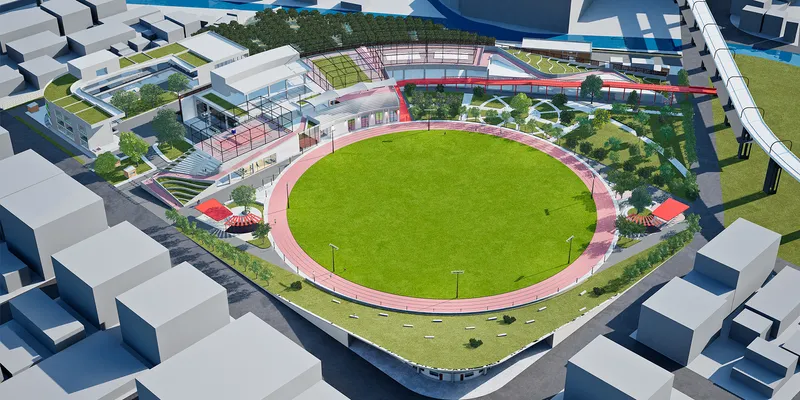
The existing stadium is characterized by an inward-facing, introverted design, creating a visual and physical disconnect from its surroundings. The new proposal shifts the orientation to the southern edge, allowing the urban grid to extend into the site and dictate movement patterns and built form.
A linear built structure wraps around the reimagined central ground, with walkable, sloped roofs that invite public access. Programmatically, the ground floor accommodates indoor sports courts, a gymnasium, café, and retail outlets that activate the street edge. The first floor includes zones for meditation, yoga, and a sky bridge that links to a community farmer’s market.
The accessible rooftop supports a range of activities — including football, pickleball, volleyball, amphitheater seating, and informal play areas. Shading is provided through a steel canopy, and a brick jaali façade on the northwest façade filters harsh sunlight while maintaining visual permeability.
The food stalls at the southern edge are formalized within a newly elevated corner structure, preserving existing culinary culture and improving hygiene and access. Structural systems include steel trusses, retaining walls, and green roofs, all of which contribute to thermal performance, structural efficiency, and public engagement.
Community and Ecological Integration
A key component of the proposal is its emphasis on social and ecological resilience. The commercial spine is designed as a single-loaded corridor, facilitating natural ventilation and visibility while housing vendors displaced during stadium demolition. Planter chajjas provide shading and support passive cooling.
Urban farming is embedded into the architectural language through designated rooftop zones, where local residents may cultivate household vegetables. These are sold within the farmer’s market, supporting local food systems and community well-being. An organic waste management and composting system incentivizes participation through a redeemable point-based model.
Along the river, a newly introduced grove of 302 orange trees serves dual purposes: acting as a green buffer against flooding and contributing to the urban agriculture initiative.
The reprogrammed ground level serves multiple functions — from public gatherings and concerts to daily leisure and sports activities. Round-the-clock accessibility is ensured through strategic lighting, safe pedestrian routes, and integrated security infrastructure.
A sky bridge connects directly to the metro station, encouraging public transport use and minimizing reliance on private vehicles. Entry zones are equipped with essential public amenities including sanitation, storage, and first-aid services. The landscape design employs rainwater harvesting, greywater recycling, and drip irrigation to promote sustainable water usage.
Conclusion
The proposed redevelopment of Yashwant Stadium aims not merely to restore a deteriorating structure but to transform it into a contemporary civic space that respects its historical relevance while addressing present-day urban challenges. Through careful integration of public utility, ecological stewardship, and socio-economic inclusivity, the design aspires to revive the stadium as a dynamic, multifunctional landmark within Nagpur’s urban fabric.
In doing so, it embodies the belief that: “Preserving memory doesn’t mean freezing time. It means allowing the past to live inside the present.”

Popular Articles
Popular articles from the community


Extended Shell: Retrofitting Kolkata's Balconies as Living Urban Thresholds
A modular retrofit system recovers the social and environmental intelligence of Kolkata's historic verandas for contemporary Park Street residents.

Temporary Home for Dogs: A Reversed Zoo Rethinks Animal Shelter Architecture
In Bucharest, a sinuous corridor and freed landscape flip the logic of containment, designing a shelter that works to make itself unnecessary.

Opera on the Sea: Driftwood Logic Shapes a Timber Opera House on Estonia's Coast
Trevor Orgill's opera house translates the entangled drift of floating timber into a civic building where wood, water, and music converge.

The Amber Palace Opera: A Geological Fiction Surfaces on Tallinn's Baltic Waterfront
Pierre Brillard reimagines a Baltic legend as a public landscape, opera house, and waterfront promenade rooted in Tallinn's coastal identity.

Similar Reads
You might also enjoy these articles

The Rhythm of Seasons
A Farmers' Market Connecting Nature and the City

More Than a Building-Designing a Living System
More Than a Building-Designing a Living System
Base Beyond
DESERT COMPOUND ARID: TOURISM OF ABSENCE AND ABUNDANCE

Explore Urban Renewal Competitions
Discover active competitions in this discipline


Challenge to reimagine the Iron Throne

Photograph architecture without architects

Illustrate the lost glory of Angkor Wat - Render Challenge

Design challenge to reuse E-waste
Comments (0)
Please login or sign up to add comments
No comments yet. Be the first to comment!