
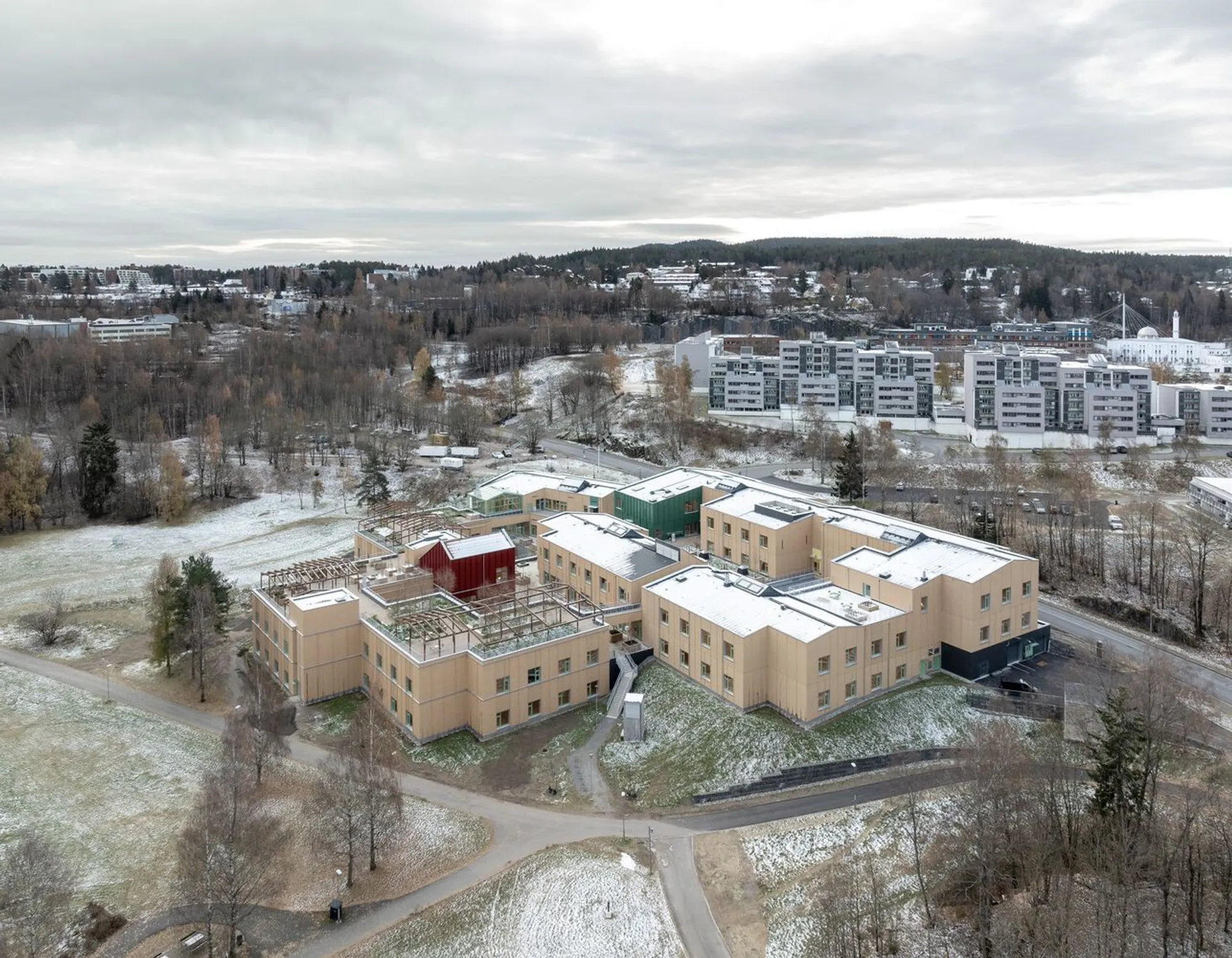
Furuset Hageby Dementia Village by NORD Architects and 3RW Arkitekter
Village-inspired dementia care community in Oslo offering autonomy, everyday amenities, sensory gardens, and sustainable architecture enhancing residents’ wellbeing and dignity.


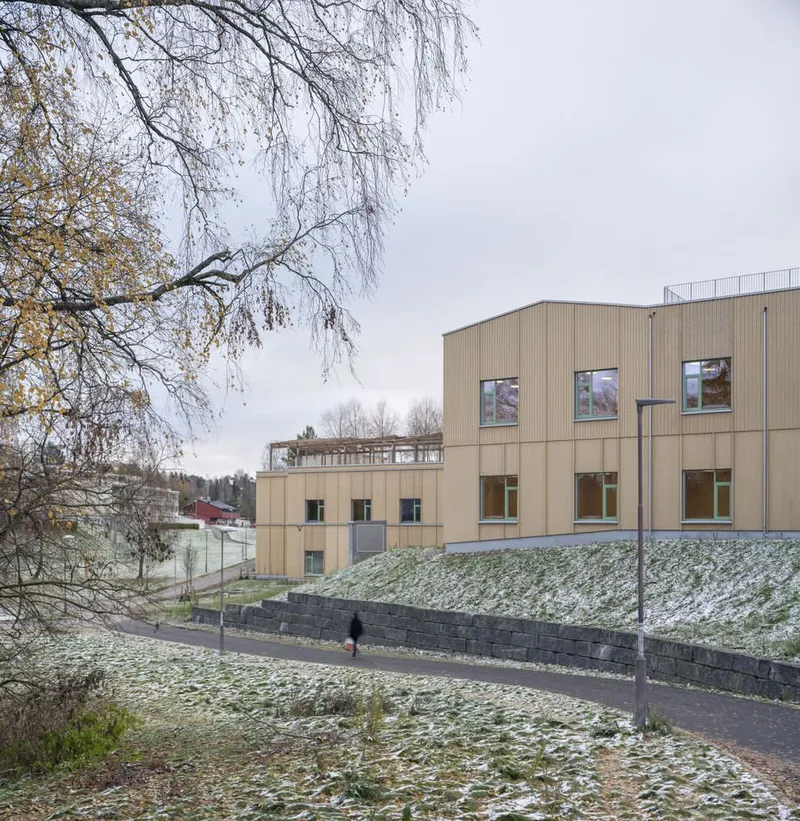
Located in Oslo, Norway, Furuset Hageby Dementia Village is a groundbreaking healthcare and residential architecture project designed by NORD Architects and 3RW Arkitekter. Completed in 2024 and spanning 11,500 m², this innovative dementia village redefines elderly care by replacing the traditional institutional nursing home model with a vibrant, human-centered community.
Rethinking Dementia Care Through Architecture
As global populations age and dementia cases rise, healthcare architecture must evolve. Furuset Hageby responds to this urgent need by creating a built environment that enhances quality of life, autonomy, and dignity. Instead of long corridors and clinical settings, residents experience a familiar village atmosphere complete with everyday amenities.
The design philosophy centers on continuity in life. By recreating recognizable urban elements: such as a grocery shop, restaurant, hairdresser, culture house, library, and doctor’s office, the project allows 112 residents to live within a safe yet socially dynamic environment. This dementia-friendly design approach strengthens orientation, reduces stress, and promotes emotional well-being.
A Village Concept for Freedom and Safety
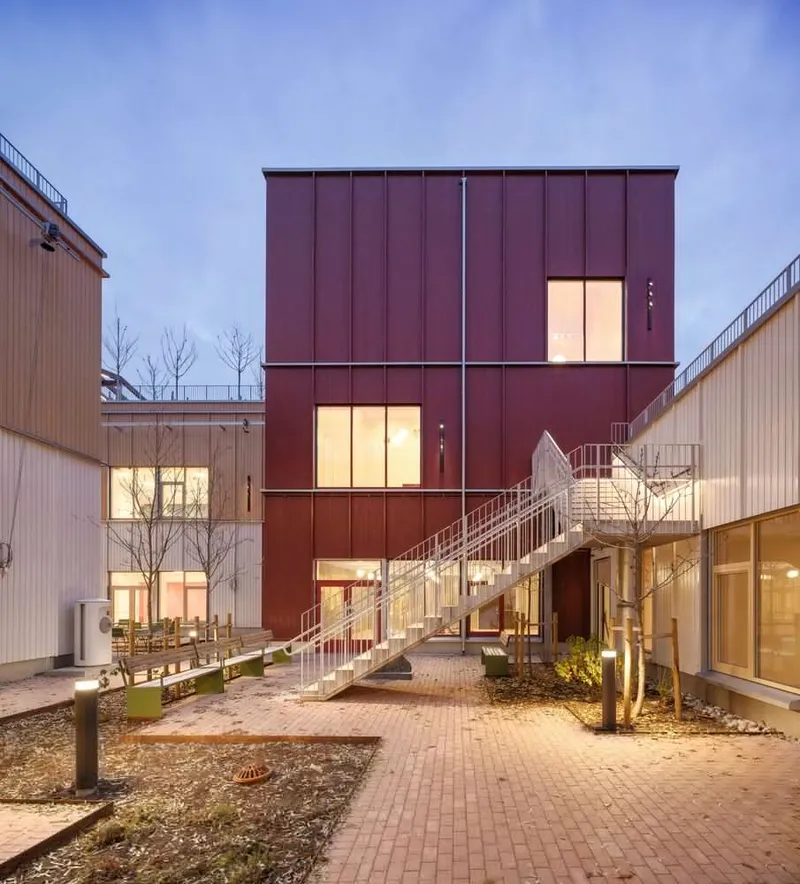
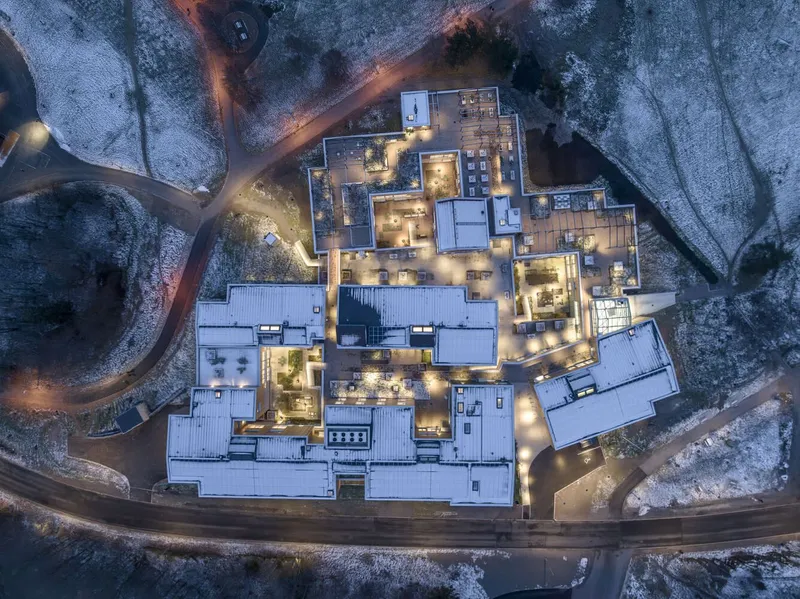
At the heart of the project is a “village street” that connects multiple building clusters and shared facilities. This central spine encourages movement, social interaction, and spontaneous encounters while ensuring intuitive wayfinding. Spatial variation: between intimate interiors, semi-private courtyards, and open communal areas, supports different levels of social engagement according to individual abilities.
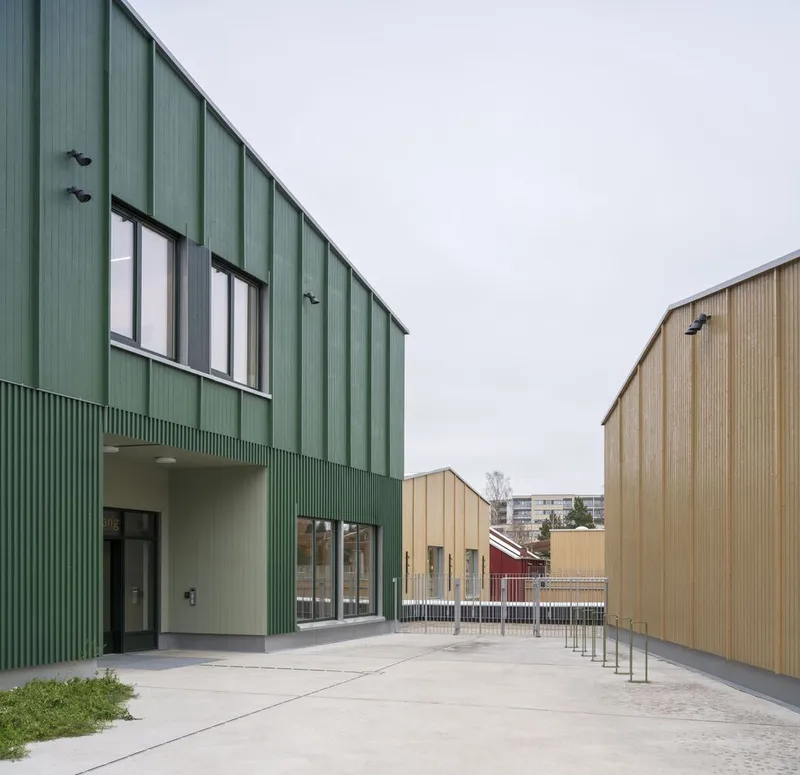
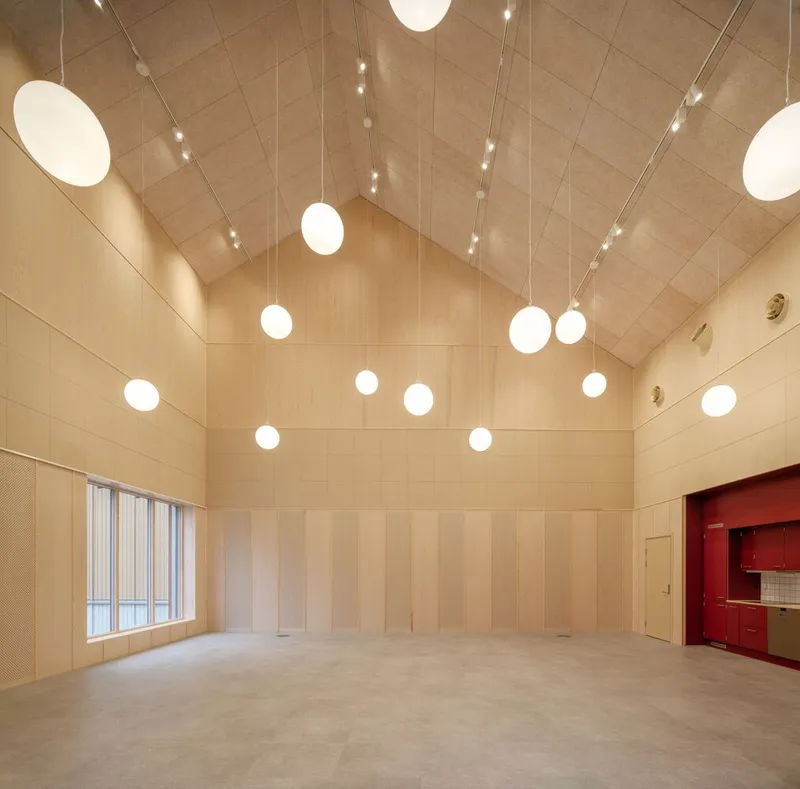
The architecture carefully balances aesthetics, acoustics, daylight, and materiality to create a sensory-friendly environment. Warm materials, natural light, and clear sightlines help residents navigate independently while minimizing confusion and anxiety. This model of dementia-friendly architecture demonstrates how thoughtful spatial design can directly support healthcare outcomes.
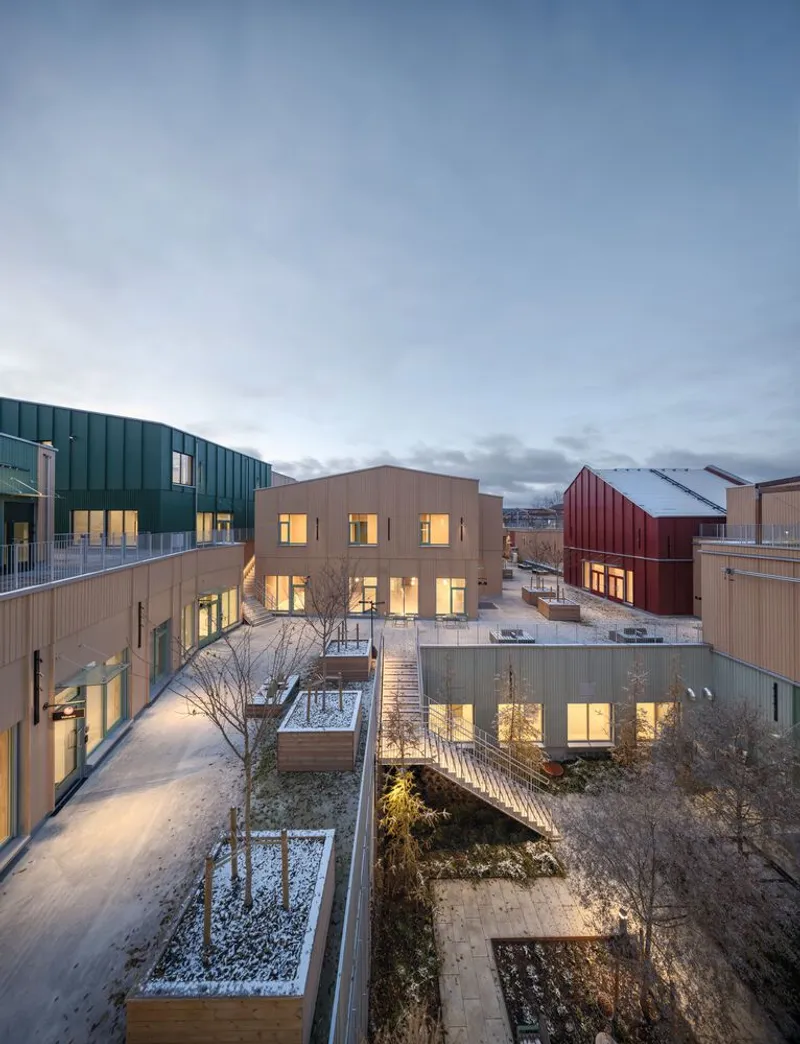
Interwoven Courtyards and a Looping Rooftop Garden
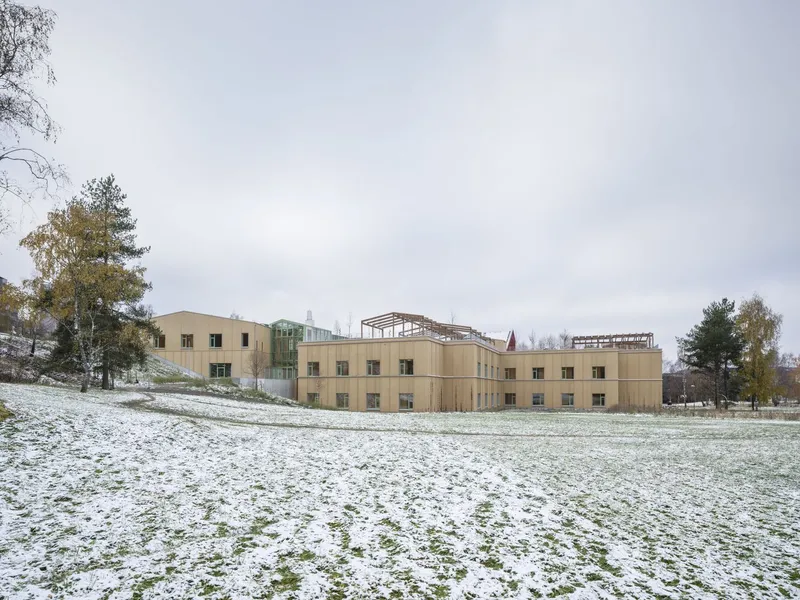
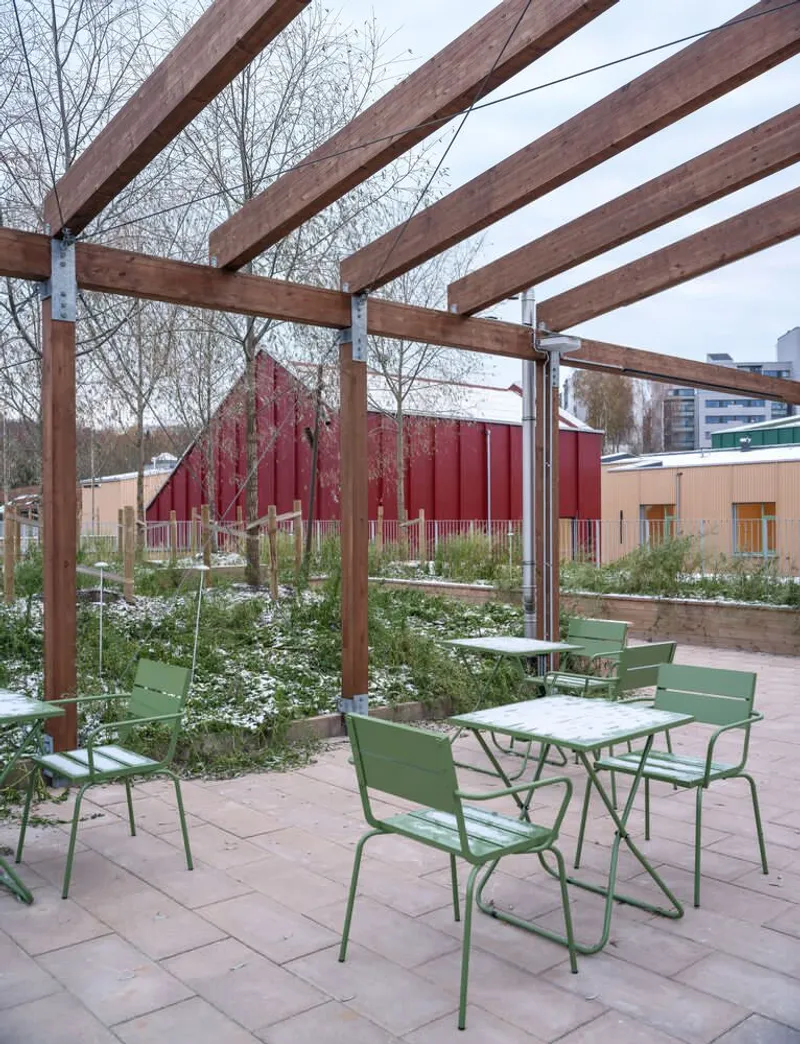
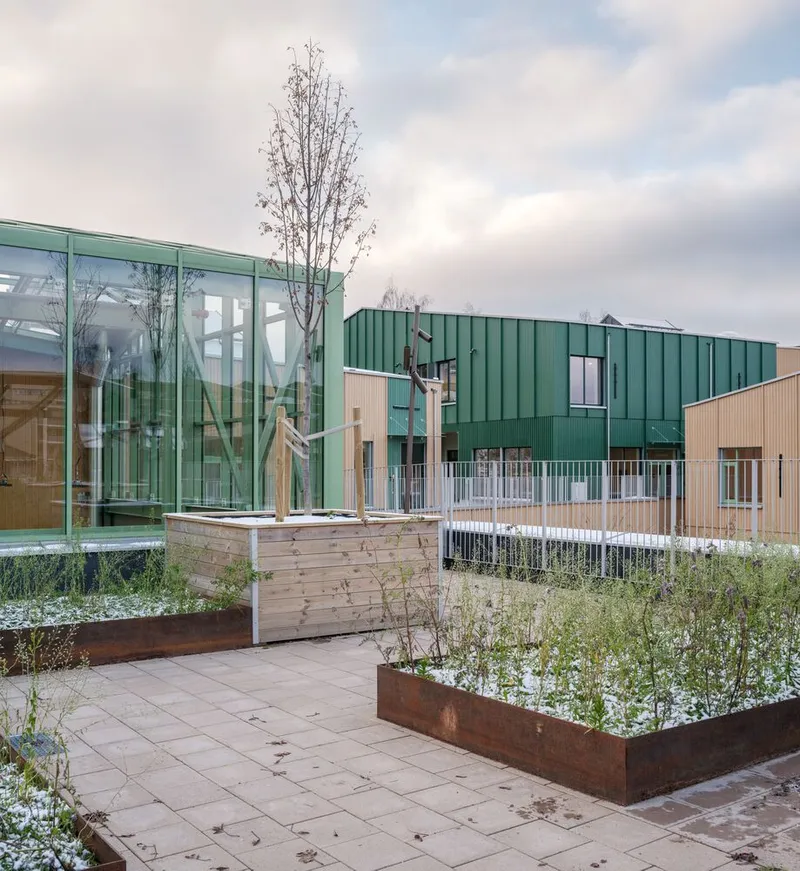
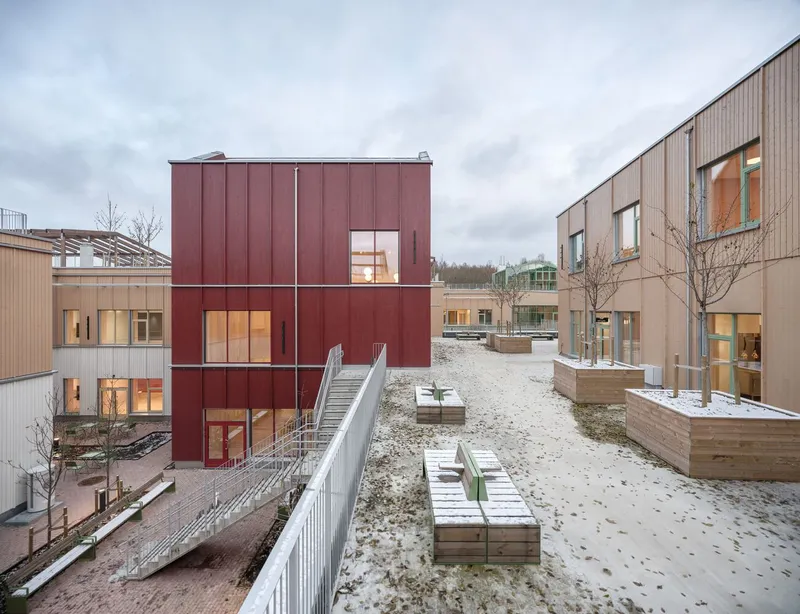
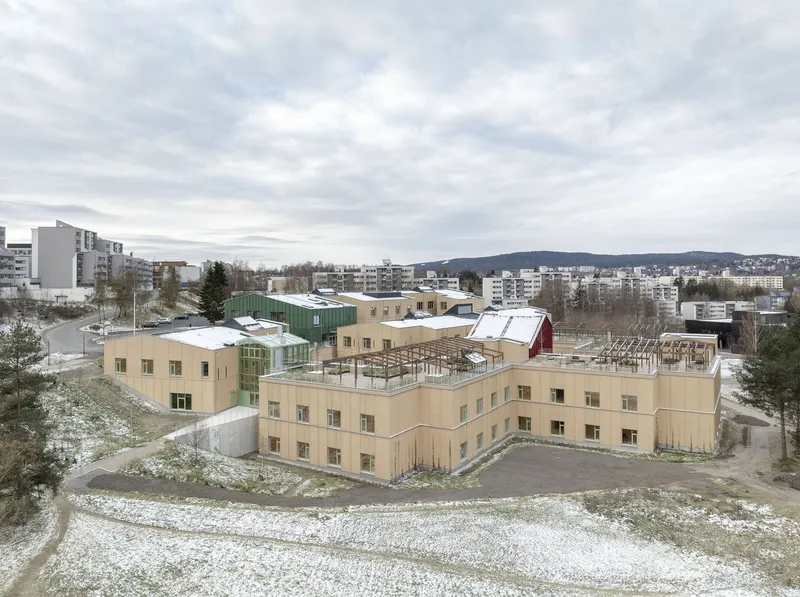
A defining feature of Furuset Hageby is its three interwoven courtyards and looping rooftop garden. The buildings adapt to the site’s varied terrain, embedding green spaces throughout the village. These sensory gardens offer therapeutic landscapes, herb gardens, a greenhouse, and relaxing lounge areas.
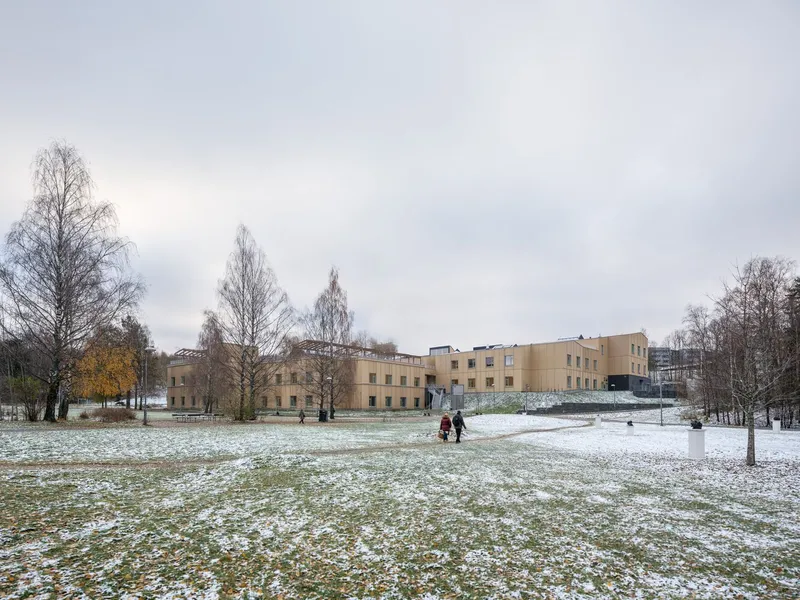
The continuous rooftop pathway is particularly significant. Designed as a loop, it ensures residents always return safely to their starting point, an essential principle in dementia care design. This architectural strategy subtly integrates safety into the spatial experience without creating visible barriers.
Nature becomes a daily companion, reinforcing the project’s identity as a “garden village.” The seamless indoor-outdoor connection enhances mental stimulation, encourages gentle physical activity, and fosters community interaction.
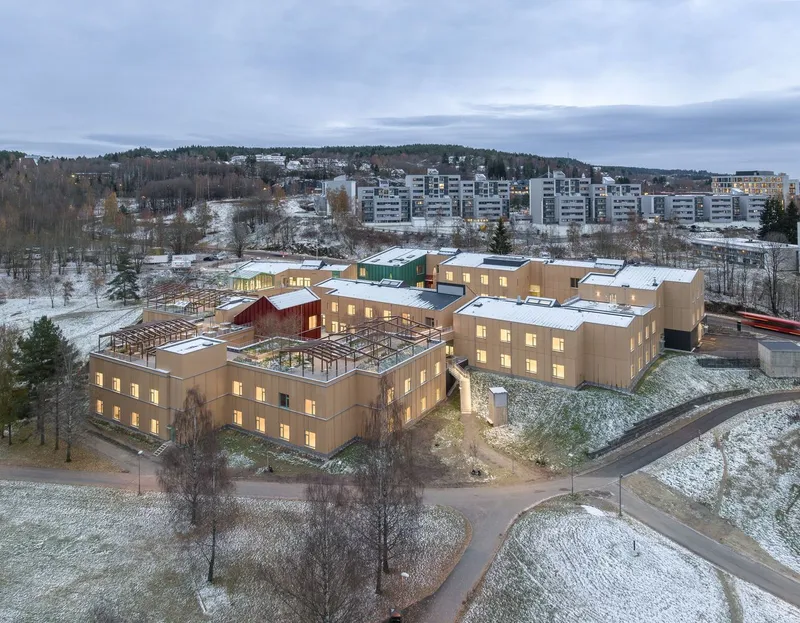
Sustainable Healthcare Architecture and FutureBuilt Standards
Furuset Hageby is part of Norway’s FutureBuilt initiative, a program promoting innovative, low-carbon urban development. The project is certified BREEAM Excellent, reflecting its commitment to environmental responsibility.
Sustainable strategies include the use of low-CO₂ materials, reduction of hazardous substances, and high environmental performance standards. By integrating social sustainability with climate-conscious construction, the project sets a benchmark for future elderly care facilities worldwide.
A Model for the Future of Dementia Villages
Furuset Hageby Dementia Village illustrates how healthcare architecture, sustainable design, and community planning can merge into a cohesive, life-enhancing environment. By shifting from institutional typologies to village-based living, NORD Architects and 3RW Arkitekter have created a pioneering model for dementia care: one that prioritizes dignity, freedom, and connection.
As cities worldwide confront aging populations, Furuset Hageby stands as a leading example of how architecture can transform healthcare environments into meaningful, inclusive communities.





Popular Articles
Popular articles from the community


The Musturak Paradise: Senior Living Architecture for a Connected Future in Temara, Morocco
The Musturak Paradise reimagines senior living architecture in Temara via private homes, social spaces, culture, community, and shared care.

Riyadh For All: Intergenerational Urban Design for Active Aging in Rabat
Riyadh For All reimagines urban design in Rabat with intergenerational co-living, adaptive courtyards, and Moroccan cultural exchange today.

Lunar Spiral: Space Architecture Shaped by the Mathematics of the Universe
Lunar Spiral reimagines space architecture through Fibonacci geometry, lunar regolith, levitating habitats, and self-sustaining Moon living.

The Ocean Hive: Sustainable Architecture for a Self-Sufficient Civilization at Sea
The Ocean Hive imagines sustainable architecture at sea, where modular habitats, algae, wave power and ocean waste sustain a growing colony.


Similar Reads
You might also enjoy these articles

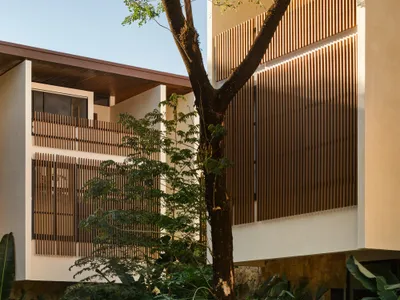
FAMM Arquitectura Organizes Ten Villas Around Courtyards and Jungle in Nosara, Costa Rica
El Molino pairs two elongated volumes with deep overhangs and timber louvers to build a compact coastal community five minutes from the beach.
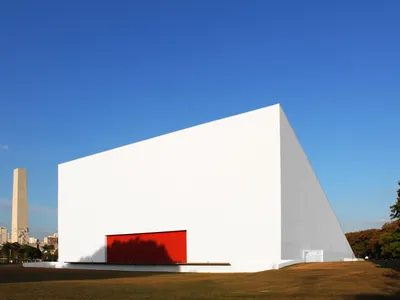
Oscar Niemeyer's Ibirapuera Park Pavilions Define São Paulo's Cultural Identity in Concrete and Curve
A constellation of modernist volumes set within São Paulo's most important urban park, conceived for the city's 400th anniversary in 1954.
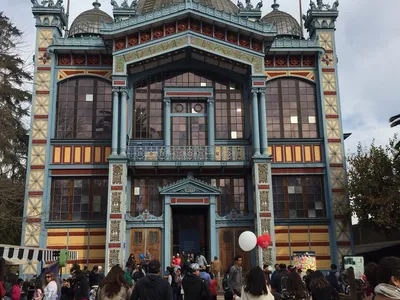
How Henri Picq's 1889 Paris Pavilion Traveled 11,000 Kilometers to Become Santiago's Artequín Museum
A prefabricated iron and glass pavilion built for the Paris Universal Exposition found a second life as a children's art museum in Chile.
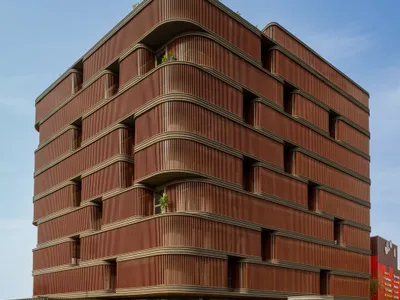
Sanjay Puri Architects Wraps a Jaipur Office Tower in Capsule-Shaped Green Buffers
A nine-level climate-responsive workplace near Jaipur Airport uses stacked planter terraces and aluminium screens to fight 40°C heat.


Explore Architecture Competitions
Discover active competitions in this discipline


Challenge to design mud housing for contemporary communities


Challenge to reimagine the Iron Throne


Photograph architecture without architects


Illustrate the lost glory of Angkor Wat - Render Challenge
Comments (0)
Please login or sign up to add comments
No comments yet. Be the first to comment!