
Gardenful: A Semi-Indoor Urban Sanctuary Blending Geometry and Wild Nature
A serene semi-indoor urban garden blending geometric structures, wild vegetation, bamboo, stone, and light to reconnect modern living with authentic nature.


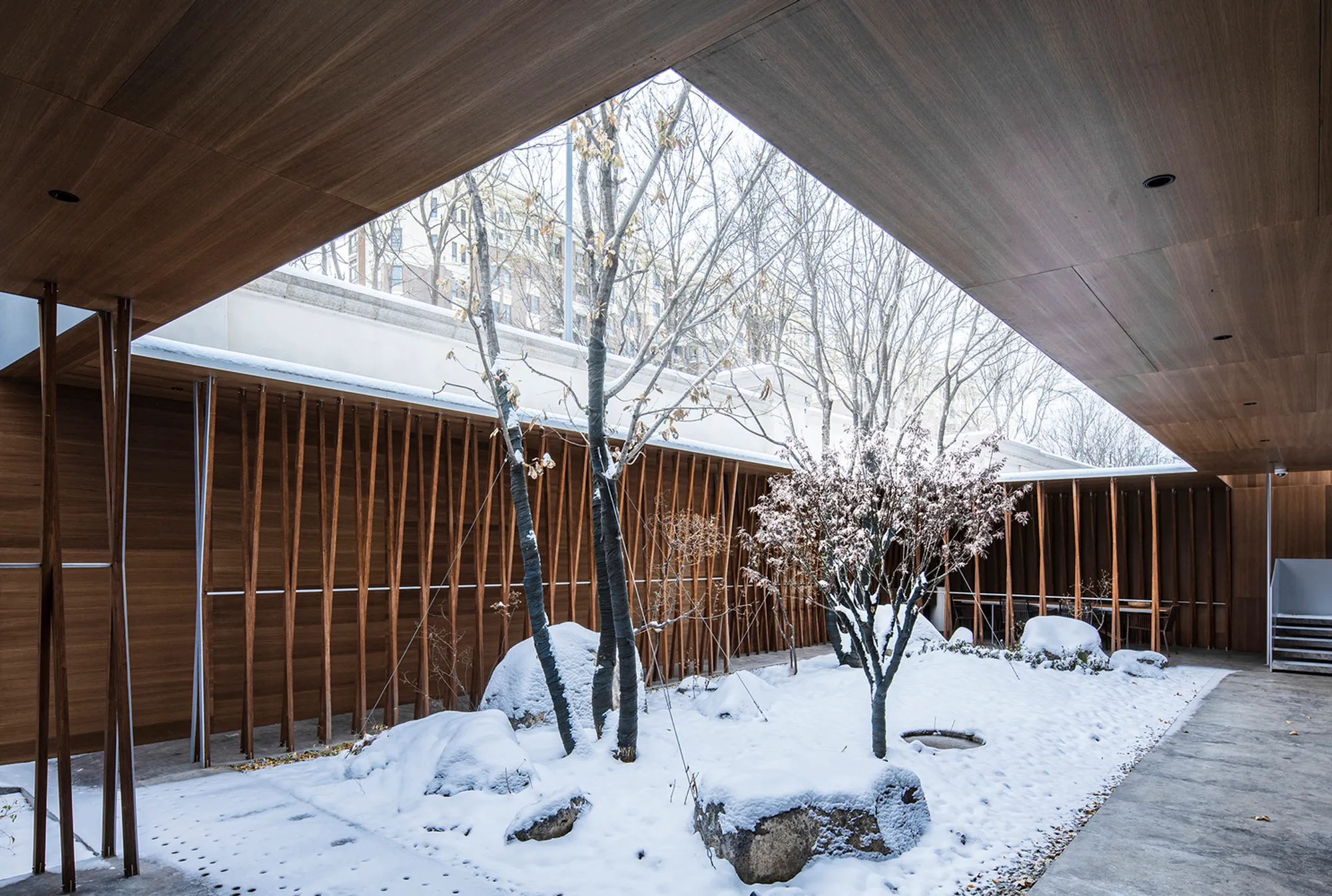
Gardenful by TAOA reimagines the boundary between architecture and landscape within a compact 227-square-meter site in Beijing. Designed in 2024, this private urban garden transforms a small corner of a villa compound into a serene ecosystem where modern geometry and untamed nature coexist. Surrounded by European-style single-family villas typical of contemporary Chinese developments, the project challenges the strict environmental separation of modern housing by restoring continuity between indoor comfort and outdoor natural life.
Reconnecting Urban Living With Nature
Modern residential architecture often prioritizes thermal comfort and environmental control, but this comes at the cost of severing the indoor-outdoor relationship. Gardenful seeks to repair that separation. Rather than defining the project as strictly a “garden” or a “building,” TAOA shapes an immersive spatial experience that accommodates real nature, provides shelter, and allows the inhabitant to walk, pause, and reflect.
This hybrid space functions as a quiet retreat—partly open, partly enclosed—encouraging a return to outdoor living. The design intention is simple yet profound: create a place for solitude, contemplation, and sensory engagement with changing seasons.
A Central Courtyard That Frames the Sky
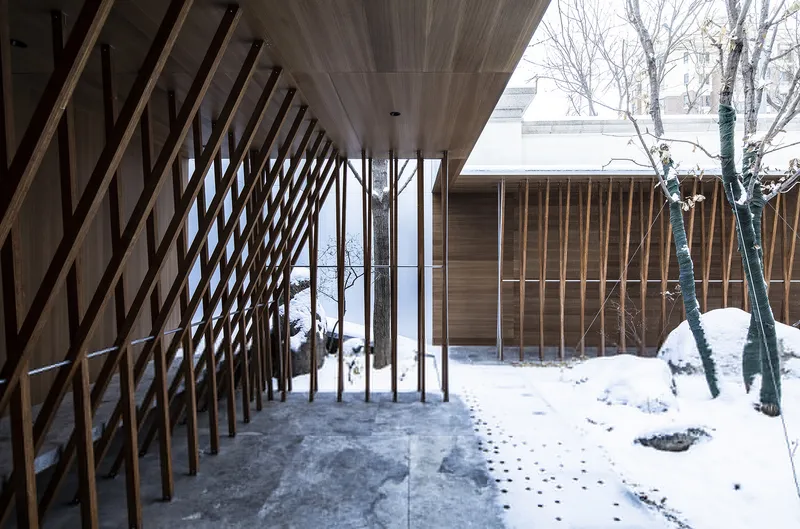
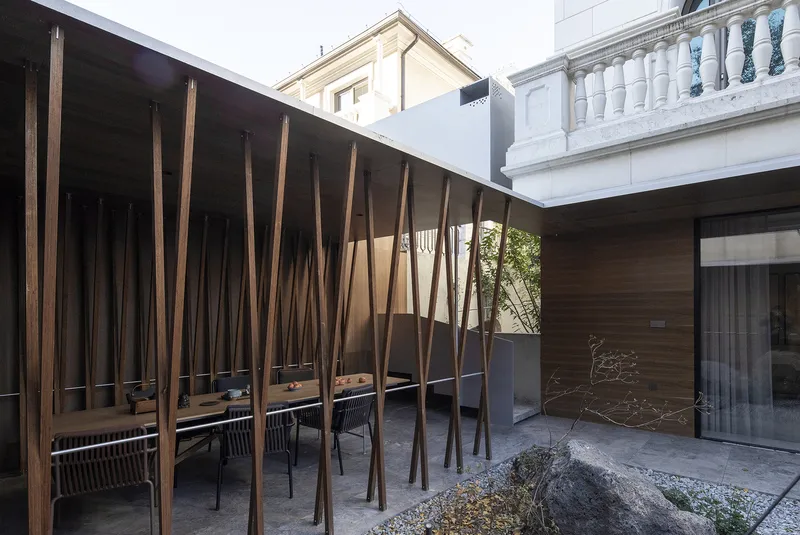
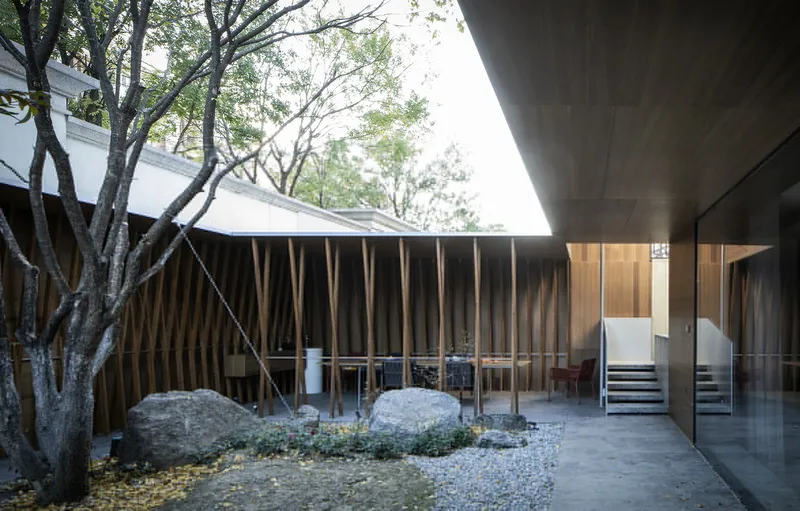
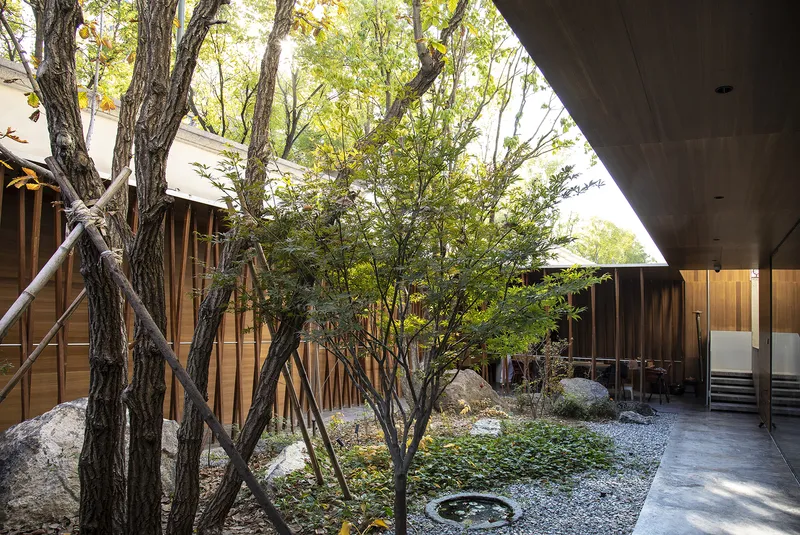
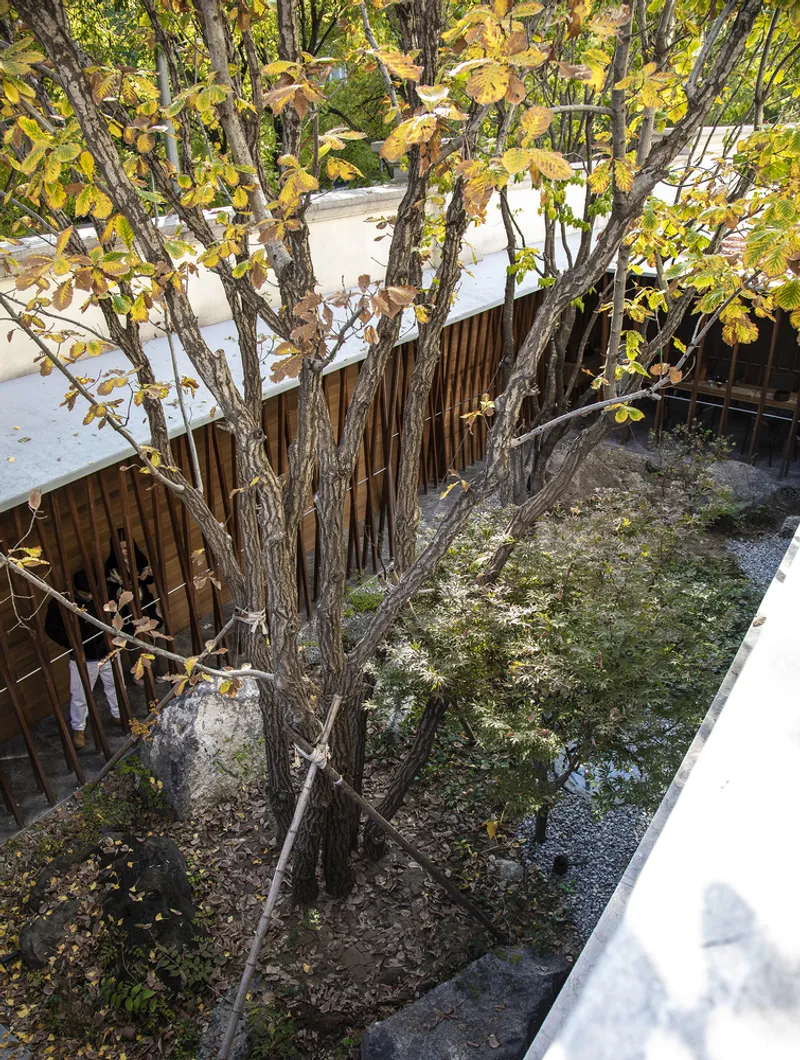
At its heart, Gardenful features a square central courtyard. Covered at the edges but open to the sky, it captures sunlight, rain, snow, and shifting weather conditions as part of the daily experience. Beneath this opening, native trees, vegetation, and stones sourced directly from the mountains introduce an authentic wildness rarely found in urban residential environments.
Around this core, spaces unfold in geometric order. The structured architectural language refines nature without diminishing its energy. The interplay between the organic and the architectural creates a subtle tension—one that enriches the sensory and spatial experience.
Spatial Transitions and Layered Landscapes
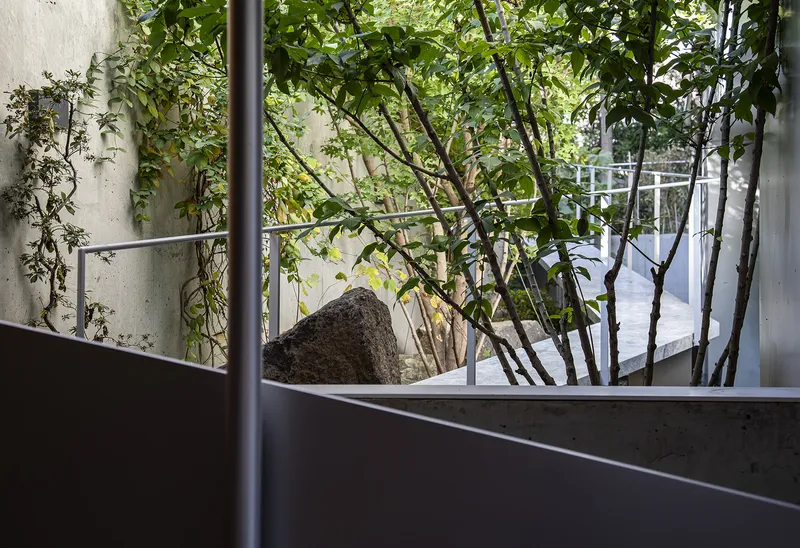
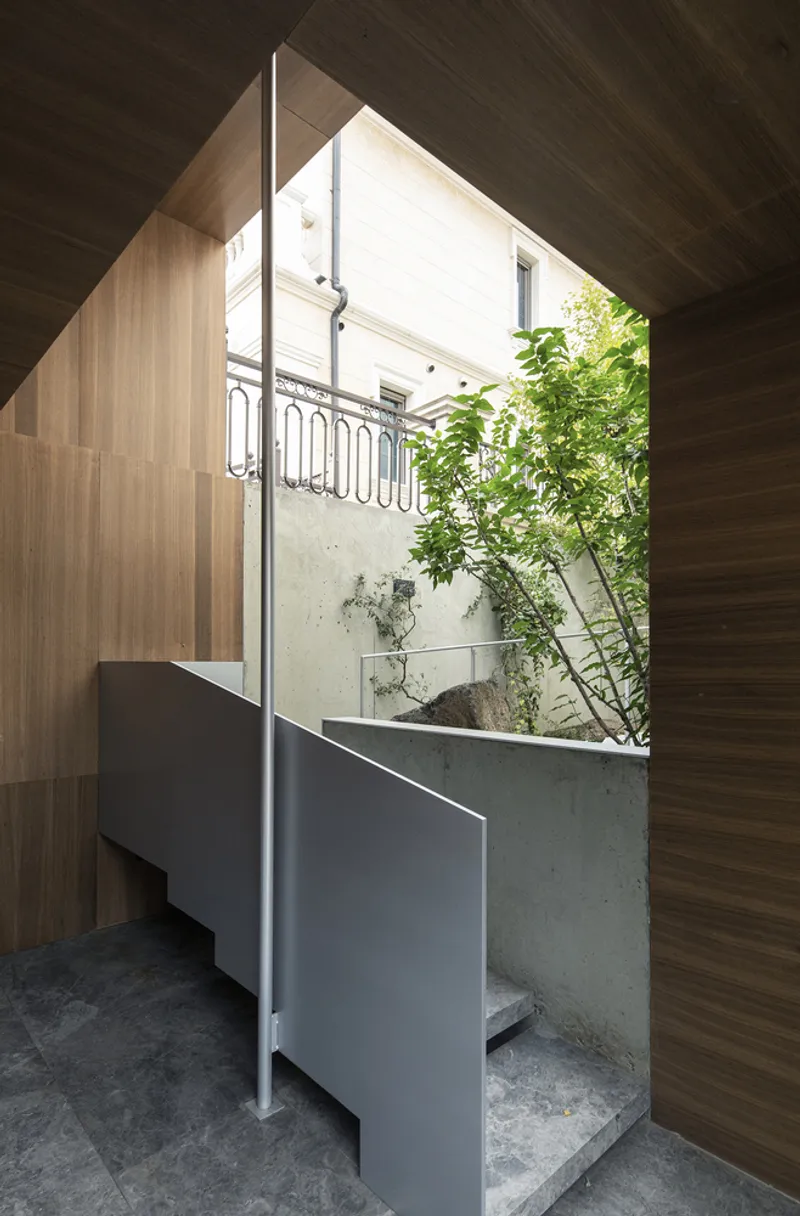
On the north side, a series of spatial transformations unfold. A stairway and the upward pull of the roof lead toward an auxiliary garden, open to the sky and bright with natural light. This smaller garden, filled with rocks and transplanted mountain plants, deepens the contrast between exposure and enclosure.
The design leverages differences in light, shade, and spatial density to reveal multiple characters of nature—sometimes raw and wild, sometimes framed and serene.
Materiality: Bamboo, Wood, Aluminum, and Stone
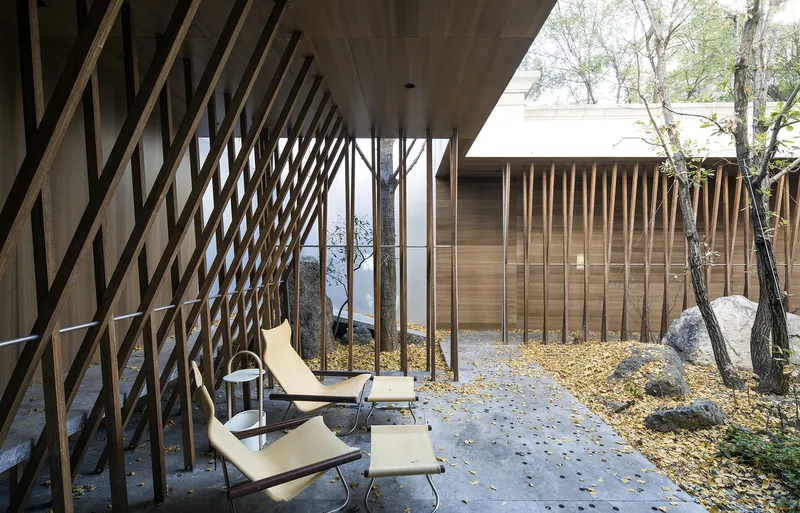
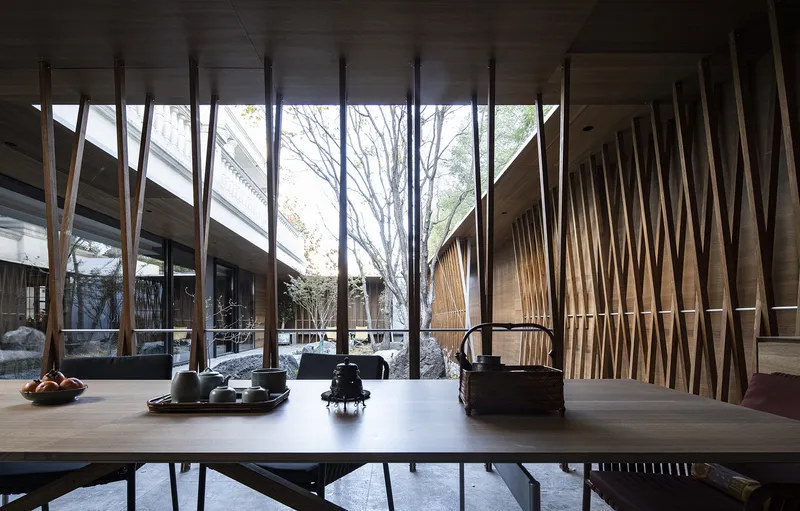
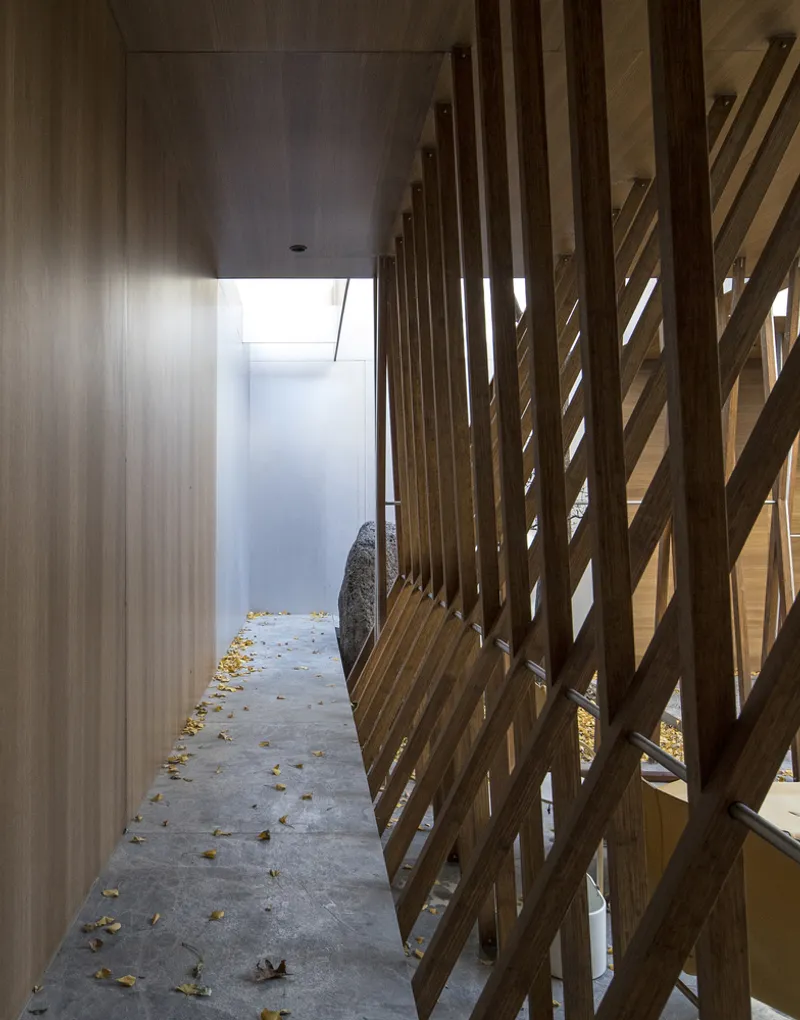
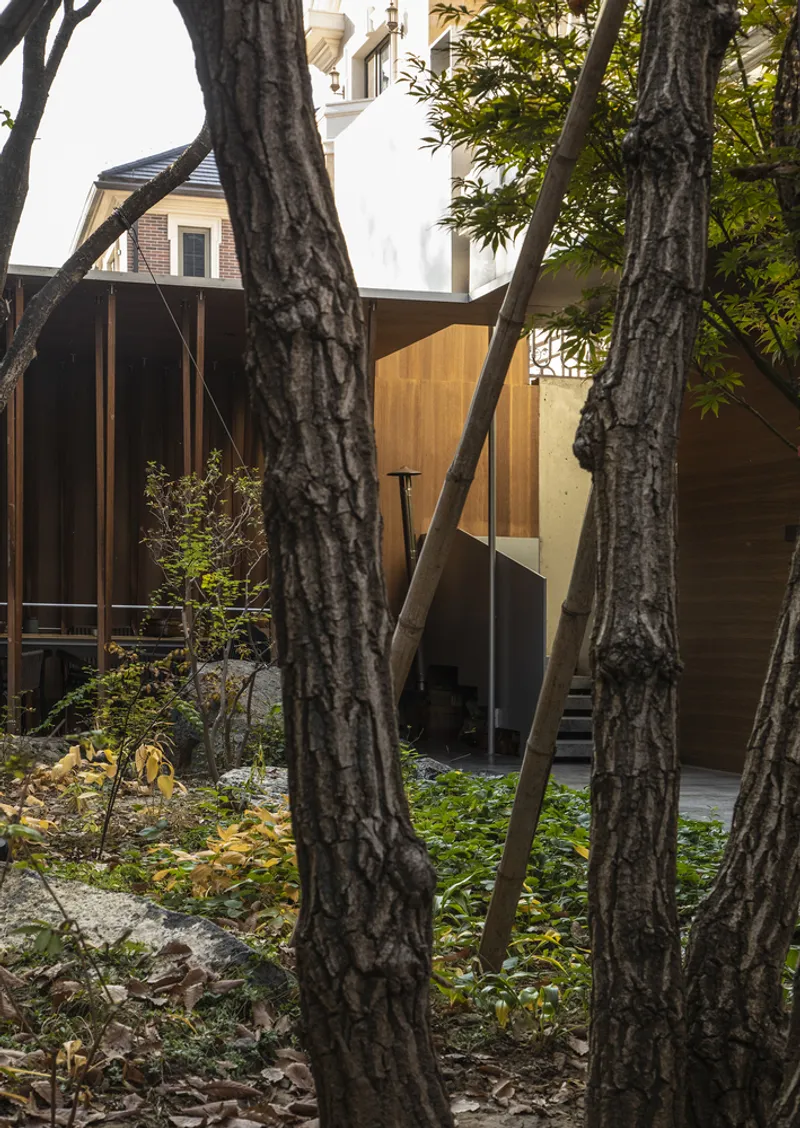
The garden’s primary structure uses slender synthetic bamboo arranged in dense, overlapping patterns. These bamboo elements act like a transparent fence, forming soft boundaries while maintaining visual permeability.
Inside, warm wooden panels line the spaces, offering a natural tactile quality. Outside, thin aluminum sheets create clean, crisp surfaces that contrast the warmth within.
Stone pathways—referred to as “bridges”—move fluidly through the environment, at times weaving between bamboo structures, at other times crossing rocky terrain. These pathways become a symbolic and literal journey between order and wildness.
Celebrating Nature in Its Rawest Form
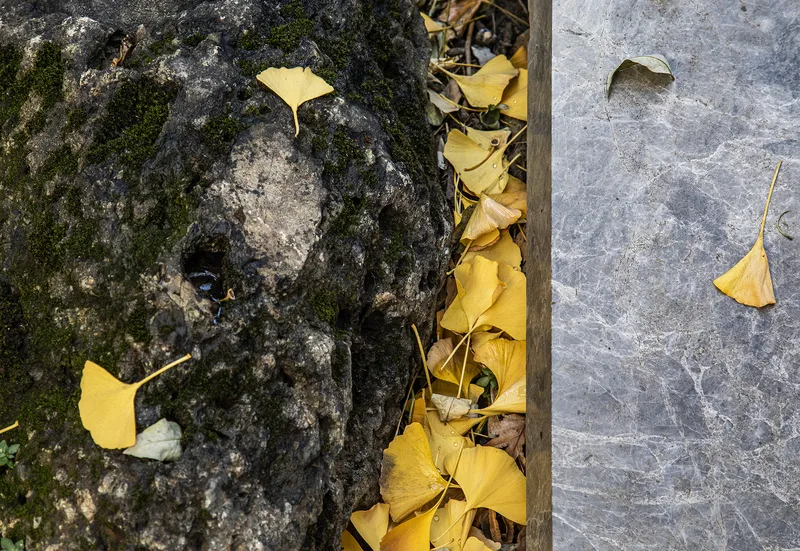
TAOA avoids using artificial nursery plants, choosing instead mountain-sourced trees, rocks, wildflowers, and groundcover. This decision emphasizes authentic natural textures and unpredictable beauty. The architectural geometry organizes these elements without overpowering them, allowing the wild character of nature to remain intact.
Fragments of real nature embedded in the geometric order release an inner vitality. The overlap of wild growth with controlled form brings a unique elegance to the urban garden, making it alive but refined.
A Quiet World Within the City
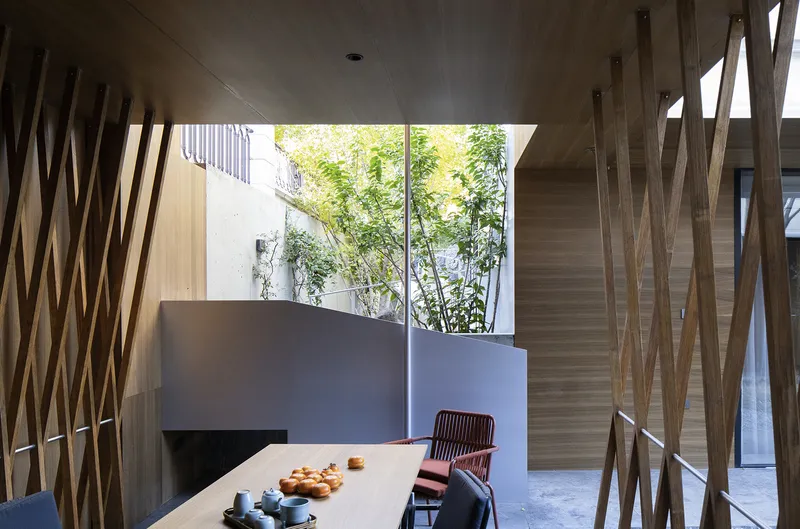
In high-density urban environments, the garden becomes a world of its own—an isolated sanctuary that absorbs and softens city noise. The continuous structure of pavilions and corridors forms a sheltered outdoor living space for the family.
The four eaves create subtle gradations of light and shade, framing the bright central courtyard as the heart of daily life. From every angle, visitors see layers of order and hierarchy, where natural elements appear as living paintings within geometric frames.
Across seasons, the garden becomes a stage for ongoing natural change—weather shifting, plants blooming, leaves falling—allowing inhabitants to witness an evolving landscape throughout the year.
All photographs are work of Tao Lei




Popular Articles
Popular articles from the community


Hill & Cross Opera: Sculptural Opera House Architecture Shaped by Tallinn’s Landscape and Identity
Hill & Cross Opera reimagines opera house architecture in Tallinn through its sculptural hill, civic plaza, glass wave and a luminous cross.

Co-life: Sustainable Architecture for Age-Friendly Community Living
Co-life reimagines sustainable architecture for seniors through courtyards, rammed earth, shared gardens, and spaces designed for belonging.

Riyadh For All: Intergenerational Urban Design for Active Aging in Rabat
Riyadh For All reimagines urban design in Rabat with intergenerational co-living, adaptive courtyards, and Moroccan cultural exchange today.

Conexión: Biophilic Design Reimagines High-Rise Living in Hong Kong
Conexión reimagines high-rise living in Hong Kong through biophilic design, green facades, shared spaces, daylight, water and nature within.

Similar Reads
You might also enjoy these articles


Hodi-Mandai Geram
Project Function: Preservation and revitalization of the Intangible heritage and socio-spatial identity of the Hodi by Housing, Cultural Memory Center, Sacred Grove, landscape, local tourism economy


Olio Towers: A Mid-Rise for Performers That Fuses Housing, Rehearsal, and Stage
Located blocks from Houston's Theater District, this modular tower stacks living units around a central performance atrium.

Oasis: Modular Green Housing Carved into Dhaka's Urban Fabric
A shortlisted Plugin Housing entry reclaims unauthorized settlements in Dhaka with stepped concrete volumes, green roofs, and ventilation-driven design.

Black Hole: A Floating Megastructure for the Post-Physical Era
Emiliano Mazzarotto envisions a spherical, self-scaling arena where e-sports, digital hotels, and holographic stadiums replace traditional public space.


Explore Vertical Garden Competitions
Discover active competitions in this discipline



Challenge to reimagine the Iron Throne


Photograph architecture without architects


Illustrate the lost glory of Angkor Wat - Render Challenge


Design challenge to reuse E-waste
Comments (0)
Please login or sign up to add comments
No comments yet. Be the first to comment!