
Gia Dinh House by G+architects: Innovative Co-Living in Ho Chi Minh City
Gia Dinh House by G+architects is a flexible, co-living urban home in Ho Chi Minh City, combining communal spaces, rentals, and natural ventilation.


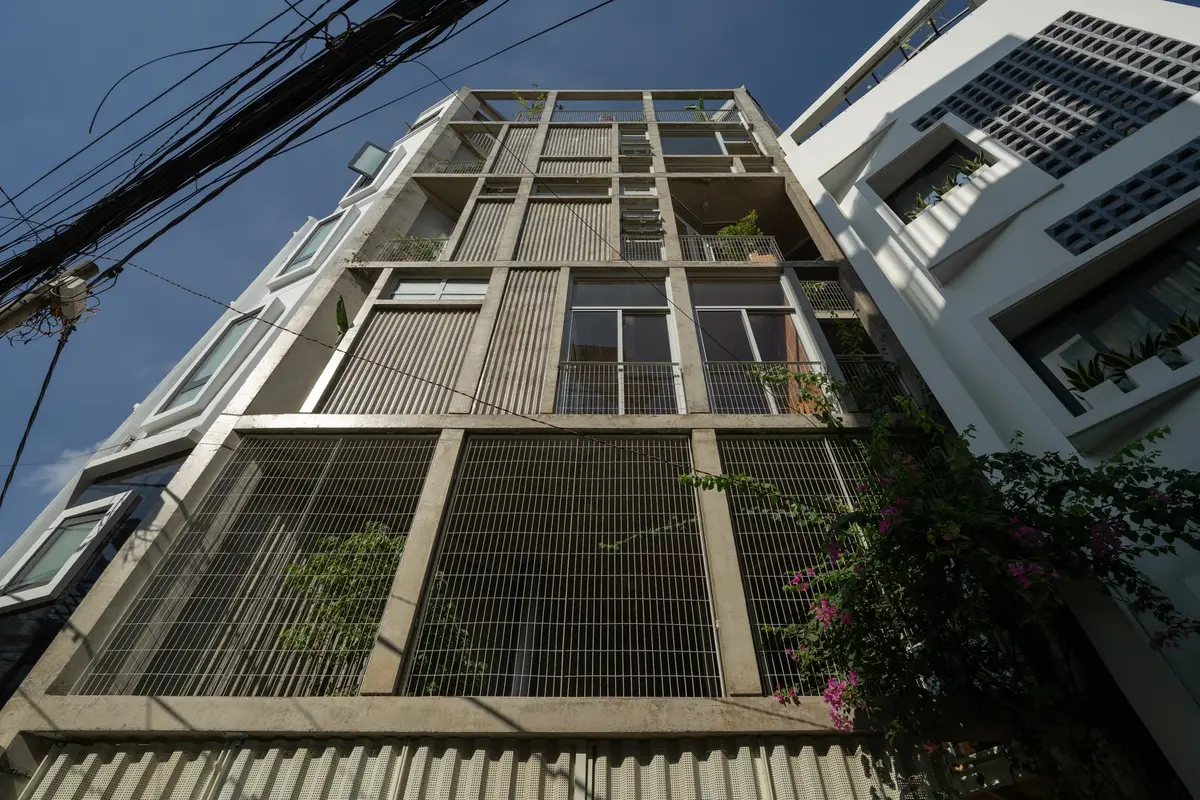
Gia Dinh House, designed by G+architects, stands as a landmark example of modern urban living in Ho Chi Minh City. Situated in a historically significant residential area, once the heart of Gia Dinh Province, this contemporary home sits on a unique chamfered plot that aligns with the street axis, creating a visually striking frontage and a dynamic interaction with the neighborhood.

Context and Site
The project occupies a long-established urban setting in Gia Dinh Ward, blending historical context with modern design strategies. The site posed challenges due to its irregular shape, which G+architects transformed into an opportunity to create a flexible and engaging living environment.

Program and Client Needs
Gia Dinh House addresses a multi-functional lifestyle by combining:
- An independent family residence
- Rental apartments for income generation
- Flexible spaces suitable for shared offices or a café
The design embodies a compact co-living model, fostering a sense of community among residents while maintaining privacy and comfort. The integration of shared workspaces and common areas encourages interaction, collaboration, and social engagement.

Design Strategies and Spatial Qualities
The architecture of Gia Dinh House emphasizes openness, flexibility, and connectivity:
- Ground and mezzanine levels: Minimal partitions create a seamless flow from the alley into the house.
- Transparency: Steel mesh gates and doors blur the boundary between interior and exterior, enhancing visual connectivity.
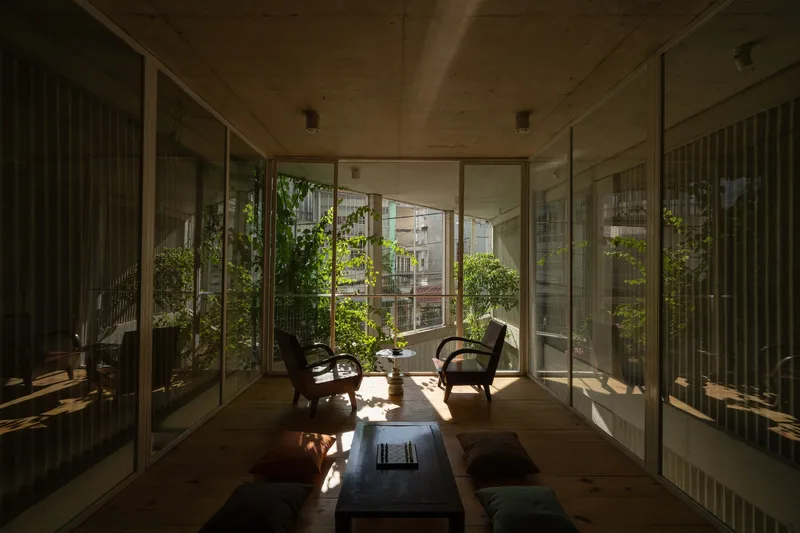
- Communal void: A central void acts as a transitional space, encouraging resident interaction and functioning as a flexible gathering area.

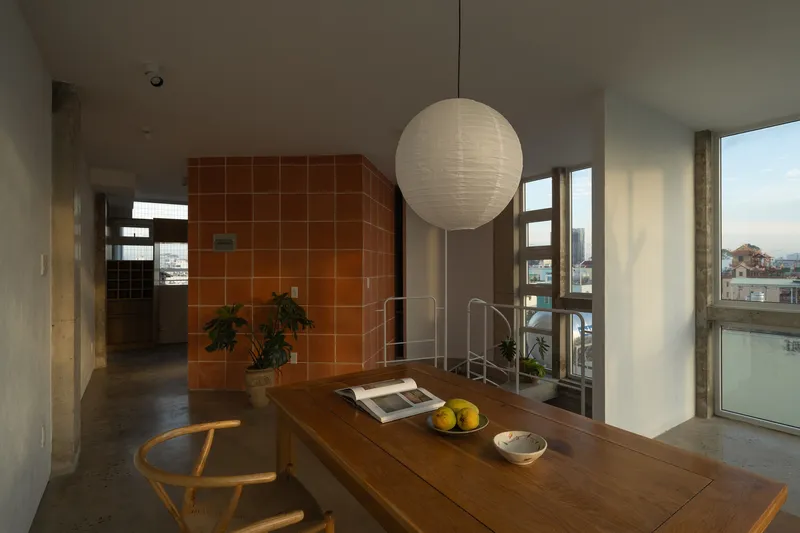
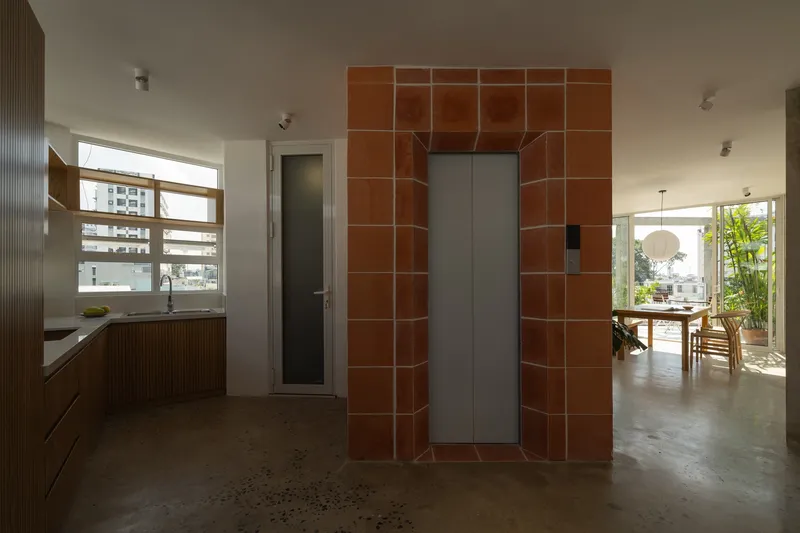
The elevator core is a sculptural centerpiece, appearing to float within the void while also providing structural support. Walls extending from the elevator shaft form triangular niches, creatively utilized for loggias, toilets, vertical gardens, or planted corners.
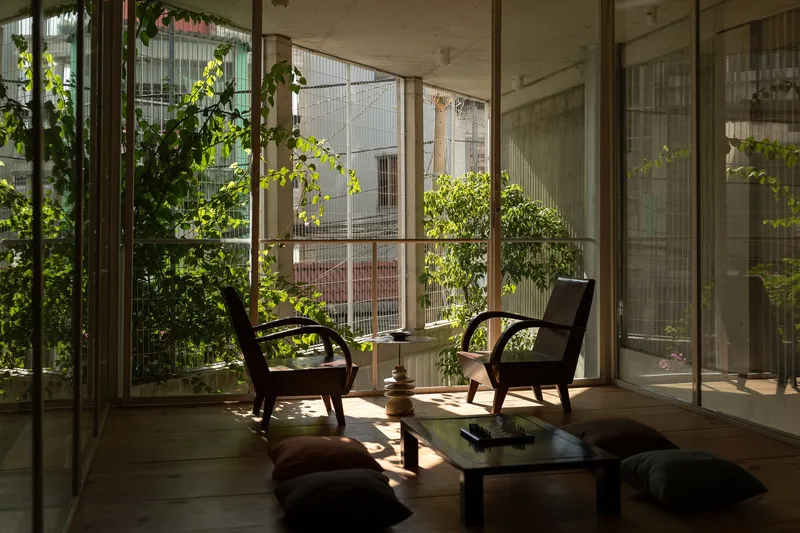
At the rear, a vertical garden facing west provides shading and works alongside louvered panels to facilitate natural cross-ventilation. Floor lobbies double as semi-public spaces, enhancing airflow, visual openness, and functional flexibility for activities such as reading, receiving guests, or enjoying the in-between garden spaces.

Materials and Interior Design
Gia Dinh House harmonizes natural materials and contemporary design:
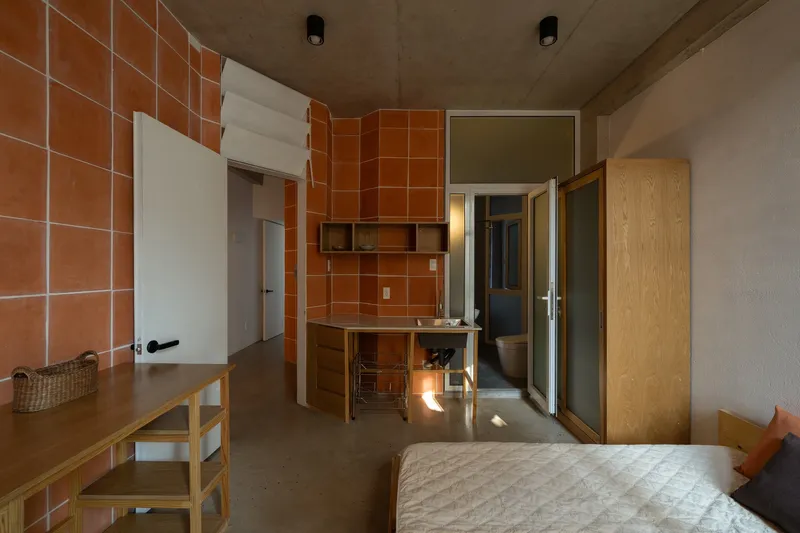
- Wood and glass elements: Warmth, transparency, and texture define living and dining spaces.
- Concrete and steel: Provide structural robustness and modern aesthetics.
- Lighting and furniture: Thoughtfully curated to complement materiality and spatial dynamics.
Concept and Experience
This residence demonstrates an innovative approach to urban co-living, balancing functionality, flexibility, and aesthetics. It transforms a skewed, irregular site into a vibrant home where residents can live, share, and connect. Gia Dinh House exemplifies modern Vietnamese residential design, showcasing how architectural strategies can enhance community living while respecting site context.
All photographs are works of Quang Dam


Popular Articles
Popular articles from the community


LT2A and OPEN Architectes Thread a Brick and Glass High School Through a Wooded Belgian Campus
In Braine-l'Alleud, a 3,000 m² wing for Collège Cardinal Mercier pairs pale brick with a glazed colonnade, deferring to a small chapel and a dense wood.

longwave studio Reorganizes a 112 m² Tainan Apartment Around the Daily Routines of a Family and Two Cats
In Tainan, Taiwan, birch plywood, rust-red furniture and a freestanding plaster wall link arrival, storage, work and family life in one apartment.

GROUP A Strips a 1969 Rotterdam Harbor Headquarters to Its Frame and Wraps It in Timber Louvers
In Rotterdam's M4H harbor district, Ferro Offices reuses a 1969 frame, adds one timber storey and reaches BREEAM-NL Outstanding.

Jaramillo Van Sluys Arquitectura and Urbanismo Turn a Demolished Registry Lot in Quito into an Orchard Plaza
In Quito's Centro Histórico, a 2,800 m² plaza exposes the San Agustín convent wall and redraws its lost Augustinian orchard in volcanic stone.

Similar Reads
You might also enjoy these articles


Hodi-Mandai Geram
Project Function: Preservation and revitalization of the Intangible heritage and socio-spatial identity of the Hodi by Housing, Cultural Memory Center, Sacred Grove, landscape, local tourism economy


Olio Towers: A Mid-Rise for Performers That Fuses Housing, Rehearsal, and Stage
Located blocks from Houston's Theater District, this modular tower stacks living units around a central performance atrium.

Oasis: Modular Green Housing Carved into Dhaka's Urban Fabric
A shortlisted Plugin Housing entry reclaims unauthorized settlements in Dhaka with stepped concrete volumes, green roofs, and ventilation-driven design.

Black Hole: A Floating Megastructure for the Post-Physical Era
Emiliano Mazzarotto envisions a spherical, self-scaling arena where e-sports, digital hotels, and holographic stadiums replace traditional public space.

Explore Ho Chi Minh City Competitions
Discover active competitions in this discipline

Challenge to reimagine the Iron Throne

Photograph architecture without architects

Illustrate the lost glory of Angkor Wat - Render Challenge

Design challenge to reuse E-waste
Comments (0)
Please login or sign up to add comments
No comments yet. Be the first to comment!