
Gil Mello Arquitetura Scatters Timber Pavilions Across a Brazilian Garden in Barão Geraldo House
A 217-square-meter residence in Brazil treats architecture as a cluster of open pavilions woven through tropical landscaping.


Most houses expand by adding rooms. Barão Geraldo House, designed by Gil Mello Arquitetura, expanded by adding an entire neighboring lot and treating the combined site as a landscape first, a building second. Completed in 2023 in Brazil, the 217-square-meter residence organizes domestic life across a constellation of timber-framed pavilions rather than a single consolidated volume. The result reads less like a house and more like a small settlement, each pitched roof marking a distinct program while the garden flows continuously between them.
What makes the project genuinely interesting is its refusal to treat the lot acquisition as a simple footprint grab. Instead of stretching the existing house outward, Gil Mello distributed the program into discrete volumes connected by brick-paved paths, covered walkways, and generous open ground. The architecture disappears into the garden. Terracotta tile roofs, vertical timber cladding, and exposed rafters set up a material language that is warm, low-key, and deliberately regional, more interested in shade and airflow than in formal gymnastics.
A Village Logic
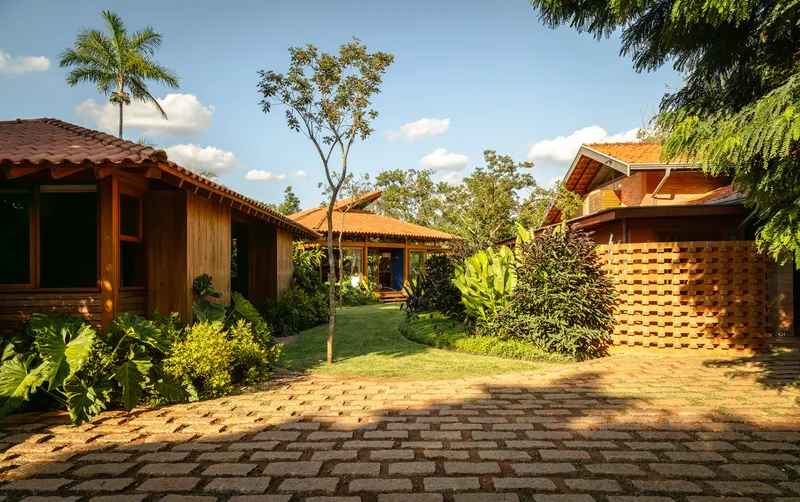
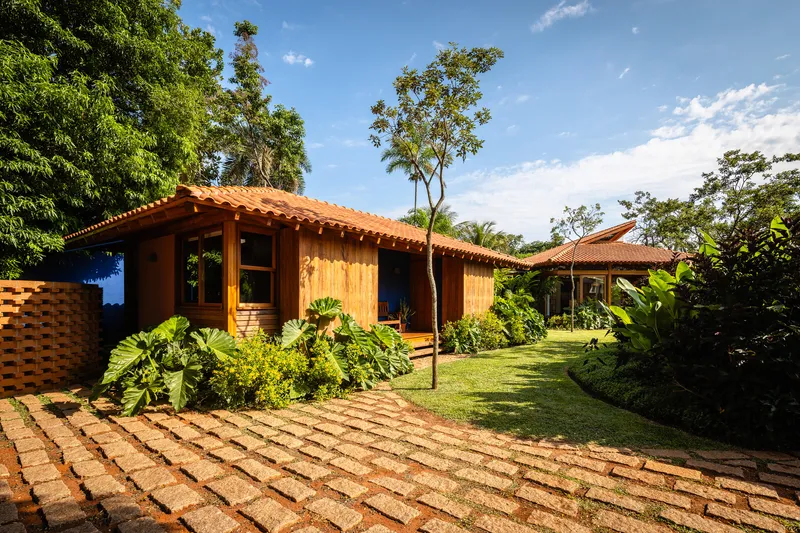
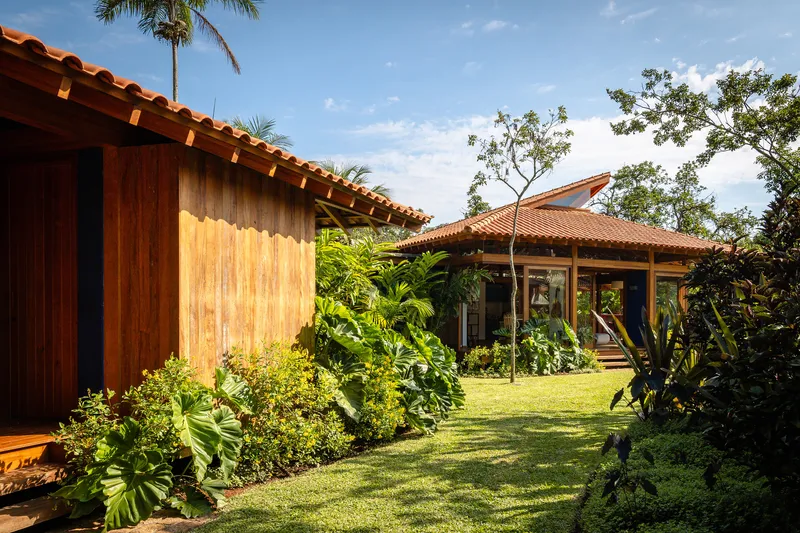
The brick-paved driveway that opens the approach sets the tone immediately: you walk through a cluster of buildings, not up to a single facade. Pavilions are rotated and offset from one another, creating pockets of shade and multiple sightlines through the vegetation. Patterned pavers stitch the volumes together at ground level while allowing planted beds to interrupt the hardscape wherever possible.
This village-like arrangement has practical consequences. Each pavilion benefits from cross-ventilation on at least two sides. The gaps between buildings become micro-gardens that pull cool air through interiors and provide every room with a green outlook. It is a planning strategy well suited to tropical climates, where the worst thing a house can do is trap heat inside a single sealed box.
Timber Structure as Ornament
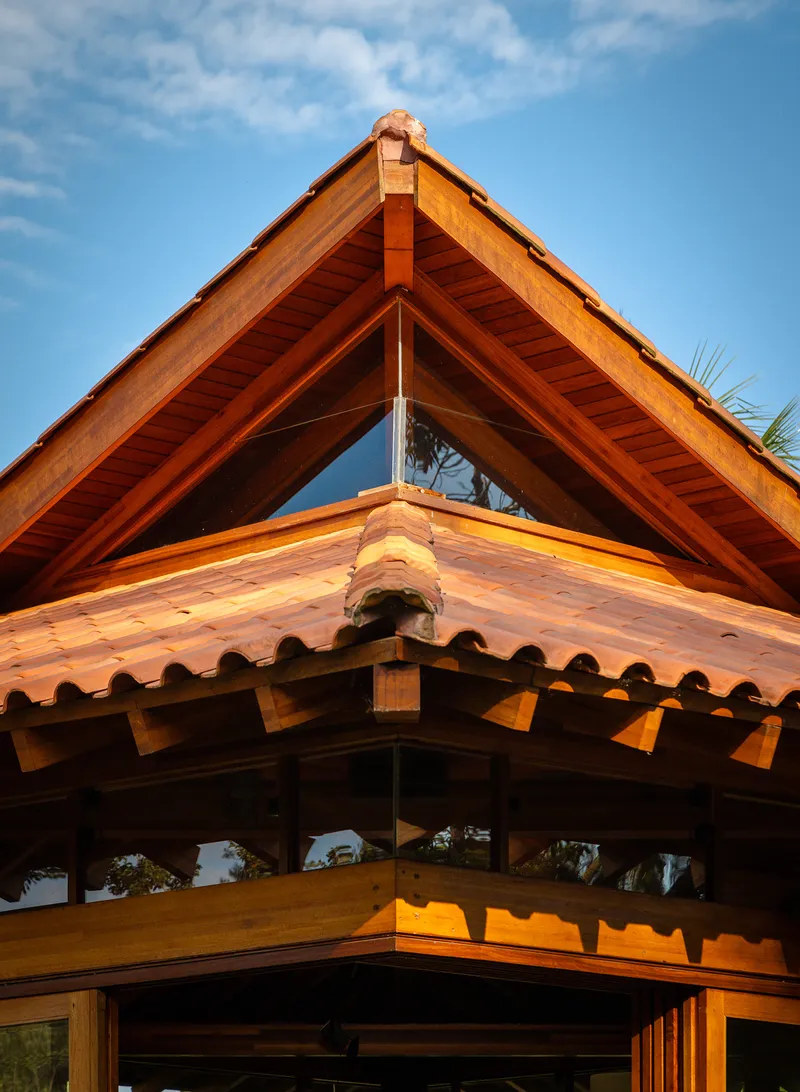
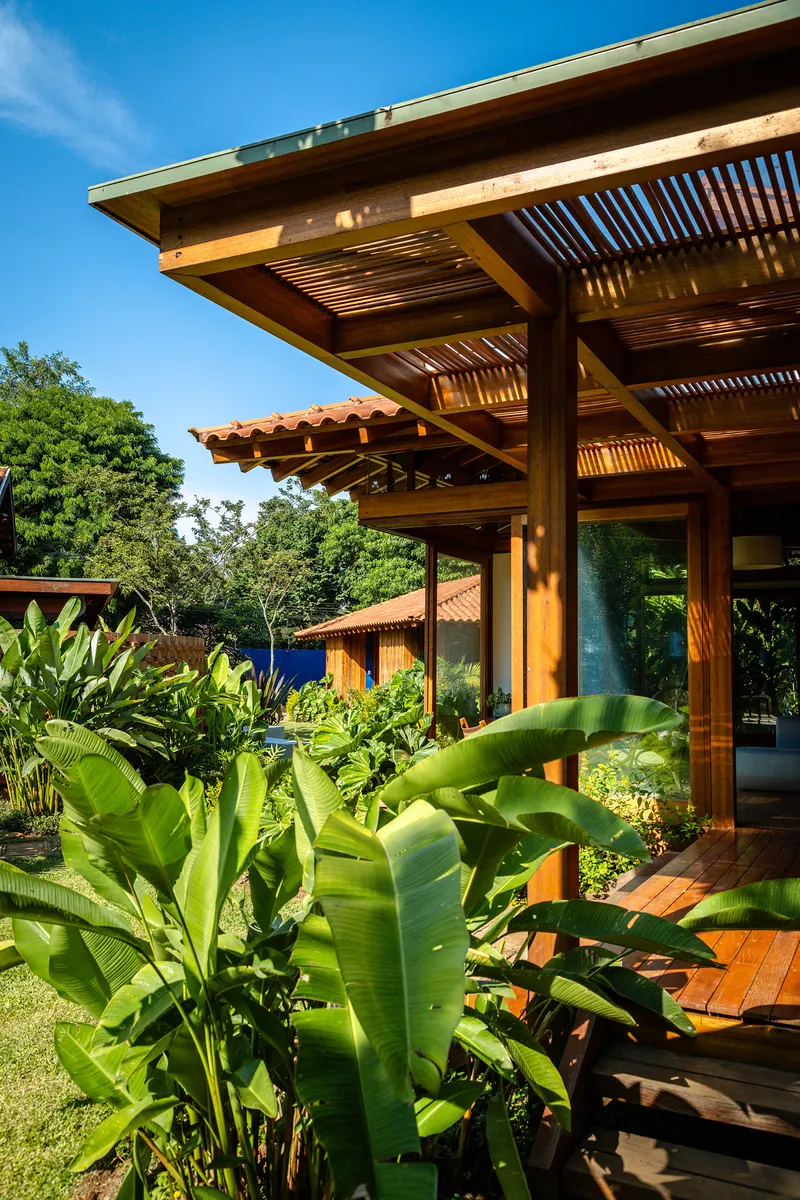

The exposed timber framing does real structural work, but it also carries the project's entire aesthetic identity. Layered gable peaks and deep slatted overhangs give the roofline a rhythmic complexity that keeps the low-slung volumes from reading as flat or monotonous. Rafters, purlins, and ridge beams are left visible throughout, turning the ceiling into the most detailed surface in every room.
Cantilevered eaves shade glazed walls without relying on external louvers or shutters. The timber detailing is precise but not precious: joints are clean, members are generously proportioned, and the palette stays within a narrow tonal range of honey-gold wood and red-brown clay tile. There is no moment where the structure tries to surprise you. It simply repeats and refines one good idea.
Perforated Brick and Material Warmth
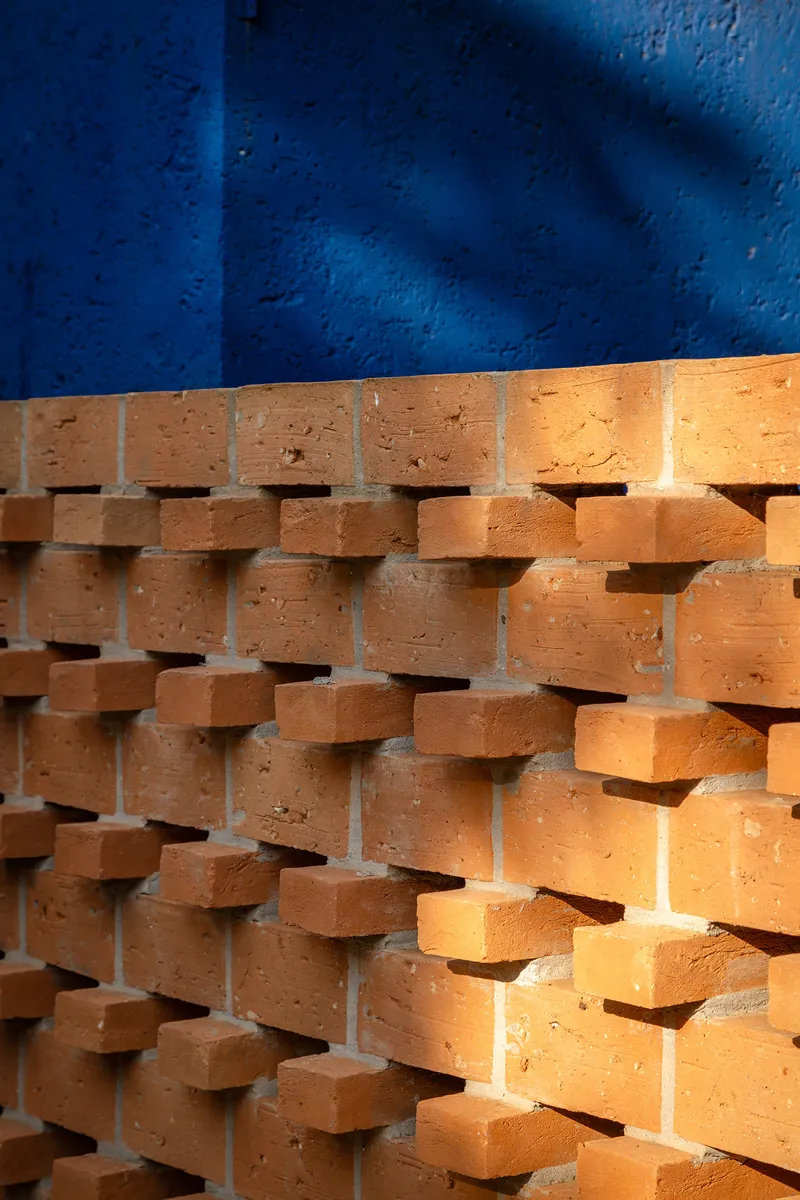
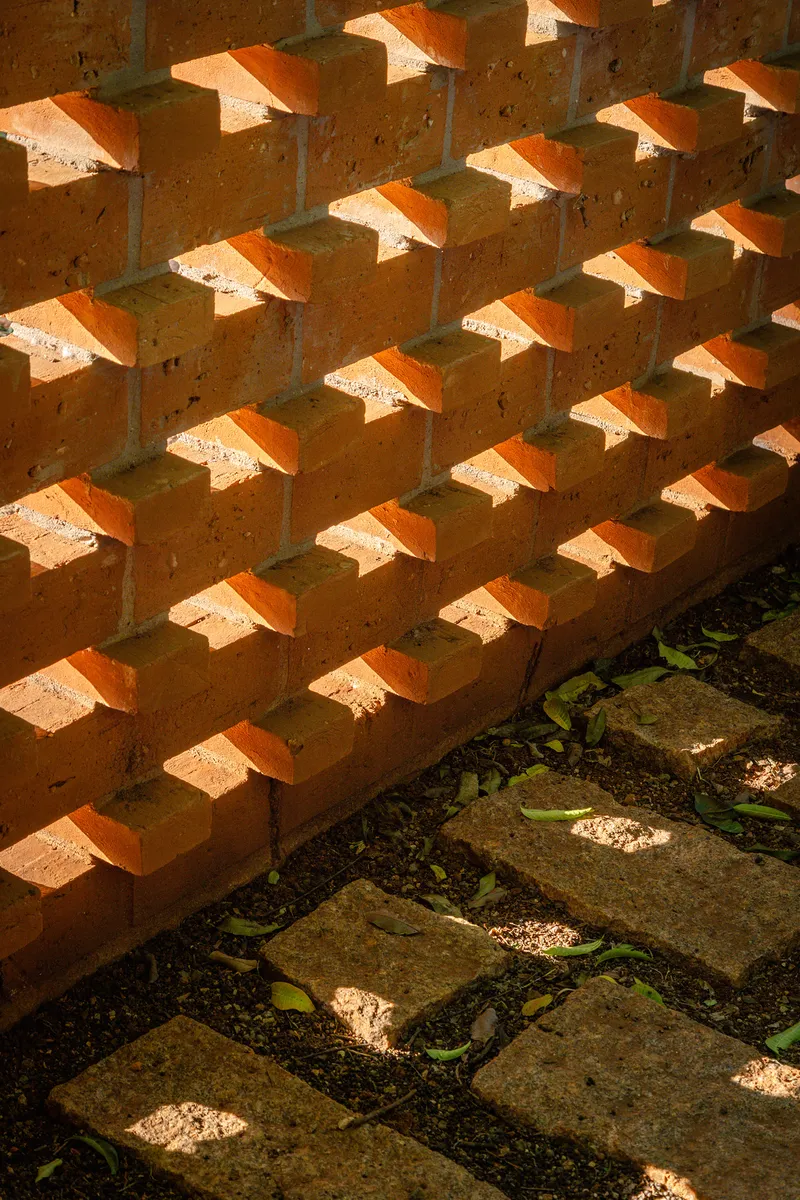
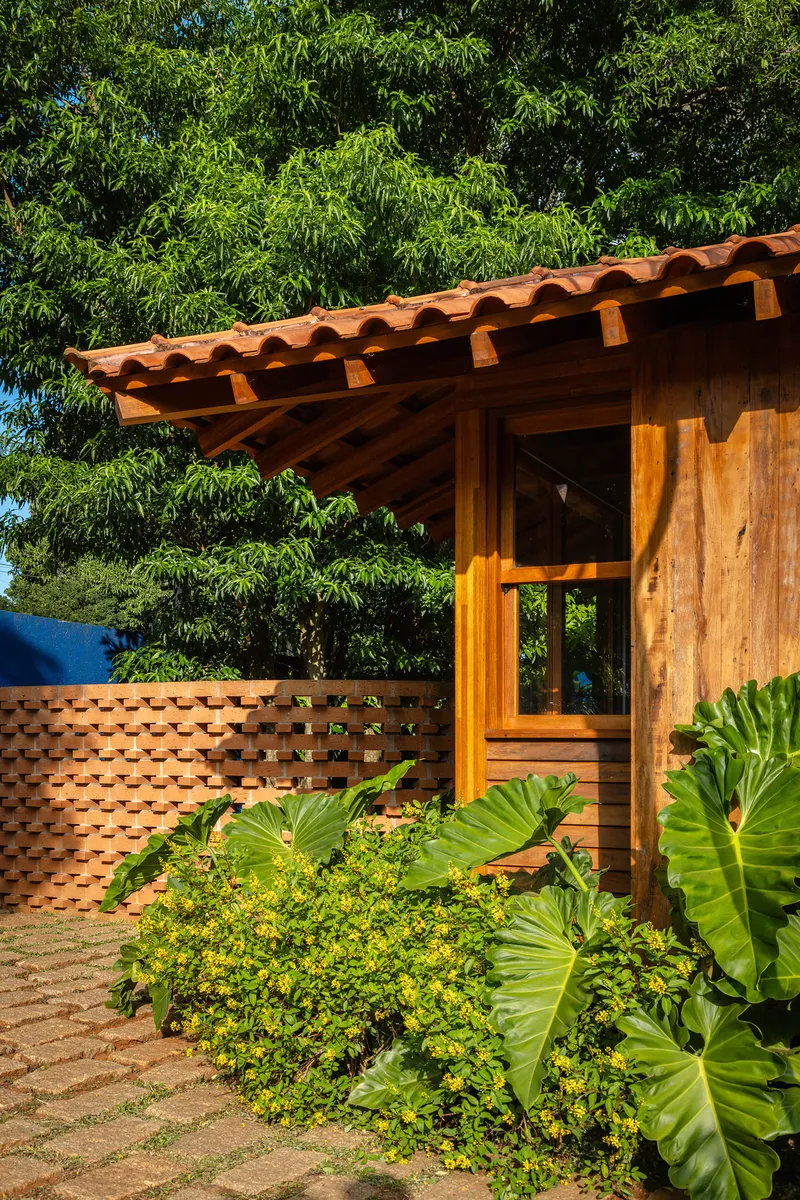
Perforated terracotta brick screens appear at strategic points along the pavilion edges, filtering light and breeze while maintaining visual privacy. The rounded edges of each brick soften the wall surface, and the diagonal shadow patterns they cast onto stone pavers shift constantly through the day. Against a blue-painted wall, the terracotta takes on an almost ceramic quality that elevates a humble building material into something genuinely photogenic.
These screens also serve as buffers between public and private zones. Where a glass wall might expose a bedroom to a pathway, a brick screen steps in, maintaining openness without sacrificing comfort. It is a straightforward, low-tech solution that adds texture to the project without relying on mechanical systems or expensive cladding.
Open-Air Living and Covered Terraces

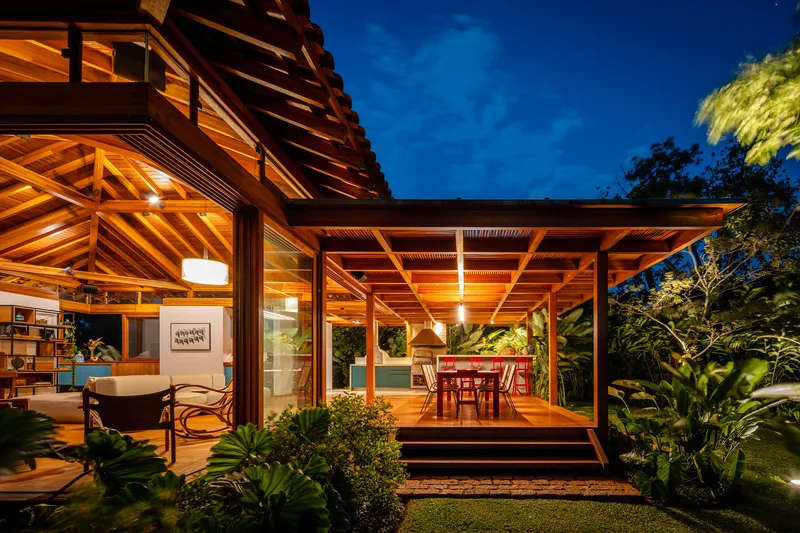

The line between indoors and outdoors barely exists here. Slatted timber ceilings extend from enclosed rooms out over teak decks, creating covered terraces that function as the primary living spaces for much of the year. The dining area, visible through full-height glazing from the garden, opens directly onto these shaded platforms, blurring the threshold between meal and landscape.
A flat timber pergola with slatted ceiling panels shelters a second dining terrace closer to the lawn. The difference between these two outdoor rooms is one of formality: one is tied to the kitchen and the house's social core, the other is a standalone structure that belongs to the garden. Both are furnished lightly and finished consistently, reinforcing the sense that the entire site, not just the enclosed volumes, is the house.
Landscape as Architecture
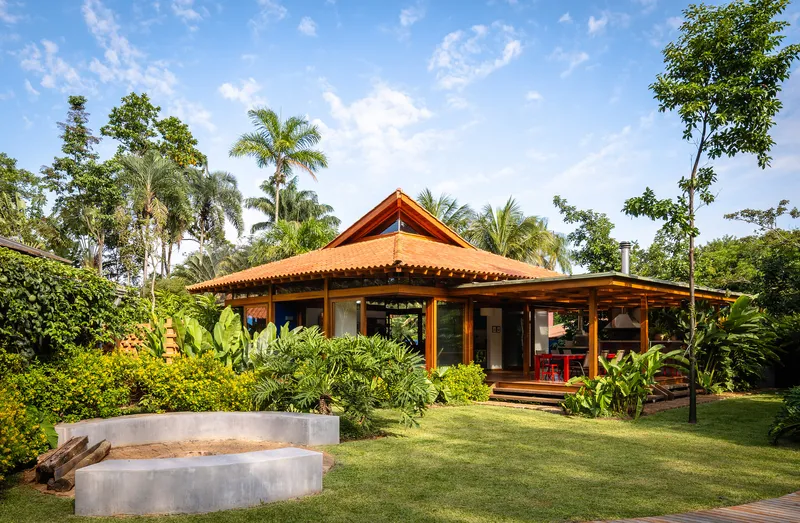
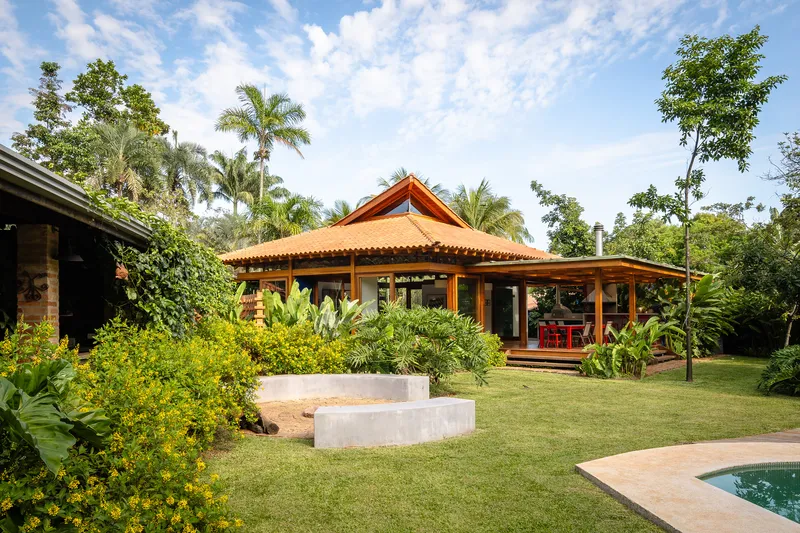
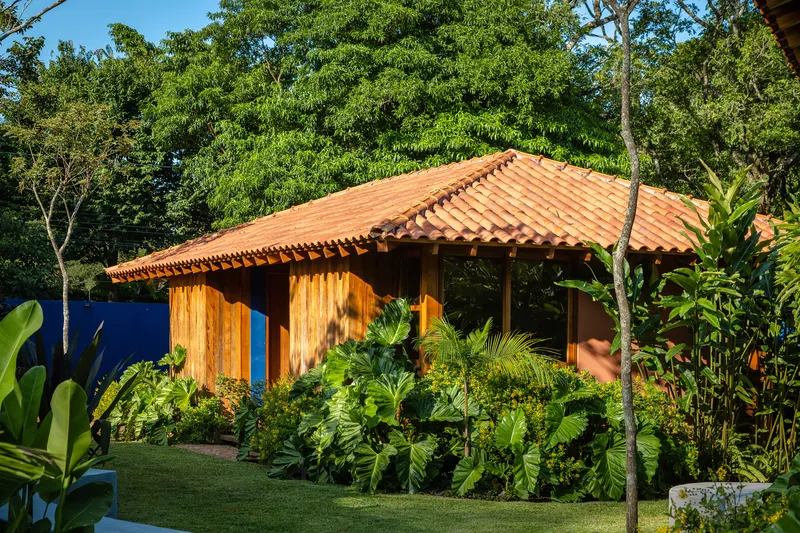
Tropical planting is not decoration here; it is structure. Mature palms, elephant ears, banana plants, and flowering shrubs define spatial boundaries as firmly as any wall. The garden was clearly designed in tandem with the architecture, not applied afterward. Concrete benches and planter boxes are placed to anchor views and create seating moments within the green framework.
The lawn itself becomes a kind of room, bordered by pavilion edges and tree canopies, generous enough to feel like a public park yet private enough for domestic life. Walking through the property, you move between zones of sunlight and deep shade, each transition marked by a change in foliage or ground surface rather than by a door.
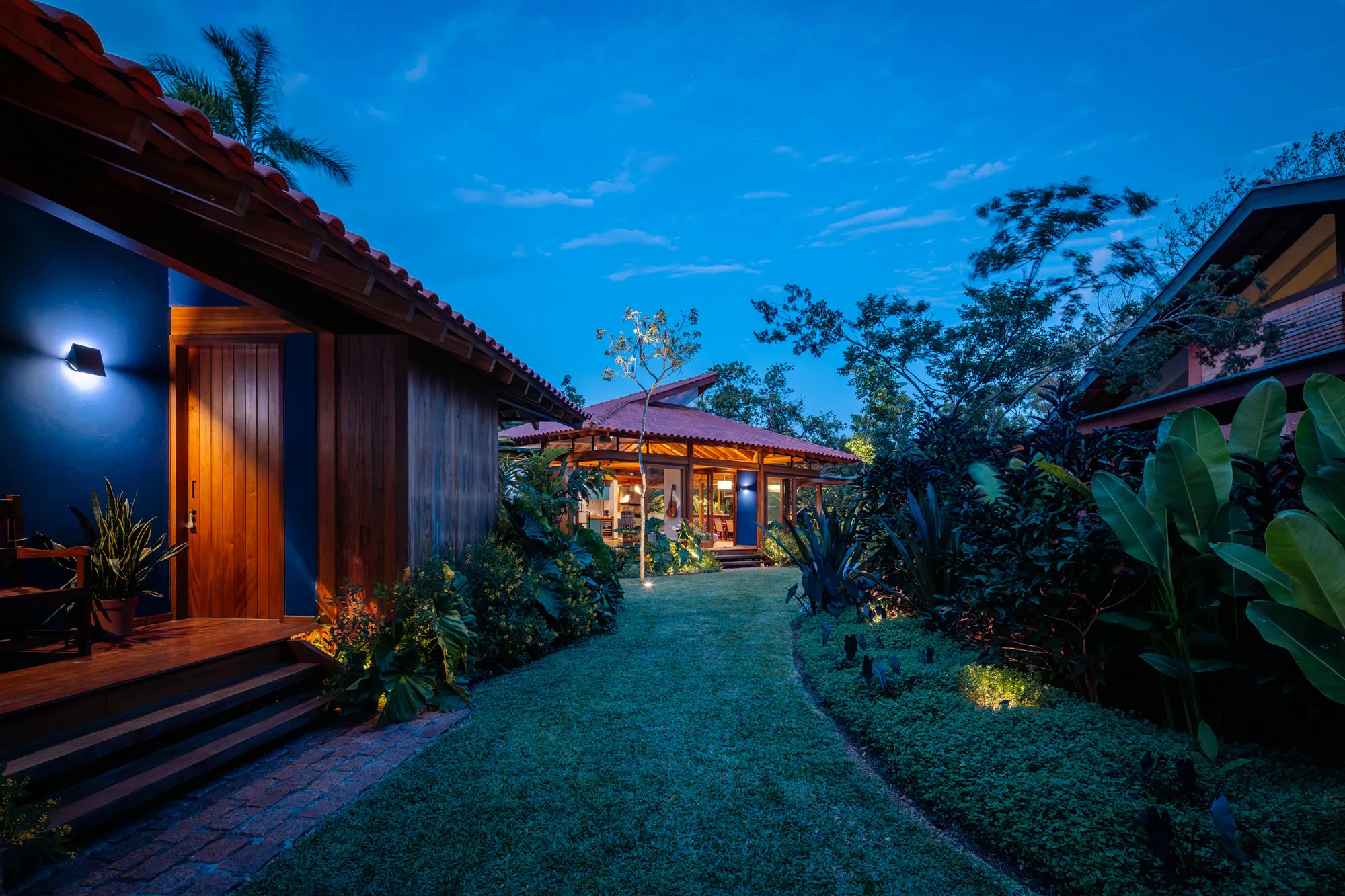
The Pavilions at Dusk
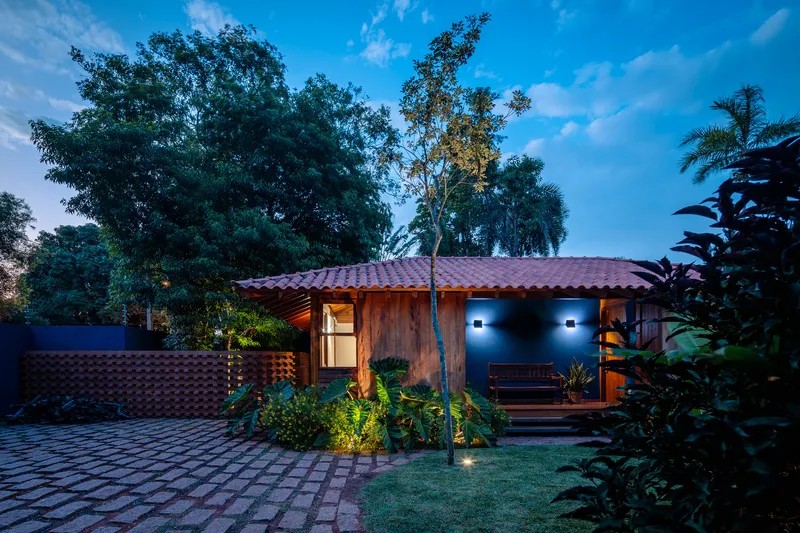
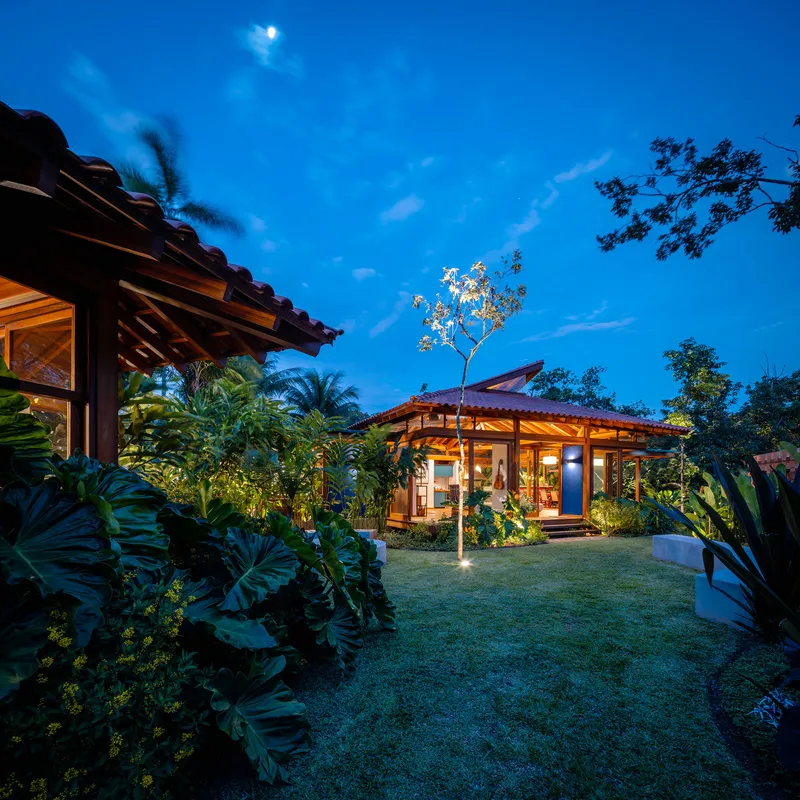
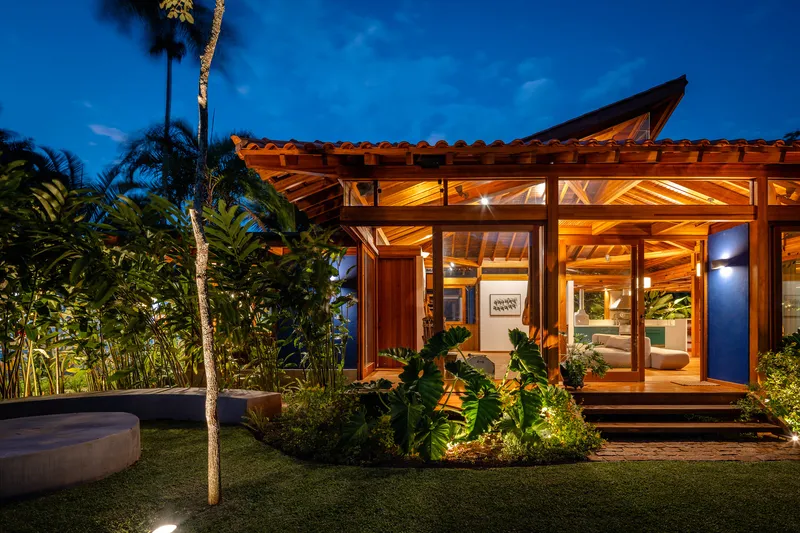
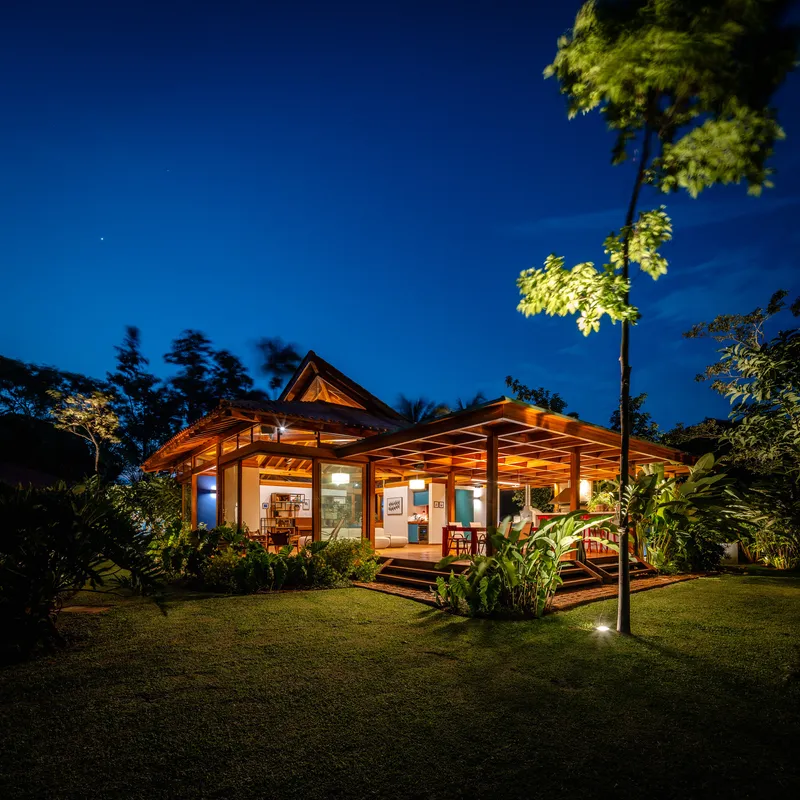
At twilight, the timber volumes glow from within. The glazed facades that seemed transparent during the day become lanterns, and the exposed trusses visible through the glass give each pavilion an almost skeletal clarity. The garden, lit only by warm interior light spilling outward, takes on a theatrical depth. You can read the entire spatial logic of the project from outside: separate volumes, clear structure, continuous landscape.
The nighttime views also reveal how much the overhanging eaves contribute to the project's character. Illuminated from below, the slatted ceilings and deep rafter shadows create a layered canopy effect that softens the transition from built form to sky. It is a small detail, but it confirms that the architects thought carefully about how the house performs across all hours, not just in the midday sun.
Interior Threshold
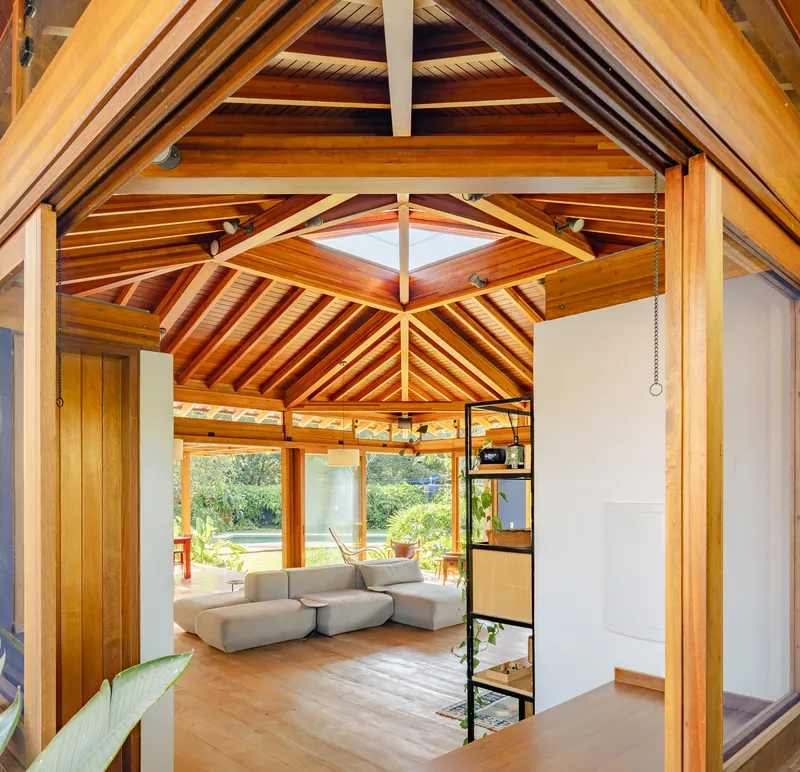
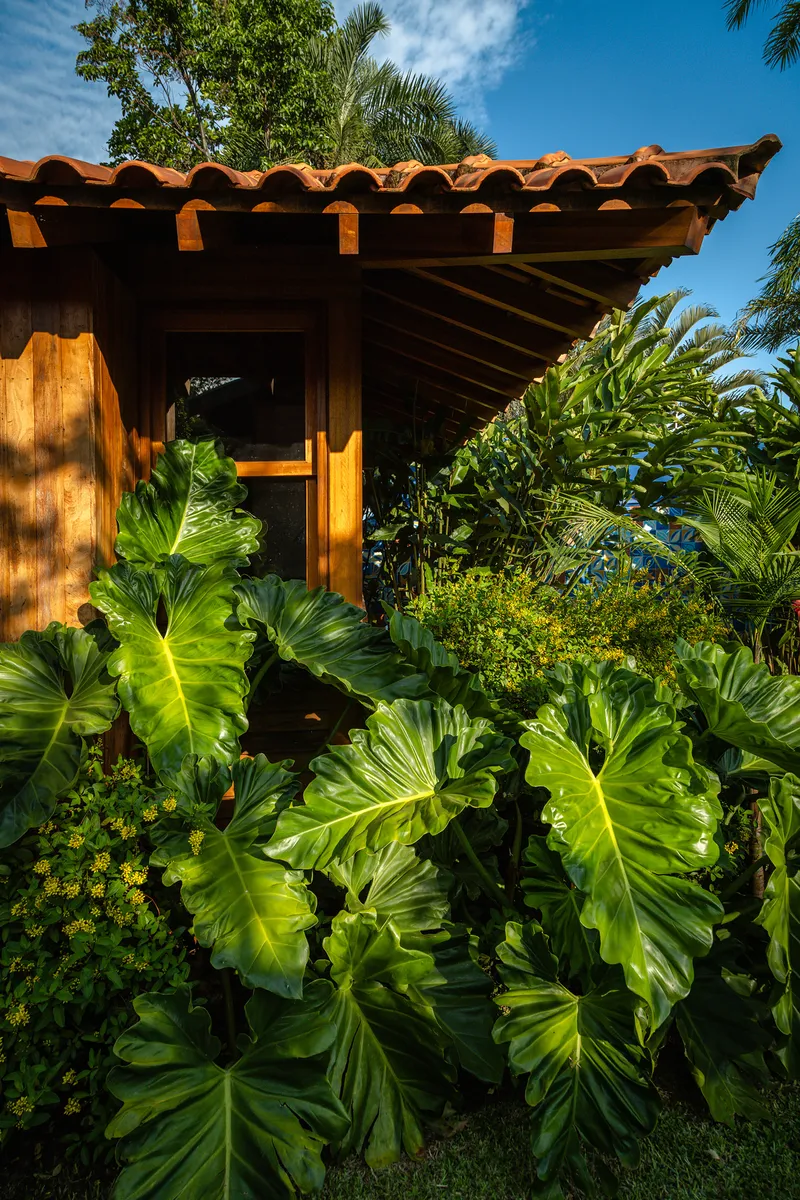

Even the interior moments that do exist are framed by openings to the outside. A doorway view into a living space reveals exposed timber roof rafters and a skylight above, bathing the room in diffused natural light. The entry portal, framed by timber posts with lush elephant ear plantings below, announces arrival without ceremony. Red furniture under a tree canopy turns the front elevation into a room with no walls at all.
The common thread is porosity. Every enclosed space connects to an adjacent outdoor one, and the materials, timber overhead, stone underfoot, greenery at eye level, remain consistent regardless of whether you are technically inside or out. The architecture insists on continuity.
Plans and Drawings
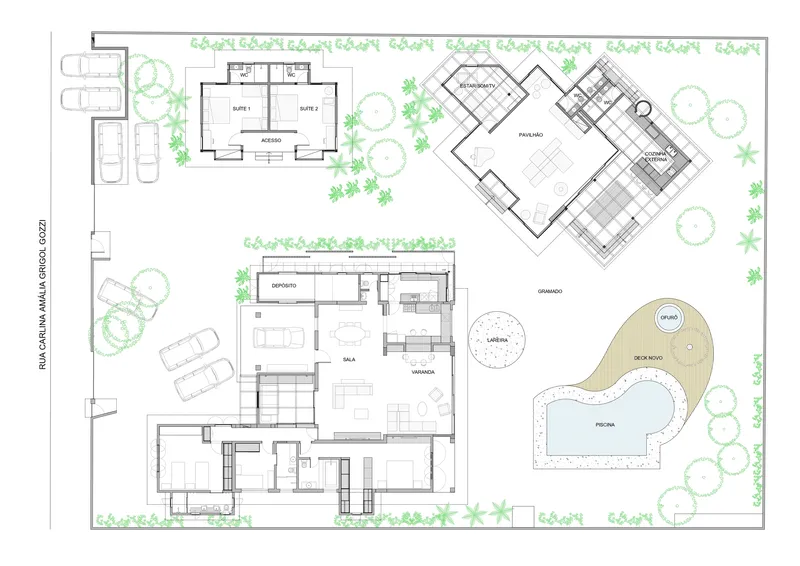

The site plan confirms what the photographs suggest: three distinct building volumes arranged asymmetrically across the lot, with a pool and curved deck occupying the gap between them. The planted landscape wraps the entire composition, with trees and garden beds mediating between the pavilions and the property boundary. The drawing makes clear that no single volume dominates; the house is the sum of its parts, including the voids between them.
Why This Project Matters
Barão Geraldo House is a useful corrective to the idea that a house must be a single, heroic object. By fragmenting the program into pavilions and letting the garden do the work of connecting them, Gil Mello Arquitetura produced a residence that is fundamentally generous: generous with air, generous with shade, and generous with the pleasure of moving through a landscape. The decision to acquire a neighboring lot and distribute rather than consolidate is the kind of move that sounds obvious in hindsight but requires genuine conviction at the outset.
The project also demonstrates that regional materials, terracotta tile, timber framing, perforated brick, can produce architecture that feels contemporary without chasing novelty. Nothing here is radical, and that is precisely the point. Barão Geraldo House is well-made, well-sited, and well-proportioned. In a discipline that often rewards spectacle, it is worth celebrating a project that earns its quality through discipline and care.
Barão Geraldo House by Gil Mello Arquitetura, lead architect Gil Mello. Located in Brazil. 217 m². Completed in 2023. Photography by Manuel Sá.
About the Studio
Share Your Own Work on uni.xyz
If projects like this are the kind of work you want to make, uni.xyz is a place to publish your own, find collaborators, and enter design competitions.




Popular Articles
Popular articles from the community


EW PARK: Sustainable Architecture Reimagines the Future of Urban Parking
EW PARK reimagines city parking as a modular wooden tower combining automation, solar energy, electric mobility, and adaptable urban design.

Hill & Cross Opera: Sculptural Opera House Architecture Shaped by Tallinn’s Landscape and Identity
Hill & Cross Opera reimagines opera house architecture in Tallinn through its sculptural hill, civic plaza, glass wave and a luminous cross.

Riyadh For All: Intergenerational Urban Design for Active Aging in Rabat
Riyadh For All reimagines urban design in Rabat with intergenerational co-living, adaptive courtyards, and Moroccan cultural exchange today.

Conexión: Biophilic Design Reimagines High-Rise Living in Hong Kong
Conexión reimagines high-rise living in Hong Kong through biophilic design, green facades, shared spaces, daylight, water and nature within.


Similar Reads
You might also enjoy these articles

Bao Huynh Watercolor Atelier: A Serene Art Retreat in Hội An
Bao Huynh Watercolor Atelier in Hội An blends multifunctional art spaces, sustainable design, local materials, and family-friendly living in a serene environment.

Atelier Macri Concept Store Interior Design by CASE-REAL
Atelier Macri store features a "ko" counter, walnut wood details, cork displays, blending retail, gallery, and seamless customer experiences.

Manuel Vargas Izquierdo Stadium and High-Performance Sports Center: Architectural Excellence in Jalpa de Méndez
The Manuel Vargas Izquierdo Stadium blends sustainable design, inclusive sports facilities, and cultural-inspired architecture, revitalizing Jalpa de Méndez’s public spaces.

KAKR Buluh Awar Hall: Revitalizing Community and Ecology Through Bamboo Architecture
Community built bamboo hall revitalizes Buluh Awar village, empowering youth, restoring ecology, celebrating vernacular craftsmanship through sustainable architecture and culture.


Explore Residential Building Competitions
Discover active competitions in this discipline



Challenge to design a portable theatre


Challenge to design a portable music platform


Challenge to design an open learning module for the elderly


Challenge to design mud housing for contemporary communities
Comments (0)
Please login or sign up to add comments
No comments yet. Be the first to comment!