
Giovanni Mecozzi Strips a Gothic Lot in Ravenna Back to Its Bones
Anne's House recovers original brick, timber ceilings, and a courtyard garden inside Ravenna's historic center.


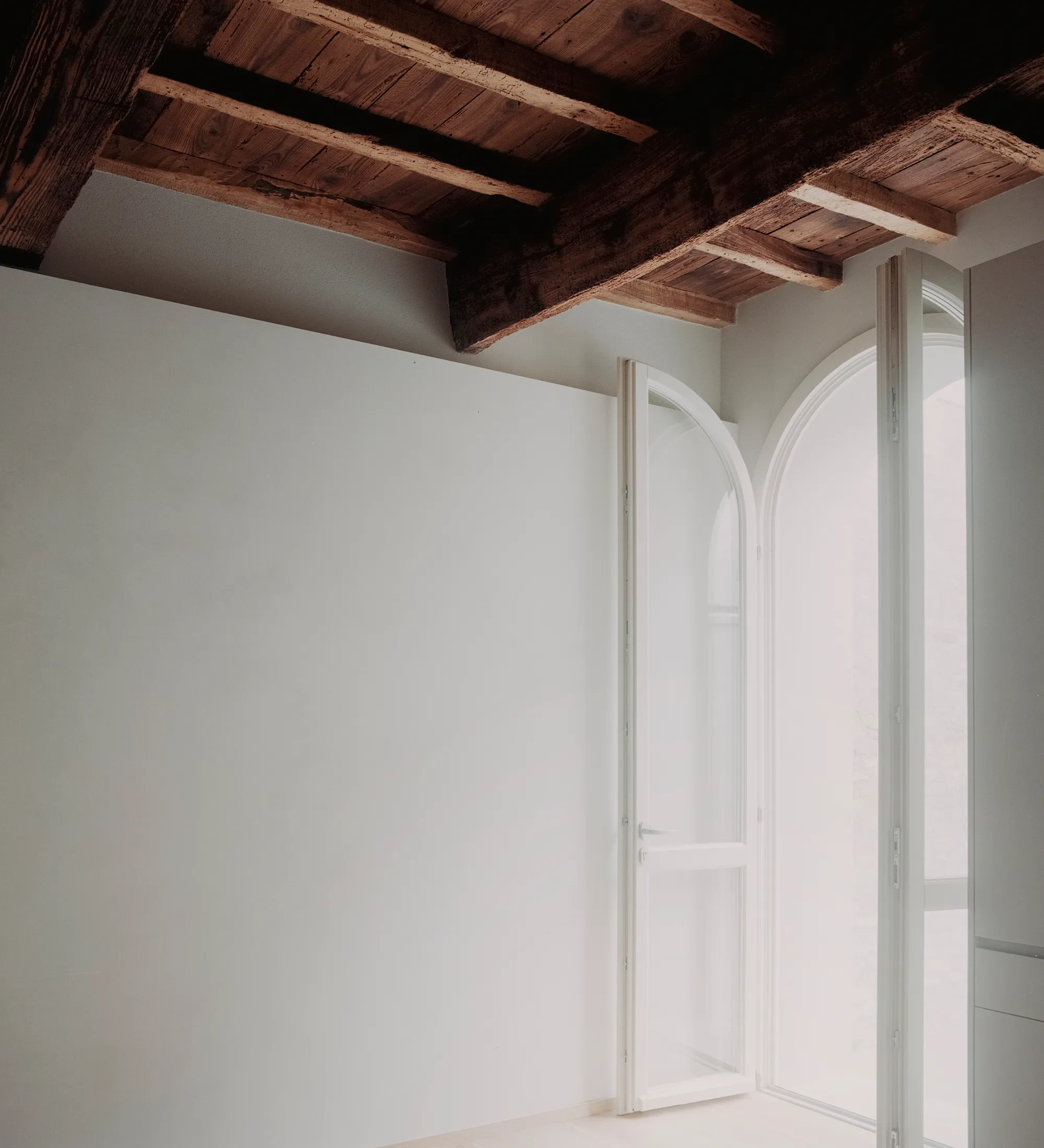
Ravenna's historic center is dense with buildings organized along what is known as the Gothic lot: a narrow, deep parcel that typically splits into a main street-facing structure, an internal courtyard, and a secondary annex at the rear. It is one of the most persistent urban types in northern Italian cities, and one that rarely gets the renovation it deserves. Most interventions plaster over the evidence. Giovanni Mecozzi Architetti took the opposite approach with Anne's House, a 270 square meter residence completed in 2022. The firm peeled back layers of cement render to expose original brickwork, uncovered and restored timber ceilings that had been concealed for decades, and reorganized the interiors around the courtyard as a true center of domestic life.
What makes the project compelling is the restraint with which contemporary additions are handled. New elements, most notably vertical slats of heat-treated larch wood and a few carefully placed steel details, read as insertions rather than impositions. The courtyard, planted with Nandina Domestica and medicinal herbs, becomes an open-air room in summer and a green backdrop in winter. There is no nostalgic pastiche here, and no gratuitous contrast either. The house simply lets you see what was always there.
The Courtyard as a Room Without a Roof

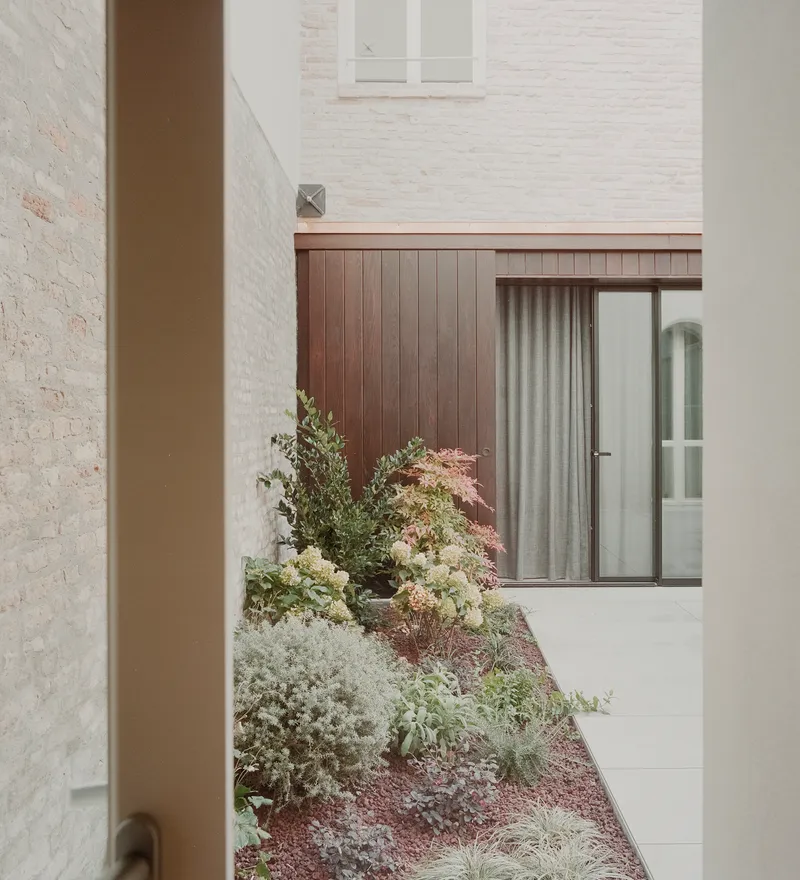

The courtyard is the hinge of the entire project. In a Gothic lot, it separates the main building from the annex, but Mecozzi treats it as connective tissue rather than leftover space. Low planted beds of hydrangeas and olive branches line the whitewashed brick walls, and the paving is deliberately continuous with the interior flooring to blur the threshold between inside and outside. A sliding glass door along the annex facade makes the boundary optional.
The decision to strip the cement plaster from the perimeter wall was critical. Exposed brick gives the courtyard a material warmth that white render would have flattened. The dark timber cladding of the annex facade provides just enough contrast to signal that something new has been introduced without breaking the material conversation.
Recovered Timber Ceilings

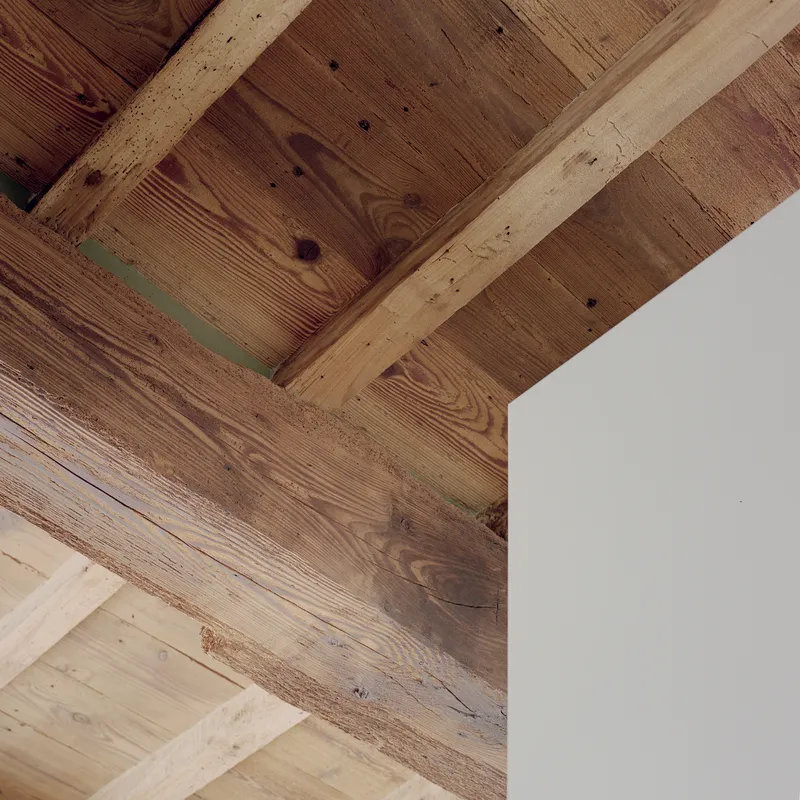
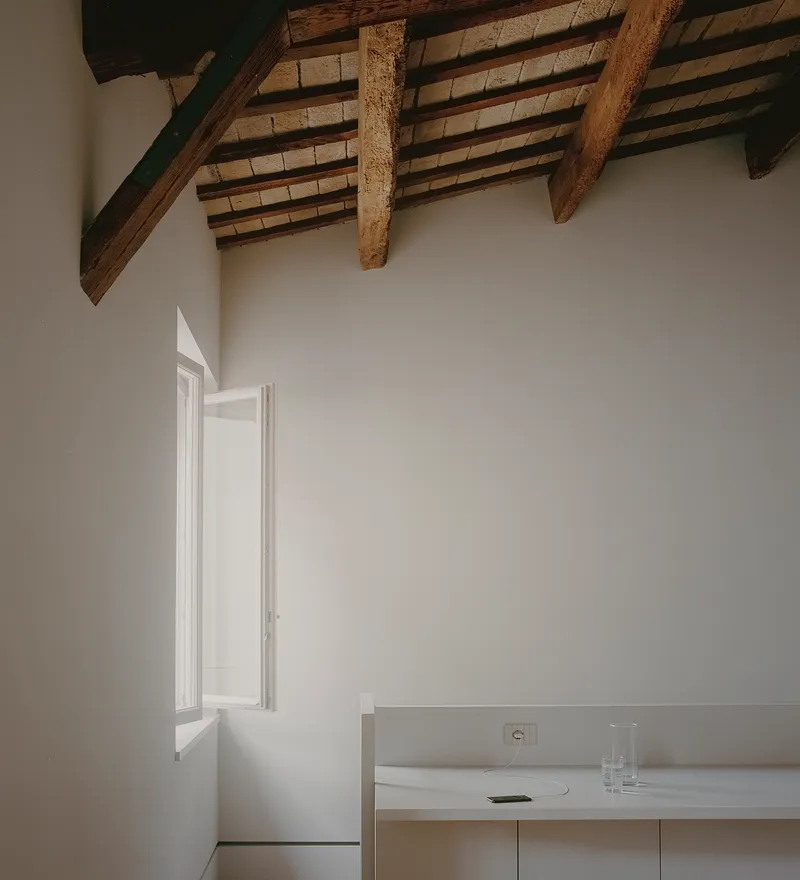
One of the happiest accidents of demolition was the discovery of original wooden ceilings hidden above later interventions. Rather than treating them as a picturesque relic, the firm restored them fully and let them do the heavy architectural lifting on each floor. Exposed beams and terracotta tile infill panels give the rooms a rhythm that no new ceiling could replicate. In image after image, these ceilings dominate: they set the scale, the color palette, and the atmosphere.
Where the timber meets the freshly painted white walls, the joint is left clean and honest. There is no decorative trim disguising the transition. The material simply changes, and that directness is one of the project's quiet strengths.
Ground Floor: The Perspective Axis

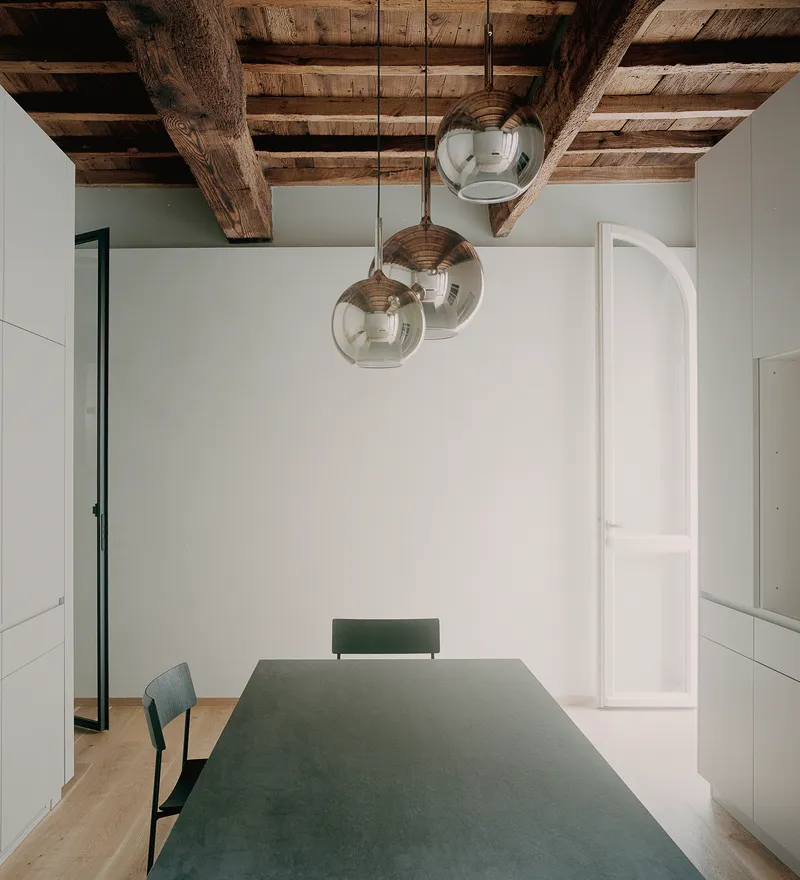

Mecozzi organized the ground floor around a perspective axis that links the street entrance to the internal courtyard. You enter through arched double doors under a dark timber beam-and-plank ceiling and look straight through to daylight and greenery at the rear. The kitchen occupies the street facade with two traditional arched openings, while the dining area sits under three glass pendant lights and exposed beams. A green table adds a single jolt of color to an otherwise muted palette of white, timber, and pale oak flooring.
The arched openings on the ground floor are original, and their proportions are generous enough to make the narrow lot feel wider than it is. Mecozzi resisted the temptation to enlarge or modernize them. The restraint pays off: the arches frame views rather than announce themselves.
The Staircase as Spatial Divider
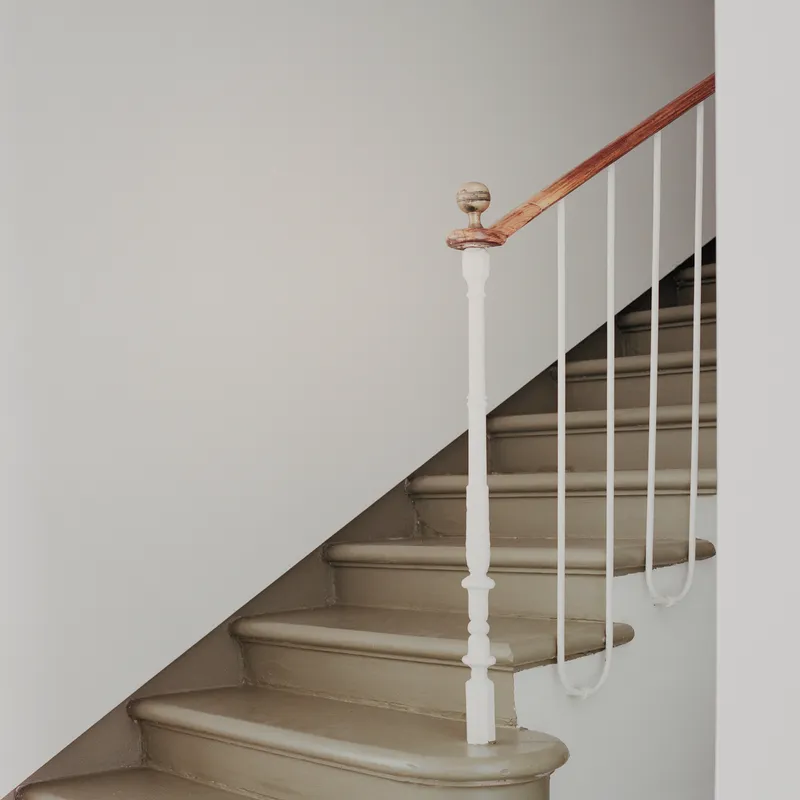


In a building this narrow, the staircase does more than connect floors. Placed at the barycentric center of the plan, it splits each level into two distinct rooms, functioning as both circulation and partition. The stair itself is a hybrid: a turned white newel post nods to the building's age, while a minimal steel rod balustrade and timber handrail belong firmly to the present. White vertical slatted railings filter light on the upper landings without closing off views.
It is a small detail, but the decision to use slender steel rods rather than solid panels keeps the stairwell luminous. In a deep, narrow lot where natural light is scarce, every bit of transparency matters.
Upper Rooms: Light, Rest, Privacy

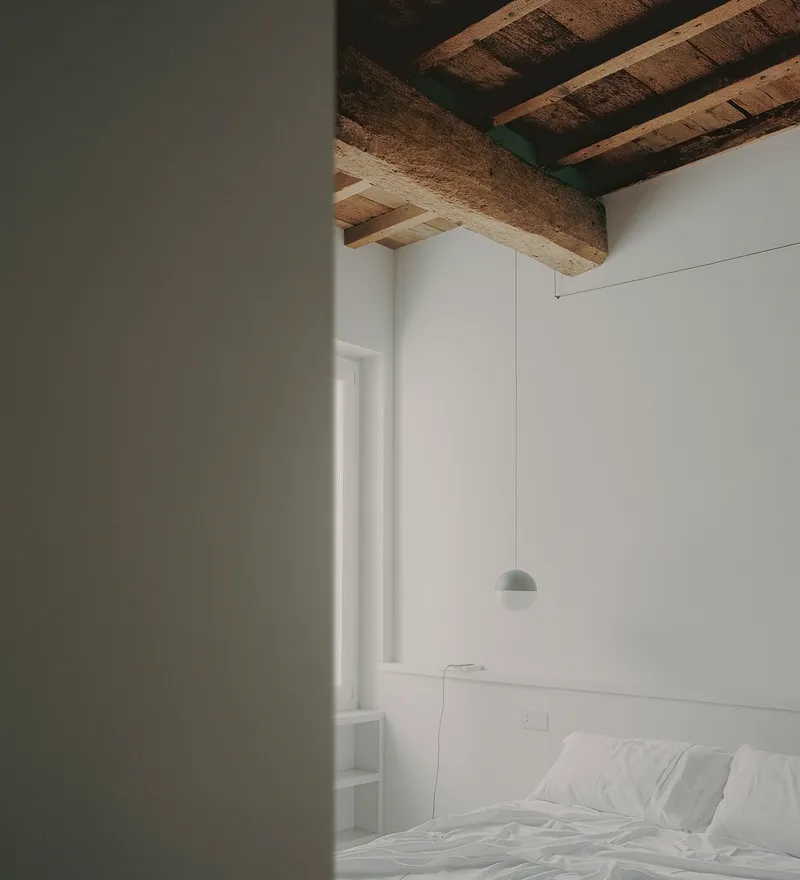

The upper levels house the bedrooms and bathrooms, and here the restored timber ceilings become even more dominant as the rooms shrink in plan. A freestanding white bathtub sits directly beneath exposed beams and a skylight, turning a utilitarian room into one of the most photogenic moments in the house. Bedrooms are viewed through doorways rather than as self-contained boxes, reinforcing the sense of sequence that the central staircase establishes.
Soft afternoon light enters through tall windows and skylights, and the palette stays deliberately neutral: white walls, pale flooring, timber above. The few pieces of furniture are spare, almost monastic. The architecture does not compete with decoration because there is almost none to compete with.
Contemporary Insertions


Where new elements are introduced, they are surgically precise. A built-in white desk with integrated electrical outlets sits flush against pale walls, its simplicity recalling the clean lines of the restored plaster around it. The rooms that serve more utilitarian functions, a home office, an exercise area, are deliberately understated, treated with the same material vocabulary as the rest of the house.
Mecozzi's approach to the contemporary insertions is almost invisible. The larch wood cladding on the annex exterior is the boldest gesture, and even that reads as a respectful complement to the exposed brick rather than a provocation. The lesson is that in buildings with this much latent character, addition by subtraction works.
Plans and Drawings
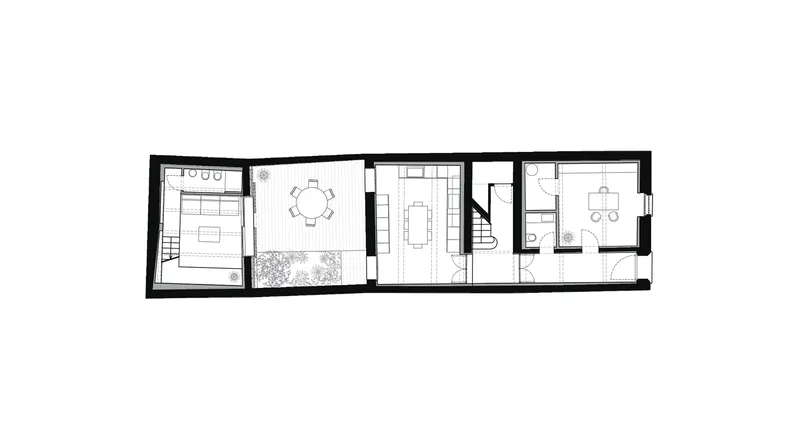
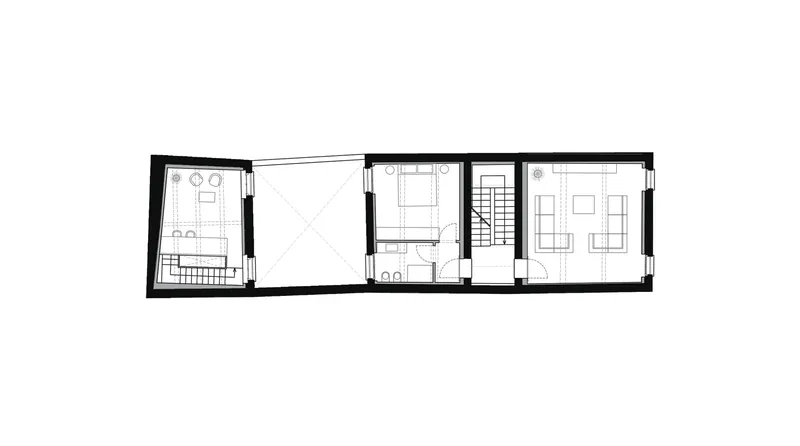

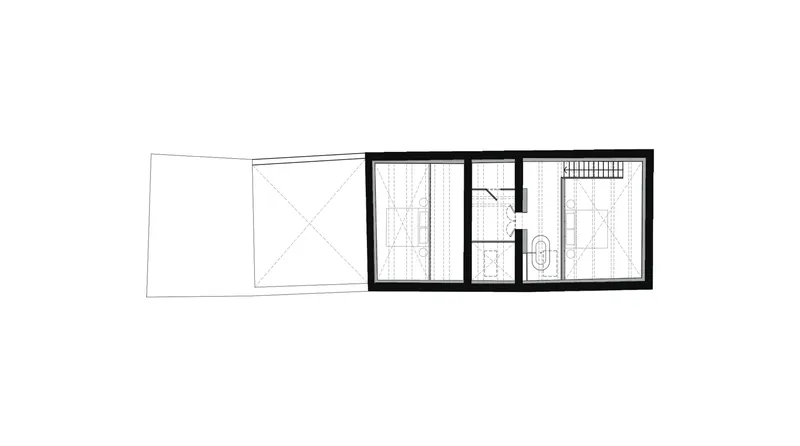
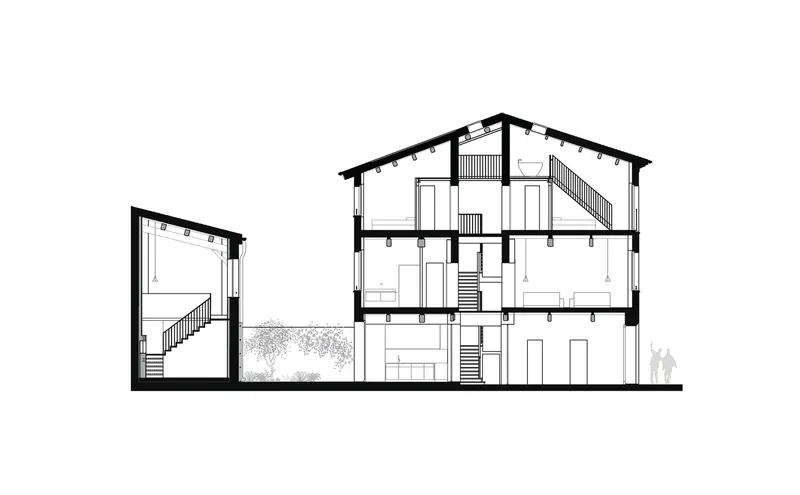

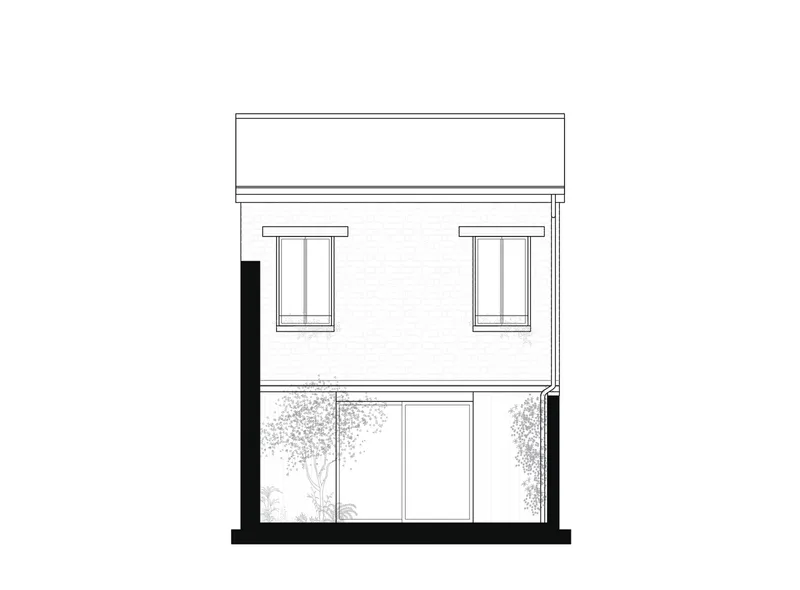
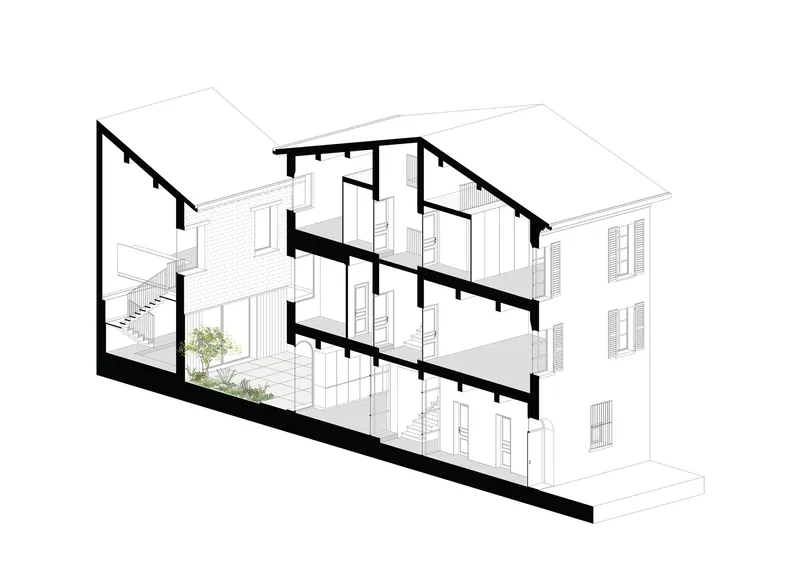

The floor plans confirm the Gothic lot logic: a linear sequence of rooms stretching from street to courtyard to annex, with the central staircase splitting each floor into paired spaces. The sections reveal the three-story main building with its pitched roof and the lower annex behind the courtyard, where a tree appears as a deliberate compositional element. The exploded axonometric is especially useful, showing how the roof structure, wall assembly, and interior volumes relate. What is clear across all the drawings is how little was added in plan and how much was recovered through careful subtraction.
Why This Project Matters
Anne's House is not a dramatic transformation. It does not rip open the roof or insert a glass box into a stone shell. Its ambition is quieter and, in many ways, harder to execute well: to take a building whose identity had been obscured by decades of indifferent maintenance and let its original character resurface. The recovered brick, the restored ceilings, and the replanted courtyard are not gestures of nostalgia. They are acts of attention.
For anyone working on historic residential fabric in Italian city centers, this project offers a credible model. Respect the lot type. Strip away what does not belong. Introduce contemporary materials only where they can carry their weight alongside the originals. Mecozzi proves that in a city as layered as Ravenna, the most compelling renovation might be the one that removes more than it adds.
Anne's House by Giovanni Mecozzi Architetti, Ravenna, Italy. 270 m², completed 2022. Photography by Simone Bossi.
About the Studio
Share Your Own Work on uni.xyz
If projects like this are the kind of work you want to make, uni.xyz is a place to publish your own, find collaborators, and enter design competitions.




Popular Articles
Popular articles from the community


Co-Life: Senior Housing Design That Reconnects Older Adults With the City
Co-Life reimagines senior housing design through healing gardens, shared streets, workshops, and a sustainable community across generations.

Hill & Cross Opera: Sculptural Opera House Architecture Shaped by Tallinn’s Landscape and Identity
Hill & Cross Opera reimagines opera house architecture in Tallinn through its sculptural hill, civic plaza, glass wave and a luminous cross.

Riyadh For All: Intergenerational Urban Design for Active Aging in Rabat
Riyadh For All reimagines urban design in Rabat with intergenerational co-living, adaptive courtyards, and Moroccan cultural exchange today.

The Ocean Hive: Sustainable Architecture for a Self-Sufficient Civilization at Sea
The Ocean Hive imagines sustainable architecture at sea, where modular habitats, algae, wave power and ocean waste sustain a growing colony.


Similar Reads
You might also enjoy these articles

Bao Huynh Watercolor Atelier: A Serene Art Retreat in Hội An
Bao Huynh Watercolor Atelier in Hội An blends multifunctional art spaces, sustainable design, local materials, and family-friendly living in a serene environment.

Atelier Macri Concept Store Interior Design by CASE-REAL
Atelier Macri store features a "ko" counter, walnut wood details, cork displays, blending retail, gallery, and seamless customer experiences.

Manuel Vargas Izquierdo Stadium and High-Performance Sports Center: Architectural Excellence in Jalpa de Méndez
The Manuel Vargas Izquierdo Stadium blends sustainable design, inclusive sports facilities, and cultural-inspired architecture, revitalizing Jalpa de Méndez’s public spaces.

KAKR Buluh Awar Hall: Revitalizing Community and Ecology Through Bamboo Architecture
Community built bamboo hall revitalizes Buluh Awar village, empowering youth, restoring ecology, celebrating vernacular craftsmanship through sustainable architecture and culture.




Comments (0)
Please login or sign up to add comments
No comments yet. Be the first to comment!