
Give Me a Hug: A Wildlife Conservation Architecture Sanctuary for Humans, Koalas, and Nature
A wildlife conservation architecture project that unites people, koalas, and nature through sustainable design and habitat restoration.


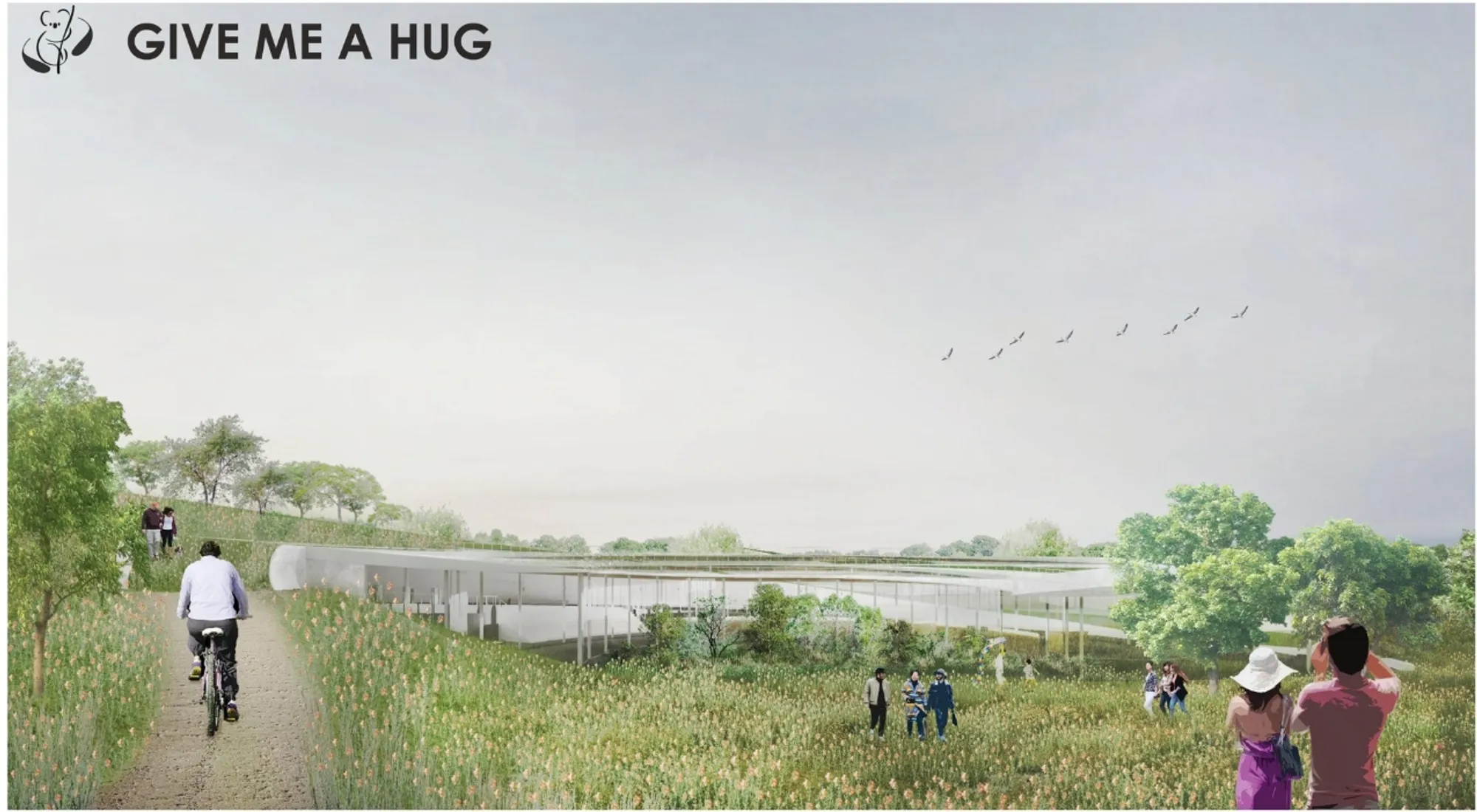
As biodiversity loss and habitat destruction continue to threaten wildlife populations worldwide, architecture is increasingly being called upon to create meaningful solutions that extend beyond human needs. Give Me a Hug, an Honorable Mention entry in the Haven 2020 competition by Yunhao Lu, Junfu Cui, and Yuyi Zhou, presents an inspiring example of wildlife conservation architecture that seeks to rebuild the relationship between humans, koalas, and the natural environment.
Rather than designing a conventional rescue center, the project envisions a re-bonding sanctuary where architecture becomes a mediator between species. Through a carefully integrated form inspired by the koala's natural behavior, the proposal creates a place where conservation, education, rehabilitation, and ecological stewardship coexist within a single architectural framework.
The project challenges the traditional separation between human infrastructure and wildlife habitats, demonstrating how architecture can become an extension of nature itself.

Architecture Inspired by the Koala's Embrace
At the heart of the design lies a simple yet powerful concept: the act of hugging.
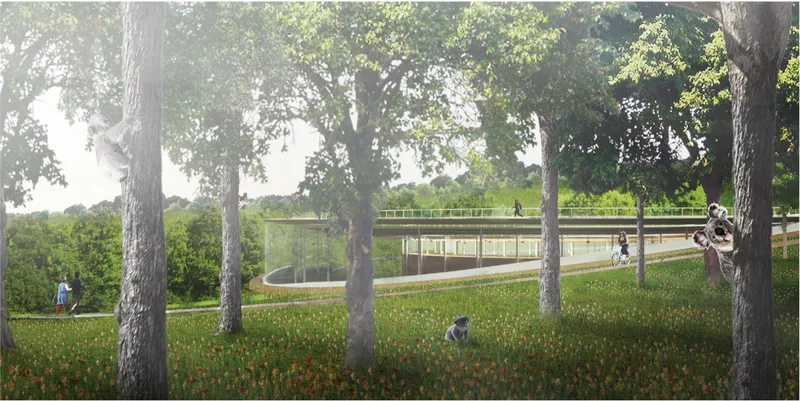
Koalas are widely recognized for their characteristic behavior of clinging to tree trunks and branches. The design team translated this unique movement into an architectural language that shapes the entire sanctuary. The resulting circular and embracing form creates a spatial experience that mirrors the protective relationship between koalas and their natural habitat.
The architecture unfolds as an open annulus that wraps around a central landscape courtyard. This gesture not only creates a symbolic embrace but also establishes visual and physical connections between humans, wildlife, and nature.
The building's form encourages visitors to move gradually around the sanctuary, experiencing the landscape and learning about koala conservation through carefully curated viewpoints and educational spaces.
A Sanctuary Embedded Within the Landscape
One of the most compelling aspects of the project is its integration with the surrounding terrain.
Instead of dominating the site, the sanctuary gently merges with the landscape, allowing the building to become part of the ecosystem rather than an interruption to it. The curved structure follows natural contours, minimizing environmental disturbance while preserving existing vegetation and wildlife corridors.
This strategy supports the project's belief that architecture should function as an extension of natural habitat rather than a separate artificial object.
The building appears to emerge organically from the ground, creating a seamless transition between architecture and landscape. Visitors are invited to move through the site as though they are entering a natural environment rather than a conventional institutional facility.
This approach reinforces the sanctuary's mission of encouraging people to reconnect with nature while respecting the needs of wildlife.
Creating Balance Between Humans, Koalas, and Nature
The challenge of wildlife conservation architecture lies in balancing the often competing requirements of humans and animals.
The designers address this challenge through a carefully organized spatial system that divides the sanctuary into three interconnected arcs positioned at different elevations. These zones create distinct environments for people, koalas, and natural ecosystems while maintaining opportunities for interaction and observation.
Hidden spaces and layered circulation routes allow wildlife to inhabit the site without feeling threatened by human activity. At the same time, visitors gain opportunities to observe and understand koala behavior in a respectful and controlled manner.
This spatial arrangement transforms the sanctuary into a place of coexistence rather than separation, fostering mutual awareness between species.
Educational Architecture That Encourages Conservation
Beyond rescue and rehabilitation, the project serves as a powerful educational destination.
The visitor journey follows a carefully planned linear circulation path that gradually introduces guests to the realities of koala conservation. Exhibition spaces, museums, public auditoriums, and observation areas provide educational opportunities while maintaining a strong connection to the surrounding landscape.
The central courtyard functions as both a habitat and a visual anchor, ensuring that nature remains at the center of every experience within the building.
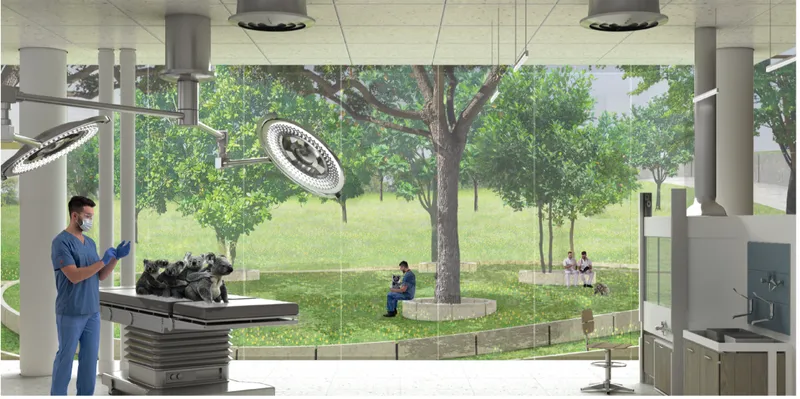
Large glazed surfaces eliminate barriers between interior and exterior spaces, allowing visitors to maintain constant visual contact with trees, vegetation, and wildlife habitats.
This immersive experience helps transform environmental education from a passive activity into an emotional and memorable encounter.

Designing for Rescue and Rehabilitation
The sanctuary incorporates specialized facilities that support koala rescue and medical care.
Emergency treatment rooms, operation spaces, laboratories, intensive care units, recovery rooms, and observation facilities are strategically organized to maximize efficiency during rescue operations. The arc-shaped layout minimizes blind spots and improves visibility throughout the complex, enabling staff to quickly locate, monitor, and assist animals in need.
The positioning of rescue-related functions follows a logical sequence that streamlines workflows and reduces stress for injured wildlife.
This combination of medical infrastructure and natural surroundings creates a therapeutic environment that supports both recovery and long-term rehabilitation.
Sustainable Architecture Rooted in Ecological Responsibility
Sustainability is integrated into every aspect of the project.
The building incorporates multiple environmental systems designed to reduce resource consumption while supporting ecological resilience. A green roof provides thermal insulation, habitat enhancement, and rainwater collection. Solar panels generate renewable energy to reduce operational demands, while integrated recycling systems process biological waste responsibly.
Natural ventilation strategies improve indoor environmental quality and reduce dependence on mechanical systems. Double low-emissivity glazing enhances energy efficiency while maintaining transparency and visual connectivity with the landscape.
Together, these systems demonstrate how sustainable architecture can support both environmental conservation and building performance.
The Roof as an Experiential Landscape
One of the project's most distinctive features is its accessible green roof.
The roof extends from the terrain and gradually rises into three concentric rings that correspond to activities occurring below. This creates a continuous landscape experience that blurs traditional boundaries between architecture and nature.
Visitors can walk across the roof while enjoying panoramic views of the surrounding environment. Carefully positioned openings introduce natural light into interior spaces and establish visual connections between levels.
The roof becomes more than a building enclosure. It transforms into a public landscape that encourages exploration, interaction, and appreciation of the natural world.
Architecture as a Tool for Ecological Healing
Give Me a Hug demonstrates how architecture can move beyond shelter and infrastructure to become an active participant in ecological restoration.
By drawing inspiration from the behavior of koalas, integrating seamlessly with the landscape, and creating meaningful opportunities for education and conservation, the project establishes a new model for wildlife-focused design.
The proposal recognizes that successful conservation depends not only on protecting animals but also on rebuilding emotional connections between people and nature.
Through thoughtful planning, sustainable technologies, and a deeply symbolic architectural form, the sanctuary offers a vision of a future where humans and wildlife can coexist more harmoniously.
As an Honorable Mention entry in Haven 2020, Give Me a Hug stands as a compelling example of how wildlife conservation architecture can inspire environmental responsibility while creating spaces that heal, educate, and reconnect communities with the natural world.



Popular Articles
Popular articles from the community

Garden of Hope: Sustainable Architecture for a Resilient Community in Qandahar
Garden of Hope reimagines sustainable architecture as secure, organic community where women rebuild lives through housing, work, and nature.

The Earth Pod: 3D Printed Homes for Resilient Refugee Communities
The Earth Pod reimagines refugee housing through 3D printed homes made from clay, combining resilience, self-sufficiency, and rapid shelter.

FAMM Arquitectura Organizes Ten Villas Around Courtyards and Jungle in Nosara, Costa Rica
El Molino pairs two elongated volumes with deep overhangs and timber louvers to build a compact coastal community five minutes from the beach.
REBIRTH: Sustainable Architecture Shaped by Community, Resilience and Renewal
REBIRTH uses sustainable architecture, circular design, local materials and shared spaces to restore community, dignity and hope for widows.
Similar Reads
You might also enjoy these articles
Eco Chapel: A Green Architecture Pavilion Designed in Symbiosis with the Forest
Eco Chapel uses green architecture to weave prayer, learning and reuse into a forest pavilion shaped by modular hexagonal canopies for life.
Kaffeebühnen: Coffee Shop Architecture Designed as a Civic Stage Between Vienna’s City and Park
Kaffeebühnen turns coffee shop architecture into a civic stage, linking Vienna’s park edge, urban life, warm timber yards, and coffee craft.
Healing Façade: Sustainable Architecture for Reforestation, Community, and Sacred Ecology in Ethiopia
Healing Façade reimagines sustainable architecture as a living wall that restores soil, catches water and renews Ethiopia's forest churches.


Urban Forest: A Vertical Ecosystem for 5,000 Workers in Singapore's Changi Business Park
Radially stacked pods and layered green decks turn a 7-acre plot into 47 acres of ecological workspace projected for 2040.


Explore Architecture Competitions
Discover active competitions in this discipline



The International Standard for Design Portfolios


The Global Benchmark for Architecture Dissertation Awards

The Global Benchmark for Graduation Excellence


Challenge to reimagine the Iron Throne
Comments (0)
Please login or sign up to add comments
No comments yet. Be the first to comment!