
Glamour
A journey through desert

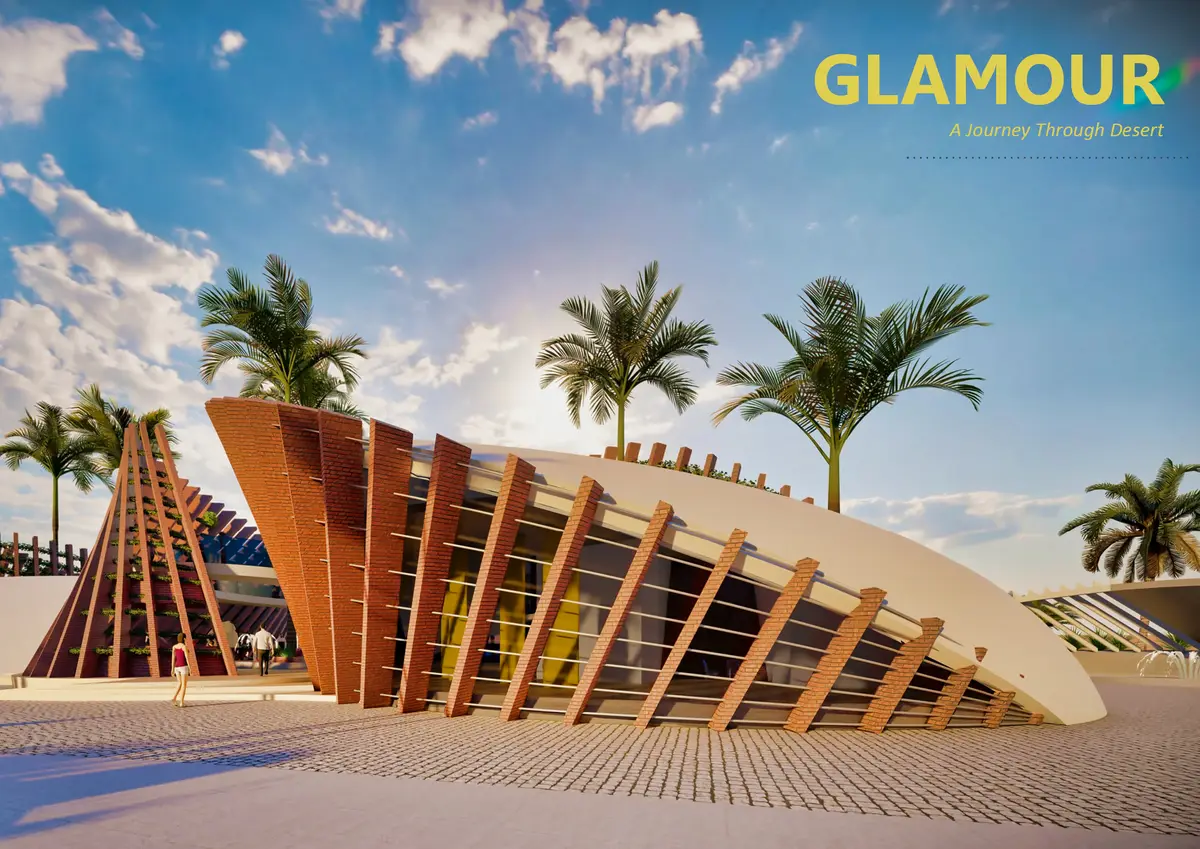
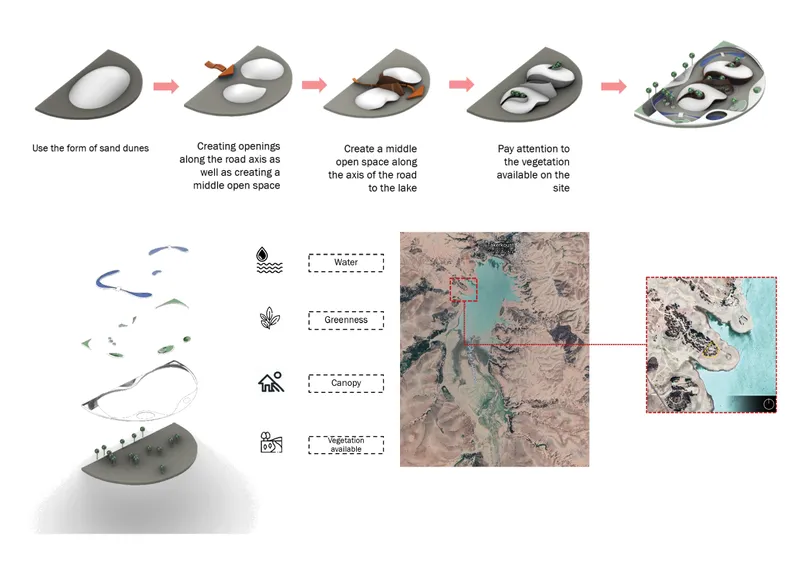
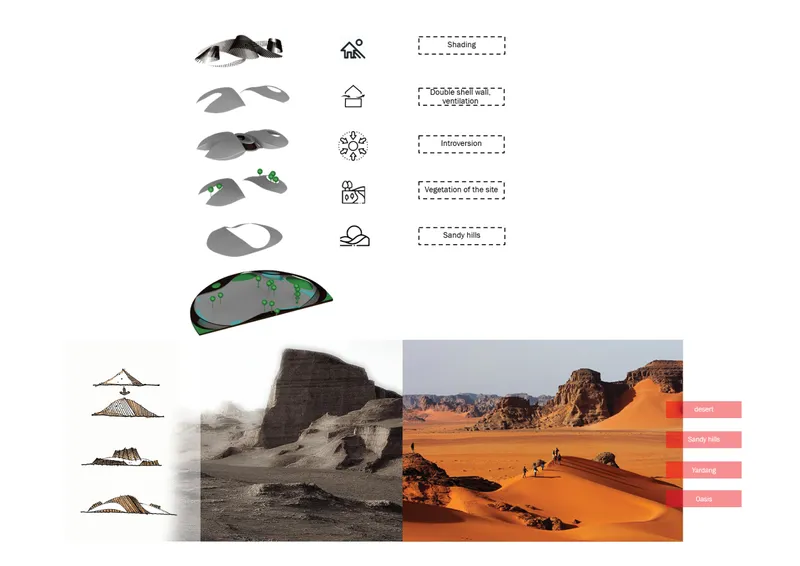
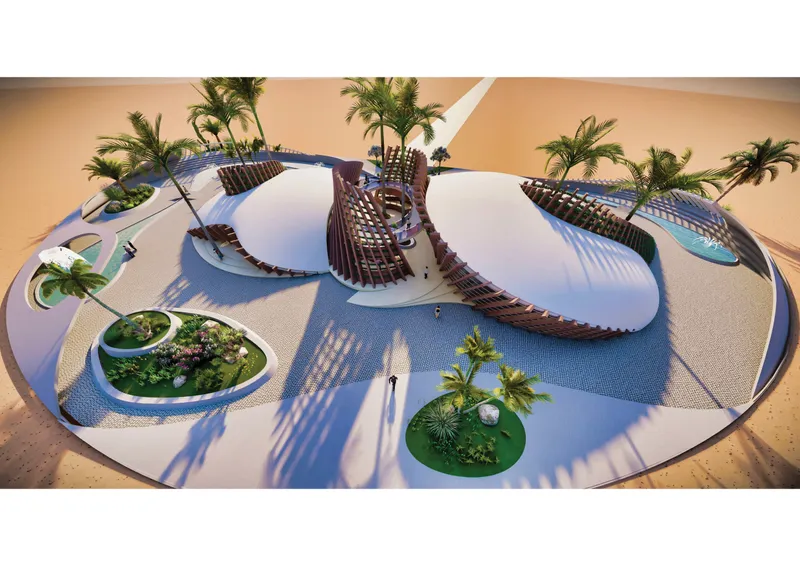
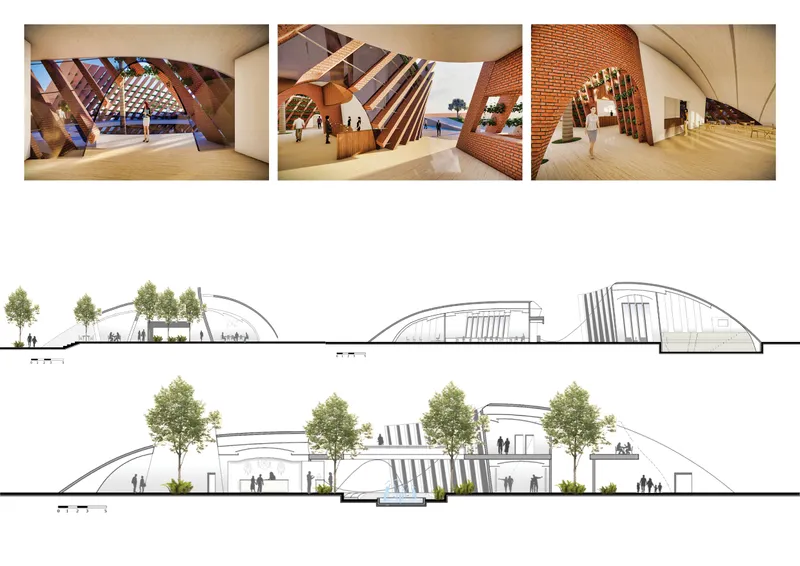
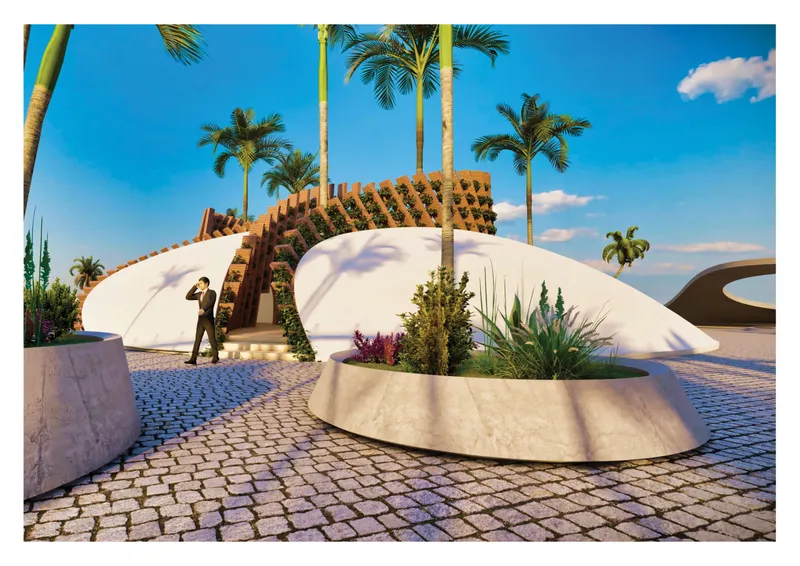
The original design for the cultural complex in Morocco, inspired by the pristine nature of the region, is based on the sand dunes located at the construction site. This design, similar to sand dunes, uses a curved structure with a gentle slope to give visitors a sense of entering the sand dune. The site environment is considered at a height below ground level to use the low temperature in the soil depth in the lower levels of the site to reduce the thermal stress of the site with the environment. In order to preserve the current plant tissue inside the site, yards have been created in the main structure that provide suitable light for plant growth according to the intended angle. Different surfaces are double-skin and are designed to provide suitable thermal insulation. To prevent heat from entering the site, narrow inlets, which lead to a wide environment, are used to create the least temperature interference with the desert environment. In order to have a wide view and adjust the incoming light, a partition-like structure has been used, in addition to shading the landscape of the environment. The complex is designed on two floors, which on the ground floor is a relaxing environment for visitors to comfort, taking into account the wide view of the lake for the exhibition and restaurant on this floor and the presence of a recreational view in front of the restaurant in the free space to enjoy the desert sky at night, has tried to make the most of the building from the desert point of view. Office environment and library are located on the first floor. In this floor, a porch is used for staff and visitors, which is accompanied by a top-down view of the central pool of the ground floor and provides a comfortable environment on first floor. In this floor, by using partitions with certain distances in the external structure, the amount of incoming light is adjusted and by using plants located between these partitions, the incoming air flow between the partitions is sufficient, this structure allows visitors to use the environmental effects of the area, including the lake. The interior of each floor is inspired by traditional Moroccan architecture, and the various entrances are designed as curves (arches) similar to the various traditional centers in Morocco. The materials used to build this complex, according to the available materials in the environment, for this purpose, efforts have been made to use bricks in some parts of the complex, in addition to respecting the traditional Moroccan architecture, the soil at the site which is released from the environment during excavation should be used as the main material for making materials. To prevent sand winds from entering the site, special surrounding furrows and suitable vegetation around the site have been used, which in addition to the mentioned use, it causes shading and induces relaxation for site visitors and creates a suitable view for using natural landscapes. for this purpose, various waterways have been used while maintaining a gentle structure next to the surrounding wall so that the ambient temperature of these parts is in a balanced range.

Popular Articles
Popular articles from the community


Singing Woman: An Opera House That Performs Before the Curtain Rises
Ovidiu Cristian Pavel's conceptual opera house translates Estonia's choral identity into a sculpted waterfront landmark facing the Baltic Sea.
Tsunami Convergenics: Turning Catastrophic Ocean Forces into Underwater Housing Infrastructure
A speculative underwater settlement off the coast of Onagawa, Japan, treats tsunamis and typhoons as energy sources rather than threats.
Cloaked Colonization: A Mobile Underwater Habitat That Moves Like a Fish
Micah Abaya's shortlisted EHC Pacific entry reimagines ocean settlement as a dispersed network of self-sustaining architectural organisms.
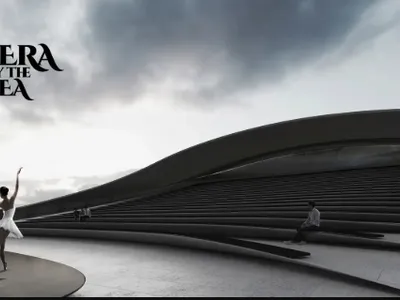
Opera by the Sea Estonia: Three Shells Dissolving Architecture into Tallinn's Coastline
A winning opera house proposal replaces monumental form with interconnected shells that blur the boundary between building, park and Baltic Sea.

Similar Reads
You might also enjoy these articles

Shakur's House: Exposed Brick as an Interior Organiser in a 168 m² Mashhad Residence
Brick moves indoors in this Mashhad residence, where masonry walls, glass partitions and teal planes sequence a compact home without closing it off.

Day and Night Park: A Time-Based Urban Newsstand in Beijing
A temporary urban newsstand in Beijing blending travel, light, and reading through poetic colors, compact form, and community-focused design.

Modernist Patio Renovation in El Masnou, Barcelona by Oliver Segura Arquitectura + Cebrià Arquitectura
Modernist patio renovation blending tradition and innovation with a movable pool, leveled floors, and Catalan materials in El Masnou.
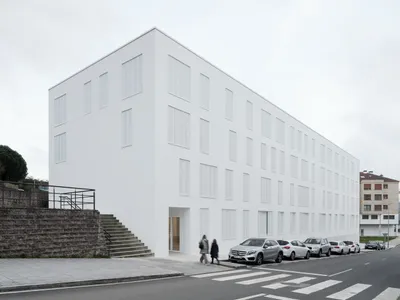
Alto Residencial Coop: Cooperative Housing Development in Santiago de Compostela by Carbajo Barrios Arquitectos
A linear cooperative housing complex blending white volumes and perforated metal façades, enhancing community living, natural light, privacy, and urban integration.

Explore Desert Architecture Competitions
Discover active competitions in this discipline


Comments (0)
Please login or sign up to add comments
No comments yet. Be the first to comment!