

Godai Pavilion by Baldó Arquitectura: A Harmonious Blend of Nature and Architecture
Godai Pavilion by Baldó Arquitectura blends Japanese-inspired design with sustainable materials, passive strategies, and bamboo architecture for a harmonious, eco-friendly retreat.


A Contemporary Pavilion in the Heart of Cantabria
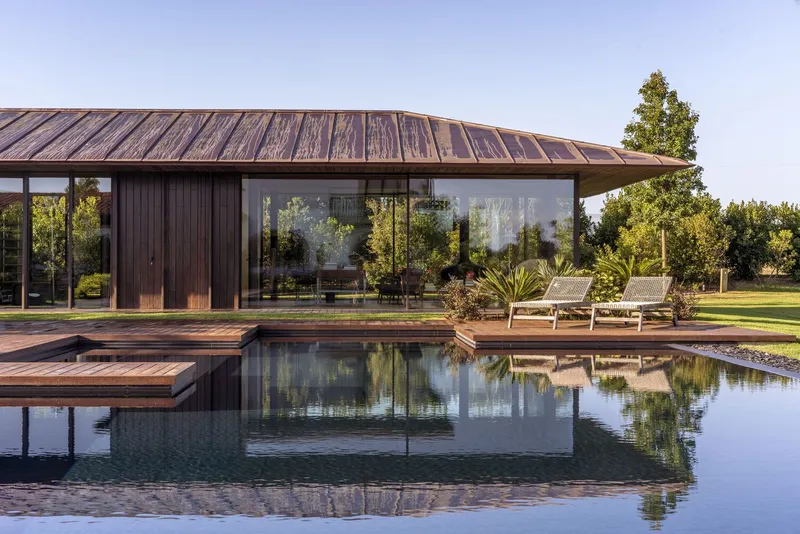
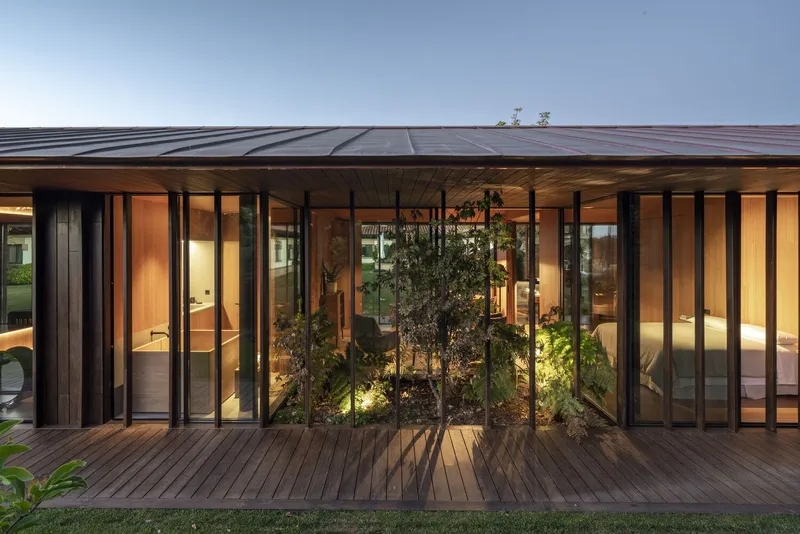
Designed by Baldó Arquitectura, the Godai Pavilion is a modern architectural masterpiece set in the serene rural landscape of Cantabria, Spain. This innovative guest pavilion, adjacent to an existing home and pool, integrates contemporary design with traditional Japanese philosophy, creating a seamless dialogue between nature and built space.
Site and Climate Considerations
The project is carefully situated on a gently sloping plot that extends northward, while the main house, swimming pool, and pavilion occupy the southern portion. Given the region’s strong winds, frequent rainfall, and intense summer sun, the architectural response prioritizes climatic adaptation through intelligent design and sustainable materials.
Architectural Concept: Inspired by the Five Elements
The Godai Pavilion draws its name from the Japanese concept of the five fundamental elements—earth, water, fire, wind, and void. The architectural approach reflects these elements through:
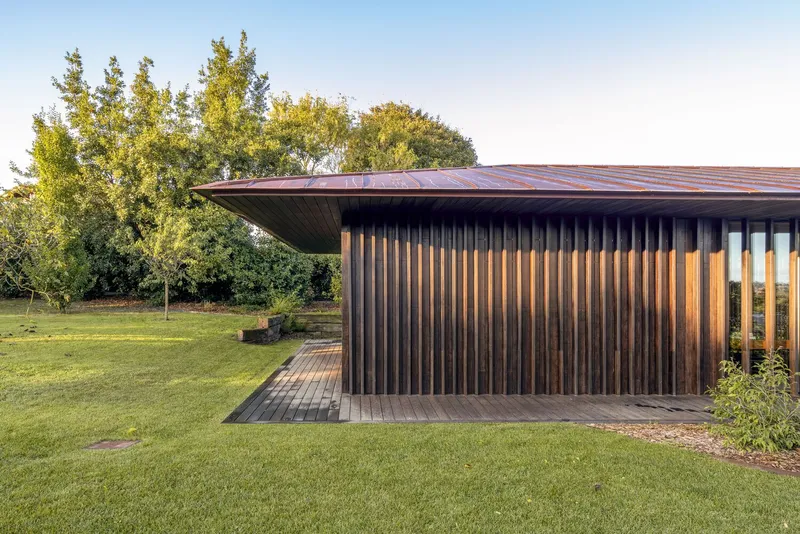
- A unified roof structure, creating continuity across different functional spaces.
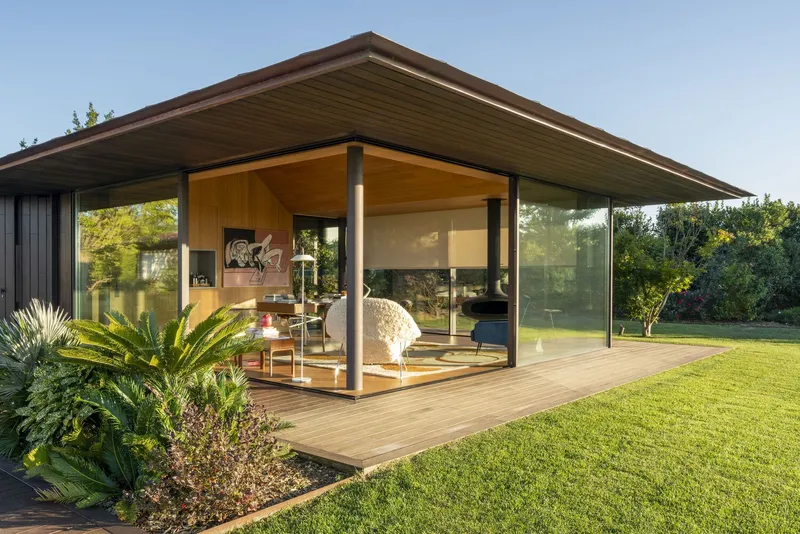
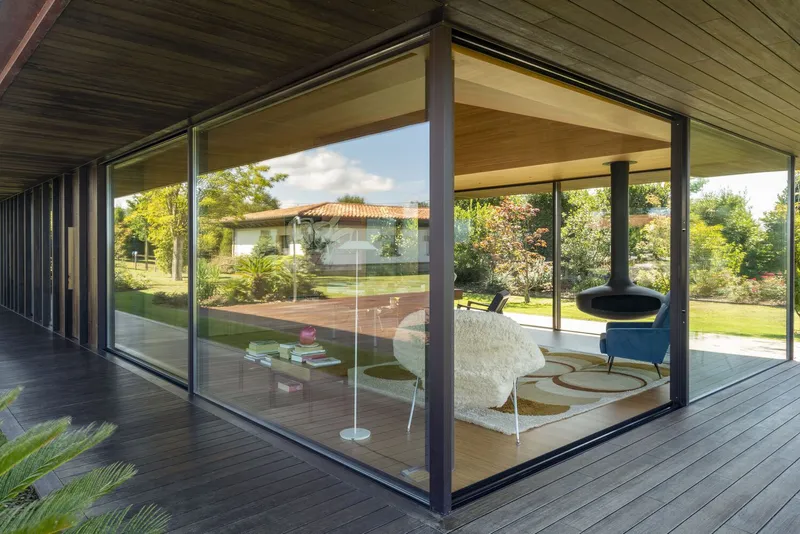
- Large transparent façades, fostering a seamless indoor-outdoor connection.
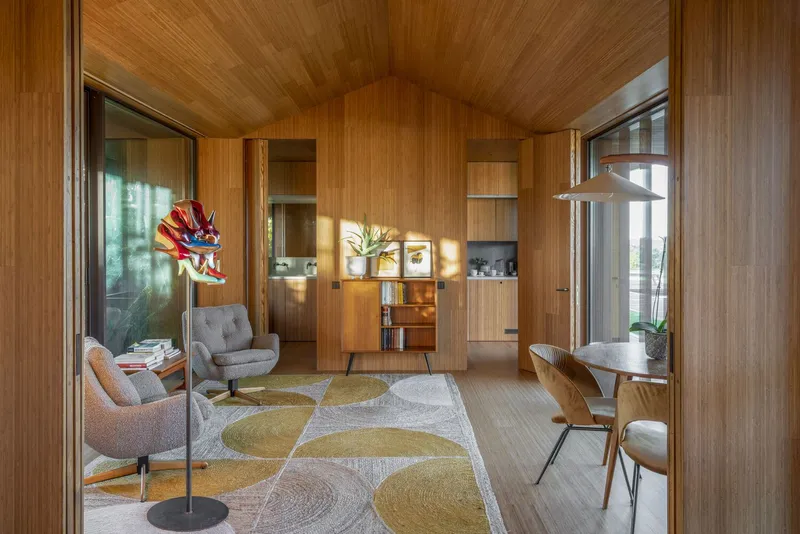
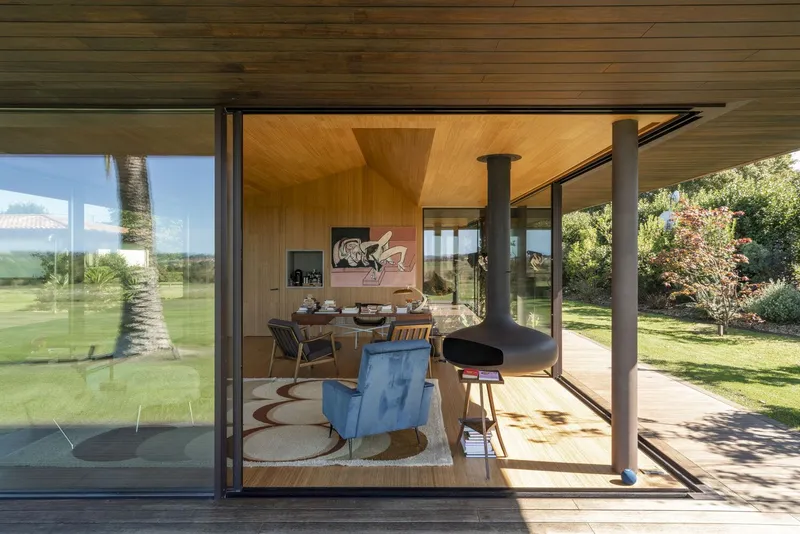
- Origami-inspired ceilings, sculpted to enhance spatial character and detach from the exterior shell.
With the swimming pool as the central element, the pavilion creates a harmonious connection between the existing residence and the new structure.
Materiality: The Dominance of Bamboo
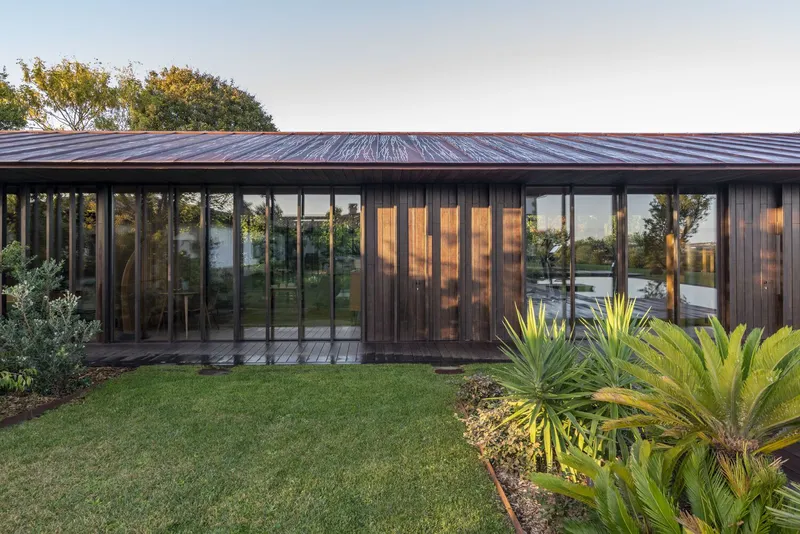
A defining feature of the Godai Pavilion is its extensive use of bamboo, chosen for its sustainability, durability, and aesthetic appeal. The material palette follows a dual-tone approach:
- Exterior: Black bamboo, creating a robust, walnut-like effect.
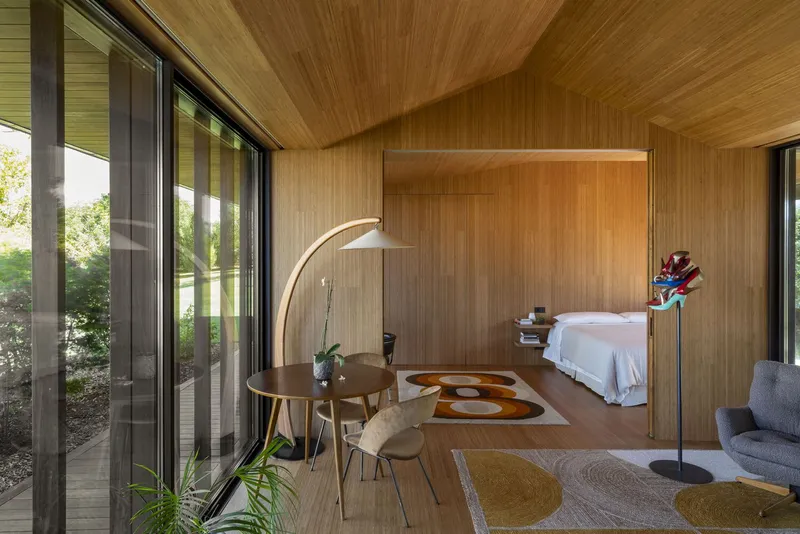
- Interior: Natural bamboo, offering warmth and lightness.
The façade’s opacity gradually transitions from solid to transparent, achieved through a rhythmic arrangement of bamboo slats based on the Fibonacci sequence. This design strategy enhances both privacy and visual fluidity. Inside, bamboo is used across floors, walls, and ceilings, echoing the aesthetics of traditional washitsu-style Japanese rooms.
Sustainability and Passive Design Strategies
The pavilion is a model of eco-conscious architecture, integrating highly efficient passive systems that optimize energy efficiency and thermal comfort:
- Large overhanging roof, offering solar and rain protection.
- Vertical bamboo slats, facilitating natural ventilation, diffused lighting, and enhanced privacy.
- Locally sourced materials, reducing environmental impact.
The project employs natural insulation solutions, including cork and mineral rock wool, while interior partitions are crafted from local pine wood and recycled OSB boards. The roof system features OSB sandwich panels with a core of recycled wood fibers, further reinforcing the structure’s commitment to sustainable construction.

A Pavilion That Embodies Architectural Harmony
The Godai Pavilion by Baldó Arquitectura is more than just a guest house—it is an architectural statement that blends nature, culture, and sustainability. By embracing Japanese-inspired principles, incorporating innovative passive design, and utilizing eco-friendly materials, the project exemplifies the future of contextual, climate-responsive architecture.
All Photographs are works of
Luis Asín


Popular Articles
Popular articles from the community


longwave studio Reorganizes a 112 m² Tainan Apartment Around the Daily Routines of a Family and Two Cats
In Tainan, Taiwan, birch plywood, rust-red furniture and a freestanding plaster wall link arrival, storage, work and family life in one apartment.

Juan García Correa, John González and Claudia Rueda Sink a Circular Amphitheater into a Manizales Engineering Building
On the La Nubia campus in Manizales, Colombia, the S1 Building folds labs and offices into a hillside of ramped lawns that double as a campus route.

Architekt Andreas Gruber Scatters 23 Dark Timber Chalets Across a South Tyrolean Forest Edge
In Molini di Tures, Amonti Chalets breaks a resort into a hamlet of gabled timber houses, with parking, storage and services pushed into the slope.

David Ortega Stacks a Two-Story Mexico City Penthouse Around a Steel Stair and a Pergola-Shaded Roof Terrace
In Colonia Roma, a 300 m² penthouse uses oak joinery, a planted steel stair and a slatted roof pergola to make a new-build apartment feel like a house.

Similar Reads
You might also enjoy these articles


Hodi-Mandai Geram
Project Function: Preservation and revitalization of the Intangible heritage and socio-spatial identity of the Hodi by Housing, Cultural Memory Center, Sacred Grove, landscape, local tourism economy


Olio Towers: A Mid-Rise for Performers That Fuses Housing, Rehearsal, and Stage
Located blocks from Houston's Theater District, this modular tower stacks living units around a central performance atrium.

Oasis: Modular Green Housing Carved into Dhaka's Urban Fabric
A shortlisted Plugin Housing entry reclaims unauthorized settlements in Dhaka with stepped concrete volumes, green roofs, and ventilation-driven design.

Black Hole: A Floating Megastructure for the Post-Physical Era
Emiliano Mazzarotto envisions a spherical, self-scaling arena where e-sports, digital hotels, and holographic stadiums replace traditional public space.

Explore Architecture Competitions
Discover active competitions in this discipline

Challenge to reimagine the Iron Throne

Photograph architecture without architects

Illustrate the lost glory of Angkor Wat - Render Challenge

Design challenge to reuse E-waste
Comments (0)
Please login or sign up to add comments
No comments yet. Be the first to comment!