
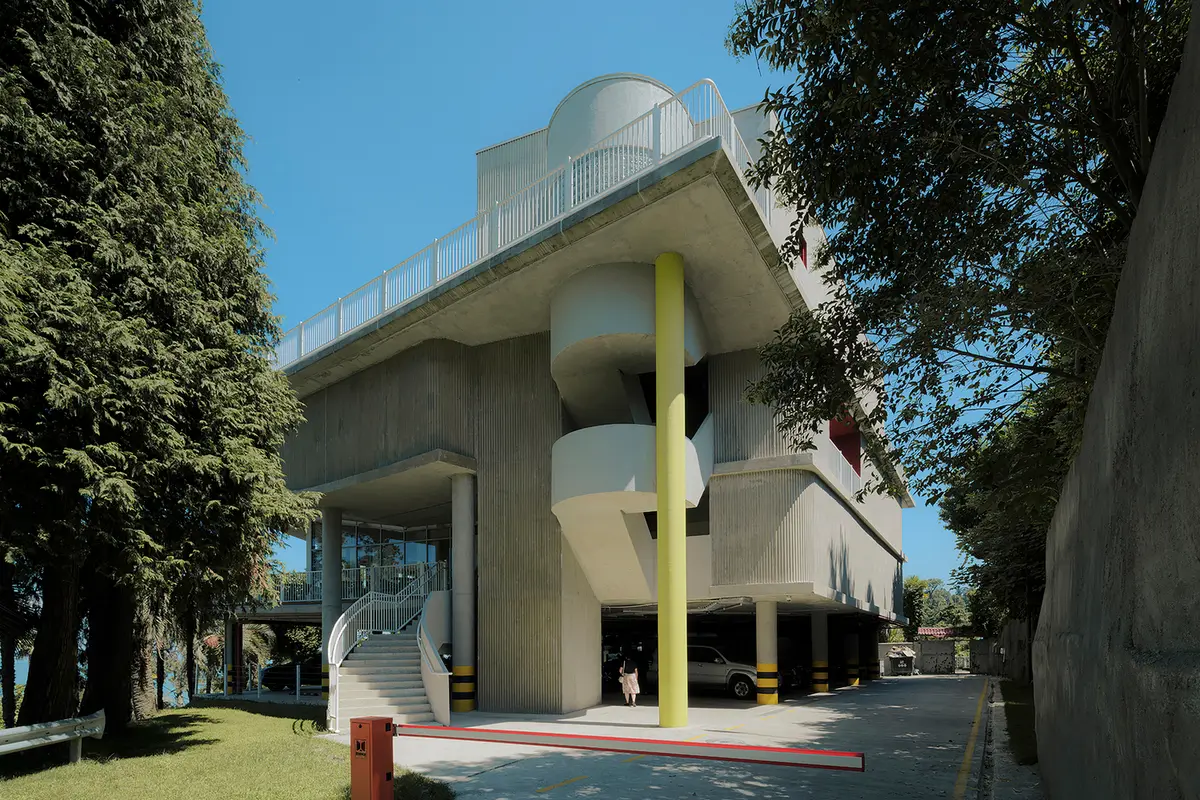
Green Cape Botanico Residential Building: MUA Architecture & Placemaking
Green Cape Botanico in Batumi blends modern residential design with lush landscapes, panoramic sea views, wellness facilities, and sustainable, community-focused architecture.


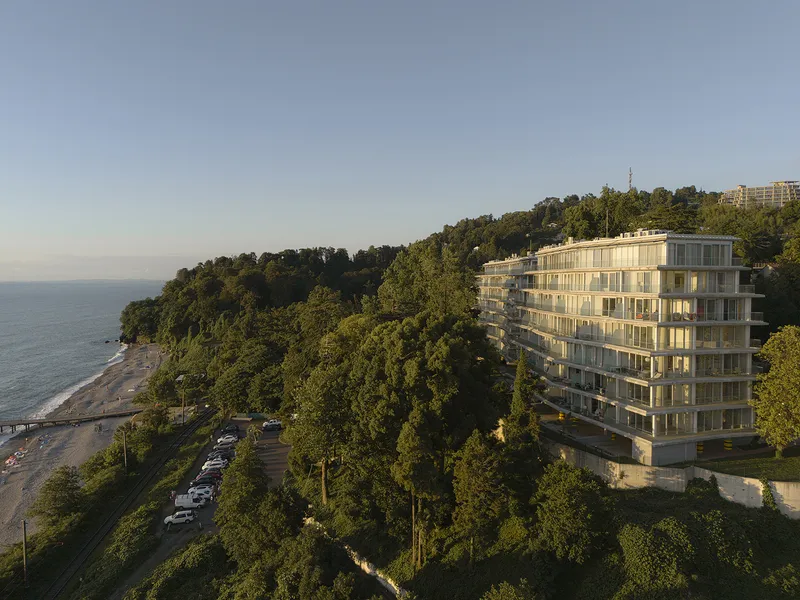
Batumi, Georgia, known for its stunning Black Sea coastline, is home to the Green Cape Botanico Residential Building, an innovative residential project by MUA Architecture & Placemaking. Situated on the lush Green Cape peninsula, the development overlooks the sea while seamlessly integrating into the surrounding natural landscape. The nearby Batumi Botanical Garden, famous for its diverse flora, enhances the site’s ecological and visual appeal. The area is dotted with charming low-rise homes and remnants of Soviet-era vacation houses, blending historical character with modern residential living.
Masterplan and Design Concept
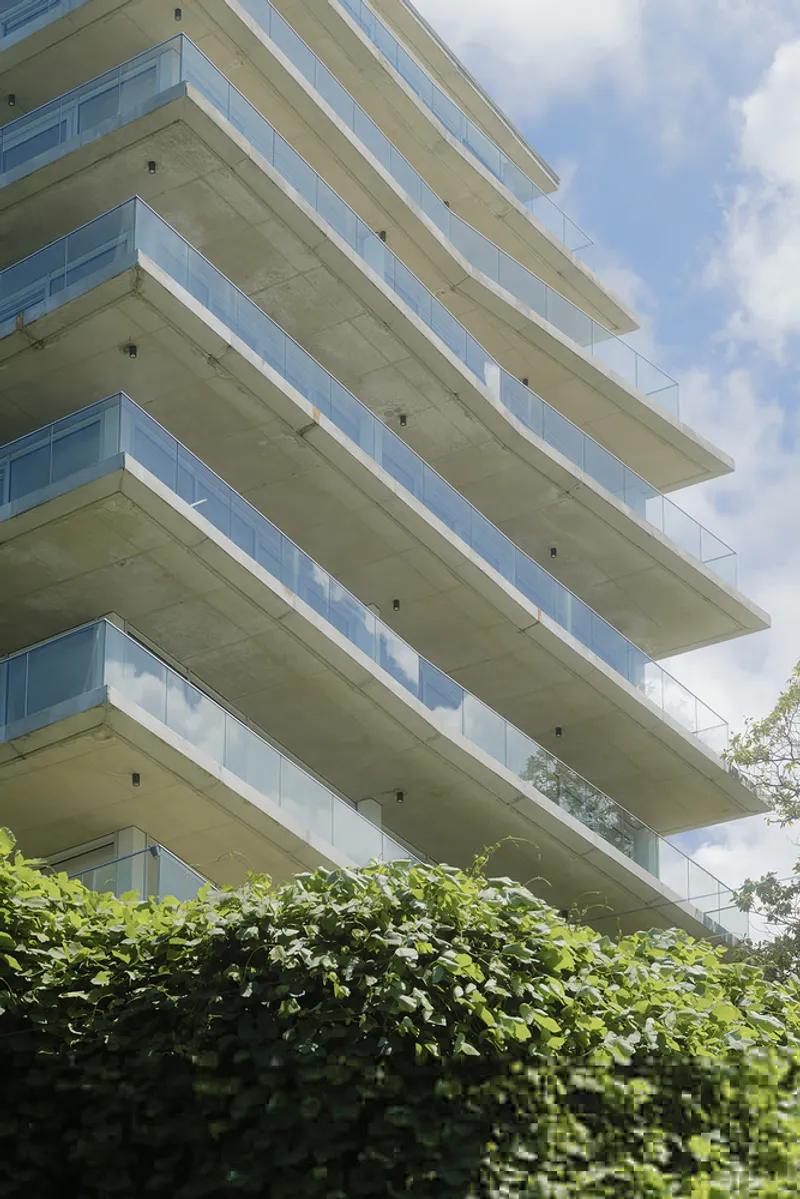
The Green Cape Botanico masterplan exemplifies a harmonious balance between modern architecture, sustainable landscape preservation, and community-focused design. The development consists of two primary apartment buildings, complemented by a third structure, the House of Wellness, which connects residential and recreational spaces.
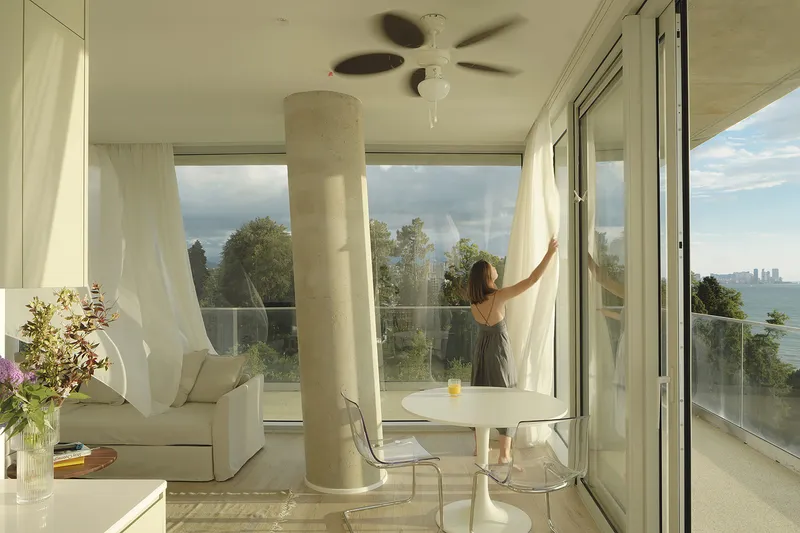
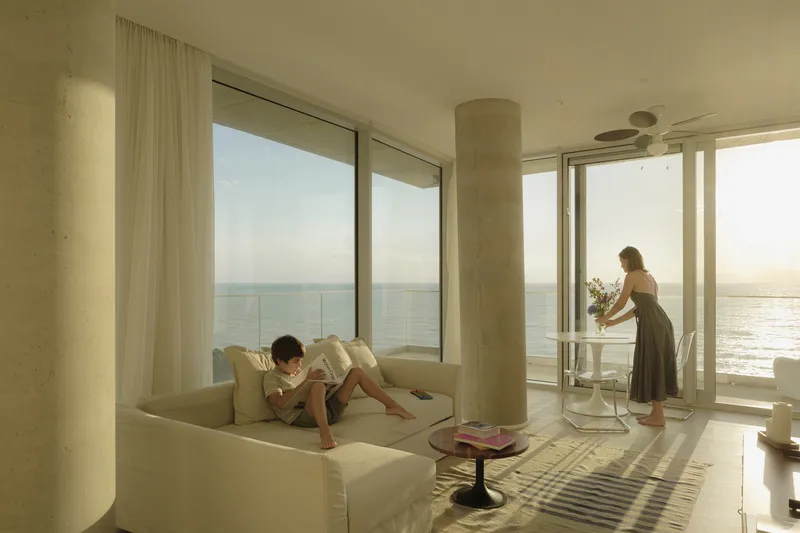
The design emphasizes integration with the existing topography, preserving natural contours while slightly elevating the buildings to maintain the site’s light and airy character. This approach minimizes environmental impact and ensures the landscape retains its authenticity. The masterplan celebrates transparency and simplicity, with floor-to-ceiling glass facades that offer panoramic views of the sea and surrounding greenery.
Landscape and Circulation
MUA’s team carefully studied the historical paths across the site, leaving them intact while revitalizing them as open walkways between buildings. This pedestrian-friendly design fosters interaction and connection with the natural surroundings, reinforcing the development’s community-oriented philosophy. The open hotel-inspired typology ensures that every apartment benefits from natural light, scenic views, and a seamless indoor-outdoor experience.
House of Wellness, Recreational Architecture
The Green Cape House of Wellness serves as a central recreational hub for residents and visitors alike. Located just a four-minute walk from Green Cape Beach, this four-level structure combines indoor and outdoor activities, including gym facilities, restaurants, and rooftop swimming pools.
The building’s architecture draws inspiration from three conceptual images: the existing natural landscape, the modern recreational facilities of Green Cape, and global precedents for wellness-focused architecture. The final design reflects local heritage updated with contemporary aesthetics, creating a space that is both functional and evocative of Batumi’s unique coastal atmosphere.
Architectural Features
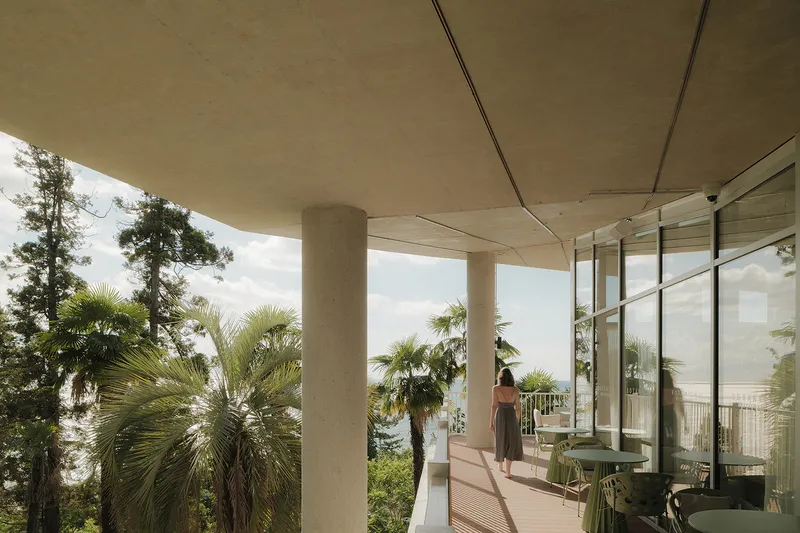
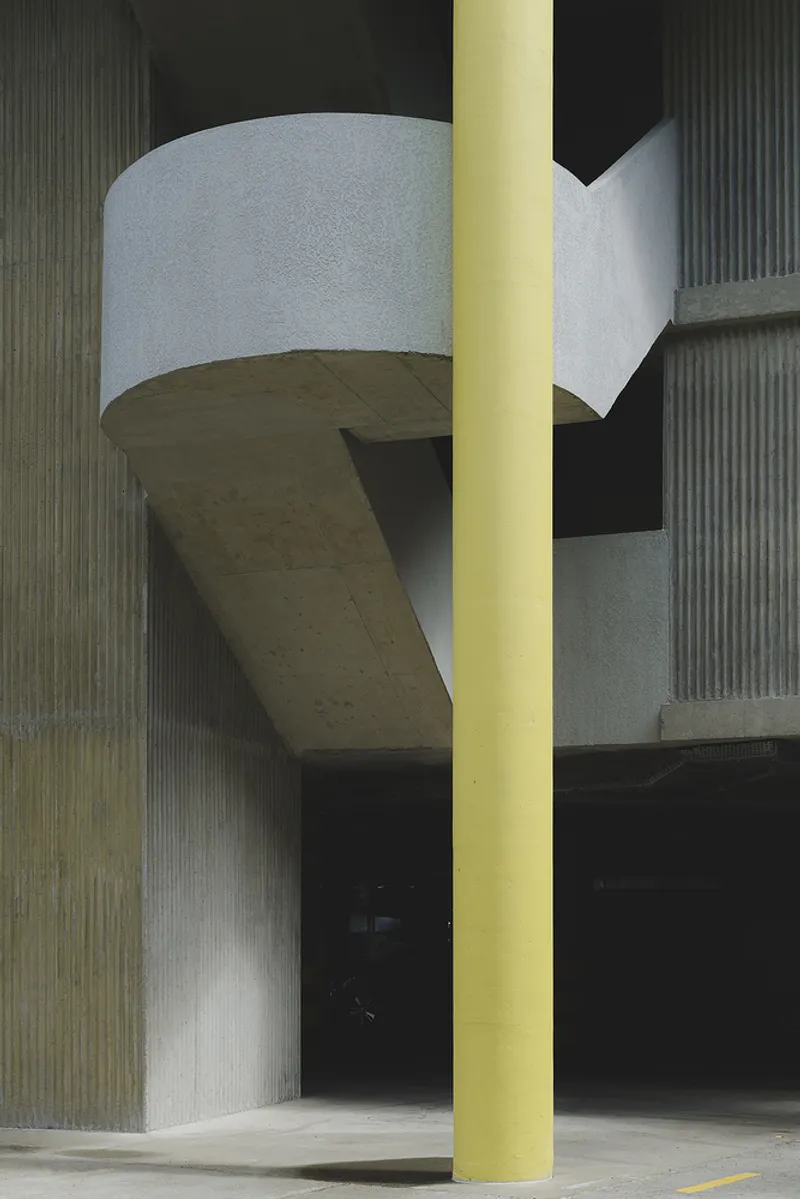
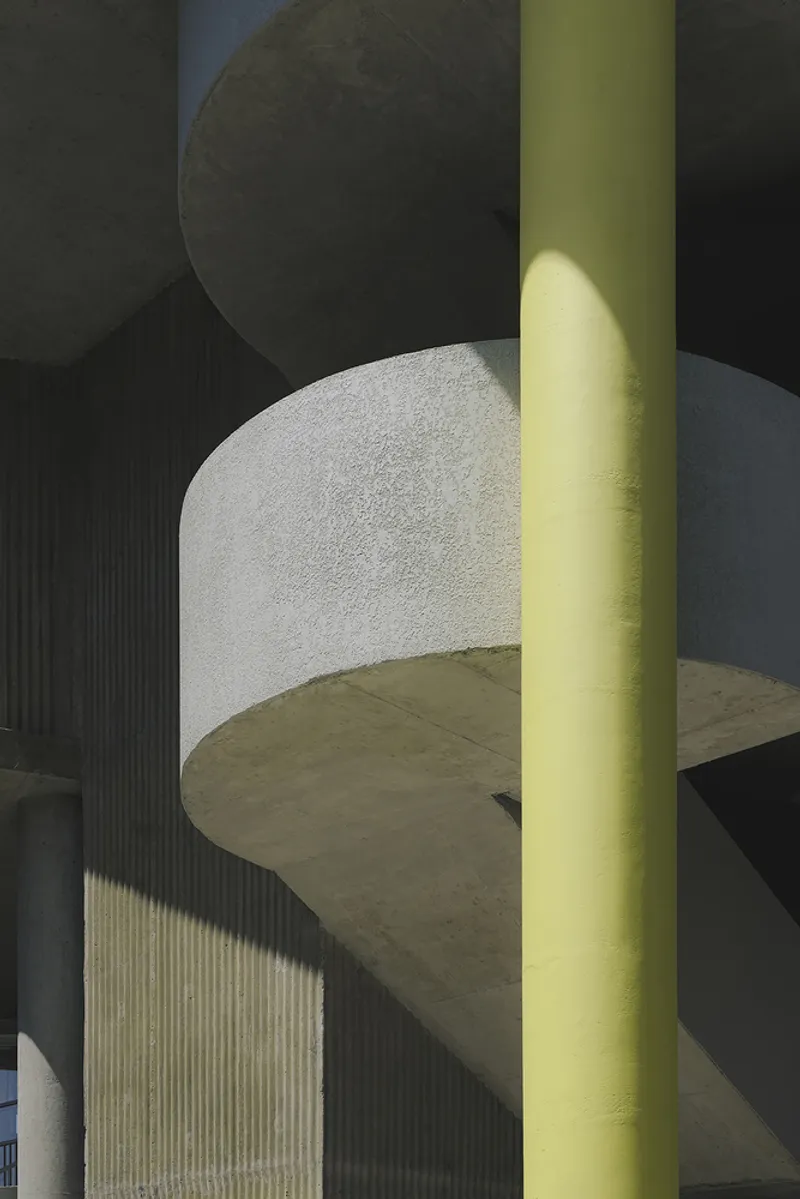
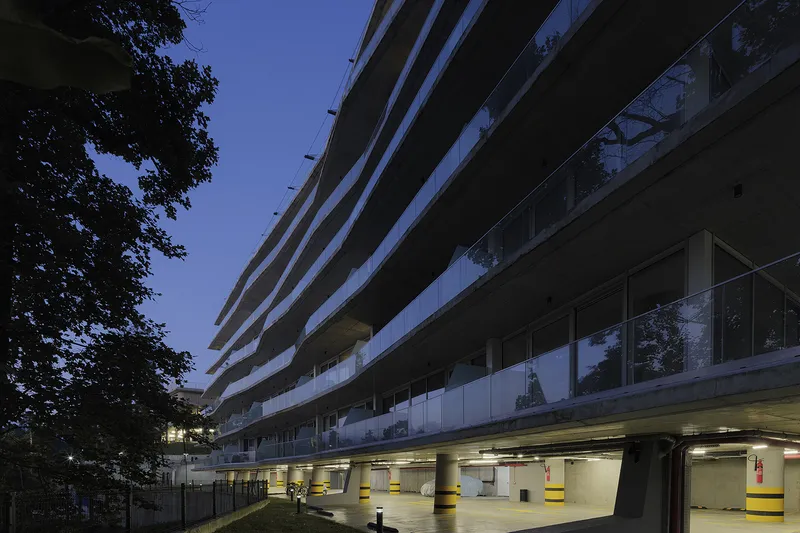
The House of Wellness is characterized by raw concrete construction, curved corners, and an elevated profile that minimizes disruption to the hilly terrain. The rooftop pools appear to float between slabs, while the restaurant terrace enjoys expansive views of the sea. A dramatic staircase at the entrance acts as the centerpiece, guiding visitors toward relaxation and entertainment.
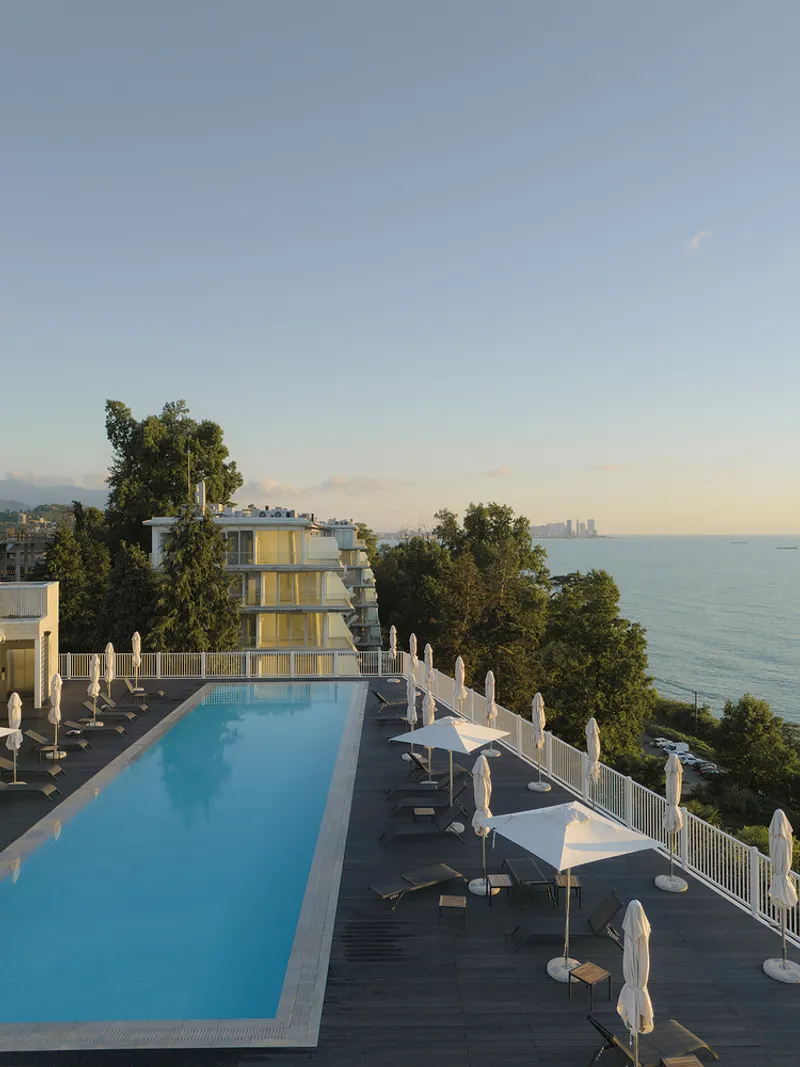
Design challenges included a compact site, steep terrain, and multiple programmatic requirements. Excavation was minimized to preserve vegetation, while the open ground level accommodates parking. Upper levels house the restaurant, gym, and pools with unobstructed views of Green Cape Beach. Technical spaces are cleverly hidden behind swimming pools, subtly integrated into the building’s contours. The rooftop terrace, featuring both main and kids’ pools, incorporates an open kitchen and bar sheltered by an overhanging concrete canopy, creating an immersive social and leisure experience.
Sustainability and Community Integration
The Green Cape Botanico project exemplifies sustainable coastal architecture through careful site planning, minimal excavation, and a strong connection to the surrounding ecosystem. Its design prioritizes natural ventilation, daylight access, and minimal environmental disruption, while promoting community interaction through shared recreational spaces.
All photographs are works of Giorgi Mamasakhlisi


Popular Articles
Popular articles from the community


David Macias Steps a Doorless Stone and Plaster House Down a Tropical Colombian Hillside
In the humid hills of Colombia, Threshold House replaces the front door with an open void and terraces its 850 m² down the slope instead of fighting it.

Juan García Correa, John González and Claudia Rueda Sink a Circular Amphitheater into a Manizales Engineering Building
On the La Nubia campus in Manizales, Colombia, the S1 Building folds labs and offices into a hillside of ramped lawns that double as a campus route.

David Ortega Stacks a Two-Story Mexico City Penthouse Around a Steel Stair and a Pergola-Shaded Roof Terrace
In Colonia Roma, a 300 m² penthouse uses oak joinery, a planted steel stair and a slatted roof pergola to make a new-build apartment feel like a house.

Jaramillo Van Sluys Arquitectura and Urbanismo Turn a Demolished Registry Lot in Quito into an Orchard Plaza
In Quito's Centro Histórico, a 2,800 m² plaza exposes the San Agustín convent wall and redraws its lost Augustinian orchard in volcanic stone.

Similar Reads
You might also enjoy these articles


Hodi-Mandai Geram
Project Function: Preservation and revitalization of the Intangible heritage and socio-spatial identity of the Hodi by Housing, Cultural Memory Center, Sacred Grove, landscape, local tourism economy


Olio Towers: A Mid-Rise for Performers That Fuses Housing, Rehearsal, and Stage
Located blocks from Houston's Theater District, this modular tower stacks living units around a central performance atrium.

Oasis: Modular Green Housing Carved into Dhaka's Urban Fabric
A shortlisted Plugin Housing entry reclaims unauthorized settlements in Dhaka with stepped concrete volumes, green roofs, and ventilation-driven design.

Black Hole: A Floating Megastructure for the Post-Physical Era
Emiliano Mazzarotto envisions a spherical, self-scaling arena where e-sports, digital hotels, and holographic stadiums replace traditional public space.

Explore Residential Building Competitions
Discover active competitions in this discipline

Challenge to design mud housing for contemporary communities

Challenge to reimagine the Iron Throne

Photograph architecture without architects

Illustrate the lost glory of Angkor Wat - Render Challenge
Comments (0)
Please login or sign up to add comments
No comments yet. Be the first to comment!