

GROW: A 48-Story Sentient Skyscraper That Thinks Like a Plant
An AI-managed tower for Dubai 2060 fuses organic structural logic, modular living, and bio-digital infrastructure into one vertical habitat.


What if a skyscraper could grow, adapt, and respond to its occupants the way a living organism reacts to sunlight and moisture? GROW, short for Generative Radial Organic Web, takes that question literally. Rising 48 stories above a projected 2060 Dubai, the tower operates as an autonomous vertical habitat governed by a central AI called Sibija, which manages everything from HVAC and surveillance to spatial reconfiguration and drone logistics. The structure itself is modeled on the vascular networks of plants, with a lattice-like radial framework of primary and secondary tubular systems that carry both physical loads and AI infrastructure through the same members. It is less a building than a synthetic organism with a programmatic metabolism.
Designed by Alessandro Cece, Zainab Khadim, and Asmaa Ebrahim Rashed Ali Alhosani, GROW was shortlisted in the Hybrid Futures '19 - Work x Fly competition. The brief asked entrants to speculate on how work and mobility would converge in future cities. This team responded with a tower that dissolves the boundaries between residential, commercial, and infrastructural programs, binding them together through a single AI nervous system and an organic structural skeleton that doubles as data conduit.
Sibija: An AI Nervous System Embedded in the Structure
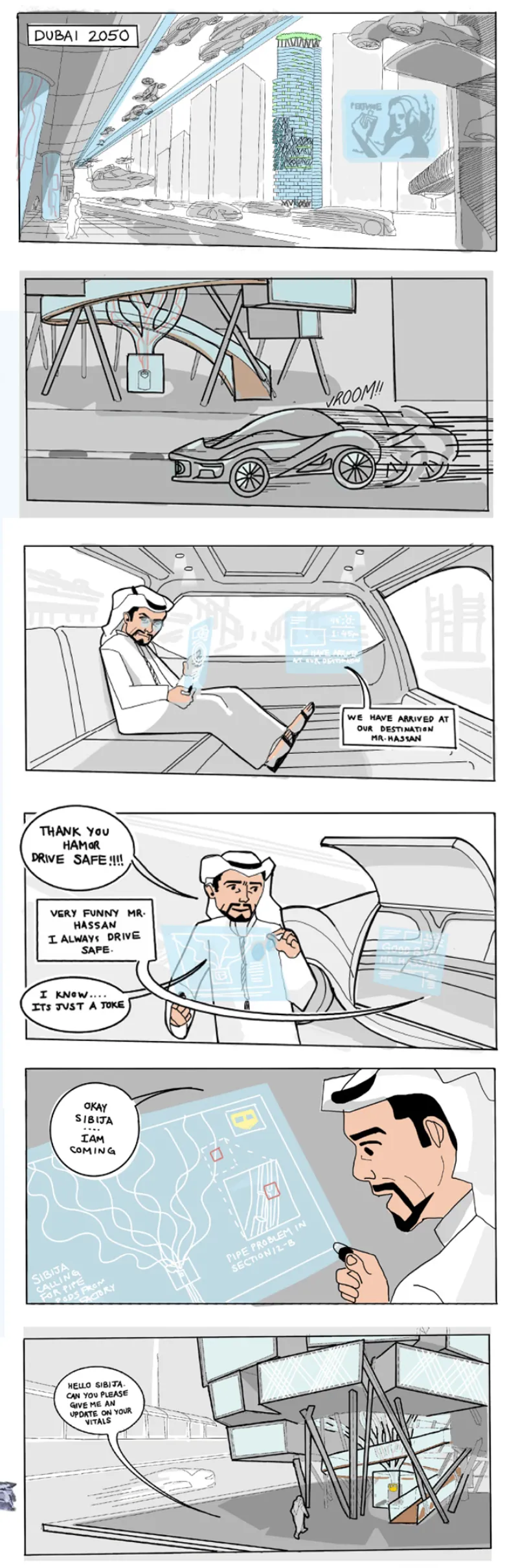
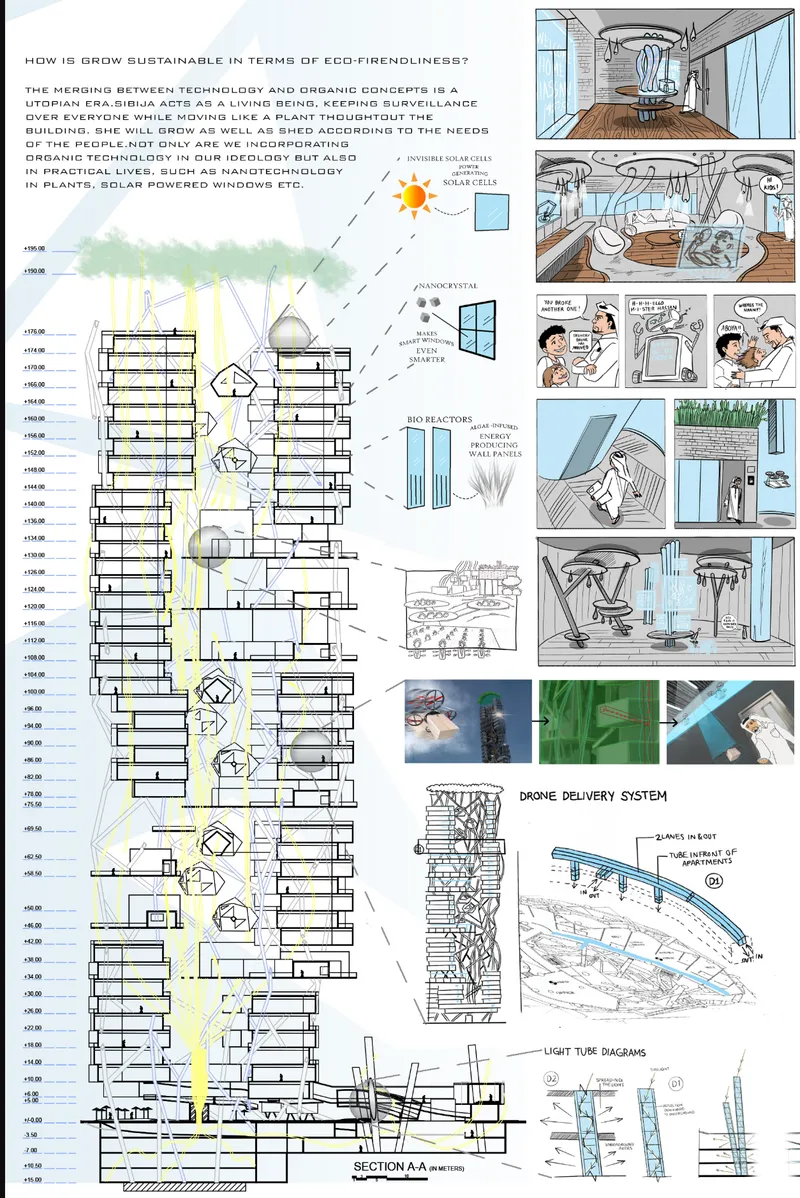
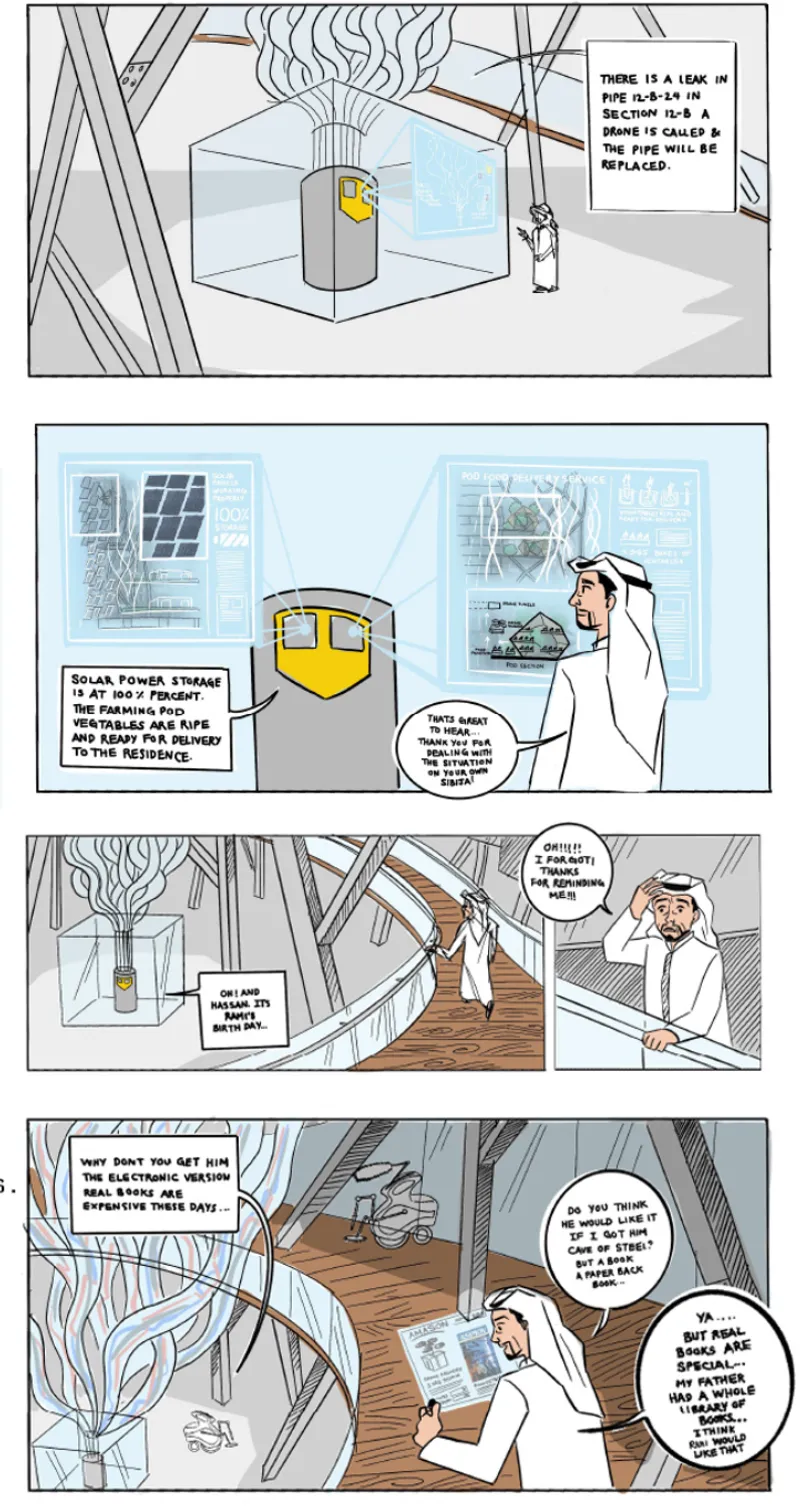
The illustrated storyboard and annotated section reveal how Sibija, the tower's central intelligence, permeates every floor. Operating through what the designers call an "AI Cube System," Sibija coordinates electrical grids, water distribution, security surveillance, and climate control as a single integrated operation. Autonomous vehicles dock at expandable aerial landing pods, while drone delivery systems move goods vertically through the section without touching street level. The section drawing maps these flows explicitly: sustainable building systems, drone corridors, and energy infrastructure are layered across the tower's height, each managed in real time by the AI.
What makes the concept provocative rather than merely techno-utopian is the dual-purpose structural logic. The branching tubular framework that holds the building up also houses the AI's data and energy pathways, mirroring the way a plant's vascular system transports both nutrients and structural cellulose. By collapsing infrastructure and structure into one system, the designers eliminate redundant service cores and free floor plates for habitation and planting.
Branching Columns and Planted Interiors

Two illustrated sequences bring the interior life of GROW into focus. Residential spaces feature exposed branching structural elements that fork upward like tree limbs, creating alcoves for planted areas and community gathering. The comic-strip format in one panel set shows how a resident might move through a living room where the boundary between furniture, structure, and garden blurs entirely. In the adjacent sequence, terraced planting beds step upward within the branching framework alongside a vertical circulation spine, suggesting that food production and daily movement share the same spatial territory.
The program is dense and varied: conventional apartments, community-oriented villa typologies with urban farming plots, commercial offices for corporations and startups, shopping centers, gyms, swimming pools, and a rooftop greenhouse. Interstitial zones on office floors accommodate sleeping pods, meditation rooms, and VR spaces. All of it is monitored and adjusted by Sibija, which reshapes modular floor components, expanding or contracting rooms to match real-time occupancy and demand.
Circular Ramps and the Spatial Experience of Vertical Circulation
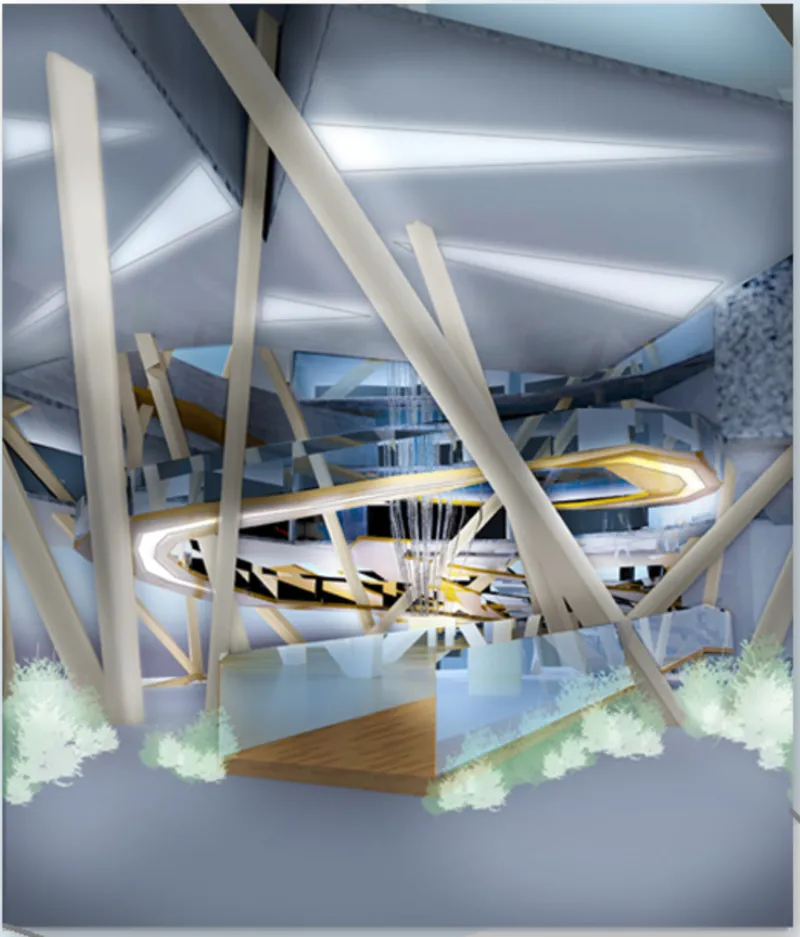
An interior rendering captures the quality of movement inside the tower. Circular ramps spiral upward through a column field of angled white structural members, creating a spatial experience closer to walking through a forest canopy than riding an elevator. The geometry is deliberate: radial circulation mirrors the organic web logic of the overall structure, and the gentle incline of the ramps allows continuous pedestrian flow across multiple levels without abrupt transitions. It is a rare competition entry that considers what it actually feels like to move through a 48-story building on foot.
A Facade That Generates Its Own Energy

The axonometric rendering pulls back to show GROW as a total system. Stacked floor plates are wrapped in diagonal bracing that integrates solar panels directly into the structural skin, while tree canopies emerge at intervals along the building's perimeter. The facade is not a passive envelope: solar-powered windows with embedded invisible solar cells and nanocrystals adjust to solar gain, optimizing interior daylighting and reducing cooling loads. Bio-reactors built into wall panels use algae to generate renewable energy, turning the building's surface into a distributed power plant.
Below grade, Sibija manages an automated self-parking system, while above, expandable bridges and ramps extend from aerial ports to accommodate flying vehicles. The axonometric makes clear that every layer of the tower, from underground podium to rooftop greenhouse, participates in both the structural and the energetic logic of the whole. Nothing is decorative; everything works.
Why This Project Matters
GROW proposes a new typology that the designers call the "sentient skyscraper." It is a building that does not merely respond to future needs but anticipates them through generative, AI-driven design. The concept dissolves the conventional separation of home, office, recreation, and infrastructure into a single continuous vertical habitat where each system reinforces the others. That ambition, paired with a structural language drawn from plant biology rather than steel engineering manuals, gives the project a coherent conceptual backbone that many speculative towers lack.
What distinguishes the work of Cece, Khadim, and Alhosani from other competition entries in this space is their insistence that sustainability and intelligence are structural, not cosmetic. The dual-purpose tubular framework, the algae bio-reactors embedded in wall panels, the nanocrystal-enhanced smart windows: these are not features bolted onto a conventional tower but principles that generate its form. Whether or not Sibija could actually manage a 48-story ecosystem in 2060 is beside the point. The question GROW asks is the right one: can a skyscraper be designed as a single, self-regulating organism rather than a stack of isolated floors? The answer here is convincing.
View the Full Project
About the Designers
Designers: Alessandro Cece, Zainab Khadim, Asmaa Ebrahim Rashed Ali Alhosani
Enter a Design Competition on uni.xyz
uni.xyz runs architecture and design competitions year-round that reward proposals with spatial conviction and real site intelligence.
Project credits: GROW (Generative Radial Organic Web) by Alessandro Cece, Zainab Khadim, Asmaa Ebrahim Rashed Ali Alhosani Hybrid Futures '19 - Work x Fly (uni.xyz).




Popular Articles
Popular articles from the community


Lunar Spiral: Space Architecture Shaped by the Mathematics of the Universe
Lunar Spiral reimagines space architecture through Fibonacci geometry, lunar regolith, levitating habitats, and self-sustaining Moon living.

Co-life: Sustainable Architecture for Age-Friendly Community Living
Co-life reimagines sustainable architecture for seniors through courtyards, rammed earth, shared gardens, and spaces designed for belonging.

Hill & Cross Opera: Sculptural Opera House Architecture Shaped by Tallinn’s Landscape and Identity
Hill & Cross Opera reimagines opera house architecture in Tallinn through its sculptural hill, civic plaza, glass wave and a luminous cross.

Riyadh For All: Intergenerational Urban Design for Active Aging in Rabat
Riyadh For All reimagines urban design in Rabat with intergenerational co-living, adaptive courtyards, and Moroccan cultural exchange today.


Similar Reads
You might also enjoy these articles

Day and Night Park: A Time-Based Urban Newsstand in Beijing
A temporary urban newsstand in Beijing blending travel, light, and reading through poetic colors, compact form, and community-focused design.

Modernist Patio Renovation in El Masnou, Barcelona by Oliver Segura Arquitectura + Cebrià Arquitectura
Modernist patio renovation blending tradition and innovation with a movable pool, leveled floors, and Catalan materials in El Masnou.

Alto Residencial Coop: Cooperative Housing Development in Santiago de Compostela by Carbajo Barrios Arquitectos
A linear cooperative housing complex blending white volumes and perforated metal façades, enhancing community living, natural light, privacy, and urban integration.
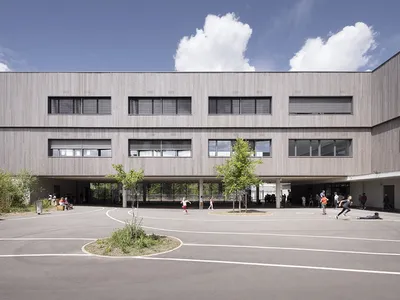
Vil Genis School by BPA ARCHITECTURE – Massy, France
Vil Genis School in Massy, France, features sustainable design, south-facing classrooms, community integration, accessible spaces, and modern educational architecture.


Comments (0)
Please login or sign up to add comments
No comments yet. Be the first to comment!