
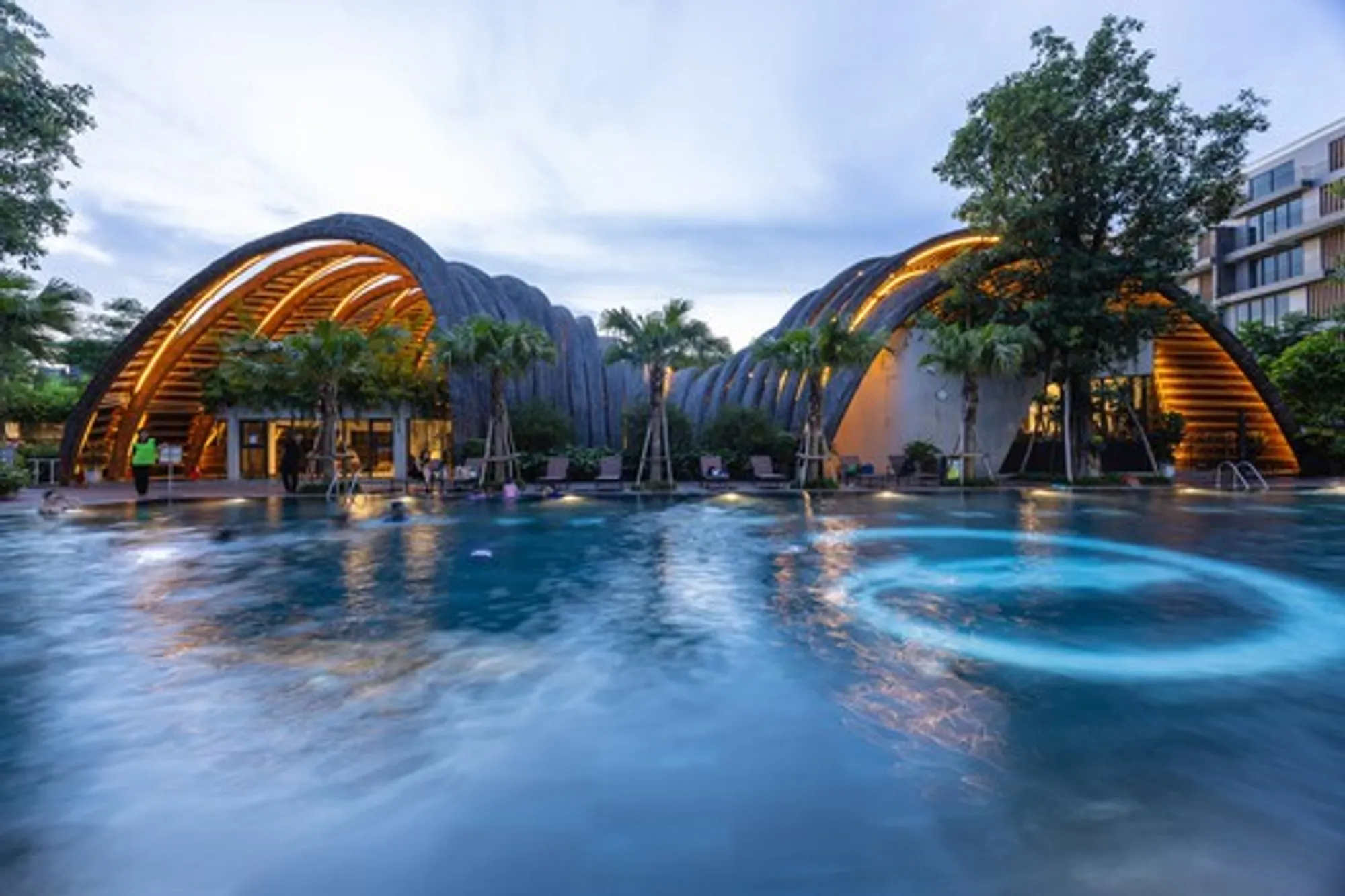
Guột Garden Club House by Ho Khue Architects
An organic clubhouse in Vinh, Vietnam, where flowing architecture, natural materials, and landscape integration create a serene community retreat.


In the rapidly transforming urban fabric of Thành Phố Vinh, Vietnam, Guột Garden Club House, designed by Ho Khue Architects, emerges as a rare architectural gesture: one that resists speed, angularity, and density in favor of flow, tactility, and coexistence with nature. Completed in 2024 with a built area of 530 m², the clubhouse is not conceived as a conventional amenity building, but as a sculptural landscape intervention where architecture becomes an extension of the earth itself.
An Organic Landmark Where Architecture, Landscape, and Community Converge in Vinh
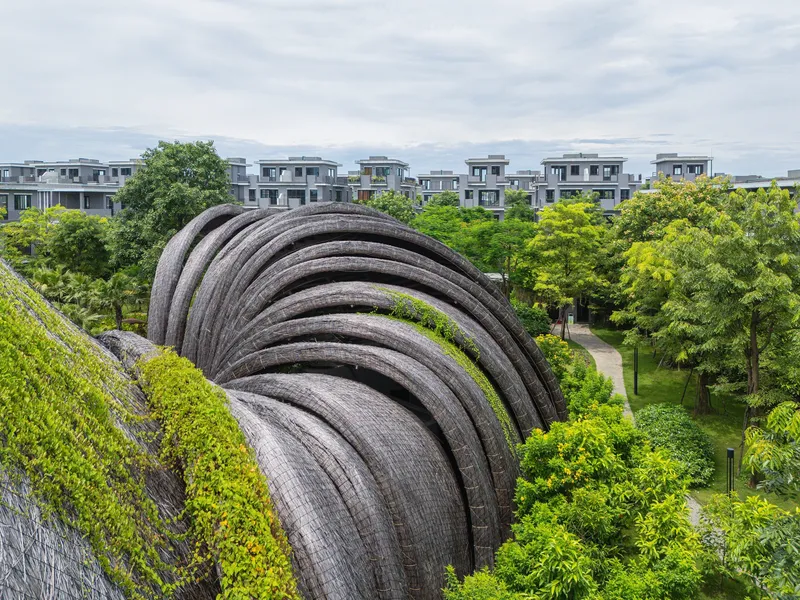
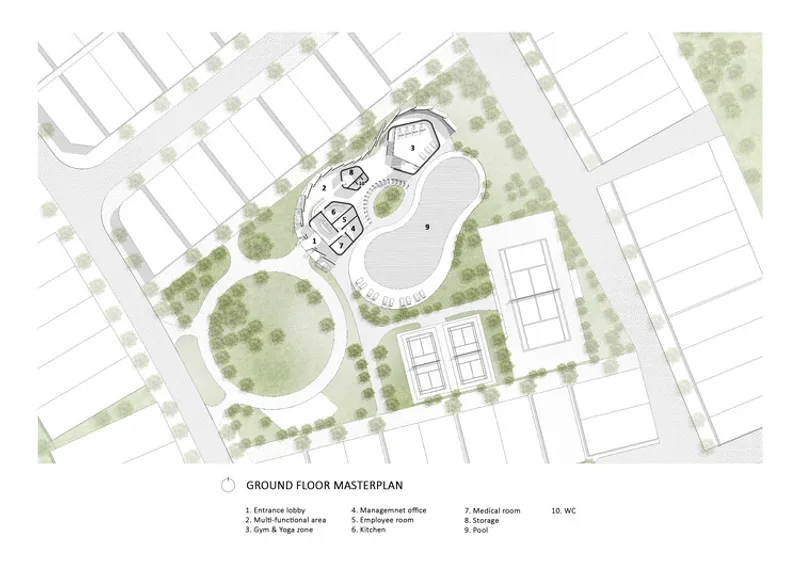
Set within a generous 5,380 m² site and occupying just 9.8% construction density, the project prioritizes open ground, vegetation, and spatial breathing room. It stands as an architectural manifesto for a more sensitive urban future: one that values proportion, restraint, and emotional experience over maximization.
Architecture as Landscape Gesture
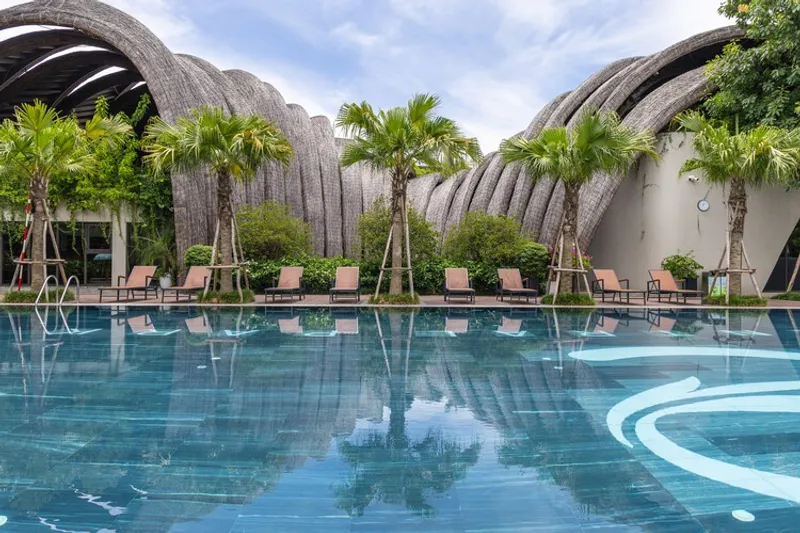
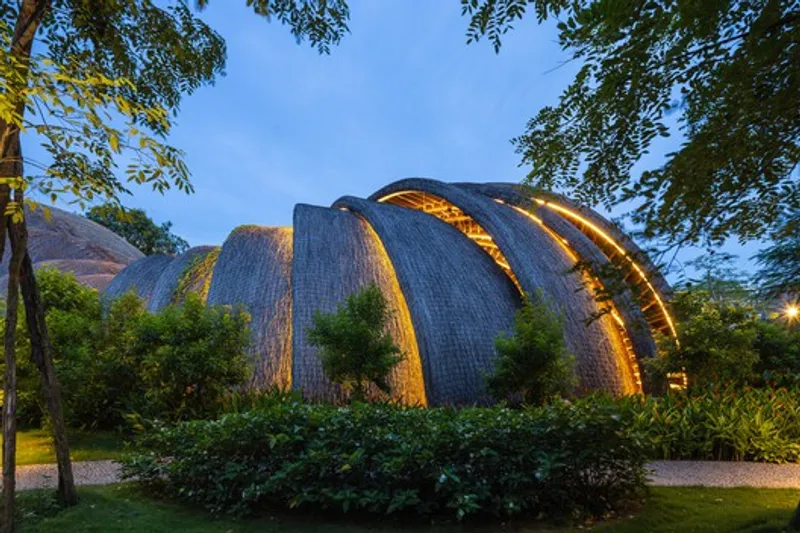
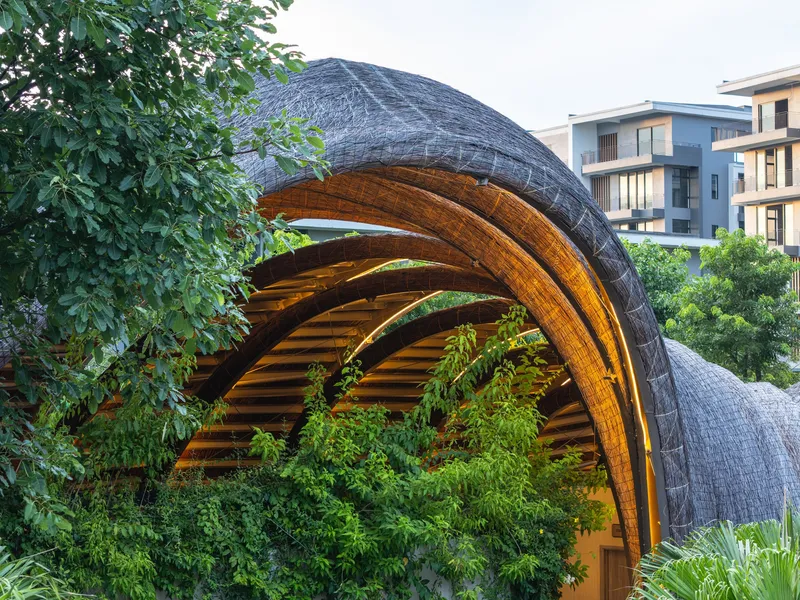
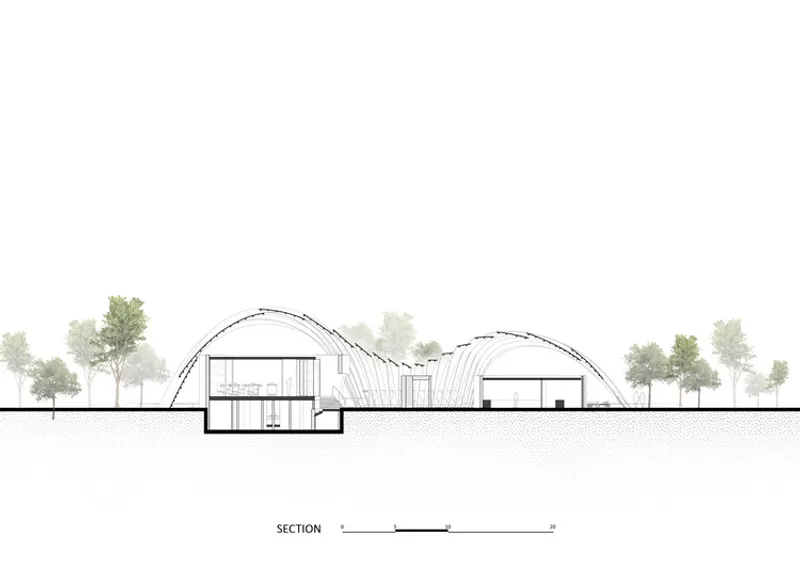
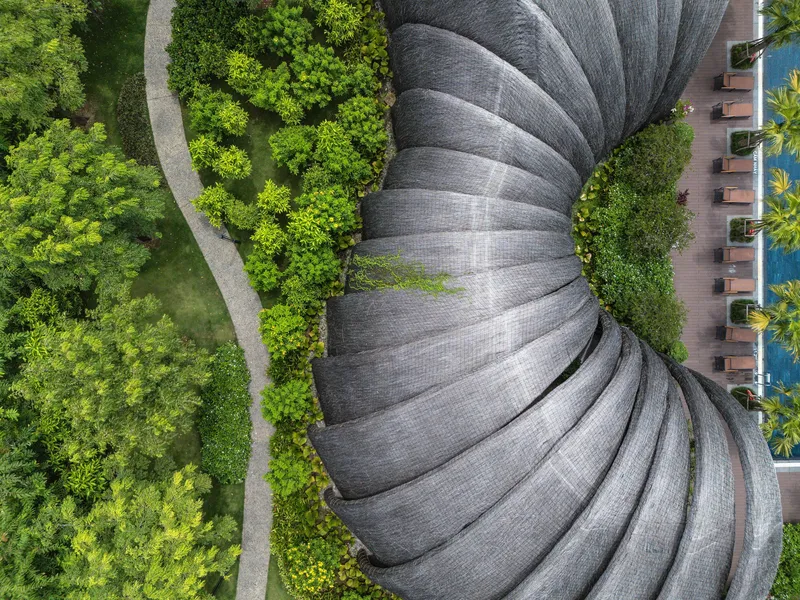
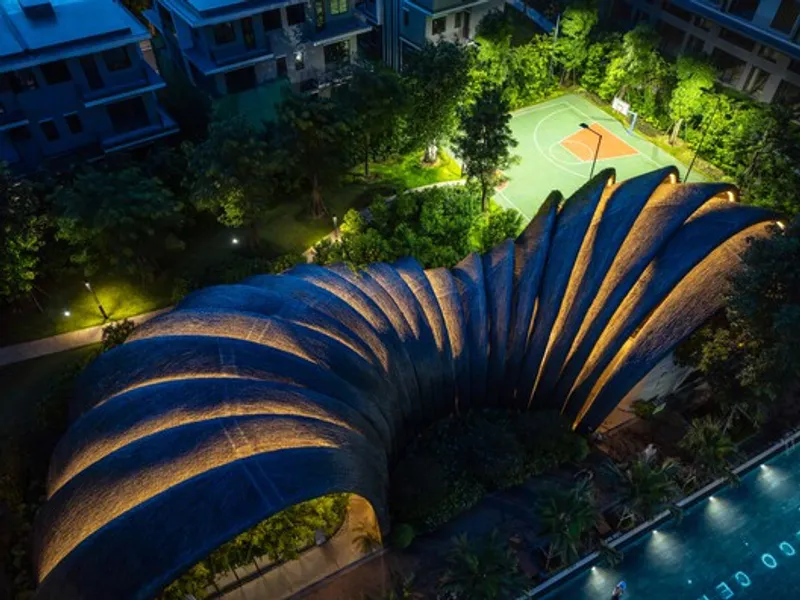
Rather than presenting a rigid, orthogonal mass, Guột Garden Club House unfolds as a continuous, non-linear form, inspired by the mountain silhouettes and cultural geography of the Lam River region. Rising to a height of eight meters, the building resembles a giant seashell or a coiling natural formation, wrapping itself gently around the swimming pool at its heart.
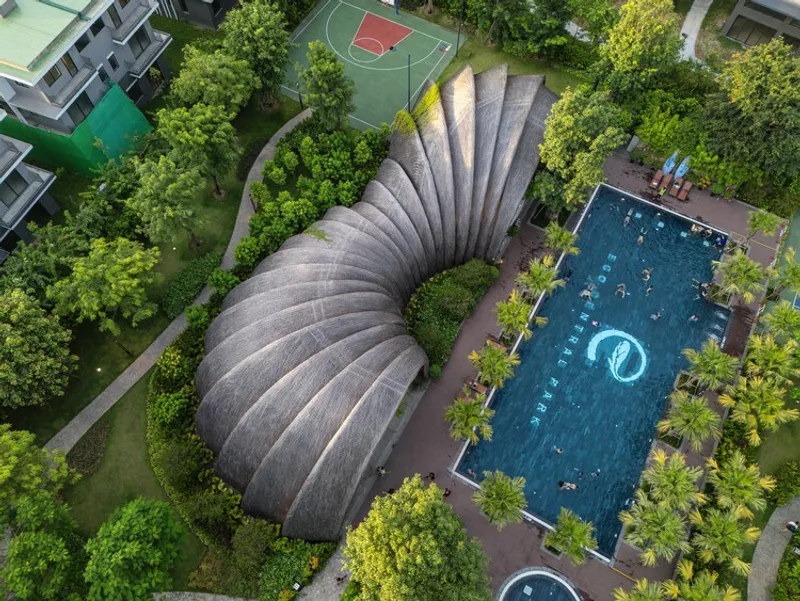
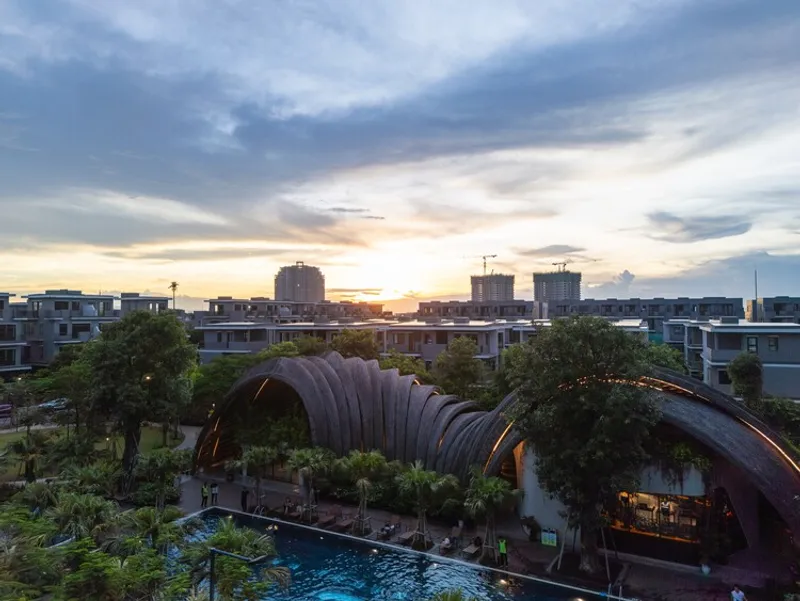
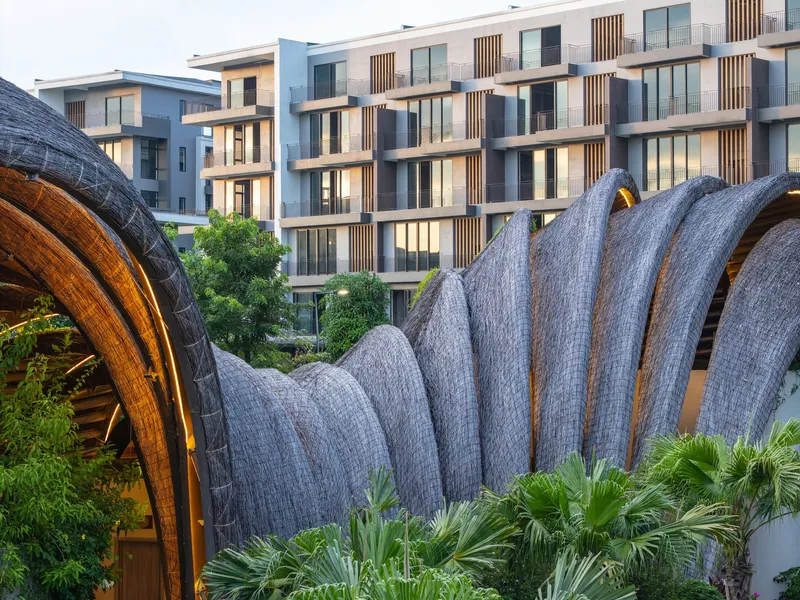
This flowing geometry deliberately challenges the surrounding city’s hard edges. The clubhouse reads less as a building placed within a garden and more as a topographic event emerging from it: a soft architectural body shaped by gravity, movement, and time.
The Roof as Living Skin
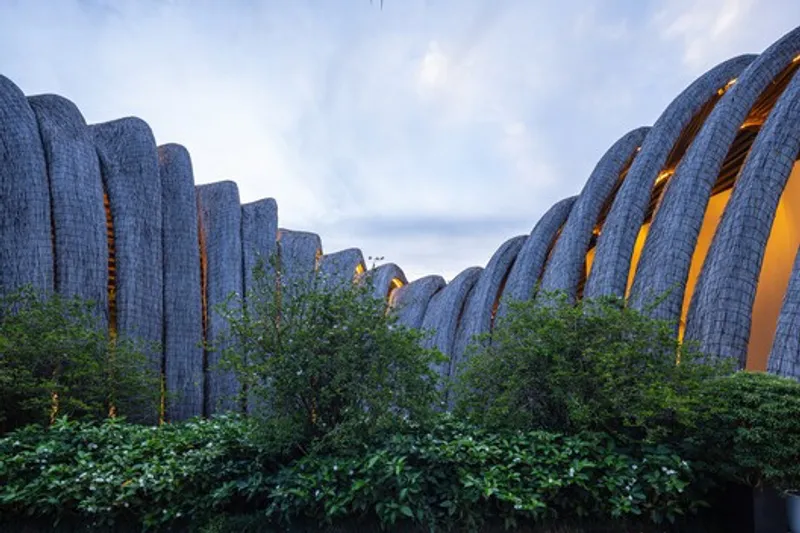
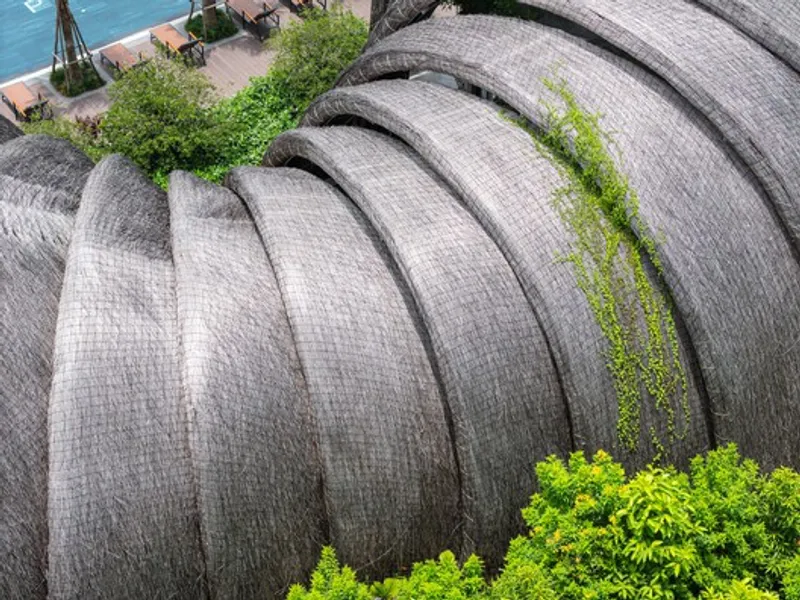
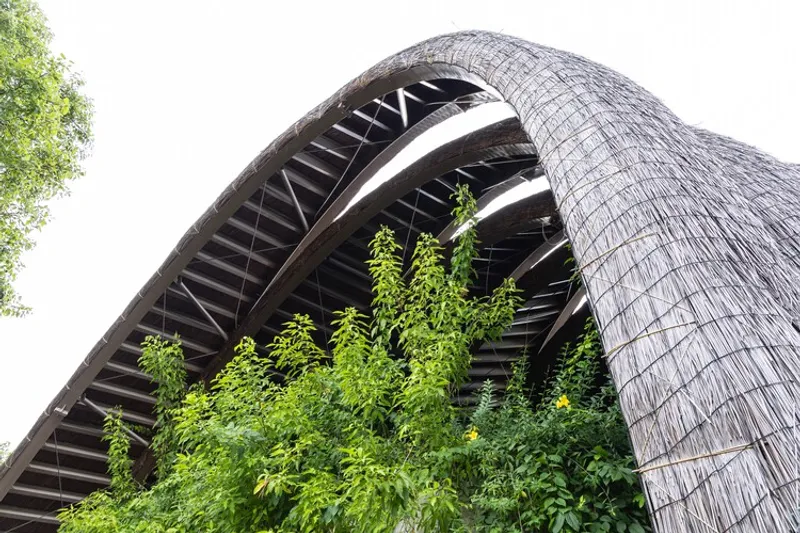
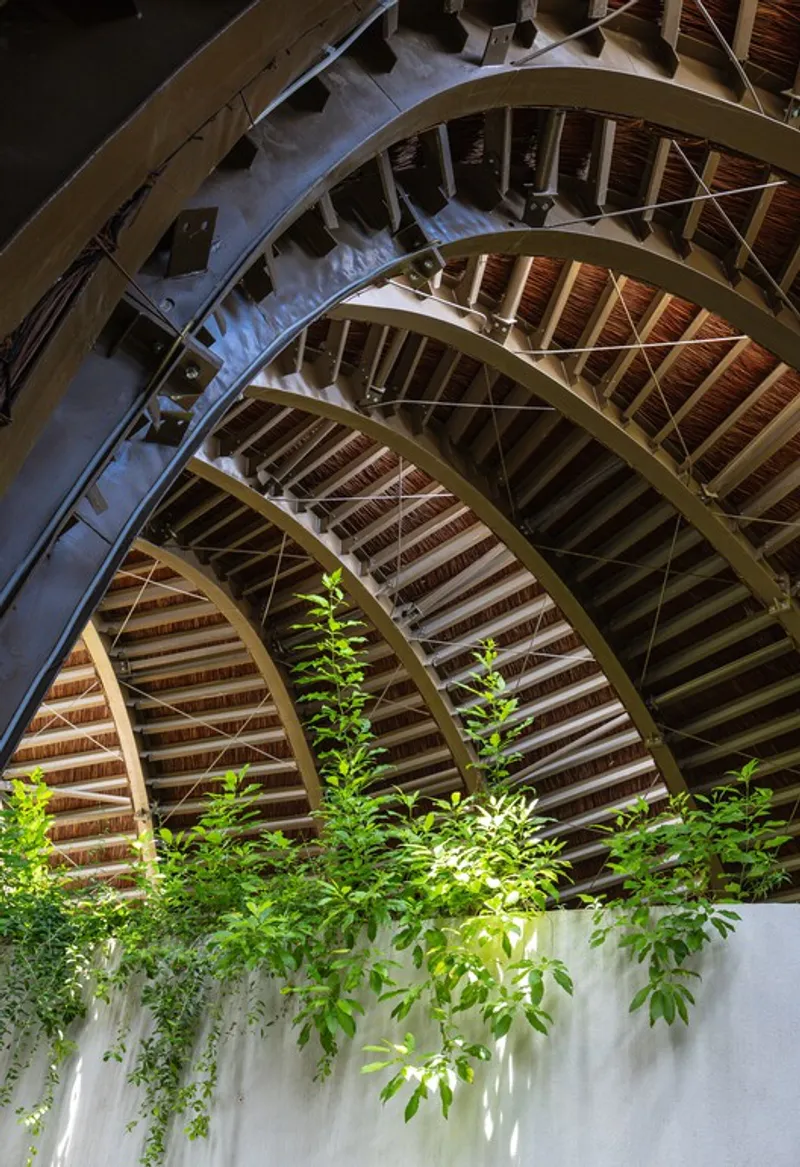
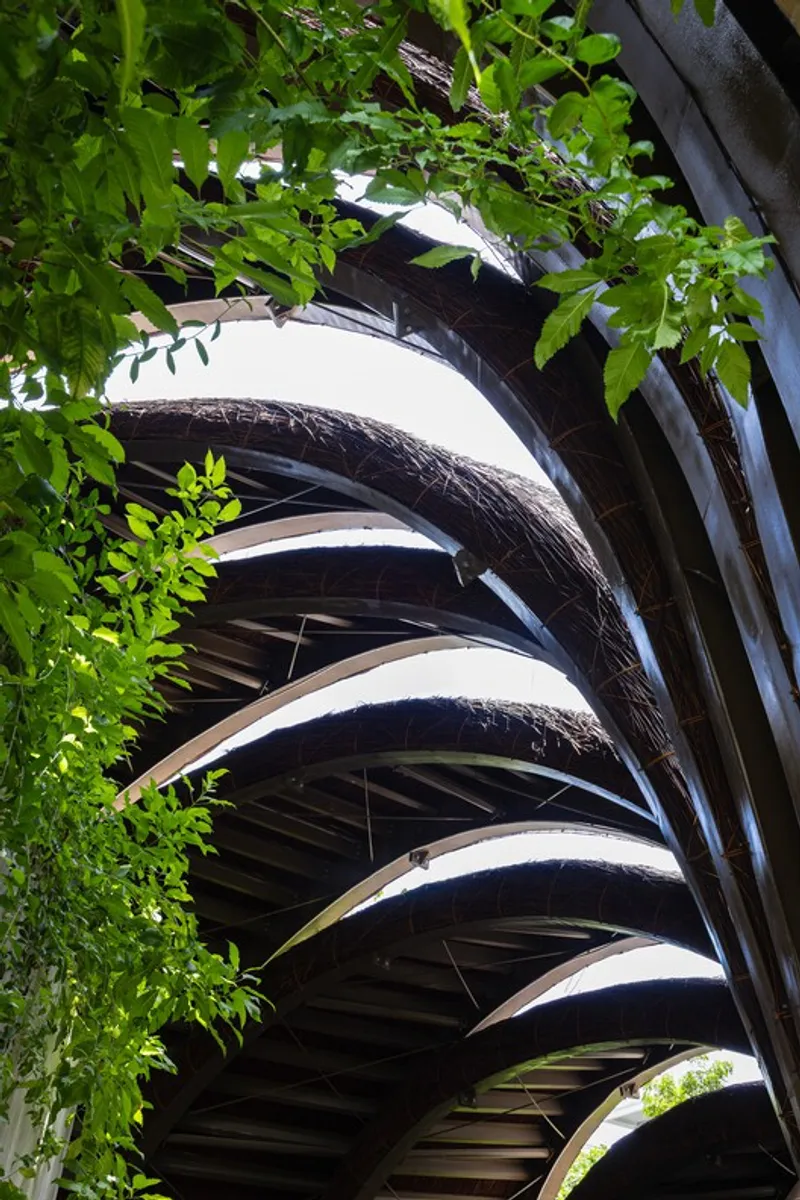
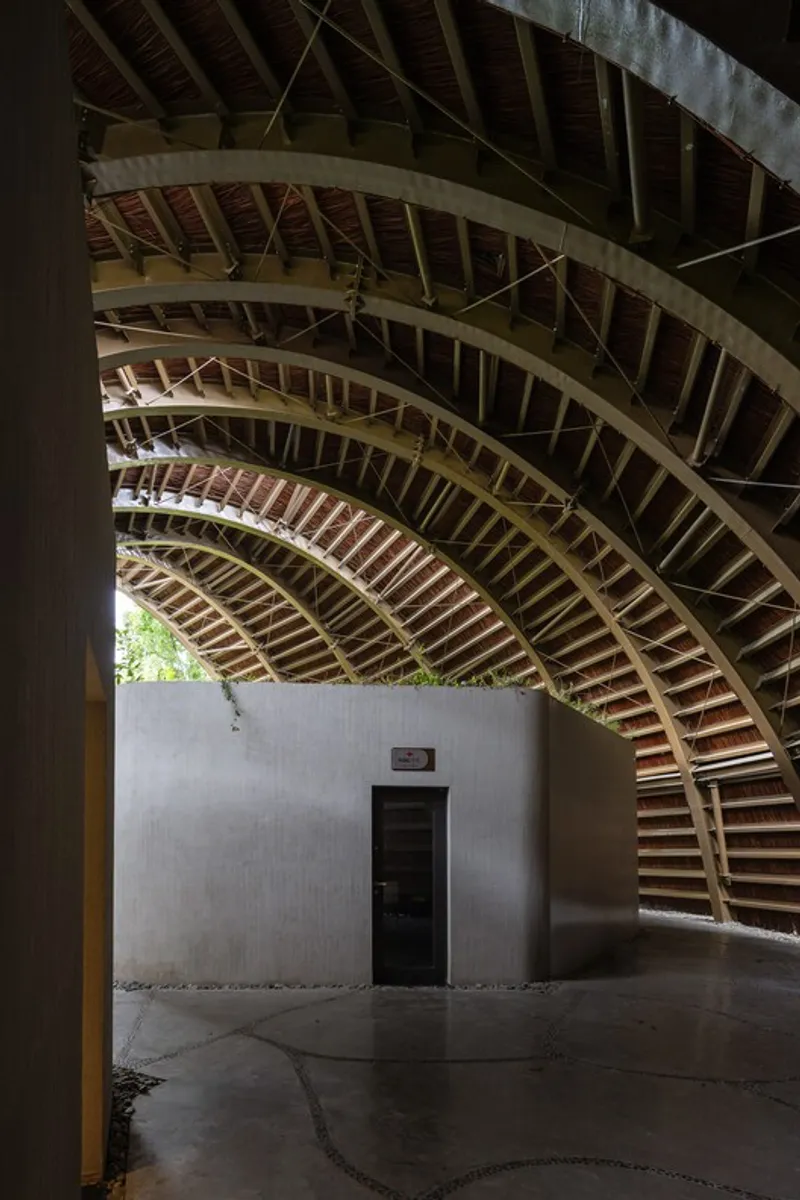
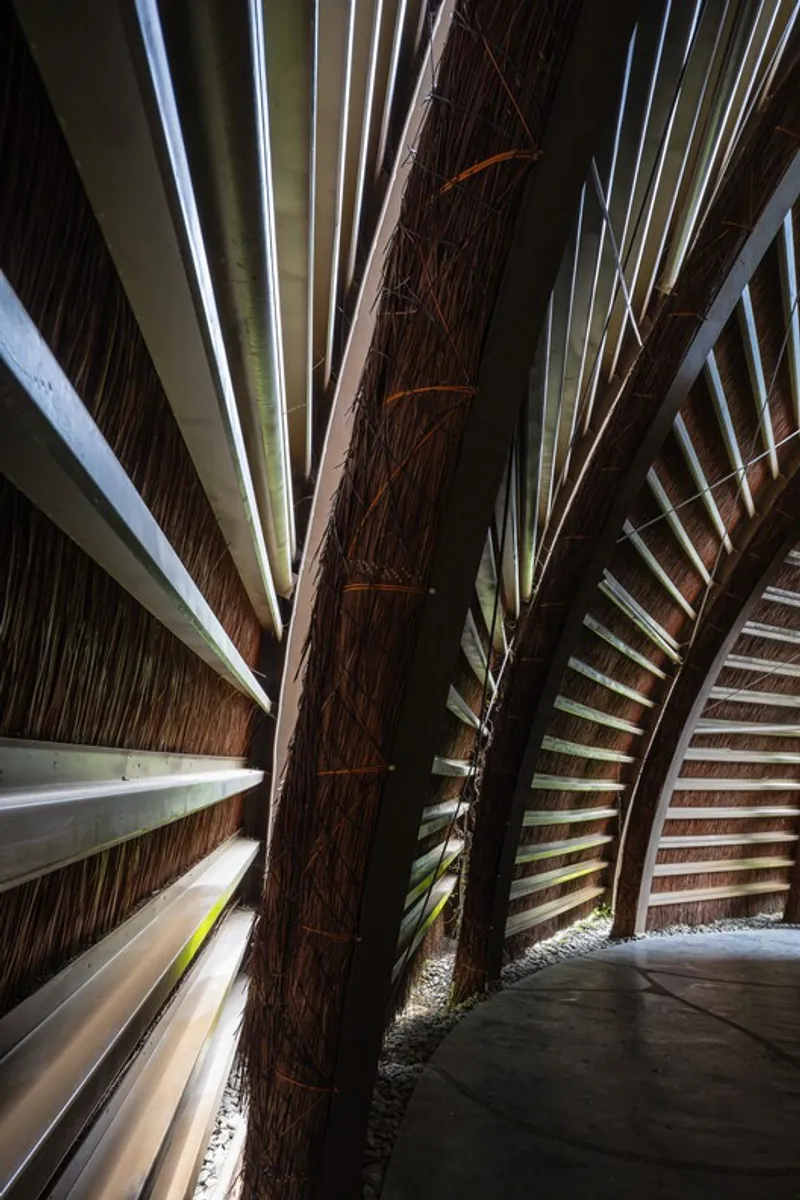
The most distinctive feature of the project is its organic roof system, both structurally and materially. The roof is supported by a series of white-painted, curved steel trusses, whose rhythmic folds act simultaneously as load-bearing elements, daylight apertures, and ventilation channels.
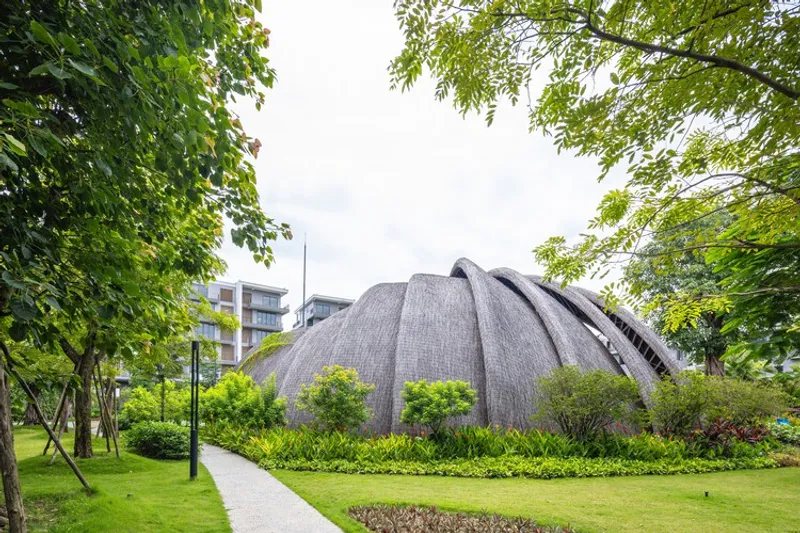
These folds echo the temporal creases of mountains, creating a visual continuity between ground and sky. Light enters the interior indirectly, filtered and softened, while air circulates naturally through the open creases, reducing the need for mechanical systems and reinforcing climatic responsiveness.
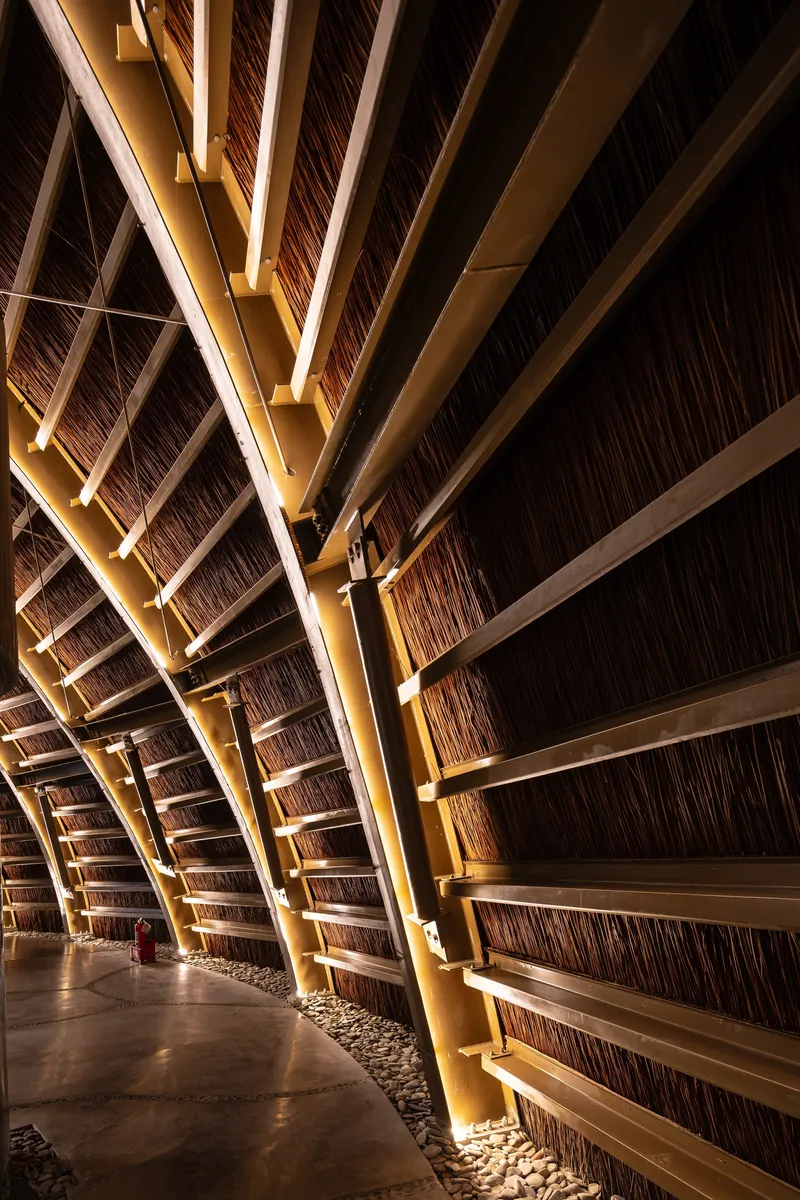
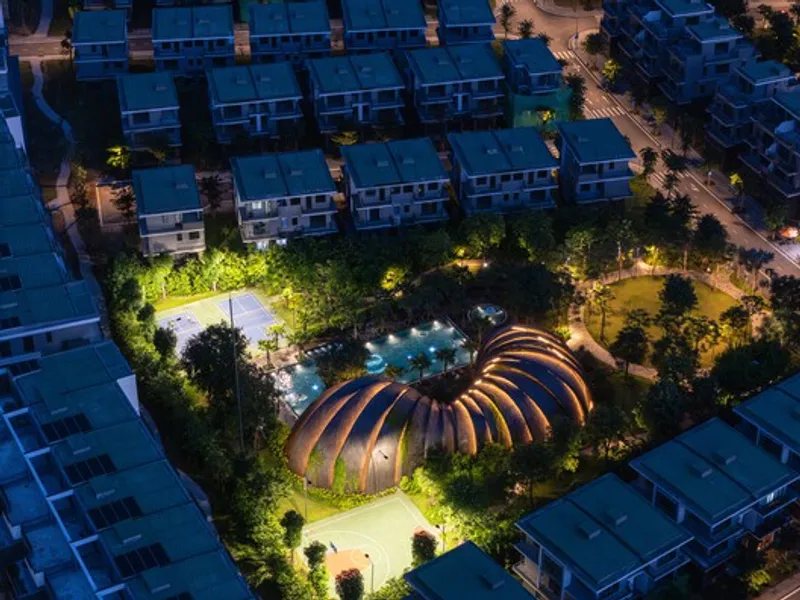
Covering this sculptural structure is a layer of Gleicheniaceae (guột), a traditional, handcrafted natural material. Rather than functioning merely as cladding, the guột roof acts as a breathing skin: filtering heat, regulating microclimate, and offering a tactile, sensorial surface that evolves over time. As it weathers, its color shifts and deepens, allowing the building to blend even more seamlessly into the surrounding greenery.
Material Dialogue: Rawness and Refinement
Inside the clubhouse, Ho Khue Architects orchestrate a deliberate contrast between raw structural honesty and moments of warmth. The interior does not hide its materiality; instead, it celebrates it.
- Board-formed concrete walls and raw concrete ceilings establish a primal, grounded atmosphere, emphasizing permanence and weight.
- Polished concrete floors subtly reflect light from expansive glass partitions, amplifying spatial depth while maintaining material restraint.
- In the Gym and Yoga areas, the tone shifts gently with the introduction of reddish-brown oak flooring, adding warmth underfoot and creating a sensory counterpoint to the lush exterior landscape.
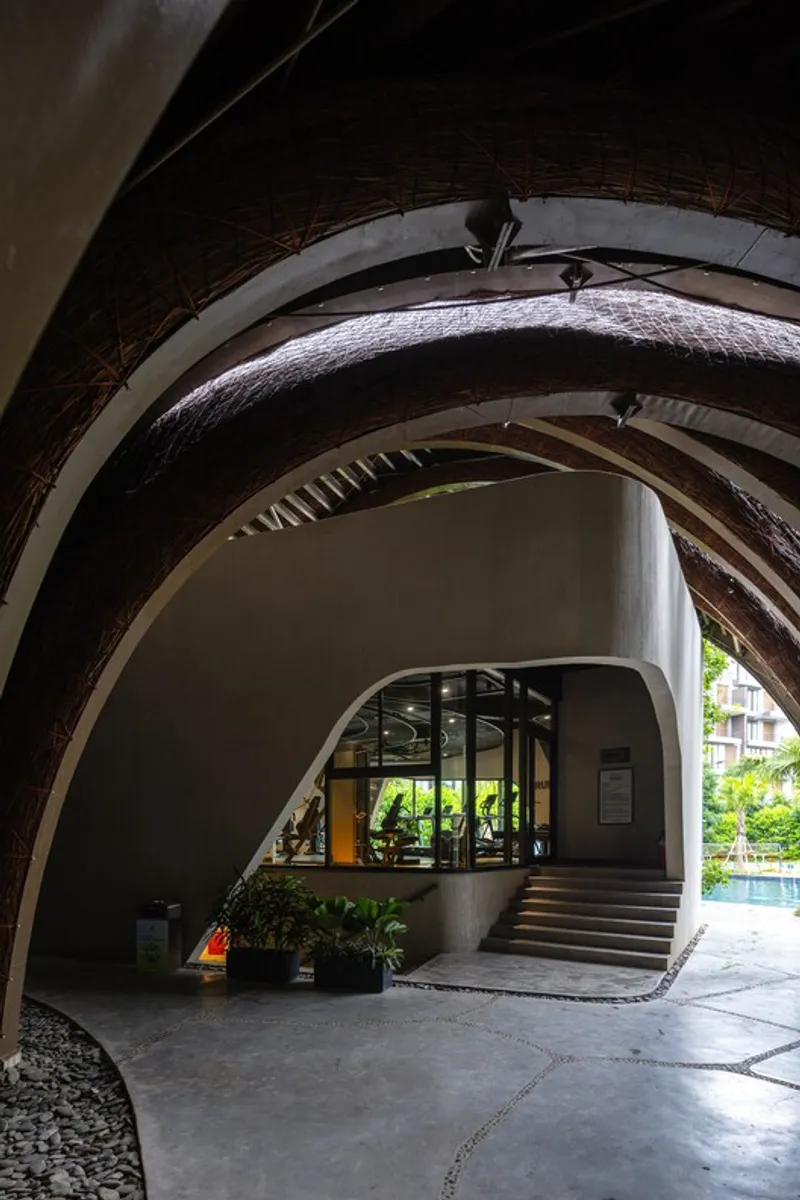
This careful balance between hardness and softness, coolness and warmth, reinforces the project’s central theme: harmony through contrast.
Light, Shadow, and Spatial Rhythm
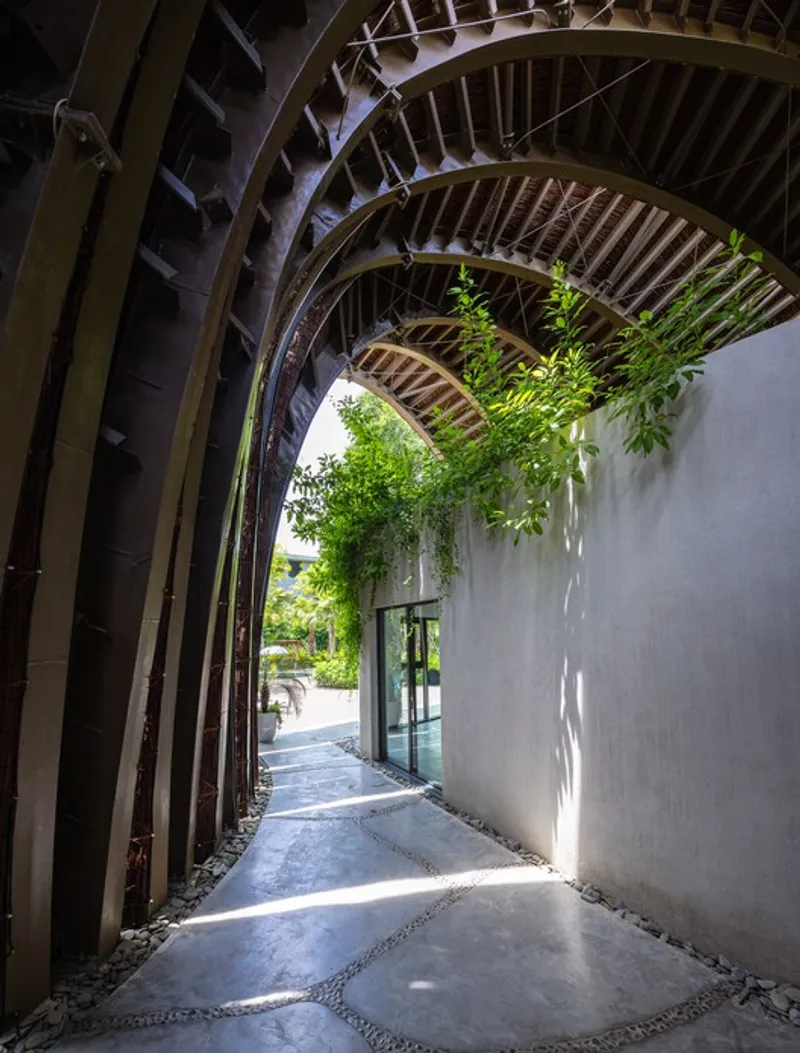
Light within Guột Garden Club House is never direct or overwhelming. Instead, it is modulated through form, material, and vegetation. Curved arches, roof folds, and large openings choreograph how daylight enters, creating slow transitions between brightness and shadow.
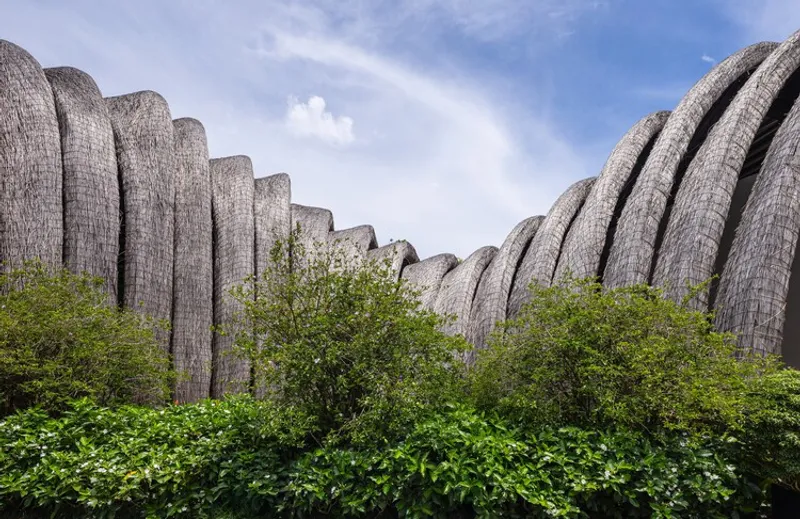
Throughout the day, the building changes character: surfaces glow softly in the morning, deepen in tone at midday, and dissolve into shadow by evening. This temporal quality enhances the emotional connection between users and space, encouraging mindfulness and presence.
Community-Centered Program
More than an architectural object, Guột Garden Club House functions as an all-in-one community amenity, designed to support a resort-like lifestyle for residents while maintaining a strong sense of collective belonging.
The program is intentionally restrained and non-commercial, prioritizing shared experience over revenue-generating functions. Key components include:
- Reception Lobby: An intimate threshold that gently transitions visitors from the city into the garden environment.
- Swimming Pool and Sports Area: The social heart of the project, where architecture, water, and landscape intersect.
- Changing Rooms and Wellness Facilities: Seamlessly integrated to support comfort and flow.
- Multi-functional Community Space: Left deliberately flexible and unprogrammed, reinforcing its role as a communal asset rather than a commercial venue.
This emphasis on community reflects a broader architectural stance: buildings should serve people first, fostering social cohesion and everyday wellbeing.
Architecture of Modesty and Balance
Despite its sculptural presence, Guột Garden Club House is defined by modesty rather than monumentality. Its low construction density allows landscape to dominate, while the building itself remains porous and accessible.
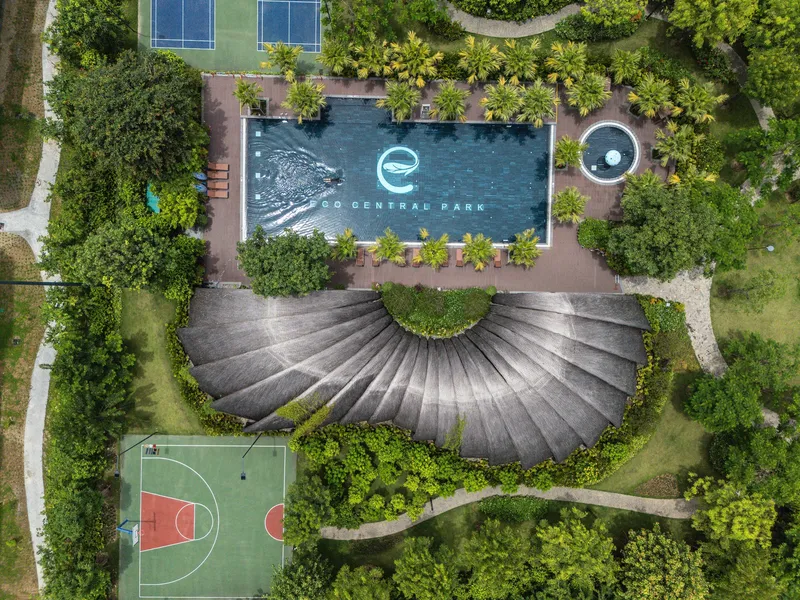
This proportional humility is a critical lesson in contemporary urban design, especially in fast-growing cities like Vinh. By prioritizing open space and environmental integration, the project demonstrates how architecture can elevate quality of life without overwhelming its context.
Sensory Architecture and Emotional Experience
What distinguishes Guột Garden Club House is its deeply sensory approach. The smell of natural roofing material, the texture of raw concrete, the softness of filtered light, and the sound of water and wind all contribute to a holistic spatial experience.
The building does not demand attention; it invites inhabitation. It offers residents a place to slow down, to recalibrate after daily routines, and to reconnect: with nature, with others, and with themselves.
A New Symbol for Vinh
As Vinh continues to urbanize, Guột Garden Club House stands as a new architectural symbol, not of speed or scale, but of balance. It redefines luxury not through excess, but through access to space, air, and calm.
Ho Khue Architects have created a clubhouse that is simultaneously sculptural and humane, contemporary and timeless. It is architecture that listens: to landscape, climate, and community, and responds with clarity and care.
All the Photographs are works of Trieu Chien




Popular Articles
Popular articles from the community


Hill & Cross Opera: Sculptural Opera House Architecture Shaped by Tallinn’s Landscape and Identity
Hill & Cross Opera reimagines opera house architecture in Tallinn through its sculptural hill, civic plaza, glass wave and a luminous cross.

The Ocean Hive: Sustainable Architecture for a Self-Sufficient Civilization at Sea
The Ocean Hive imagines sustainable architecture at sea, where modular habitats, algae, wave power and ocean waste sustain a growing colony.

Play: Fragments of Their World
Familiar architecture becomes modular playground design, creating safe spaces where displaced children can learn, connect, imagine and play.

Lunar Spiral: Space Architecture Shaped by the Mathematics of the Universe
Lunar Spiral reimagines space architecture through Fibonacci geometry, lunar regolith, levitating habitats, and self-sustaining Moon living.


Similar Reads
You might also enjoy these articles


Hodi-Mandai Geram
Project Function: Preservation and revitalization of the Intangible heritage and socio-spatial identity of the Hodi by Housing, Cultural Memory Center, Sacred Grove, landscape, local tourism economy


Olio Towers: A Mid-Rise for Performers That Fuses Housing, Rehearsal, and Stage
Located blocks from Houston's Theater District, this modular tower stacks living units around a central performance atrium.

Oasis: Modular Green Housing Carved into Dhaka's Urban Fabric
A shortlisted Plugin Housing entry reclaims unauthorized settlements in Dhaka with stepped concrete volumes, green roofs, and ventilation-driven design.

Black Hole: A Floating Megastructure for the Post-Physical Era
Emiliano Mazzarotto envisions a spherical, self-scaling arena where e-sports, digital hotels, and holographic stadiums replace traditional public space.

Explore Hospitality Building Competitions
Discover active competitions in this discipline



Challenge to reimagine the Iron Throne


Photograph architecture without architects


Illustrate the lost glory of Angkor Wat - Render Challenge


Design challenge to reuse E-waste
Comments (0)
Please login or sign up to add comments
No comments yet. Be the first to comment!