
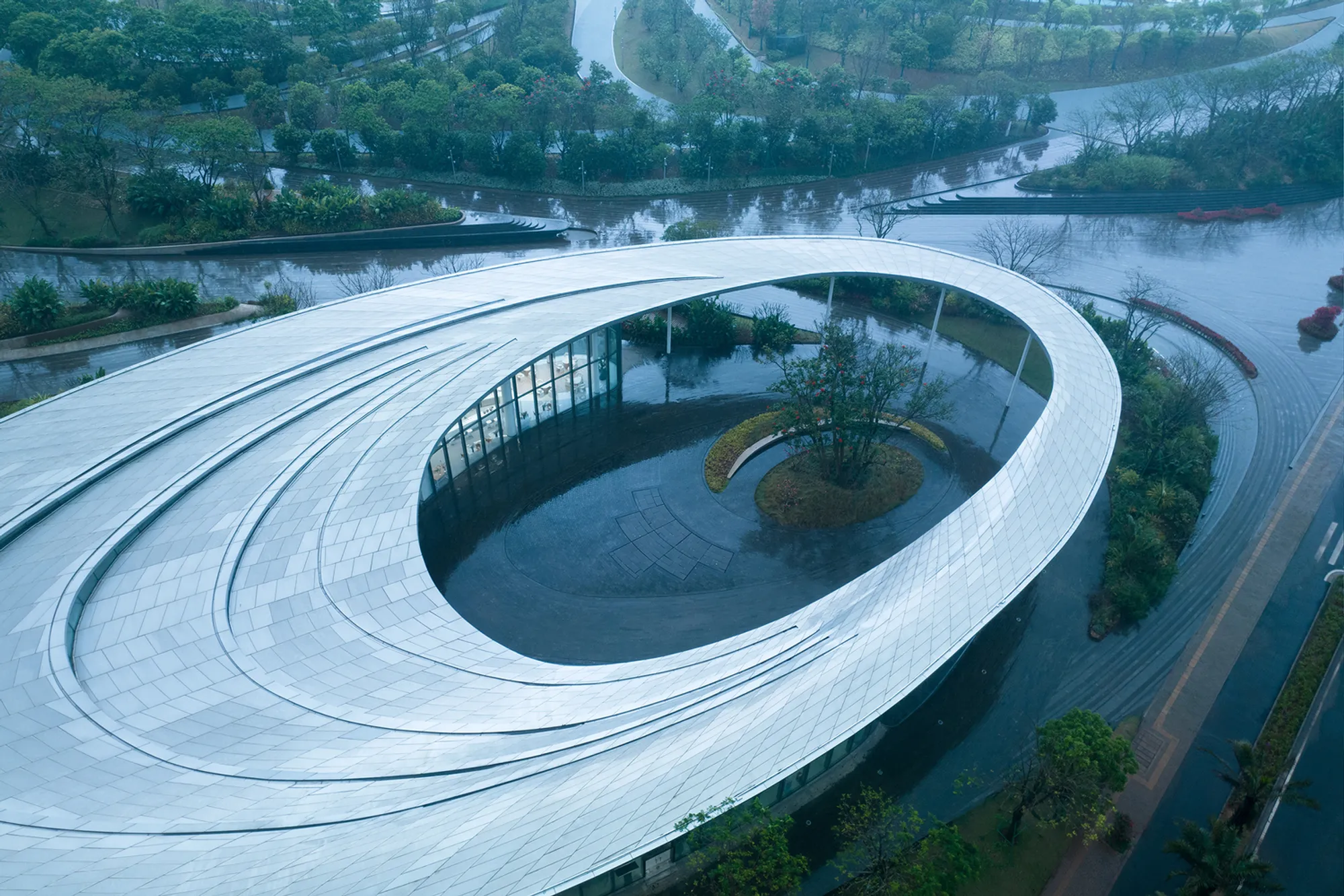
Haikou Xixiu Park Visitor Center by MUDA-Architects: A Futuristic Landmark Rooted in Local Tradition
Inspired by Hainan’s coastal culture, this elliptical glass pavilion merges tradition, sustainability, and landscape in a fluid architectural form.


Nestled within the lush coastal greenery of Haikou, China, the Haikou Xixiu Park Visitor Center by MUDA-Architects redefines the architectural relationship between built form and landscape. Completed in 2023, this 1,996 m² public pavilion emerges as both landmark and landscape, where architecture, culture, and nature converge. Designed to resonate with Hainan Island’s tropical ecology and vernacular traditions, the visitor center serves as a welcoming threshold for thousands of parkgoers—offering spaces for relaxation, exploration, and reflection.
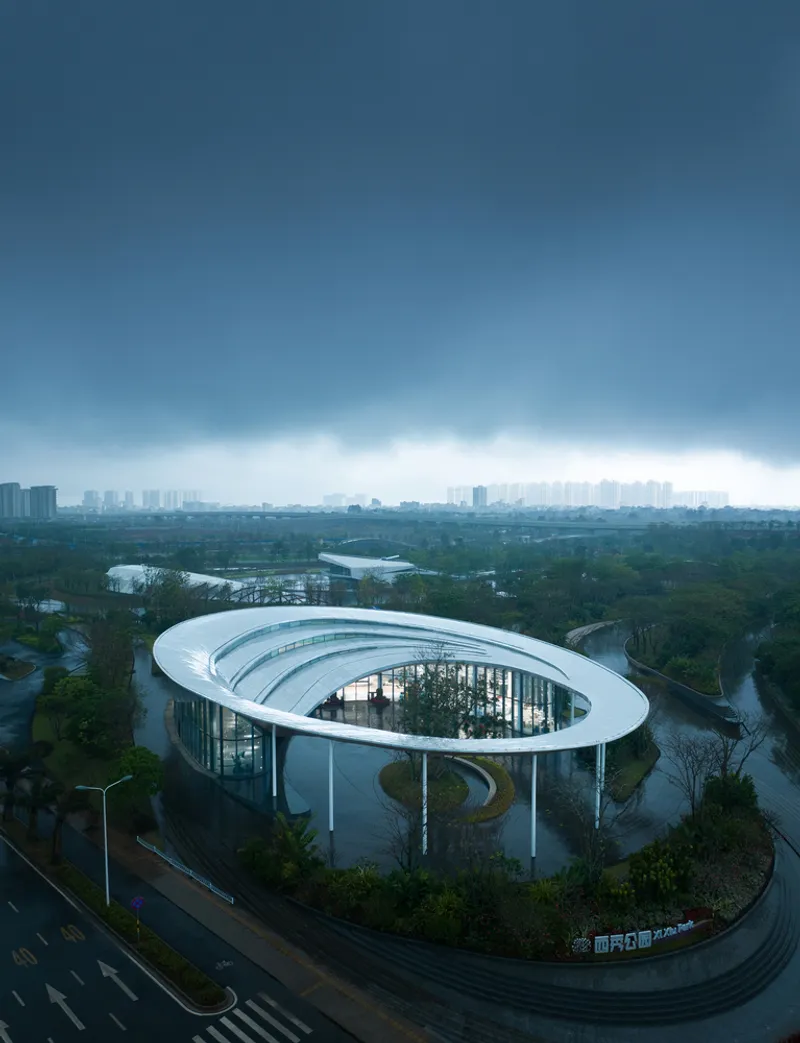
A Floating Pavilion Inspired by Hainan’s Coastal Vernacular
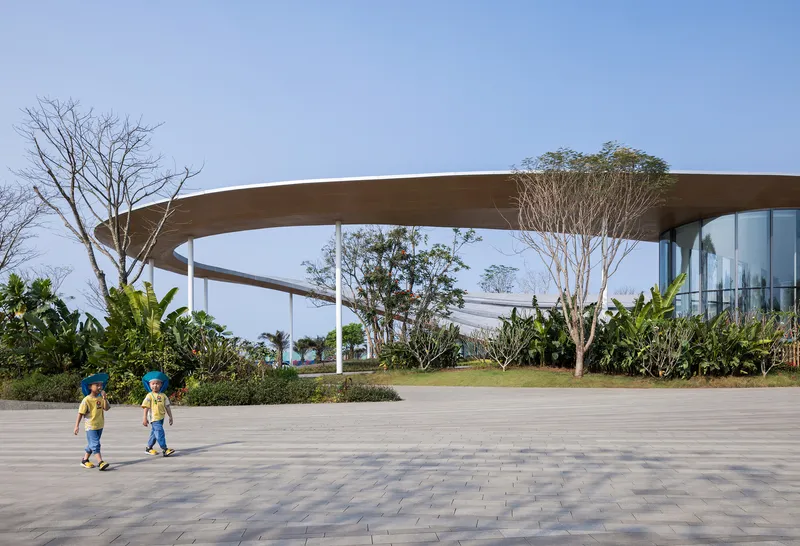
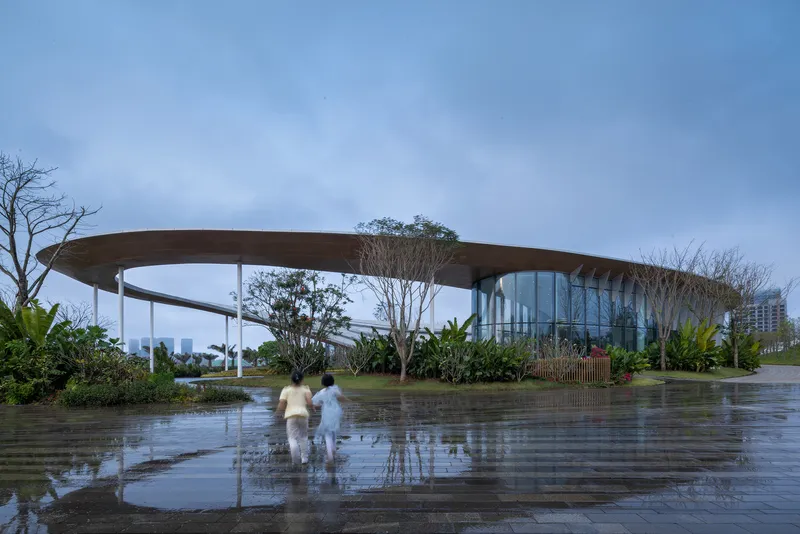
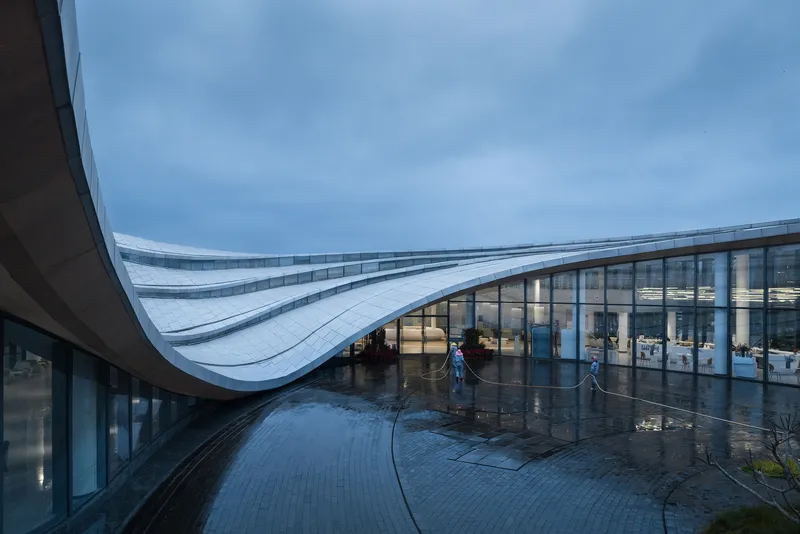
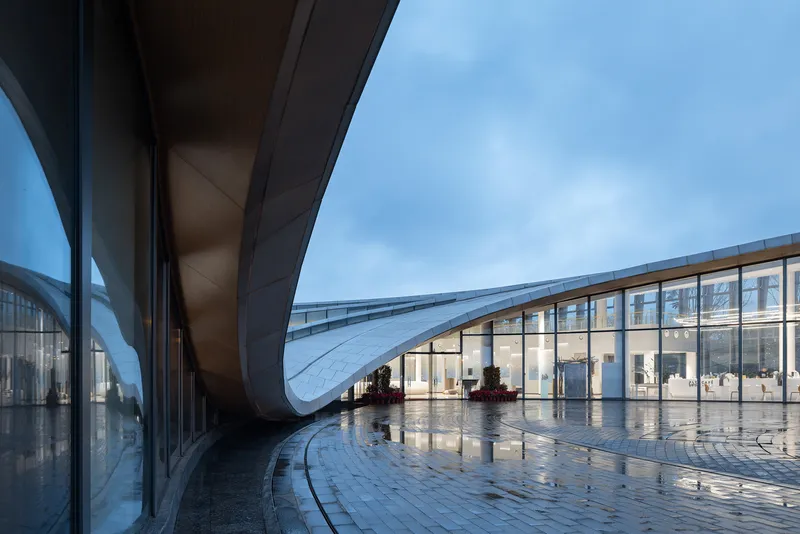
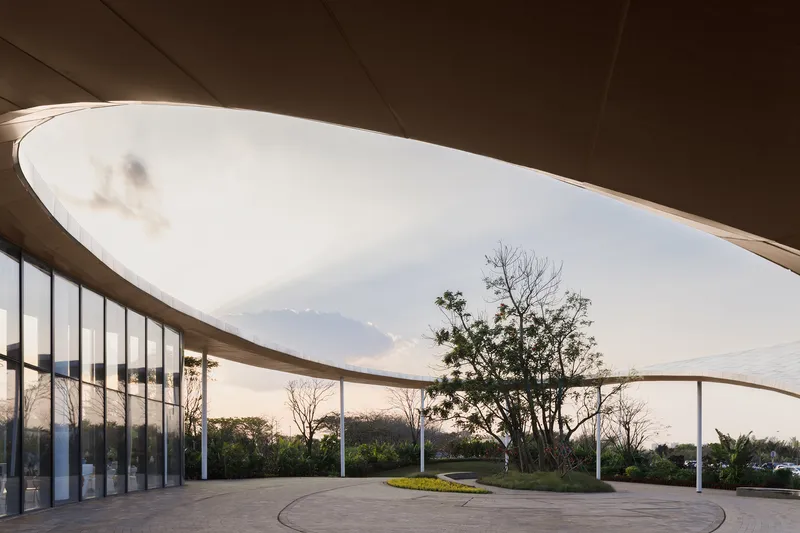
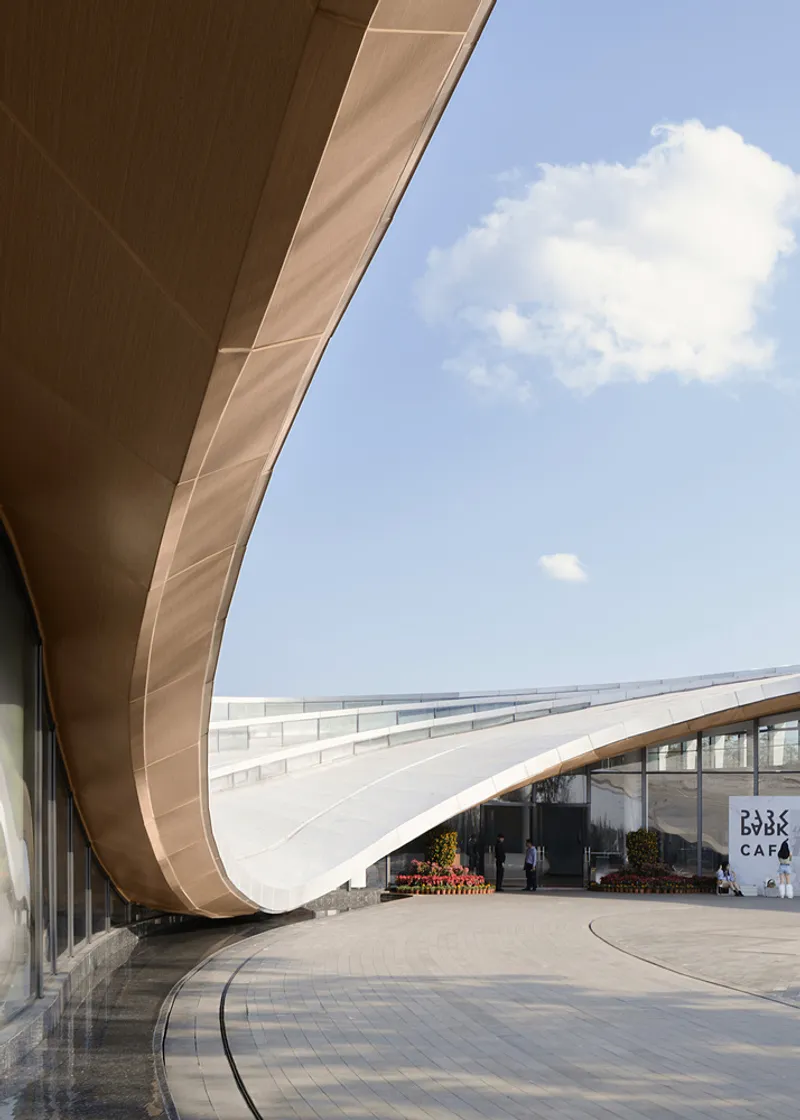
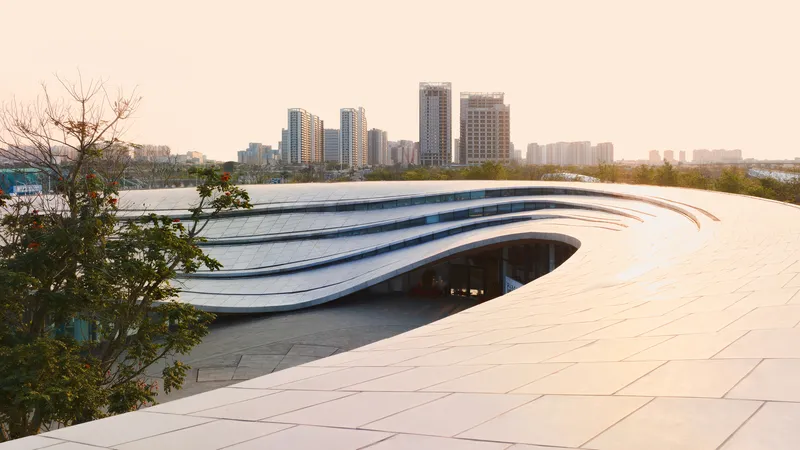
The project's defining feature is its inverted thatched roof form, which reinterprets traditional Hainanese architecture through a bold, contemporary lens. MUDA-Architects have taken the simple pitched roof of local village houses and flipped it upside down, creating a dramatic curvilinear canopy that ripples like waves across the landscape. This sculptural gesture is more than aesthetic: it functions as passive shading, rainwater harvesting, and climatic comfort, thoughtfully responding to Hainan’s tropical sun and monsoon rains.
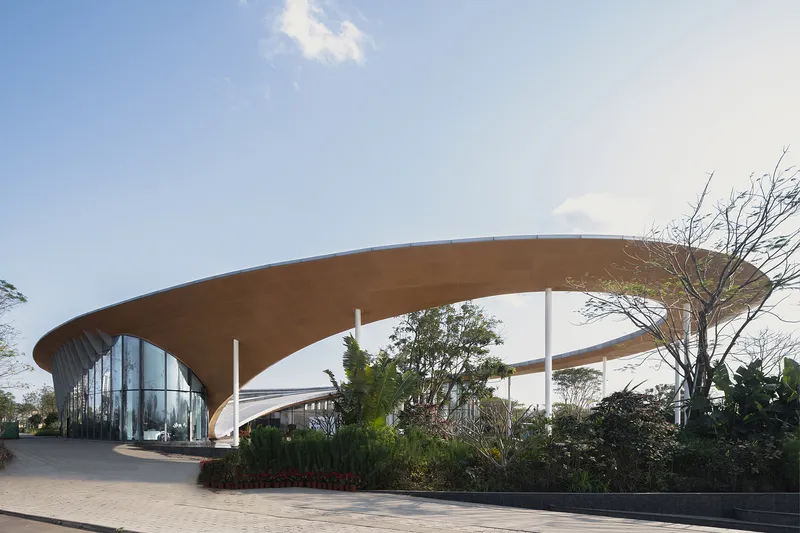
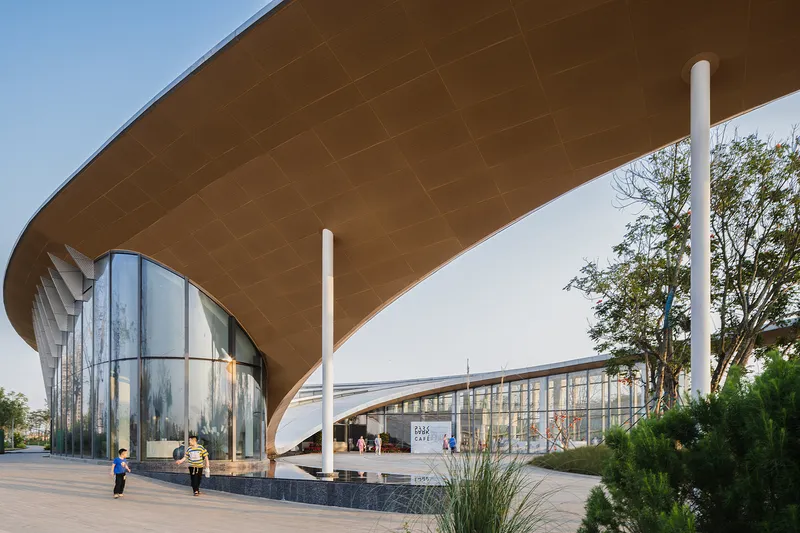
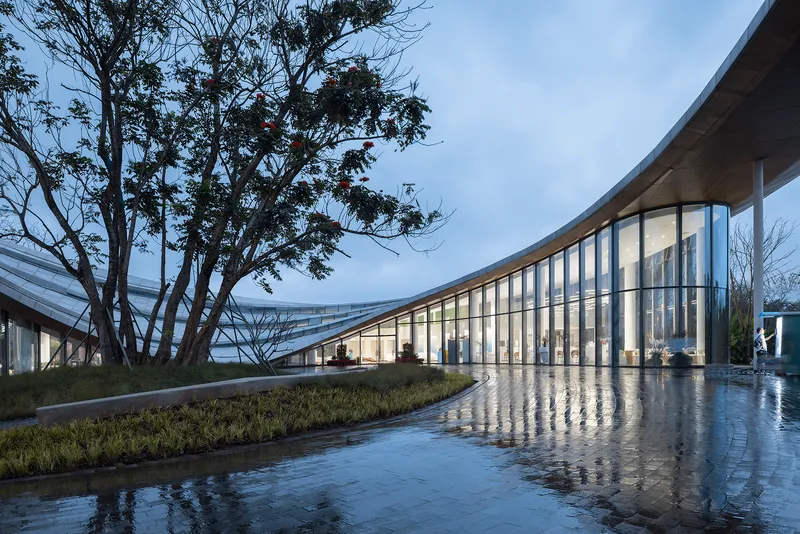
Set amid native vegetation near the ocean, the architecture mirrors a giant oval pebble, harmonizing with its natural surroundings and evoking the spirit of the island. The building appears to hover lightly over the ground, softening the boundary between structure and setting.
Fluid Form & Transparent Façade
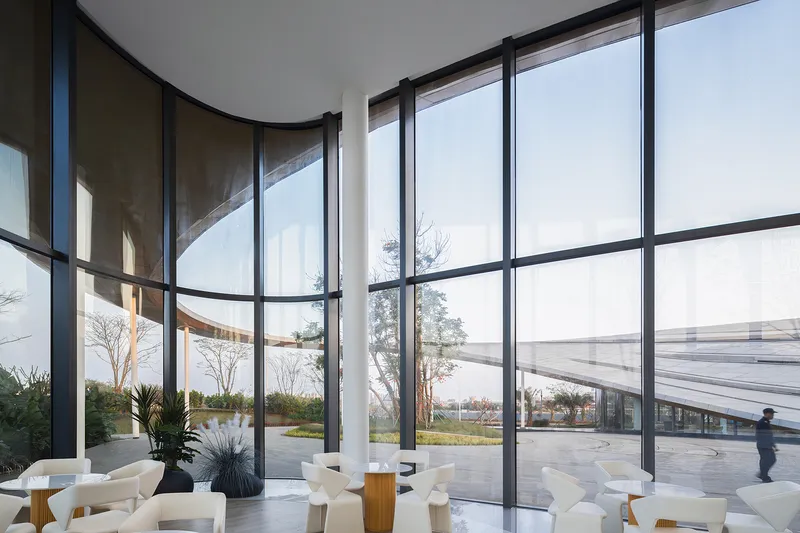
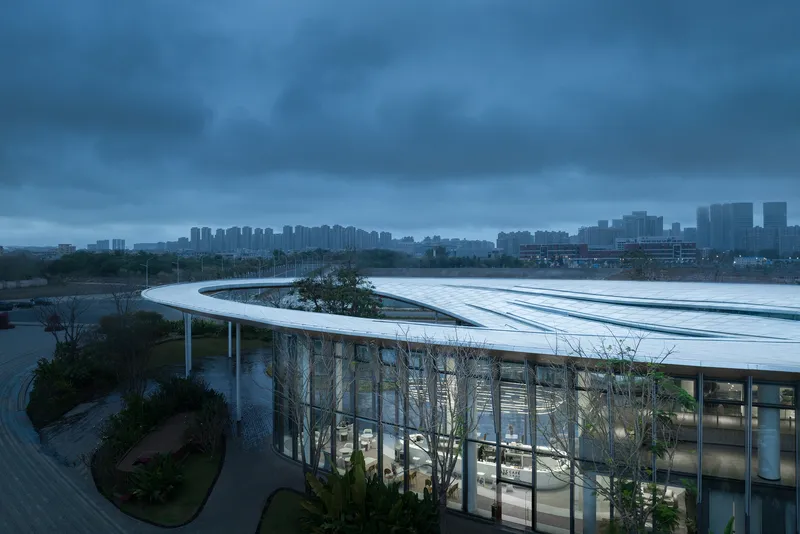
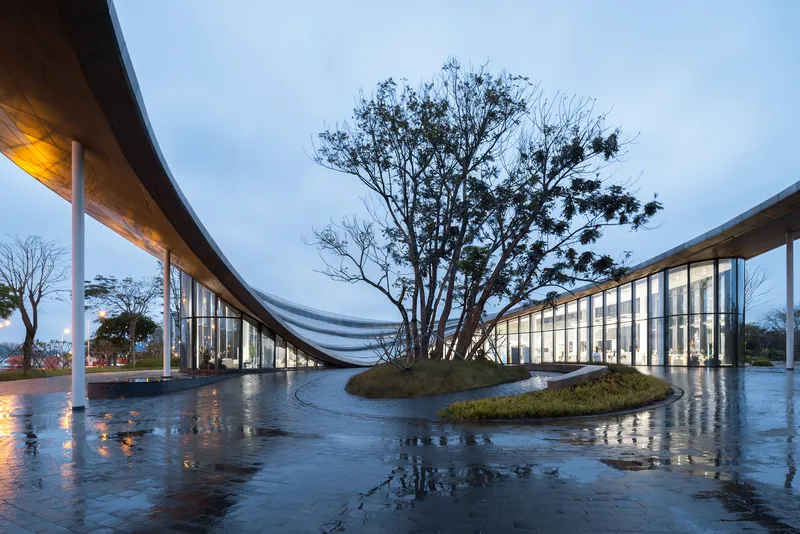
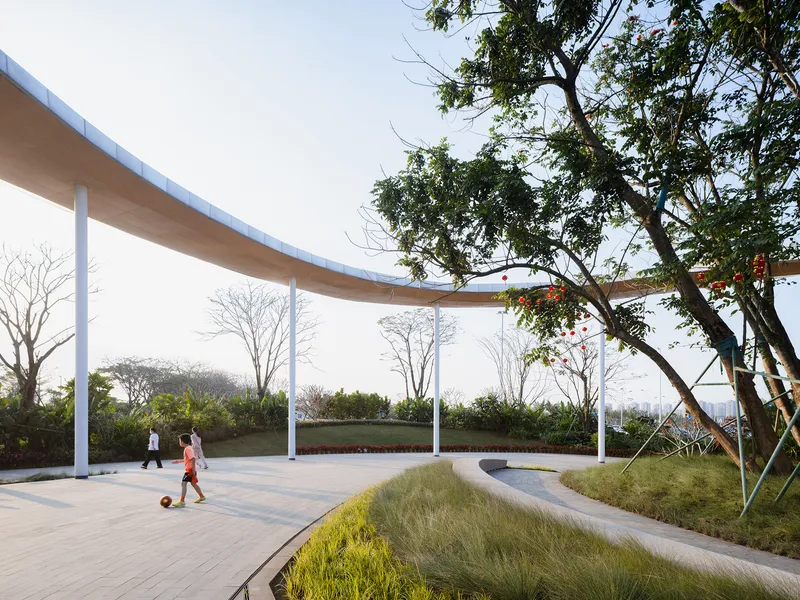
The elliptical layout of the building conforms to the park’s natural contours, preserving the existing greenery while enhancing accessibility. The four-tiered roof drapes gently over the building, its fluid form echoing the movement of water. Beneath this canopy, the façade is composed of ultra-clear low-iron glass, delivering 360-degree panoramic views of the park and maximizing visual transparency.
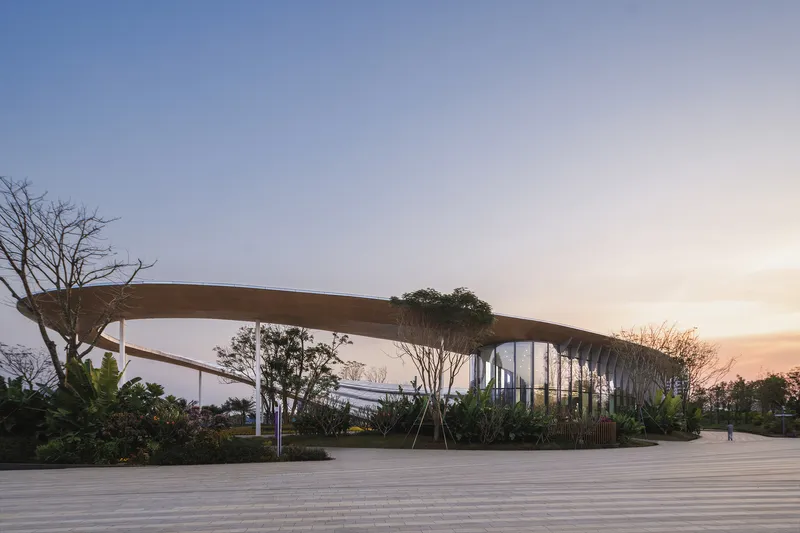
From a distance, the glass shell makes the structure appear weightless, almost as if it’s floating over the forest. This visual lightness contrasts with the textural richness of the titanium aluminum roof and wood-grained aluminum soffits, which tie the building back to earth and place.
Environmental Integration Through Smart Materials
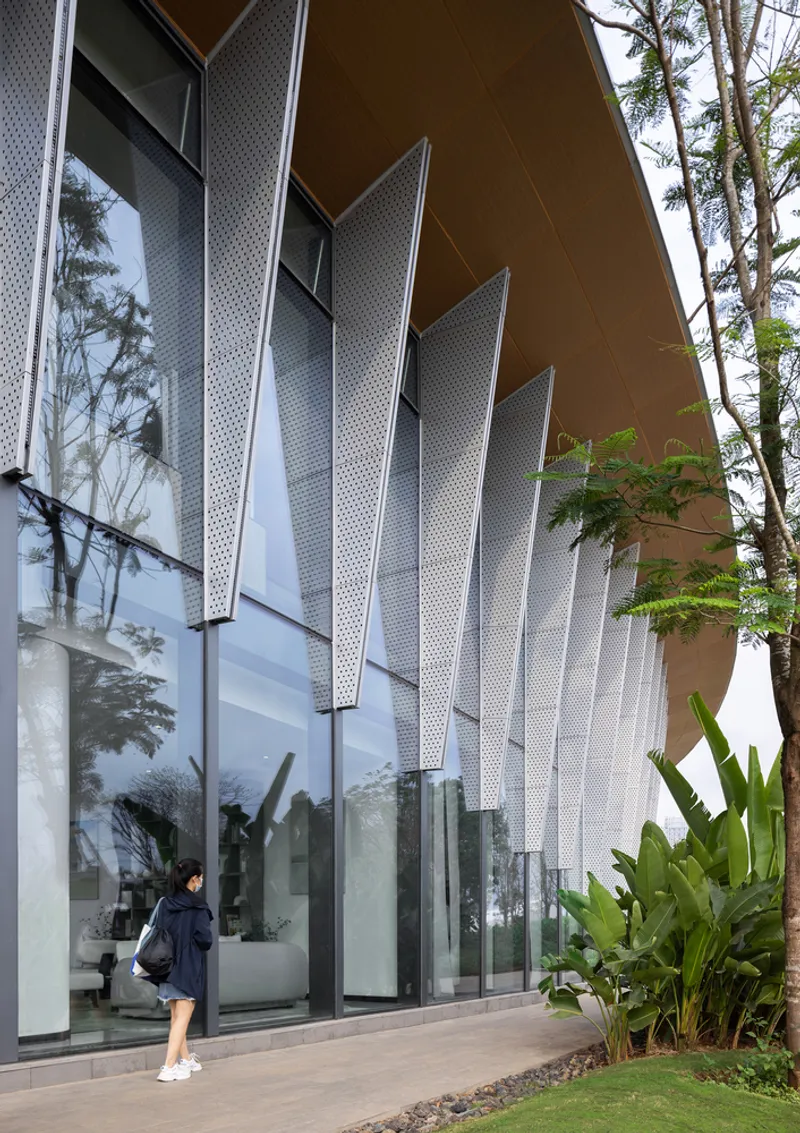
The structure’s perforated aluminum sunshades wrap the curved façade in varying lengths and rhythms, generating a dynamic wave-like pattern that subtly echoes Haikou’s coastal breeze and tides. These louvers function as solar control devices, allowing light diffusion while protecting interior spaces from glare and overheating. Combined with the deep eaves of the roof, the design significantly reduces energy use and improves indoor comfort.
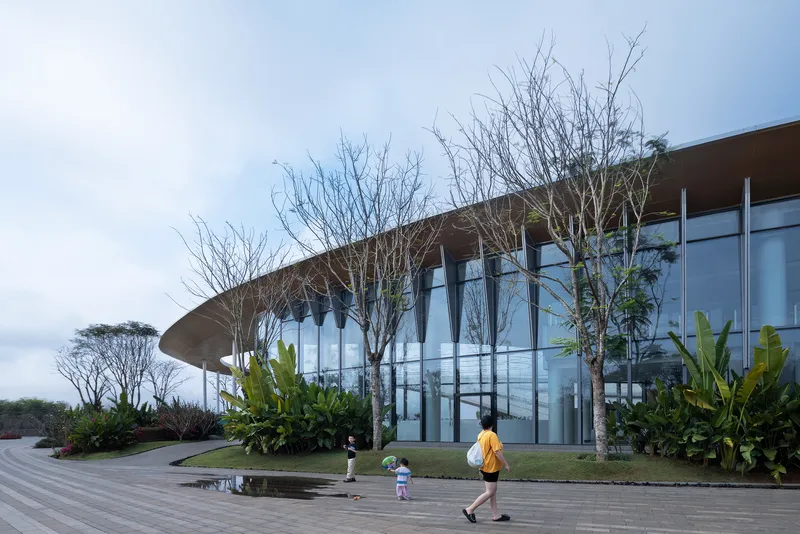
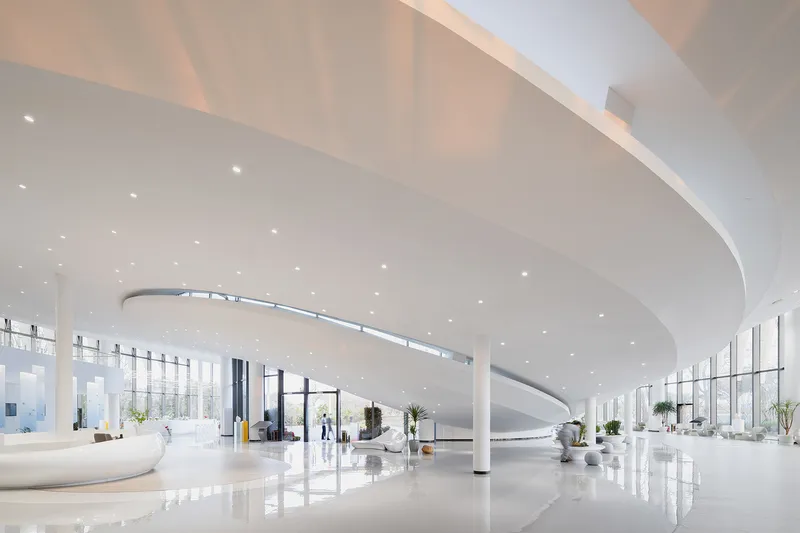
The architects also integrated white steel columns that pierce both interior and exterior zones, playing a dual role as structural supports and sculptural elements. This rhythmic colonnade provides a visual cadence and spatial orientation for visitors.
Spatial Programming: A Park Within a Pavilion
Inside, the plan is organized as a progressive sequence of public spaces. Upon entering, visitors are welcomed into a bright reception hall framed by natural light streaming through the curving skylines. Beyond this, the space flows into a multipurpose exhibition area and café, both offering views into the central courtyard and landscape beyond.
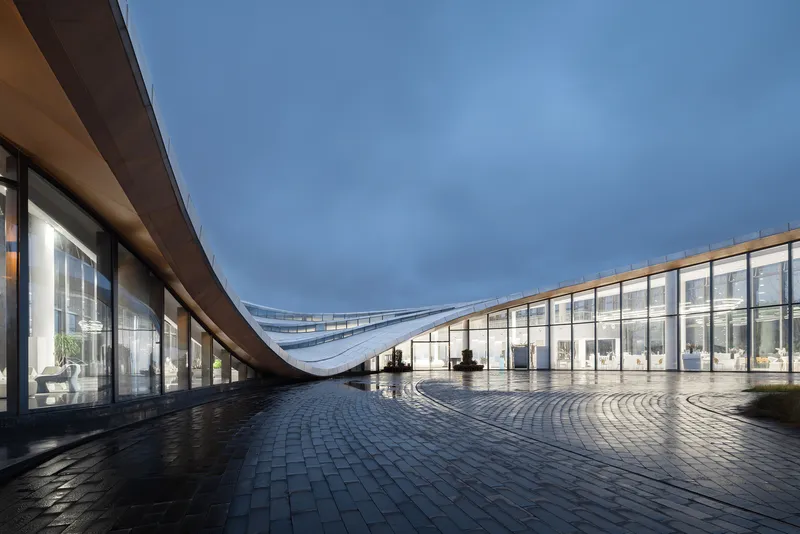
The second tier houses essential support functions: restrooms, nursery room, medical center, and administrative offices, all seamlessly integrated into the spatial rhythm. The courtyard at the heart of the building acts as a spatial pause—a breathing space that transitions between built volume and open nature, anchoring the architecture in a choreography of light, air, and sound.
Harmony Between Innovation and Tradition
MUDA-Architects’ vision is deeply rooted in local tradition, yet the execution speaks boldly in the language of 21st-century design. From its organic roofline to its responsive building envelope, the project celebrates Hainan’s natural identity while establishing a new architectural symbol for Haikou’s urban fabric.
By embedding sustainable strategies, referencing local wisdom, and embracing sculptural minimalism, the Haikou Xixiu Park Visitor Center serves as a civic and ecological interface—a contemporary space that educates, orients, and connects people to place.
All the photographs are works of Arch-Exist




Popular Articles
Popular articles from the community


Co-life: Sustainable Architecture for Age-Friendly Community Living
Co-life reimagines sustainable architecture for seniors through courtyards, rammed earth, shared gardens, and spaces designed for belonging.

The Musturak Paradise: Senior Living Architecture for a Connected Future in Temara, Morocco
The Musturak Paradise reimagines senior living architecture in Temara via private homes, social spaces, culture, community, and shared care.

The Earth Pod: 3D Printed Homes for Resilient Refugee Communities
The Earth Pod reimagines refugee housing through 3D printed homes made from clay, combining resilience, self-sufficiency, and rapid shelter.

Play: Fragments of Their World
Familiar architecture becomes modular playground design, creating safe spaces where displaced children can learn, connect, imagine and play.

Similar Reads
You might also enjoy these articles


Hodi-Mandai Geram
Project Function: Preservation and revitalization of the Intangible heritage and socio-spatial identity of the Hodi by Housing, Cultural Memory Center, Sacred Grove, landscape, local tourism economy


Olio Towers: A Mid-Rise for Performers That Fuses Housing, Rehearsal, and Stage
Located blocks from Houston's Theater District, this modular tower stacks living units around a central performance atrium.

Oasis: Modular Green Housing Carved into Dhaka's Urban Fabric
A shortlisted Plugin Housing entry reclaims unauthorized settlements in Dhaka with stepped concrete volumes, green roofs, and ventilation-driven design.

Black Hole: A Floating Megastructure for the Post-Physical Era
Emiliano Mazzarotto envisions a spherical, self-scaling arena where e-sports, digital hotels, and holographic stadiums replace traditional public space.


Explore Public Building Competitions
Discover active competitions in this discipline



Challenge to design locus for the upliftment of human rights


Challenge to reimagine the Iron Throne


Photograph architecture without architects


Illustrate the lost glory of Angkor Wat - Render Challenge
Comments (0)
Please login or sign up to add comments
No comments yet. Be the first to comment!