
Hakusan Megane Shanghai by Each Design: A Timeless Fusion of Japanese Craftsmanship and Shanghai Heritage
Hakusan Megane Shanghai blends Japanese craftsmanship with Shanghai heritage, using reclaimed materials, refined fixtures, and artisanal detailing to create a timeless retail experience.

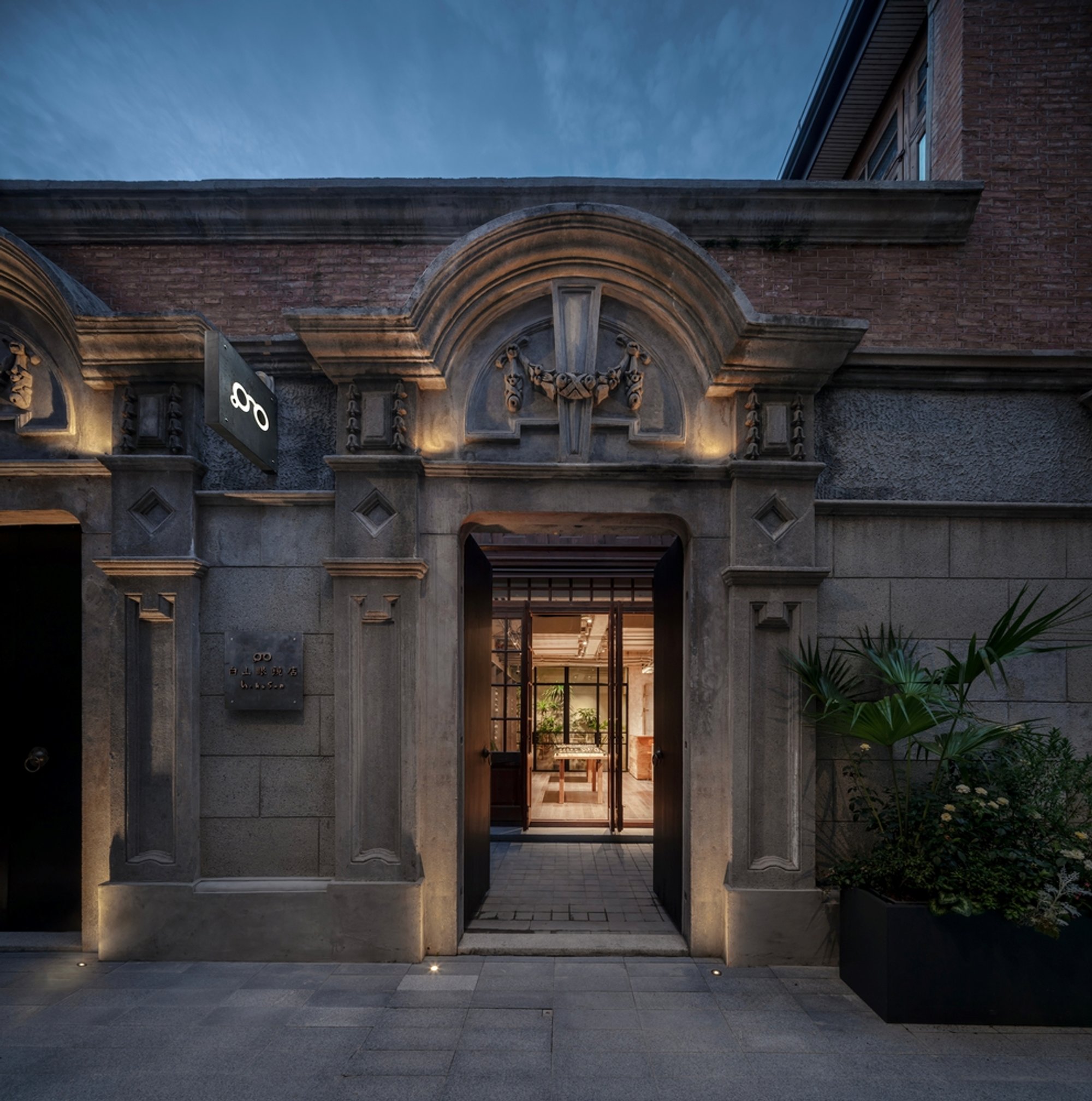
Hakusan Megane, Japan’s iconic eyewear brand founded in 1883, has long been celebrated for its commitment to precision craftsmanship and classic frame silhouettes. For the brand’s first flagship store in mainland China, Each Design envisioned a space in Zhang Yuan, Shanghai, that would inherit the sensibility of Hakusan Megane’s Japanese stores while embracing the cultural depth of its historic urban context. The result is a meticulously crafted retail interior where heritage, materiality, and innovation converge seamlessly.
Honoring the Brand’s Legacy Through Spatial Continuity
The design brief asked for a space that reflects the atmosphere of Hakusan Megane locations in Japan while introducing the unique identity of Shanghai. Each Design approached this by studying the display logic of the brand’s Shibuya store and reinterpreting it for the Shanghai location. The designers transformed the structure of eyeglass temples into a functional joint system, merging this concept with traditional mortise-and-tenon carpentry techniques. This thoughtful fusion allows the space to feel familiar to the brand’s long-time customers while presenting a fresh narrative rooted in craftsmanship and innovation.
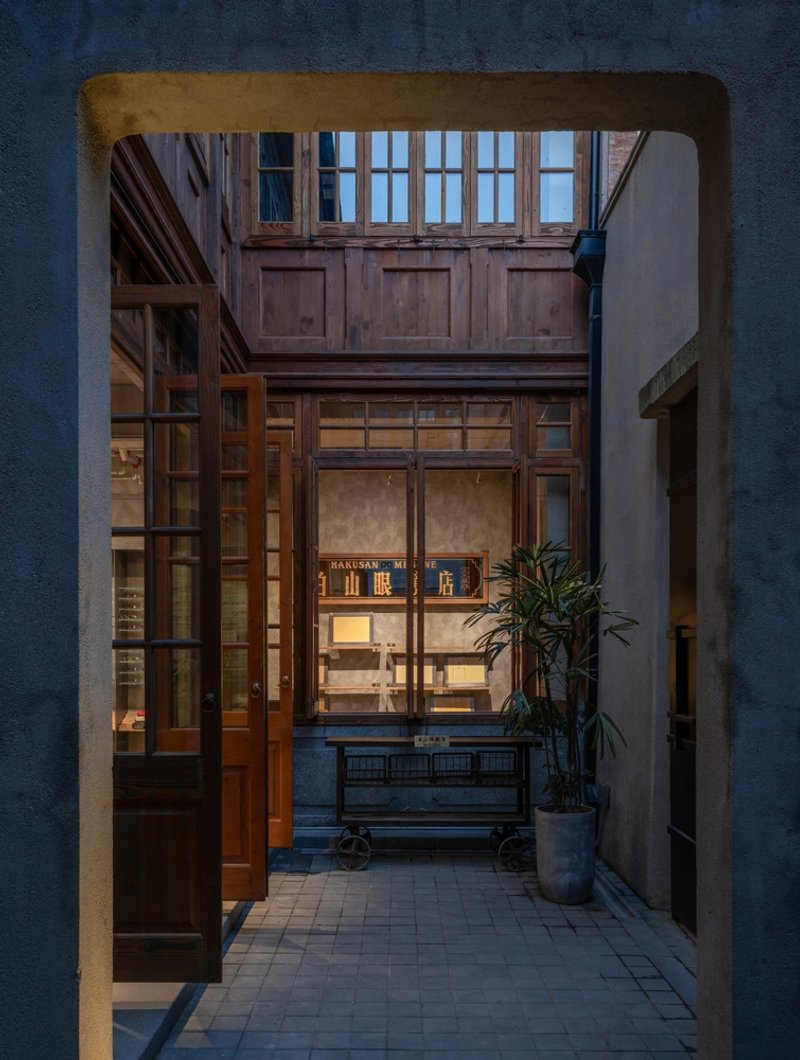
Zhang Yuan: A Historic Setting Reimagined for Contemporary Retail
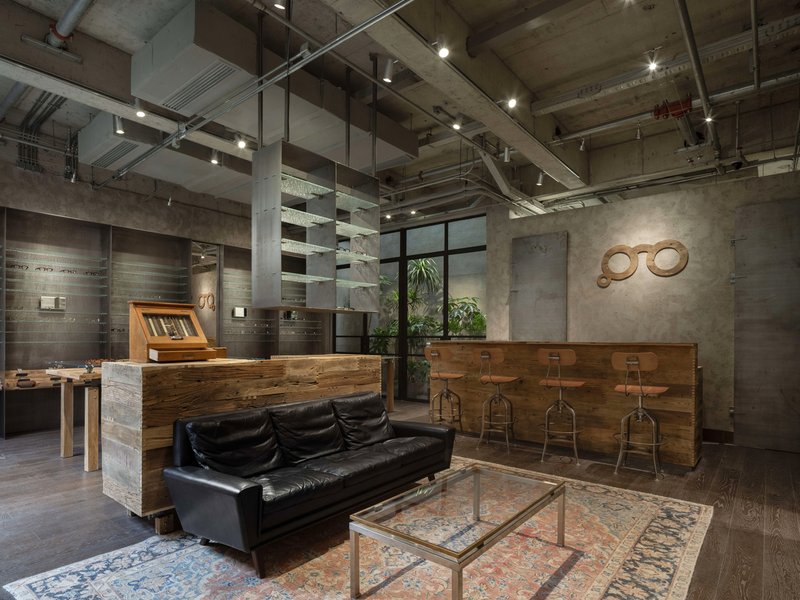
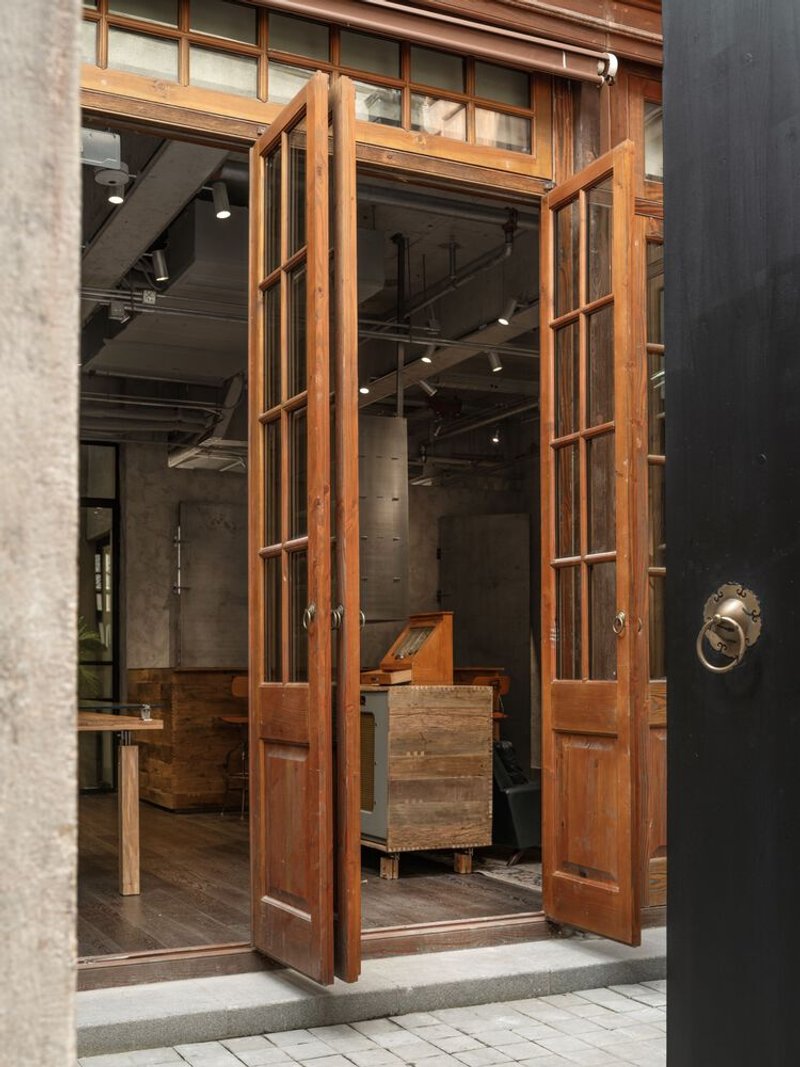
The project is set within Zhang Yuan, one of Shanghai’s most historically significant gardens of the late 19th century. Recently restored and revitalized, the area now forms a cultural and commercial hub that blends heritage with modernity. Inspired by this setting, Each Design intentionally selected time-worn and recycled materials instead of new, glossy surfaces. This approach establishes a meaningful dialogue between the store’s interior and the layered history of the site.
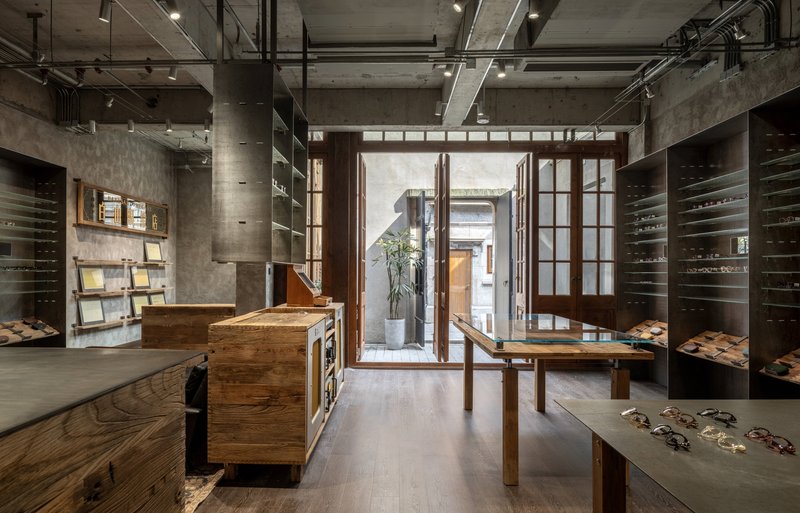
To reinforce this narrative, reclaimed elm wood is paired with raw iron panels, creating a balance between warmth and rigidity. The patina of oxidized iron and the tactile softness of aged wood form a harmonious material palette shaped by time, grounding the new store in the architectural memory of Zhang Yuan.
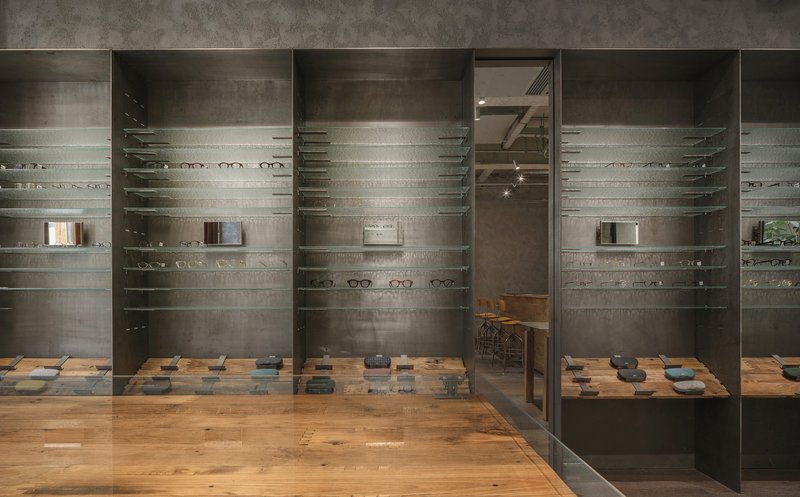
Craftsmanship as the Central Design Language
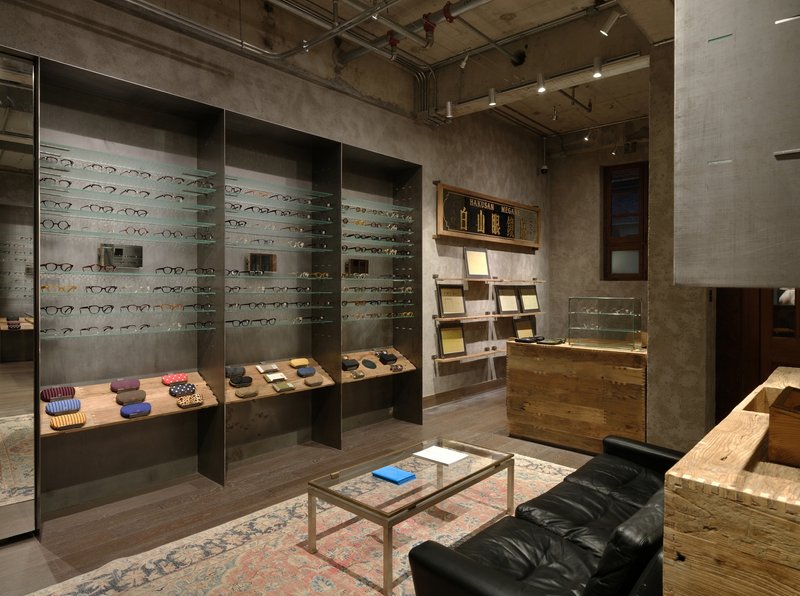
Within this historically protected building, the design emphasizes subtlety and precision. The team crafted an integrated system of display fixtures inspired by essential elements of eyewear construction, specifically the hinge and the pile. These components, which allow rotation and connection in eyeglass frames, are reinterpreted as spatial joints, forming a cohesive design language throughout the store.
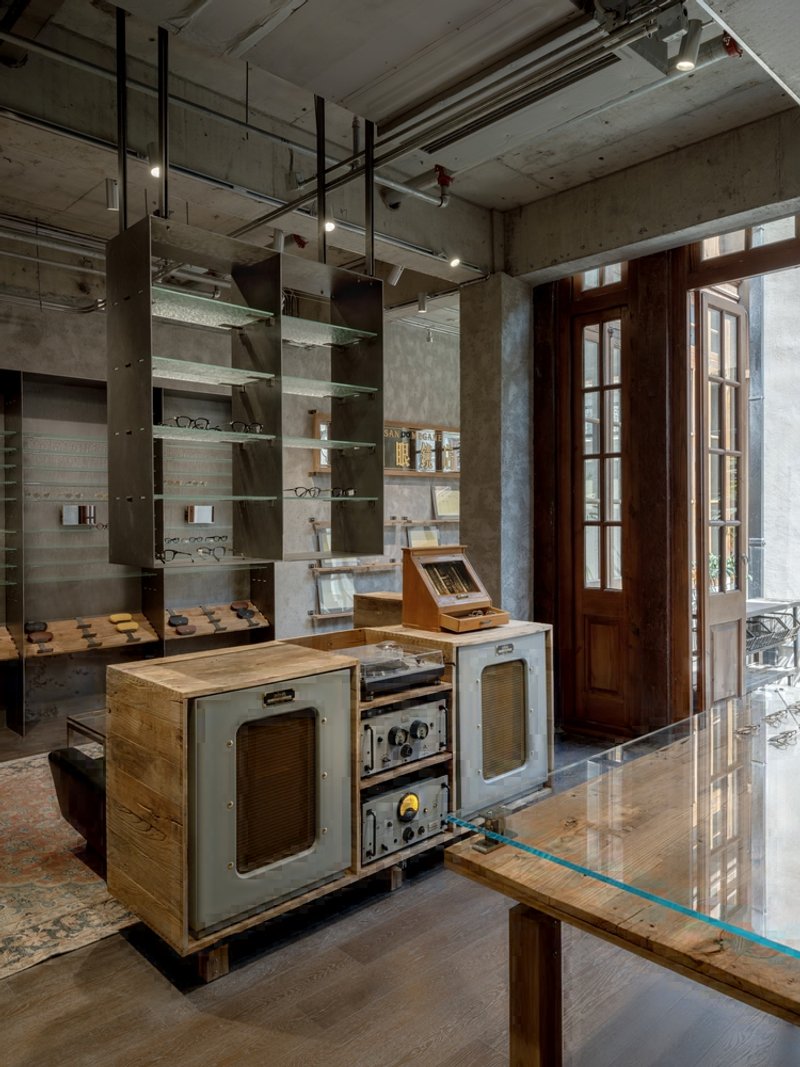
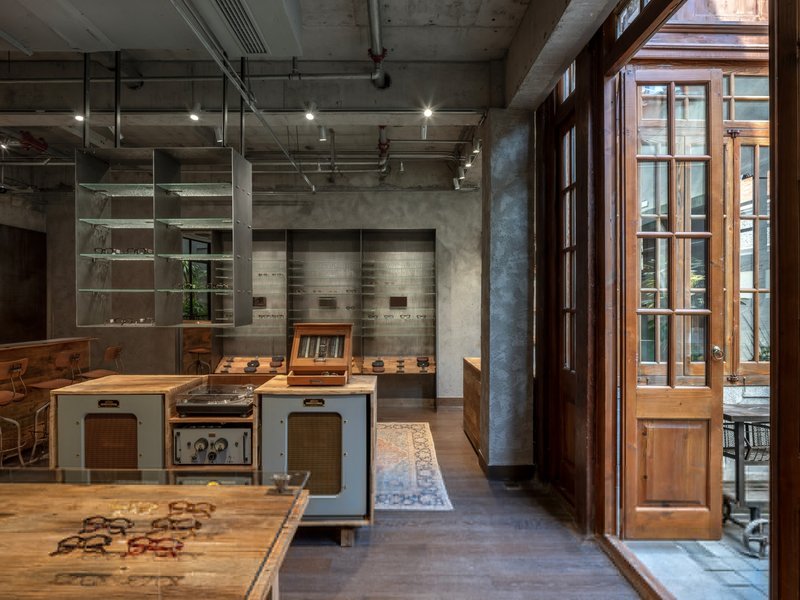
Furniture and fixtures continue the narrative of handcrafted excellence. Salvaged elm panels are transformed into tables and cabinets using traditional finger-joint mortise-and-tenon techniques. Rather than relying on adhesives, Each Design chose to preserve manual craftsmanship, working closely with wood artisans who were willing to maintain traditional production methods despite the pressures of contemporary mass manufacturing.
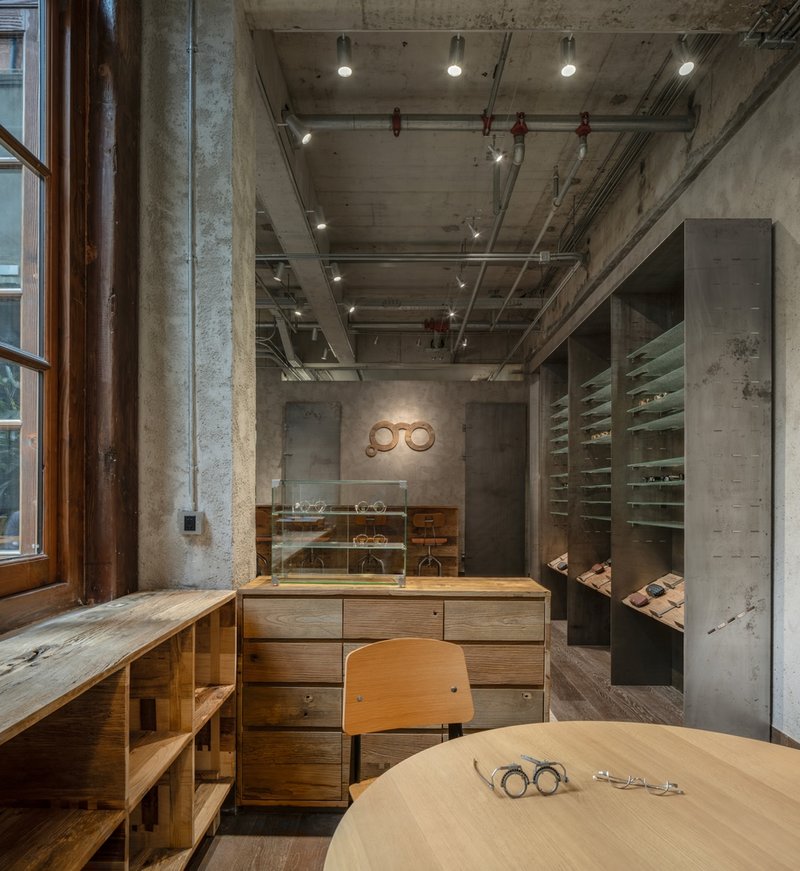
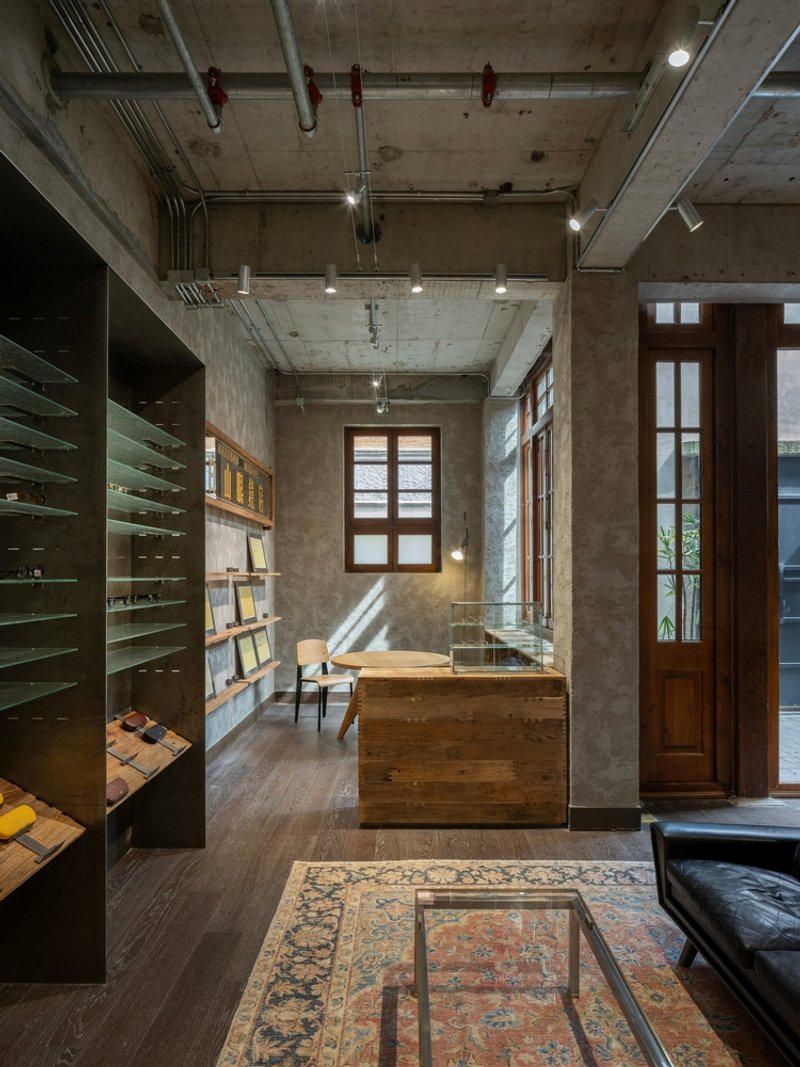
Material Innovation: Balancing Wood and Metal Through Traditional Techniques
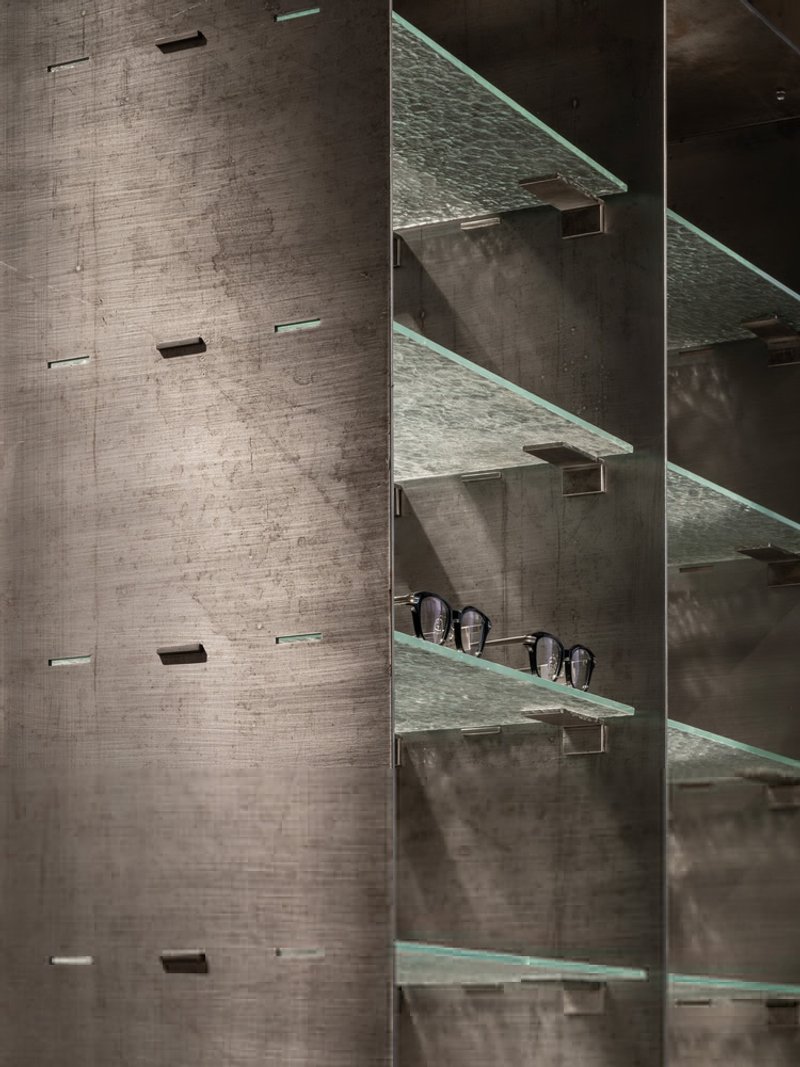
To offset the visual heaviness of the wooden fixtures, the design team extended the finger-joint technique to 8mm solid iron panels. This innovative method avoids screws and overly complex metal fittings, creating a lightweight yet robust shelving system. The result is a refined balance of industrial materiality and artisanal craftsmanship.
Water-corrugated glass, a recurring element in Hakusan Megane’s global stores, continues to define the display system in Shanghai. When illuminated, the glass casts gently mottled shadows across the space, adding depth, softness, and a touch of visual poetry to the interior environment.
A Dialogue Between Tradition and Modernity
Hakusan Megane Shanghai stands as a refined example of contemporary retail design rooted in heritage and craft. Each Design’s sensitive approach: balancing Japanese identity, Shanghai history, and material authenticity, sets a new standard for culturally resonant retail spaces. The store not only celebrates the brand’s storied past but also creates a warm and immersive environment for customers in mainland China.
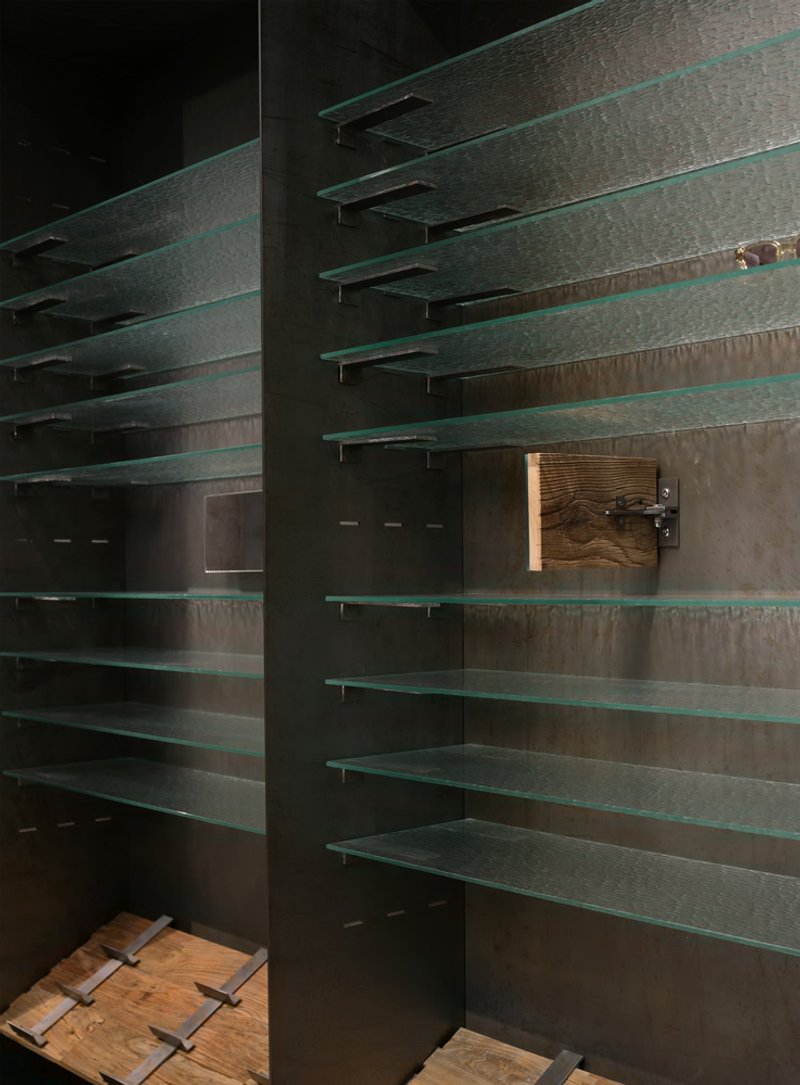
All photographs are works of Edward Shi




Popular Articles
Popular articles from the community

A Park Building That Wants to Be a Landscape
Omrania's Operations & Maintenance Building at King Salman Park dissolves industrial program into Riyadh's largest green infrastructure.
Art 1 Office Strips Athens Back to Its Bones
Neiheiser Argyros transforms a 40-year-old Athens office building into a vivid, materially rich workplace anchored by red steel, exposed concrete, and roof
Bood Design Bureau Splits a Gilan Residence in Two to Let the Forest In
Double Side House negotiates privacy and openness through interlocking concrete volumes and planted courtyards in northern Iran's humid Caspian lowlands.
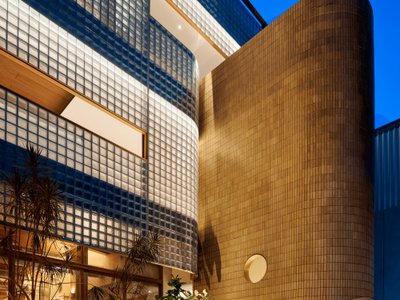
Gunawarman 35: Jakarta's Corner of Quiet Complexity
WOFF's mixed-use building in Jakarta pairs translucent glass block walls with a buff brick cylinder to hold coffee, wellness, and work under one roof.

Similar Reads
You might also enjoy these articles

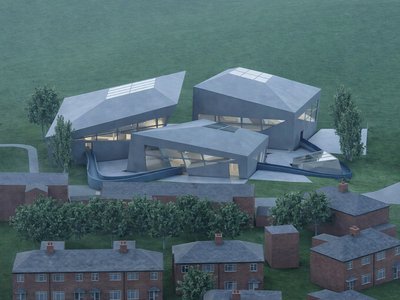
Filtering Space: A Gradual Spatial Experience
From urban intensity to spatial calm.


The Ken Roberts Memorial Delineation Competition (Krob)
As the most senior architectural drawing competition currently in operation anywhere in the world, it draws hundreds of entries each year, awarding the very best submissions in a series of medium-based categories.


Waterfront Redevelopment and Urban Revitalization in Mumbai: Forging a New Dawn for Darukhana
A transformative waterfront redevelopment project reimagining Darukhana’s shipbreaking heritage into an inclusive urban future.

OUT-OF-MAP: A Call for Postcards on Feminist Narratives of Public Space
Rhizoma Design and Research Lab invites artists, designers, architects, researchers, and students to reflect on how feminist perspectives can reshape public space. Selected works will be exhibited in Barcelona, October 2026. Submissions open until 15 April 2026.


Explore Architecture Competitions
Discover active competitions in this discipline




The International Standard for Design Portfolios


The Global Benchmark for Architecture Dissertation Awards


The Global Benchmark for Graduation Excellence


Challenge to design luxury tourism on rails
Comments (0)
Please login or sign up to add comments
No comments yet. Be the first to comment!