

Half Day House: A Masterpiece of Adaptive Reuse House Design in Taiwan
An adaptive reuse house in Taiwan transforms a 1960s military dormitory into a poetic hybrid of memory, ritual, and domestic life.


Transforming History into Living Space
The Half Day House, renovated by Cabinet YFY, is an evocative example of adaptive reuse house design, where a 1960s Japanese naval dormitory in Kaohsiung, Taiwan is reimagined as a hybrid space for both work and living. Architect Yu-Hsuan Lin embraced the layered history of the structure—originally part of the Japanese Navy’s Sixth Fuel Factory—and orchestrated a sensitive architectural renewal that merges memory, domestic life, nature, and community heritage.
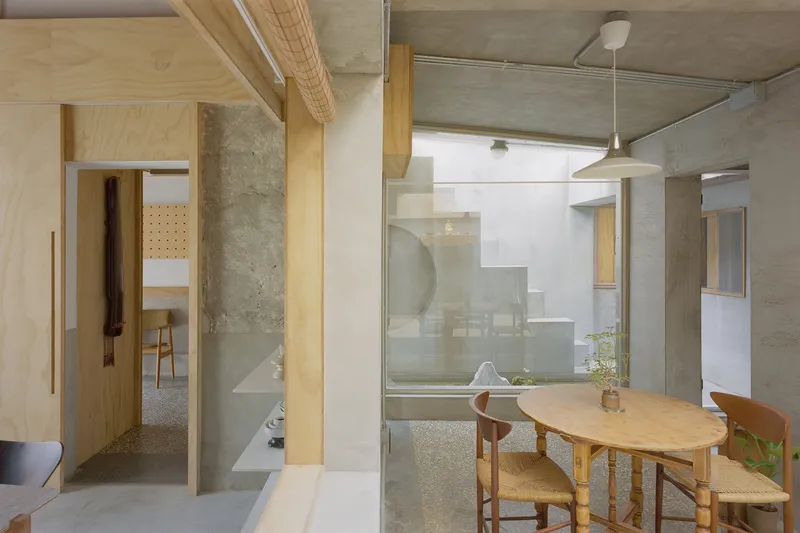


Rather than restoring the house to its original state or demolishing it entirely, the renovation preserves the spirit of the past while redefining spatial relationships for modern needs. This transformation is not merely functional; it is poetic, rooted in light, water, texture, and memory.


A Dialogue Between Light, Water, and Structure
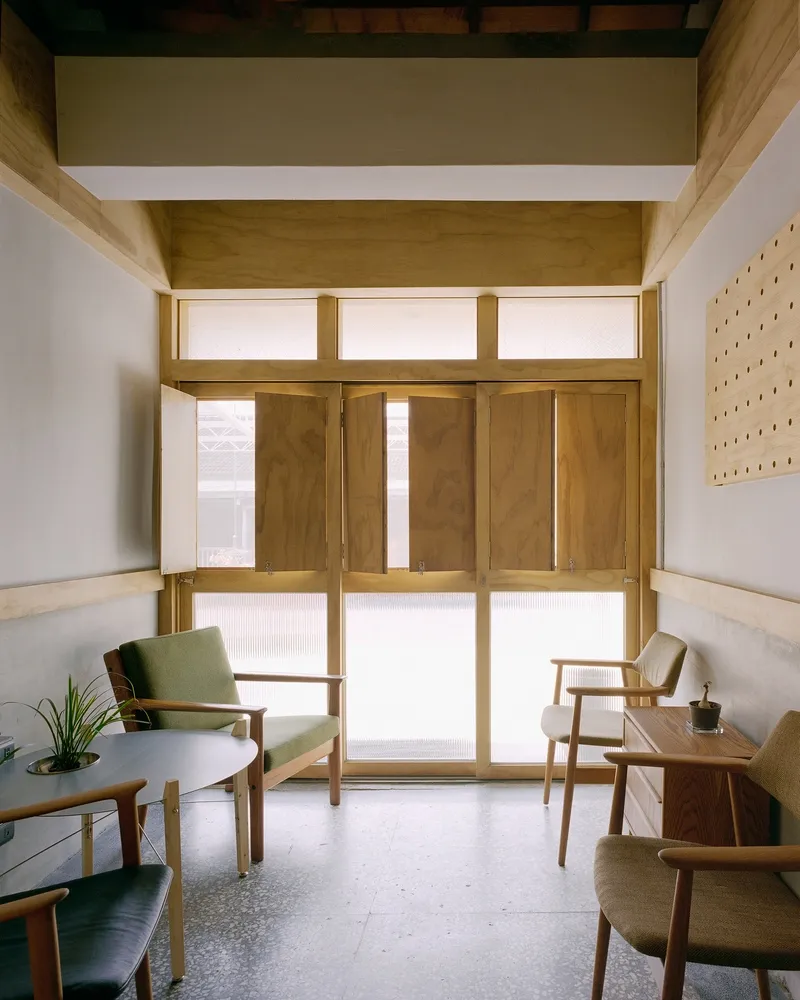
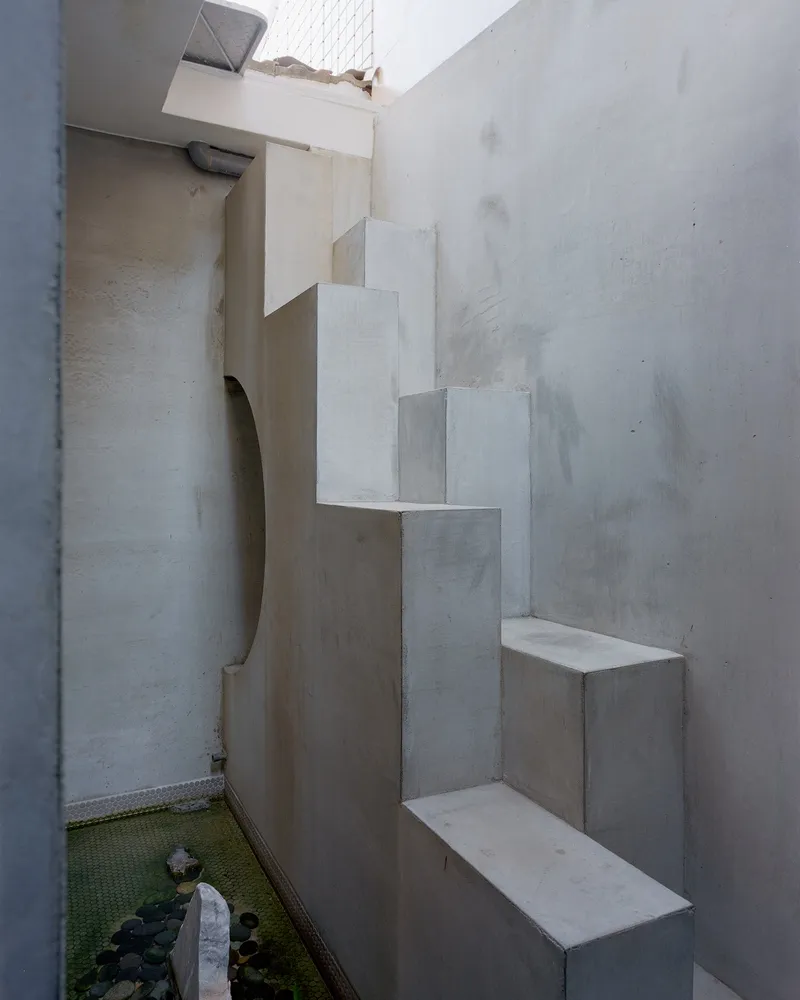
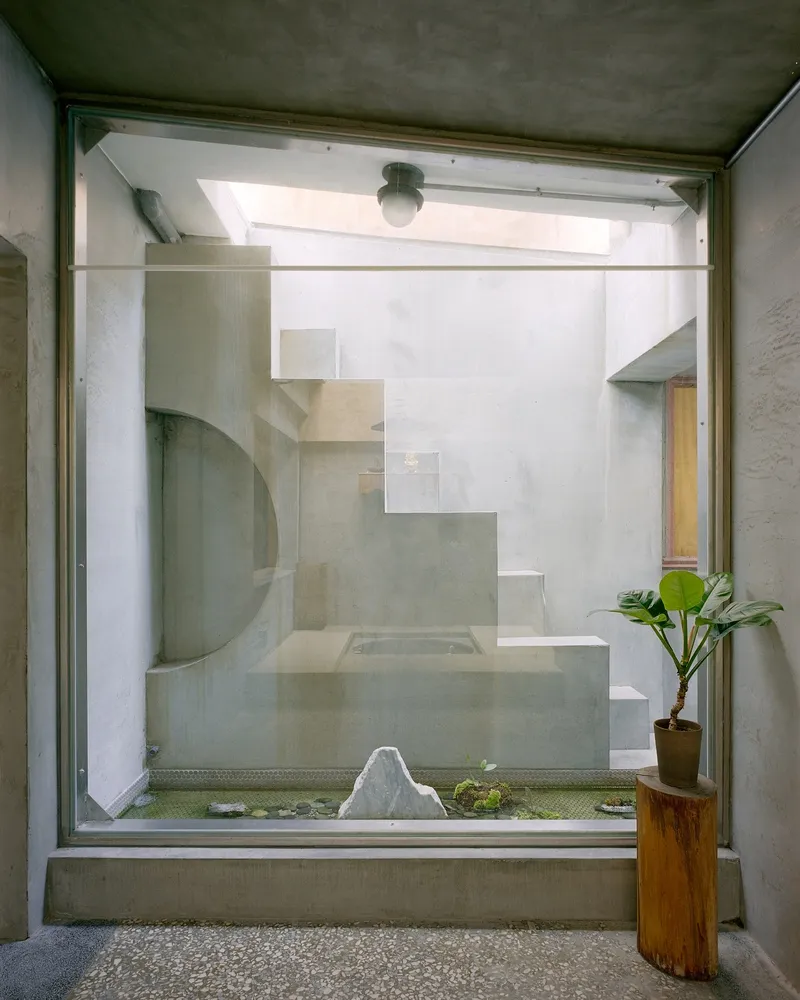
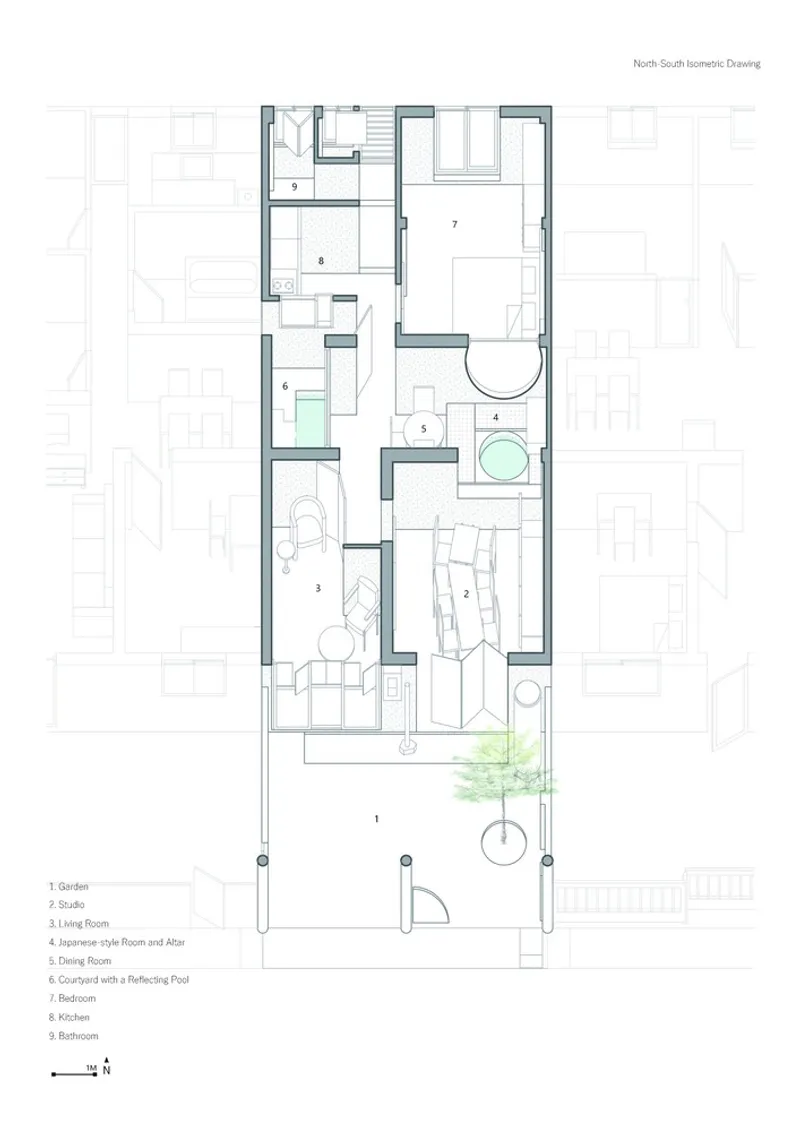
A key intervention in the adaptive reuse was the replacement of part of the original roof with transparent materials, allowing natural light to animate the house in unexpected ways. Walls were removed to create spatial continuity, and a central pool beneath the skylight became the house’s emotional and visual core. Sunlight dances on water, which reflects onto walls and ceilings, introducing a meditative and ever-shifting ambiance.


The poetic movement of goldfish in the pool brings life to these reflections, blurring the boundary between built structure and organic elements. This central space becomes a quiet observatory of daily life—ritual, leisure, reflection—all coexisting in a slow, fluid rhythm.


Layered Spatial Experience and Visual Connectivity
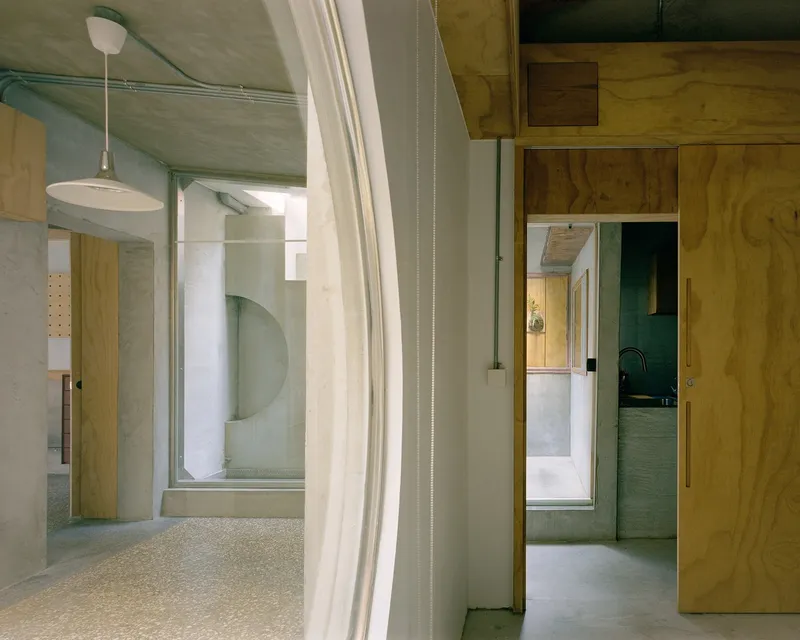
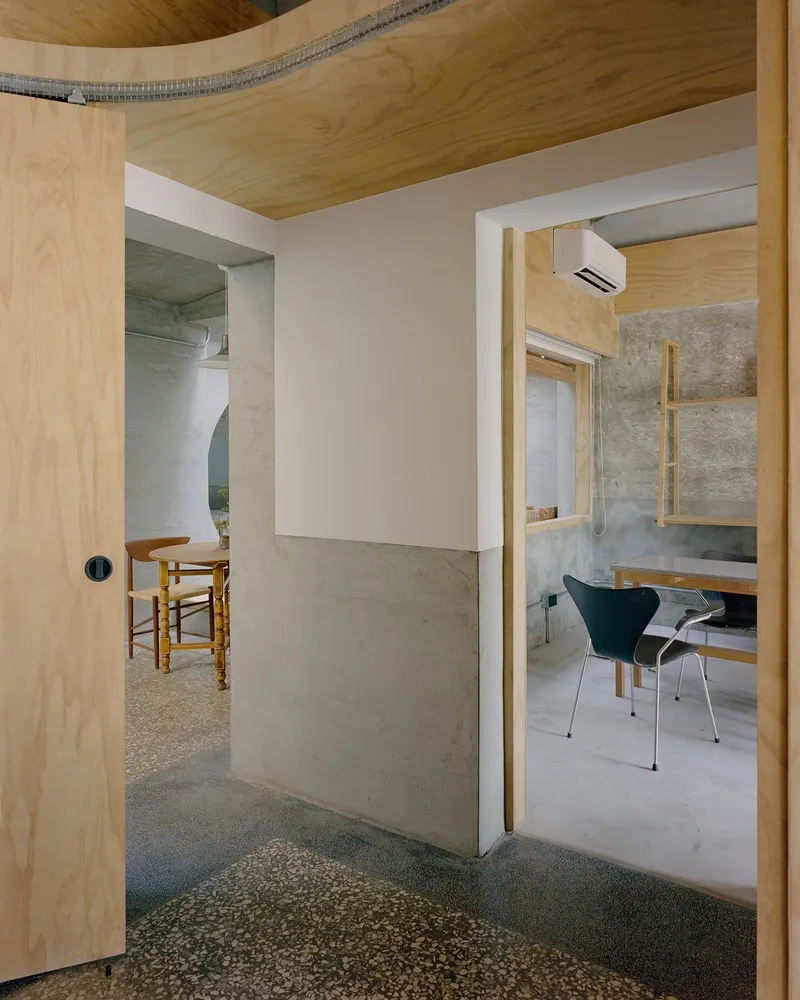
The renovation rethinks domestic space not as a series of rooms, but as an interconnected sequence of visual fields. Openings are carefully placed to allow for overlap between views, creating a sense of layered transparency. From the street, one can glimpse into the home’s interior complexity, and from within, each angle offers a new interaction of light, texture, and form.

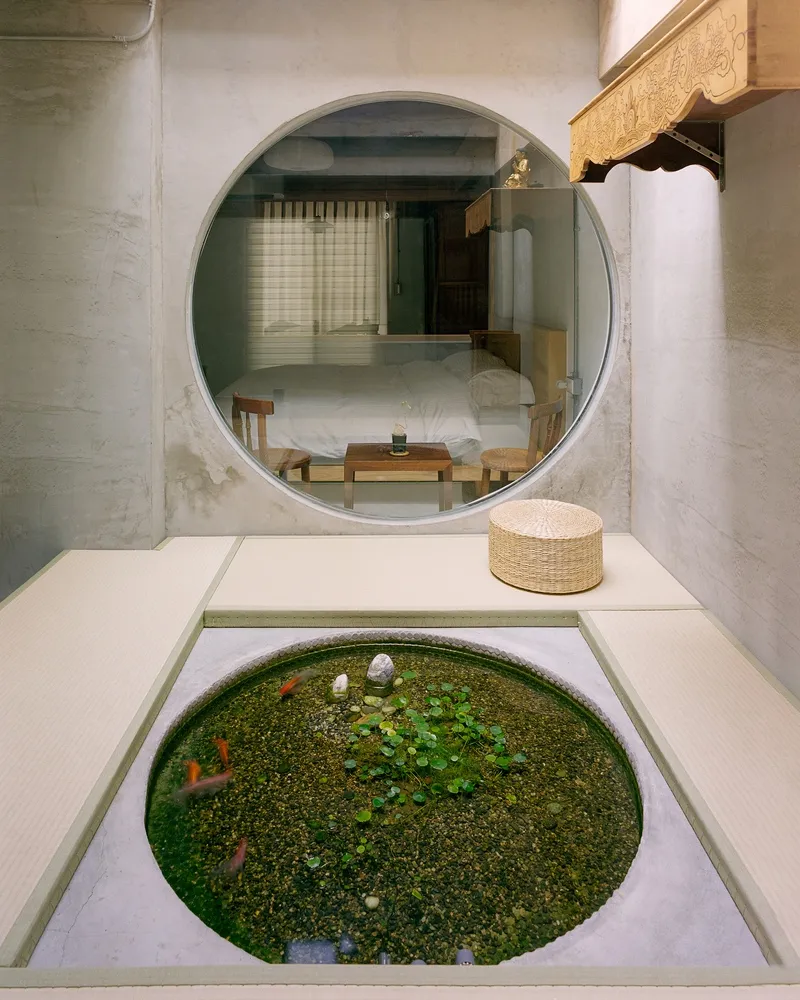
These connections reflect the evolving nature of Taiwanese domesticity, where history, religion, daily routine, and spatial fluidity are interwoven. The house’s interior lives and breathes with the rituals of cooking, eating, meditating, and gathering—all seamlessly tied together around the central pool.


A Living Archive of Materials and Eras
One of the most powerful aspects of this adaptive reuse house design is its sensitivity to time. The renovation does not erase the past—it layers it. Materials and stylistic details from various periods are deliberately retained or reinterpreted. Concrete, wood, glass, and metal blend into an architectural collage that speaks to decades of occupation, transition, and memory.

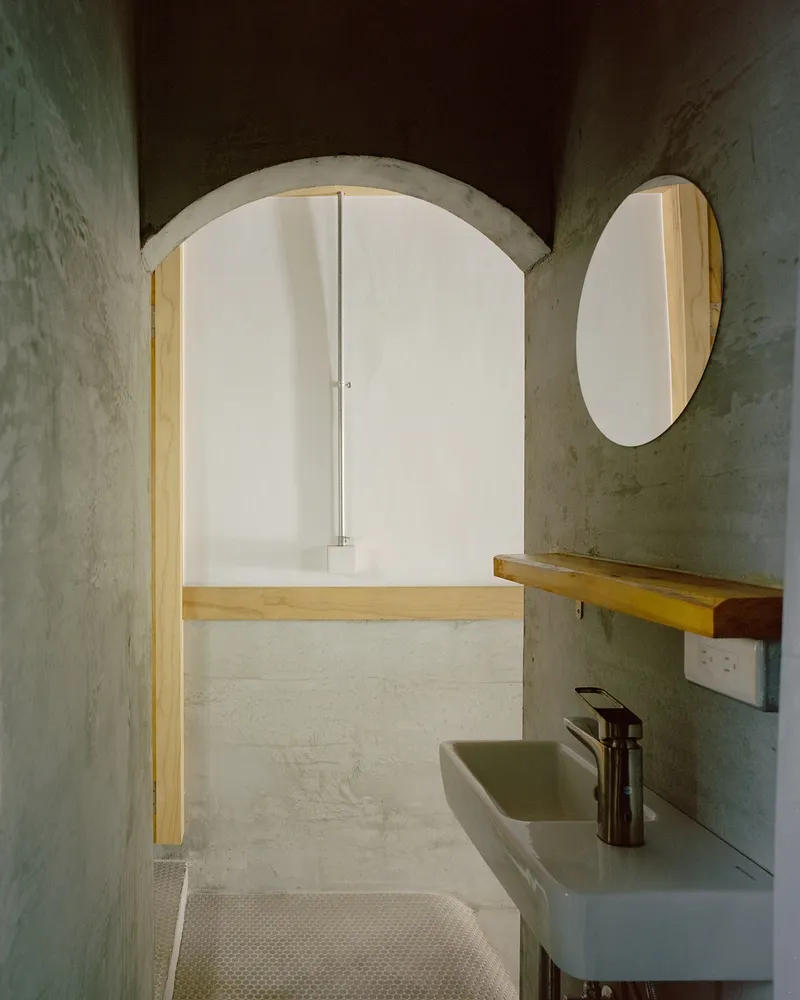

In Taiwanese architecture, domestic space evolves rapidly through user needs and generational shifts. The Half Day House reflects this dynamism. Its new configuration accepts fluidity rather than finality. Walls, objects, and scenes remain in motion, never locked into a single interpretation. The architecture is not an end-point; it is a living canvas of transformation.

Spiritual and Social Layers Interwoven
Beyond architectural composition, the home’s central space also accommodates religious practices and everyday rituals. It becomes a platform where spiritual reflection, communal meals, and natural rhythms coalesce. These quiet, sacred layers give the project an emotional depth often absent in purely aesthetic renovations.
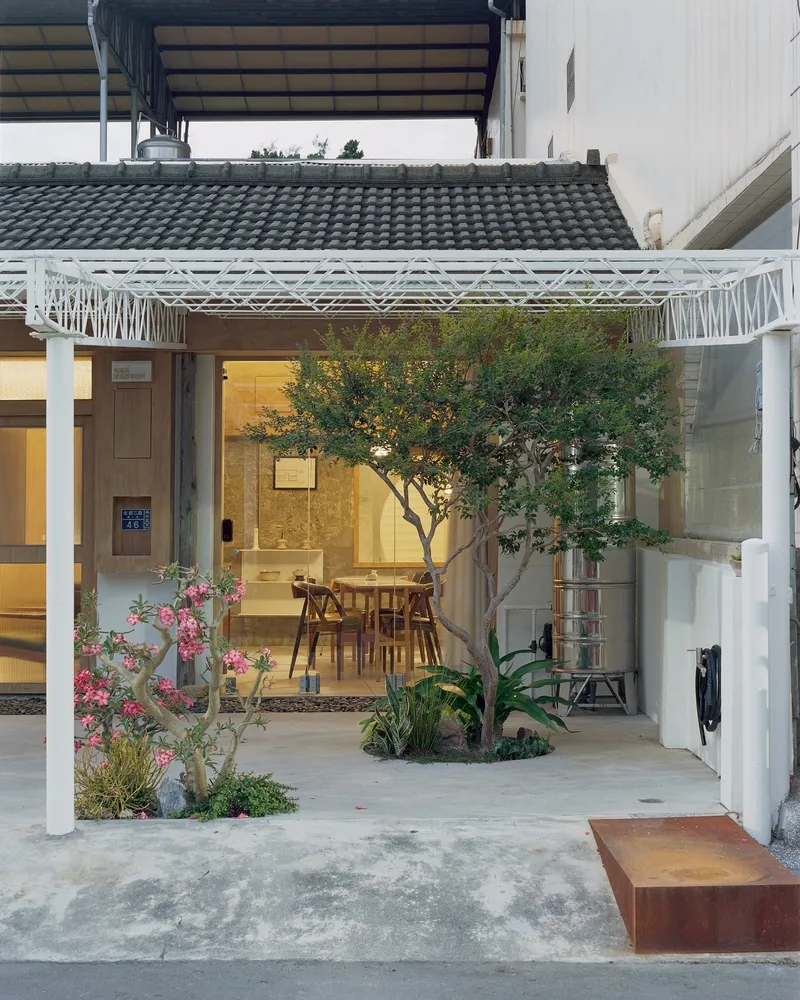
Through this approach, the Half Day House avoids both nostalgic preservation and commercialized reinvention. Instead, it becomes a new model for how historic homes can evolve through adaptive reuse house design—with dignity, intimacy, and sensitivity to time.
All Photographs are works of Studio Millspace




Popular Articles
Popular articles from the community

EW PARK: Sustainable Architecture Reimagines the Future of Urban Parking
EW PARK reimagines city parking as a modular wooden tower combining automation, solar energy, electric mobility, and adaptable urban design.

The Ocean Hive: Sustainable Architecture for a Self-Sufficient Civilization at Sea
The Ocean Hive imagines sustainable architecture at sea, where modular habitats, algae, wave power and ocean waste sustain a growing colony.

Riyadh For All: Intergenerational Urban Design for Active Aging in Rabat
Riyadh For All reimagines urban design in Rabat with intergenerational co-living, adaptive courtyards, and Moroccan cultural exchange today.

Hill & Cross Opera: Sculptural Opera House Architecture Shaped by Tallinn’s Landscape and Identity
Hill & Cross Opera reimagines opera house architecture in Tallinn through its sculptural hill, civic plaza, glass wave and a luminous cross.

Similar Reads
You might also enjoy these articles

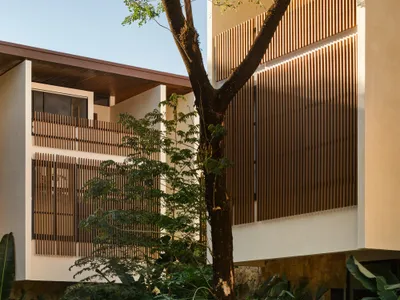
FAMM Arquitectura Organizes Ten Villas Around Courtyards and Jungle in Nosara, Costa Rica
El Molino pairs two elongated volumes with deep overhangs and timber louvers to build a compact coastal community five minutes from the beach.
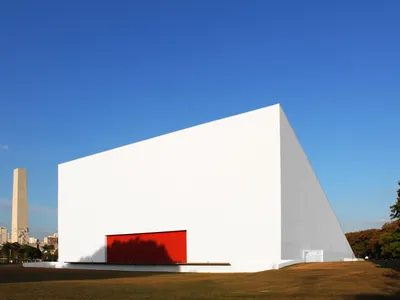
Oscar Niemeyer's Ibirapuera Park Pavilions Define São Paulo's Cultural Identity in Concrete and Curve
A constellation of modernist volumes set within São Paulo's most important urban park, conceived for the city's 400th anniversary in 1954.
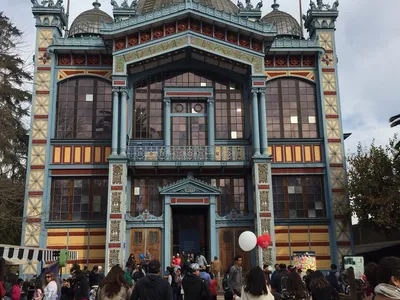
How Henri Picq's 1889 Paris Pavilion Traveled 11,000 Kilometers to Become Santiago's Artequín Museum
A prefabricated iron and glass pavilion built for the Paris Universal Exposition found a second life as a children's art museum in Chile.
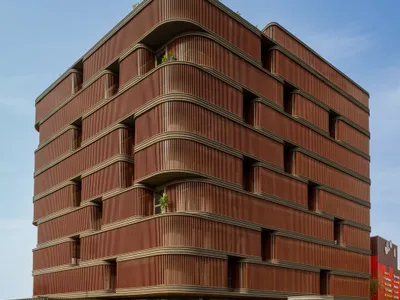
Sanjay Puri Architects Wraps a Jaipur Office Tower in Capsule-Shaped Green Buffers
A nine-level climate-responsive workplace near Jaipur Airport uses stacked planter terraces and aluminium screens to fight 40°C heat.

Explore Temporary Dwelling Competitions
Discover active competitions in this discipline



Challenge to reimagine the Iron Throne


Photograph architecture without architects


Illustrate the lost glory of Angkor Wat - Render Challenge


Design challenge to reuse E-waste
Comments (0)
Please login or sign up to add comments
No comments yet. Be the first to comment!