
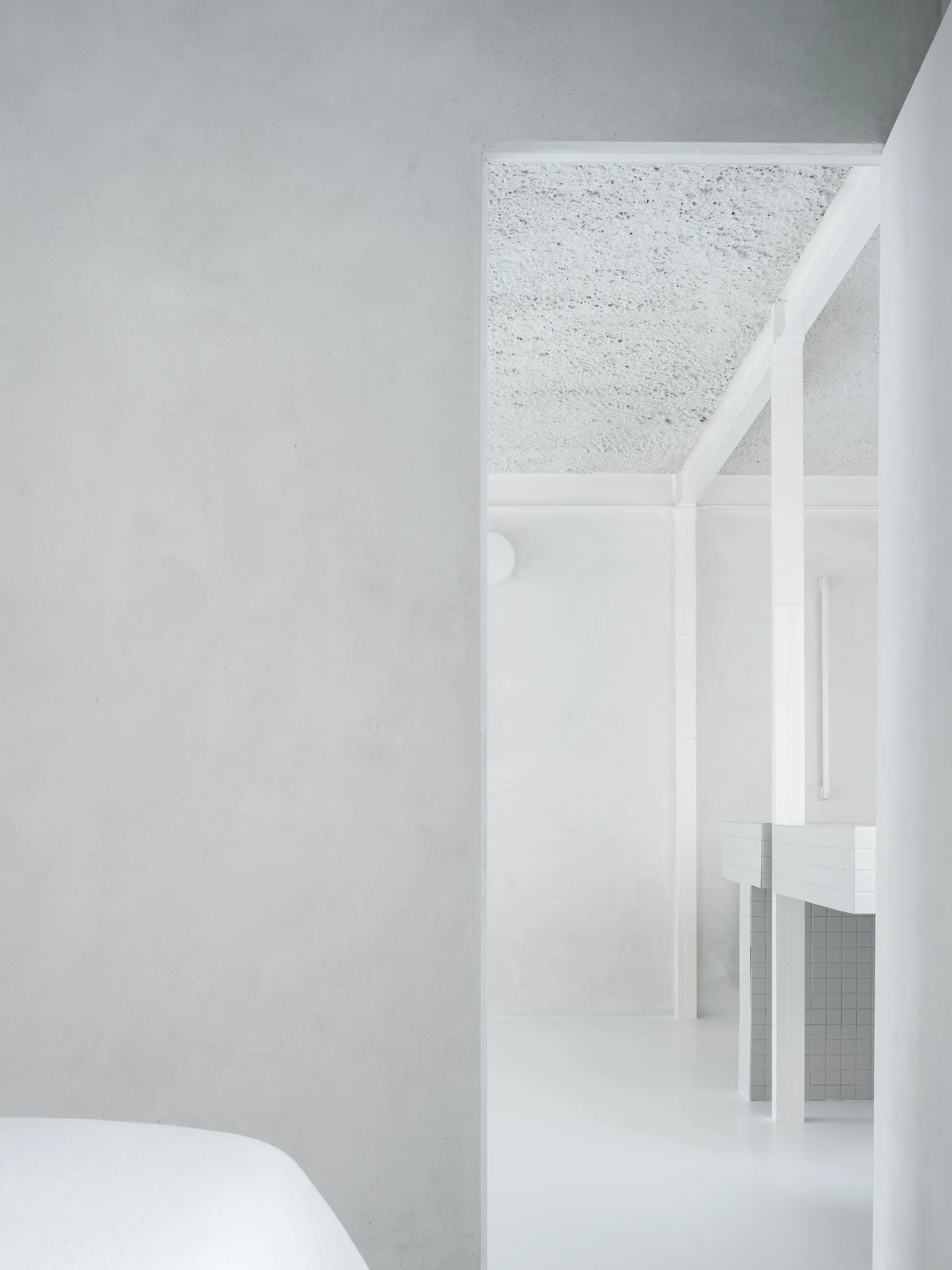
HANGHAR Strips a Madrid Apartment Back to Its Bones to Make Homeownership Possible
In the gentrifying Carabanchel neighborhood, an 85-square-meter flat trades conventional finish for raw affordability and spatial honesty.


Madrid's housing crisis is not a statistic. It is the defining condition of an entire generation locked out of ownership in a city where the average home price has long outpaced wages. HANGHAR's Rio House, completed in 2022, is a direct response: an 85-square-meter apartment in the rapidly gentrifying Carabanchel neighborhood, renovated with the explicit goal of cutting build costs to the minimum so that the act of buying a home remains plausible. The result is not austerity. It is a carefully calibrated interior where raw surfaces, reflective materials, and a disciplined structural grid create a dwelling that feels generous precisely because so little has been added.
What makes Rio House interesting is not its restraint alone but the intelligence behind its incompleteness. HANGHAR treats the apartment as an unfinished space on purpose: a framework that keeps costs down today while making future renovation straightforward. A single technically equipped wall consolidates plumbing, electrical, and storage for both kitchen and bathroom, leaving the rest of the plan free from the expensive, inflexible buildout that most renovations impose. The intervention is minimal, and that minimalism is the architecture.
The Steel Grid as Spatial Organizer
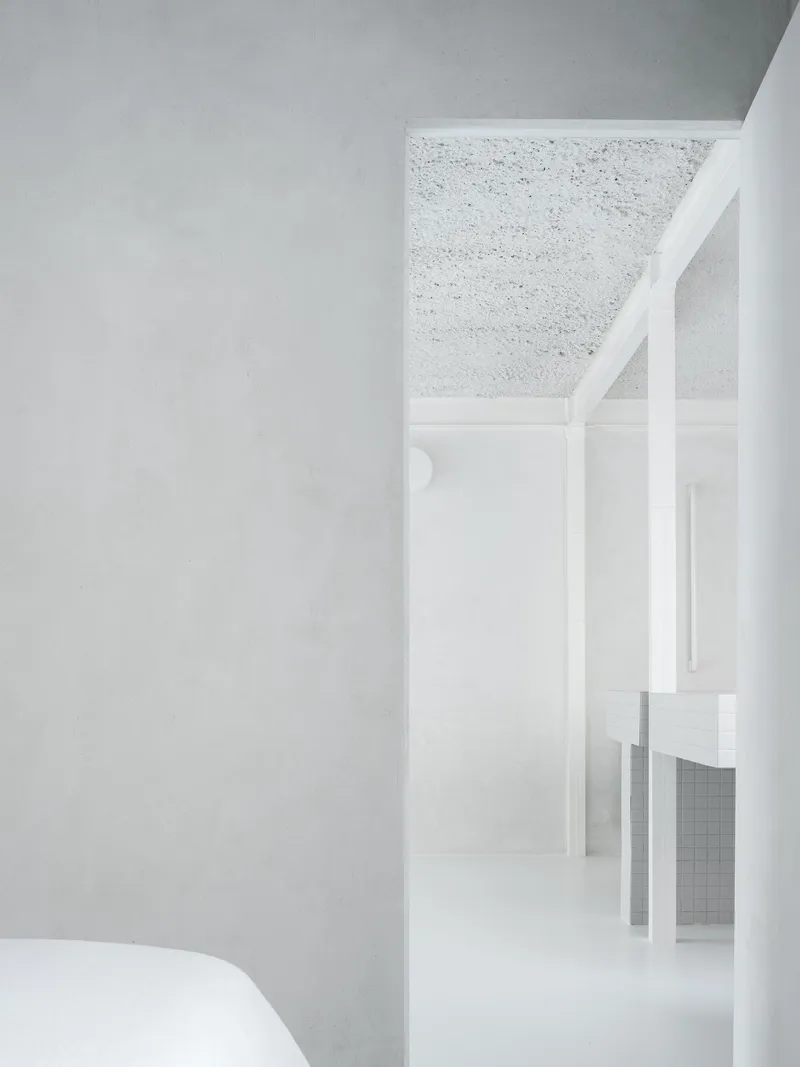
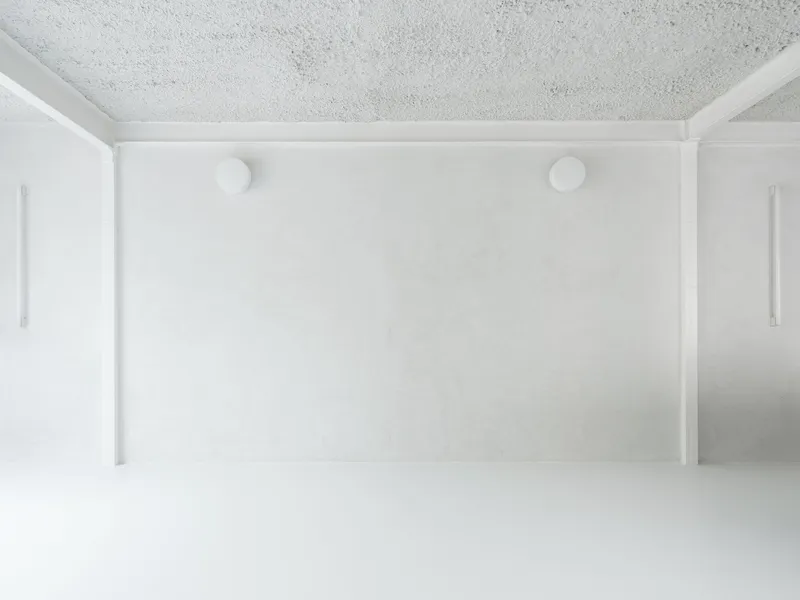
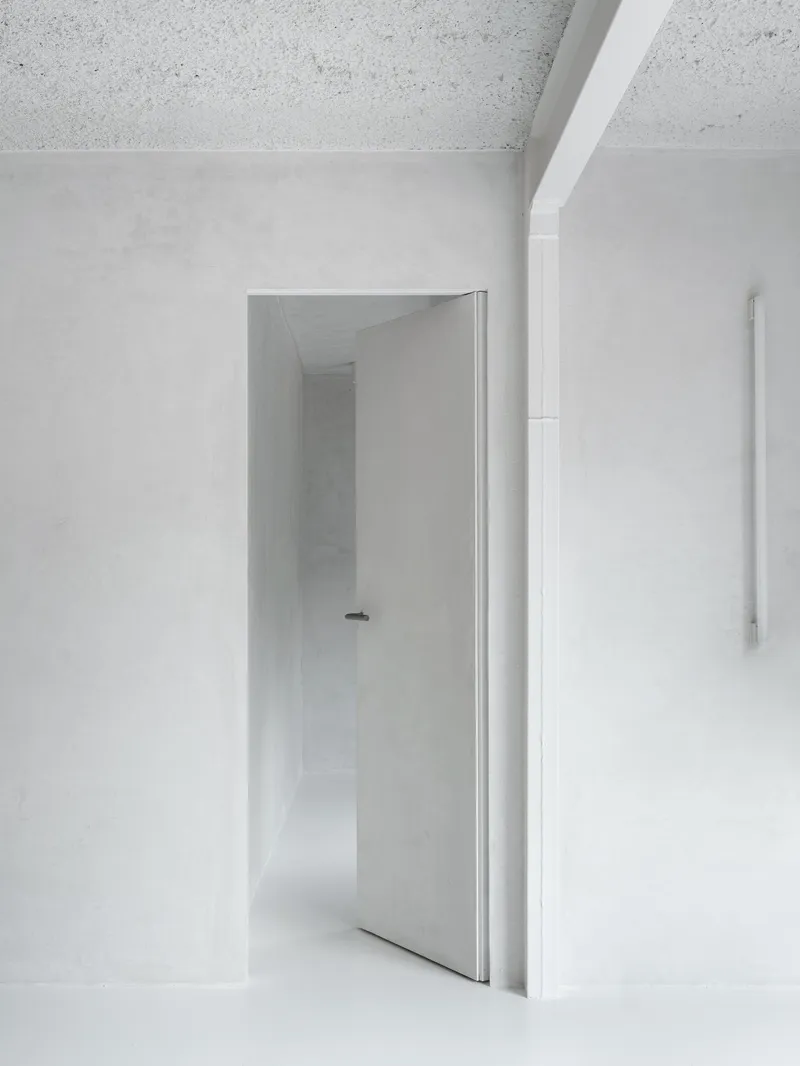
A light steel structure of L-beams and pillars runs through the apartment, creating a legible hierarchy between public and private zones without resorting to full-height partition walls. The white-painted steel frames read as furniture-scale elements rather than construction, letting sightlines pass through doorways and across rooms. Against the sprayed plaster ceiling and reflective epoxy resin floor, the grid establishes rhythm and proportion in a space that might otherwise feel featureless.
HANGHAR preserved the original layout of the dwelling, concentrating intervention at the wall between kitchen and bathroom. Everything else remains more or less as found, which keeps demolition waste low and construction time short. The steel grid supplements rather than replaces the existing structure, a tactic that turns a budgetary constraint into a formal language.
The Aluminum Wall and Kitchen Core
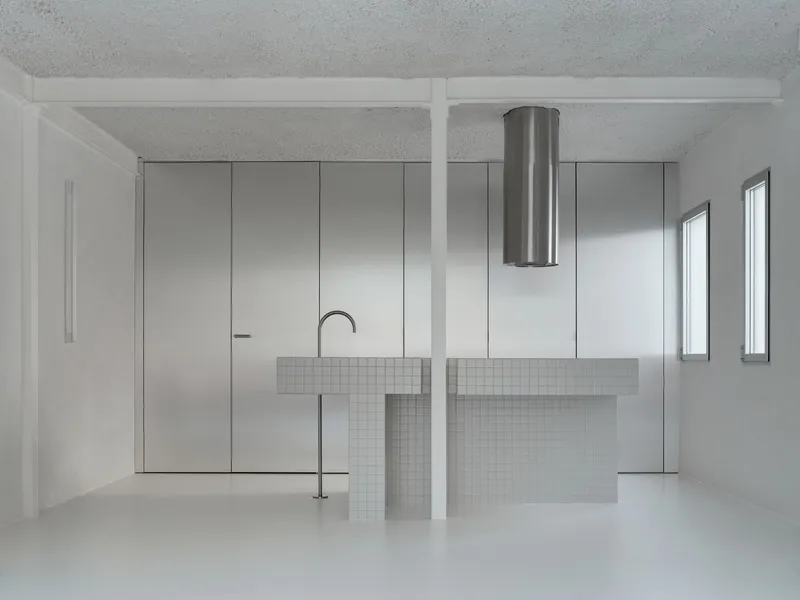
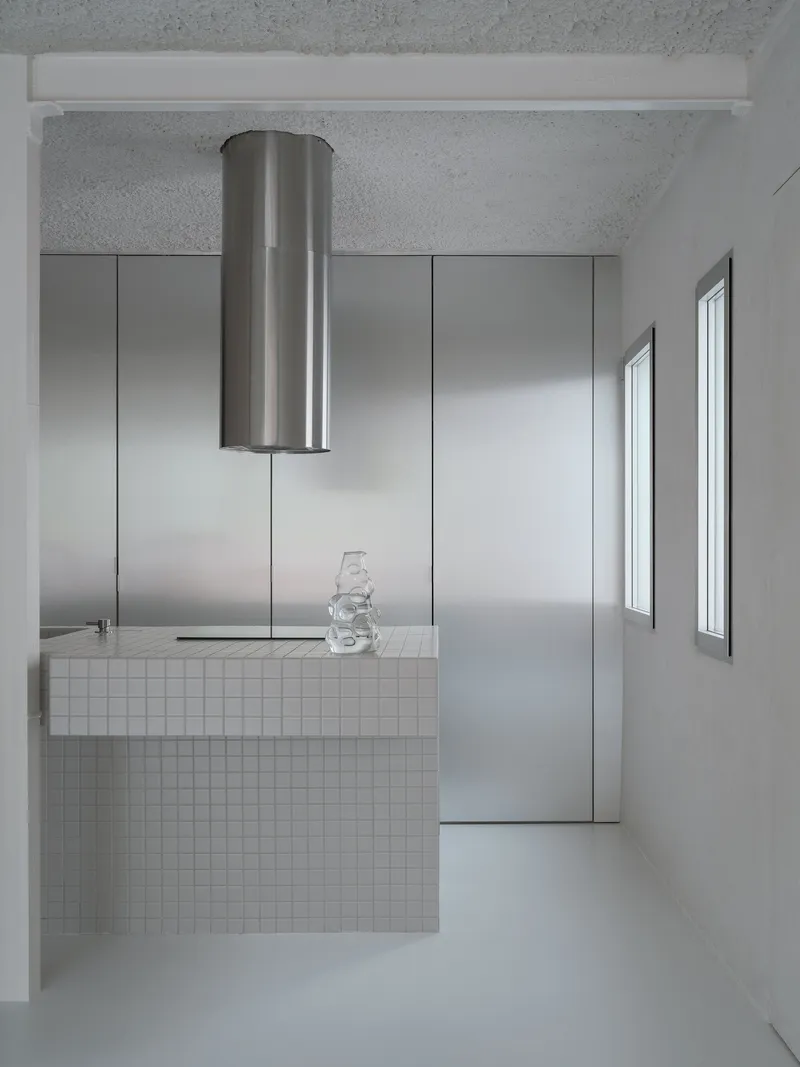
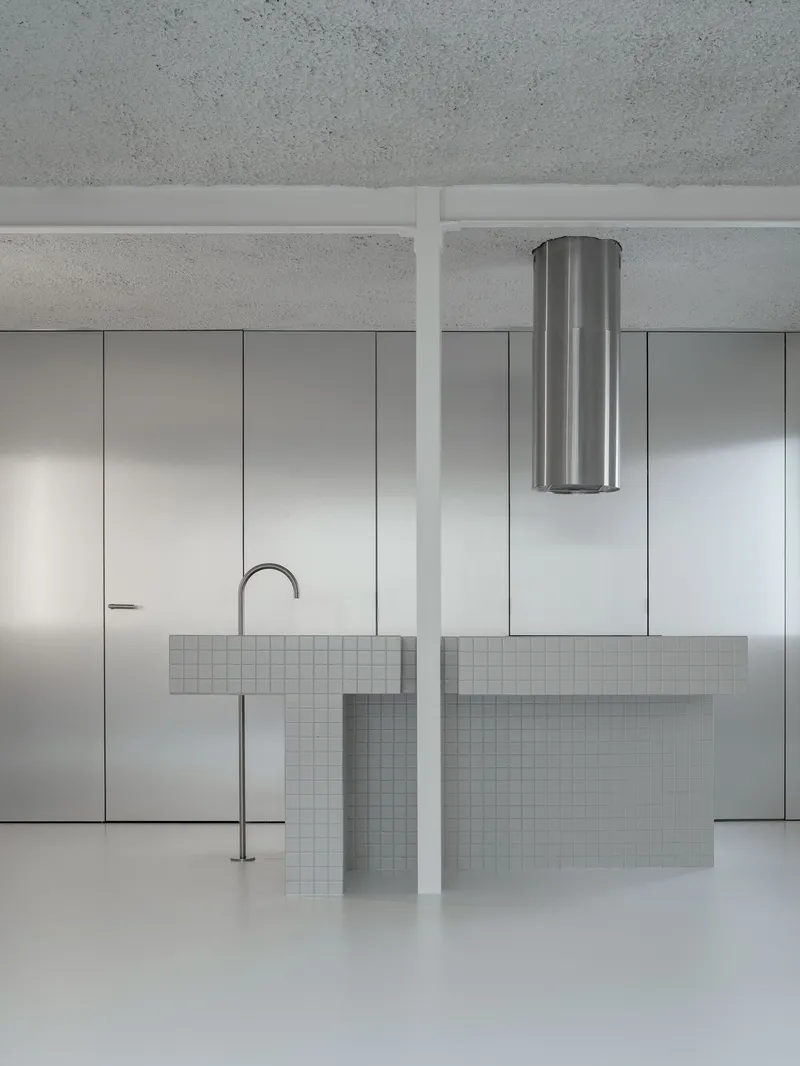
The technically equipped wall is clad in raw aluminum, a single monolithic surface that contains plumbing, electrical cabling, and storage behind brushed steel panels. It serves both the kitchen on one side and the bathroom on the other, consolidating all the expensive, service-heavy work into one vertical plane. The reflective quality of the aluminum bounces light and domestic activity back into the room, making the kitchen feel larger and more luminous than its footprint warrants.
A kitchen island clad in white mosaic ceramic tile anchors the open cooking area. A cylindrical stainless steel range hood drops from the ceiling above it, the most sculptural object in the apartment. The contrast between the rough tile surface and the polished metal is deliberate: it acknowledges the unfinished ethos of the project while still giving the kitchen a center of gravity.
Corridor and Threshold Details
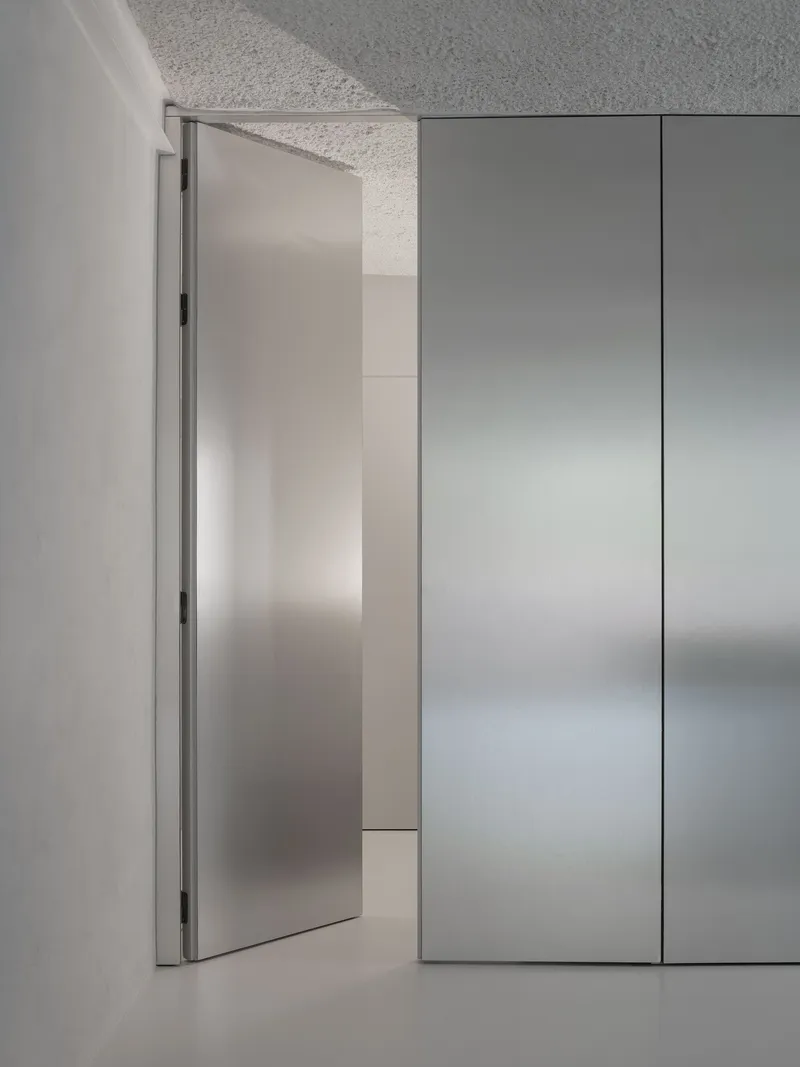
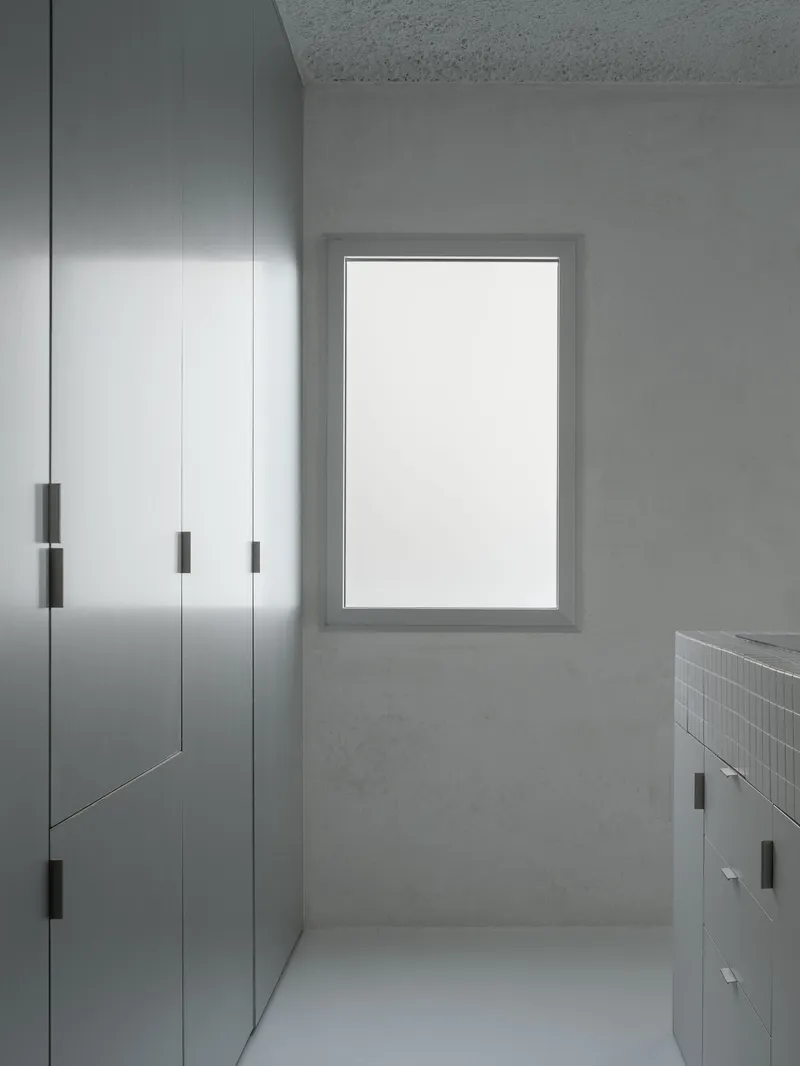
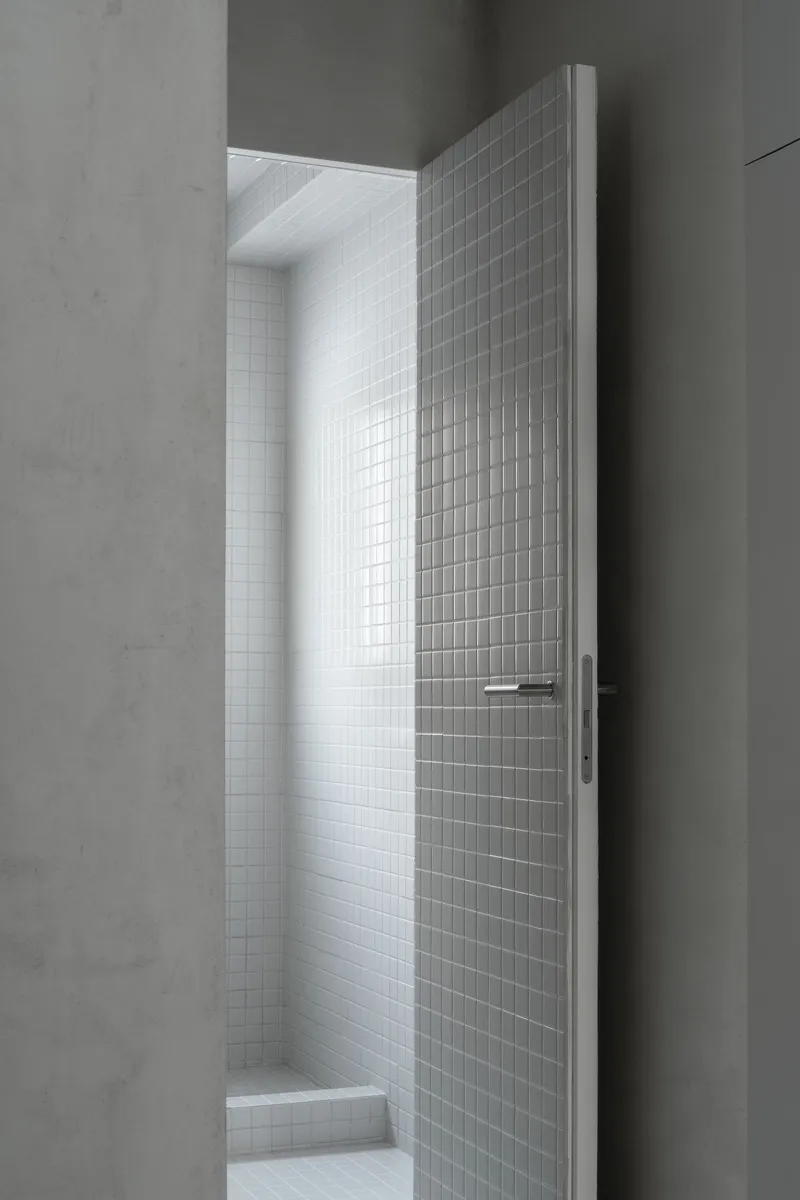
Circulation through Rio House is handled with the same economy. Brushed steel wardrobes line one corridor, doubling as storage and wall finish. A pivot door in the same material opens against the cabinet panels, its hinge visible and mechanical, refusing to hide the hardware behind flush trim. At the far end, a mosaic tile vanity counter catches daylight from a window, pulling the kitchen's material palette into the bathroom zone.
The narrow doorway into the tiled bathroom, lit from above by natural light, is one of the most compelling moments in the apartment. It demonstrates how a small aperture and a change in surface material can create a sense of arrival without any additional cost. These thresholds do the work that expensive millwork or decorative finishes would do in a conventional renovation.
Red Marble and Material Restraint
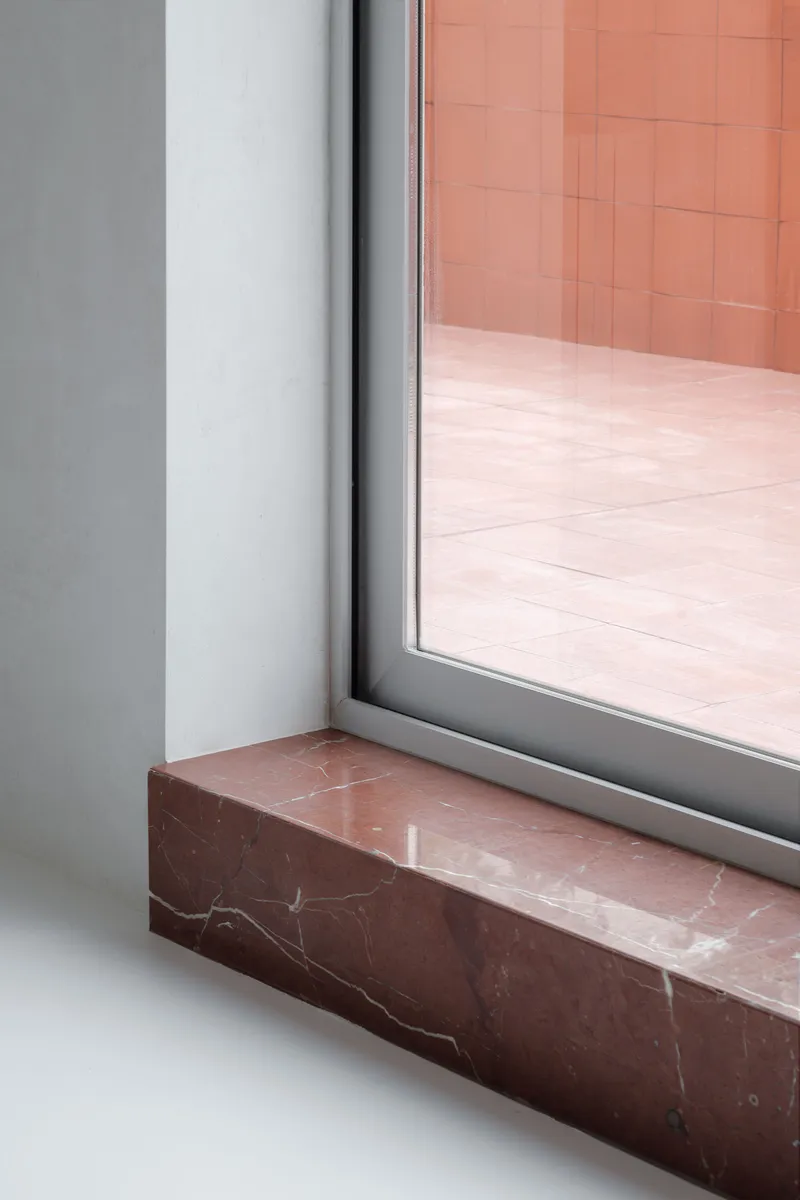
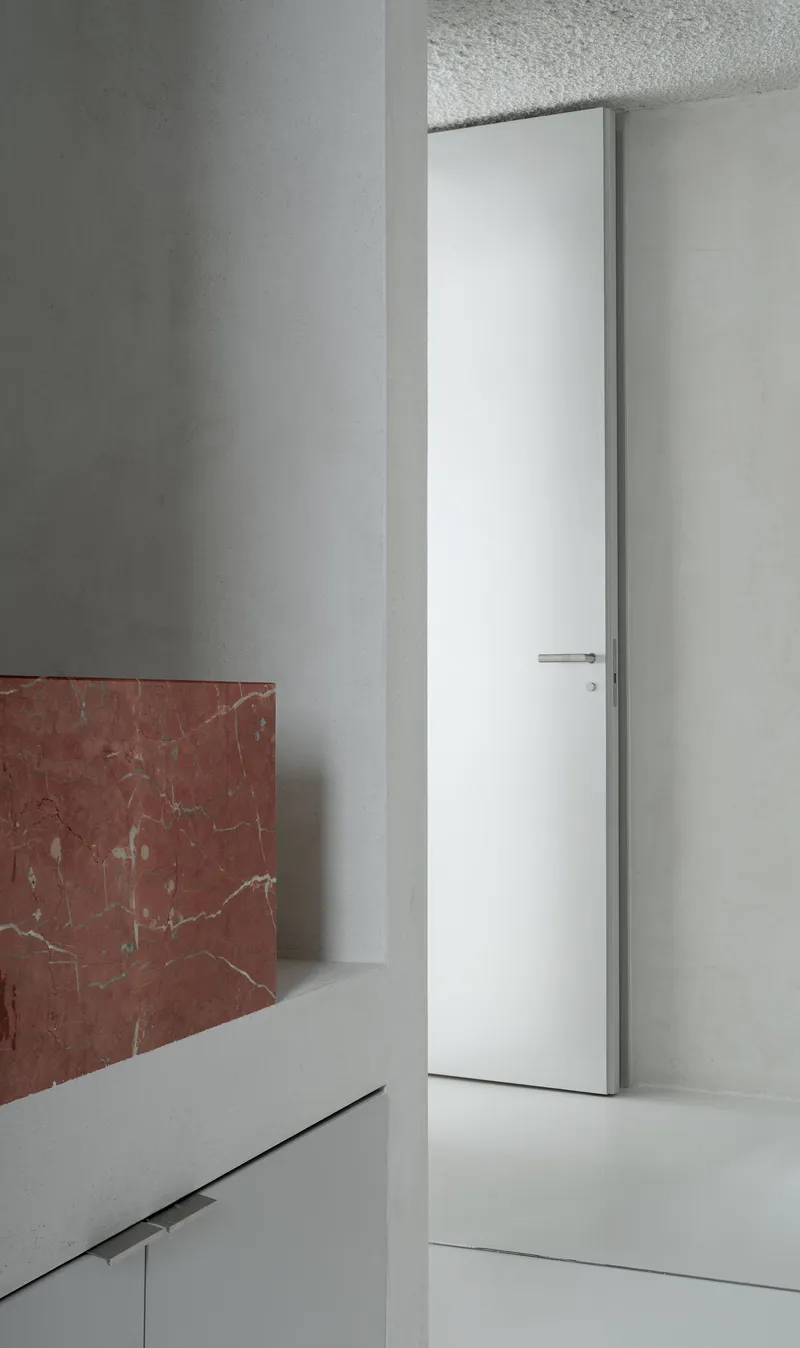
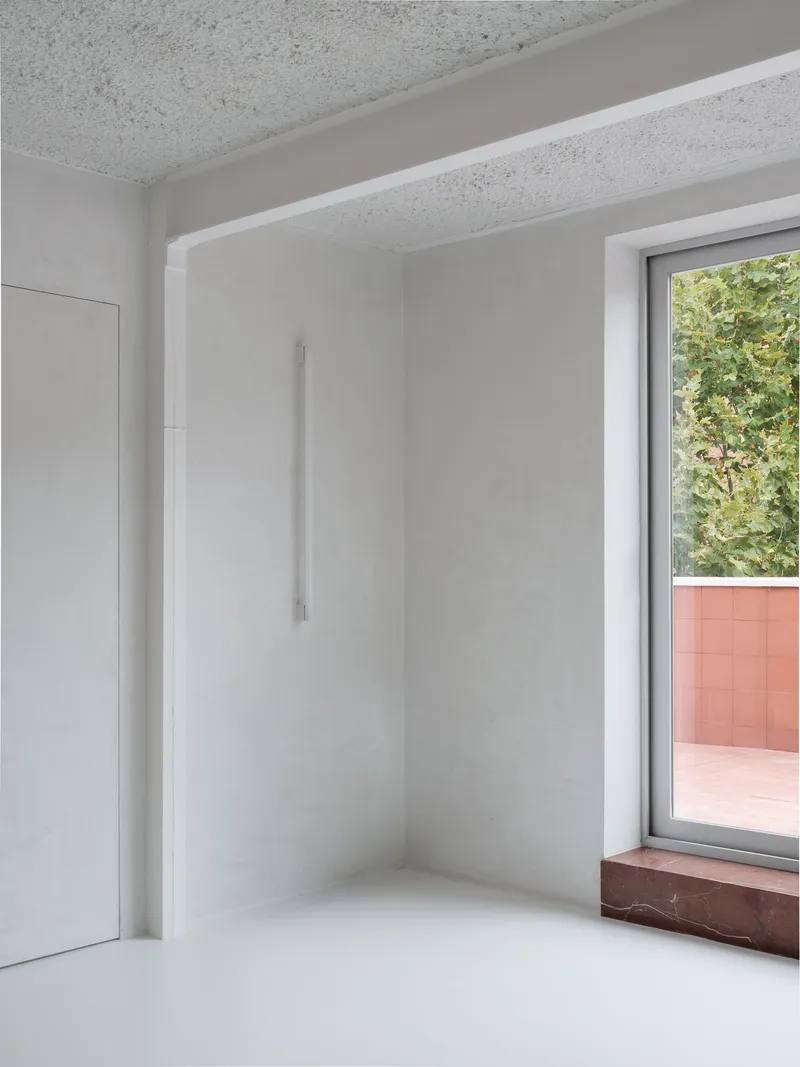
Local red marble appears in limited, precise doses: a window sill here, a wainscoting detail there. It is the one material in the apartment that gestures toward luxury, and HANGHAR uses it sparingly enough that its warmth registers against the cooler whites and greys of plaster, aluminum, and resin. The red marble sill meeting a planted balcony is a small but effective connection between interior and exterior, grounding the otherwise industrial palette in something geological and specific to the region.
This discipline, knowing exactly how much of an expensive material to deploy, is what separates Rio House from a simple cost-cutting exercise. Every finish choice signals intention. The flush white doors set into plaster walls, the terrazzo ceiling panels that read as found rather than installed: none of this is accidental. It is a renovation strategy built on the principle that restraint, executed with care, produces dignity rather than deprivation.
Light as the Primary Finish
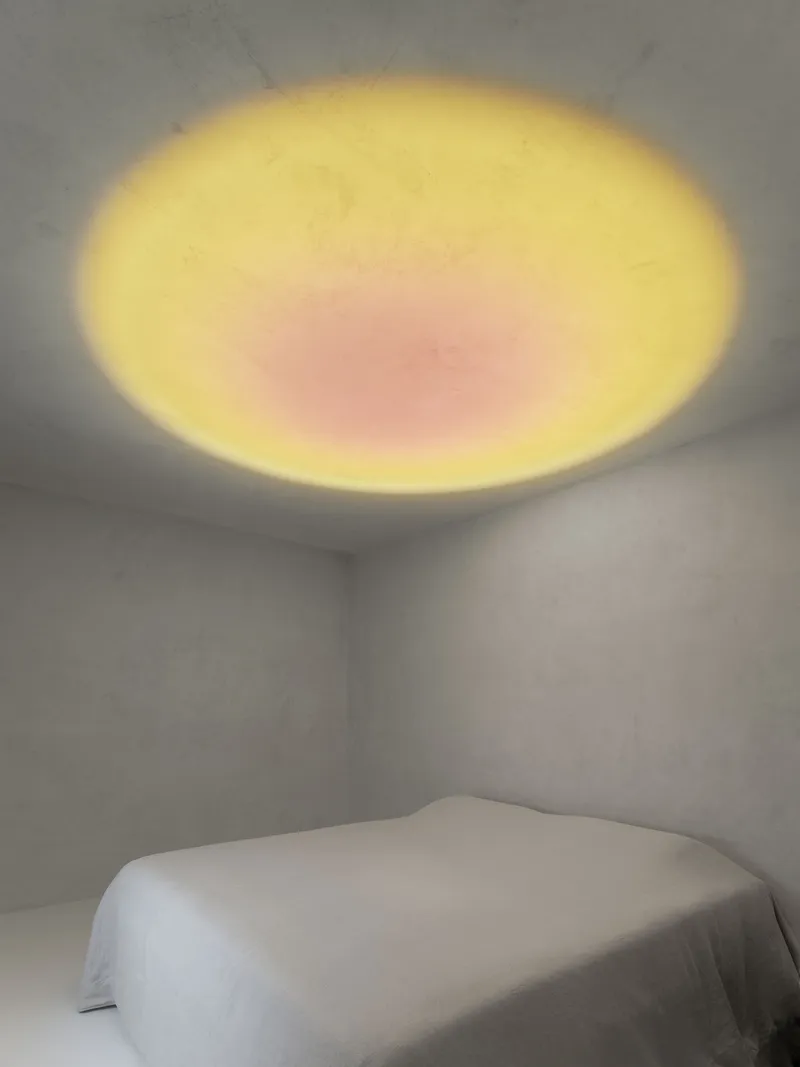
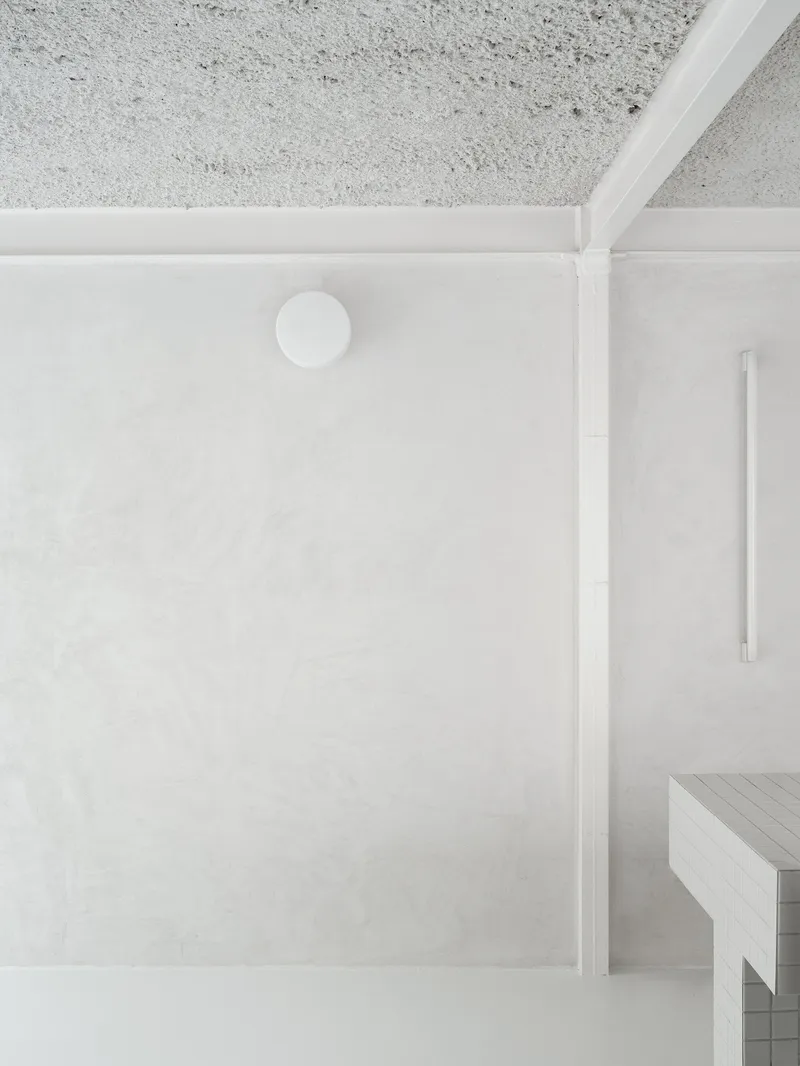
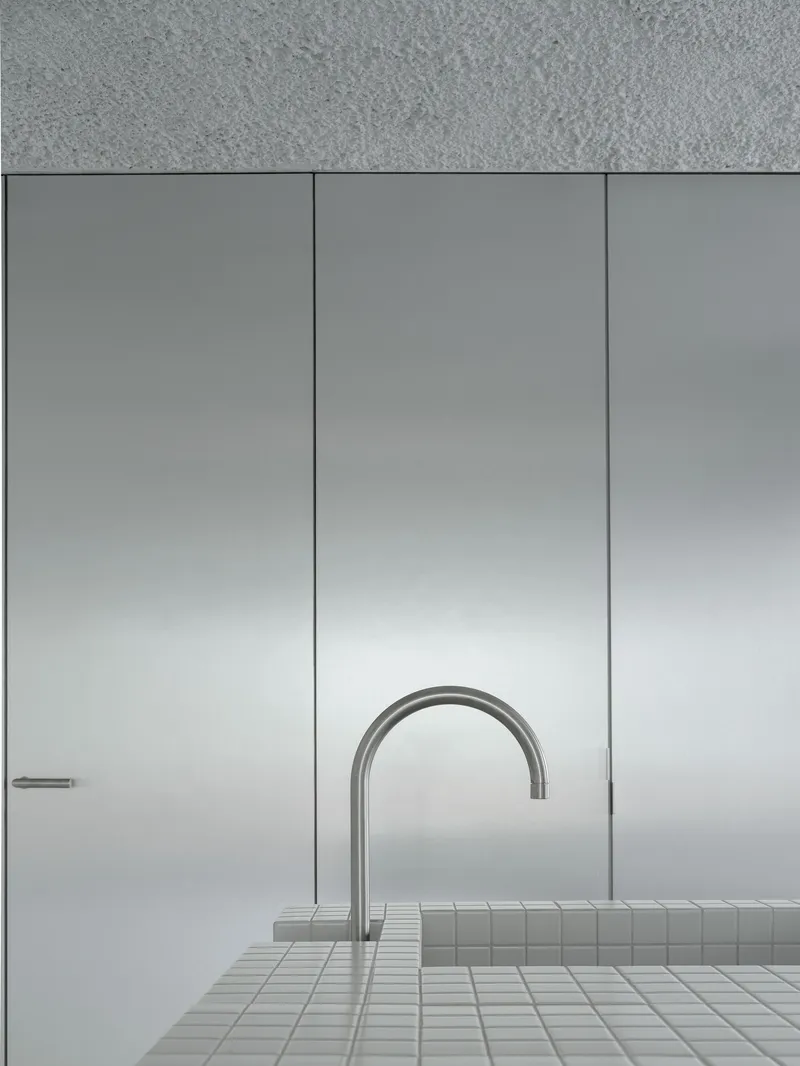
Where budget prevents material richness, light fills the gap. A circular skylight casts yellow and pink tones across a white ceiling, transforming a simple plaster surface into something almost painterly. The reflective epoxy floor amplifies whatever daylight enters through windows and skylights, creating a luminous volume from an otherwise modest room. Even the curved stainless steel faucet rising from the mosaic tile counter catches and redistributes light, turning a plumbing fixture into an optical event.
HANGHAR understands that in a project where every euro matters, light is the cheapest and most effective finish available. The ceiling apertures, the reflective surfaces, the white walls: all of these are low-cost decisions that produce a high-quality spatial experience. It is the oldest trick in architecture, and it works.
Plans and Drawings
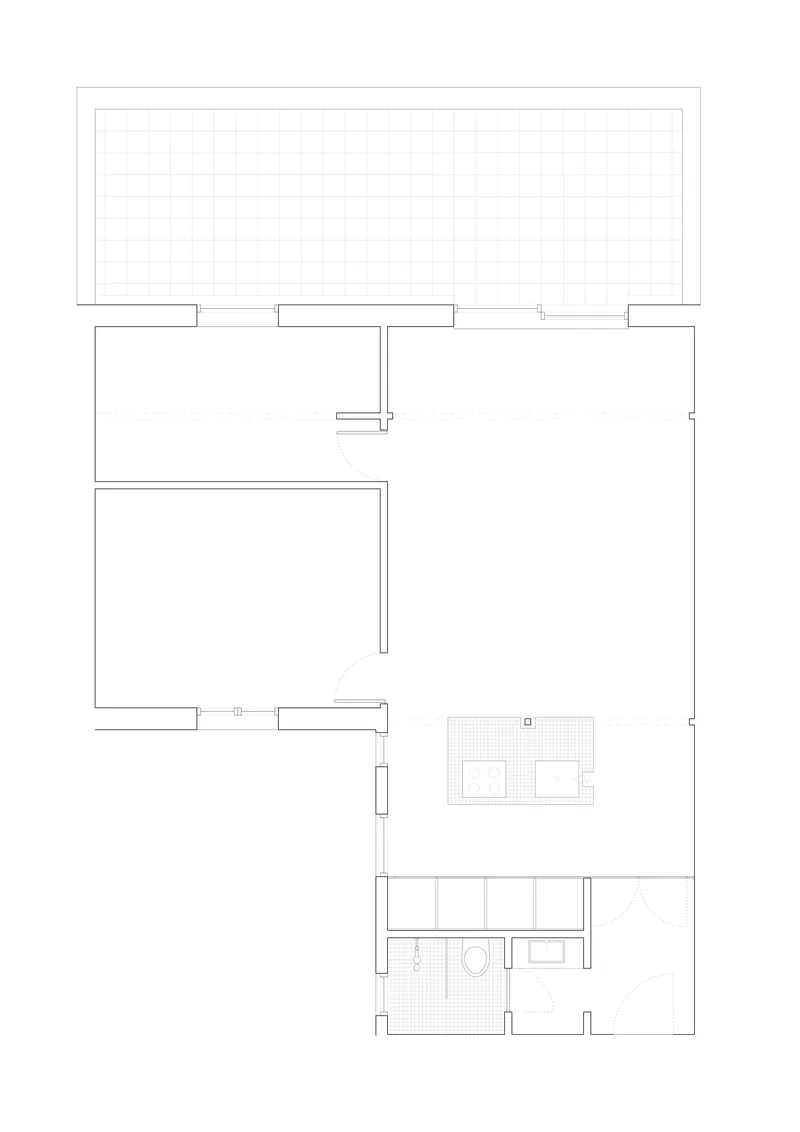
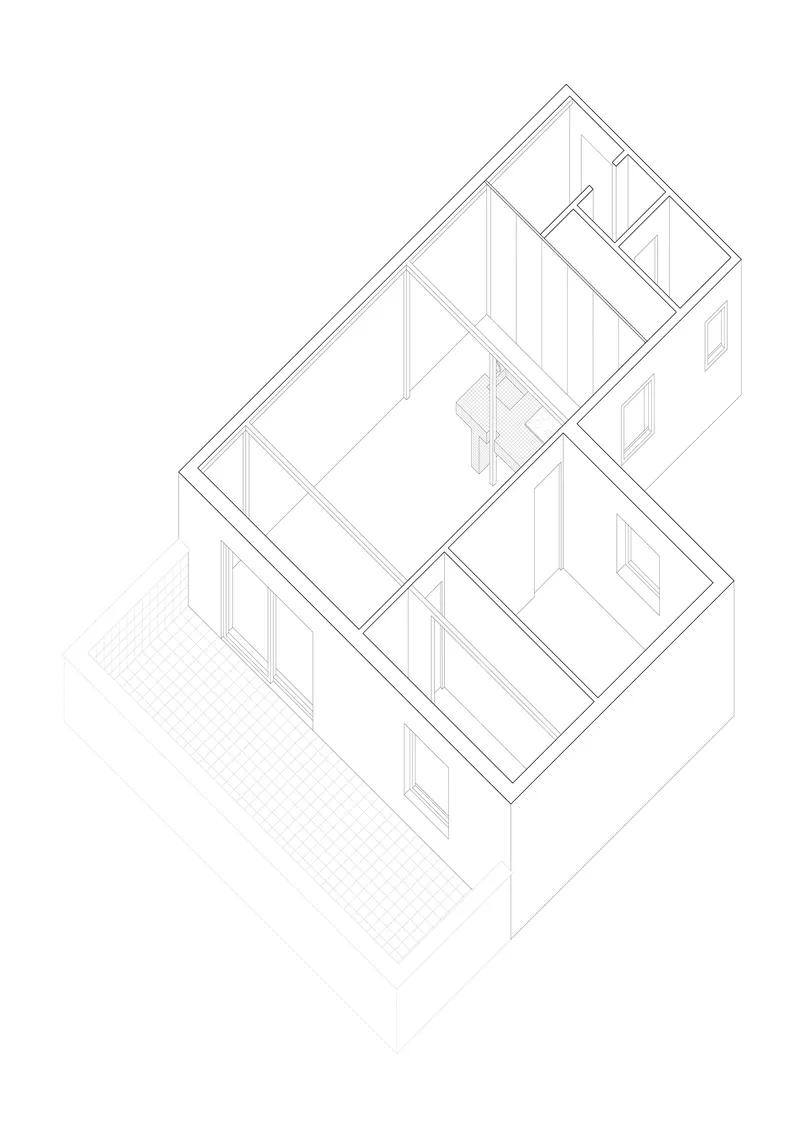
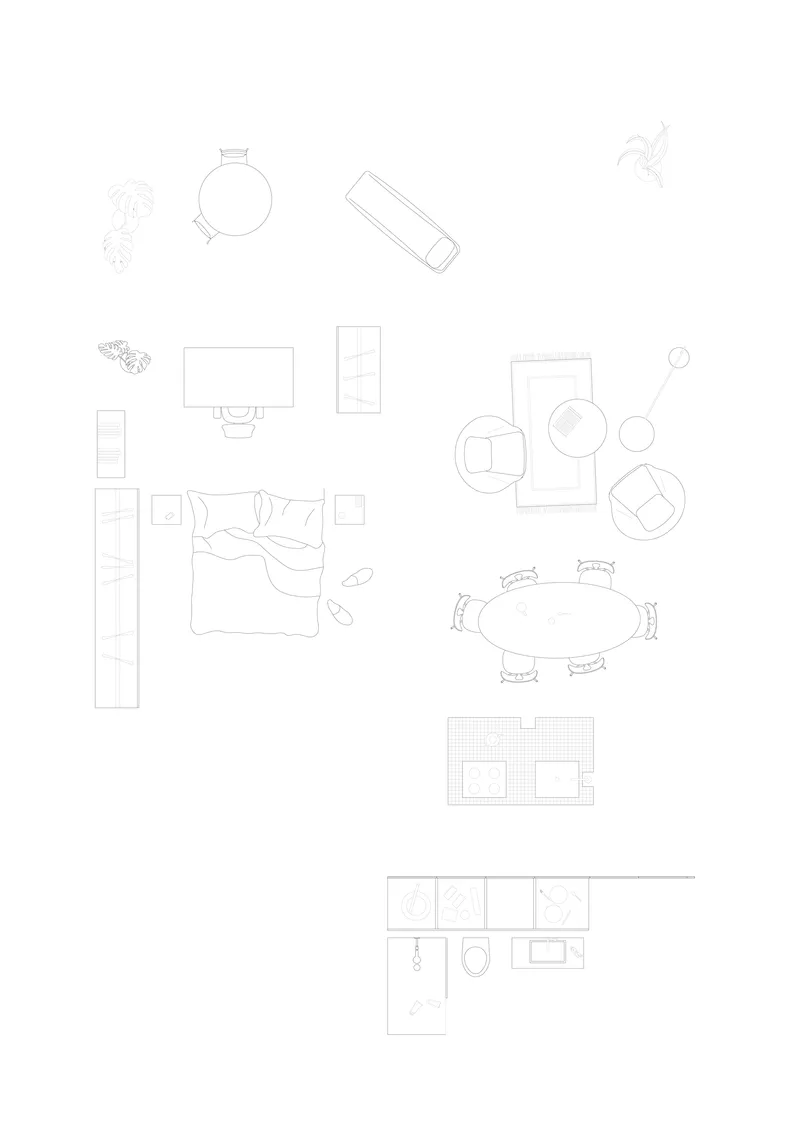
The floor plan confirms how little was moved. The open living area flows into the kitchen zone, with the technically equipped wall serving as the spine between cooking and bathing. The axonometric drawing reveals the two-level organization and the staircase connecting them, showing how the steel grid subdivides the section without closing it off. A separate furniture layout plan scatters bed, dining table, and kitchen fixtures across the page, illustrating the flexibility that the stripped-back shell affords. Future inhabitants can reconfigure these elements without touching the core infrastructure.
Why This Project Matters
Rio House matters because it refuses to accept that affordable housing must be ugly, cramped, or architecturally negligible. In a city where owning a home is becoming an act of defiance against market forces, HANGHAR has produced a dwelling that is deliberately unfinished and all the better for it. The project is a template: consolidate services into one wall, use a light structural grid to organize space, deploy expensive materials only where they count, and let light do the rest. It is replicable, and it should be replicated.
More broadly, the project challenges the renovation industry's assumption that a good home requires a complete fit-out. By designing for incompleteness, HANGHAR gives inhabitants agency over their own space across time. The apartment is not a finished product but a starting condition, one that respects both the budget constraints of today and the aspirations of tomorrow. That is a rare thing in contemporary residential architecture, and it deserves attention.
Rio House by HANGHAR, Carabanchel, Madrid, Spain. 85 m². Completed 2022. Photography by Luis Díaz Díaz.
About the Studio
Share Your Own Work on uni.xyz
If projects like this are the kind of work you want to make, uni.xyz is a place to publish your own, find collaborators, and enter design competitions.




Popular Articles
Popular articles from the community


Co-life: Sustainable Architecture for Age-Friendly Community Living
Co-life reimagines sustainable architecture for seniors through courtyards, rammed earth, shared gardens, and spaces designed for belonging.

Conexión: Biophilic Design Reimagines High-Rise Living in Hong Kong
Conexión reimagines high-rise living in Hong Kong through biophilic design, green facades, shared spaces, daylight, water and nature within.

The Earth Pod: 3D Printed Homes for Resilient Refugee Communities
The Earth Pod reimagines refugee housing through 3D printed homes made from clay, combining resilience, self-sufficiency, and rapid shelter.

Lunar Spiral: Space Architecture Shaped by the Mathematics of the Universe
Lunar Spiral reimagines space architecture through Fibonacci geometry, lunar regolith, levitating habitats, and self-sustaining Moon living.


Similar Reads
You might also enjoy these articles

Bao Huynh Watercolor Atelier: A Serene Art Retreat in Hội An
Bao Huynh Watercolor Atelier in Hội An blends multifunctional art spaces, sustainable design, local materials, and family-friendly living in a serene environment.

Atelier Macri Concept Store Interior Design by CASE-REAL
Atelier Macri store features a "ko" counter, walnut wood details, cork displays, blending retail, gallery, and seamless customer experiences.

Manuel Vargas Izquierdo Stadium and High-Performance Sports Center: Architectural Excellence in Jalpa de Méndez
The Manuel Vargas Izquierdo Stadium blends sustainable design, inclusive sports facilities, and cultural-inspired architecture, revitalizing Jalpa de Méndez’s public spaces.

KAKR Buluh Awar Hall: Revitalizing Community and Ecology Through Bamboo Architecture
Community built bamboo hall revitalizes Buluh Awar village, empowering youth, restoring ecology, celebrating vernacular craftsmanship through sustainable architecture and culture.


Explore Plug-In House Competitions
Discover active competitions in this discipline


Challenge to design mud housing for contemporary communities


Challenge to reimagine the Iron Throne


Photograph architecture without architects


Illustrate the lost glory of Angkor Wat - Render Challenge
Comments (0)
Please login or sign up to add comments
No comments yet. Be the first to comment!