

Hangzhou Asian Games Technical Officials Village by GOA: A Fusion of Modernity and Tradition
The Hangzhou Asian Games Technical Officials Village blends sustainable urban design, biophilic architecture, and traditional aesthetics, creating a vibrant international community.


Sustainable Urban Design Meets Cultural Heritage
The Hangzhou Asian Games Technical Officials Village, designed by GOA (Group of Architects), is a key component of the Hangzhou Asian Games Village, built for the 2022 Asian Summer Olympics. This large-scale urban project includes the Athlete Village, Media Village, and the Technical Officials Village, with GOA leading the design of the latter.
Situated in Xiaoshan District, near the Olympic Sports Center and Qianjiang Century City, the development enjoys proximity to the Qiantang River, balancing urban infrastructure with natural landscapes. Beyond its function during the Asian Games, the village is envisioned as a vibrant international community, setting a precedent for future urban planning in Hangzhou by integrating local heritage with global architectural trends.
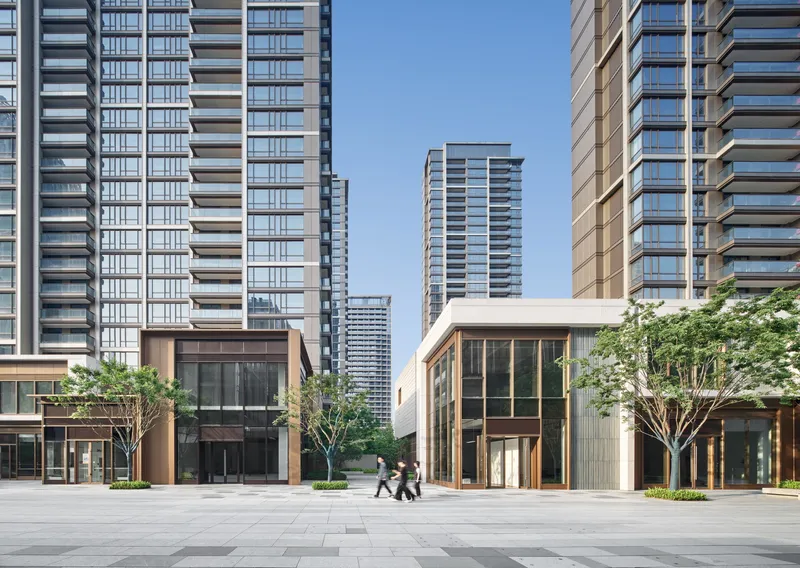
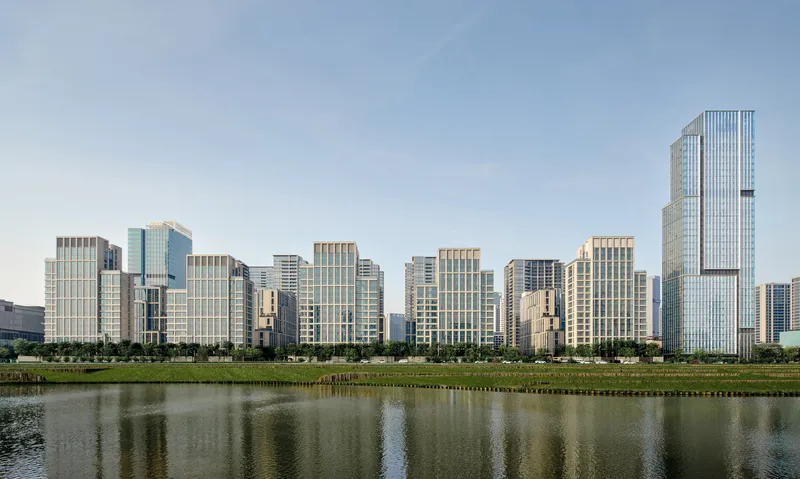
Human-Centered Urban Planning & Sustainable Design
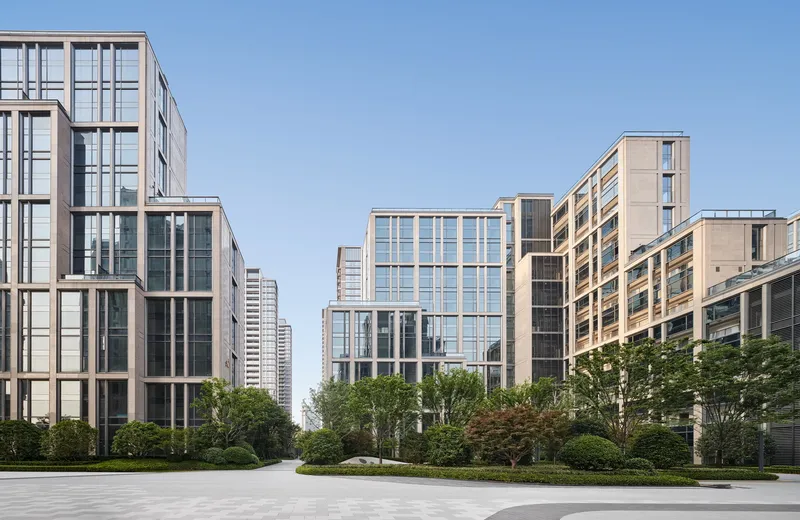
Unlike conventional Chinese urban layouts characterized by large blocks and wide roads, the design prioritizes walkability and social interaction. The compact street grid introduces smaller blocks and a pedestrian-friendly environment, reminiscent of traditional Hangzhou alleys. The undulating skyline, inspired by Hangzhou’s rolling mountains and terraced tea fields, seamlessly integrates nature with architecture.
To foster a strong sense of community, the site is divided into six smaller parcels, each forming a neighborhood on a human scale. Buildings are arranged along the outer edges, enclosing a central public park that serves as a hub for social and recreational activities. The circulation design mimics Hangzhou’s historic pathways, guiding residents through meandering streets that open into lush green courtyards, maximizing solar access and ventilation.

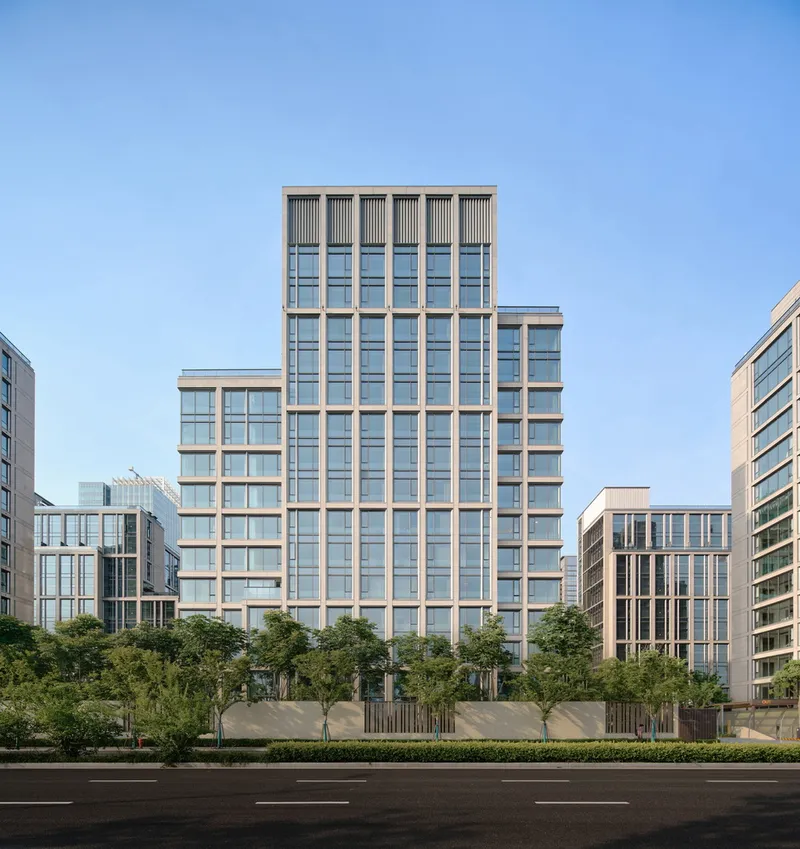
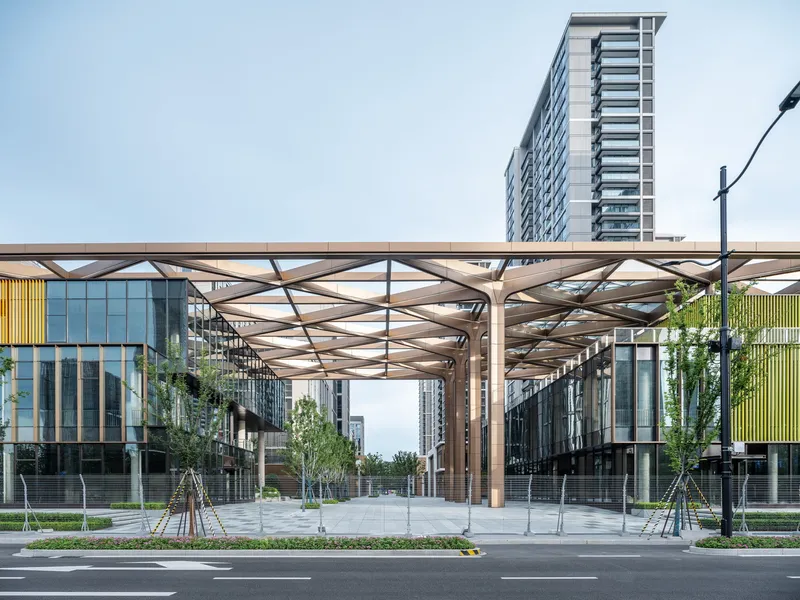
Architectural Language: Merging Tradition with Innovation
The Technical Officials Village comprises:
- 1 super high-rise apartment tower
- 10 mid-rise apartment buildings
- 12 high-rise residential towers
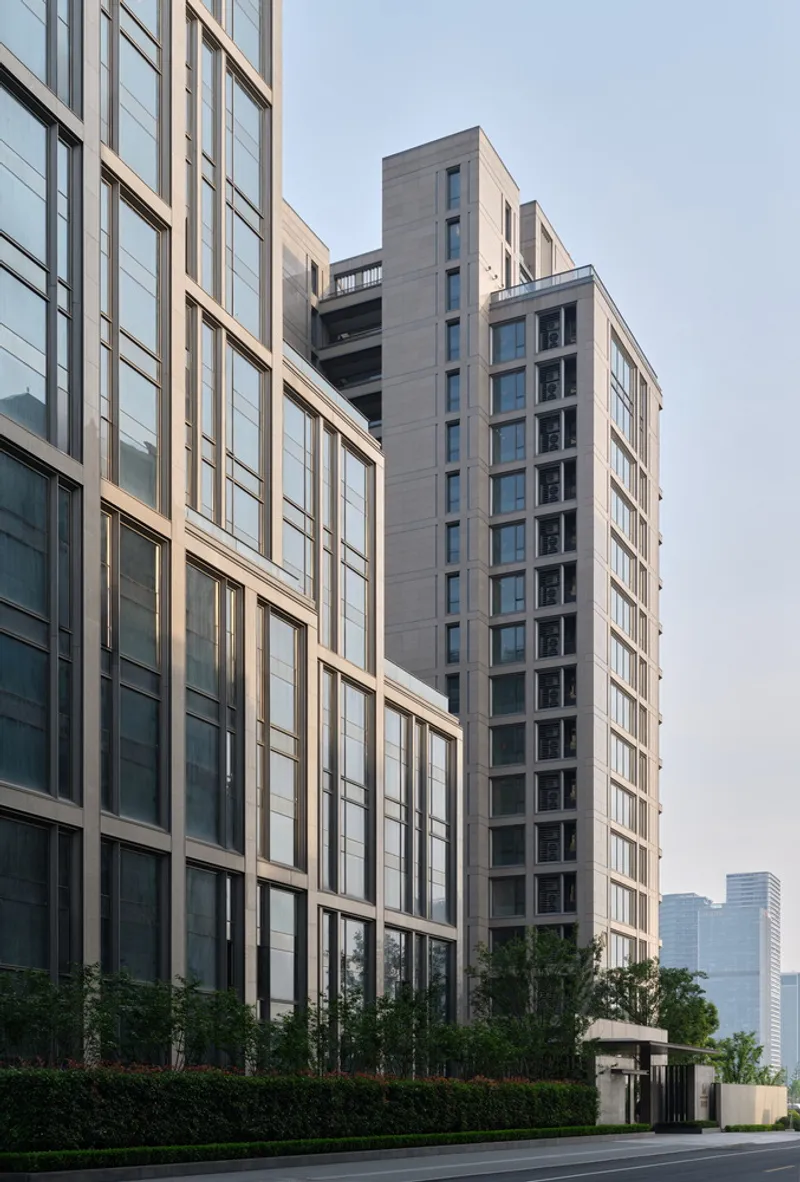
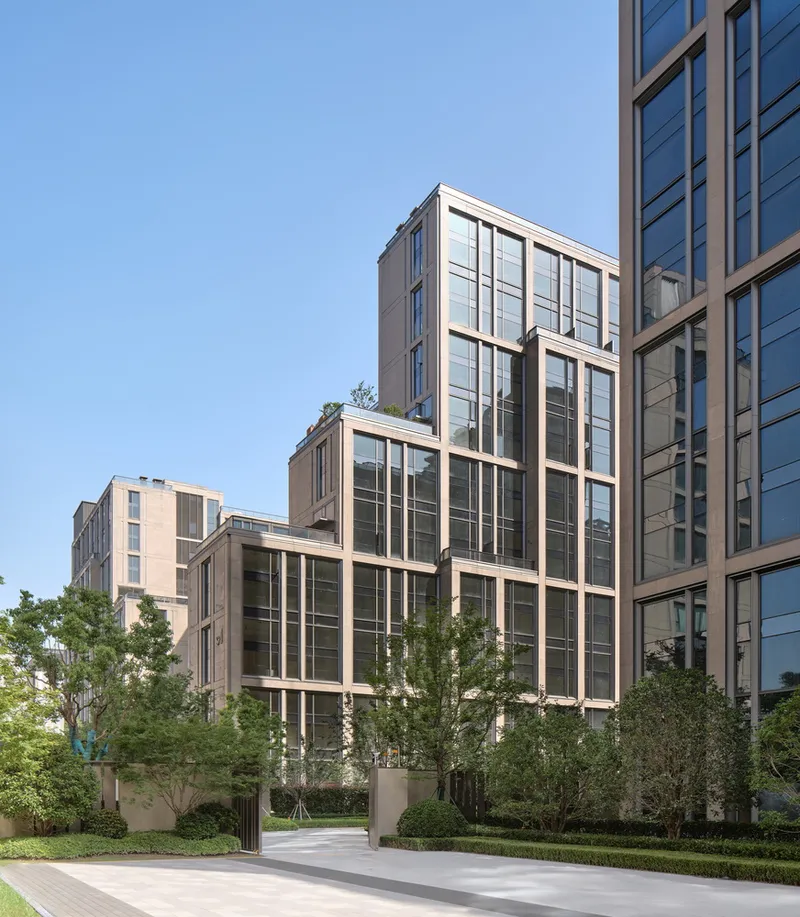
The façade design blends contemporary minimalism with traditional Chinese aesthetics, featuring glass curtain walls, natural stone, and metal elements. The light-colored glass and neutral gray stone reflect the natural landscapes of peaks, streams, and tea gardens, evoking a sense of serenity.
The super high-rise tower’s façade draws inspiration from bamboo joints and traditional Jiangnan-style windows, creating a dynamic rhythm through interwoven panel lines. Meanwhile, the lower apartment buildings incorporate elevated floors, seamlessly connecting indoor and outdoor spaces for a harmonious living experience.

Biophilic Elements & Sustainable Living
Incorporating biophilic design principles, the super high-rise tower features atrium gardens on every fourth floor, paying homage to Jiangnan classical gardens. Meanwhile, sunken courtyards at the entrances enhance natural ventilation and daylight access, fostering a healthy and comfortable living environment. These elements reduce energy consumption, improve air quality, and create a tranquil retreat within the urban fabric.
A Model for Future Urban Development
The Hangzhou Asian Games Technical Officials Village is more than an athletic housing facility—it is a prototype for future urban living. By blending sustainable urban planning, walkability, and traditional Chinese aesthetics, GOA has created a resilient, community-driven, and environmentally-conscious architectural landmark.
All Photographs are works of AOGVISION, Studio FF


Popular Articles
Popular articles from the community


FCC Arquitectura Expands a Portuguese Granite House with a Board-Marked Concrete Wing
In Portugal, JV House pairs a cleaned-up whitewashed and granite dwelling with a timber-shuttered concrete extension, courtyards and a garden pool.

ETEH Reworks the Shared Spaces of São Domingos School in Brazil Around Timber, Color and Hanging Plants
At São Domingos School in Brazil, 436 m² of hall, refectory and library are recast with timber joinery, a yellow and blue code and trailing greenery.

David Ortega Stacks a Two-Story Mexico City Penthouse Around a Steel Stair and a Pergola-Shaded Roof Terrace
In Colonia Roma, a 300 m² penthouse uses oak joinery, a planted steel stair and a slatted roof pergola to make a new-build apartment feel like a house.

Cube Design Draws an Ecological Corridor Between Two Shenzhen Hills with the Nankai Building
Beside Shenzhen's container docks, the Nankai Building pairs stacked balconies with a climbing green screen to connect two hillsides across its height.

Similar Reads
You might also enjoy these articles


Hodi-Mandai Geram
Project Function: Preservation and revitalization of the Intangible heritage and socio-spatial identity of the Hodi by Housing, Cultural Memory Center, Sacred Grove, landscape, local tourism economy


Olio Towers: A Mid-Rise for Performers That Fuses Housing, Rehearsal, and Stage
Located blocks from Houston's Theater District, this modular tower stacks living units around a central performance atrium.

Oasis: Modular Green Housing Carved into Dhaka's Urban Fabric
A shortlisted Plugin Housing entry reclaims unauthorized settlements in Dhaka with stepped concrete volumes, green roofs, and ventilation-driven design.

Black Hole: A Floating Megastructure for the Post-Physical Era
Emiliano Mazzarotto envisions a spherical, self-scaling arena where e-sports, digital hotels, and holographic stadiums replace traditional public space.

Explore Architecture Competitions
Discover active competitions in this discipline

Challenge to reimagine the Iron Throne

Photograph architecture without architects

Illustrate the lost glory of Angkor Wat - Render Challenge

Design challenge to reuse E-waste
Comments (0)
Please login or sign up to add comments
No comments yet. Be the first to comment!