
Harim First Kitchen by Studio GIMGEOSIL – A Flagship Culinary Experience in Iksan
Harim First Kitchen transforms a factory-adjacent market into an immersive culinary experience with stainless steel interiors, interactive zones, and brand-driven spatial design.

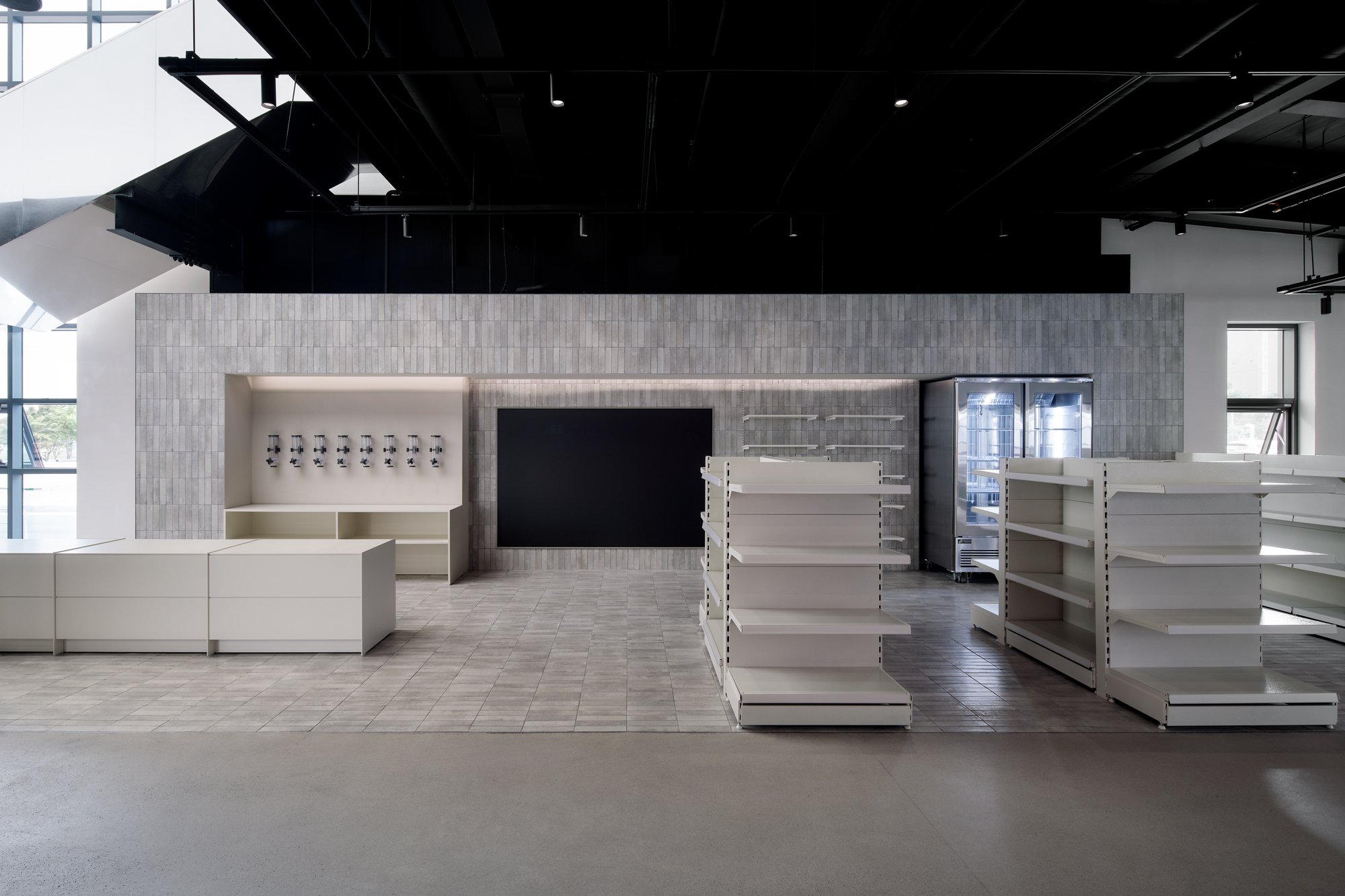
Harim First Kitchen in Iksan, South Korea, designed by Studio GIMGEOSIL, redefines the relationship between food, space, and brand experience. More than a market or retail environment, this 764 m² flagship store transforms Harim’s ready-meal identity into an immersive cultural destination—one that allows visitors to see, taste, and deeply engage with the brand’s evolving culinary philosophy.
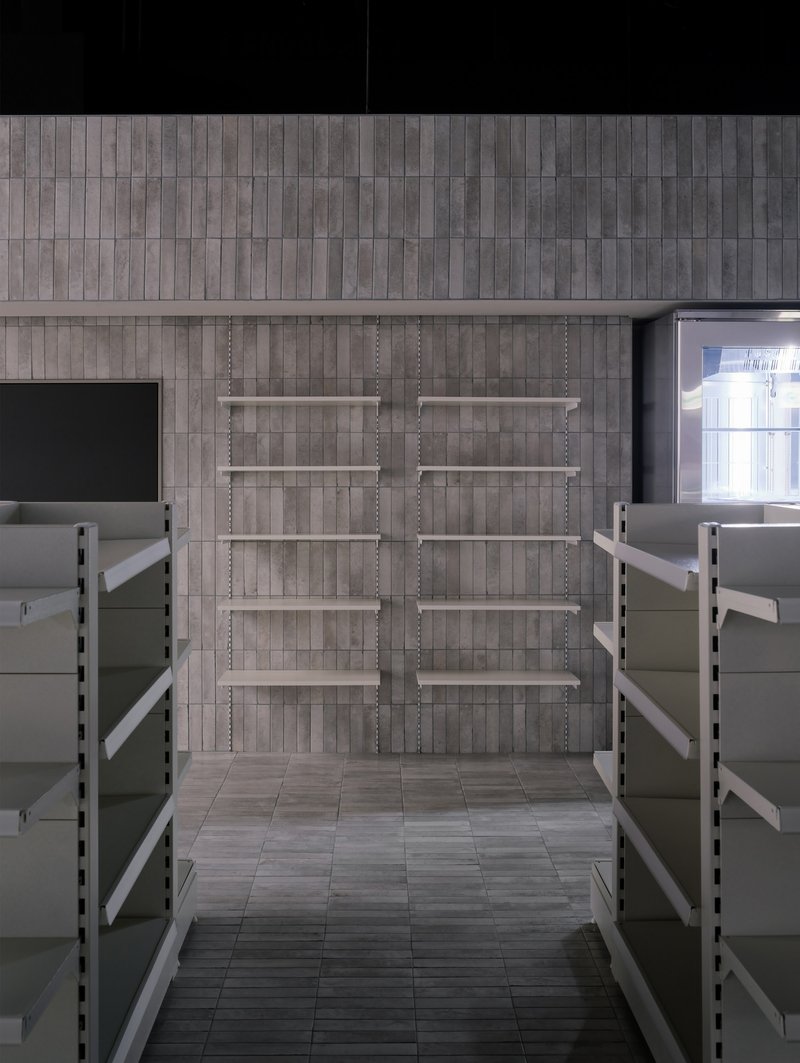
Harim has expanded its influence through brands like The Misik, Melting Piece, and Foody Buddy, each rooted in a refined design language that blends visual identity with spatial storytelling. At Harim First Kitchen, this language is intensified through materiality, interaction, and sensory experience, establishing the space as a physical extension of Harim’s innovative culinary culture.
A Market Beyond Retail: Designing a Flagship Brand Experience
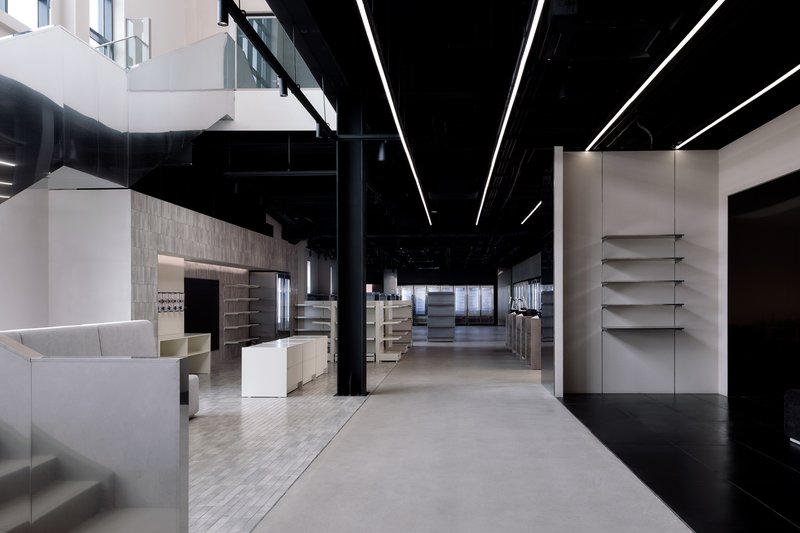
The project began with a central question: Does a market exist solely to display and sell products? Studio GIMGEOSIL’s answer was to create a hybrid environment that merges retail, storytelling, education, and leisure. The interior moves beyond commerce to form a place where visitors can linger, explore, and connect with the brand narrative. Here, Harim showcases not only its products, but its values—quality, transparency, and a commitment to culinary creativity.
Experiential Design Rooted in the Factory Context
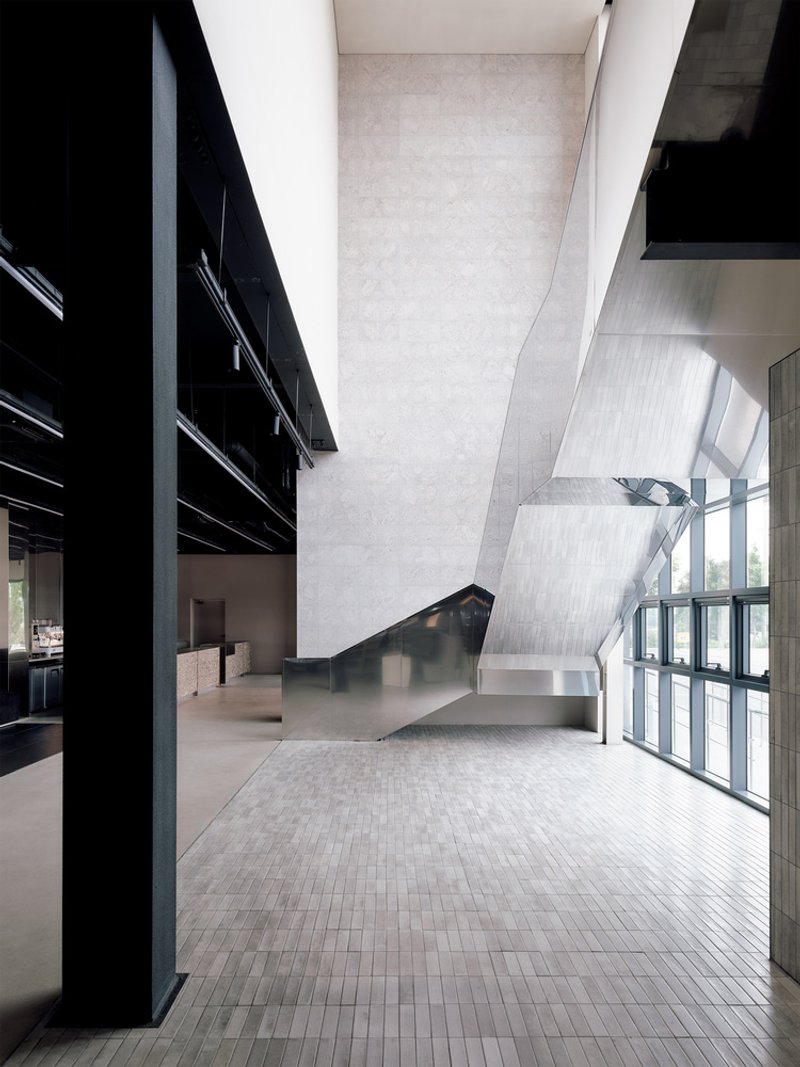
Located adjacent to Harim’s production facility in Iksan, the project integrates the atmosphere of a functioning food factory into the visitor journey. For guests touring the manufacturing plant, Harim First Kitchen serves as both an extension and a culmination of the experience. Two core customer experience (CX) zones define this approach:
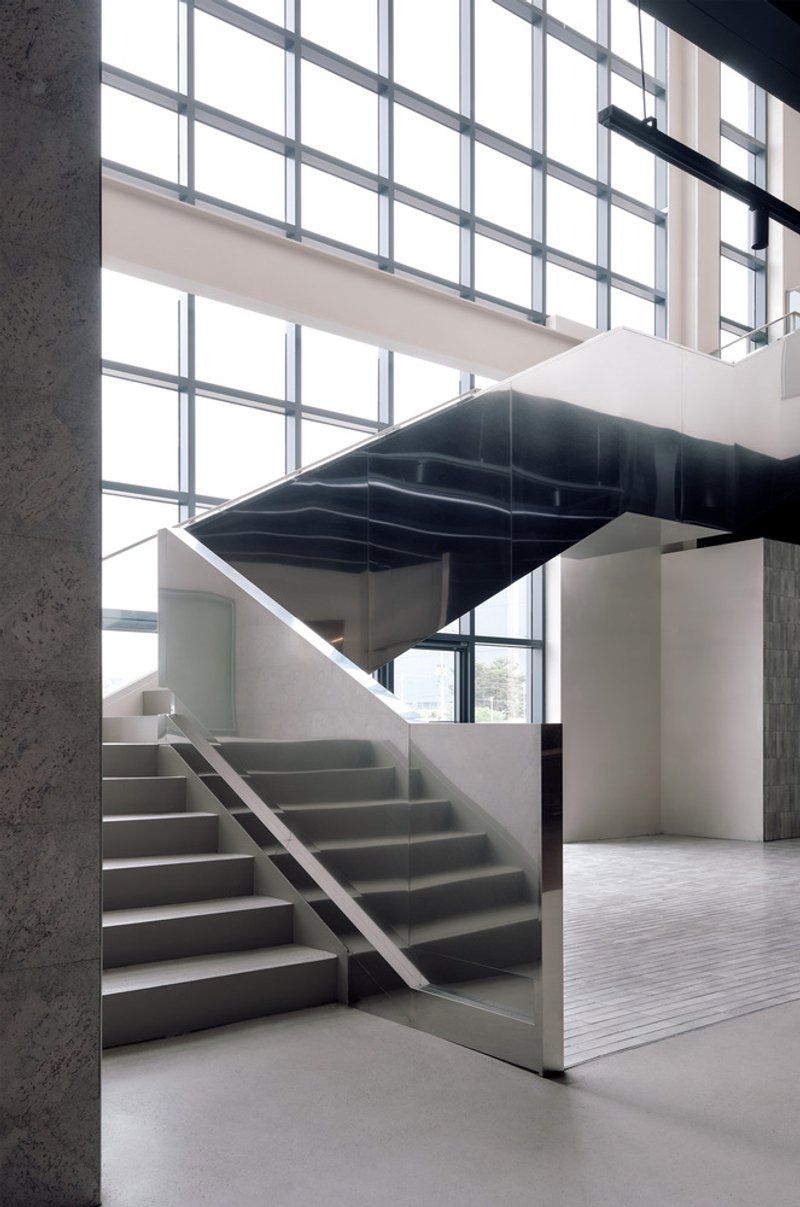
1. Café & Lounge for Rest, Reflection, and Collaboration
Recognizing the need for a comfortable post-tour environment, the design incorporates a warm, inviting café and lounge. This space allows visitors to relax, enjoy freshly brewed coffee, and continue exploring Harim products in a casual setting. For employees, the café doubles as a shared workspace—a zone for informal meetings, team conversations, and daily collaboration.
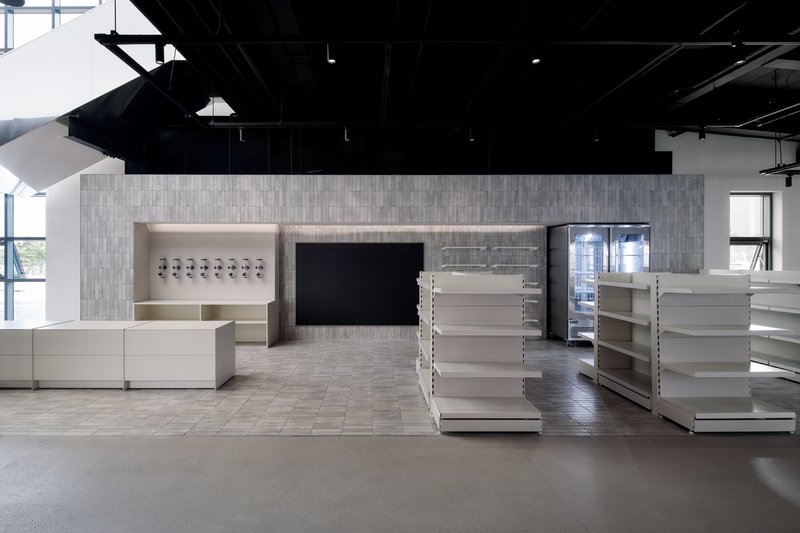
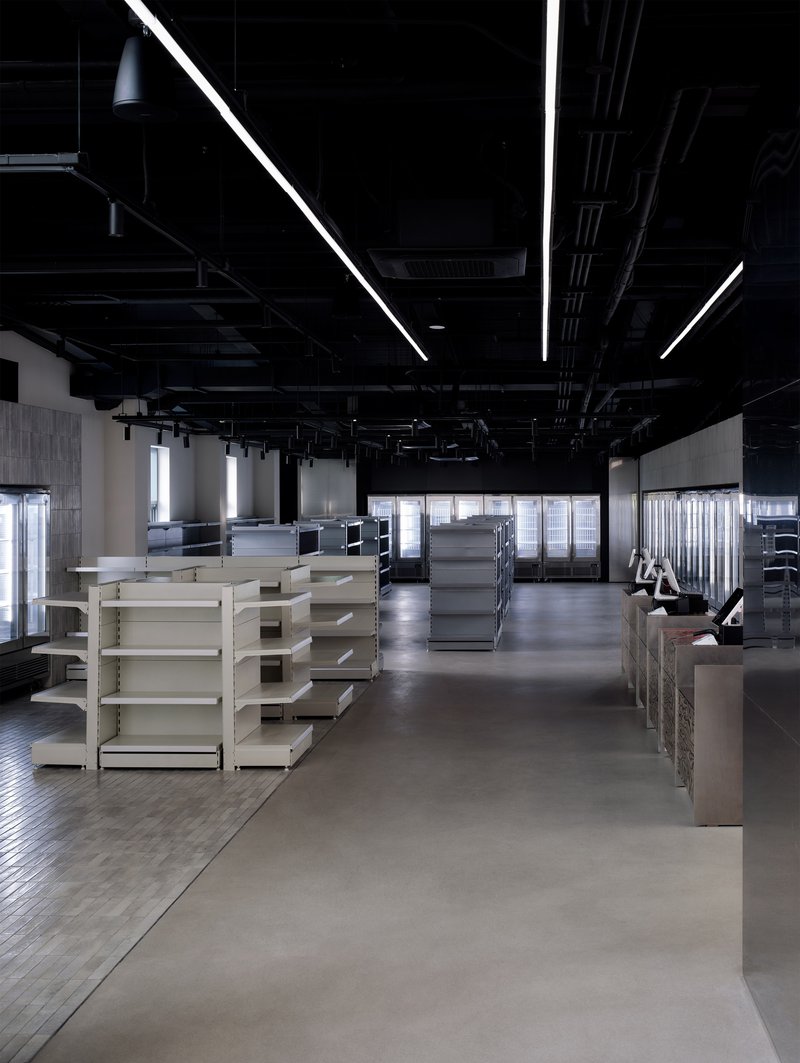
2. Interactive Kids Zone for Hands-on Culinary Engagement
Given the high number of younger visitors, Studio GIMGEOSIL created a playful and educational Kids Zone. This area integrates symbolic brand elements with hands-on programs such as DIY ramen-making, allowing children to engage with Harim’s culinary process in an intuitive and multi-sensory way. Through touch, play, and interaction, the space forms a memorable introduction to food culture and production.
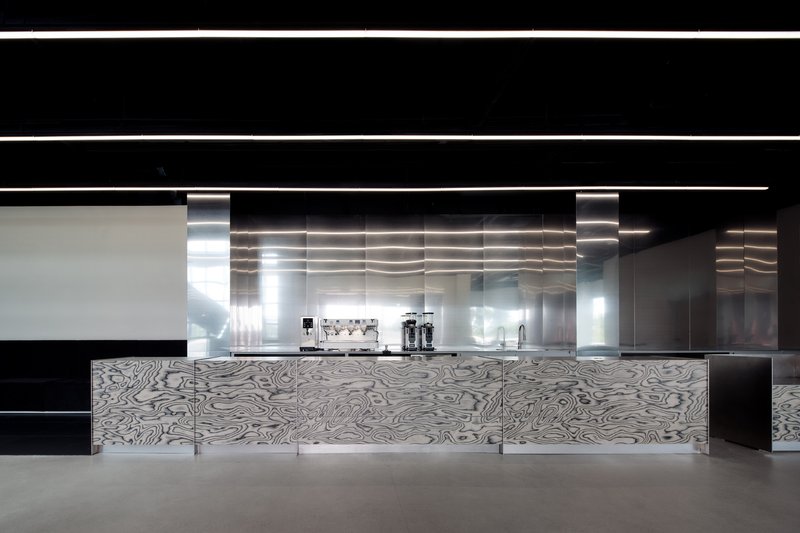
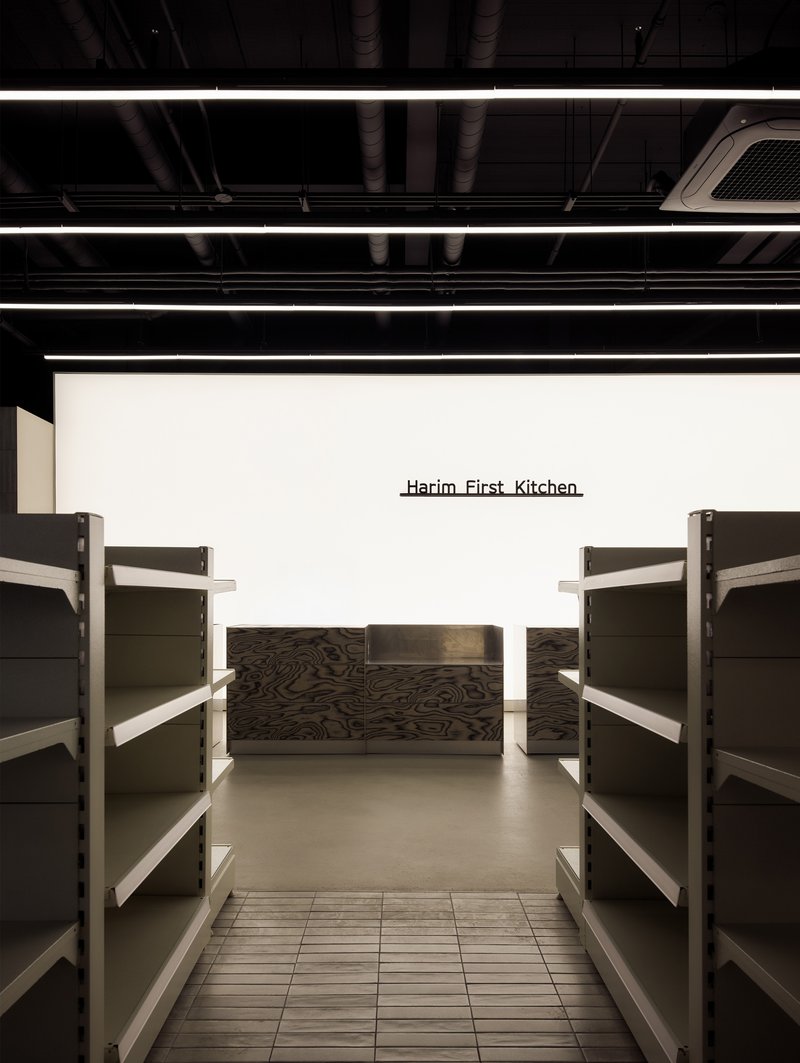
Material Identity: Stainless Steel as a Connecting Language
Stainless steel becomes the project’s dominant material, bridging the aesthetic and functional gap between factory and market. Commonly used in industrial kitchens, the material conveys durability, cleanliness, and a sense of trust in food production. Its reflective, raw surfaces pair with controlled black accents to create a sharp, contemporary identity.
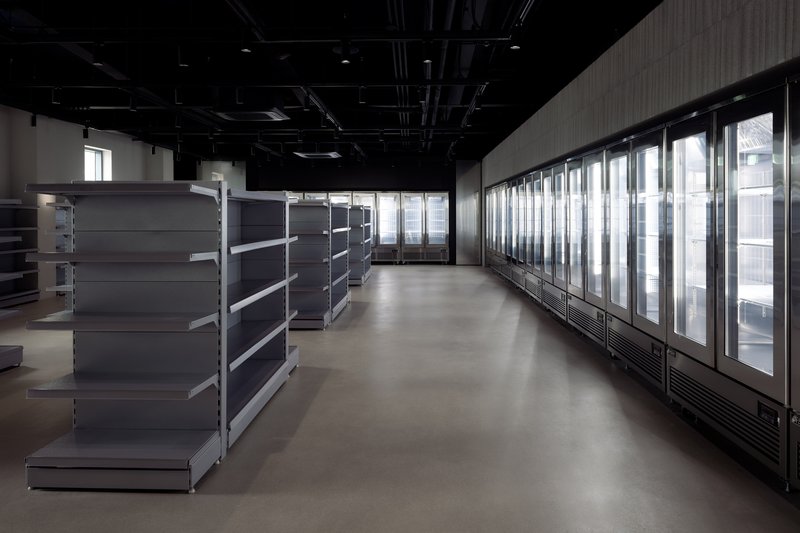
Within the market area, stainless steel shelving, tasting counters, and display zones define a unified spatial tone. The ramen display—one of the signature experiences—extends the factory narrative, emphasizing craftsmanship, transparency, and the sensory appeal of food preparation.
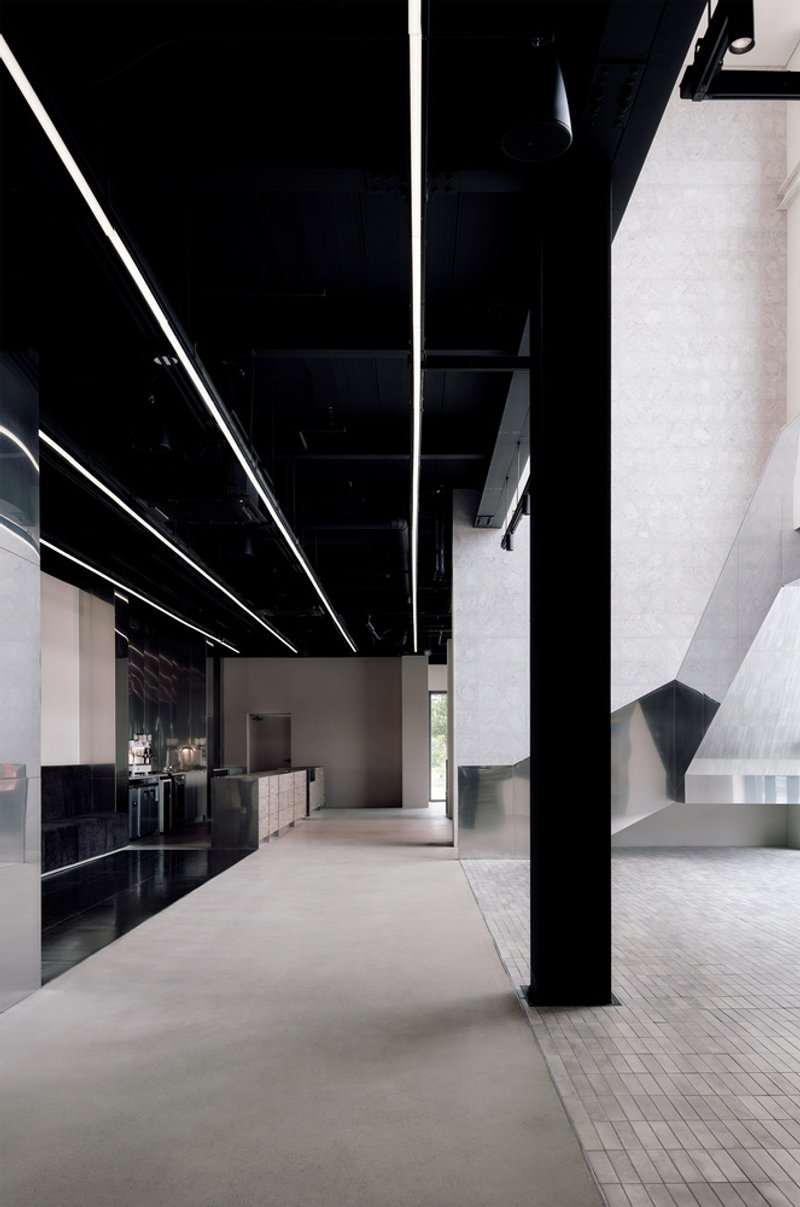
A Spatial Narrative of Production, Taste, and Culture
Harim First Kitchen serves as a new model for retail and food-driven brand environments. It dissolves the boundary between production and consumption, allowing visitors to witness how food is made, understand the brand’s culinary vision, and participate in the process through tasting, learning, and play.
All photographs are works of Kim Dongkyu



Popular Articles
Popular articles from the community

The Faith: Modular Architecture for Play, Learning, and Hope in Kutupalong Refugee Camp
A modular playground architecture project in Bangladesh where play, learning, safety, and hope rebuild childhood inside a refugee camp anew.
IKC de Geluksvogel: Sustainable School Architecture Designed for Free Movement and Digital Learning
IKC de Geluksvogel turns sustainable school architecture into a flexible Maastricht campus for digital learning, nature, and free movement.

PLATAFORMArq Folds a Concrete Roof Over the Portuguese Mountains in House #474
A 220-square-meter residence in Teixoso, Portugal, wraps board-formed concrete into an angular canopy that frames the Serra da Estrela foothills.
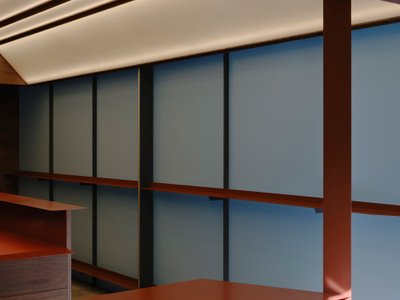
Kerry Kounnapis Packs 800 Daily Coffees into a 43-Square-Metre Melbourne Laneway Bar
Palace Coffee channels Pellegrini's and European standing bars through oxide-red steel and spotted gum timber in a Ridgway Place sliver.

Similar Reads
You might also enjoy these articles

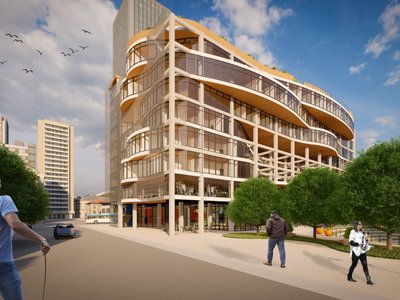
Olio Towers: A Mid-Rise for Performers That Fuses Housing, Rehearsal, and Stage
Located blocks from Houston's Theater District, this modular tower stacks living units around a central performance atrium.
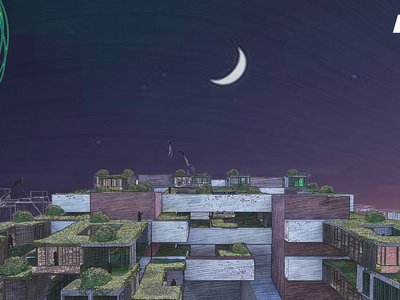
Oasis: Modular Green Housing Carved into Dhaka's Urban Fabric
A shortlisted Plugin Housing entry reclaims unauthorized settlements in Dhaka with stepped concrete volumes, green roofs, and ventilation-driven design.

Black Hole: A Floating Megastructure for the Post-Physical Era
Emiliano Mazzarotto envisions a spherical, self-scaling arena where e-sports, digital hotels, and holographic stadiums replace traditional public space.
Compact & Sustainable Living in Piraeus: A Four-Level Family Home Built Around Light and Air
A narrow townhouse in one of Greece's densest port cities uses a central atrium and passive strategies to house three generations under one roof.

Explore Interior Design Competitions
Discover active competitions in this discipline




The International Standard for Design Portfolios


The Global Benchmark for Architecture Dissertation Awards


The Global Benchmark for Graduation Excellence


Challenge to design luxury tourism on rails
Comments (0)
Please login or sign up to add comments
No comments yet. Be the first to comment!