

Haven Koala Habitat: A Sustainable Wildlife Architecture Project for Conservation and Rehabilitation
A sustainable wildlife architecture project redefining koala rehabilitation through ecological design, public awareness, and habitat restoration.


As climate change, deforestation, and urban expansion continue to threaten Australia’s wildlife, architects and designers are increasingly exploring how sustainable wildlife architecture can contribute to ecological restoration. Haven (designing a koala habitat) is a visionary architectural proposal that responds directly to the growing environmental challenges faced by koalas through a carefully designed rescue and rehabilitation center focused on coexistence, awareness, and habitat protection.
Designed by Fatemeh Lavasaniand Sepidehjn1, the project reimagines architecture not only as a shelter for humans, but as a shared ecological infrastructure capable of supporting vulnerable wildlife species. The proposal creates an immersive environment where humans and koalas can interact within a carefully balanced ecosystem while maintaining freedom of movement, safety, and environmental continuity.
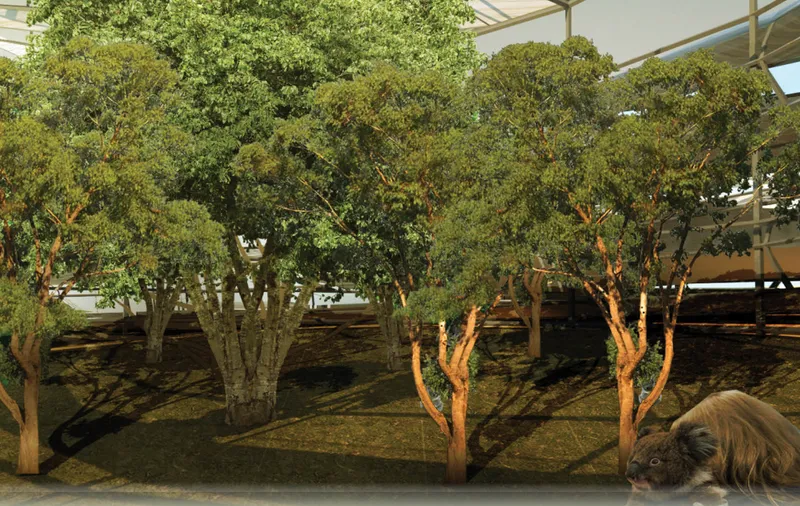
The architectural concept is centered around the idea of creating a “haven” for koalas, a sanctuary where rehabilitation, conservation, education, and public engagement coexist under one integrated spatial system. Rather than separating wildlife from people entirely, the design promotes controlled interaction and environmental awareness, helping visitors understand the ecological importance of koalas and the urgent need for habitat preservation.
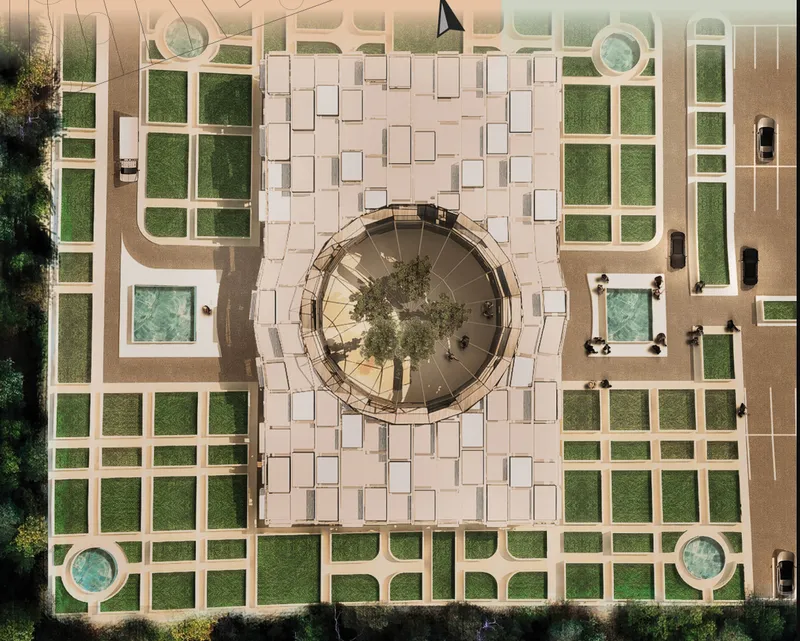
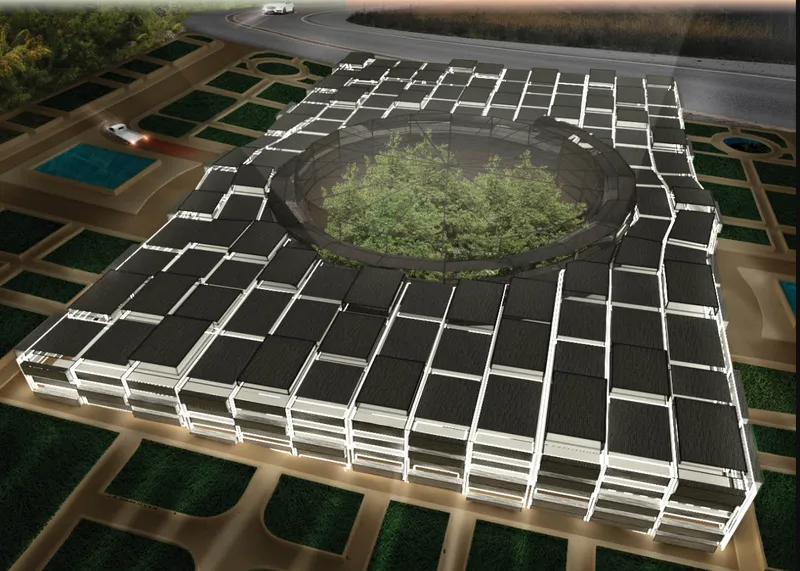
At the core of the project lies a circular open courtyard filled with native vegetation and mature trees, forming the emotional and environmental heart of the building. This central green void acts as a living ecosystem around which the entire architectural program is organized. The structure wraps around this natural core through layered circulation paths, transparent facades, and interconnected indoor-outdoor spaces that maintain constant visual and physical relationships with nature.
The project’s site planning demonstrates a strong emphasis on environmental balance and spatial organization. The surrounding landscape grid creates a calm and accessible public realm while integrating water elements, vegetation zones, circulation pathways, and open gathering spaces. This structured landscape system allows the building to blend naturally into its environment while providing flexible movement for visitors, staff, and wildlife.
The rehabilitation center includes a diverse range of functional programs distributed across multiple levels. Indoor and outdoor koala quarters provide safe rehabilitation environments, while veterinary and operational facilities support treatment and recovery processes. Educational spaces, exhibition areas, visitor centers, cafés, and observation paths encourage public participation and environmental learning. By combining conservation infrastructure with public engagement, the project transforms ecological awareness into a direct architectural experience.
One of the most striking elements of the proposal is its layered roof and circulation strategy. The design introduces spiral pathways and elevated walkways that encourage continuous movement while maximizing natural ventilation and daylight penetration. These circulation systems create dynamic visual connections between visitors and the rehabilitated habitats without disrupting the animals’ comfort and recovery.
The building’s environmental strategy further strengthens its identity as a sustainable architecture project. The proposal incorporates passive ventilation systems, greenhouse glass panels, shaded circulation zones, and fire-retardant materials to ensure safety, durability, and climatic responsiveness. Natural airflow is guided through the layered circular roof structure, helping regulate interior temperatures while reducing energy consumption.
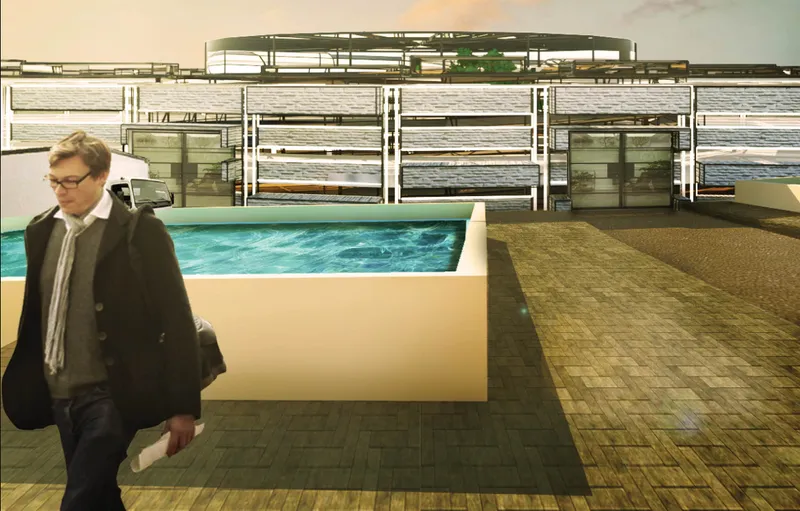
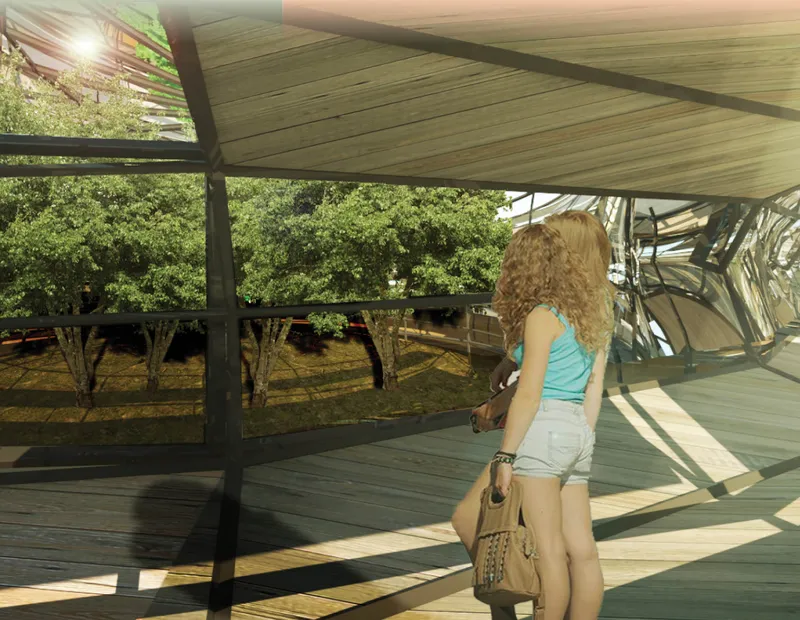
Transparency plays a major role in the architectural language of the project. Extensive glazing systems visually dissolve the boundaries between built and natural environments, allowing visitors to remain constantly connected to the surrounding landscape and wildlife habitats. This openness reinforces the project’s broader message of coexistence and ecological integration.
The underground level supports the operational needs of the facility while maintaining minimal visual disruption above ground. Service spaces, storage, technical installations, and support facilities are strategically hidden below the surface, allowing the upper levels to remain focused on greenery, rehabilitation spaces, and public interaction.
The overall architectural form combines geometric precision with organic spatial experiences. Modular structural grids contrast with the soft circular central void, creating a balance between rational planning and natural fluidity. This relationship between structure and ecology gives the project a strong contemporary identity while remaining deeply rooted in environmental sensitivity.
More than just a rehabilitation center, Haven Koala Habitat proposes a new direction for wildlife architecture and conservation-focused design. It demonstrates how architecture can actively participate in ecological healing while creating educational and emotional experiences for the public. Through sustainable planning, integrated habitats, and environmentally responsive systems, the project positions architecture as a tool for coexistence between humans and endangered wildlife.
Designed by Fatemeh Lavasani and Sepidehjn1, Haven Koala Habitat stands as a thoughtful exploration of sustainable wildlife architecture, ecological restoration, and the future of conservation-centered spatial design.



Popular Articles
Popular articles from the community

AL-JANNAH: Sustainable Architecture and Permaculture for Afghan Widows
AL-JANNAH uses sustainable architecture and permaculture to create resilient oasis of housing, learning, work and renewal for Afghan widows.

Co-Life: Senior Housing Design That Reconnects Older Adults With the City
Co-Life reimagines senior housing design through healing gardens, shared streets, workshops, and a sustainable community across generations.

Hill & Cross Opera: Sculptural Opera House Architecture Shaped by Tallinn’s Landscape and Identity
Hill & Cross Opera reimagines opera house architecture in Tallinn through its sculptural hill, civic plaza, glass wave and a luminous cross.

The Musturak Paradise: Senior Living Architecture for a Connected Future in Temara, Morocco
The Musturak Paradise reimagines senior living architecture in Temara via private homes, social spaces, culture, community, and shared care.
Similar Reads
You might also enjoy these articles

Eco Chapel: A Green Architecture Pavilion Designed in Symbiosis with the Forest
Eco Chapel uses green architecture to weave prayer, learning and reuse into a forest pavilion shaped by modular hexagonal canopies for life.
Kaffeebühnen: Coffee Shop Architecture Designed as a Civic Stage Between Vienna’s City and Park
Kaffeebühnen turns coffee shop architecture into a civic stage, linking Vienna’s park edge, urban life, warm timber yards, and coffee craft.
Healing Façade: Sustainable Architecture for Reforestation, Community, and Sacred Ecology in Ethiopia
Healing Façade reimagines sustainable architecture as a living wall that restores soil, catches water and renews Ethiopia's forest churches.


Urban Forest: A Vertical Ecosystem for 5,000 Workers in Singapore's Changi Business Park
Radially stacked pods and layered green decks turn a 7-acre plot into 47 acres of ecological workspace projected for 2040.

Comments (0)
Please login or sign up to add comments
No comments yet. Be the first to comment!