

Hearth House by Kastler Skjeseth Architects: A Thoughtful Renovation of Historic Storehouse in Helgeroa, Norway
Hearth House in Helgeroa transforms a 1749 storehouse into a modern residence, blending heritage preservation, industrial interiors, and multifunctional design.


Nestled in the scenic coastal village of Helgeroa, Norway, the Hearth House by Kastler Skjeseth Architects is a striking example of heritage preservation meeting contemporary residential design. Completed in 2023, this 100 m² residence transforms a historic storehouse from 1749 into a modern, functional home, blending industrial materiality with traditional Norwegian architecture.
Preserving Heritage While Embracing Modern Living
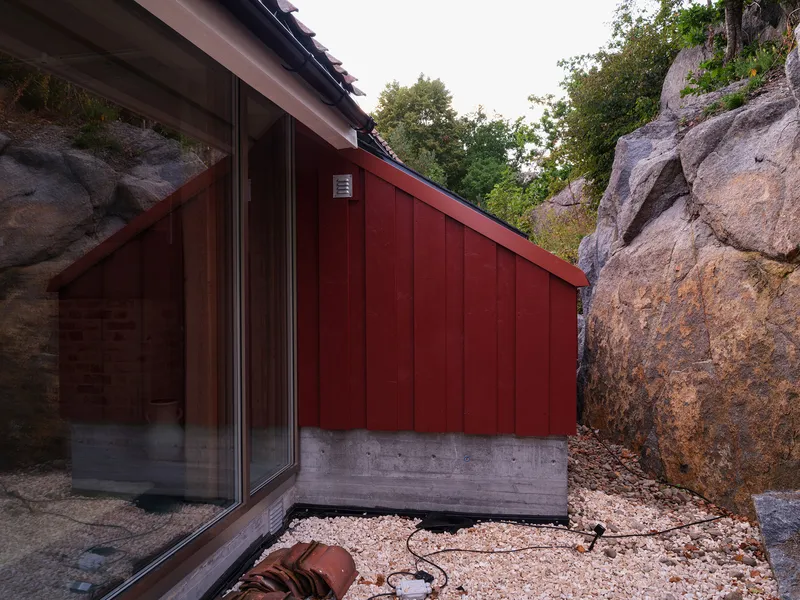
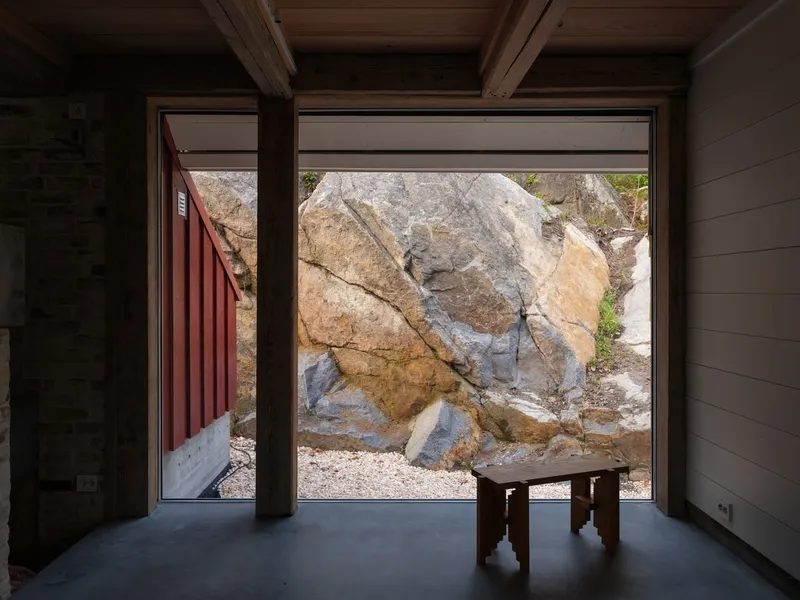
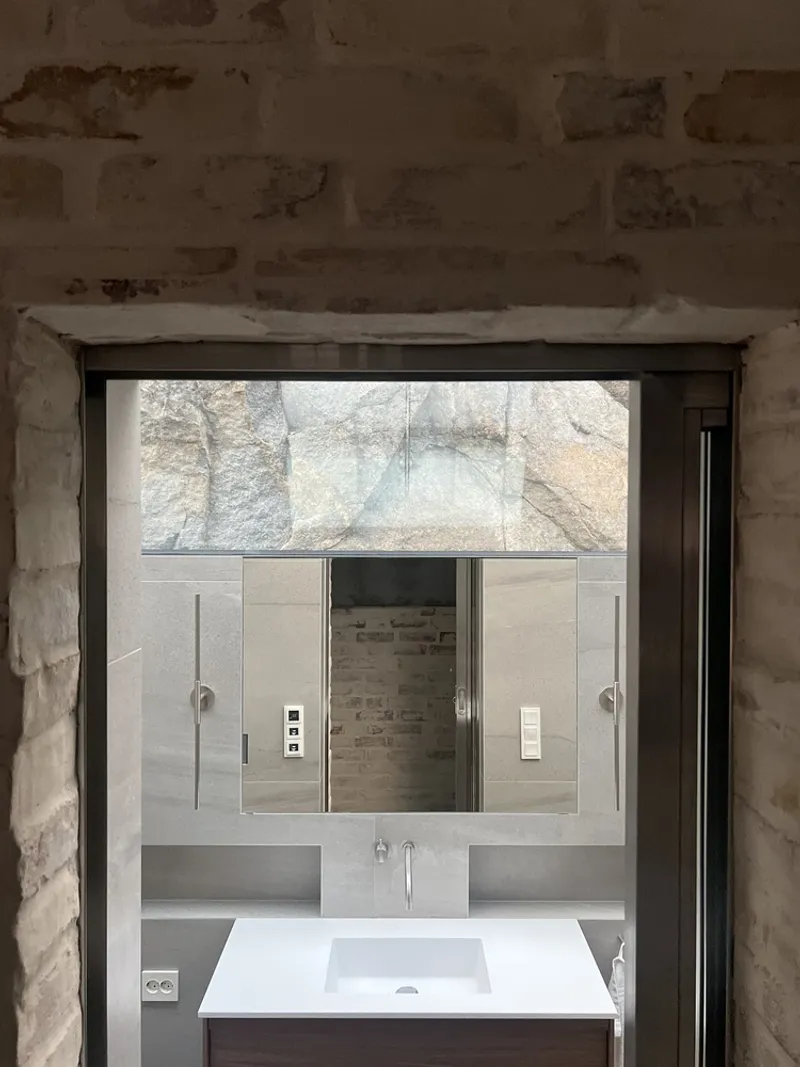
The project centers on a sensitive renovation and adaptive reuse of a centuries-old storehouse. The architects aimed to maintain the original appearance of the three most prominent facades: south, east, and west, while implementing a more radical intervention on the north wall. This new north-facing wall introduces indirect sunlight, a framed rock face, and modern sanitary functions, seamlessly merging heritage with contemporary comfort.
The renovation involved converting a dark, uninsulated space into a welcoming residence, carefully adhering to strict local heritage regulations. The intervention balances historic preservation with innovative design solutions, respecting the building’s storied past while providing a comfortable modern lifestyle.

Industrial Materiality and Functional Interiors
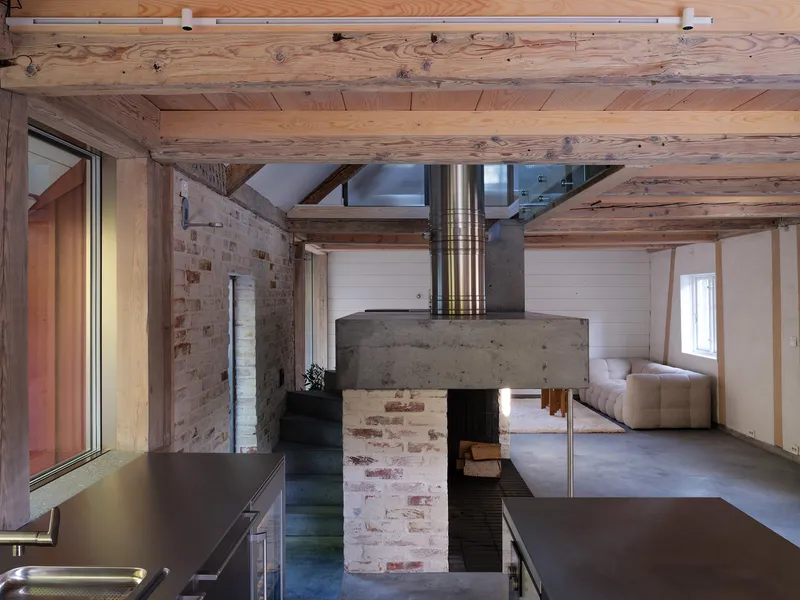
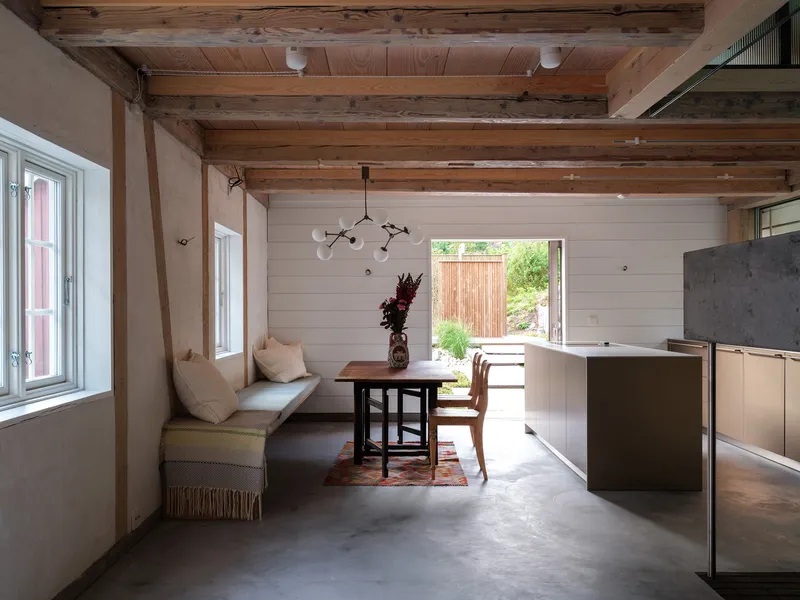
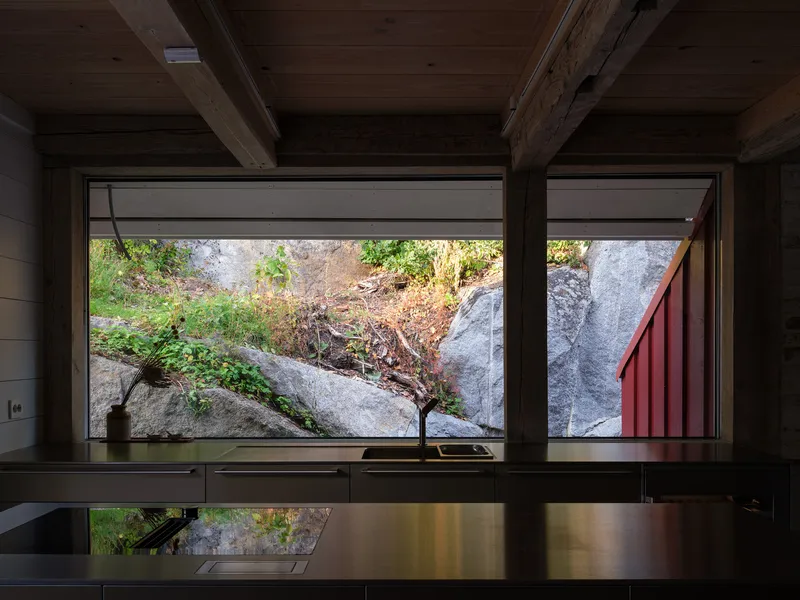
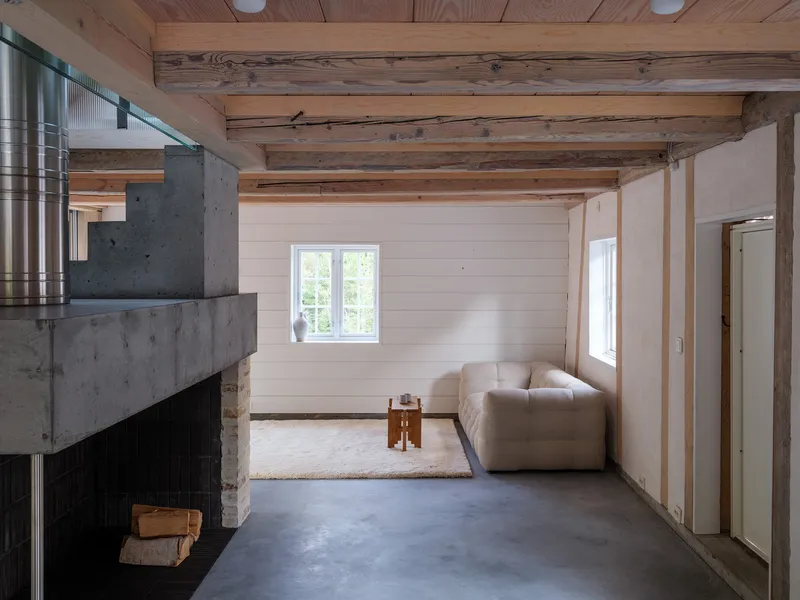
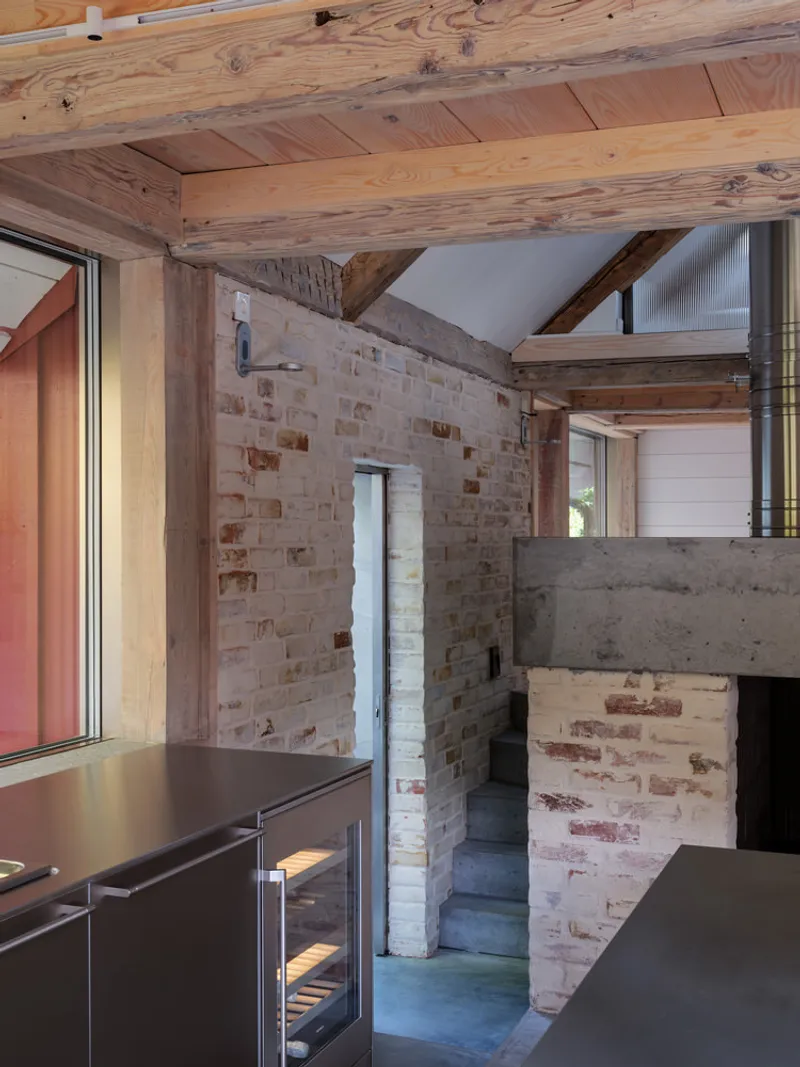
Guided by the building’s historical use for utility and industry, the interior design adopts a palette of stainless steel, concrete, and timber, providing a robust, industrial aesthetic. The open-plan layout emphasizes flexibility and functionality. Free-standing elements recall previous service installations: what were once machines for pressing, brewing, cleaning, and baking are now replaced by a steel kitchen island, concrete fireplace, robust furniture, and a bathroom attached externally.
This combination of industrial and utilitarian finishes preserves the informal character inherent in the original typology while creating spaces suitable for contemporary living. Each design choice respects the building’s history and structural narrative, reinforcing a dialogue between past and present.
The Reimagined Hearth: Centerpiece of the Home
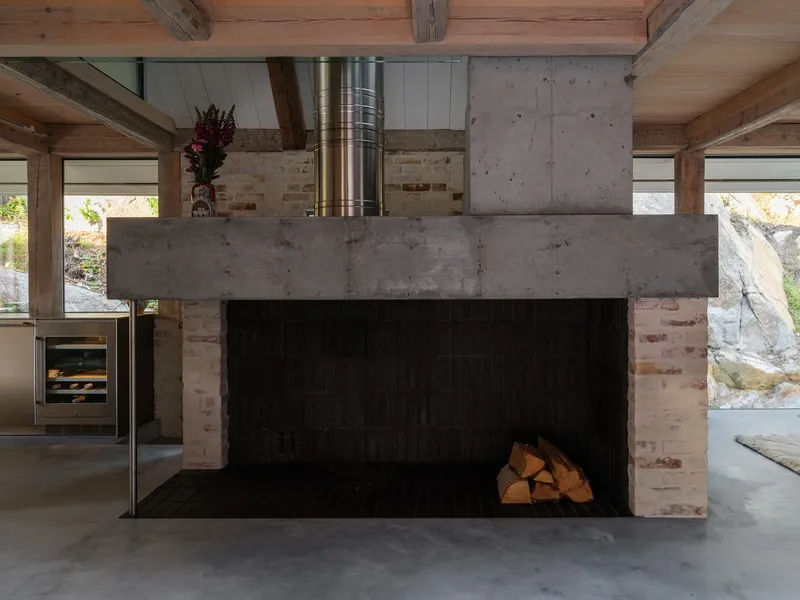
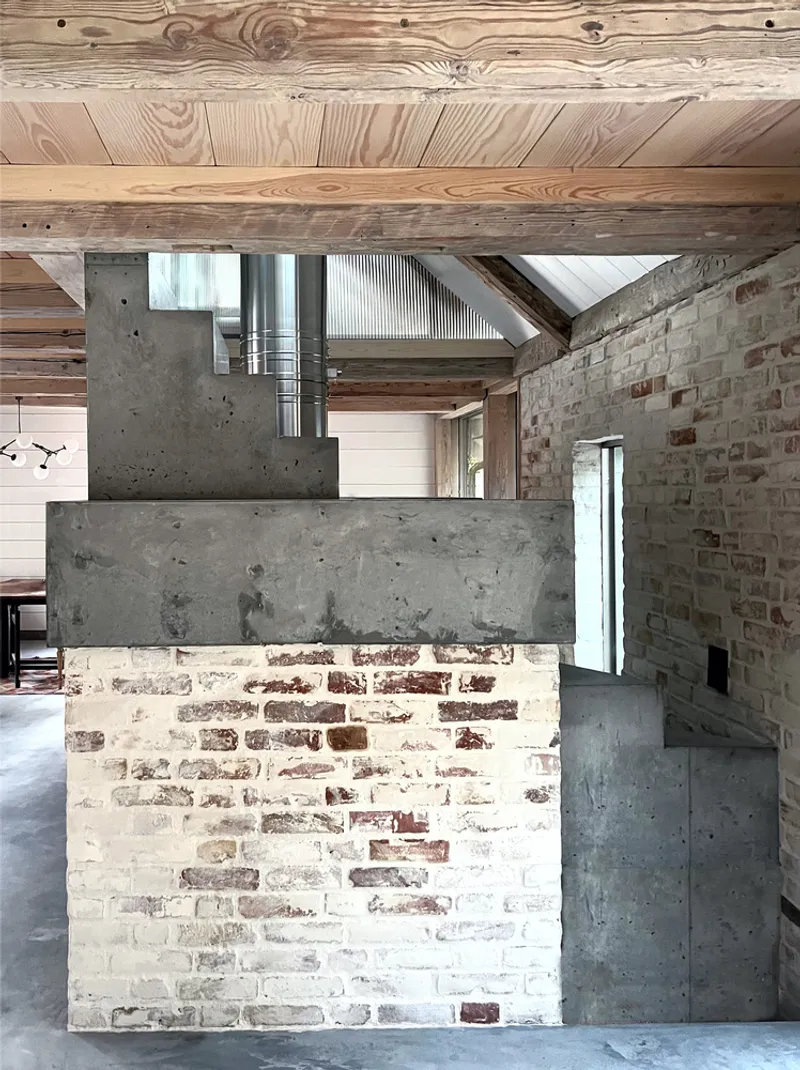
At the core of the house lies the reconfigured hearth, crafted from bricks salvaged from the original obsolete baker oven. This oversized, sculptural element serves multiple functions in one continuous form: it provides heat, access to the attic via stairs, and houses a compact bathroom, reflecting the “rule of three” principle in design.
The hearth’s combination of concrete, masonry, and steel creates a visually striking centerpiece while maintaining the integrity of the original floorboards. Acting as both a functional and sculptural feature, it anchors the home and connects the various levels seamlessly.
Thoughtful Additions and Sustainable Design
The design introduces thoughtful additions without compromising the historic integrity. New bedrooms, a bathroom, and a modern kitchen are integrated with sensitivity to the original timber-framed walls with slag stone infill. The project demonstrates how adaptive reuse of heritage buildings can meet contemporary living standards while minimizing environmental impact and preserving local culture.
The Hearth House stands as a model of sustainable residential architecture, combining robust materials, flexible spatial arrangements, and respect for historical context. It exemplifies the transformative potential of heritage buildings, showing that functionality and preservation can coexist beautifully.
Project Highlights
- Location: Helgeroa, Norway
- Architects: Kastler Skjeseth Architects
- Lead Architect: Erlend Skjeseth
- Area: 100 m²
- Year: 2023
- Photography: Max Creasy, Erlend Skjeseth
- Key Features: Adaptive reuse, industrial material palette, reconfigured multifunctional hearth, open-plan layout, heritage facade preservation
All photographs are works of
Max Creasy, Erlend Skjeseth


Popular Articles
Popular articles from the community


FCC Arquitectura Expands a Portuguese Granite House with a Board-Marked Concrete Wing
In Portugal, JV House pairs a cleaned-up whitewashed and granite dwelling with a timber-shuttered concrete extension, courtyards and a garden pool.

David Ortega Stacks a Two-Story Mexico City Penthouse Around a Steel Stair and a Pergola-Shaded Roof Terrace
In Colonia Roma, a 300 m² penthouse uses oak joinery, a planted steel stair and a slatted roof pergola to make a new-build apartment feel like a house.


Aquadapt: An Underwater Habitat That Rewrites Its Rooms by the Hour
Curved modules ring the seabed while one shell shifts from breakfast room to cinema, farm and football pitch as residents' needs change.

Opera on the Sea: Driftwood Logic Shapes a Timber Opera House on Estonia's Coast
Trevor Orgill's opera house translates the entangled drift of floating timber into a civic building where wood, water, and music converge.

Similar Reads
You might also enjoy these articles

Bamboo Housing Challenge 2026: Design Affordable, Sustainable Homes Using Bamboo
An international design competition by Bamboo U and IBUKU inviting architects and designers to reimagine affordable housing using bamboo — with the winning design built full-scale in Bali.

Computational Design & Education: Beegraphy Design Awards Introduces 7th Category (Featuring Jiyun's Innovative Approach)
Dive into Beegraphy’s 7th Design Awards category, where computational design meets education to create immersive, interactive learning tools, inspired by Jiyun’s work.
From Parametric Lighting to Urban Furniture: Join the 2nd Workshop in Beegraphy’s Computational Design Series
Dive into Cutting-Edge Design Techniques and Practical Applications with Industry Experts

Last Call: Unleash Your Architectural Genius in SHAK's Kindergarten Design Competition
Urgent call for architects to join SHAK's kindergarten design competition before the looming deadline

Explore Housing Competitions
Discover active competitions in this discipline

Challenge to reimagine the Iron Throne

Photograph architecture without architects

Illustrate the lost glory of Angkor Wat - Render Challenge

Design challenge to reuse E-waste
Comments (0)
Please login or sign up to add comments
No comments yet. Be the first to comment!