

Hemlock House by Alexander Jermyn Architecture
Hemlock House by Alexander Jermyn Architecture redefines alpine living with charred wood, concrete resilience, lakefront views, and light-filled interiors.


Reinterpreting Alpine Living in the Sierra Nevada
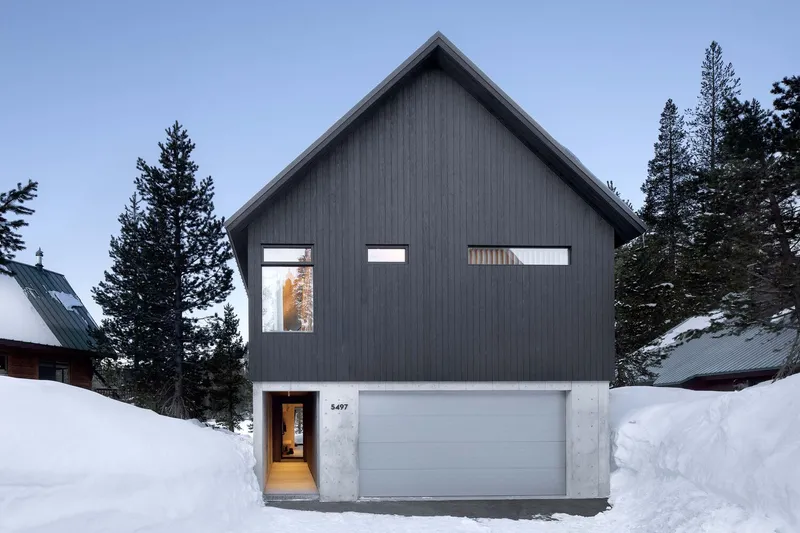
Hemlock House, designed by Alexander Jermyn Architecture, is a 3,200-square-foot residence located in Soda Springs, California, on the edge of a serene Sierra Nevada lake. This striking contemporary home reimagines the alpine house typology with a bold material strategy that addresses the region’s harsh climate conditions—heavy winter snowfalls and the persistent risk of summer wildfires.

Architectural Concept & Material Strategy
The design team embraced resilience by installing material mockups throughout an entire winter season to test durability under extreme snow loads and fluctuating weather. The result is a two-part structure:
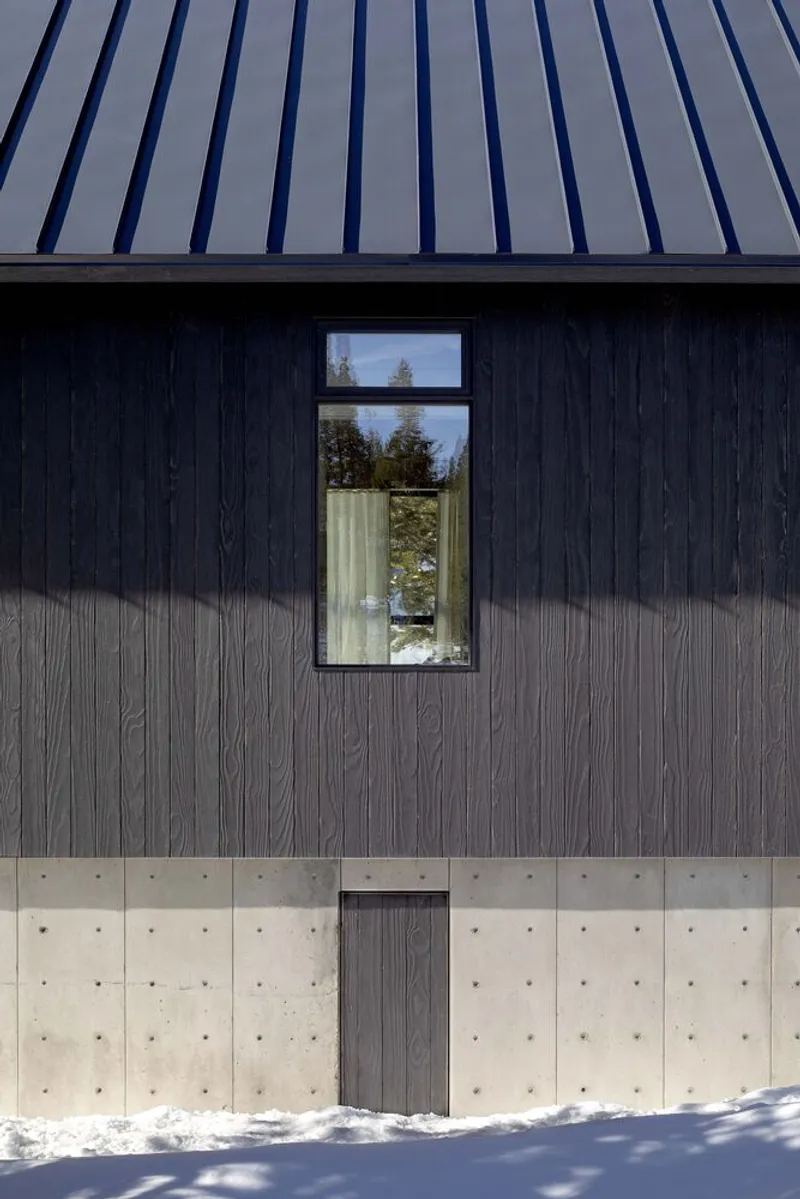
- Upper Volume: Charred wood cladding (shou sugi ban) that creates a protective, fire-resistant shell and visually contrasts with the snow-covered landscape.
- Lower Base: Exposed concrete walls engineered to withstand snow pressure, functioning like the hull of a ship against natural forces.
This balance of robustness and elegance allows Hemlock House to stand as both a shelter and a sculptural statement within its alpine setting.


Indoor-Outdoor Connection
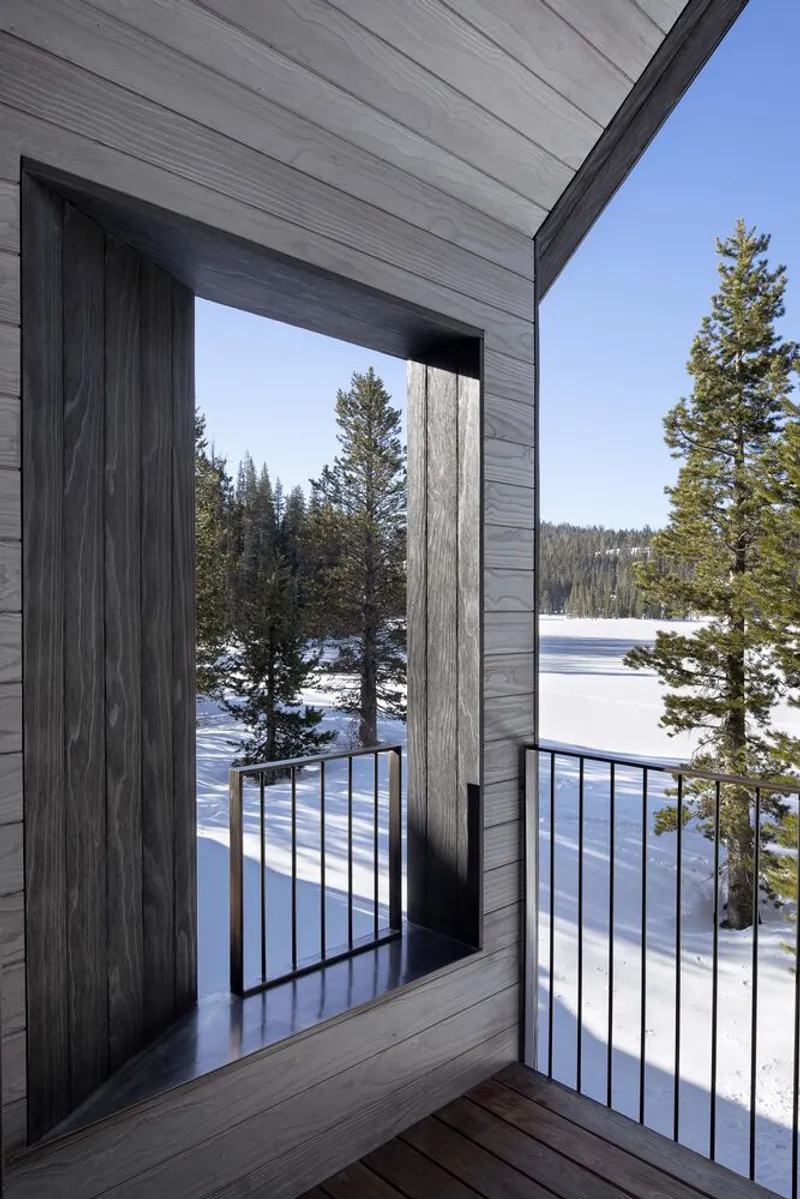
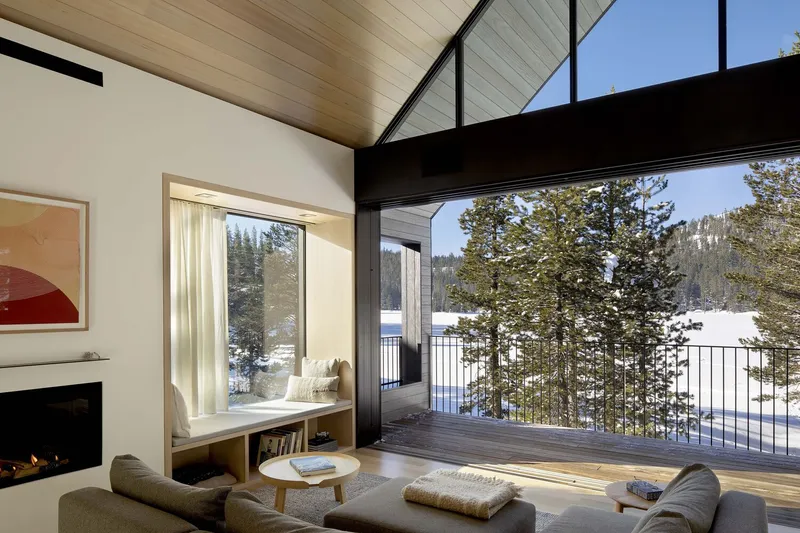
The lakeside façade opens with expansive sliding glass doors, blurring boundaries between interior living and the surrounding forested environment. Natural light floods the interiors, with whitewashed walls and bleached hemlock surfaces amplifying brightness while reflecting the serene lakeside views.
Interior Design & Spatial Organization
The layout emphasizes light, community, and flexibility:
- Second Floor: Main living and dining areas maximize panoramic lake views, complemented by built-in benches that create intimate gathering spaces.
- Kitchen & Mezzanine: A double-height space topped by a floating mezzanine, designed as an artist’s studio.
- Ground Floor: Functional spaces including a garage, ski-tuning station, laundry, guest rooms, and a media room that doubles as overflow accommodation.
- Bunk Room: Sleeps 4–8, equipped with full-size bunks and powered cubbies to support both leisure and remote work.
This design ensures both communal gathering spaces and private retreats, adaptable for family life and hosting guests.

Construction & Collaboration
Built during the pandemic, Hemlock House became a collaborative journey between architect and owner, who traveled long hours together for site visits. This process fostered shared vision, adaptability, and creativity, resulting in a home deeply attuned to both its environment and its inhabitants’ needs.


All Photographs are works of Jeremy Bitterman


Popular Articles
Popular articles from the community


David Macias Steps a Doorless Stone and Plaster House Down a Tropical Colombian Hillside
In the humid hills of Colombia, Threshold House replaces the front door with an open void and terraces its 850 m² down the slope instead of fighting it.

Architekt Andreas Gruber Scatters 23 Dark Timber Chalets Across a South Tyrolean Forest Edge
In Molini di Tures, Amonti Chalets breaks a resort into a hamlet of gabled timber houses, with parking, storage and services pushed into the slope.

longwave studio Reorganizes a 112 m² Tainan Apartment Around the Daily Routines of a Family and Two Cats
In Tainan, Taiwan, birch plywood, rust-red furniture and a freestanding plaster wall link arrival, storage, work and family life in one apartment.

GROUP A Strips a 1969 Rotterdam Harbor Headquarters to Its Frame and Wraps It in Timber Louvers
In Rotterdam's M4H harbor district, Ferro Offices reuses a 1969 frame, adds one timber storey and reaches BREEAM-NL Outstanding.

Similar Reads
You might also enjoy these articles


Hodi-Mandai Geram
Project Function: Preservation and revitalization of the Intangible heritage and socio-spatial identity of the Hodi by Housing, Cultural Memory Center, Sacred Grove, landscape, local tourism economy


Olio Towers: A Mid-Rise for Performers That Fuses Housing, Rehearsal, and Stage
Located blocks from Houston's Theater District, this modular tower stacks living units around a central performance atrium.

Oasis: Modular Green Housing Carved into Dhaka's Urban Fabric
A shortlisted Plugin Housing entry reclaims unauthorized settlements in Dhaka with stepped concrete volumes, green roofs, and ventilation-driven design.

Black Hole: A Floating Megastructure for the Post-Physical Era
Emiliano Mazzarotto envisions a spherical, self-scaling arena where e-sports, digital hotels, and holographic stadiums replace traditional public space.

Explore Architecture Competitions
Discover active competitions in this discipline

Challenge to reimagine the Iron Throne

Photograph architecture without architects

Illustrate the lost glory of Angkor Wat - Render Challenge

Design challenge to reuse E-waste
Comments (0)
Please login or sign up to add comments
No comments yet. Be the first to comment!