

Herbert Paradise by RISE Design Studio: A Benchmark for Sustainable Residential Retrofit in London
Deep retrofit London terrace transforms existing housing into an energy-efficient, low-carbon home with garden studio, solar power, and enhanced living quality.


Located in Kensal Rise, North West London, Herbert Paradise is a transformative residential retrofit project by RISE Design Studio that redefines what sustainable urban living can achieve within existing housing stock. Completed in 2024, the project converts a conventional mid-terrace house into a highly energy-efficient, low-carbon family home, setting a new benchmark for eco-friendly residential renovation in the United Kingdom.
Rather than demolishing and rebuilding, the architects focused on deep retrofit strategies, demonstrating how older homes can be upgraded to meet contemporary environmental standards while enhancing comfort, spatial quality, and connection to nature. With a total floor area of 268 square meters, the house now operates as a model for scalable, climate-responsive renovation in dense metropolitan contexts.


EnerPHit Retrofit Strategy and Low-Carbon Design
At the core of Herbert Paradise is a comprehensive EnerPHit-inspired retrofit, a rigorous approach derived from the Passivhaus standard for refurbishments. RISE Design Studio implemented advanced insulation systems, significantly enhanced airtightness, and introduced Mechanical Ventilation with Heat Recovery (MVHR) to maintain optimal indoor air quality while minimizing heat loss.
The environmental performance gains are substantial. Annual energy consumption has been reduced by approximately 75 percent, dropping from 38,500 kWh to just 9,500 kWh per year. This dramatic reduction illustrates the potential of deep energy retrofits to outperform standard building regulations and deliver long-term operational savings.
Heating and hot water are provided through an Air Source Heat Pump (ASHP), replacing fossil fuel dependency with a renewable alternative. On-site energy generation is supported by solar photovoltaic panels, further lowering the home’s carbon footprint and improving energy resilience.
Spatial Reconfiguration and Garden Integration
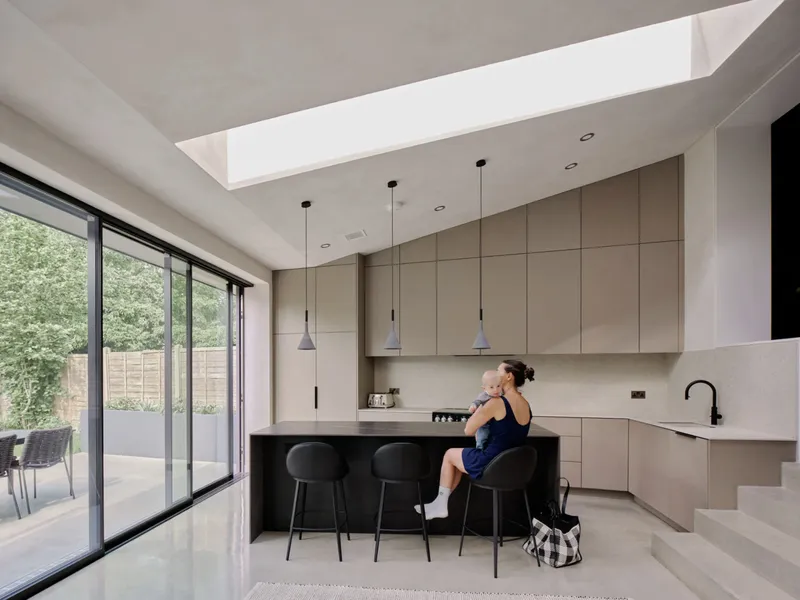
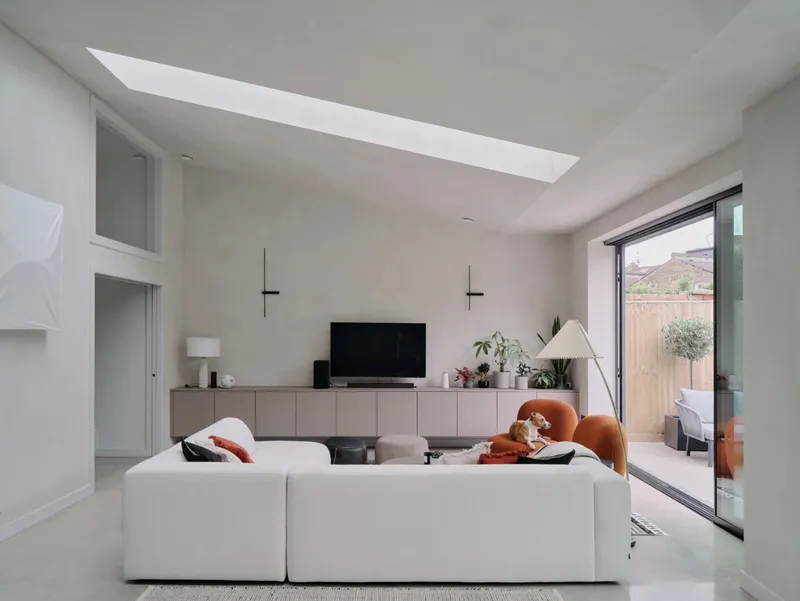
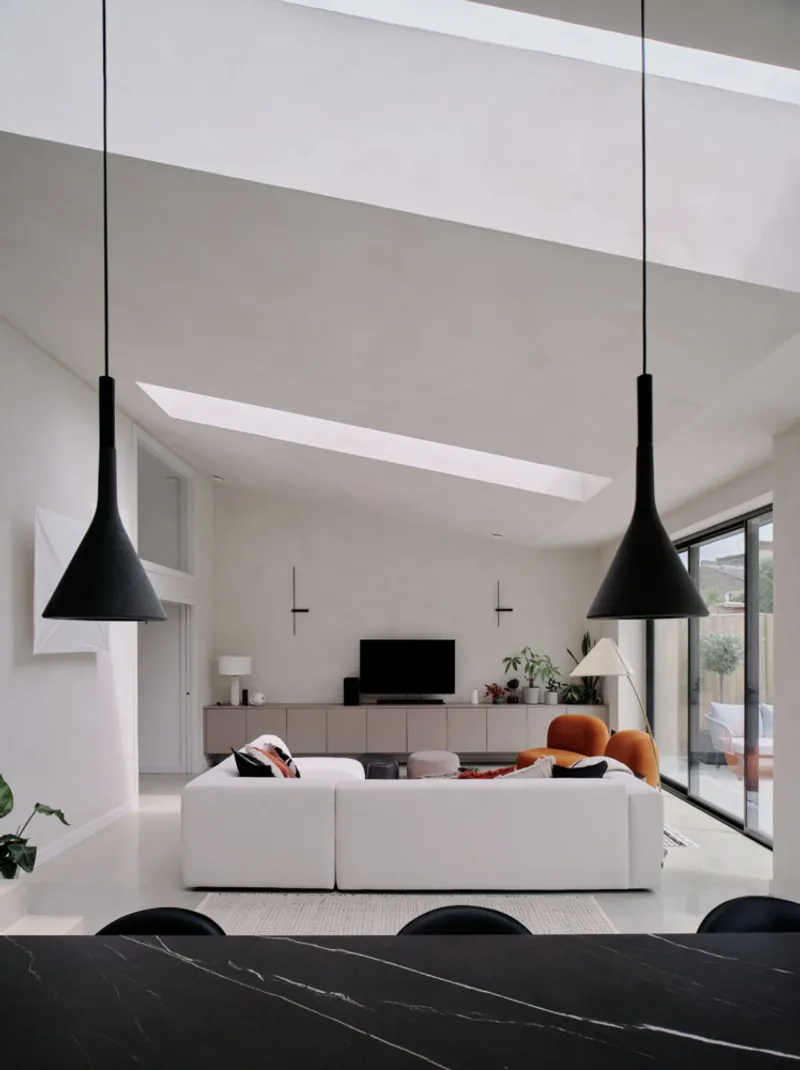
The architectural intervention includes rear and dormer extensions that expand the internal living spaces while preserving the character of the existing terrace. The ground floor has been reconfigured into an open-plan kitchen, dining, and living area that flows seamlessly into the garden, reinforcing a strong indoor-outdoor relationship.
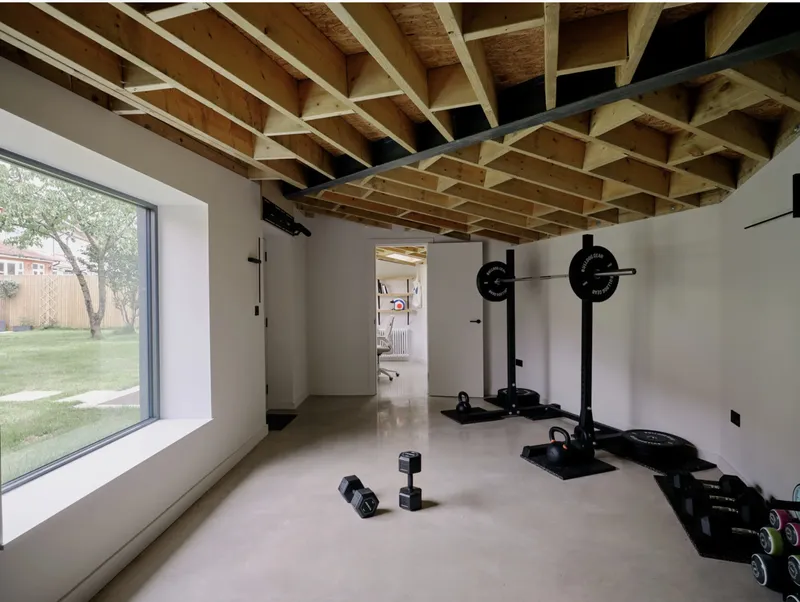
Large glazed openings maximize daylight penetration and visual continuity with the landscape, allowing the garden and mature fruit trees to become an integral part of daily life. This spatial openness supports social living while improving thermal comfort and natural ventilation.
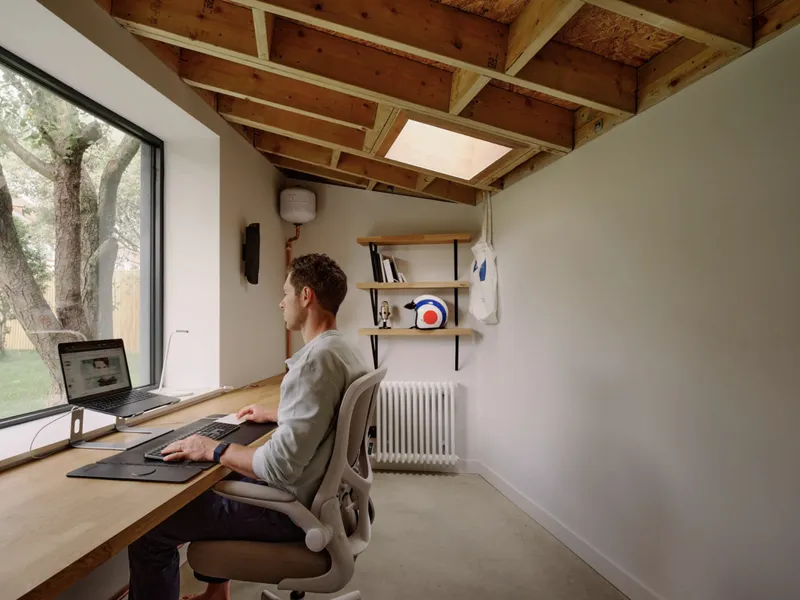
A separate garden studio adds valuable flexibility to the home, functioning as a dedicated workspace. This addition responds directly to contemporary work-from-home needs, offering physical and psychological separation between domestic and professional life while maintaining a close connection to nature.

Sustainable Materials and Interior Architecture
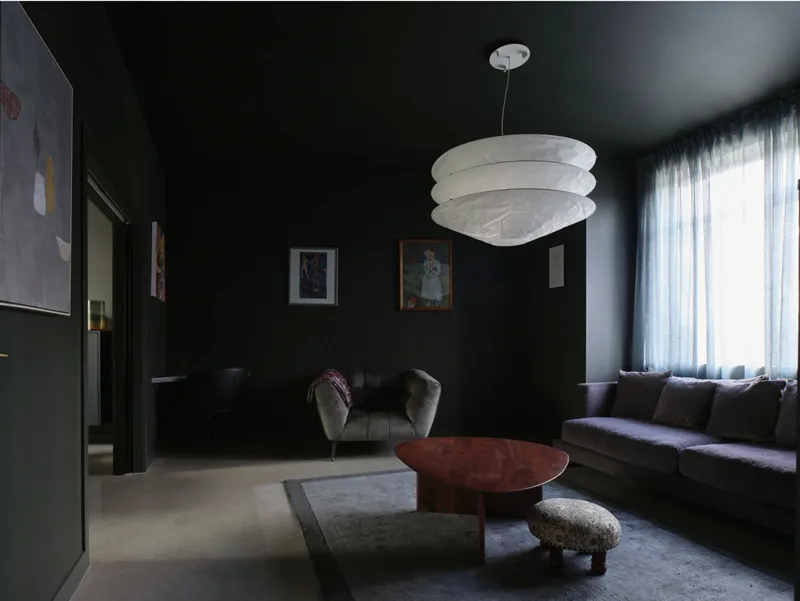
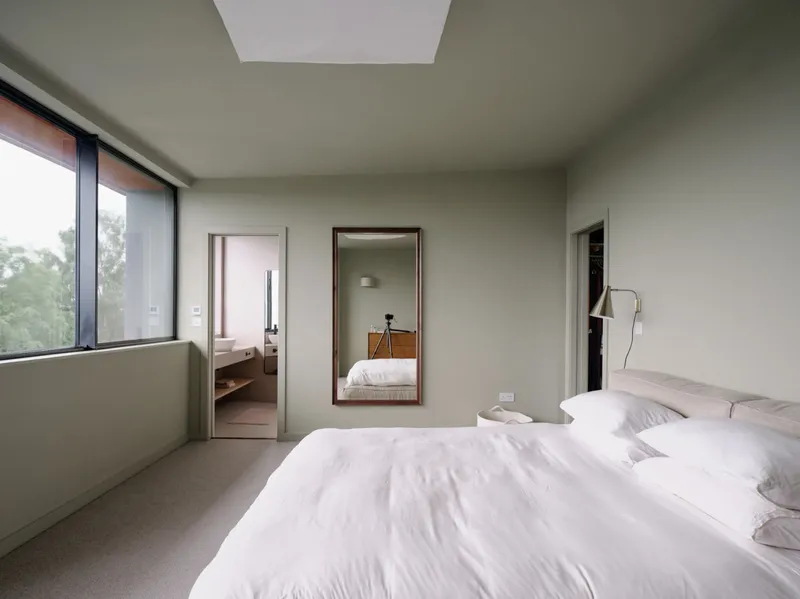
Material selection played a critical role in aligning performance with aesthetics. The project incorporates locally sourced clay plaster, chosen for its breathability and moisture-regulating properties, enhancing indoor environmental quality. Valchromat was used extensively for kitchen cabinetry and bespoke joinery due to its durability, low VOC emissions, and refined finish.
Flooring materials such as polished concrete and microcement contribute to thermal mass, longevity, and visual continuity, reinforcing the home’s minimalist yet warm interior language. Together, these choices demonstrate how sustainable materials in residential architecture can elevate both environmental performance and design expression.

Comfort, Wellbeing, and Everyday Experience
Beyond technical efficiency, Herbert Paradise prioritizes occupant wellbeing. Carefully positioned roof lights, including a circular skylight above the master ensuite shower, introduce moments of delight while enhancing natural light and spatial character. The open kitchen and living areas support cooking, entertaining, and family life, with fluid transitions between inside and outside spaces.
The garden studio has significantly improved daily routines, eliminating long commutes and offering a quiet, focused environment for work. This thoughtful integration of lifestyle needs underscores the project’s holistic approach to sustainable home design.
A Scalable Model for Sustainable Urban Housing
As cities worldwide confront climate change, housing shortages, and aging building stock, Herbert Paradise offers a compelling blueprint for sustainable residential retrofits in urban environments. The project proves that deep renovation, when combined with innovative design and environmental commitment, can deliver homes that are energy-efficient, comfortable, and architecturally refined.


All photographs are works of Henry Woide


Popular Articles
Popular articles from the community


Opera on the Sea: Driftwood Logic Shapes a Timber Opera House on Estonia's Coast
Trevor Orgill's opera house translates the entangled drift of floating timber into a civic building where wood, water, and music converge.

Extended Shell: Retrofitting Kolkata's Balconies as Living Urban Thresholds
A modular retrofit system recovers the social and environmental intelligence of Kolkata's historic verandas for contemporary Park Street residents.

Opera by the Sea Estonia: Three Shells Dissolving Architecture into Tallinn's Coastline
A winning opera house proposal replaces monumental form with interconnected shells that blur the boundary between building, park and Baltic Sea.

Manzana Morphosis: Stretching Barcelona's Grid into a Living Landscape for 2050
A radical reworking of the Eixample manzana turns density into a tool for generous public space, vertical ecology, and environmental performance.

Similar Reads
You might also enjoy these articles


Hodi-Mandai Geram
Project Function: Preservation and revitalization of the Intangible heritage and socio-spatial identity of the Hodi by Housing, Cultural Memory Center, Sacred Grove, landscape, local tourism economy


Olio Towers: A Mid-Rise for Performers That Fuses Housing, Rehearsal, and Stage
Located blocks from Houston's Theater District, this modular tower stacks living units around a central performance atrium.

Oasis: Modular Green Housing Carved into Dhaka's Urban Fabric
A shortlisted Plugin Housing entry reclaims unauthorized settlements in Dhaka with stepped concrete volumes, green roofs, and ventilation-driven design.

Black Hole: A Floating Megastructure for the Post-Physical Era
Emiliano Mazzarotto envisions a spherical, self-scaling arena where e-sports, digital hotels, and holographic stadiums replace traditional public space.

Explore Retrofit Competitions
Discover active competitions in this discipline

Challenge to reimagine the Iron Throne

Photograph architecture without architects

Illustrate the lost glory of Angkor Wat - Render Challenge

Design challenge to reuse E-waste
Comments (0)
Please login or sign up to add comments
No comments yet. Be the first to comment!